UNIVERSITY OF SOUTHERNMINDANAO
Group Members: Dalguntas, Deocampo, Silao, Sumosot
Group F
NCM 07
CONTRACEPTION, FAMILY PLANNING PROGRAM
WITH TYPES AND ADVANCES IN GENETICS AND
GENETIC TECHNOLOGY, ALTERNATIVE METHODS
OF BIRTH
2.
2
• Reproductive lifeplanning includes all the decisions an individual
or couple make about whether and when to have children, how
many children to have, and how they are spaced.
• Contraception - is the act of preventing pregnancy. This can be a
device, a medication, a procedure or a behavior.
• Contraceptive - a measure to halt conception
• Coitus – sexual activity
Key Terms
3.
3
AN IDEAL CONTRACEPTIVESHOULD BE:
• Safe
• Effective
• Compatible with spiritual and cultural beliefs and personal preferences of
both
the user and sexual partner
• Free of bothersome side effects
• Convenient to use and easily obtainable
• Affordable and needing few instructions for effective use
• Free of effects (after discontinuation) on future pregnancies
Family Planning Program
4.
4
Important things toconsider when helping a couple choose a
method that will be right for them include:
• Personal values
• Ability to use a method correctly
• If the method will affect sexual enjoyment
• Financial factors
• If a couple’s relationship is short term or long term
• Prior experiences with contraception
• Future plans
Family Planning Program
5.
5
1. Natural FamilyPlanning
2. Barrier Method
3. Hormonal Contraception
4. Intrauterine Devices
5. Surgical Methods of Reproductive Life Planning
METHODS OF FAMILY PLANNING
6.
6
Natural family planningmethods, also called periodic abstinence
methods, are, as the name implies, methods that involve no
introduction of chemical or foreign material into the body. Under
these methods are 6 more methods, which include:
• Abstinence
• Lactation Amenorrhea Period
• Coitus Interruptus
• Postcoital Douching
• Fertility Awareness Methods
Natural Family Planning
7.
7
1. Abstinence –refraining from sexual relations, has a theoretical
0% failure rate and is also the most effective way to prevent STIs.
Periodic abstinence is a method to avoid pregnancy by avoiding
sex on the days a woman may conceive.
2. Lactation Amenorrhea Period - when a woman is
breastfeeding, there is a natural suppression of both ovulation
and menses.
3. Coitus interruptus (withdrawal) - is one of the oldest known
methods of contraception. The couple proceeds with coitus until
the moment of ejaculation. Then, the man withdraws and
spermatozoa are emitted outside the vagina.
Natural Family Planning
8.
8
4. Postcoital Douching- Douching following intercourse, no matter
what solution is used, is ineffective as a contraceptive measure as
sperm may be present in cervical mucus as quickly as 90 seconds
after ejaculation, long before douching could be accomplished.
5. Fertility awareness methods - rely on detecting when a woman
will be capable of impregnation (fertile) so she can use periods of
abstinence during that time.
• Calendar method - requires a couple to abstain from coitus on the days
of a menstrual cycle when the woman is most likely to conceive.
• Basal Body temperature – To use this method, the woman takes her
temperature, each morning immediately after waking before she rises
from bed or undertakes any activity; this is her BBT. As soon as a woman
notices a slight dip in temperature followed by an increase, she knows
she has ovulated. She refrains from having coitus (sexual relations) for
the next 3 days.
Natural Family Planning
Natural Family Planning
•Cervical Mucus Method (Billing’s Method) – All the days on which cervical
mucus is copious, and for at least 3 to 4 days afterward, are considered to be
fertile days, or days on which the woman should abstain from coitus to avoid
conception.
• Two-Day Method - a woman assesses for vaginal secretions daily. If she feels
secretions for 2 days in a row, she avoids coitus that day and the day following
as the presence of secretions suggests fertility.
• Symptothermal Method – combines the cervical mucus and BBT methods.
The woman takes her temperature daily, watching for the rise in temperature
that marks ovulation. She also analyzes her cervical mucus every day or if her
cervix feels softer than usual. The couple then abstains from intercourse until
3 days after the rise in temperature or the fourth day after the peak of mucus
change.
• Standard Days Method: CycleBeads – This method is designed for women
who have menstrual cycles between 26 and 32 days. A woman purchases a
circle of beads that helps her predict fertile days.
• Ovulation Detection - Still another method to predict ovulation is by the use
of an over-the-counter ovulation detection kit. These kits detect the midcycle
Insert Running Title 10
11.
Natural Family Planning
•Marquette Model – This method combines the use of
ovulation detection with other signs of ovulation (cervical
mucus, BBT, cervix position and softness) to avoid pregnancy
during a woman’s fertile period.
Insert Running Title 11
12.
BARRIER METHOD
Barrier Method– are forms of birth control that place a
chemical or latex barrier between the cervix and advancing
sperm so sperm cannot reach and fertilize an ovum.
• Spermicide – a spermicide is an agent that causes the death of
spermatozoa before they can enter the cervix. Various preparations are
available, including gels, creams, sponges, films, foams, and vaginal
suppositories. Vaginally inserted spermicidal products are contraindicated
in women with acute cervicitis because they might further irritate the
cervix.
• Male Condom - is a latex rubber or synthetic sheath that is placed over the
erect penis before coitus to trap sperm.
• Female condoms - are sheaths made of latex or polyurethane,
prelubricated with a permicide so, similarly to male condoms. The inner
ring (closed end) covers the cervix, and the outer ring (open end) rests
against the vaginal opening. The sheath may be inserted any time before
sexual activity begins and then removed after ejaculation occurs.
13.
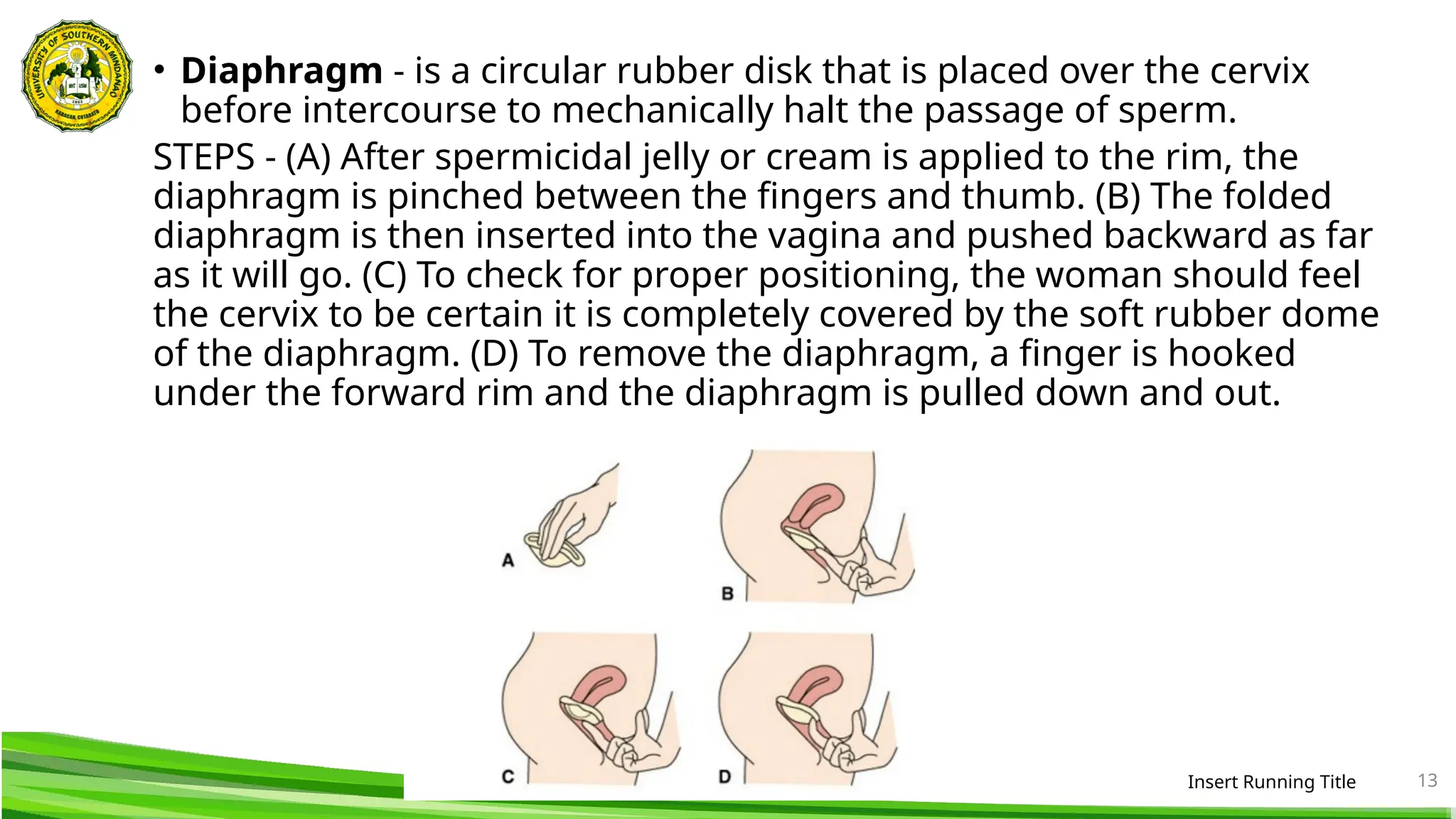
• Diaphragm -is a circular rubber disk that is placed over the cervix
before intercourse to mechanically halt the passage of sperm.
STEPS - (A) After spermicidal jelly or cream is applied to the rim, the
diaphragm is pinched between the fingers and thumb. (B) The folded
diaphragm is then inserted into the vagina and pushed backward as far
as it will go. (C) To check for proper positioning, the woman should feel
the cervix to be certain it is completely covered by the soft rubber dome
of the diaphragm. (D) To remove the diaphragm, a finger is hooked
under the forward rim and the diaphragm is pulled down and out.
Insert Running Title 13
14.
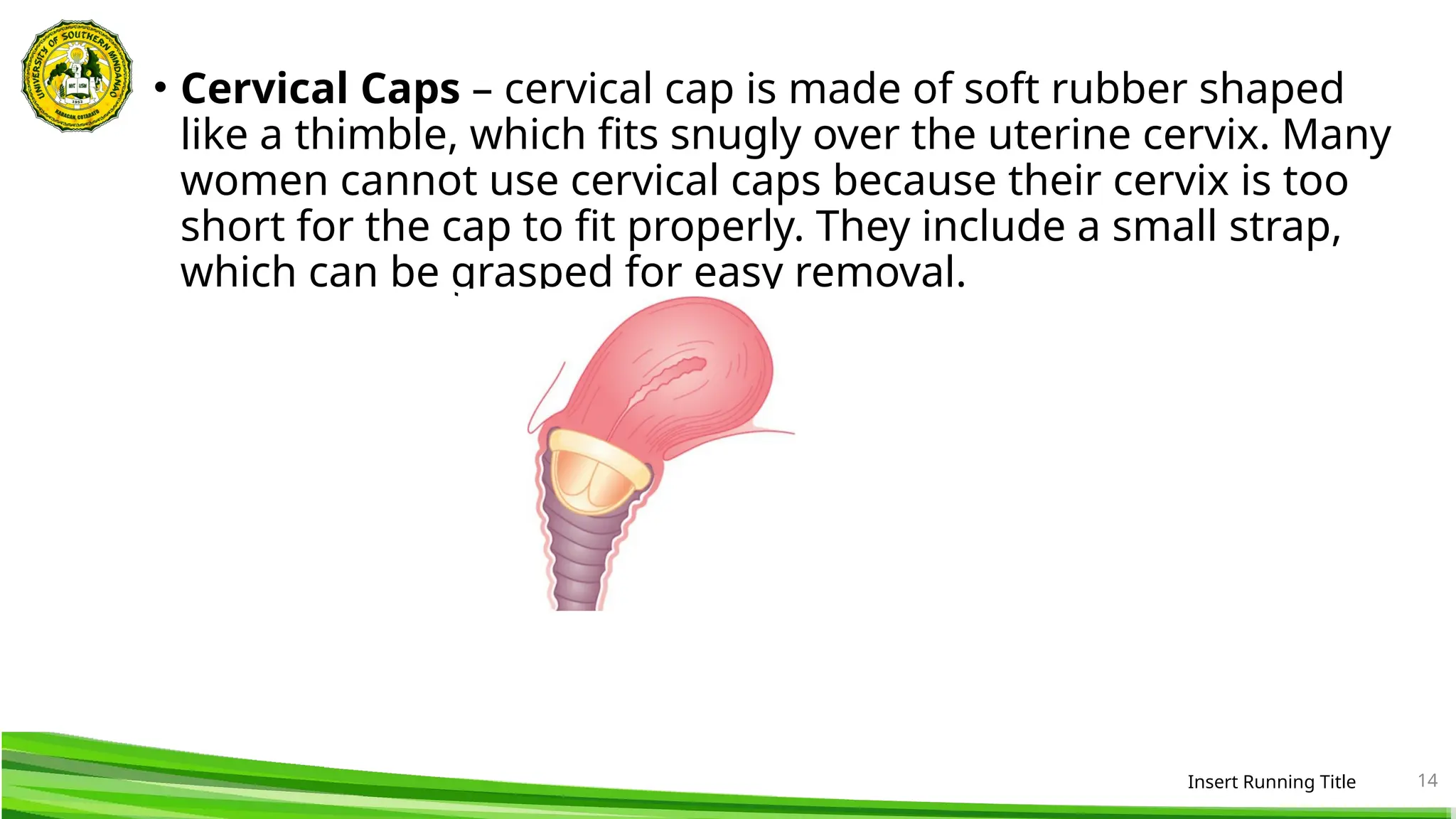
• Cervical Caps– cervical cap is made of soft rubber shaped
like a thimble, which fits snugly over the uterine cervix. Many
women cannot use cervical caps because their cervix is too
short for the cap to fit properly. They include a small strap,
which can be grasped for easy removal.
Insert Running Title 14
15.
Hormonal Contraception
Hormonal contraceptives
hormones that can be taken orally, transdermally,
intravaginally, or intramuscularly.
cause fluctuations in a normal menstrual cycle that ovulation
or sperm transport does not occur.
Insert Running Title 15
16.
ORAL CONTRACEPTIVES
Oral contraceptives
known as pill, OCs ( oral contraceptive), or COCs (combination oral
contraceptives). They are composed of varying amounts of natural estrogen
(17β-estradiol, estradiol valerate) or synthetic estrogen (ethinyl estradiol)
combined with a small amount of synthetic progesterone (progestin).
Insert Running Title 16
17.
Types of OralContraceptives
1. Combination Oral Contraceptives
99.9% effective, when used correctly.
Popular COCs prescribed in the United States are:
• Monophasic pills, which contain fixed doses of both estrogen and progestin
throughout a 21-day cycle
• Biphasic, or preparations that deliver a constant amount of estrogen
throughout the cycle but varying amounts of progestin
• Triphasic and tetraphasic preparations, which vary in both estrogen and
progestin content throughout the cycle
How pills are supplied?
• in 28-ill dispensers (21 active pills and 7 placebo pills) labeled with the day of
the cycle they should be taken.
• in 84-day dispensers which designed to eliminate menses
Insert Running Title 17
18.
Oral contraceptives havebenefits in addition to preventing pregnancy,
such as decreasing incidences of:
Dysmenorrhea, because of lack of ovulation
Premenstrual dysphoric syndrome and acne because of the increased
progesterone levels
Iron deficiency anemia because of the reduced amount of menstrual flow
• Acute pelvic inflammatory disease (PID) and resulting tubal scarring
Insert Running Title 18
19.
Women can seta start date for a cycle of pills in one of four (4) ways:
Sunday start: Take the first pill on the first Sunday after the beginning of a
menstrual flow.
Quick start: Begin pills as soon as they are prescribed. Beginning pills
immediately after a prescription is filled may increase compliance, reducing
unintended pregnancies.
First day start: Begin pills on the first day of menses.
1. After childbirth, a woman should start the contraceptive on a day (or
Sunday) closest to 2 weeks after birth; after an elective termination of
pregnancy, she could begin on a chosen day or the first Sunday after the
procedure.
Insert Running Title 19
20.
2. Progestin-Only Pills(Mini-Pills)
containing only progestins.
it must be taken conscientiously every day do not interfere with milk
production, they may be taken during breastfeeding.
Side Effects and Contraindications of All Oral Contraceptive:
• Nausea
• Weight gain
• Headache
• Breast tenderness
• Breakthrough bleeding (spotting outside the menstrual period)
• COCs are not routinely prescribed for women with a history of:
• - thromboembolic disease
• - family history of cerebral or cardiovascular accident
• - migraine with aura
• - who smoke because of the increased tendency toward clotting as an
effect of the increased estrogen
Insert Running Title 20
21.
Insert Running Title21
Women taking COCs to notify their healthcare provider if symptoms
of myocardial or thromboembolic complications occur, such as:
• Chest pain (pulmonary embolus or myocardial infarction)
• Shortness of breath (pulmonary embolus)
• Severe headache (cerebrovascular accident)
• Severe leg pain (thrombophlebitis)
• Eye problems, such as blurred vision (hypertension, cerebrovascular
accident)
22.
22
1. Transdermal contraception
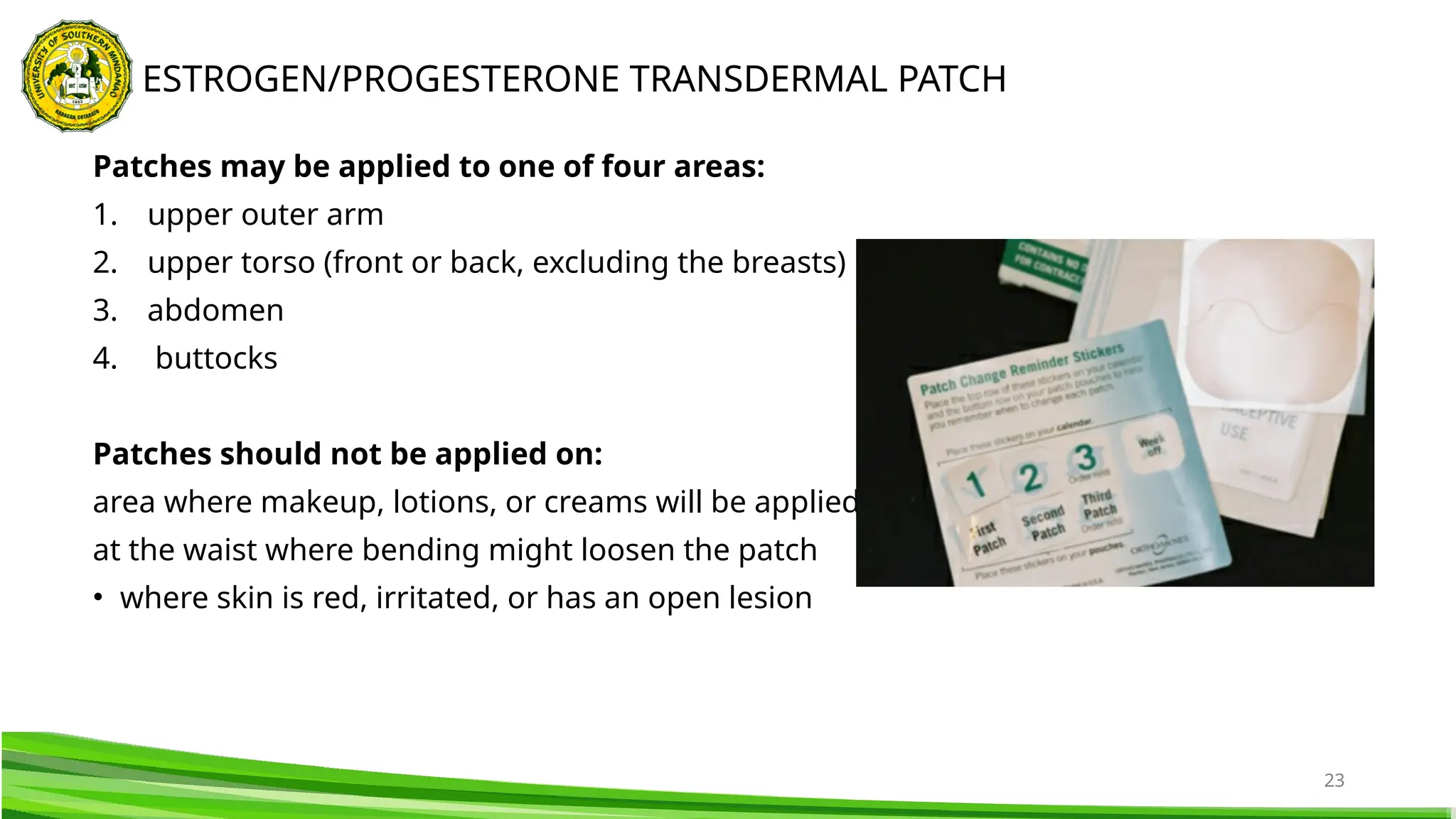
refersto patches that slowly but continuously release a combination of
estrogen and progesterone .
patches are applied each week for 3 weeks. No patch is applied the
fourth week. During the week on which the woman is patch free, a
menstrual flow will occur.
less effective in women who are obese
ESTROGEN/PROGESTERONE TRANSDERMAL PATCH
23.
23
Patches may beapplied to one of four areas:
1. upper outer arm
2. upper torso (front or back, excluding the breasts)
3. abdomen
4. buttocks
Patches should not be applied on:
area where makeup, lotions, or creams will be applied
at the waist where bending might loosen the patch
• where skin is red, irritated, or has an open lesion
ESTROGEN/PROGESTERONE TRANSDERMAL PATCH
24.
24
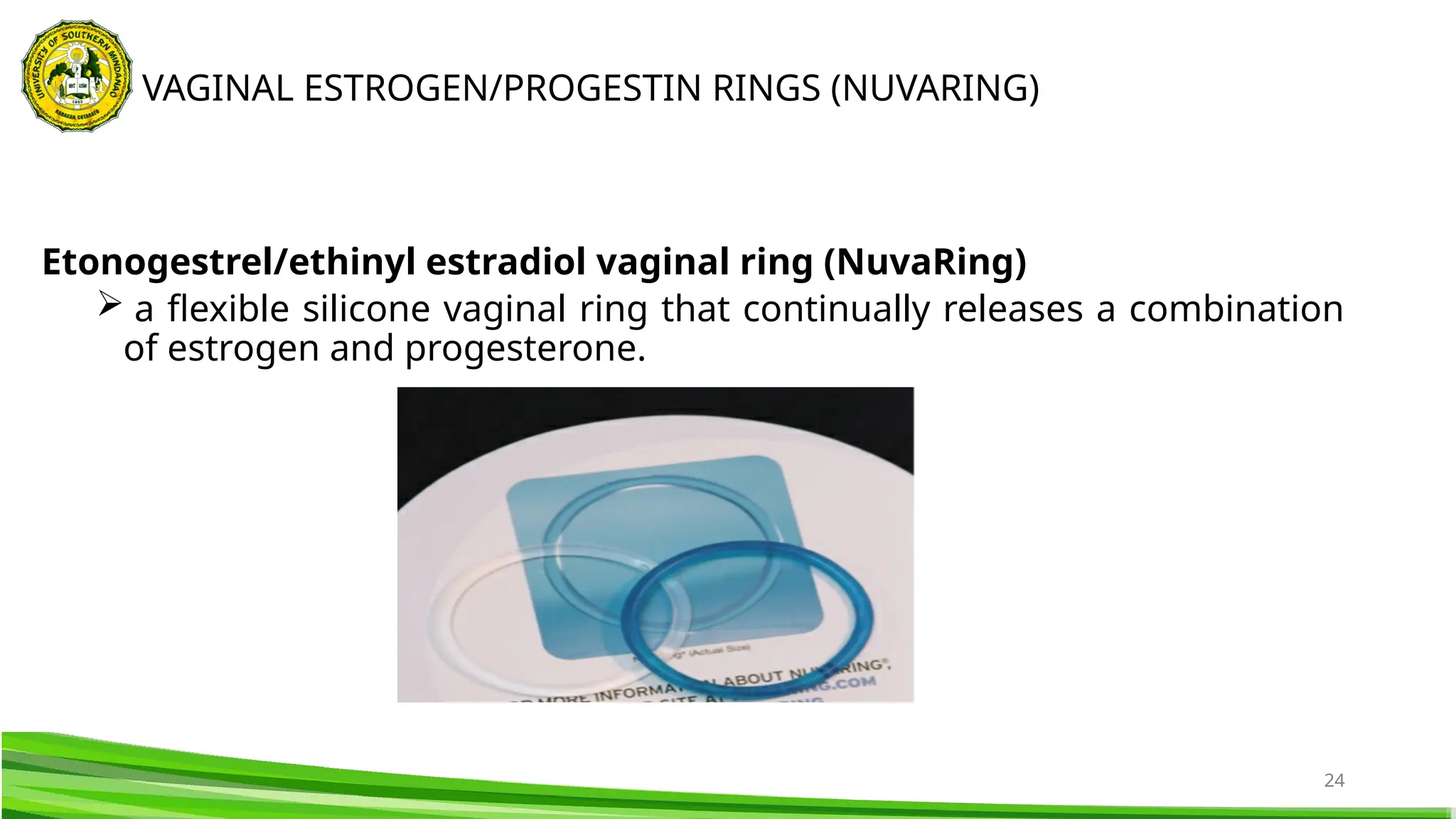
Etonogestrel/ethinyl estradiol vaginalring (NuvaRing)
a flexible silicone vaginal ring that continually releases a combination
of estrogen and progesterone.
VAGINAL ESTROGEN/PROGESTIN RINGS (NUVARING)
25.
25
A progestin-filled miniaturerod no bigger than a matchstick
Nexplanon - etonogestrel implant can be embedded just under the
skin on the inside of the upper arm where it will slowly release
progestin over a period of 3 years.
Side effects include:
weight gain
irregular menstrual cycle (heavy bleeding, spotting ,breakthrough
bleeding, and )
depression
• scarring at the insertion site, and need for removal
SUBDERMAL HORMONE IMPLANTS
Subdermal Hormone Implants
26.
26
Intramuscular (IM) Injections
Theinjection is made deep into a major muscle (buttocks, deltoid, or thigh) before
the fifth day after the beginning of a menstrual flow.
A single intramuscular injection of depot medroxyprogesterone acetate or
DMPA (Depo-Provera),
a progesterone given every 12 weeks,
The effectiveness rate of this method is almost 100%, making it an
increasingly popular contraceptive method .
Common side effects include:
headache
weight gain
depression
irregular or heavy menstrual cycles for 1 year
no menstrual bleeding after the first year.
• Increase in the risk for osteoporosis from a loss of bone mineral density
INTRAMUSCULAR (IM) INJECTIONS
27.
27
Different hormonal applicationshave different effects on pregnancy.
1. Estrogen/progestin combination pills (COCs)
2. discontinue taking any more pills if suspects she is pregnant
after women stop taking COCs, they may not be able to become pregnant
for 1 or 2 months, and possibly 6 to 8 months.
3.Progestin-impregnated rings or progestin patches.
If a woman using a progestin ring or patch becomes pregnant, the
progestin should have no effect on a developing fetus. After discontinuing
both methods, women become fertile again immediately.
HORMONAL CONTRACEPTION AND EFFECT ON PREGNANCY
28.
28
3. Subdermal implants
If a woman becomes pregnant while using a subdermal implant, the rod
can be removed; although, because the implant releases only progestin,
there should be no effect on the fetus.
-At the end of 3 years, when the implant is removed (a 5- to 10-minute
procedure), the woman will be fertile again almost immediately.
4. Depot medroxyprogesterone acetate (DMPA)
Should have no effect if a woman becomes pregnant.
Return to fertility is often delayed by 6 to 12 months
HORMONAL CONTRACEPTION AND EFFECT ON PREGNANCY
29.
29
Intrauterine device (IUD)
isa small plastic device that is inserted into the uterus through the vagina.
can be either hormonal or non-hormonal
almost 100% effective
prevent fertilization as well as to create a local sterile inflammatory
reaction that prevents implantation.
• The copper IUD can also be used within 5 days of unprotected sex as a form
of emergency contraception
INTRAUTERINE DEVICES
30.
30
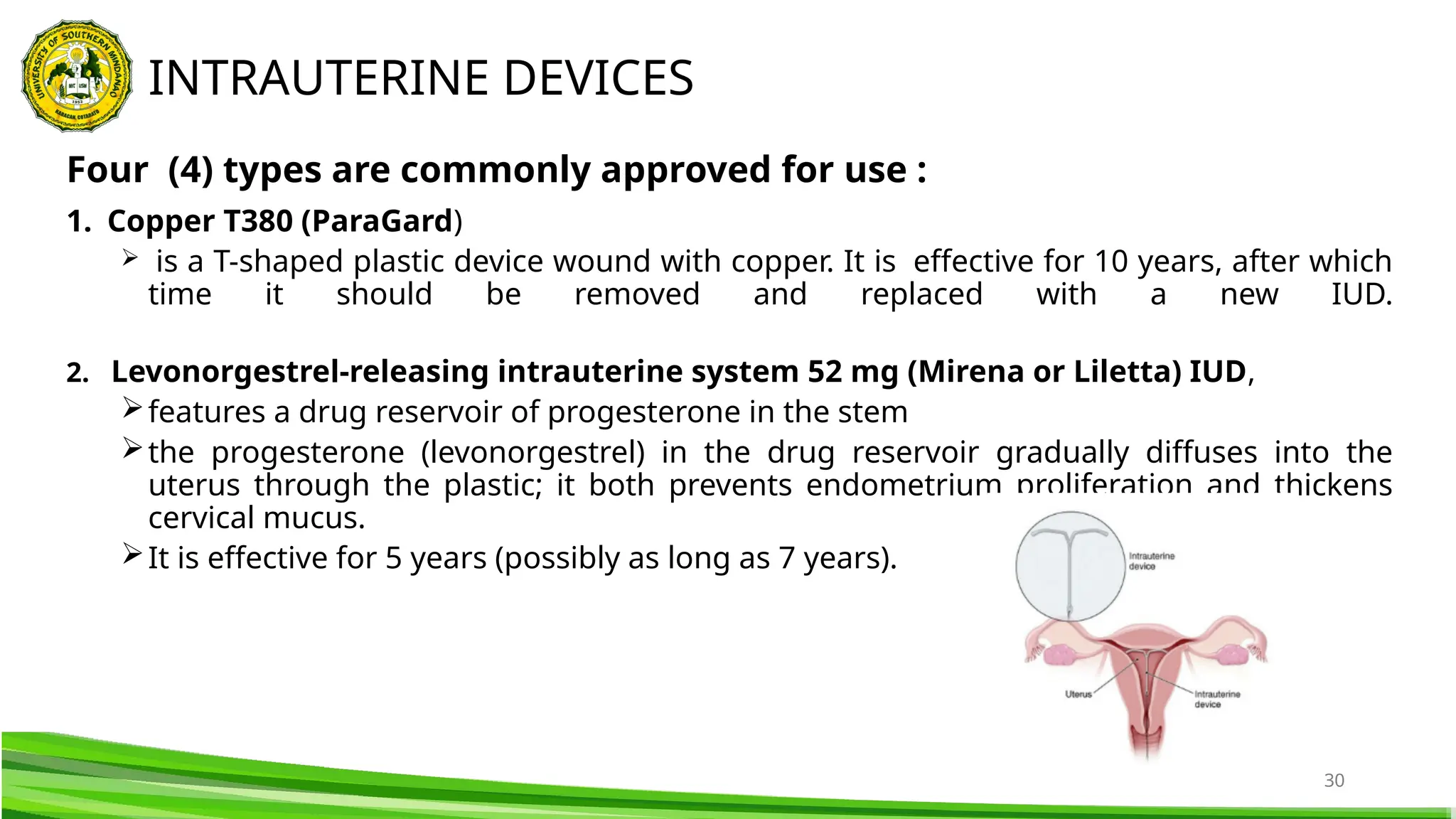
Four (4) typesare commonly approved for use :
1. Copper T380 (ParaGard)
is a T-shaped plastic device wound with copper. It is effective for 10 years, after which
time it should be removed and replaced with a new IUD.
2. Levonorgestrel-releasing intrauterine system 52 mg (Mirena or Liletta) IUD,
features a drug reservoir of progesterone in the stem
the progesterone (levonorgestrel) in the drug reservoir gradually diffuses into the
uterus through the plastic; it both prevents endometrium proliferation and thickens
cervical mucus.
It is effective for 5 years (possibly as long as 7 years).
INTRAUTERINE DEVICES
31.
31
3. Levonorgestrel-releasing intrauterinesystem 13.5 mg (Skyla)
IUD
has a lower dose of progesterone in the stem.
It works similarly to Mirena and is effective for 3 years.
4. Levonorgestrel-releasing intrauterine system 19.5 mg (Kyleena)
IUD
has a lower dose of progesterone in the stem as compared to Mirena
but higher than that of Skyla.
it is approved for 5 years and has a bleeding profile similar to
Mirena.
INTRAUTERINE DEVICES
32.
32
Surgical methods ofreproductive life planning often called
sterilization, includes tubal ligation for women and vasectomy for
me.
Many people choose these surgical methods because:
some of the most effective methods of contraception
involve no further costs
• should have no effect on sexual enjoyment
Surgical Methods of Reproductive Life Planning
33.
33
Vasectomy
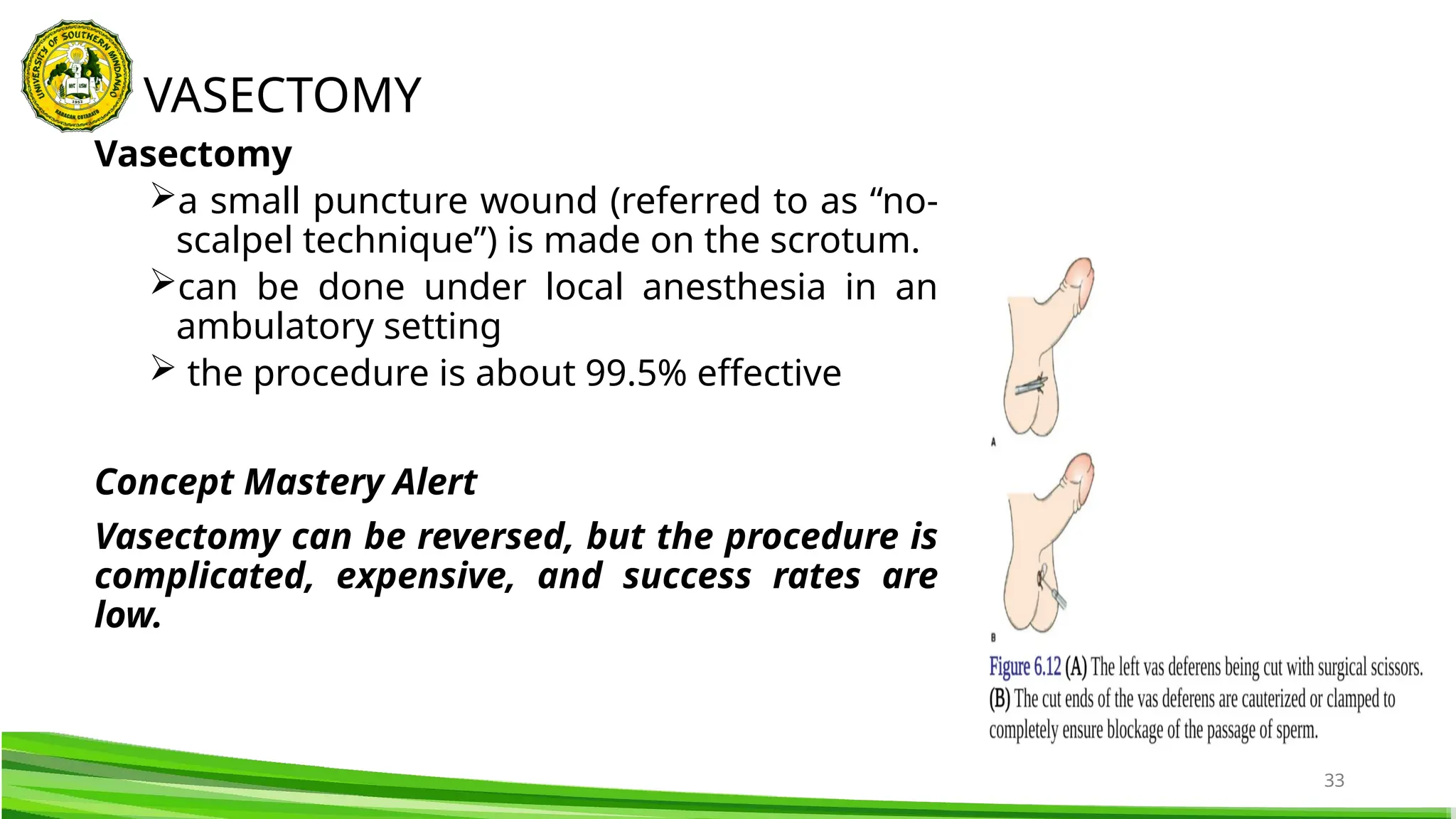
a small puncturewound (referred to as “no-
scalpel technique”) is made on the scrotum.
can be done under local anesthesia in an
ambulatory setting
the procedure is about 99.5% effective
Concept Mastery Alert
Vasectomy can be reversed, but the procedure is
complicated, expensive, and success rates are
low.
VASECTOMY
34.
34
TUBAL LIGATION
Tubal ligation
fallopian tubes are occluded by cautery, crushed, clamped, or blocked,
thereby preventing passage of both sperm and ova.
has a 99.5% effectiveness rate .
it also is associated with a decreased incidence of ovarian cancer.
Fimbriectomy
removal of the fimbria at the distal end of the fimbriae
Laparoscopy
is a surgical procedure where a small incision is made in the abdomen
for the purpose of viewing or performing surgery on the organs of the
pelvis or abdomen.
during a laparoscopic tubal ligation, a lighted laparoscope is inserted
through the incision.
35.
35
TUBAL LIGATION
Essure
newersystem
consists of a spring-loaded mechanism that releases a soft micro-insert
into the tube .
This procedure is preferred over the traditional surgical tubal ligation for
women who are very obese and by patients who would like to avoid a
surgical procedure through their abdomen.
Complications of Essure:
• persistent pelvic pain
• allergic reactions
• perforation of the fallopian tubes
• spontaneous expulsion of the device through the vagina
36.
36
Side Effects andContraindications of Essure:
an umbilical hernia or ureter or bowel perforation
vaginal spotting, intermittent vaginal bleeding
• severe lower abdominal cramping after tubal ligation—symptoms termed
posttubal ligation syndrome
Removal of the fallopian tubes appears to relieve these symptoms.
37.
37
EMERGENCY POSTCOITAL CONTRACEPTION
“Morning-afterpills,”
available for emergency post-coital contraception (EC), which is
needed after unprotected voluntary coitus or involuntary situations
such as rape.
Two (2) types are most common:
1. High-dose progestin-based pills
2. Insertion of a copper IUD
38.
38
Elective Termination ofPregnancy
Elective termination of pregnancy
is a procedure performed by a knowledgeable healthcare provider to end a
pregnancy before fetal viability.
also referred to as therapeutic, medical, or induced abortions.
Reasons that elective terminations are most often requested are for a pregnancy
that:
• Threatens a woman’s life, such as pregnancy in a woman with class IV heart disease
• Involves a fetus found on amniocentesis to have a chromosomal defect
• Is unwanted because it is the result of rape or incest
• Is unwanted because a woman chooses not to have a child at this time in her life for such
reasons as being too young, not wanting to be a single parent, wanting no more
children, having financial difficulties, or from failed contraception
39.
39
MEDICALLY INDUCED TERMINATION
Mifepristone(RU-486 or Mifeprex) is a progesterone antagonist that blocks
the effect of progesterone, preventing implantation of the fertilized ovum
and therefore causing the pregnancy to be lost.
To Medically induced termination of pregnancy is contraindicated if a
woman has:
• A confirmed or suspected ectopic pregnancy (only methotrexate is used
and the woman needs additional follow-up)
• An IUD in place
• A serious medical condition such as chronic adrenal failure
• A history of current long-term systemic corticosteroid therapy
• A history of allergy to mifepristone, misoprostol, or other prostaglandins
• A hemorrhagic disorder or is taking concurrent anticoagulant therapy
40.
40
MEDICALLY INDUCED TERMINATION
Advantagesof medically induced over surgical termination include:
- Decreased risk of damage to the uterus through instrument insertion
- Decreased use of anesthesia necessary for surgically performed
procedures.
Complications of medically induced termination include:
nausea and vomiting, diarrhea, severe uterine cramping, incomplete
abortion, possibility of prolonged bleeding.
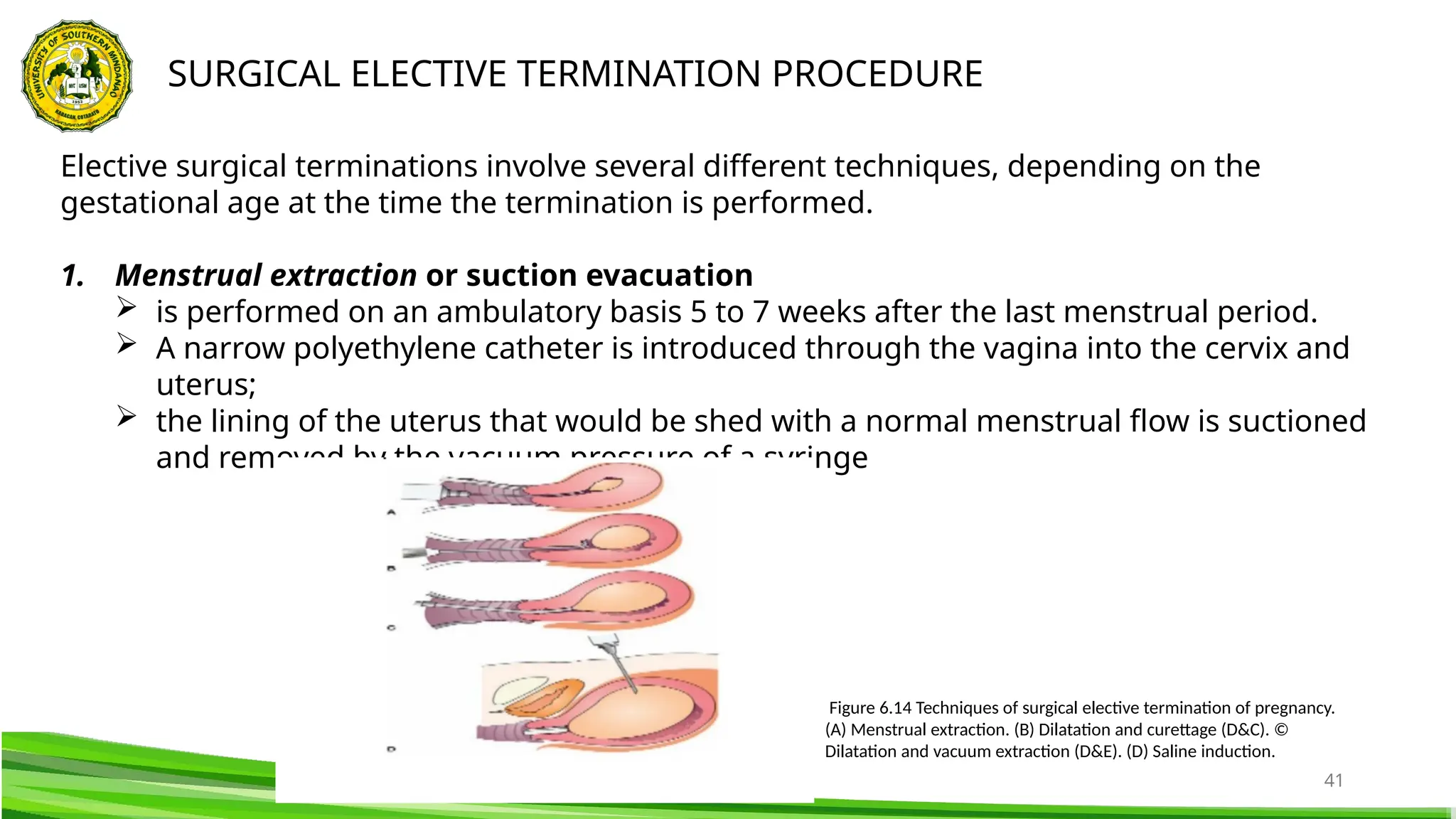
42
SURGICAL ELECTIVE TERMINATIONPROCEDURE
2. Dilatation and Curettage (D&C)
is used when the gestational age of a pregnancy is still less than 13 weeks.
done in an ambulatory setting using a paracervical anesthetic block that does not
eliminate all pain but limits what the woman experiences to cramping and a feeling of
pressure.
the cervix is dilated and the uterus is scraped clean with a curette, removing the zygote
and trophoblast cells with the uterine lining .
3. Dilatation and vacuum extraction (D&E)
is used with terminations between 12 and 16 weeks of gestation.
done in either an inpatient or ambulatory setting.
4. Prostaglandin or a saline induction
is used if a pregnancy is between 16 and 24 weeks
is done on an inpatient or same-day surgery basis.
43.
43
SURGICAL ELECTIVE TERMINATIONPROCEDURE
Hysterectomy
removal of the fetus by surgical intervention
is similar to a cesarean birth and is performed if the gestational age of
the pregnancy is more than about 20 to 24 weeks.
Partial birth abortion
a surgical technique formerly used during the last 3 months of
pregnancy if the fetus was discovered to have a congenital anomaly
that would be incompatible with life or would result in a severely
compromised child.
49
GENETICS
Genetics is thestudy of genes, genetic variation, and heredity in organisms.
Genetic Disorders
*can be passed from one generation to the next.
* results from mutation in the structure of a gene or chromosomes.
*can occur in demographic group
*due to occupational hazard
Cytogenetics- the study of chromosomes by light microscopy and the
method by which chromosomal aberration are identified.
50.
50
GENETICS
Nature of inheritance
Genes– are the basic units pf heredity that determine both the physical and
cognitive characteristics of people.
Phenotype- outward appearance or the expression of genes.
Genotype – the actual gene composition
Genome- the complete set of genes present
51.
51
GENETICS
Mandelian inheritance: Dominantand recessive patterns
Homozygous - has two like genes for a trait, two healthy genes.
Heterozygous – has differ genes, a healthy and unhealthy genes.
Genetic Counseling and Testing
• Provide concrete, accurate information about the process of
inheritance and inherited disorders.
• Reassure people who are concerned their child may inherit a
particular disorder that the disorder will not occur.
• Allow people who are affected by inherited disorders to make
informed choices about future reproduction.
• Allow people to pursue potential interventions that may exist, such as
fetal surgery.
• Allow families to begin preparation for a child with special needs.
52.
52
GENETICS
Assessment for GeneticDisorders
History
- a chief tool in discovering transmitted disorders.
Physical assessment
-a careful assessment of family members
Screening and diagnostic Testing
- test are available to provide clues or to diagnose disorders.
Reproductive alternative
*Contraceptive
*Adoption
*Use of a surrogate mother
*Diagnosis of disorder during pregnancy
*Termination of a pregnancy
*Acceptance that cannot conceive a child
53.
53
GENETICS
Assisted reproductive technology(ART)
- refers to medical procedures that aim to achieve pregnancy. These
complex treatments involve influencing gametes, or eggs and sperm, to
increase the chances of fertilization.
Type of ART benefits complication
IVF – involves a doctor extracting eggs and fertilizing them in a special lab.
Specialists can combine this with an embryo transfer (IVF-ET) and transfer
the resulting embryos into a person’s uterus.
• an increased chance of fertilization and pregnancy.
• multiple pregnancy
• side effects from fertility
• drugs ectopic pregnancy
54.
54
GENETICS
Types of ART
•Invitro fertilization-embryo transfer (IVF)
•Intrauterine Insemination (IUI)
•Intracytoplasmic Sperm Injection (ICSI)
•Frozen embryo transfer (FET)
55.
55
GENETICS
Infallopian tensfer -use laparoscopic surgery to deliver the gametes
directly into the fallopian tube. Some people may choose this method for
religious reasons, or their insurance may only cover this type of ART
• are typically more expensive than IVF.
• due to the higher costs and risks of this type of ART, specialists rarely use
these procedures,
• there is not much data available on their success rates Frozen embryo
transfer (FET). It involves thawing previously IVF frozen embryos and
inserting them into a person’s uterus.
• is as safe as using fresh embryos in treatment.
• suggests an increased risk of preterm birth
• not all frozen embryos survive the thawing out process.
56.
56
GENETICS
Intracytoplasmic sperm injection(ICSI) is a procedure that specialists can
perform alongside IVF to help fertilize an egg. An embryologist, or embryo
specialist, uses a tiny needle to inject a single
•may be an effective method of ART for people with sperm-related infertility.
•The procedure may damage some or all of the eggs.
•The egg might not grow into an embryo even after being injected with
sperm.
57.
57
GENETICS
Future possibilities
Stem cellresearch is looking at the possibility that an immature cells from a
healthy embryo could be implanted into an embryo with a known abnormal
genetic make up
Designer baby and its ethical implications
The term “designer baby” refers to a baby whose genes have been artificially
selected to produce specific traits. This process can be done using a variety
of methods of gene editing.
Some people believe that designer babies are morally wrong because they
involve manipulating the genes of a human embryo.
58.
58
GENETICS
Social inequality, asthose with the financial resources to access genetic
engineering could create a class of “genetically enhanced” individuals with
significant advantages over those who cannot afford the technology.
• Issue of informed consent. Since the individuals being genetically
modified are embryos or even sperm and egg cells, they cannot provide
consent for the procedures. This raises questions about the right of
parents to make potentially life-altering decisions on behalf of their future
children, particularly when it comes to non-medical enhancements.
59.
59
GENETICS
When scientists editone strand of DNA, other strands or genes can be altered,
and these alterations can carry on and affect future generations
This also bring up the idea that with diseases like autism spectrum disorder or
OCD where there can be cases where it doesn’t affect the person very much or
is severe. If gene editing CRISPR technology would be allowed to edit these,
people basically saying people with these diseases are undesirable and they
need to be “fixed” (Bergman).
• There are also fears that designer babies could be used to create
“superhumans” who are stronger, faster, and smarter than the rest of us. It
could lead to a new form of eugenics, where only the wealthy can afford to
create genetically-modified children, further exacerbating social inequality.
60.
60
GENETICS
Legal and ethicalaspects of Genetic Screening and Counsel
•Participation by couples or individuals in genetic screening must be
elective.
•People desiring genetic screening must sign an informed consent for
the procedure.
• Results must be interpreted correctly, yet provided to the individuals
as quickly as possible.
•The results must not be withheld from the individuals and must be
given only to those persons directly involved.
• After genetic counseling, persons must not be coerced to undergo
procedures such as abortion or sterilization
61.
Genetic engineering
through geneticengineering, genetic disorders may also be fixed by replacing
the faulty gene with a functional gene.
• Testing for traits unrelated to disease
• Creating better athletes with Gene doping
• Creating designer babies
Genome editing
also called gene editing is a group of technologies that give scientists the
ability to change an organism's DNA.
CRISPR-Cas9
was adapted from a naturally occurring genome editing system that bacteria
use as an immune defense.
Insert Running Title 61
62.
Genetics
Common Chromosomal DisordersResulting in Physical or Cognitive
Developmental Disorders
1. TRISOMY 13 SYNDROME (47XY13+ OR 47XX13+)
2. TRISOMY 18 SYNDROME (47XY18+ OR 47XX18+)
3. CRI-DU-CHAT SYNDROME (46XX5P- OR 46XY5P-)
4. TURNER SYNDROME (45Χ0)
5. KLINEFELTER SYNDROME (47XXY)
6. FRAGILE X SYNDROME (46XY23Q-)
7. DOWN SYNDROME (TRISOMY 21) (47XY21+ OR 47XX21+)
8. CHILDHOOD TUMORS Insert Running Title 62
63.
Genetics
Filipino celebrities whohad children via IVF:
•Joel Cruz
•Vicky Belo And Hyden Kho
•Korina Sanchez and Mar Roxas
•Alice Dixson
Insert Running Title 63
64.
Alternative Methods ofChildbirth
Leboyer Method
Hydrotherapy and Water Birth Method
Unassisted Birthing Method
Hypnobirthing
Home Birth
• Birth Centers
Insert Running Title 64
65.
Leboyer Birth Method
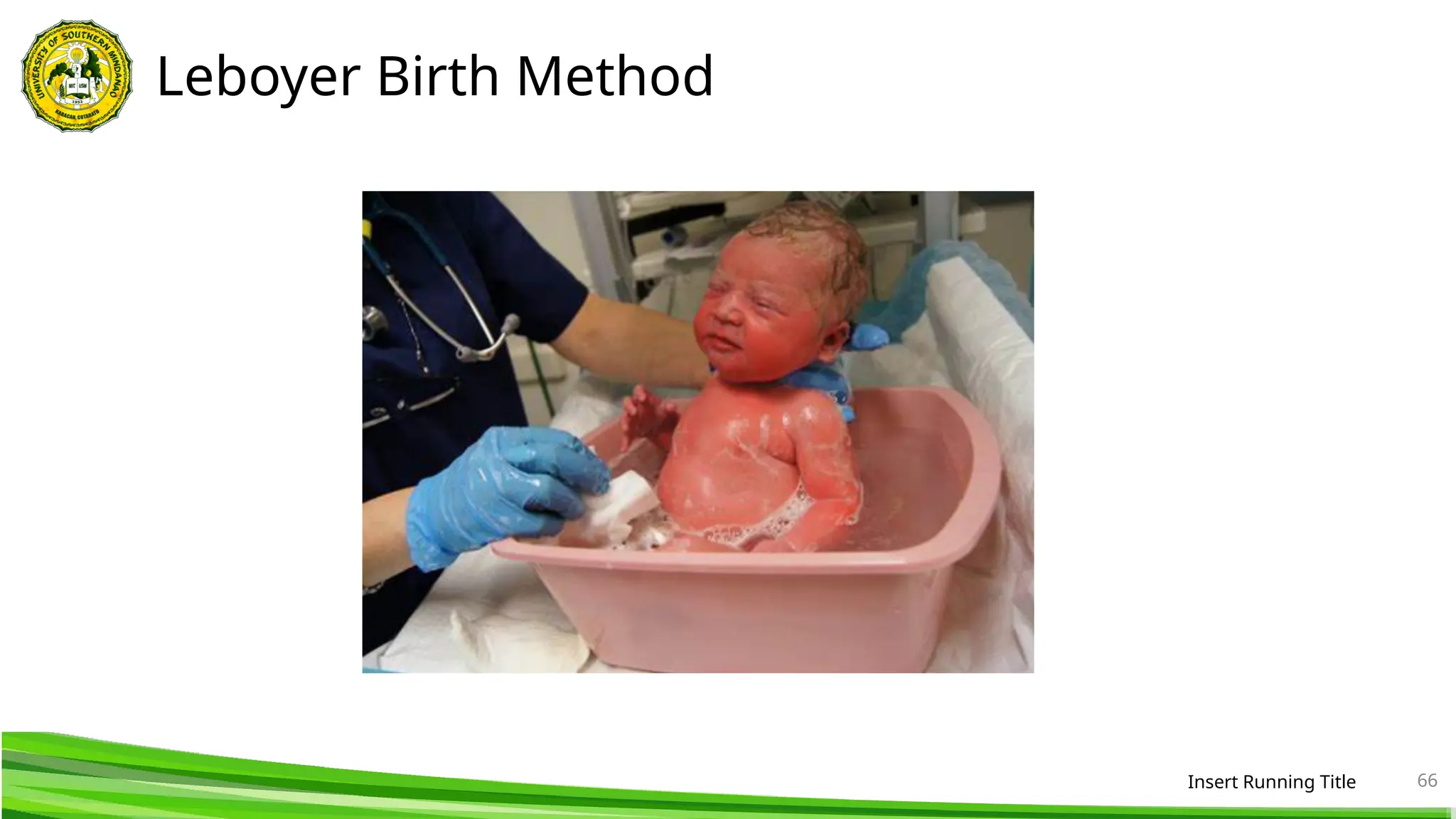
TheLeboyer Method, developed by French obstetrician
Frédérick Leboyer, emphasizes creating a peaceful and gentle
environment for both the baby and mother during birth.
Dim lighting, soft music, a warm room temperature, the cord is
cut late, and the infant is placed immediately after birth into
warm bath water.
Insert Running Title 65
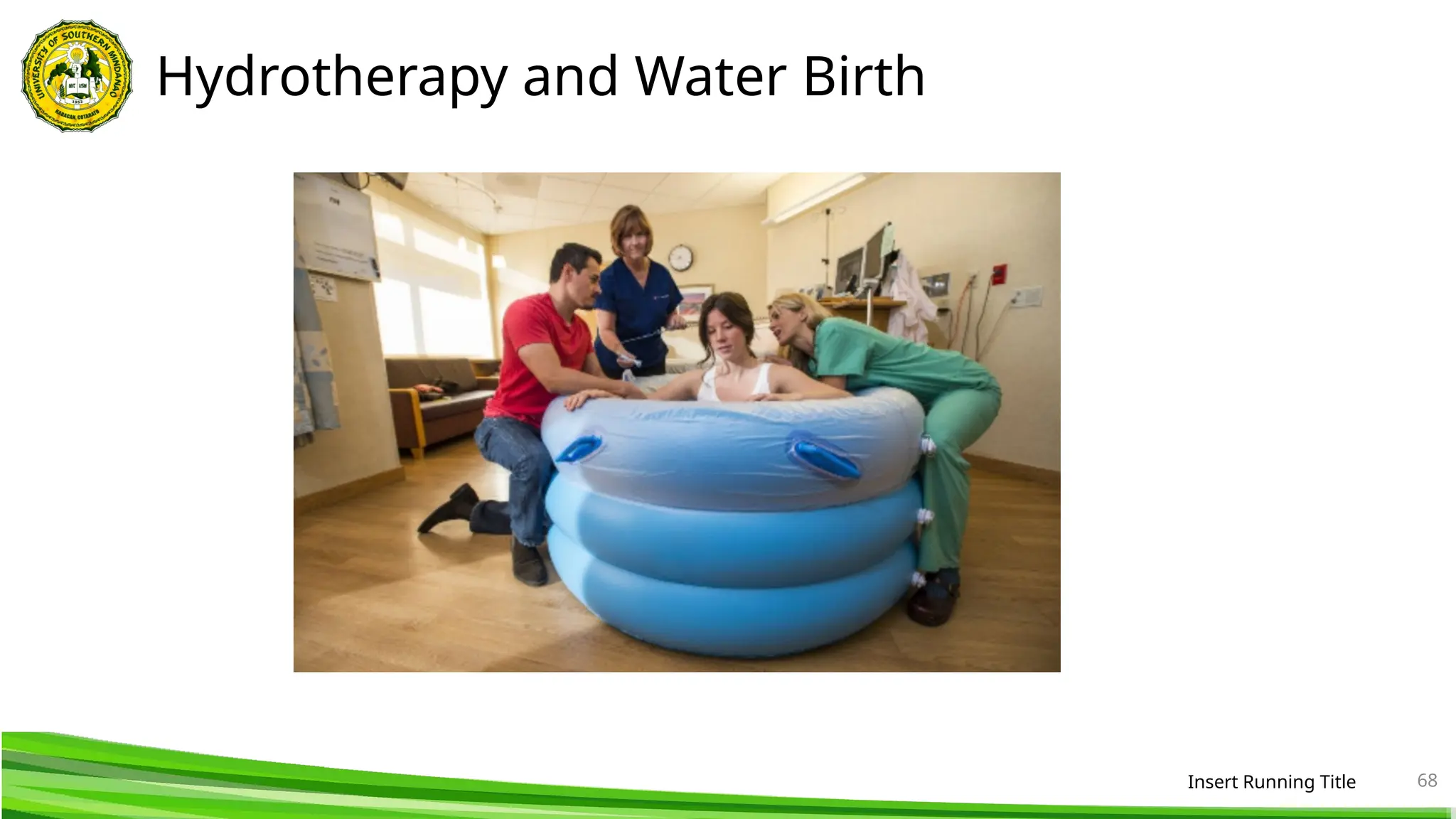
Hydrotherapy and WaterBirth
Hydrotherapy and Water Birth involves the use of warm
water during labor and birth, often in a birthing tub or pool.
Water helps relieve pain, easier movement, and can contribute
to a more relaxed experience.
Insert Running Title 67
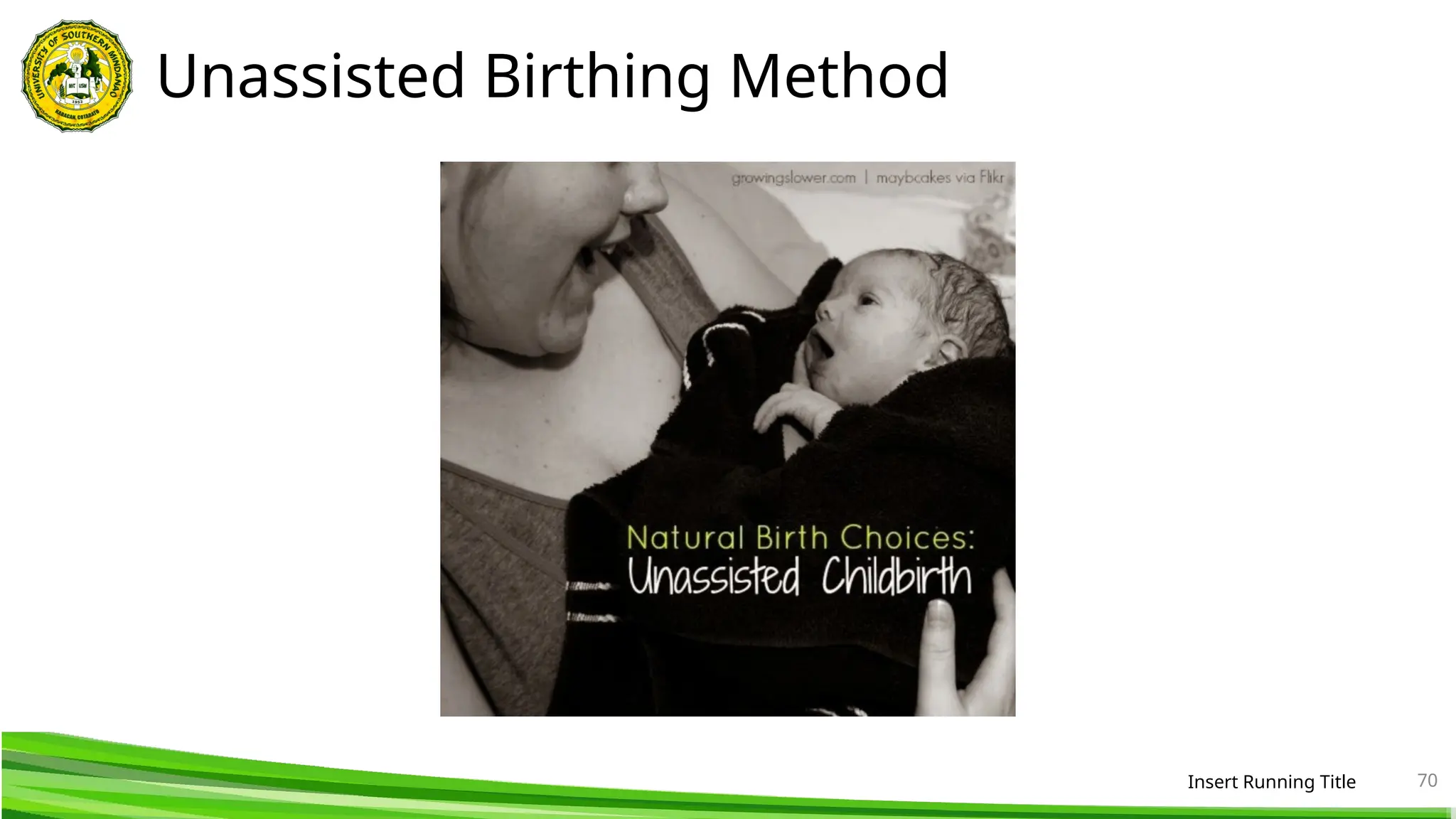
Unassisted Birthing Method
UnassistedBirthing Method. Free birthing, or couples birth,
refers to women giving birth without healthcare provider
supervision (Snowden, Tilden, Snyder, et al., 2015).
It differs from home birth because, using this technique, a
woman learns pregnancy care from reading books or articles
found on the Internet and then arranges to have her child birth
at home, perhaps accompanied by her family or friends, but
without healthcare supervision.
Insert Running Title 69
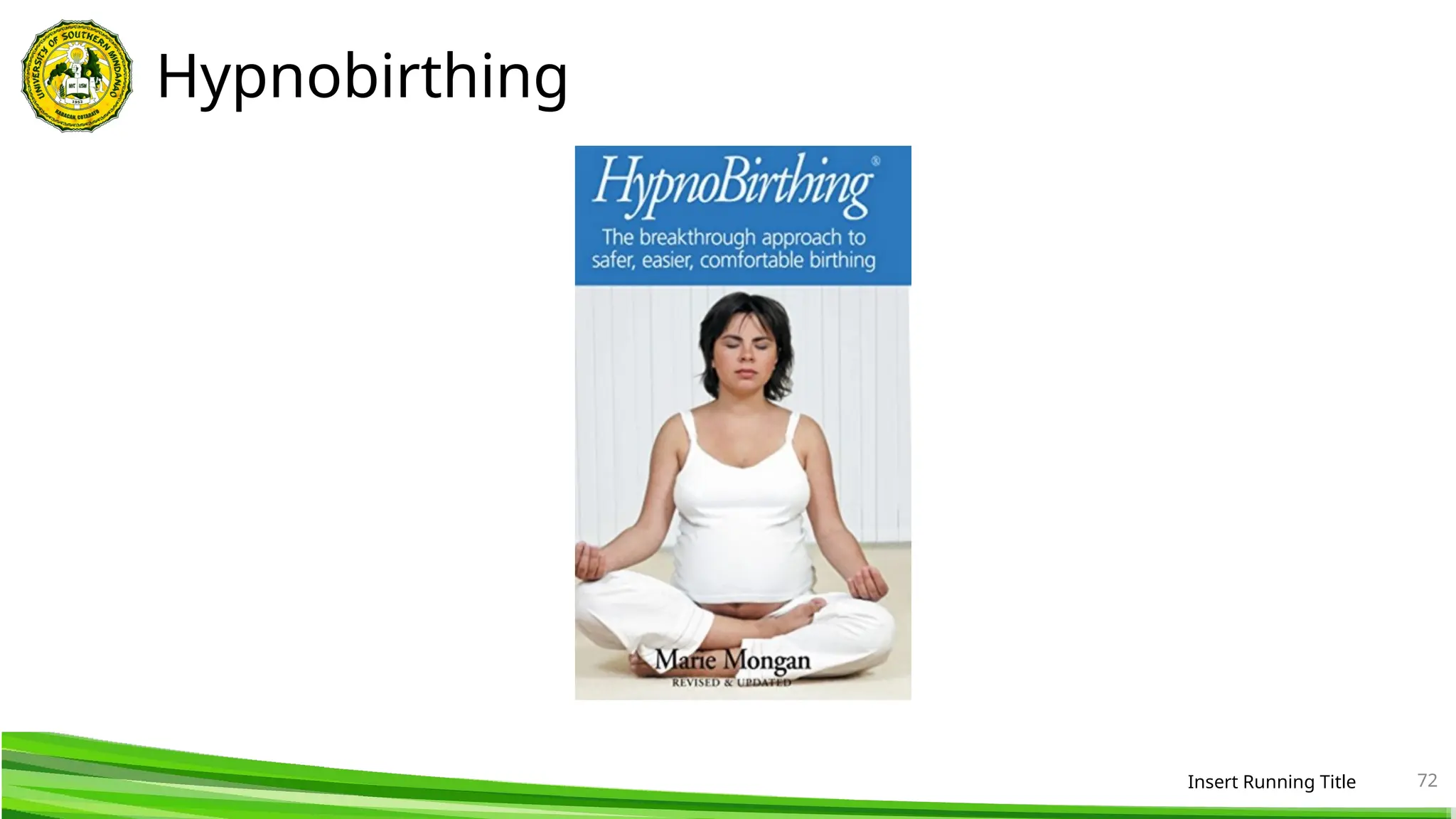
Hypnobirthing
Hypnobirthing, expectant mothersemploy relaxation
techniques, breathing exercises, and self-hypnosis to manage
pain and fear during labor. This approach aims to create a calm
and peaceful birthing atmosphere, helping women to actively
participate in their birthing process.
Insert Running Title 71
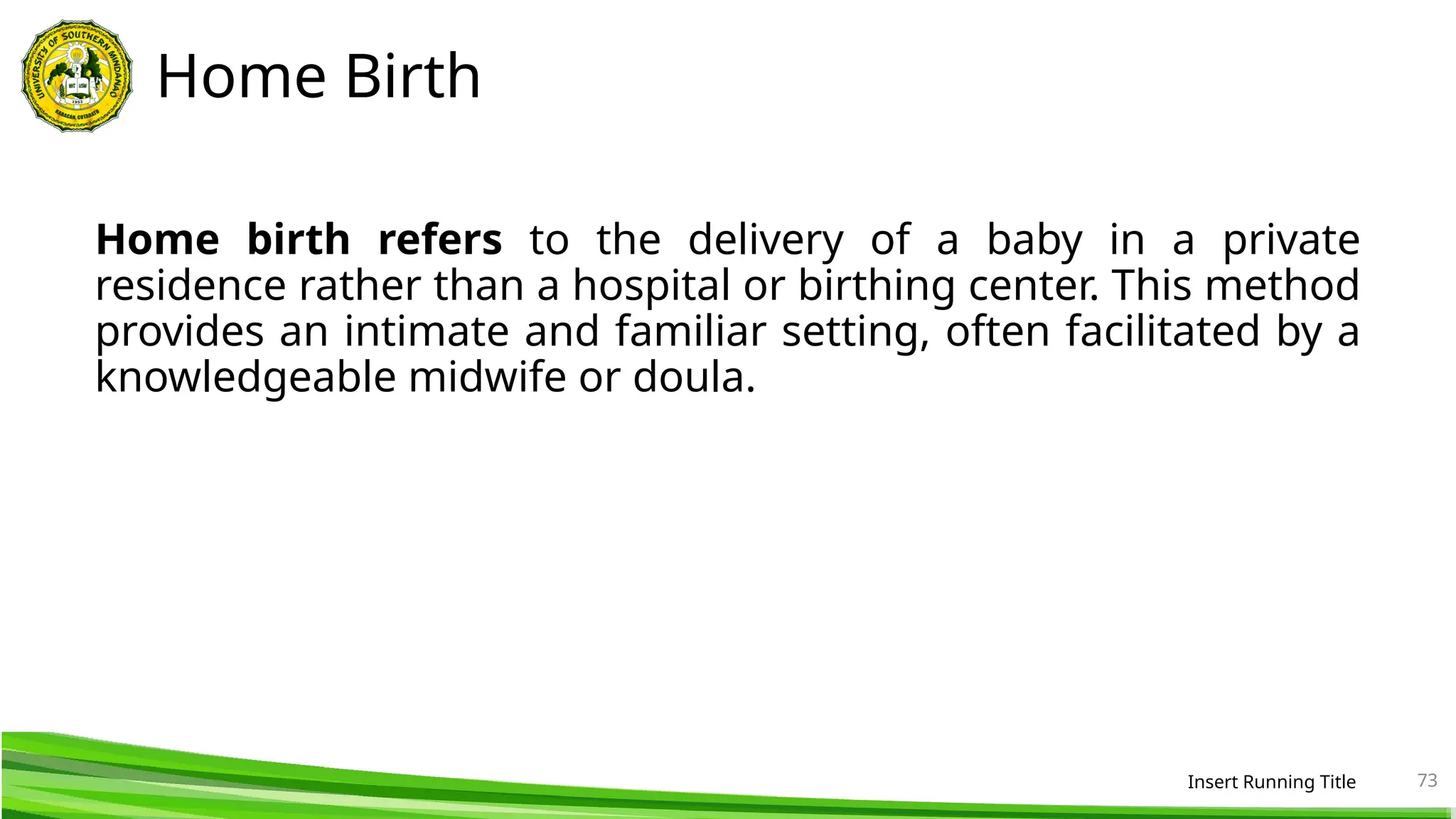
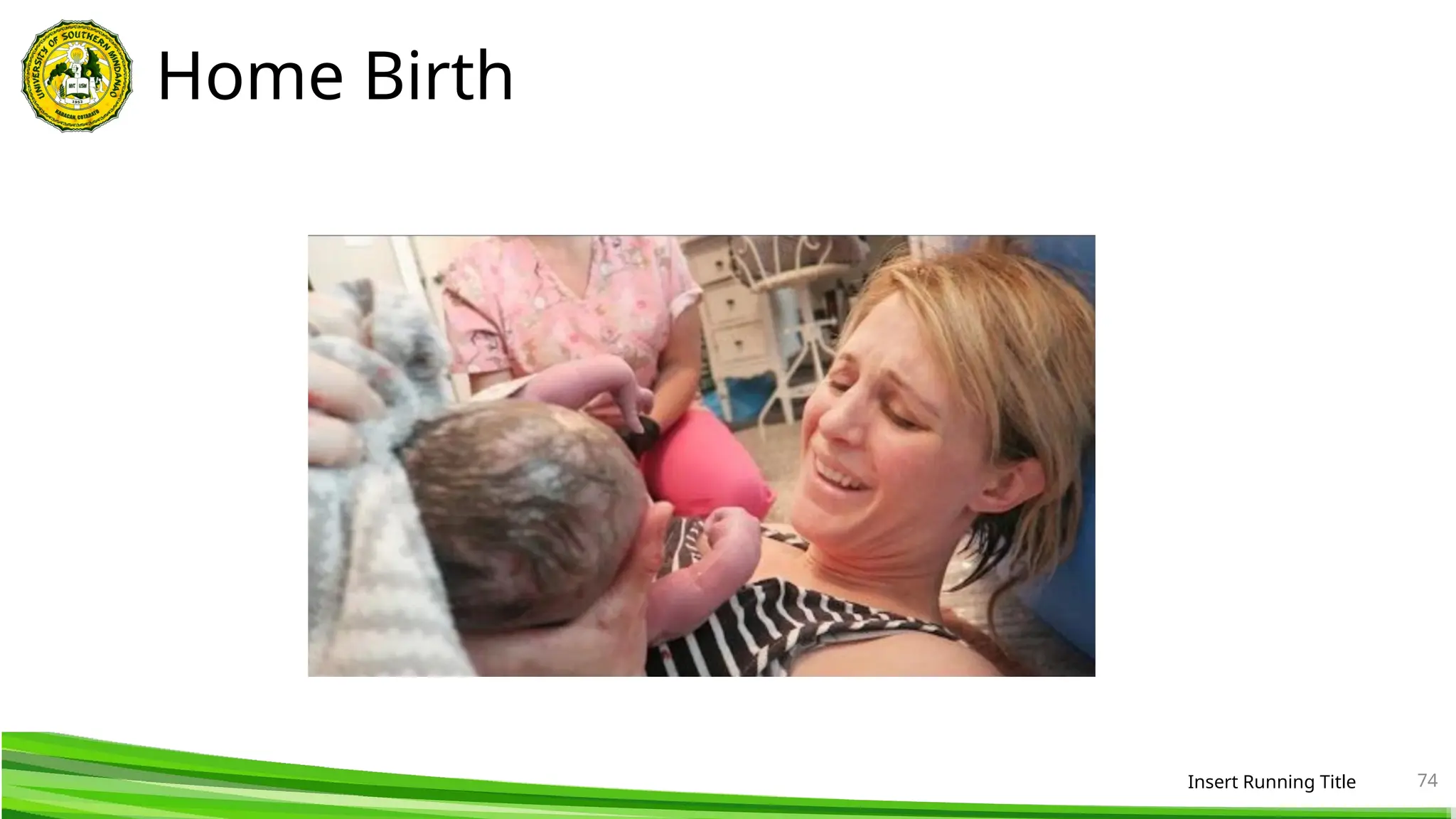
Home Birth
Home birthrefers to the delivery of a baby in a private
residence rather than a hospital or birthing center. This method
provides an intimate and familiar setting, often facilitated by a
knowledgeable midwife or doula.
Insert Running Title 73
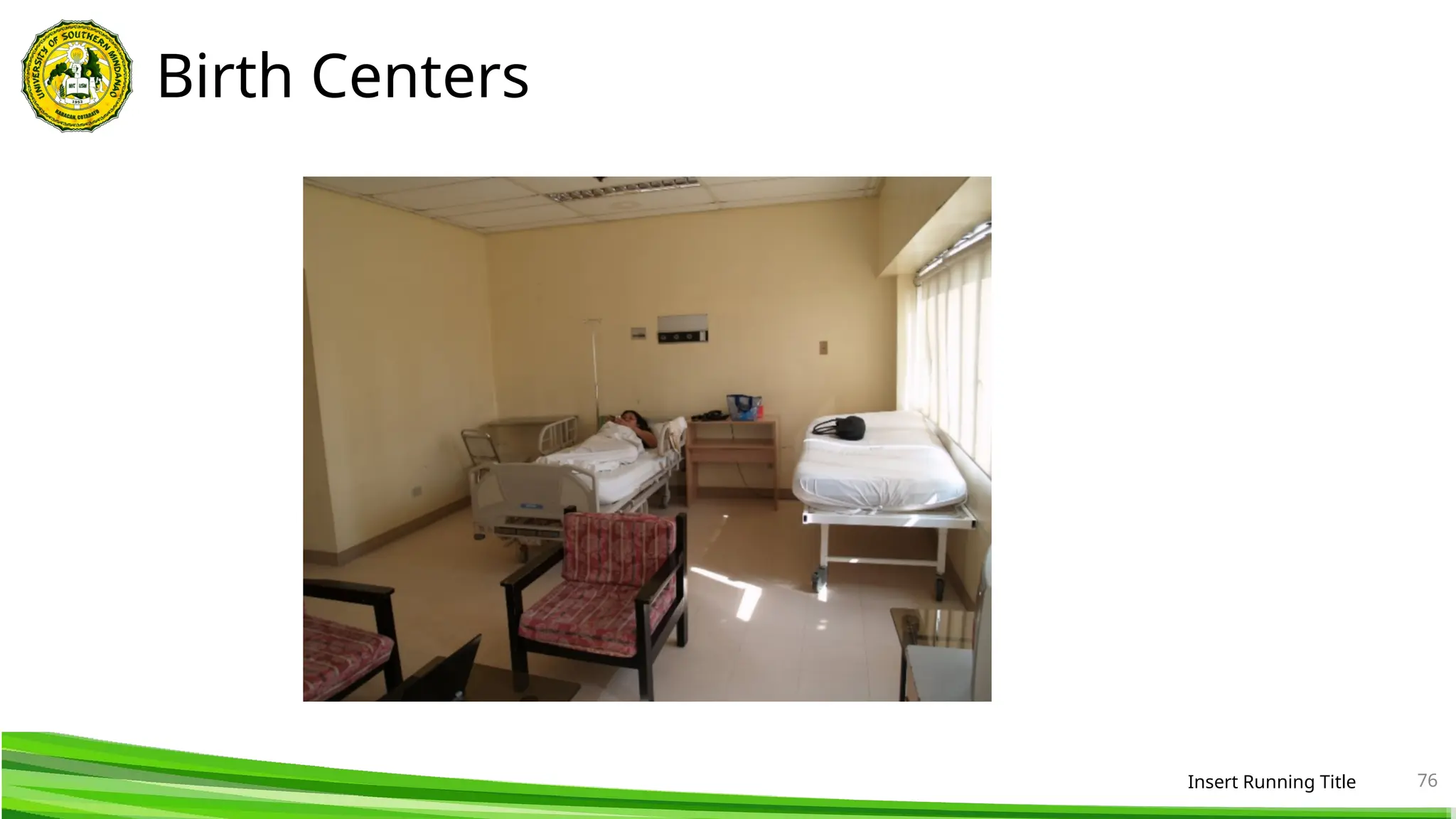
Birth Centers
Birth centersoffer a middle ground between hospital births
and home births. They are equipped with medical facilities and
staff, yet they provide a homelike ambiance for the birthing
process.
Insert Running Title 75









![METHODS_OF_CONTRACEPTION_&_EMERGENCY_CONTRACEPTION[1].pptx](https://cdn.slidesharecdn.com/ss_thumbnails/methodsofcontraceptionemergencycontraception1-250103093523-49b30cae-thumbnail.jpg?width=640&height=640&fit=bounds)


![Understanding Parkinson’s Disease: Causes, Symptoms, and Treatment [2025]](https://cdn.slidesharecdn.com/ss_thumbnails/understandingparkinson-251208102525-80ba3223-thumbnail.jpg?width=640&height=640&fit=bounds)


