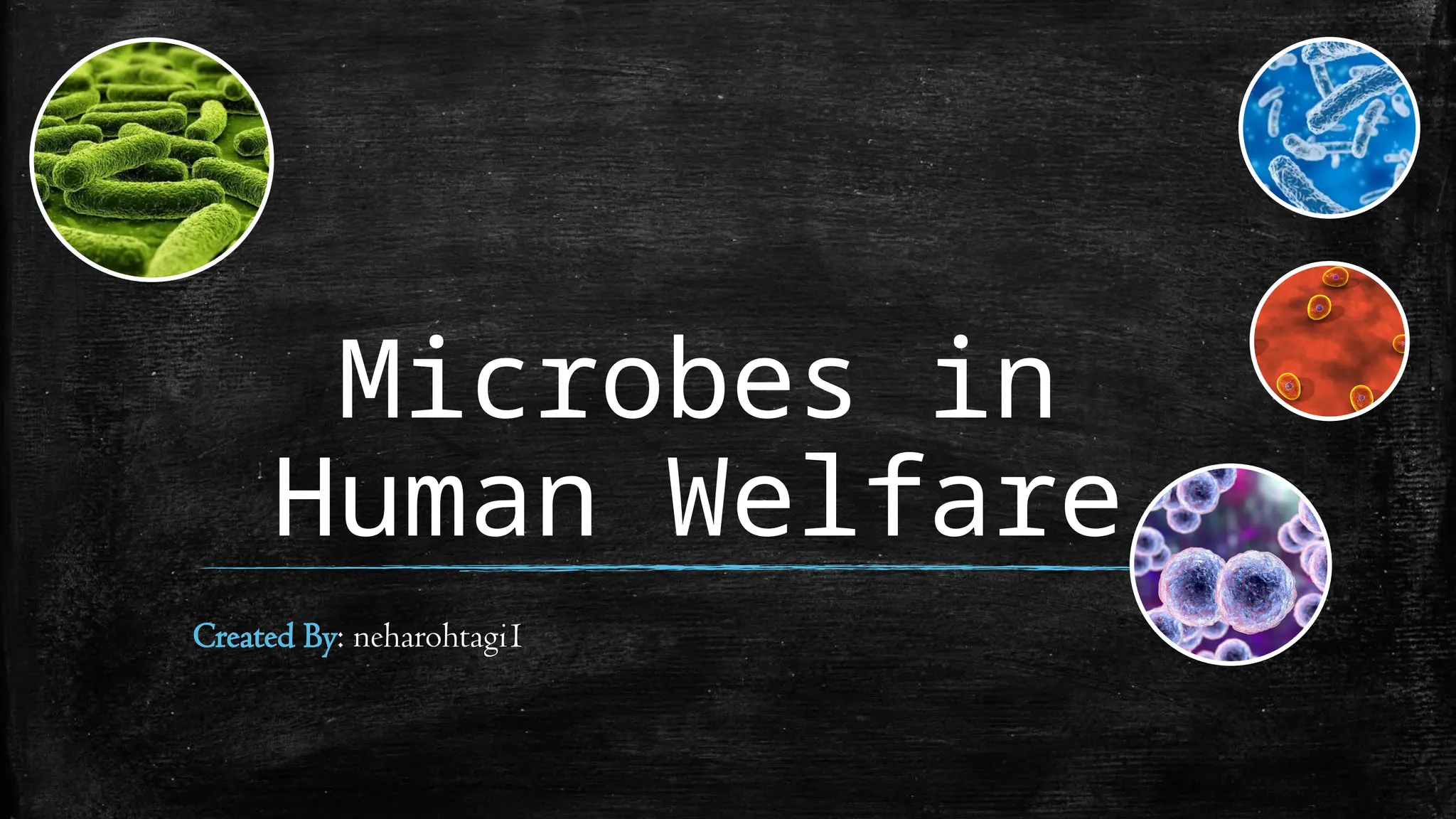
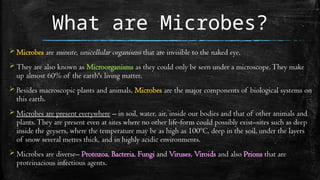
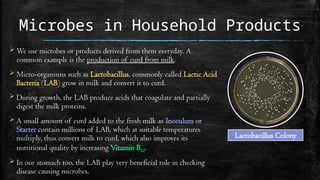
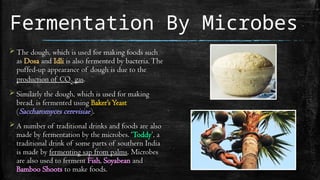
Microbes in
Human Welfare
Created By: neharohtagi1
What are Microbes?
 Microbes are minute, unicellular organisms that are invisible to the naked eye.
 They are also known as Microorganisms as they could only be seen under a microscope.They make
up almost 60% of the earth's living matter.
 Besides macroscopic plants and animals, Microbes are the major components of biological systems on
this earth.
 Microbes are present everywhere – in soil, water, air, inside our bodies and that of other animals and
plants.They are present even at sites where no other life-form could possibly exist–sites such as deep
inside the geysers, where the temperature may be as high as 100ÂșC, deep in the soil, under the layers
of snow several metres thick, and in highly acidic environments.
 Microbes are diverse– Protozoa, Bacteria, Fungi and Viruses, Viroids and also Prions that are
proteinacious infectious agents.
Microbes in Household Products
 We use microbes or products derived from them everyday. A
common example is the production of curd from milk.
 Micro-organisms such as Lactobacillus, commonly called Lactic Acid
Bacteria (LAB) grow in milk and convert it to curd.
 During growth, the LAB produce acids that coagulate and partially
digest the milk proteins.
 A small amount of curd added to the fresh milk as Inoculum or
Starter contain millions of LAB, which at suitable temperatures
multiply, thus convert milk to curd, which also improves its
nutritional quality by increasing Vitamin B12.
 In our stomach too, the LAB play very beneficial role in checking
disease causing microbes.
Lactobacillus Colony
Fermentation By Microbes
 The dough, which is used for making foods such
as Dosa and Idli is also fermented by bacteria.The
puffed-up appearance of dough is due to the
production of CO2 gas.
 Similarly the dough, which is used for making
bread, is fermented using Baker’sYeast
(Saccharomyces cerevisiae).
 A number of traditional drinks and foods are also
made by fermentation by the microbes. ‘Toddy’, a
traditional drink of some parts of southern India
is made by fermenting sap from palms. Microbes
are also used to ferment Fish, Soyabean and
Bamboo Shoots to make foods.
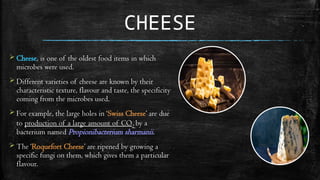
CHEESE
 Cheese, is one of the oldest food items in which
microbes were used.
 Different varieties of cheese are known by their
characteristic texture, flavour and taste, the specificity
coming from the microbes used.
 For example, the large holes in ‘Swiss Cheese’ are due
to production of a large amount of CO2 by a
bacterium named Propionibacterium sharmanii.
 The ‘Roquefort Cheese’ are ripened by growing a
specific fungi on them, which gives them a particular
flavour.
Microbes in Industries
 Even in industry, microbes are used to synthesise a number of products valuable to human beings.
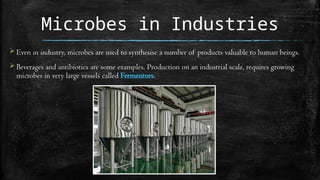
 Beverages and antibiotics are some examples. Production on an industrial scale, requires growing
microbes in very large vessels called Fermentors.
Fermented Beverages
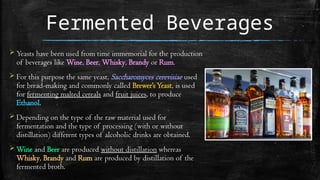
 Yeasts have been used from time immemorial for the production
of beverages like Wine, Beer, Whisky, Brandy or Rum.
 For this purpose the same yeast, Saccharomyces cerevisiae used
for bread-making and commonly called Brewer’sYeast, is used
for fermenting malted cereals and fruit juices, to produce
Ethanol.
 Depending on the type of the raw material used for
fermentation and the type of processing (with or without
distillation) different types of alcoholic drinks are obtained.
 Wine and Beer are produced without distillation whereas
Whisky, Brandy and Rum are produced by distillation of the
fermented broth.
Antibiotics
Antibiotics produced by microbes are
regarded as one of the most significant
discoveries of the 20th
century and have
greatly contributed towards the welfare
of the human society.
Anti is greek word that means ‘Against’
and bio means ‘Life’, which means
‘Against Life’ (of pathogens); whereas
for human beings, it’s ‘Pro Life’ and not
against it.
Antibiotics are chemical substances,
which are produced by some microbes
and can kill or retard the growth of
other (disease-causing) microbes.
Alexander Fleming while working on
Staphylococci, once observed a mould
growing in one of his unwashed culture
plates around which bacteria could not
grow. He found out that it was due to a
chemical produced by the mould called
Penicillium notatum.
Its full potential as an effective
antibiotic was established later by
Ernest Chain and Howard Florey. It
was extensively used to treat American
soldiers wounded in WorldWar II.
Fleming, Chain and Florey were
awarded the Nobel Prize in 1945, for
this discovery.
Antibiotics have greatly improved our
capacity to treat deadly diseases such as
Plague, Whooping Cough (kali khansi),
Diphtheria (gal ghotu) and Leprosy
(kusht rog), which used to kill millions
all over the globe.
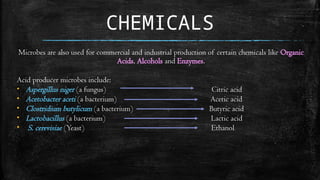
CHEMICALS
Microbes are also used for commercial and industrial production of certain chemicals like Organic
Acids, Alcohols and Enzymes.
Acid producer microbes include:
‱ Aspergillus niger (a fungus) Citric acid
‱ Acetobacter aceti (a bacterium) Acetic acid
‱ Clostridium butylicum (a bacterium) Butyric acid
‱ Lactobacillus (a bacterium) Lactic acid
‱ S. cerevisiae (Yeast) Ethanol
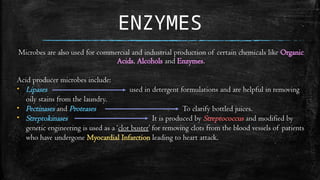
ENZYMES
Microbes are also used for commercial and industrial production of certain chemicals like Organic
Acids, Alcohols and Enzymes.
Acid producer microbes include:
‱ Lipases used in detergent formulations and are helpful in removing
oily stains from the laundry.
‱ Pectinases and Proteases To clarify bottled juices.
‱ Streptokinases It is produced by Streptococcus and modified by
genetic engineering is used as a ‘clot buster’ for removing clots from the blood vessels of patients
who have undergone Myocardial Infarction leading to heart attack.
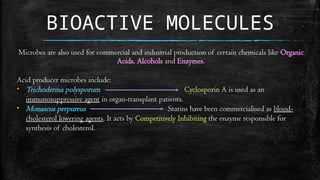
BIOACTIVE MOLECULES
Microbes are also used for commercial and industrial production of certain chemicals like Organic
Acids, Alcohols and Enzymes.
Acid producer microbes include:
‱ Trichoderma polysporum Cyclosporin A is used as an
immunosuppressive agent in organ-transplant patients.
‱ Monascus perpureus Statins have been commercialised as blood-
cholesterol lowering agents. It acts by Competitively Inhibiting the enzyme responsible for
synthesis of cholesterol.
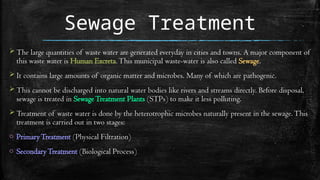
Sewage Treatment
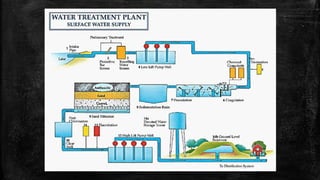
 The large quantities of waste water are generated everyday in cities and towns. A major component of
this waste water is Human Excreta.This municipal waste-water is also called Sewage.
 It contains large amounts of organic matter and microbes. Many of which are pathogenic.
 This cannot be discharged into natural water bodies like rivers and streams directly. Before disposal,
sewage is treated in SewageTreatment Plants (STPs) to make it less polluting.
 Treatment of waste water is done by the heterotrophic microbes naturally present in the sewage.This
treatment is carried out in two stages:
o PrimaryTreatment (Physical Filtration)
o SecondaryTreatment (Biological Process)
Primary Treatment
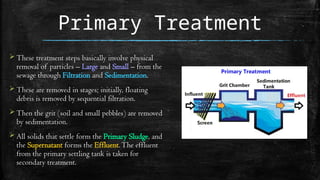
 These treatment steps basically involve physical
removal of particles – Large and Small – from the
sewage through Filtration and Sedimentation.
 These are removed in stages; initially, floating
debris is removed by sequential filtration.
 Then the grit (soil and small pebbles) are removed
by sedimentation.
 All solids that settle form the Primary Sludge, and
the Supernatant forms the Effluent.The effluent
from the primary settling tank is taken for
secondary treatment.
Secondary Treatment
‱ The primary effluent is passed into large aeration tanks where it is constantly agitated mechanically and air is pumped into it.
‱ This allows vigorous growth of useful aerobic microbes into flocs (masses of bacteria associated with fungal filaments to form mesh like structures).While growing, these microbes consume the
major part of the organic matter in the effluent.
‱ This significantly reduces the BOD (biochemical oxygen demand) of the effluent. BOD refers to the amount of the oxygen that would be consumed if all the organic matter in 1 liter of water
were oxidised by bacteria.The BOD test measures the rate of uptake of oxygen by micro-organisms in a sample of water and thus indirectly, BOD is a measure of the organic matter present in the
water.
‱ Once the BOD of sewage or waste water is reduced significantly, the effluent is then passed into a settling tank where the bacterial ‘flocs’ are allowed to sediment.This sediment is called activated
sludge.
‱ A small part of the activated sludge is pumped back into the aeration tank to serve as the inoculum.The remaining major part of the sludge is pumped into large tanks called anaerobic sludge
digesters. Here, other kinds of bacteria, which grow anaerobically, digest the bacteria and the fungi in the sludge.
‱ During this digestion, bacteria produce a mixture of gases such as methane, hydrogen sulphide and carbon dioxide.These gases form biogas and can be used as source of energy as it is
inflammable.The effluent from the secondary treatment plant is generally released into natural water bodies like rivers and streams.
Govt. Action Plan
 Due to increasing Urbanization, sewage is being produced in
much larger quantities than ever before. However, the no. of
sewage treatment plants has not increased enough to treat
such large quantities.
 So, the untreated sewage is often discharged directly into
rivers leading to Pollution and gain in Water-borne Diseases.
 The Ministry of Environment and Forests has initiated
Ganga Action Plan and Yamuna Action Plan to save these
major rivers of our country from pollution.
 Under these plans, it is proposed to build a large number of
sewage treatment plants so that only treated sewage may be
discharged in the rivers.
Production Of Biogas
 Biogas is a mixture of gases (containing predominantly CH4) produced by the microbial activity and
which may be used as fuel.
 However, certain bacteria, grow anaerobically on cellulosic material, produce large amount of methane
along with CO2 and H2.These bacteria are collectively called Methanogens (Methanobacterium).
 These bacteria are commonly found in the Anaerobic Sludge during sewage treatment.These bacteria
are also present in the Rumen (a part of stomach) of cattle.
 A lot of cellulosic material present in the food of cattle is also present in the rumen. In rumen, these
bacteria help in the breakdown of cellulose and play an important role in the nutrition of cattle.
 Thus, the excreta (dung) of cattle, commonly called Gobar, is rich in these bacteria. Dung can be used
for generation of biogas, commonly called Gobar Gas.
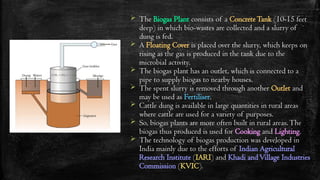
 The Biogas Plant consists of a ConcreteTank (10-15 feet
deep) in which bio-wastes are collected and a slurry of
dung is fed.
 A Floating Cover is placed over the slurry, which keeps on
rising as the gas is produced in the tank due to the
microbial activity.
 The biogas plant has an outlet, which is connected to a
pipe to supply biogas to nearby houses.
 The spent slurry is removed through another Outlet and
may be used as Fertiliser.
 Cattle dung is available in large quantities in rural areas
where cattle are used for a variety of purposes.
 So, biogas plants are more often built in rural areas.The
biogas thus produced is used for Cooking and Lighting.
 The technology of biogas production was developed in
India mainly due to the efforts of Indian Agricultural
Research Institute (IARI) and Khadi andVillage Industries
Commission (KVIC).
Biocontrol Agents
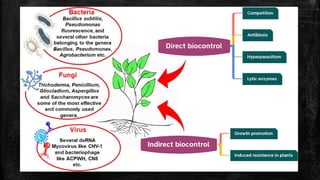
 Biocontrol refers to the use of biological methods for controlling plant diseases and pests.
 In modern society, these problems have been tackled increasingly by the use of chemicals – by use of
insecticides and pesticides.
 These chemicals are toxic and extremely harmful, to human beings and animals alike, and have been
polluting our environment (soil, ground water), fruits, vegetables and crop plants.
 Our soil is also polluted through our use of weedicides to remove weeds. In agriculture, there is a
method of controlling pests that relies on natural predation rather than introduced chemicals.
 A key belief of the organic farmer is that biodiversity furthers health.
 The organic farmer works create a system where the insects that are sometimes called pests are not
eradicated, but instead are kept at manageable levels by a complex system of checks and balances
within a living and vibrant ecosystem.
Organic Farming
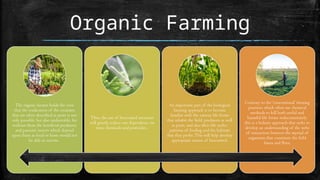
The organic farmer holds the view
that the eradication of the creatures
that are often described as pests is not
only possible, but also undesirable, for
without them the beneficial predatory
and parasitic insects which depend
upon them as food or hosts would not
be able to survive.
Thus, the use of biocontrol measures
will greatly reduce our dependence on
toxic chemicals and pesticides.
An important part of the biological
farming approach is to become
familiar with the various life forms
that inhabit the field, predators as well
as pests, and also their life cycles,
patterns of feeding and the habitats
that they prefer. This will help develop
appropriate means of biocontrol.
Contrary to the ‘conventional’ farming
practices which often use chemical
methods to kill both useful and
harmful life forms indiscriminately,
this is a holistic approach that seeks to
develop an understanding of the webs
of interaction between the myriad of
organisms that constitute the field
fauna and flora.
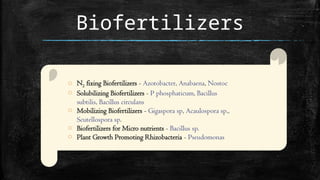
Biofertilizers
o N2 fixing Biofertilizers - Azotobacter, Anabaena, Nostoc
o Solubilizing Biofertilizers - P phosphaticum, Bacillus
subtilis, Bacillus circulans
o Mobilizing Biofertilizers - Gigaspora sp, Acaulospora sp.,
Scutellospora sp.
o Biofertilizers for Micro nutrients - Bacillus sp.
o Plant Growth Promoting Rhizobacteria - Pseudomonas
Microbes in Human Welfare PPT Class - 12

Microbes in Human Welfare PPT Class - 12

  • 1.
  • 2.
    What are Microbes? Microbes are minute, unicellular organisms that are invisible to the naked eye.  They are also known as Microorganisms as they could only be seen under a microscope.They make up almost 60% of the earth's living matter.  Besides macroscopic plants and animals, Microbes are the major components of biological systems on this earth.  Microbes are present everywhere – in soil, water, air, inside our bodies and that of other animals and plants.They are present even at sites where no other life-form could possibly exist–sites such as deep inside the geysers, where the temperature may be as high as 100ÂșC, deep in the soil, under the layers of snow several metres thick, and in highly acidic environments.  Microbes are diverse– Protozoa, Bacteria, Fungi and Viruses, Viroids and also Prions that are proteinacious infectious agents.
  • 3.
    Microbes in HouseholdProducts  We use microbes or products derived from them everyday. A common example is the production of curd from milk.  Micro-organisms such as Lactobacillus, commonly called Lactic Acid Bacteria (LAB) grow in milk and convert it to curd.  During growth, the LAB produce acids that coagulate and partially digest the milk proteins.  A small amount of curd added to the fresh milk as Inoculum or Starter contain millions of LAB, which at suitable temperatures multiply, thus convert milk to curd, which also improves its nutritional quality by increasing Vitamin B12.  In our stomach too, the LAB play very beneficial role in checking disease causing microbes. Lactobacillus Colony
  • 4.
    Fermentation By Microbes The dough, which is used for making foods such as Dosa and Idli is also fermented by bacteria.The puffed-up appearance of dough is due to the production of CO2 gas.  Similarly the dough, which is used for making bread, is fermented using Baker’sYeast (Saccharomyces cerevisiae).  A number of traditional drinks and foods are also made by fermentation by the microbes. ‘Toddy’, a traditional drink of some parts of southern India is made by fermenting sap from palms. Microbes are also used to ferment Fish, Soyabean and Bamboo Shoots to make foods.
  • 5.
    CHEESE  Cheese, isone of the oldest food items in which microbes were used.  Different varieties of cheese are known by their characteristic texture, flavour and taste, the specificity coming from the microbes used.  For example, the large holes in ‘Swiss Cheese’ are due to production of a large amount of CO2 by a bacterium named Propionibacterium sharmanii.  The ‘Roquefort Cheese’ are ripened by growing a specific fungi on them, which gives them a particular flavour.
  • 6.
    Microbes in Industries Even in industry, microbes are used to synthesise a number of products valuable to human beings.  Beverages and antibiotics are some examples. Production on an industrial scale, requires growing microbes in very large vessels called Fermentors.
  • 7.
    Fermented Beverages  Yeastshave been used from time immemorial for the production of beverages like Wine, Beer, Whisky, Brandy or Rum.  For this purpose the same yeast, Saccharomyces cerevisiae used for bread-making and commonly called Brewer’sYeast, is used for fermenting malted cereals and fruit juices, to produce Ethanol.  Depending on the type of the raw material used for fermentation and the type of processing (with or without distillation) different types of alcoholic drinks are obtained.  Wine and Beer are produced without distillation whereas Whisky, Brandy and Rum are produced by distillation of the fermented broth.
  • 8.
    Antibiotics Antibiotics produced bymicrobes are regarded as one of the most significant discoveries of the 20th century and have greatly contributed towards the welfare of the human society. Anti is greek word that means ‘Against’ and bio means ‘Life’, which means ‘Against Life’ (of pathogens); whereas for human beings, it’s ‘Pro Life’ and not against it. Antibiotics are chemical substances, which are produced by some microbes and can kill or retard the growth of other (disease-causing) microbes. Alexander Fleming while working on Staphylococci, once observed a mould growing in one of his unwashed culture plates around which bacteria could not grow. He found out that it was due to a chemical produced by the mould called Penicillium notatum. Its full potential as an effective antibiotic was established later by Ernest Chain and Howard Florey. It was extensively used to treat American soldiers wounded in WorldWar II. Fleming, Chain and Florey were awarded the Nobel Prize in 1945, for this discovery. Antibiotics have greatly improved our capacity to treat deadly diseases such as Plague, Whooping Cough (kali khansi), Diphtheria (gal ghotu) and Leprosy (kusht rog), which used to kill millions all over the globe.
  • 9.
    CHEMICALS Microbes are alsoused for commercial and industrial production of certain chemicals like Organic Acids, Alcohols and Enzymes. Acid producer microbes include: ‱ Aspergillus niger (a fungus) Citric acid ‱ Acetobacter aceti (a bacterium) Acetic acid ‱ Clostridium butylicum (a bacterium) Butyric acid ‱ Lactobacillus (a bacterium) Lactic acid ‱ S. cerevisiae (Yeast) Ethanol
  • 10.
    ENZYMES Microbes are alsoused for commercial and industrial production of certain chemicals like Organic Acids, Alcohols and Enzymes. Acid producer microbes include: ‱ Lipases used in detergent formulations and are helpful in removing oily stains from the laundry. ‱ Pectinases and Proteases To clarify bottled juices. ‱ Streptokinases It is produced by Streptococcus and modified by genetic engineering is used as a ‘clot buster’ for removing clots from the blood vessels of patients who have undergone Myocardial Infarction leading to heart attack.
  • 11.
    BIOACTIVE MOLECULES Microbes arealso used for commercial and industrial production of certain chemicals like Organic Acids, Alcohols and Enzymes. Acid producer microbes include: ‱ Trichoderma polysporum Cyclosporin A is used as an immunosuppressive agent in organ-transplant patients. ‱ Monascus perpureus Statins have been commercialised as blood- cholesterol lowering agents. It acts by Competitively Inhibiting the enzyme responsible for synthesis of cholesterol.
  • 12.
    Sewage Treatment  Thelarge quantities of waste water are generated everyday in cities and towns. A major component of this waste water is Human Excreta.This municipal waste-water is also called Sewage.  It contains large amounts of organic matter and microbes. Many of which are pathogenic.  This cannot be discharged into natural water bodies like rivers and streams directly. Before disposal, sewage is treated in SewageTreatment Plants (STPs) to make it less polluting.  Treatment of waste water is done by the heterotrophic microbes naturally present in the sewage.This treatment is carried out in two stages: o PrimaryTreatment (Physical Filtration) o SecondaryTreatment (Biological Process)
  • 13.
    Primary Treatment  Thesetreatment steps basically involve physical removal of particles – Large and Small – from the sewage through Filtration and Sedimentation.  These are removed in stages; initially, floating debris is removed by sequential filtration.  Then the grit (soil and small pebbles) are removed by sedimentation.  All solids that settle form the Primary Sludge, and the Supernatant forms the Effluent.The effluent from the primary settling tank is taken for secondary treatment.
  • 14.
    Secondary Treatment ‱ Theprimary effluent is passed into large aeration tanks where it is constantly agitated mechanically and air is pumped into it. ‱ This allows vigorous growth of useful aerobic microbes into flocs (masses of bacteria associated with fungal filaments to form mesh like structures).While growing, these microbes consume the major part of the organic matter in the effluent. ‱ This significantly reduces the BOD (biochemical oxygen demand) of the effluent. BOD refers to the amount of the oxygen that would be consumed if all the organic matter in 1 liter of water were oxidised by bacteria.The BOD test measures the rate of uptake of oxygen by micro-organisms in a sample of water and thus indirectly, BOD is a measure of the organic matter present in the water. ‱ Once the BOD of sewage or waste water is reduced significantly, the effluent is then passed into a settling tank where the bacterial ‘flocs’ are allowed to sediment.This sediment is called activated sludge. ‱ A small part of the activated sludge is pumped back into the aeration tank to serve as the inoculum.The remaining major part of the sludge is pumped into large tanks called anaerobic sludge digesters. Here, other kinds of bacteria, which grow anaerobically, digest the bacteria and the fungi in the sludge. ‱ During this digestion, bacteria produce a mixture of gases such as methane, hydrogen sulphide and carbon dioxide.These gases form biogas and can be used as source of energy as it is inflammable.The effluent from the secondary treatment plant is generally released into natural water bodies like rivers and streams.
  • 16.
    Govt. Action Plan Due to increasing Urbanization, sewage is being produced in much larger quantities than ever before. However, the no. of sewage treatment plants has not increased enough to treat such large quantities.  So, the untreated sewage is often discharged directly into rivers leading to Pollution and gain in Water-borne Diseases.  The Ministry of Environment and Forests has initiated Ganga Action Plan and Yamuna Action Plan to save these major rivers of our country from pollution.  Under these plans, it is proposed to build a large number of sewage treatment plants so that only treated sewage may be discharged in the rivers.
  • 17.
    Production Of Biogas Biogas is a mixture of gases (containing predominantly CH4) produced by the microbial activity and which may be used as fuel.  However, certain bacteria, grow anaerobically on cellulosic material, produce large amount of methane along with CO2 and H2.These bacteria are collectively called Methanogens (Methanobacterium).  These bacteria are commonly found in the Anaerobic Sludge during sewage treatment.These bacteria are also present in the Rumen (a part of stomach) of cattle.  A lot of cellulosic material present in the food of cattle is also present in the rumen. In rumen, these bacteria help in the breakdown of cellulose and play an important role in the nutrition of cattle.  Thus, the excreta (dung) of cattle, commonly called Gobar, is rich in these bacteria. Dung can be used for generation of biogas, commonly called Gobar Gas.
  • 18.
     The BiogasPlant consists of a ConcreteTank (10-15 feet deep) in which bio-wastes are collected and a slurry of dung is fed.  A Floating Cover is placed over the slurry, which keeps on rising as the gas is produced in the tank due to the microbial activity.  The biogas plant has an outlet, which is connected to a pipe to supply biogas to nearby houses.  The spent slurry is removed through another Outlet and may be used as Fertiliser.  Cattle dung is available in large quantities in rural areas where cattle are used for a variety of purposes.  So, biogas plants are more often built in rural areas.The biogas thus produced is used for Cooking and Lighting.  The technology of biogas production was developed in India mainly due to the efforts of Indian Agricultural Research Institute (IARI) and Khadi andVillage Industries Commission (KVIC).
  • 19.
    Biocontrol Agents  Biocontrolrefers to the use of biological methods for controlling plant diseases and pests.  In modern society, these problems have been tackled increasingly by the use of chemicals – by use of insecticides and pesticides.  These chemicals are toxic and extremely harmful, to human beings and animals alike, and have been polluting our environment (soil, ground water), fruits, vegetables and crop plants.  Our soil is also polluted through our use of weedicides to remove weeds. In agriculture, there is a method of controlling pests that relies on natural predation rather than introduced chemicals.  A key belief of the organic farmer is that biodiversity furthers health.  The organic farmer works create a system where the insects that are sometimes called pests are not eradicated, but instead are kept at manageable levels by a complex system of checks and balances within a living and vibrant ecosystem.
  • 20.
    Organic Farming The organicfarmer holds the view that the eradication of the creatures that are often described as pests is not only possible, but also undesirable, for without them the beneficial predatory and parasitic insects which depend upon them as food or hosts would not be able to survive. Thus, the use of biocontrol measures will greatly reduce our dependence on toxic chemicals and pesticides. An important part of the biological farming approach is to become familiar with the various life forms that inhabit the field, predators as well as pests, and also their life cycles, patterns of feeding and the habitats that they prefer. This will help develop appropriate means of biocontrol. Contrary to the ‘conventional’ farming practices which often use chemical methods to kill both useful and harmful life forms indiscriminately, this is a holistic approach that seeks to develop an understanding of the webs of interaction between the myriad of organisms that constitute the field fauna and flora.
  • 22.
    Biofertilizers o N2 fixingBiofertilizers - Azotobacter, Anabaena, Nostoc o Solubilizing Biofertilizers - P phosphaticum, Bacillus subtilis, Bacillus circulans o Mobilizing Biofertilizers - Gigaspora sp, Acaulospora sp., Scutellospora sp. o Biofertilizers for Micro nutrients - Bacillus sp. o Plant Growth Promoting Rhizobacteria - Pseudomonas