Fish Systematics
C
onservatio
n
Sunderban
Redlist
Biodiversityt
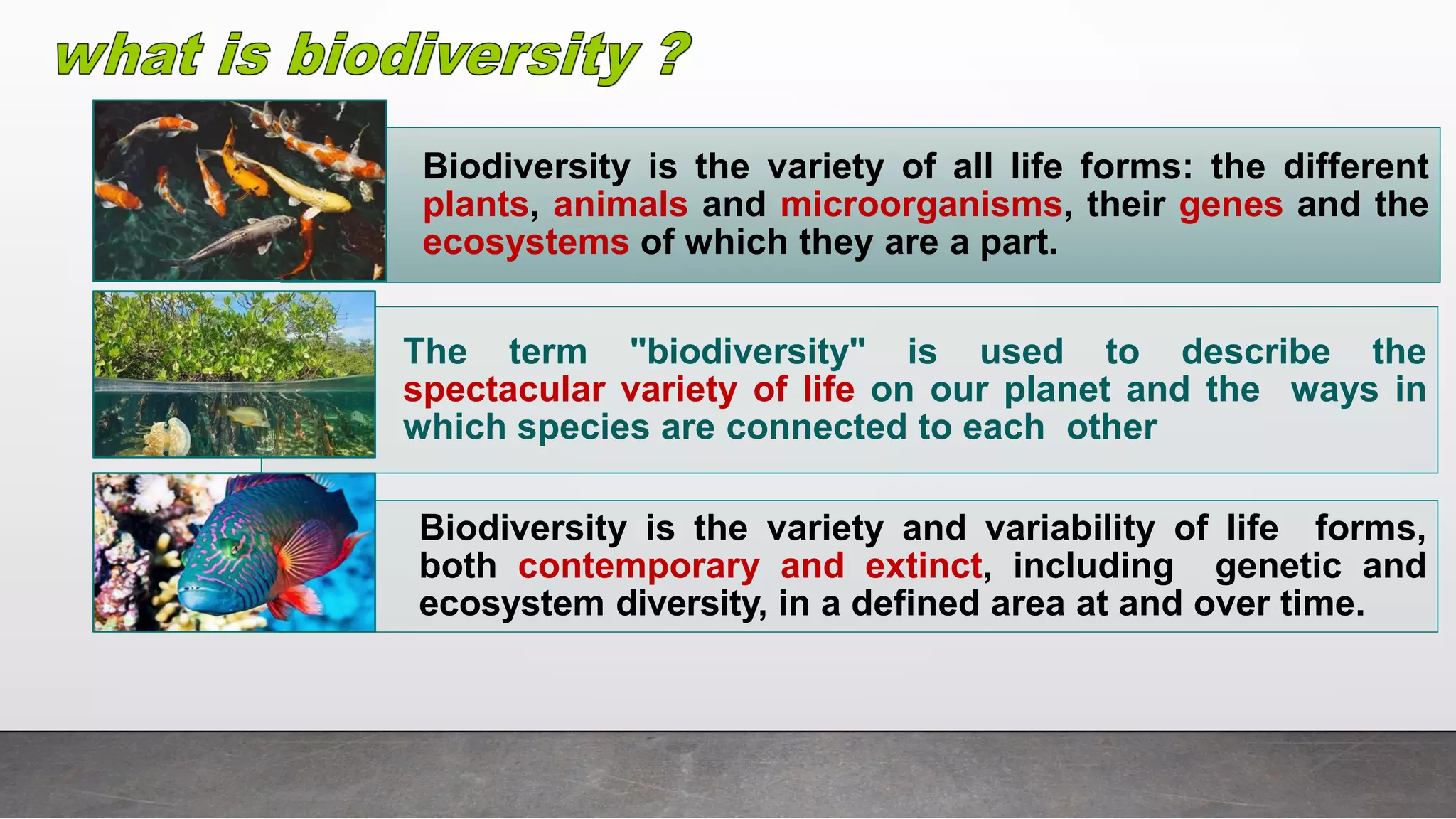
Biodiversity is the variety of all life forms: the different
plants, animals and microorganisms, their genes and the
ecosystems of which they are a part.
Biodiversity is the variety and variability of life forms,
both contemporary and extinct, including genetic and
ecosystem diversity, in a defined area at and over time.
The term "biodiversity" is used to describe the
spectacular variety of life on our planet and the ways in
which species are connected to each other
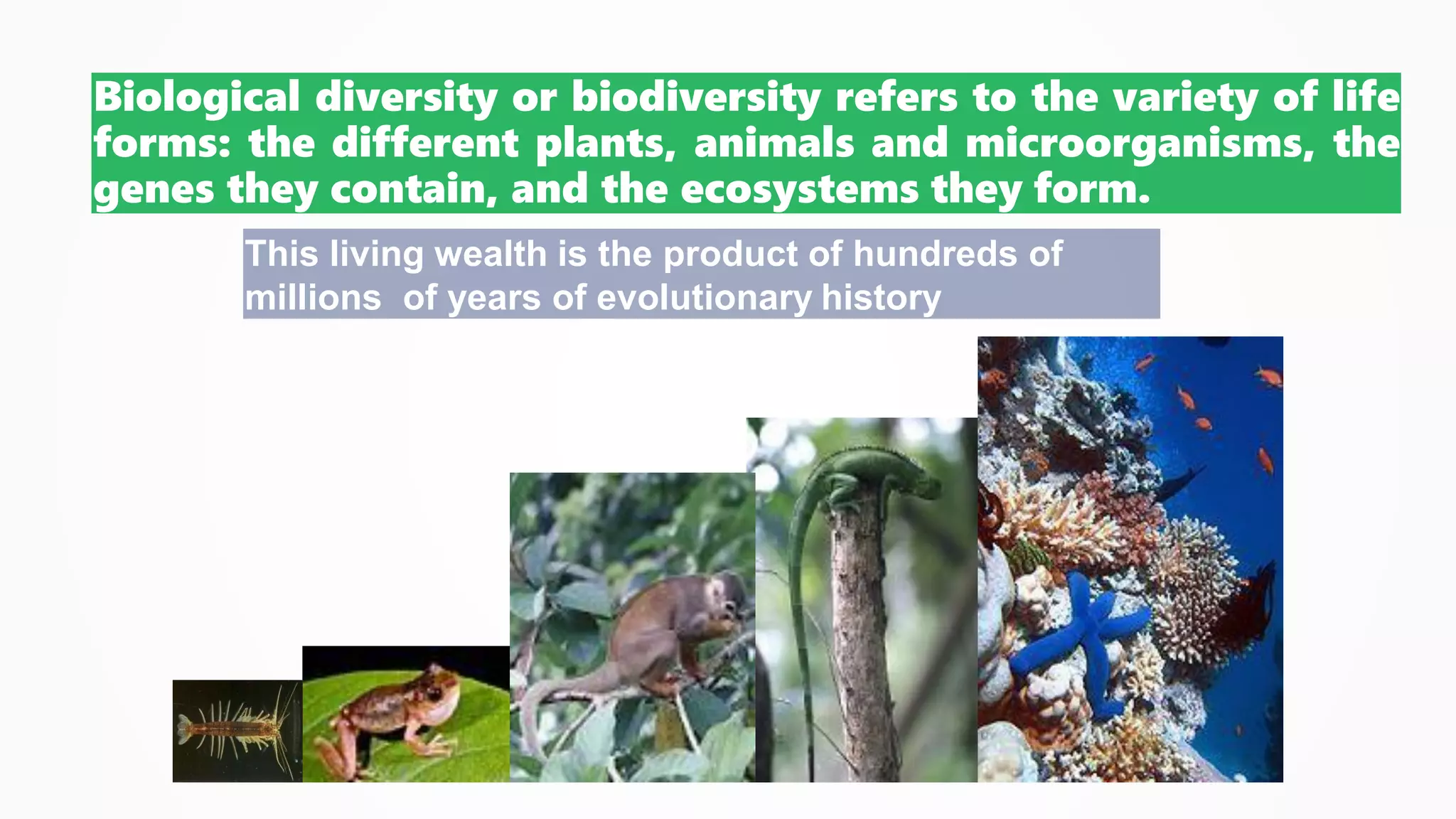
Biological diversity or biodiversity refers to the variety of life
forms: the different plants, animals and microorganisms, the
genes they contain, and the ecosystems they form.
This living wealth is the product of hundreds of
millions of years of evolutionary history
Biodiversity is often used as a measure of the health of biological systems.
The biodiversity found on Earth today consists of many millions of distinct
biological species, which is the product of nearly 3.5 billion years of
evolution.
❑ Biodiversity is a portmanteau word (a blend of two
or more words), from biology and diversity,
originating from and used interchangeably with
"biological diversity".
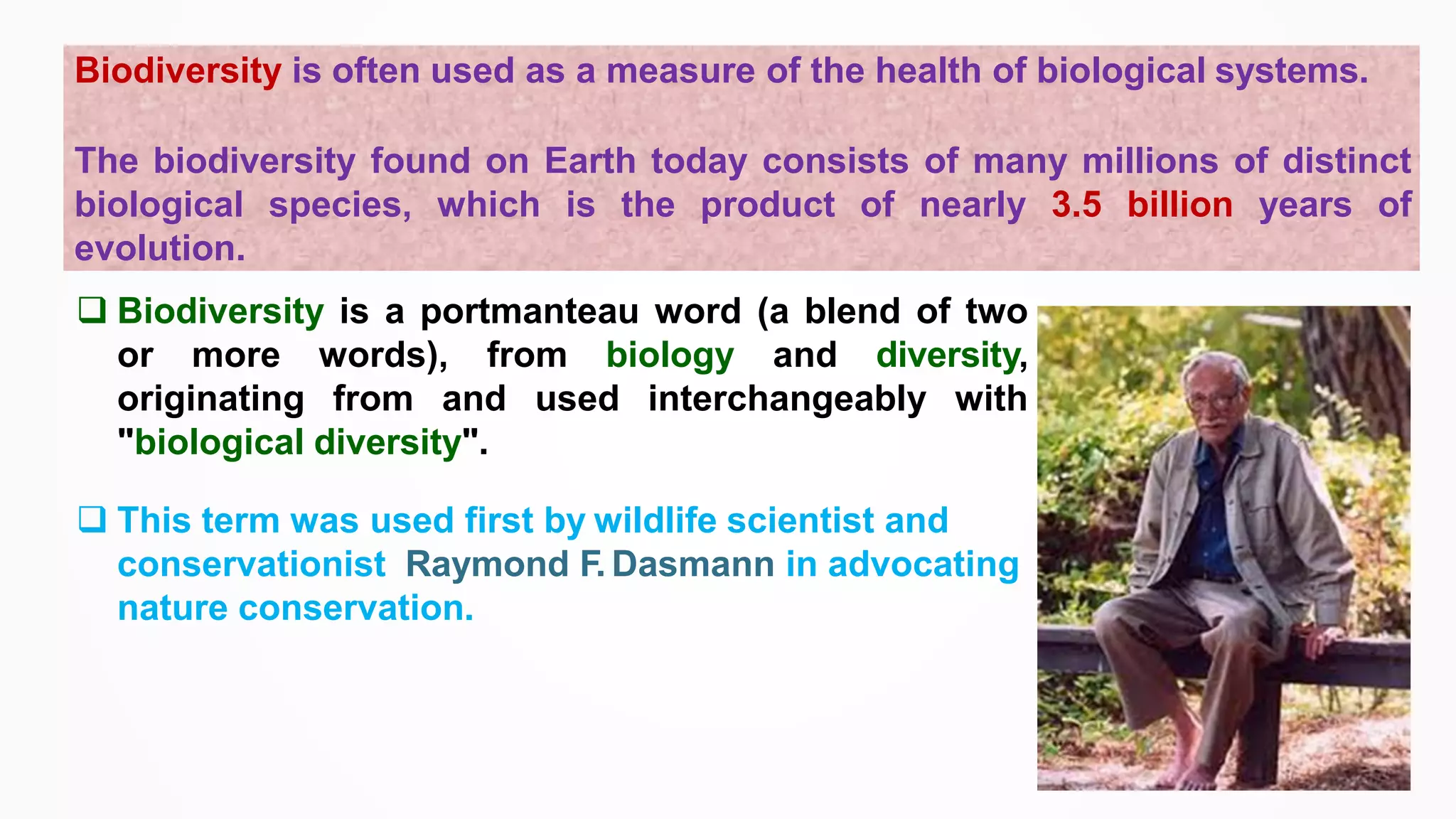
❑ This term was used first by wildlife scientist and
conservationist Raymond F. Dasmann in advocating
nature conservation.
Biodiversity encompasses all species of plants, animals, and
microorganisms and the ecosystems and ecological
processes of which they are parts.
It refers to the variety and variability among; living organisms
and the ecosystem complexes in which they occur.
In the simplest sense, biodiversity can be defined
as the sum total of species of plants, animals,
and microorganisms occurring in a given
habitat.
Different levels of Biodiversity…
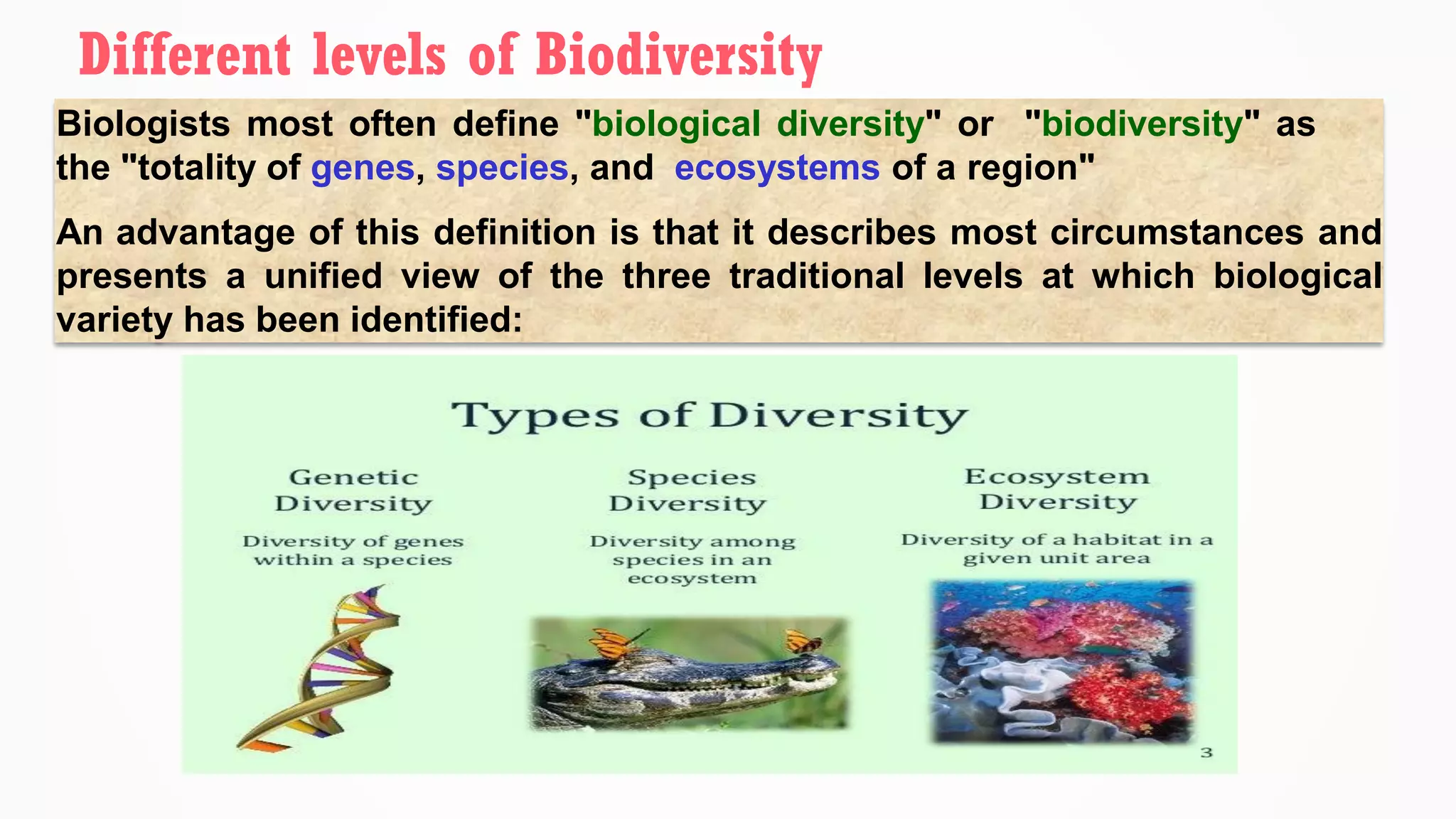
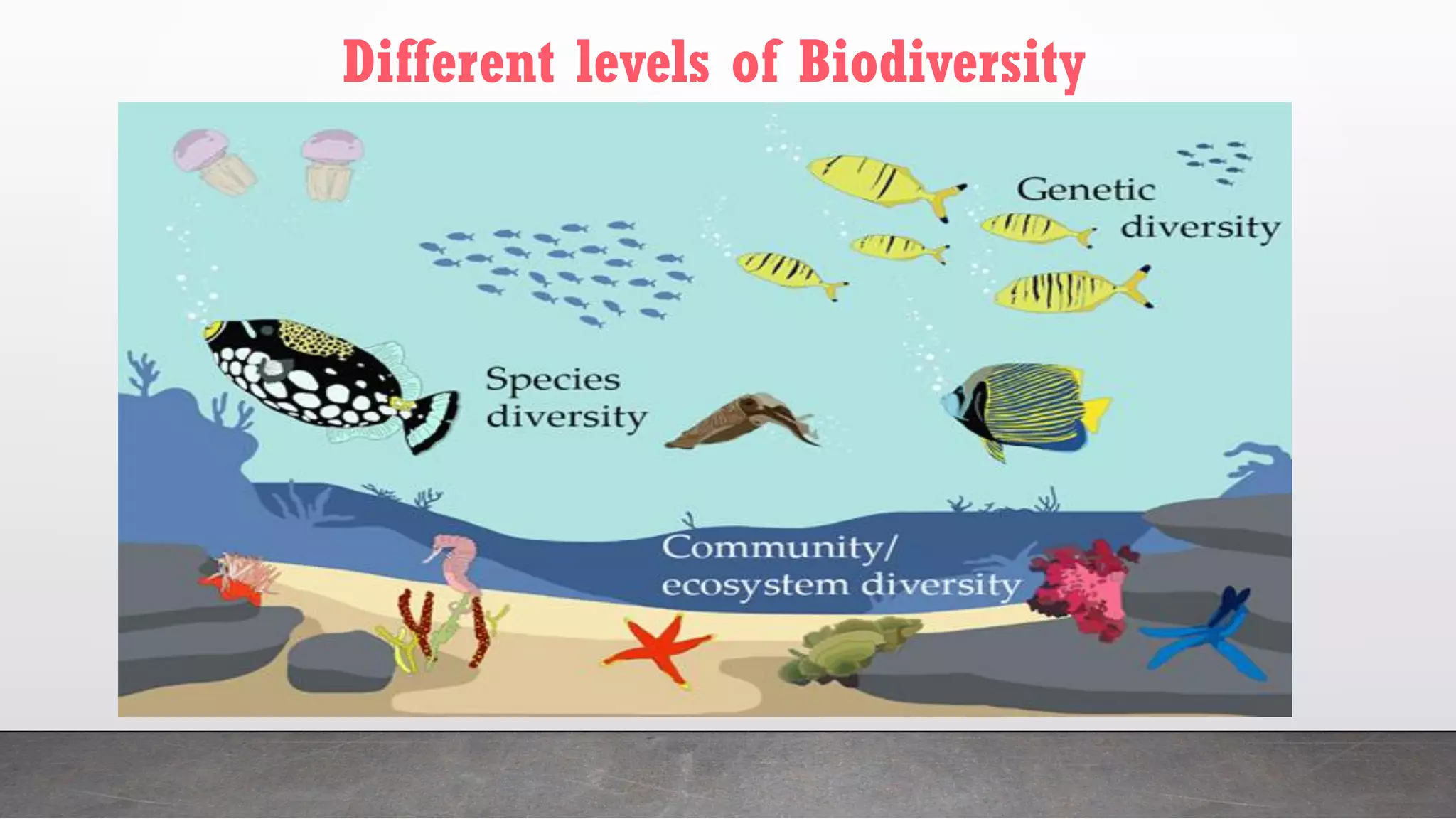
Biologists most often define "biological diversity" or "biodiversity" as
the "totality of genes, species, and ecosystems of a region"
An advantage of this definition is that it describes most circumstances and
presents a unified view of the three traditional levels at which biological
variety has been identified:
Different levels of Biodiversity
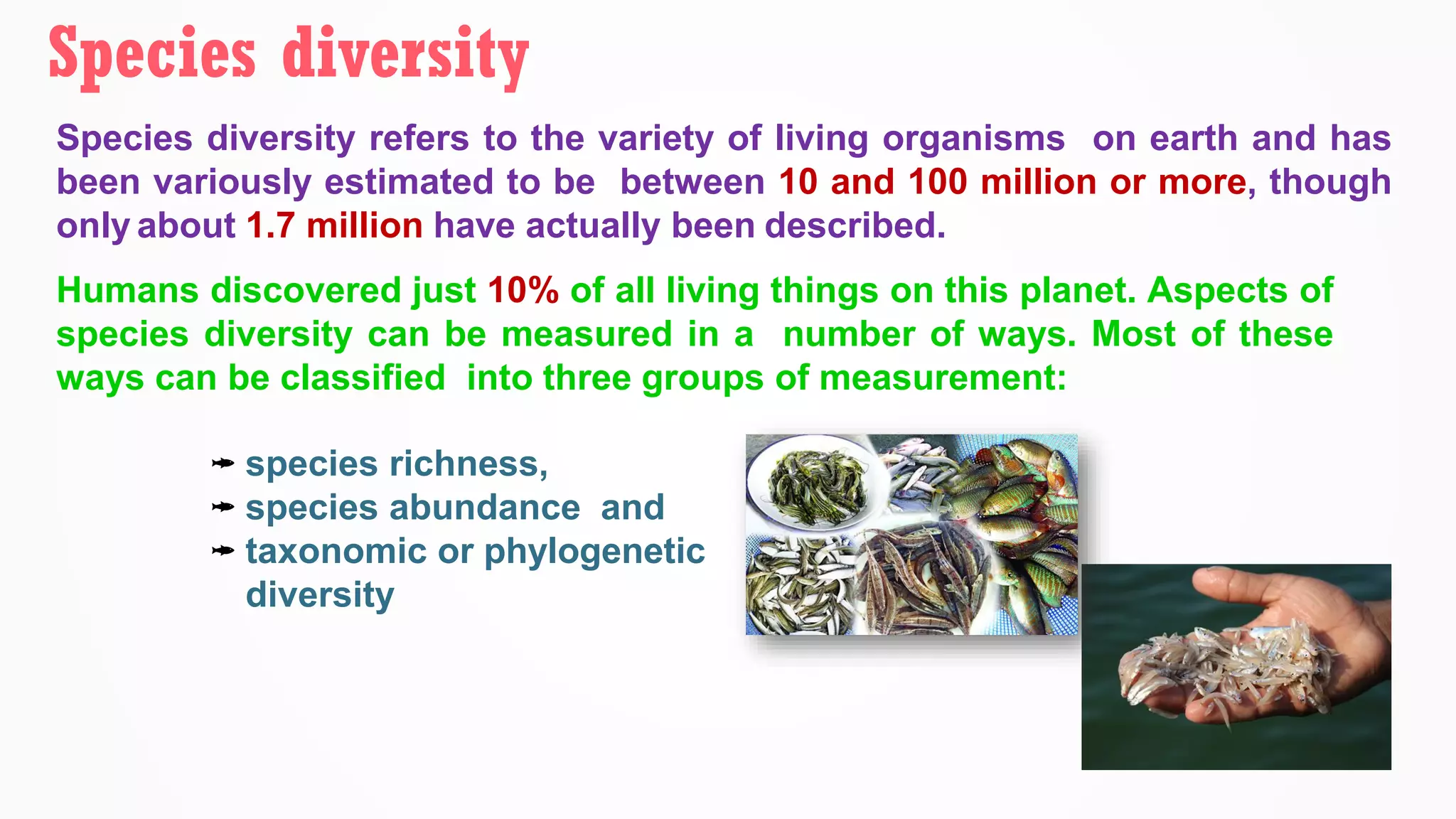
Species diversity refers to the variety of living organisms on earth and has
been variously estimated to be between 10 and 100 million or more, though
only about 1.7 million have actually been described.
Humans discovered just 10% of all living things on this planet. Aspects of
species diversity can be measured in a number of ways. Most of these
ways can be classified into three groups of measurement:
Species diversity
species richness,
species abundance and
taxonomic or phylogenetic
diversity
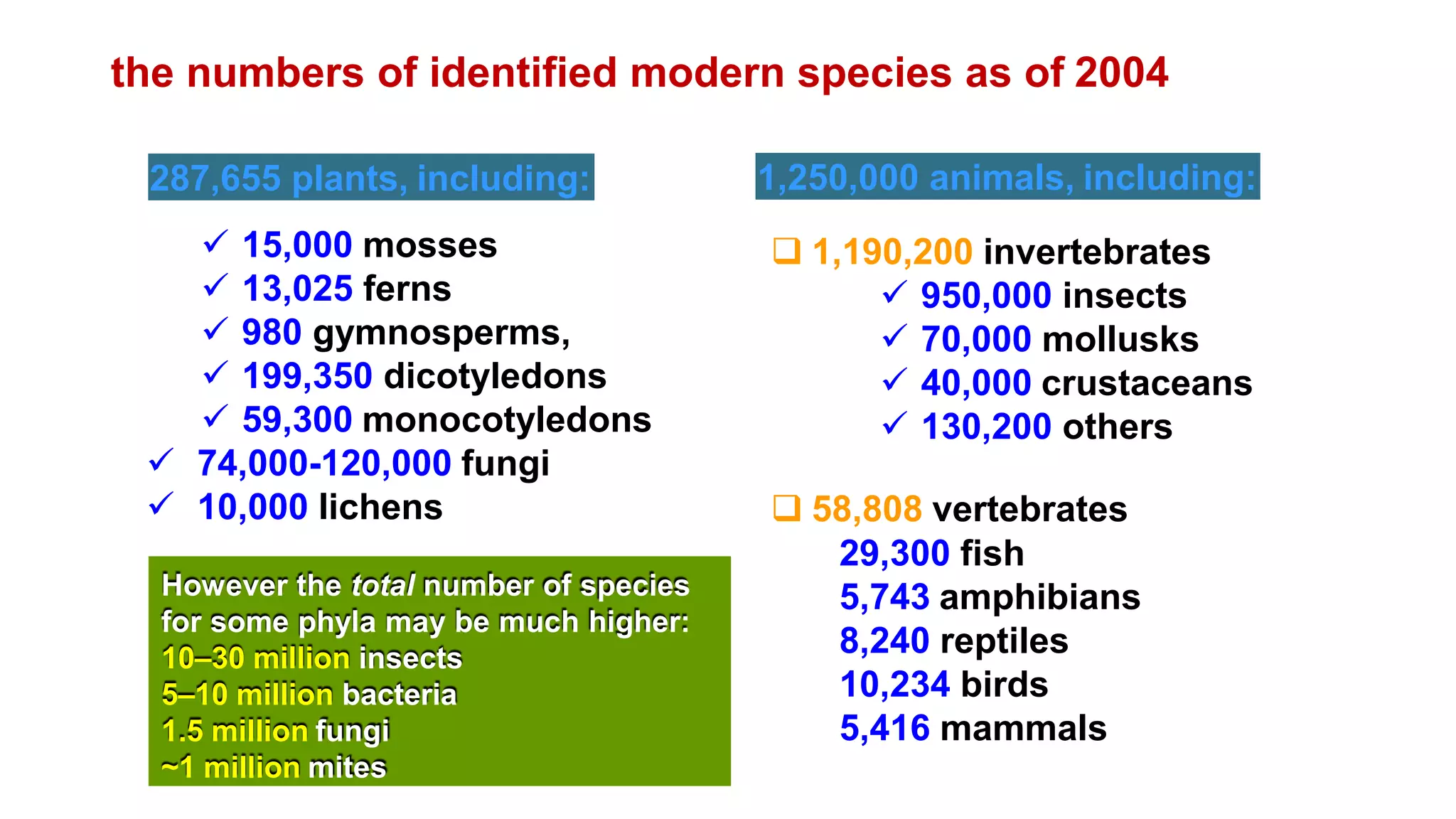
287,655 plants, including:
✓ 15,000 mosses
✓ 13,025 ferns
✓ 980 gymnosperms,
✓ 199,350 dicotyledons
✓ 59,300 monocotyledons
✓ 74,000-120,000 fungi
✓ 10,000 lichens
the numbers of identified modern species as of 2004
1,250,000 animals, including:
❑ 1,190,200 invertebrates
✓ 950,000 insects
✓ 70,000 mollusks
✓ 40,000 crustaceans
✓ 130,200 others
❑ 58,808 vertebrates
29,300 fish
5,743 amphibians
8,240 reptiles
10,234 birds
5,416 mammals
However the total number of species
for some phyla may be much higher:
10–30 million insects
5–10 million bacteria
1.5 million fungi
~1 million mites
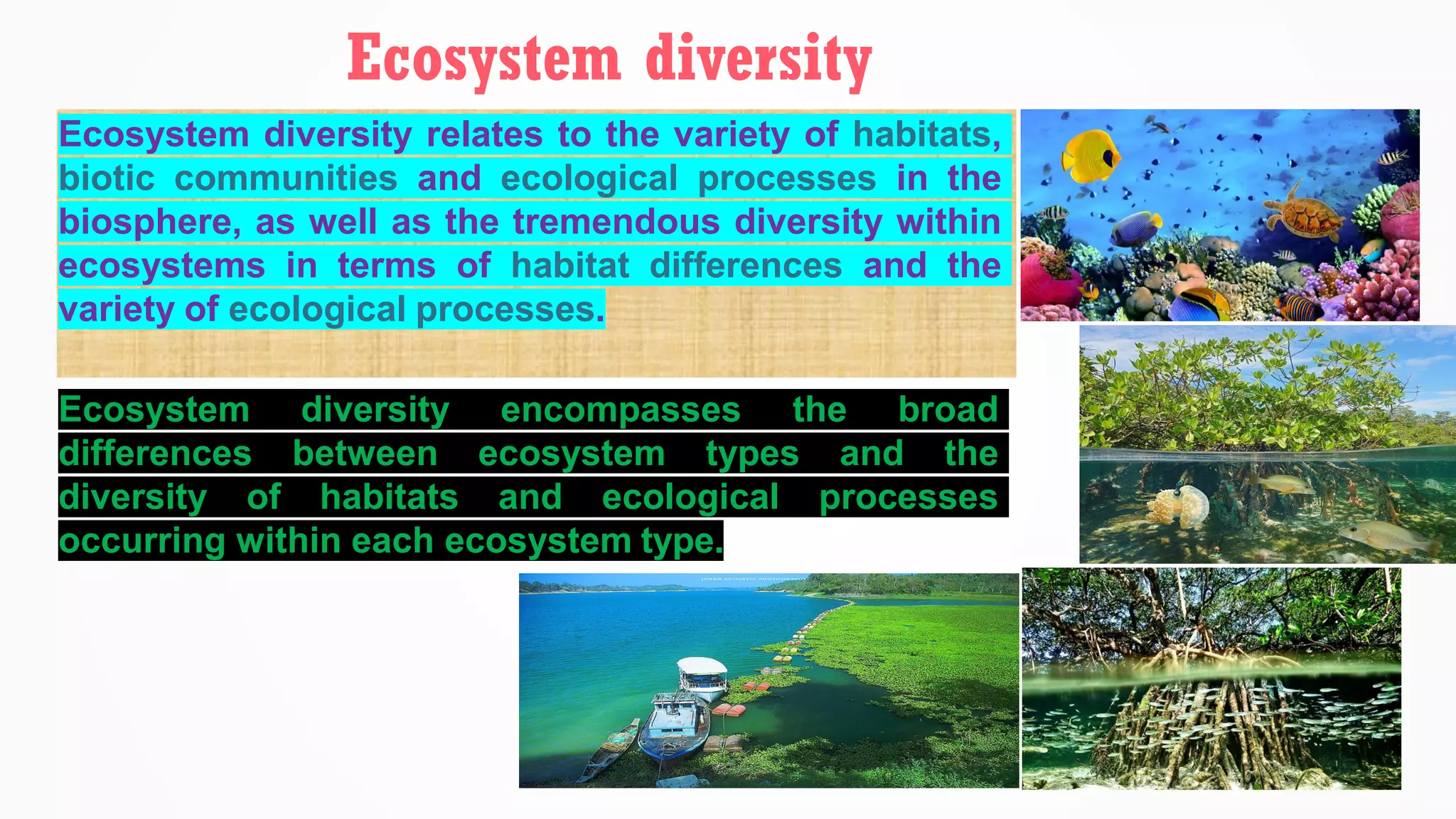
Ecosystem diversity relates to the variety of habitats,
biotic communities and ecological processes in the
biosphere, as well as the tremendous diversity within
ecosystems in terms of habitat differences and the
variety of ecological processes.
Ecosystem diversity
Ecosystem diversity encompasses the broad
differences between ecosystem types and the
diversity of habitats and ecological processes
occurring within each ecosystem type.
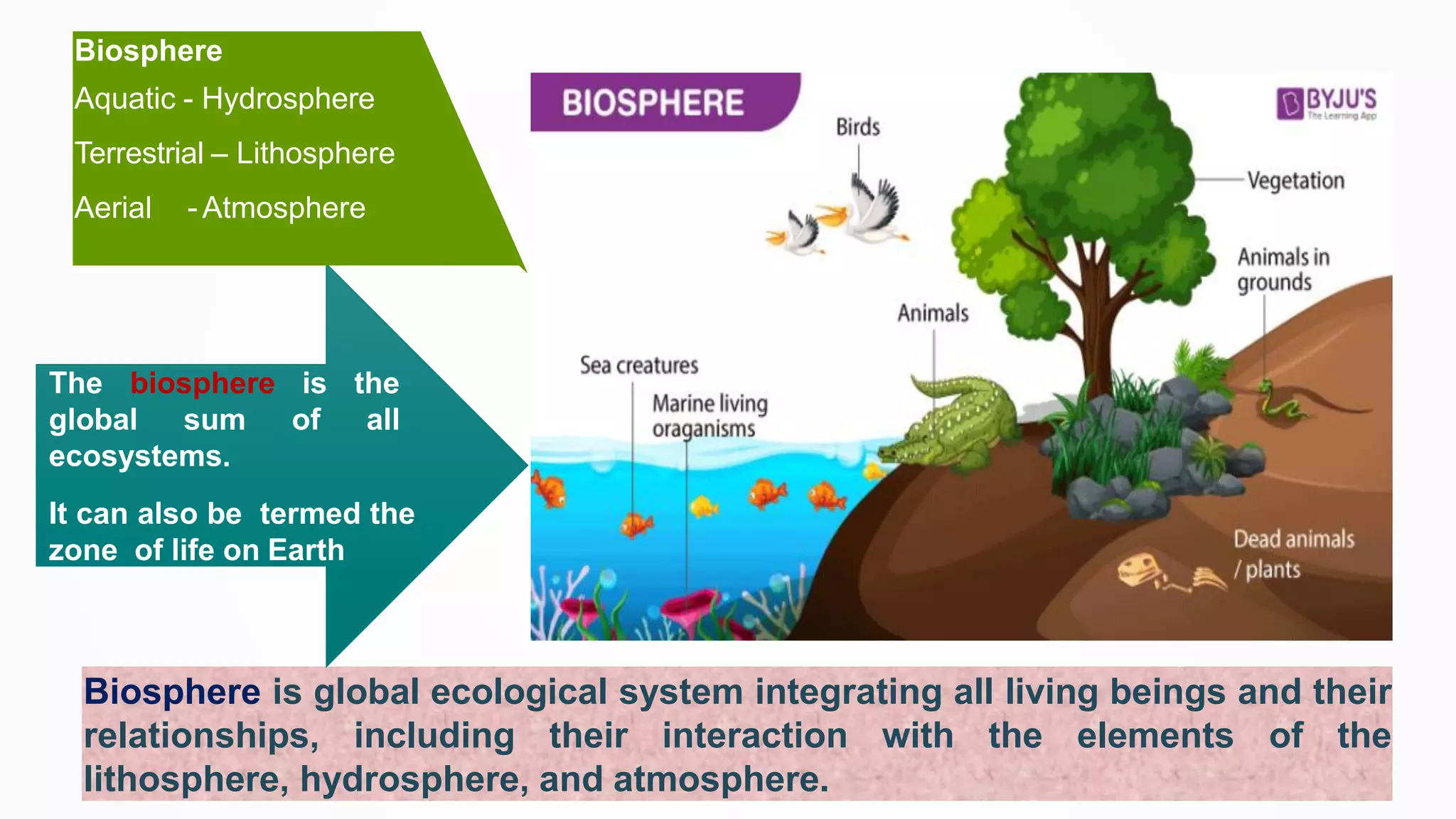
Biosphere is global ecological system integrating all living beings and their
relationships, including their interaction with the elements of the
lithosphere, hydrosphere, and atmosphere.
The biosphere is the
global sum of all
ecosystems.
It can also be termed the
zone of life on Earth
Biosphere
Aquatic - Hydrosphere
Terrestrial – Lithosphere
Aerial - Atmosphere
It refers to the variation of genes within species. This
constitutes distinct population of the same species or genetic
variation within population or varieties within a species.
Genetic diversity
Genetic diversity is the sum total of genetic information,
contained in the genes of individuals of plants, animals, and
microorganisms that inhabit the earth.
It refers to the variety of genetic information contained in all
of the individual plants, animals and microorganisms.
Genetic diversity occurs within and between populations of
species as well as between species.
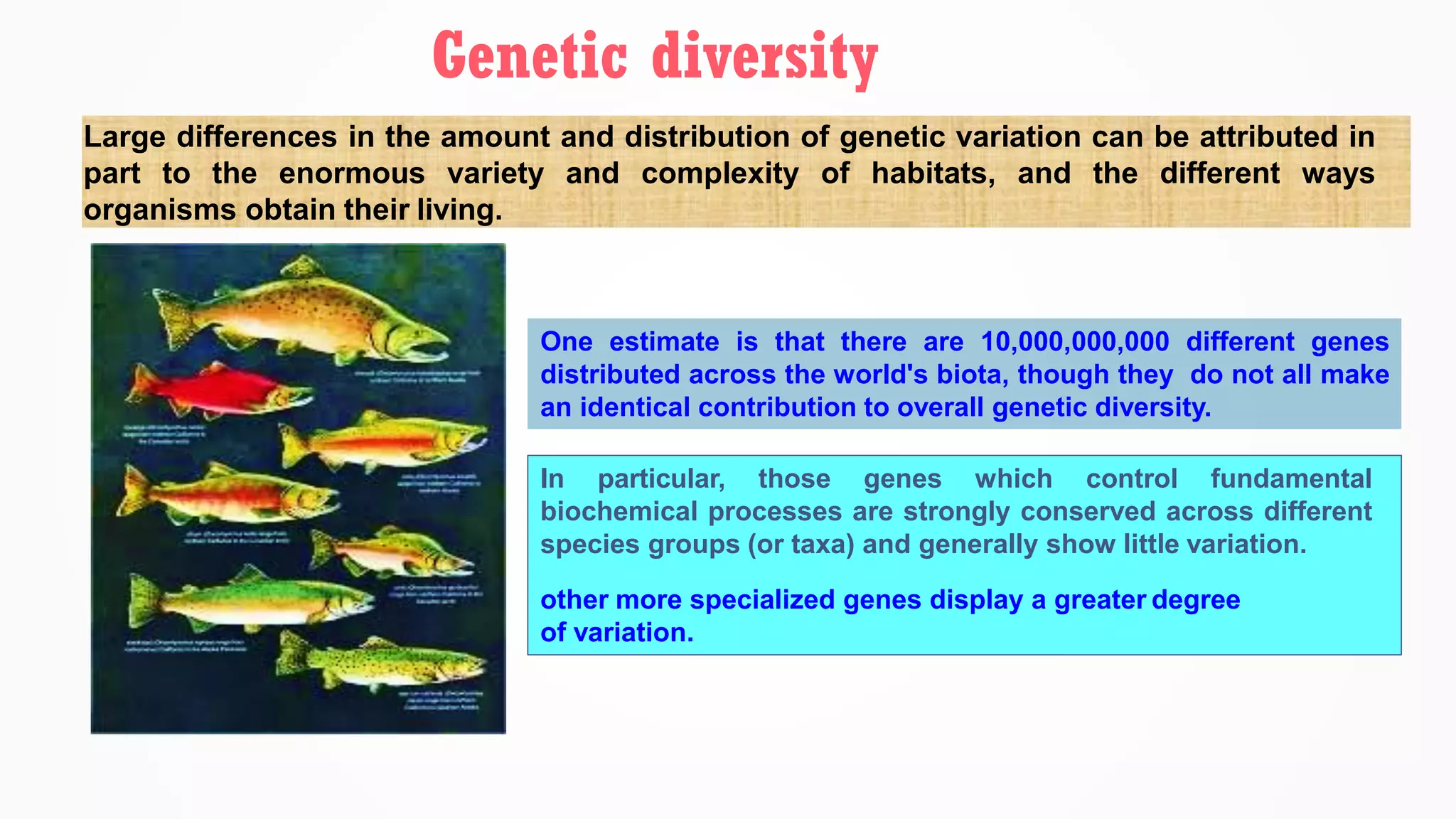
Large differences in the amount and distribution of genetic variation can be attributed in
part to the enormous variety and complexity of habitats, and the different ways
organisms obtain their living.
One estimate is that there are 10,000,000,000 different genes
distributed across the world's biota, though they do not all make
an identical contribution to overall genetic diversity.
In particular, those genes which control fundamental
biochemical processes are strongly conserved across different
species groups (or taxa) and generally show little variation.
other more specialized genes display a greater degree
of variation.
Genetic diversity
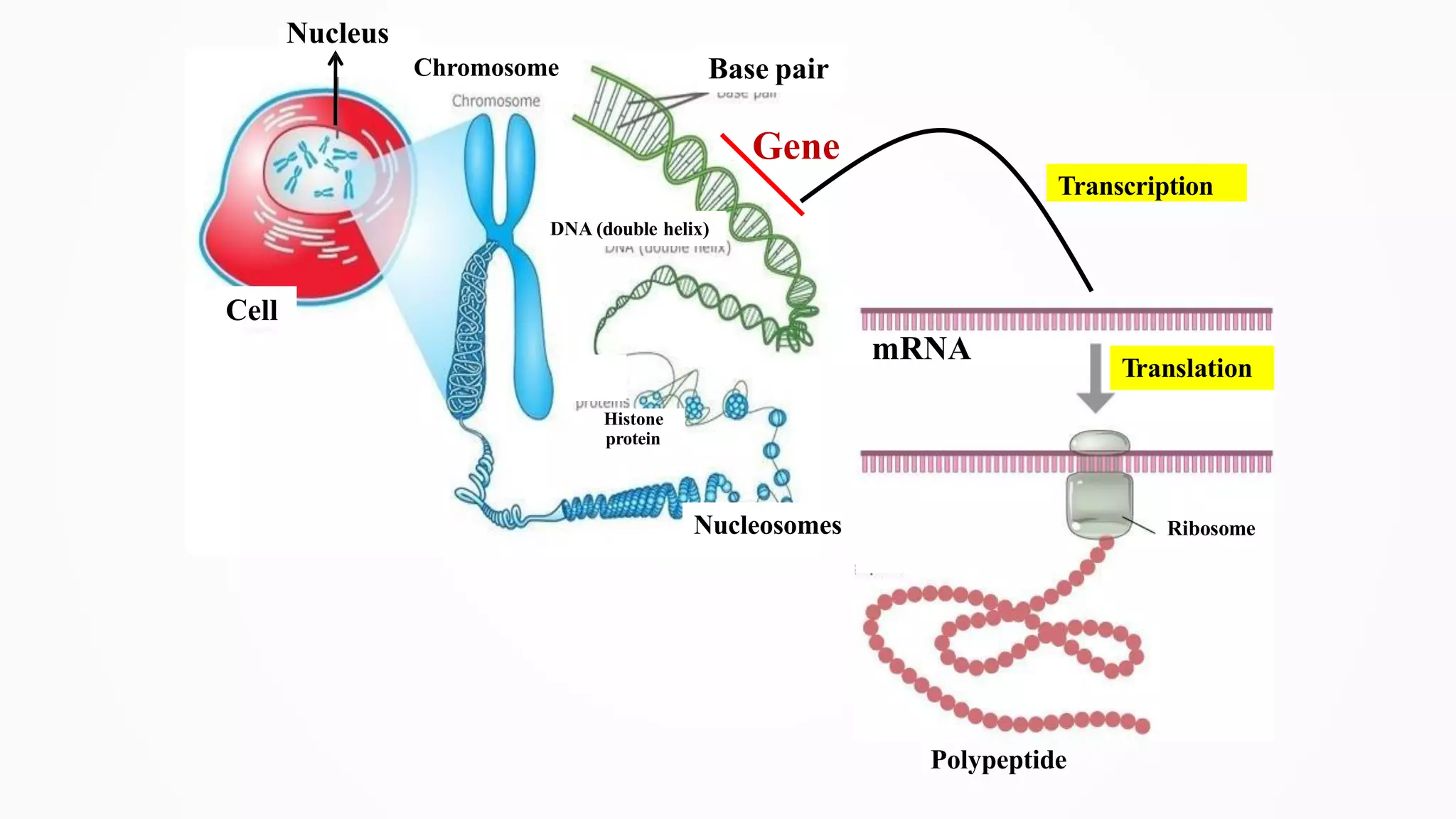
Nucleus
Cell
Chromosome Base pair
DNA (double helix)
Histone
protein
Nucleosomes
Gene
Polypeptide
Ribosome
mRNA
Translation
Transcription
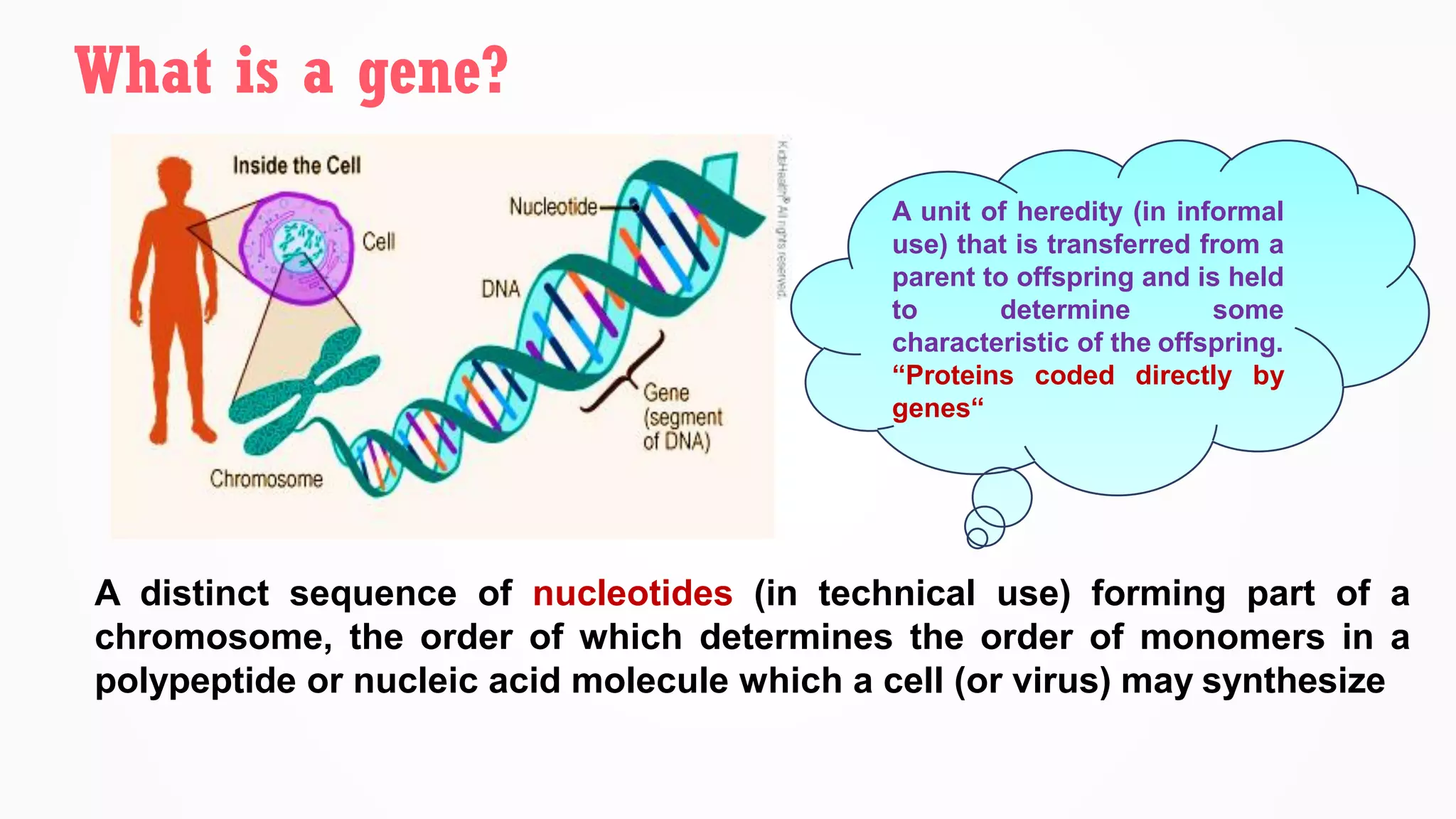
What is a gene?
A distinct sequence of nucleotides (in technical use) forming part of a
chromosome, the order of which determines the order of monomers in a
polypeptide or nucleic acid molecule which a cell (or virus) may synthesize
A unit of heredity (in informal
use) that is transferred from a
parent to offspring and is held
to determine some
characteristic of the offspring.
“Proteins coded directly by
genes“
Systematics
➢ The word is derived from the Latinized Greek word Systema
➢ Systematics is the study of the kind and diversity of life on the planet Earth, both
past and present, and the relationships among living organisms through time
➢ Systematics, in simple sense, is the science of the diversity of the organisms
➢ The word ‘relationship’ is broadly conceived to include all biological correlation
among organisms
➢ Systematics, in other words, is used to understand the evolutionary history of
life on Earth.
➢ Systematics is fundamental to biology because it is the foundation
for all studies of organisms, by showing how any organism relates
to other living things (ancestor-descendant relationships).
➢ Systematics is also of major importance in understanding
conservation issues because it attempts to explain the Earth's
biodiversity and could be used to assist in allocating limited means
to preserve and protect endangered species, by looking at, for
example, the genetic diversity among various taxa of plants or
animals and deciding how much of that to preserve.
Systematics
Taxonomy
Taxonomy is the practice and science of classification.
The word finds its roots in the Greek τάξις, taxis (meaning 'order',
'arrangement') and νόμος, nomos ('law' or 'science').
Taxonomy uses taxonomic units, known as taxa (singular taxon).
Taxonomy is the theory and practice of classifying organisms.
Class 1 intro_fs_2022-converted

Class 1 intro_fs_2022-converted

  • 1.
  • 2.
    Biodiversity is thevariety of all life forms: the different plants, animals and microorganisms, their genes and the ecosystems of which they are a part. Biodiversity is the variety and variability of life forms, both contemporary and extinct, including genetic and ecosystem diversity, in a defined area at and over time. The term "biodiversity" is used to describe the spectacular variety of life on our planet and the ways in which species are connected to each other
  • 3.
    Biological diversity orbiodiversity refers to the variety of life forms: the different plants, animals and microorganisms, the genes they contain, and the ecosystems they form. This living wealth is the product of hundreds of millions of years of evolutionary history
  • 4.
    Biodiversity is oftenused as a measure of the health of biological systems. The biodiversity found on Earth today consists of many millions of distinct biological species, which is the product of nearly 3.5 billion years of evolution. ❑ Biodiversity is a portmanteau word (a blend of two or more words), from biology and diversity, originating from and used interchangeably with "biological diversity". ❑ This term was used first by wildlife scientist and conservationist Raymond F. Dasmann in advocating nature conservation.
  • 5.
    Biodiversity encompasses allspecies of plants, animals, and microorganisms and the ecosystems and ecological processes of which they are parts. It refers to the variety and variability among; living organisms and the ecosystem complexes in which they occur. In the simplest sense, biodiversity can be defined as the sum total of species of plants, animals, and microorganisms occurring in a given habitat. Different levels of Biodiversity…
  • 6.
    Biologists most oftendefine "biological diversity" or "biodiversity" as the "totality of genes, species, and ecosystems of a region" An advantage of this definition is that it describes most circumstances and presents a unified view of the three traditional levels at which biological variety has been identified: Different levels of Biodiversity
  • 7.
    Different levels ofBiodiversity
  • 8.
    Species diversity refersto the variety of living organisms on earth and has been variously estimated to be between 10 and 100 million or more, though only about 1.7 million have actually been described. Humans discovered just 10% of all living things on this planet. Aspects of species diversity can be measured in a number of ways. Most of these ways can be classified into three groups of measurement: Species diversity species richness, species abundance and taxonomic or phylogenetic diversity
  • 9.
    287,655 plants, including: ✓15,000 mosses ✓ 13,025 ferns ✓ 980 gymnosperms, ✓ 199,350 dicotyledons ✓ 59,300 monocotyledons ✓ 74,000-120,000 fungi ✓ 10,000 lichens the numbers of identified modern species as of 2004 1,250,000 animals, including: ❑ 1,190,200 invertebrates ✓ 950,000 insects ✓ 70,000 mollusks ✓ 40,000 crustaceans ✓ 130,200 others ❑ 58,808 vertebrates 29,300 fish 5,743 amphibians 8,240 reptiles 10,234 birds 5,416 mammals However the total number of species for some phyla may be much higher: 10–30 million insects 5–10 million bacteria 1.5 million fungi ~1 million mites
  • 10.
    Ecosystem diversity relatesto the variety of habitats, biotic communities and ecological processes in the biosphere, as well as the tremendous diversity within ecosystems in terms of habitat differences and the variety of ecological processes. Ecosystem diversity Ecosystem diversity encompasses the broad differences between ecosystem types and the diversity of habitats and ecological processes occurring within each ecosystem type.
  • 11.
    Biosphere is globalecological system integrating all living beings and their relationships, including their interaction with the elements of the lithosphere, hydrosphere, and atmosphere. The biosphere is the global sum of all ecosystems. It can also be termed the zone of life on Earth Biosphere Aquatic - Hydrosphere Terrestrial – Lithosphere Aerial - Atmosphere
  • 13.
    It refers tothe variation of genes within species. This constitutes distinct population of the same species or genetic variation within population or varieties within a species. Genetic diversity Genetic diversity is the sum total of genetic information, contained in the genes of individuals of plants, animals, and microorganisms that inhabit the earth. It refers to the variety of genetic information contained in all of the individual plants, animals and microorganisms. Genetic diversity occurs within and between populations of species as well as between species.
  • 14.
    Large differences inthe amount and distribution of genetic variation can be attributed in part to the enormous variety and complexity of habitats, and the different ways organisms obtain their living. One estimate is that there are 10,000,000,000 different genes distributed across the world's biota, though they do not all make an identical contribution to overall genetic diversity. In particular, those genes which control fundamental biochemical processes are strongly conserved across different species groups (or taxa) and generally show little variation. other more specialized genes display a greater degree of variation. Genetic diversity
  • 15.
    Nucleus Cell Chromosome Base pair DNA(double helix) Histone protein Nucleosomes Gene Polypeptide Ribosome mRNA Translation Transcription
  • 16.
    What is agene? A distinct sequence of nucleotides (in technical use) forming part of a chromosome, the order of which determines the order of monomers in a polypeptide or nucleic acid molecule which a cell (or virus) may synthesize A unit of heredity (in informal use) that is transferred from a parent to offspring and is held to determine some characteristic of the offspring. “Proteins coded directly by genes“
  • 17.
    Systematics ➢ The wordis derived from the Latinized Greek word Systema ➢ Systematics is the study of the kind and diversity of life on the planet Earth, both past and present, and the relationships among living organisms through time ➢ Systematics, in simple sense, is the science of the diversity of the organisms ➢ The word ‘relationship’ is broadly conceived to include all biological correlation among organisms ➢ Systematics, in other words, is used to understand the evolutionary history of life on Earth.
  • 18.
    ➢ Systematics isfundamental to biology because it is the foundation for all studies of organisms, by showing how any organism relates to other living things (ancestor-descendant relationships). ➢ Systematics is also of major importance in understanding conservation issues because it attempts to explain the Earth's biodiversity and could be used to assist in allocating limited means to preserve and protect endangered species, by looking at, for example, the genetic diversity among various taxa of plants or animals and deciding how much of that to preserve. Systematics
  • 19.
    Taxonomy Taxonomy is thepractice and science of classification. The word finds its roots in the Greek τάξις, taxis (meaning 'order', 'arrangement') and νόμος, nomos ('law' or 'science'). Taxonomy uses taxonomic units, known as taxa (singular taxon). Taxonomy is the theory and practice of classifying organisms.