BIODIVERSITY AND
CONSERVATION
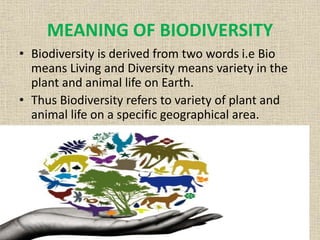
MEANING OF BIODIVERSITY
• Biodiversity is derived from two words i.e Bio
means Living and Diversity means variety in the
plant and animal life on Earth.
• Thus Biodiversity refers to variety of plant and
animal life on a specific geographical area.
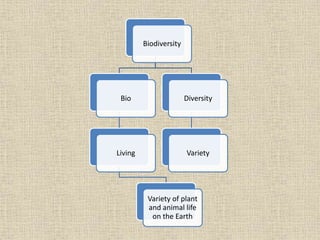
Biodiversity
Bio
Living
Variety of plant
and animal life
on the Earth
Diversity
Variety
Levels /Types of Biodiversity
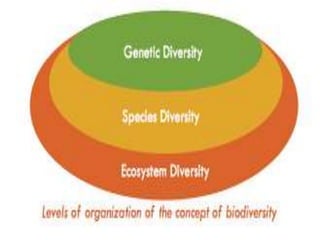
• There are three levels or types of Biodiversity:
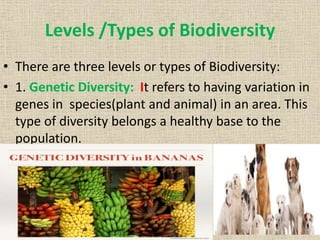
• 1. Genetic Diversity: It refers to having variation in
genes in species(plant and animal) in an area. This
type of diversity belongs a healthy base to the
population.
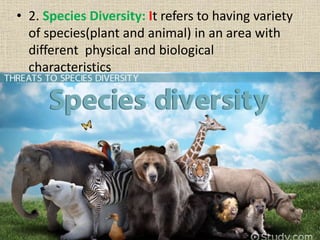
• 2. Species Diversity: It refers to having variety
of species(plant and animal) in an area with
different physical and biological
characteristics
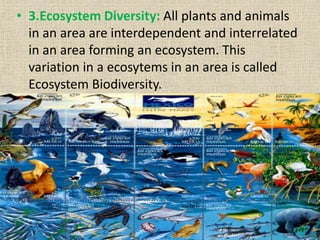
• 3.Ecosystem Diversity: All plants and animals
in an area are interdependent and interrelated
in an area forming an ecosystem. This
variation in a ecosytems in an area is called
Ecosystem Biodiversity.
IMPORTANCE OF BIODIVERSITY
• 1.ECOLOGICAL ROLE: Every specie(plant and animal) in an
ecosystem is important .
• Species capture and store energy, produce and decompose
organic matter, fix atmospheric gases, part of water cycle and
help to regulate climate.
• Loss of a species makes difficult for the ecosystem to survive.
• 2. ECONOMIC ROLE: Every specie (plant or animal ) provide
resources which hare helpful for the economic development of
the country.
• Products from species like food crops, cash crops, fish, medicines
etc are some of the resources we get from species which help in
the economic development of the country.
• 3. SCIENTIFIC ROLE: Biodiversity helps in understanding as to
how life has evolved and how it will continue to evolve in future
too study the role of each in sustaining the ecosystem
LOSS OF BIODIVERSITY
• 1. With rapid increase in population and rising standards of
living, pressure on resources has increased.
• 2. Due to the high demand of land and other resources for
living has resulted in loss of animal and plant species in
various areas.
• 3. Natural disasters like Earthquakes, floods, volcanoes etc
have resulted in causing damage to plant and animal specie
on earth.
• 4. Excessive use of the fertilizers and pesticides have harmed
the land surface and even the toxic water has also resulted
in harming the plant species.
• 5. Excessive hunting of animals for their skin, ivory etc has
also resulted in the loss of biodiversity.
TYPES OF SPECIES ACCORDING TO IUCN(INTERNATIONAL
UNION FOR THE CONSERVATION OF NATURE
)
• 1. ENDANGERD SPECIES: these are the species which are in
danger of extinction. Example birds like parrots, pigeons
and animals like tigers and elephants
• 2. VULNERABLE SPECIES: these are the species are the in
danger of extinction and will become extinct in future if
they are not taken care of. Example frogs, penguins, parrots
etc.
• 3. RARE SPECIES: there are species whose population is
very less and found in only limited areas. Their population
need to be taken care of so that they extinct .Example
Cheetah.
• Areas which are rich in variety of biodiversity are called
hotspots. Example tropical regions or region near equator
Conservation of Biodiversity
• Every specie is important in the ecosystem. All
plants , animals and humans are interlinked
and interdependent on each other.
• If species of plants and animals are disturbed,
they will degrade environment and may
threaten the human beings own existence.
• Therefore the conservation of specie is
important.
• The Government Of India with 155 other nations
have signed Conventions Of Earth Summit held at
Rio di Janerio Brazil in June 1992. following points
were given:
• 1.efforts should be made to preserve the species
that are endangered .
• 2. prevention of extinction of species requires sound
planning for their saving .
• 3. Each country should identify the habitats of their
plant and animal species in the area and ensure their
protection.
• 4.habitats where species feed, breed and nurse
should be given more protection.
• 5.international trade for animals , plants and their
product should be regulated.
• The Government of India Act was passed in year
1972 for the protection of plant and animal
species.92 national parks and 492 sanctuaries
were built for protection of species.
• Countries situated in the tropical regions or near
equator have variety of plant and animal life and
thus called as Hotspots or Mega biodiversity
centres. There are 12 centres identified like
Mexico,Columbia, Brazil,Madagascar, China,
India, Malayasia etc.

Biodiversity and conservation 11

  • 1.
  • 2.
    MEANING OF BIODIVERSITY •Biodiversity is derived from two words i.e Bio means Living and Diversity means variety in the plant and animal life on Earth. • Thus Biodiversity refers to variety of plant and animal life on a specific geographical area.
  • 3.
    Biodiversity Bio Living Variety of plant andanimal life on the Earth Diversity Variety
  • 4.
    Levels /Types ofBiodiversity • There are three levels or types of Biodiversity: • 1. Genetic Diversity: It refers to having variation in genes in species(plant and animal) in an area. This type of diversity belongs a healthy base to the population.
  • 5.
    • 2. SpeciesDiversity: It refers to having variety of species(plant and animal) in an area with different physical and biological characteristics
  • 6.
    • 3.Ecosystem Diversity:All plants and animals in an area are interdependent and interrelated in an area forming an ecosystem. This variation in a ecosytems in an area is called Ecosystem Biodiversity.
  • 8.
    IMPORTANCE OF BIODIVERSITY •1.ECOLOGICAL ROLE: Every specie(plant and animal) in an ecosystem is important . • Species capture and store energy, produce and decompose organic matter, fix atmospheric gases, part of water cycle and help to regulate climate. • Loss of a species makes difficult for the ecosystem to survive. • 2. ECONOMIC ROLE: Every specie (plant or animal ) provide resources which hare helpful for the economic development of the country. • Products from species like food crops, cash crops, fish, medicines etc are some of the resources we get from species which help in the economic development of the country. • 3. SCIENTIFIC ROLE: Biodiversity helps in understanding as to how life has evolved and how it will continue to evolve in future too study the role of each in sustaining the ecosystem
  • 9.
    LOSS OF BIODIVERSITY •1. With rapid increase in population and rising standards of living, pressure on resources has increased. • 2. Due to the high demand of land and other resources for living has resulted in loss of animal and plant species in various areas. • 3. Natural disasters like Earthquakes, floods, volcanoes etc have resulted in causing damage to plant and animal specie on earth. • 4. Excessive use of the fertilizers and pesticides have harmed the land surface and even the toxic water has also resulted in harming the plant species. • 5. Excessive hunting of animals for their skin, ivory etc has also resulted in the loss of biodiversity.
  • 10.
    TYPES OF SPECIESACCORDING TO IUCN(INTERNATIONAL UNION FOR THE CONSERVATION OF NATURE ) • 1. ENDANGERD SPECIES: these are the species which are in danger of extinction. Example birds like parrots, pigeons and animals like tigers and elephants • 2. VULNERABLE SPECIES: these are the species are the in danger of extinction and will become extinct in future if they are not taken care of. Example frogs, penguins, parrots etc. • 3. RARE SPECIES: there are species whose population is very less and found in only limited areas. Their population need to be taken care of so that they extinct .Example Cheetah. • Areas which are rich in variety of biodiversity are called hotspots. Example tropical regions or region near equator
  • 11.
    Conservation of Biodiversity •Every specie is important in the ecosystem. All plants , animals and humans are interlinked and interdependent on each other. • If species of plants and animals are disturbed, they will degrade environment and may threaten the human beings own existence. • Therefore the conservation of specie is important.
  • 12.
    • The GovernmentOf India with 155 other nations have signed Conventions Of Earth Summit held at Rio di Janerio Brazil in June 1992. following points were given: • 1.efforts should be made to preserve the species that are endangered . • 2. prevention of extinction of species requires sound planning for their saving . • 3. Each country should identify the habitats of their plant and animal species in the area and ensure their protection. • 4.habitats where species feed, breed and nurse should be given more protection. • 5.international trade for animals , plants and their product should be regulated.
  • 13.
    • The Governmentof India Act was passed in year 1972 for the protection of plant and animal species.92 national parks and 492 sanctuaries were built for protection of species. • Countries situated in the tropical regions or near equator have variety of plant and animal life and thus called as Hotspots or Mega biodiversity centres. There are 12 centres identified like Mexico,Columbia, Brazil,Madagascar, China, India, Malayasia etc.