

Chronic Kidney Disease
Syafrizal Nasution and Oke Rina
H.Adam Malik Hospital
Case
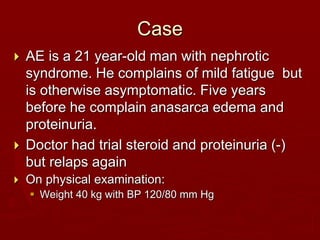
 AE is a 21 year-old man with nephrotic
syndrome. He complains of mild fatigue but
is otherwise asymptomatic. Five years
before he complain anasarca edema and
proteinuria.
 Doctor had trial steroid and proteinuria (-)
but relaps again
 On physical examination:
 Weight 40 kg with BP 120/80 mm Hg
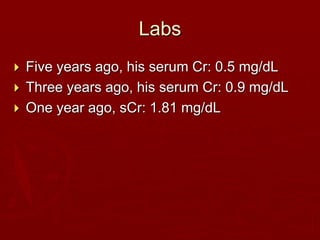
Labs
 Five years ago, his serum Cr: 0.5 mg/dL
 Three years ago, his serum Cr: 0.9 mg/dL
 One year ago, sCr: 1.81 mg/dL
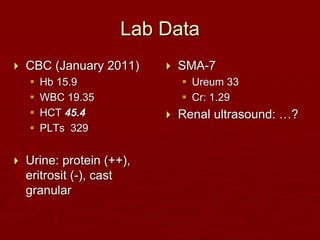
Lab Data
 CBC (January 2011)
 Hb 15.9
 WBC 19.35
 HCT 45.4
 PLTs 329
 Urine: protein (++),
eritrosit (-), cast
granular
 SMA-7
 Ureum 33
 Cr: 1.29
 Renal ultrasound: …?
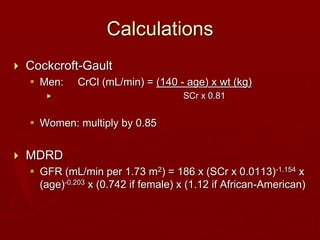
Calculations
 Cockcroft-Gault
 Men: CrCl (mL/min) = (140 - age) x wt (kg)
 SCr x 0.81
 Women: multiply by 0.85
 MDRD
 GFR (mL/min per 1.73 m2) = 186 x (SCr x 0.0113)-1.154 x
(age)-0.203 x (0.742 if female) x (1.12 if African-American)
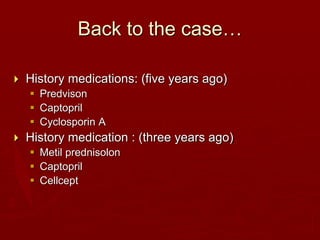
Back to the case…
 History medications: (five years ago)
 Predvison
 Captopril
 Cyclosporin A
 History medication : (three years ago)
 Metil prednisolon
 Captopril
 Cellcept
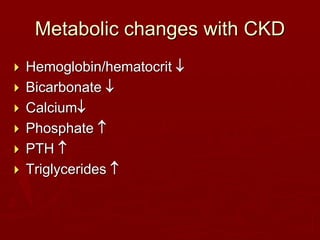
Metabolic changes with CKD
 Hemoglobin/hematocrit 
 Bicarbonate 
 Calcium
 Phosphate 
 PTH 
 Triglycerides 
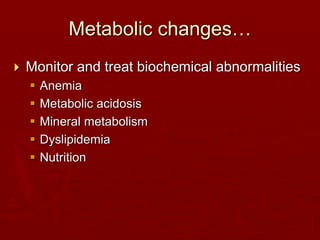
Metabolic changes…
 Monitor and treat biochemical abnormalities
 Anemia
 Metabolic acidosis
 Mineral metabolism
 Dyslipidemia
 Nutrition
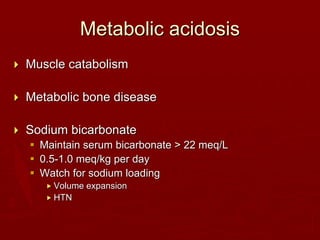
Metabolic acidosis
 Muscle catabolism
 Metabolic bone disease
 Sodium bicarbonate
 Maintain serum bicarbonate > 22 meq/L
 0.5-1.0 meq/kg per day
 Watch for sodium loading
 Volume expansion
 HTN
NEJM 2000; 342(20): 1478-83
Mineral metabolism
 Calcium and phosphate metabolism
abnormalities associated with:
 Renal osteodystrophy
 Calciphylaxis and vascular calcification
 14 of 16 ESRD/HD pts (20-30 yrs) had
calcification on CT scan
 3 of 60 in the control group
Nutrition
 Think about uremia
 Catabolic state
 Anorexia
 Decreased protein intake
 Consider assistance with a renal dietician
Follow-up Visit
 Two weeks later, the patient returns and
complains of fatique and hematemesis
 His BP today is 159/75 mm Hg
 He refused dialysis  go back to his home
 He died 10 days after came home in another
hospital
New laboratories (dari Adam
Malik)
 Hb
 Leuco
 Ureum: ?
 Creat:?
Evaluation for CKD
 Blood
 CBC with diff
 SMA-7 with Ca2+ and
phosphorous
 PTH
 HBA1c
 LFTs and FLP
 Uric acid and Fe2+
studies
 Urine
 Urinalysis with
microscopy
 Spot urine for
microalbumin
 24-urine collection for
protein and creatinine
 Ultrasound
Key points
 The serum creatinine level is not enough!
 Target BP for CKD
 <130/80 mm Hg
 <125/75 mm Hg in proteinuria
 HTN and proteinuria are the two most
important modifiable risk factors for
progressive CKD

Penyakit Ginjal Kronik

  • 1.
    Chronic Kidney Disease SyafrizalNasution and Oke Rina H.Adam Malik Hospital
  • 2.
    Case  AE isa 21 year-old man with nephrotic syndrome. He complains of mild fatigue but is otherwise asymptomatic. Five years before he complain anasarca edema and proteinuria.  Doctor had trial steroid and proteinuria (-) but relaps again  On physical examination:  Weight 40 kg with BP 120/80 mm Hg
  • 3.
    Labs  Five yearsago, his serum Cr: 0.5 mg/dL  Three years ago, his serum Cr: 0.9 mg/dL  One year ago, sCr: 1.81 mg/dL
  • 4.
    Lab Data  CBC(January 2011)  Hb 15.9  WBC 19.35  HCT 45.4  PLTs 329  Urine: protein (++), eritrosit (-), cast granular  SMA-7  Ureum 33  Cr: 1.29  Renal ultrasound: …?
  • 5.
    Calculations  Cockcroft-Gault  Men:CrCl (mL/min) = (140 - age) x wt (kg)  SCr x 0.81  Women: multiply by 0.85  MDRD  GFR (mL/min per 1.73 m2) = 186 x (SCr x 0.0113)-1.154 x (age)-0.203 x (0.742 if female) x (1.12 if African-American)
  • 6.
    Back to thecase…  History medications: (five years ago)  Predvison  Captopril  Cyclosporin A  History medication : (three years ago)  Metil prednisolon  Captopril  Cellcept
  • 7.
    Metabolic changes withCKD  Hemoglobin/hematocrit   Bicarbonate   Calcium  Phosphate   PTH   Triglycerides 
  • 8.
    Metabolic changes…  Monitorand treat biochemical abnormalities  Anemia  Metabolic acidosis  Mineral metabolism  Dyslipidemia  Nutrition
  • 9.
    Metabolic acidosis  Musclecatabolism  Metabolic bone disease  Sodium bicarbonate  Maintain serum bicarbonate > 22 meq/L  0.5-1.0 meq/kg per day  Watch for sodium loading  Volume expansion  HTN
  • 10.
    NEJM 2000; 342(20):1478-83 Mineral metabolism  Calcium and phosphate metabolism abnormalities associated with:  Renal osteodystrophy  Calciphylaxis and vascular calcification  14 of 16 ESRD/HD pts (20-30 yrs) had calcification on CT scan  3 of 60 in the control group
  • 11.
    Nutrition  Think abouturemia  Catabolic state  Anorexia  Decreased protein intake  Consider assistance with a renal dietician
  • 12.
    Follow-up Visit  Twoweeks later, the patient returns and complains of fatique and hematemesis  His BP today is 159/75 mm Hg  He refused dialysis  go back to his home  He died 10 days after came home in another hospital
  • 13.
    New laboratories (dariAdam Malik)  Hb  Leuco  Ureum: ?  Creat:?
  • 14.
    Evaluation for CKD Blood  CBC with diff  SMA-7 with Ca2+ and phosphorous  PTH  HBA1c  LFTs and FLP  Uric acid and Fe2+ studies  Urine  Urinalysis with microscopy  Spot urine for microalbumin  24-urine collection for protein and creatinine  Ultrasound
  • 15.
    Key points  Theserum creatinine level is not enough!  Target BP for CKD  <130/80 mm Hg  <125/75 mm Hg in proteinuria  HTN and proteinuria are the two most important modifiable risk factors for progressive CKD