A presentation on Circuit Breaker 
By 
Priyankar Misra 
EEE 
VITAM
Introduction 
• Automatically operated electrical switch, 
protect an electrical switch from overload or 
short circuit 
• Basic function-fault detection and interrupt 
current flow 
• Can be reset to resume application 
• Available in a variety of size
Origin 
• Early form, developed by Thomas Edison in 
1879 patent application-to protect lighting 
circuit wiring from accidental short circuit 
• Modern miniature circuit breaker ,patented by 
Brown, Boveri and Cie in 1924.
Operation 
• A fault condition must be detected 
• Once fault detected, contacts within circuit 
breaker, some mechanical stored energy 
stored in the circuit breaker and some energy 
utilized from the fault current. 
• Circuit breaker contacts carry the load current 
without getting heated 
• Arc in generated, which is controlled and 
extinguished in a controlled way
Arc interruption 
• Low voltage MCB-air, larger ratings –metallic 
or non metallic arc clutches 
• Gas circuit breakers-dielectric strength of 
sulphur hexafluoride 
• Vacuum circuit breakers-minimal arching 
• Air circuit breakers-compressed air
Short circuit current 
• Circuit breakers-rated-normal current they can 
carry and maximum short circuit current they 
can safely carry 
• Under short circuit conditions-current much 
larger then normal currents flow-electrical 
contacts open to interrupt large current arc is 
produced
Types of circuit breakers 
• Low voltage circuit breakers 
• Magnetic circuit breakers 
• Thermal magnetic circuit breakers 
• Common trip breakers 
• Medium voltage circuit breakers 
• Sulfur hexafluoride high voltage circuit breakers 
• Disconnecting circuit breakers 
• Carbon dioxide high voltage circuit breakers
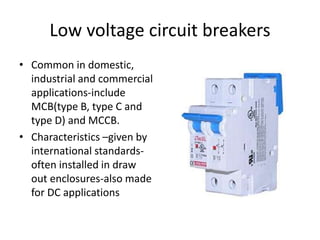
Low voltage circuit breakers 
• Common in domestic, 
industrial and commercial 
applications-include 
MCB(type B, type C and 
type D) and MCCB. 
• Characteristics –given by 
international standards-often 
installed in draw 
out enclosures-also made 
for DC applications
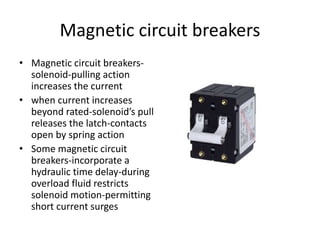
Magnetic circuit breakers 
• Magnetic circuit breakers-solenoid- 
pulling action 
increases the current 
• when current increases 
beyond rated-solenoid’s pull 
releases the latch-contacts 
open by spring action 
• Some magnetic circuit 
breakers-incorporate a 
hydraulic time delay-during 
overload fluid restricts 
solenoid motion-permitting 
short current surges
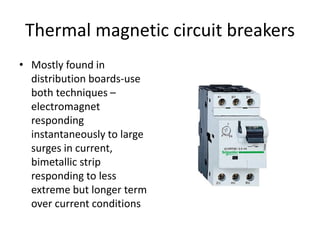
Thermal magnetic circuit breakers 
• Mostly found in 
distribution boards-use 
both techniques – 
electromagnet 
responding 
instantaneously to large 
surges in current, 
bimetallic strip 
responding to less 
extreme but longer term 
over current conditions
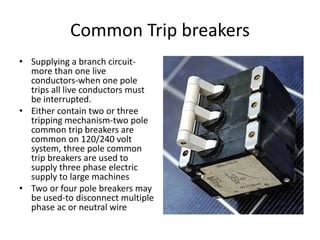
Common Trip breakers 
• Supplying a branch circuit-more 
than one live 
conductors-when one pole 
trips all live conductors must 
be interrupted. 
• Either contain two or three 
tripping mechanism-two pole 
common trip breakers are 
common on 120/240 volt 
system, three pole common 
trip breakers are used to 
supply three phase electric 
supply to large machines 
• Two or four pole breakers may 
be used-to disconnect multiple 
phase ac or neutral wire
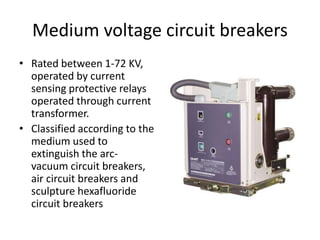
Medium voltage circuit breakers 
• Rated between 1-72 KV, 
operated by current 
sensing protective relays 
operated through current 
transformer. 
• Classified according to the 
medium used to 
extinguish the arc-vacuum 
circuit breakers, 
air circuit breakers and 
sculpture hexafluoride 
circuit breakers
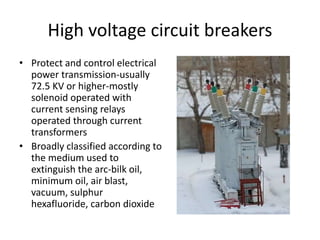
High voltage circuit breakers 
• Protect and control electrical 
power transmission-usually 
72.5 KV or higher-mostly 
solenoid operated with 
current sensing relays 
operated through current 
transformers 
• Broadly classified according to 
the medium used to 
extinguish the arc-bilk oil, 
minimum oil, air blast, 
vacuum, sulphur 
hexafluoride, carbon dioxide
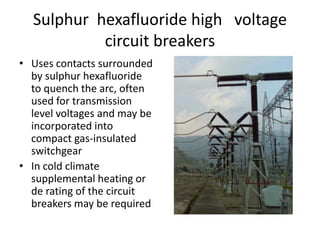
Sulphur hexafluoride high voltage 
circuit breakers 
• Uses contacts surrounded 
by sulphur hexafluoride 
to quench the arc, often 
used for transmission 
level voltages and may be 
incorporated into 
compact gas-insulated 
switchgear 
• In cold climate 
supplemental heating or 
de rating of the circuit 
breakers may be required
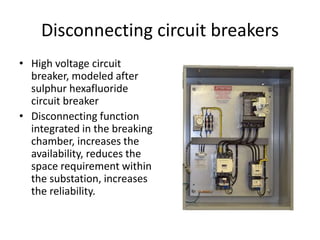
Disconnecting circuit breakers 
• High voltage circuit 
breaker, modeled after 
sulphur hexafluoride 
circuit breaker 
• Disconnecting function 
integrated in the breaking 
chamber, increases the 
availability, reduces the 
space requirement within 
the substation, increases 
the reliability.
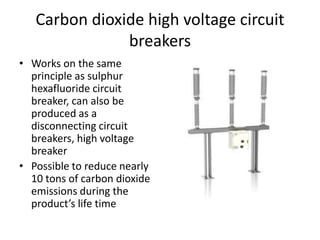
Carbon dioxide high voltage circuit 
breakers 
• Works on the same 
principle as sulphur 
hexafluoride circuit 
breaker, can also be 
produced as a 
disconnecting circuit 
breakers, high voltage 
breaker 
• Possible to reduce nearly 
10 tons of carbon dioxide 
emissions during the 
product’s life time
Advantages of circuit breaker 
• Disconnect the entire load instead of a single 
load 
• Provide better protection to 3 phase motors 
• Less cost 
• Provides greater reliability and safety 
• Cost of ownership
Disadvantages of circuit breakers 
• Initial cost is high 
• Reacts less quicker than a fuse 
• More sensitive to vibration and movement
Conclusion 
• Circuit breaker is an essential part of electrical 
network as it protects every device from 
electrical damage 
• Helps us to detect the fault and the area 
associated with it 
• Nowadays vacuum and sulphur hexaflouride 
circuit breakers are widely used due to their 
reliable and fast operations

Circuit breaker

  • 1.
    A presentation onCircuit Breaker By Priyankar Misra EEE VITAM
  • 2.
    Introduction • Automaticallyoperated electrical switch, protect an electrical switch from overload or short circuit • Basic function-fault detection and interrupt current flow • Can be reset to resume application • Available in a variety of size
  • 3.
    Origin • Earlyform, developed by Thomas Edison in 1879 patent application-to protect lighting circuit wiring from accidental short circuit • Modern miniature circuit breaker ,patented by Brown, Boveri and Cie in 1924.
  • 4.
    Operation • Afault condition must be detected • Once fault detected, contacts within circuit breaker, some mechanical stored energy stored in the circuit breaker and some energy utilized from the fault current. • Circuit breaker contacts carry the load current without getting heated • Arc in generated, which is controlled and extinguished in a controlled way
  • 5.
    Arc interruption •Low voltage MCB-air, larger ratings –metallic or non metallic arc clutches • Gas circuit breakers-dielectric strength of sulphur hexafluoride • Vacuum circuit breakers-minimal arching • Air circuit breakers-compressed air
  • 6.
    Short circuit current • Circuit breakers-rated-normal current they can carry and maximum short circuit current they can safely carry • Under short circuit conditions-current much larger then normal currents flow-electrical contacts open to interrupt large current arc is produced
  • 7.
    Types of circuitbreakers • Low voltage circuit breakers • Magnetic circuit breakers • Thermal magnetic circuit breakers • Common trip breakers • Medium voltage circuit breakers • Sulfur hexafluoride high voltage circuit breakers • Disconnecting circuit breakers • Carbon dioxide high voltage circuit breakers
  • 8.
    Low voltage circuitbreakers • Common in domestic, industrial and commercial applications-include MCB(type B, type C and type D) and MCCB. • Characteristics –given by international standards-often installed in draw out enclosures-also made for DC applications
  • 9.
    Magnetic circuit breakers • Magnetic circuit breakers-solenoid- pulling action increases the current • when current increases beyond rated-solenoid’s pull releases the latch-contacts open by spring action • Some magnetic circuit breakers-incorporate a hydraulic time delay-during overload fluid restricts solenoid motion-permitting short current surges
  • 10.
    Thermal magnetic circuitbreakers • Mostly found in distribution boards-use both techniques – electromagnet responding instantaneously to large surges in current, bimetallic strip responding to less extreme but longer term over current conditions
  • 11.
    Common Trip breakers • Supplying a branch circuit-more than one live conductors-when one pole trips all live conductors must be interrupted. • Either contain two or three tripping mechanism-two pole common trip breakers are common on 120/240 volt system, three pole common trip breakers are used to supply three phase electric supply to large machines • Two or four pole breakers may be used-to disconnect multiple phase ac or neutral wire
  • 12.
    Medium voltage circuitbreakers • Rated between 1-72 KV, operated by current sensing protective relays operated through current transformer. • Classified according to the medium used to extinguish the arc-vacuum circuit breakers, air circuit breakers and sculpture hexafluoride circuit breakers
  • 13.
    High voltage circuitbreakers • Protect and control electrical power transmission-usually 72.5 KV or higher-mostly solenoid operated with current sensing relays operated through current transformers • Broadly classified according to the medium used to extinguish the arc-bilk oil, minimum oil, air blast, vacuum, sulphur hexafluoride, carbon dioxide
  • 14.
    Sulphur hexafluoride highvoltage circuit breakers • Uses contacts surrounded by sulphur hexafluoride to quench the arc, often used for transmission level voltages and may be incorporated into compact gas-insulated switchgear • In cold climate supplemental heating or de rating of the circuit breakers may be required
  • 15.
    Disconnecting circuit breakers • High voltage circuit breaker, modeled after sulphur hexafluoride circuit breaker • Disconnecting function integrated in the breaking chamber, increases the availability, reduces the space requirement within the substation, increases the reliability.
  • 16.
    Carbon dioxide highvoltage circuit breakers • Works on the same principle as sulphur hexafluoride circuit breaker, can also be produced as a disconnecting circuit breakers, high voltage breaker • Possible to reduce nearly 10 tons of carbon dioxide emissions during the product’s life time
  • 17.
    Advantages of circuitbreaker • Disconnect the entire load instead of a single load • Provide better protection to 3 phase motors • Less cost • Provides greater reliability and safety • Cost of ownership
  • 18.
    Disadvantages of circuitbreakers • Initial cost is high • Reacts less quicker than a fuse • More sensitive to vibration and movement
  • 19.
    Conclusion • Circuitbreaker is an essential part of electrical network as it protects every device from electrical damage • Helps us to detect the fault and the area associated with it • Nowadays vacuum and sulphur hexaflouride circuit breakers are widely used due to their reliable and fast operations