Alto Mayo Case Study: Conservation International Peru 
Panel : Linking Policy and Practice: Approaches to REDD + Benefit Sharing 2 December 2014 Percy Summers, CI Peru Director of the Sustainable Landscape Partnership for Peru
Alto Mayo 
Protected Forest
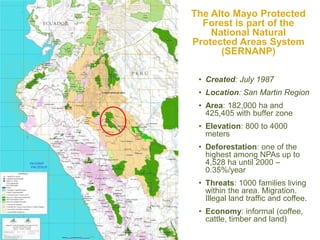
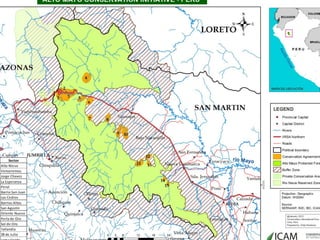
The Alto Mayo Protected Forest is part of the National Natural Protected Areas System (SERNANP) 
•Created: July 1987 
•Location: San Martin Region 
•Area: 182,000 ha and 425,405 with buffer zone 
•Elevation: 800 to 4000 meters 
•Deforestation: one of the highest among NPAs up to 4,528 ha until 2000 – 0.35%/year 
•Threats: 1000 families living within the area. Migration. Illegal land traffic and coffee. 
•Economy: informal (coffee, cattle, timber and land)
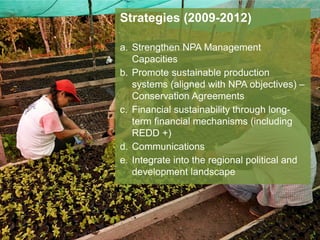
Strategies (2009-2012) 
a. 
Strengthen NPA Management Capacities 
b. 
Promote sustainable production systems (aligned with NPA objectives) – Conservation Agreements 
c. 
Financial sustainability through long- term financial mechanisms (including REDD +) 
d. 
Communications 
e. 
Integrate into the regional political and development landscape
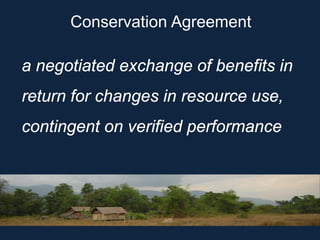
a negotiated exchange of benefits in return for changes in resource use, contingent on verified performance 
Conservation Agreement
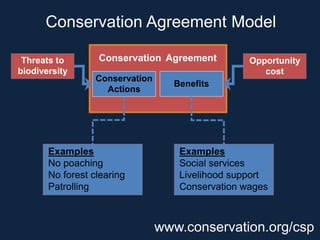
Conservation Agreement 
Benefits 
Threats to biodiversity 
Opportunity 
cost 
Conservation Agreement Model 
Conservation Actions 
Examples No poaching No forest clearing Patrolling 
Examples Social services Livelihood support Conservation wages 
www.conservation.org/csp
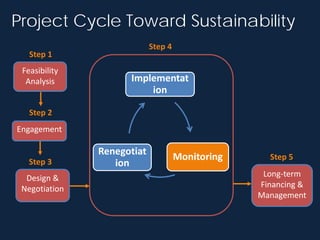
Implementation 
Monitoring 
Renegotiation 
Project Cycle Toward Sustainability 
Design & Negotiation 
Step 3 
Step 4 
Long-term Financing & Management 
Step 5 
Engagement 
Step 2 
Feasibility Analysis 
Step 1
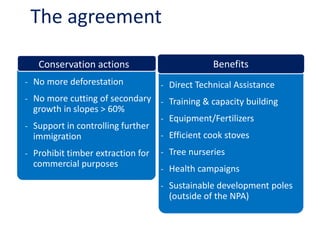
The agreement 
- 
Direct Technical Assistance 
- 
Training & capacity building 
- 
Equipment/Fertilizers 
- 
Efficient cook stoves 
- 
Tree nurseries 
- 
Health campaigns 
- 
Sustainable development poles (outside of the NPA) 
Benefits 
Conservation actions 
- 
No more deforestation 
- 
No more cutting of secondary growth in slopes > 60% 
- 
Support in controlling further immigration 
- 
Prohibit timber extraction for commercial purposes
Thank you!

Alto Mayo Case Study: Conservation International Peru

  • 1.
    Alto Mayo CaseStudy: Conservation International Peru Panel : Linking Policy and Practice: Approaches to REDD + Benefit Sharing 2 December 2014 Percy Summers, CI Peru Director of the Sustainable Landscape Partnership for Peru
  • 2.
  • 3.
    The Alto MayoProtected Forest is part of the National Natural Protected Areas System (SERNANP) •Created: July 1987 •Location: San Martin Region •Area: 182,000 ha and 425,405 with buffer zone •Elevation: 800 to 4000 meters •Deforestation: one of the highest among NPAs up to 4,528 ha until 2000 – 0.35%/year •Threats: 1000 families living within the area. Migration. Illegal land traffic and coffee. •Economy: informal (coffee, cattle, timber and land)
  • 4.
    Strategies (2009-2012) a. Strengthen NPA Management Capacities b. Promote sustainable production systems (aligned with NPA objectives) – Conservation Agreements c. Financial sustainability through long- term financial mechanisms (including REDD +) d. Communications e. Integrate into the regional political and development landscape
  • 5.
    a negotiated exchangeof benefits in return for changes in resource use, contingent on verified performance Conservation Agreement
  • 6.
    Conservation Agreement Benefits Threats to biodiversity Opportunity cost Conservation Agreement Model Conservation Actions Examples No poaching No forest clearing Patrolling Examples Social services Livelihood support Conservation wages www.conservation.org/csp
  • 7.
    Implementation Monitoring Renegotiation Project Cycle Toward Sustainability Design & Negotiation Step 3 Step 4 Long-term Financing & Management Step 5 Engagement Step 2 Feasibility Analysis Step 1
  • 8.
    The agreement - Direct Technical Assistance - Training & capacity building - Equipment/Fertilizers - Efficient cook stoves - Tree nurseries - Health campaigns - Sustainable development poles (outside of the NPA) Benefits Conservation actions - No more deforestation - No more cutting of secondary growth in slopes > 60% - Support in controlling further immigration - Prohibit timber extraction for commercial purposes
  • 11.