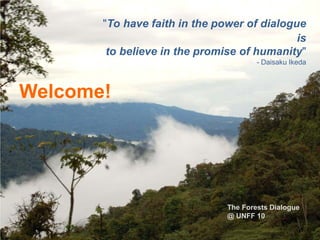
"To have faith in the power of dialogue
                                             is
        to believe in the promise of humanity"
                                       - Daisaku Ikeda


Welcome!


                               The Forests Dialogue
                               @ UNFF 10
Realizing the Potential of
Investing in Locally Controlled Forestry


Gary Dunning
Executive Director
The Forests Dialogue

UNFF 10
12 April 2013
Istanbul, Turkey
The Forests Dialogue
Purpose
• Established in 2000
• Created to reduce conflict
  among stakeholders in the
  forest sector
• International platform and
  process to discuss key SFM
  and conservation issues
• Focused on building
  mutual trust, enhanced
  understanding and
  commitment to change
To Date
• 13 Initiatives
  45 International Dialogues
  Nearly 3000 engaged
• 25 SC members
• Secretariat based at
  Yale University
What is Investing in
Locally Controlled Forestry (ILCF)?
Locally controlled forestry describes the local right for forest
  owner families and communities to make decisions on
  commercial forest management and land use, with secure
  rights, freedom of association and access to markets and
  technology.

Investment, in the context of ILCF, comes in two forms:
    – Asset investment is seeking a tangible financial return
    – Enabling investment, which does not expect a financial
      return, but is focused on securing rights, organizational
      development, capacity building and sustainable livelihoods
The Paradigm Shift in Investment
Why ILCF now?
• Growing trend towards local
  control and increased rights
  by communities
• Interest from investment
  funds, philanthropic
  foundations
• Ability to effectively mobilize
  increased funds for
  investment in forests – carbon
  & impact investment
• Opportunity to improve
  livelihoods while connecting
  communities to the
  local landscape
ILCF Initiative Support
  Funders
  • Growing Forest Partnerships
  • Sida
  • World Business Council for
    Sustainable Development

  Initiative Partners
  •   IIED
  •   IUCN
  •   FAO
  •   Profor (World Bank)
  •   G3 – alliance of
      rightsholders
The ILCF Initiative: 2009-2012


    400 stakeholders from 60 countries
Initiative Findings
Benefits of ILCF
• Investors – Balance social and
  environmental goals with need
  for return
• Right Holders – Meet investors
  needs, build capacity,
  livelihoods and partnerships
• Governments – Help reduce
  poverty, increase economic
  competitiveness and social
  progress
• Donors and NGOs – Create
  conditions for sustainable
  investment and assist
  community enterprise
Investment Framework
Type                                Enabling Investment                                                                        Asset Investment
Investor   Government               Donors                       Rights-holders              Private sector       Philanthropists           Banks                     Private investors
                                    Philanthropists              Product investors           companies            SWFs                                                and equity funds
                                                                 Philanthropists                                  Rights-holders


Vehicle    Projects                 NGOs                         SMEs                        Product purchase     Capital investment        Financial services        Capital investment
                                    Research institutions        Intermediaries


Goal       Private sector development                            Fill the ‘Pioneer Gap’,     Sustainable supply   Return on capital plus    Payment of interest       Risk-adjusted return
                                                                                             chain, quality       social / environ-mental   and return of principal   on capital
                                                                                             product              impact


Means      Public expenditure,      Grants, e.g.                 Enterprise                  Product              Impact investment via     Loans secured             Value
           e.g.: Infra-structure    Organizational               Philanthropy: Grants        investment via       equity, loans             against company or        investment via:
           Fiscal reform            development, Institutional   and seed funding, e.g.      Purchase order,                                personal assets (e.g.     equity, loans
           Regulatory reform        reform                       demonstrating validity of   pre-payments                                   land)
           Subsidies                                             business model


Output                                  Public goods                                                                                Private assets
Enabling ILCF
Roadmap to success
Enabling Conditions
•    Clarity of tenure and rights
•    “Good enough” governance
•    Partnerships
•    Business development
     services
•    Intermediaries and brokers
•    Transparency and
     accountability
•    Agreed goals and
     expectations
•    Checks and balances
•    Respect for different values
     but embracing change
Advancing ILCF
Next steps to scale up
• Forest and Farm Facility aims
  to develop institutions at local
  level.
• Further understanding of
  opportunities for asset
  investment – understanding
  the value chain and policy
  frameworks at national level.
• Develop partnerships
  (international, regional,
  national & local) with private
  sector and enabling investors
  to mobilize investment
Thanks!
TFD Documents and
Publications
Available electronically at:
www.theforestsdialogue.org


Follow us on Twitter: @forestsdialogue
Like us on Facebook: the forests dialogue

                      The Forests Dialogue Secretariat
                                        Yale University
                                  New Haven, CT, USA

                                      +1 203 432 5966

                                       tfd@yale.edu
                          www.theforestsdialogue.org
Panel
Panelists:
                                                  Discussion
Ghan Shyam Pandey – Global Alliance of Community Forestry

Peter deMarsh – International Family Forest Alliance

Björn Merkell – Swedish Forest Agency

Diji Chandrasekharan Behr – PROFOR

Patrick Wylie- International Union for Conservation of Nature (IUCN)


Moderator
Xiaoting Hou – The Forests Dialogue

UNFF10 PRESENTATION on Investing in locally controlled forestry

  • 1.
    "To have faithin the power of dialogue is to believe in the promise of humanity" - Daisaku Ikeda Welcome! The Forests Dialogue @ UNFF 10
  • 2.
    Realizing the Potentialof Investing in Locally Controlled Forestry Gary Dunning Executive Director The Forests Dialogue UNFF 10 12 April 2013 Istanbul, Turkey
  • 3.
    The Forests Dialogue Purpose •Established in 2000 • Created to reduce conflict among stakeholders in the forest sector • International platform and process to discuss key SFM and conservation issues • Focused on building mutual trust, enhanced understanding and commitment to change To Date • 13 Initiatives 45 International Dialogues Nearly 3000 engaged • 25 SC members • Secretariat based at Yale University
  • 4.
    What is Investingin Locally Controlled Forestry (ILCF)? Locally controlled forestry describes the local right for forest owner families and communities to make decisions on commercial forest management and land use, with secure rights, freedom of association and access to markets and technology. Investment, in the context of ILCF, comes in two forms: – Asset investment is seeking a tangible financial return – Enabling investment, which does not expect a financial return, but is focused on securing rights, organizational development, capacity building and sustainable livelihoods
  • 5.
    The Paradigm Shiftin Investment
  • 6.
    Why ILCF now? •Growing trend towards local control and increased rights by communities • Interest from investment funds, philanthropic foundations • Ability to effectively mobilize increased funds for investment in forests – carbon & impact investment • Opportunity to improve livelihoods while connecting communities to the local landscape
  • 7.
    ILCF Initiative Support Funders • Growing Forest Partnerships • Sida • World Business Council for Sustainable Development Initiative Partners • IIED • IUCN • FAO • Profor (World Bank) • G3 – alliance of rightsholders
  • 8.
    The ILCF Initiative:2009-2012 400 stakeholders from 60 countries
  • 9.
  • 10.
    Benefits of ILCF •Investors – Balance social and environmental goals with need for return • Right Holders – Meet investors needs, build capacity, livelihoods and partnerships • Governments – Help reduce poverty, increase economic competitiveness and social progress • Donors and NGOs – Create conditions for sustainable investment and assist community enterprise
  • 11.
    Investment Framework Type Enabling Investment Asset Investment Investor Government Donors Rights-holders Private sector Philanthropists Banks Private investors Philanthropists Product investors companies SWFs and equity funds Philanthropists Rights-holders Vehicle Projects NGOs SMEs Product purchase Capital investment Financial services Capital investment Research institutions Intermediaries Goal Private sector development Fill the ‘Pioneer Gap’, Sustainable supply Return on capital plus Payment of interest Risk-adjusted return chain, quality social / environ-mental and return of principal on capital product impact Means Public expenditure, Grants, e.g. Enterprise Product Impact investment via Loans secured Value e.g.: Infra-structure Organizational Philanthropy: Grants investment via equity, loans against company or investment via: Fiscal reform development, Institutional and seed funding, e.g. Purchase order, personal assets (e.g. equity, loans Regulatory reform reform demonstrating validity of pre-payments land) Subsidies business model Output Public goods Private assets
  • 12.
  • 13.
  • 14.
    Enabling Conditions • Clarity of tenure and rights • “Good enough” governance • Partnerships • Business development services • Intermediaries and brokers • Transparency and accountability • Agreed goals and expectations • Checks and balances • Respect for different values but embracing change
  • 15.
    Advancing ILCF Next stepsto scale up • Forest and Farm Facility aims to develop institutions at local level. • Further understanding of opportunities for asset investment – understanding the value chain and policy frameworks at national level. • Develop partnerships (international, regional, national & local) with private sector and enabling investors to mobilize investment
  • 16.
    Thanks! TFD Documents and Publications Availableelectronically at: www.theforestsdialogue.org Follow us on Twitter: @forestsdialogue Like us on Facebook: the forests dialogue The Forests Dialogue Secretariat Yale University New Haven, CT, USA +1 203 432 5966 tfd@yale.edu www.theforestsdialogue.org
  • 17.
    Panel Panelists: Discussion Ghan Shyam Pandey – Global Alliance of Community Forestry Peter deMarsh – International Family Forest Alliance Björn Merkell – Swedish Forest Agency Diji Chandrasekharan Behr – PROFOR Patrick Wylie- International Union for Conservation of Nature (IUCN) Moderator Xiaoting Hou – The Forests Dialogue