

Chromosoal Disorders
Saleh Al-Missned
331116716
Supervised by /D.Mostaf
 Define 'structural chromosomal abnormalities; define
and describe each of the following.
 Deletion
 Inversion
 Ring chromosome
 Duplication
 Translocation
 Robertsonian translocation
 Isochromosome
Illustrate the features of some cytogenetic
disorders:
Down syndrome.
Cri du chat.
Turner syndrome.
Klinefelter syndrome.
* Definition :
Change in chromosome usually result from a chromosomal breakage
followed by loss or rearrangement material .
Type :
1- Deletion
2- Inversion
3- Ring chromosome
4- Duplication
5- Translocation
6- Isochromosome
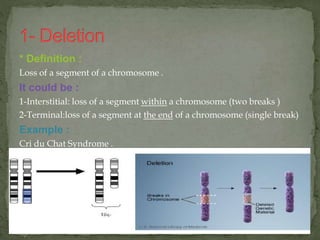
* Definition :
Loss of a segment of a chromosome .
It could be :
1-Interstitial: loss of a segment within a chromosome (two breaks )
2-Terminal:loss of a segment at the end of a chromosome (single break)
Example :
Cri du Chat Syndrome .
* Definition:
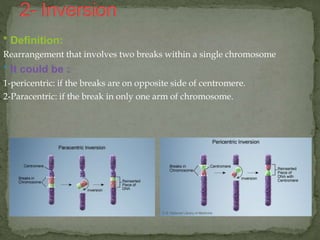
Rearrangement that involves two breaks within a single chromosome
* It could be :
1-pericentric: if the breaks are on opposite side of centromere.
2-Paracentric: if the break in only one arm of chromosome.
* Definition :
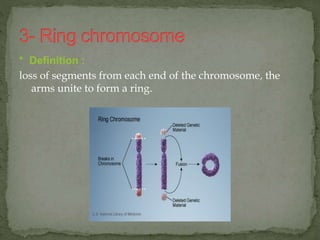
loss of segments from each end of the chromosome, the
arms unite to form a ring.
* Definition:
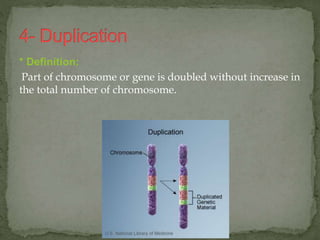
Part of chromosome or gene is doubled without increase in
the total number of chromosome.
* Definition :
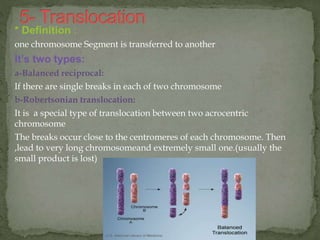
one chromosome Segment is transferred to another
It’s two types:
a-Balanced reciprocal:
If there are single breaks in each of two chromosome
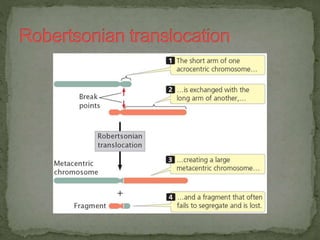
b-Robertsonian translocation:
It is a special type of translocation between two acrocentric
chromosome
The breaks occur close to the centromeres of each chromosome. Then
,lead to very long chromosomeand extremely small one.(usually the
small product is lost)
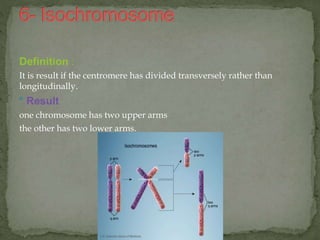
Definition :
It is result if the centromere has divided transversely rather than
longitudinally.
* Result
one chromosome has two upper arms
the other has two lower arms.
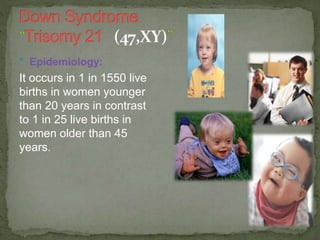
* Epidemiology:
It occurs in 1 in 1550 live
births in women younger
than 20 years in contrast
to 1 in 25 live births in
women older than 45
years.
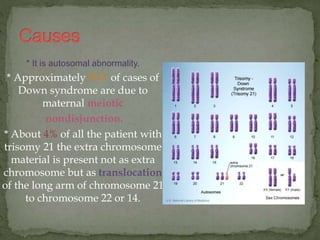
* It is autosomal abnormality.
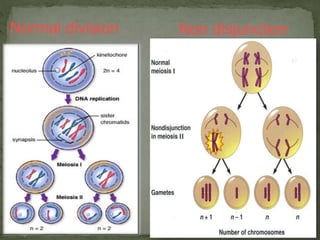
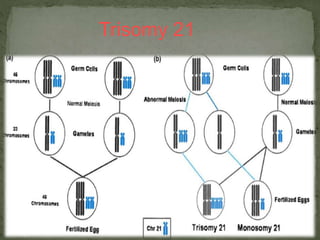
* Approximately 95% of cases of
Down syndrome are due to
maternal meiotic
nondisjunction.
* About 4% of all the patient with
trisomy 21 the extra chromosome
material is present not as extra
chromosome but as translocation
of the long arm of chromosome 21
to chromosome 22 or 14.
Normal division Non disjunction
Trisomy 21
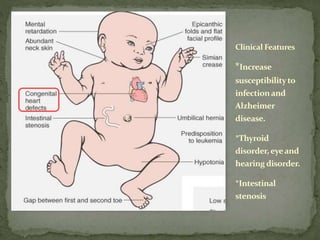
Clinical Features
*Increase
susceptibilityto
infectionand
Alzheimer
disease.
*Thyroid
disorder,eyeand
hearing disorder.
*Intestinal
stenosis
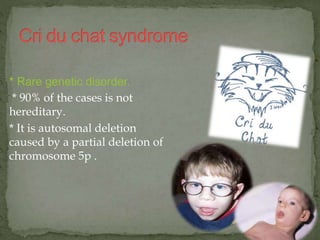
* Rare genetic disorder.
* 90% of the cases is not
hereditary.
* It is autosomal deletion
caused by a partial deletion of
chromosome 5p .
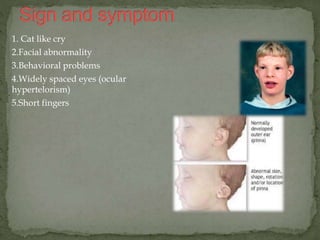
1. Cat like cry
2.Facial abnormality
3.Behavioral problems
4.Widely spaced eyes (ocular
hypertelorism)
5.Short fingers
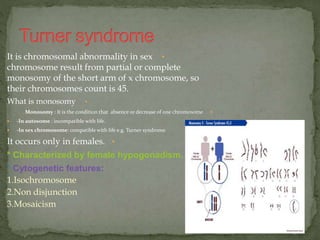
•It is chromosomal abnormality in sex
chromosome result from partial or complete
monosomy of the short arm of x chromosome, so
their chromosomes count is 45.
•What is monosomy
Monosomy : It is the condition that absence or decrease of one chromosome
 -In autosome : incompatible with life.
 -In sex chromosome: compatible with life e.g. Turner syndrome
•It occurs only in females.
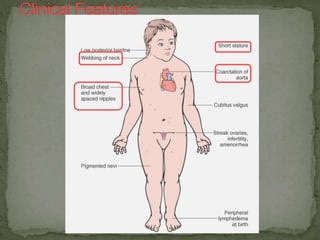
* Characterized by female hypogonadism.
* Cytogenetic features:
1.Isochromosome
2.Non disjunction
3.Mosaicism
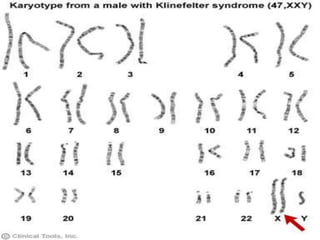
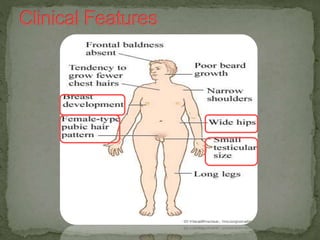
A male hypogonadism that develop when there
are at least two x chromosome and one or more Y
chromosome. Most patients are 47,XXY
* Cytogenetic features:
1.Chromosomal non disjunction during meiosis.
2. Mosaicism
What is Mosaicism
 Mosaicism : It is a mitotic errors in early development give
rise to 2 or more population of cell in the same individual.
Result from Mitotic errors during cleavage .
Mosaicism effecting often the sex chromosome
Structural abnormalities
Change in chromosome usually result from achromosomal breakage followed by loss or
rearrangement material
Deletion Loss of a segment of a chromosome
Inversion Rearrangement that involves two breaks within a single chromosome
Ring chromosome loss of segments from each end of the chromosome, the arms unite to form a
ring.
Duplication
Part of chromosome or gene is doubled without increase in the total number of chromosome.
Translocation one chromosome Segment is transferred to another
Isochromosome It is result if the centromere has divided transversely rather than longitudinally
the features of some cytogenetic
Down Syndrome (47,XY) -Non-disjunction -Translocation
5(deletion of chromosome5.p) short arm cases is not hereditaryCri du chat syndrome
Turner syndrome
Mosaicism-Non disjunctio-(45,x) It occurs only in females Isochromosome
Mosaicism-Klinefelter syndrome (47,XXY) 1.Chromosomal non disjunction during meiosis
 ROBBINS (Basic Pathology) 8th edition
 Pathologic Basis Of Disease.
 The pictures form the U.S national Library of medicine
Chromosoal Disorders

Chromosoal Disorders

  • 1.
  • 2.
     Define 'structuralchromosomal abnormalities; define and describe each of the following.  Deletion  Inversion  Ring chromosome  Duplication  Translocation  Robertsonian translocation  Isochromosome Illustrate the features of some cytogenetic disorders: Down syndrome. Cri du chat. Turner syndrome. Klinefelter syndrome.
  • 3.
    * Definition : Changein chromosome usually result from a chromosomal breakage followed by loss or rearrangement material . Type : 1- Deletion 2- Inversion 3- Ring chromosome 4- Duplication 5- Translocation 6- Isochromosome
  • 4.
    * Definition : Lossof a segment of a chromosome . It could be : 1-Interstitial: loss of a segment within a chromosome (two breaks ) 2-Terminal:loss of a segment at the end of a chromosome (single break) Example : Cri du Chat Syndrome .
  • 5.
    * Definition: Rearrangement thatinvolves two breaks within a single chromosome * It could be : 1-pericentric: if the breaks are on opposite side of centromere. 2-Paracentric: if the break in only one arm of chromosome.
  • 6.
    * Definition : lossof segments from each end of the chromosome, the arms unite to form a ring.
  • 7.
    * Definition: Part ofchromosome or gene is doubled without increase in the total number of chromosome.
  • 8.
    * Definition : onechromosome Segment is transferred to another It’s two types: a-Balanced reciprocal: If there are single breaks in each of two chromosome b-Robertsonian translocation: It is a special type of translocation between two acrocentric chromosome The breaks occur close to the centromeres of each chromosome. Then ,lead to very long chromosomeand extremely small one.(usually the small product is lost)
  • 10.
    Definition : It isresult if the centromere has divided transversely rather than longitudinally. * Result one chromosome has two upper arms the other has two lower arms.
  • 11.
    * Epidemiology: It occursin 1 in 1550 live births in women younger than 20 years in contrast to 1 in 25 live births in women older than 45 years.
  • 12.
    * It isautosomal abnormality. * Approximately 95% of cases of Down syndrome are due to maternal meiotic nondisjunction. * About 4% of all the patient with trisomy 21 the extra chromosome material is present not as extra chromosome but as translocation of the long arm of chromosome 21 to chromosome 22 or 14.
  • 13.
  • 14.
  • 15.
  • 16.
    * Rare geneticdisorder. * 90% of the cases is not hereditary. * It is autosomal deletion caused by a partial deletion of chromosome 5p .
  • 17.
    1. Cat likecry 2.Facial abnormality 3.Behavioral problems 4.Widely spaced eyes (ocular hypertelorism) 5.Short fingers
  • 18.
    •It is chromosomalabnormality in sex chromosome result from partial or complete monosomy of the short arm of x chromosome, so their chromosomes count is 45. •What is monosomy Monosomy : It is the condition that absence or decrease of one chromosome  -In autosome : incompatible with life.  -In sex chromosome: compatible with life e.g. Turner syndrome •It occurs only in females. * Characterized by female hypogonadism. * Cytogenetic features: 1.Isochromosome 2.Non disjunction 3.Mosaicism
  • 20.
    A male hypogonadismthat develop when there are at least two x chromosome and one or more Y chromosome. Most patients are 47,XXY * Cytogenetic features: 1.Chromosomal non disjunction during meiosis. 2. Mosaicism What is Mosaicism  Mosaicism : It is a mitotic errors in early development give rise to 2 or more population of cell in the same individual. Result from Mitotic errors during cleavage . Mosaicism effecting often the sex chromosome
  • 23.
    Structural abnormalities Change inchromosome usually result from achromosomal breakage followed by loss or rearrangement material Deletion Loss of a segment of a chromosome Inversion Rearrangement that involves two breaks within a single chromosome Ring chromosome loss of segments from each end of the chromosome, the arms unite to form a ring. Duplication Part of chromosome or gene is doubled without increase in the total number of chromosome. Translocation one chromosome Segment is transferred to another Isochromosome It is result if the centromere has divided transversely rather than longitudinally the features of some cytogenetic Down Syndrome (47,XY) -Non-disjunction -Translocation 5(deletion of chromosome5.p) short arm cases is not hereditaryCri du chat syndrome Turner syndrome Mosaicism-Non disjunctio-(45,x) It occurs only in females Isochromosome Mosaicism-Klinefelter syndrome (47,XXY) 1.Chromosomal non disjunction during meiosis
  • 25.
     ROBBINS (BasicPathology) 8th edition  Pathologic Basis Of Disease.  The pictures form the U.S national Library of medicine