Motivating Students to Read


Chapter 17
Elizabeth Goode
LIBR 263
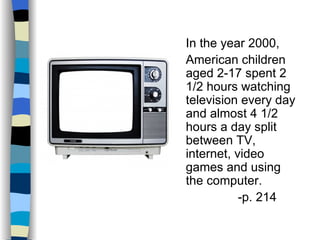
In the year 2000,
American children
aged 2-17 spent 2
1/2 hours watching
television every day
and almost 4 1/2
hours a day split
between TV,
internet, video
games and using
the computer.
           -p. 214
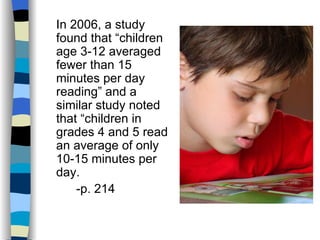
In 2006, a study
found that “children
age 3-12 averaged
fewer than 15
minutes per day
reading” and a
similar study noted
that “children in
grades 4 and 5 read
an average of only
10-15 minutes per
day.
    -p. 214
Two things to ponder:
1) Jim Trelease wrote, “We’ve taught
   children how to read but have
   forgotten to teach them to want to
   read.” p. 215
2) “The more motivated children are, the
   greater amount and breadth of their
   reading, even after controlling for
   previous amount and breadth of
   reading.
Adult Role Models
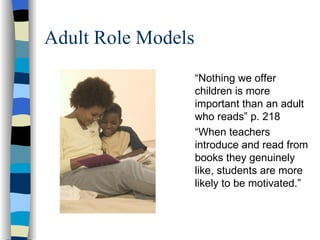
                    “Nothing we offer
                    children is more
                    important than an adult
                    who reads” p. 218
                    “When teachers
                    introduce and read from
                    books they genuinely
                    like, students are more
                    likely to be motivated.”
 Those books generally are better
  books. They usually are more solidly
  crafted and contain more levels on
  which children can make connections.
 When teachers recommend books that
  are personally meaningful, a genuine
  and irresistible enthusiasm
  accompanies their words. When people
  talk about books they like, those who
  listen are often influenced by their
  sincerity and conviction. P. 218
Learning from Motivated Readers-
Common principles of how motivated
readers read:
   They don’t read for others but rather their own purposes. They
    read what is important to them.
   They have personal and identifiable likes and dislikes in books.
   They feel rewarded during the reading process and find
    immediate pleasure in the reading without thinking about the
    info they will gain from it.
   They don’t feel trapped by a book.
   They don’t hesitate about passing judgment on a book.
   They read at their own rate.
   They don’t feel obligated to remember everything they read.
   They read broadly, narrowly, or in between, depending on how
    they feel.
   They develop personal attachment to books they like
   They find regular time to read.                P. 219
Best thing to learn: get out of
student’s way


“Are the things I am asking my
students to do in response to a
book adding to their enjoyment
and understanding of that book?”
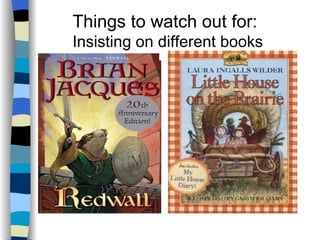
Things to watch out for:
Insisting on different books
   Disgracing student’s ““Authentic literacy”
    choice in books,       are types of
    placing value          activities that are
    judgments on out-of-   practiced not just
    school reading         within the walls of a
   Not using “authentic   schoolroom but also
    literacy” activities   for real-life purposes
   Disempowering          outside school.” p.
    student reading        220
   Misusing reading     No Worksheets or
    incentive programs     Basal Readers
Reading Incentive Programs
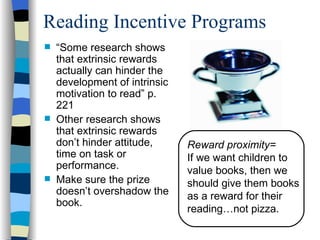
   “Some research shows
    that extrinsic rewards
    actually can hinder the
    development of intrinsic
    motivation to read” p.
    221
   Other research shows
    that extrinsic rewards
    don’t hinder attitude,     Reward proximity=
    time on task or            If we want children to
    performance.               value books, then we
   Make sure the prize        should give them books
    doesn’t overshadow the     as a reward for their
    book.
                               reading…not pizza.
Positive Student Motivation-Ideal
Reading Environment:
   Set an example-communicate enthusiasm and
    appreciation of literature and most importantly read in
    front of the students
   Provide access to books-different formats and
    reading levels
   Make time for books: read-aloud, time for self-
    selected reading, introduce books to children
   Create a reading atmosphere
   Work with parents
   Choose meaningful activities
   No guarantees every child will be motivated to read
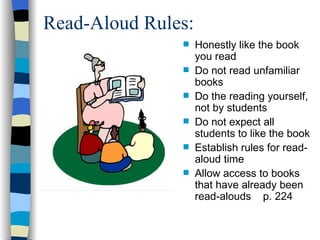
Read-Aloud Rules:
                   Honestly like the book
                    you read
                   Do not read unfamiliar
                    books
                   Do the reading yourself,
                    not by students
                   Do not expect all
                    students to like the book
                   Establish rules for read-
                    aloud time
                   Allow access to books
                    that have already been
                    read-alouds p. 224
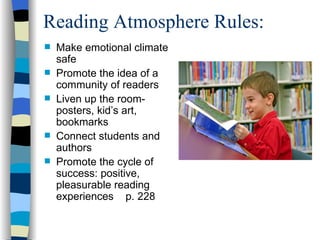
Reading Atmosphere Rules:
   Make emotional climate
    safe
   Promote the idea of a
    community of readers
   Liven up the room-
    posters, kid’s art,
    bookmarks
   Connect students and
    authors
   Promote the cycle of
    success: positive,
    pleasurable reading
    experiences p. 228
Tunnell, M. O., Jacobs, J.S., Young, T.A., Bryan, G.
(2012). Children's Literature, Briefly, (5th Edition). Allyn
& Bacon.

Chp17 goode

  • 1.
    Motivating Students toRead Chapter 17 Elizabeth Goode LIBR 263
  • 2.
    In the year2000, American children aged 2-17 spent 2 1/2 hours watching television every day and almost 4 1/2 hours a day split between TV, internet, video games and using the computer. -p. 214
  • 3.
    In 2006, astudy found that “children age 3-12 averaged fewer than 15 minutes per day reading” and a similar study noted that “children in grades 4 and 5 read an average of only 10-15 minutes per day. -p. 214
  • 4.
    Two things toponder: 1) Jim Trelease wrote, “We’ve taught children how to read but have forgotten to teach them to want to read.” p. 215 2) “The more motivated children are, the greater amount and breadth of their reading, even after controlling for previous amount and breadth of reading.
  • 5.
    Adult Role Models “Nothing we offer children is more important than an adult who reads” p. 218 “When teachers introduce and read from books they genuinely like, students are more likely to be motivated.”
  • 6.
     Those booksgenerally are better books. They usually are more solidly crafted and contain more levels on which children can make connections.  When teachers recommend books that are personally meaningful, a genuine and irresistible enthusiasm accompanies their words. When people talk about books they like, those who listen are often influenced by their sincerity and conviction. P. 218
  • 7.
    Learning from MotivatedReaders- Common principles of how motivated readers read:  They don’t read for others but rather their own purposes. They read what is important to them.  They have personal and identifiable likes and dislikes in books.  They feel rewarded during the reading process and find immediate pleasure in the reading without thinking about the info they will gain from it.  They don’t feel trapped by a book.  They don’t hesitate about passing judgment on a book.  They read at their own rate.  They don’t feel obligated to remember everything they read.  They read broadly, narrowly, or in between, depending on how they feel.  They develop personal attachment to books they like  They find regular time to read. P. 219
  • 8.
    Best thing tolearn: get out of student’s way “Are the things I am asking my students to do in response to a book adding to their enjoyment and understanding of that book?”
  • 9.
    Things to watchout for: Insisting on different books
  • 10.
    Disgracing student’s ““Authentic literacy” choice in books, are types of placing value activities that are judgments on out-of- practiced not just school reading within the walls of a  Not using “authentic schoolroom but also literacy” activities for real-life purposes  Disempowering outside school.” p. student reading 220  Misusing reading No Worksheets or incentive programs Basal Readers
  • 11.
    Reading Incentive Programs  “Some research shows that extrinsic rewards actually can hinder the development of intrinsic motivation to read” p. 221  Other research shows that extrinsic rewards don’t hinder attitude, Reward proximity= time on task or If we want children to performance. value books, then we  Make sure the prize should give them books doesn’t overshadow the as a reward for their book. reading…not pizza.
  • 12.
    Positive Student Motivation-Ideal ReadingEnvironment:  Set an example-communicate enthusiasm and appreciation of literature and most importantly read in front of the students  Provide access to books-different formats and reading levels  Make time for books: read-aloud, time for self- selected reading, introduce books to children  Create a reading atmosphere  Work with parents  Choose meaningful activities  No guarantees every child will be motivated to read
  • 13.
    Read-Aloud Rules:  Honestly like the book you read  Do not read unfamiliar books  Do the reading yourself, not by students  Do not expect all students to like the book  Establish rules for read- aloud time  Allow access to books that have already been read-alouds p. 224
  • 14.
    Reading Atmosphere Rules:  Make emotional climate safe  Promote the idea of a community of readers  Liven up the room- posters, kid’s art, bookmarks  Connect students and authors  Promote the cycle of success: positive, pleasurable reading experiences p. 228
  • 15.
    Tunnell, M. O.,Jacobs, J.S., Young, T.A., Bryan, G. (2012). Children's Literature, Briefly, (5th Edition). Allyn & Bacon.