Topic Selection
SPE 108
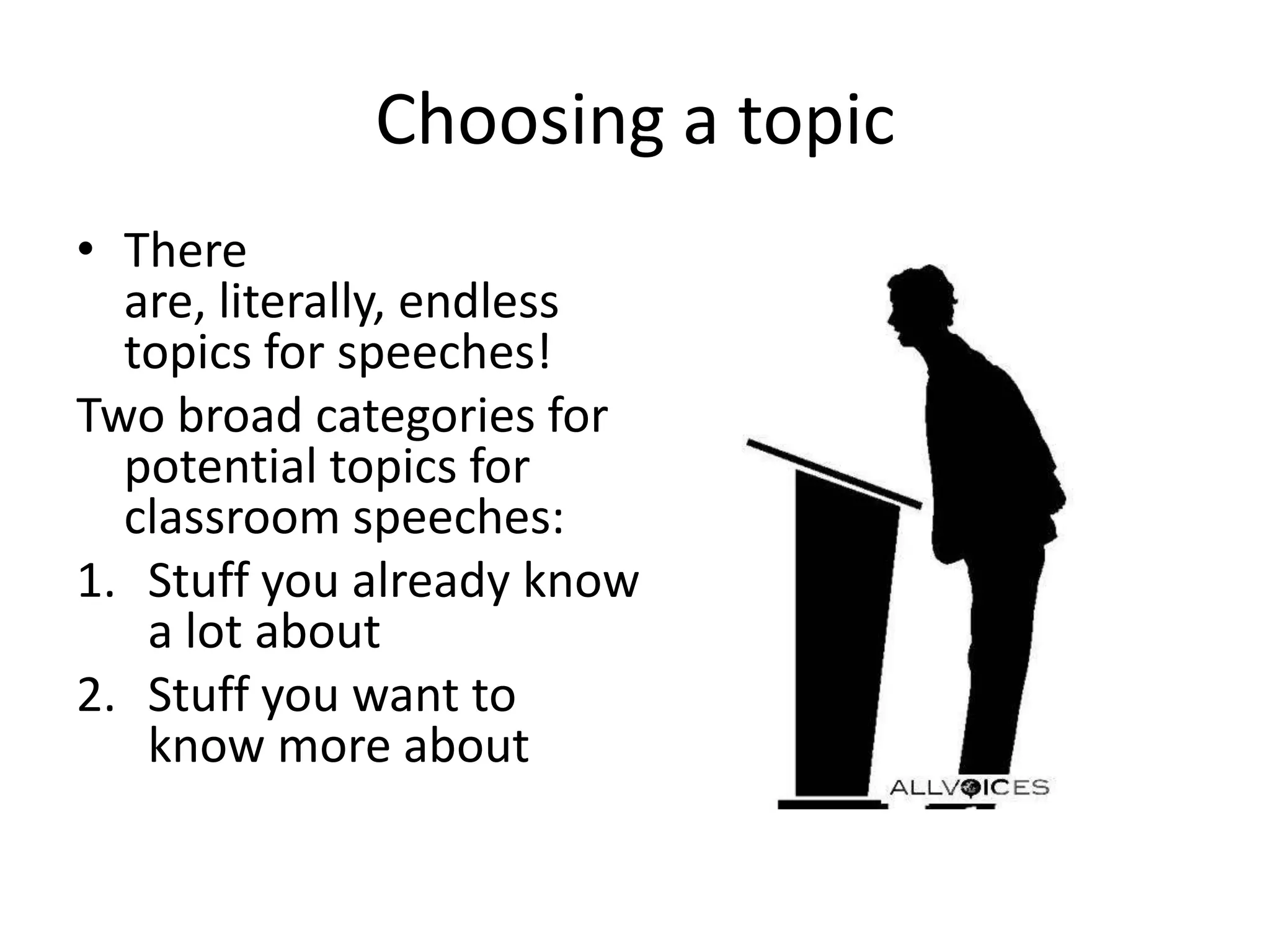
Choosing a topic
• There
are, literally, endless
topics for speeches!
Two broad categories for
potential topics for
classroom speeches:
1. Stuff you already know
a lot about
2. Stuff you want to
know more about
Topics you know a lot about
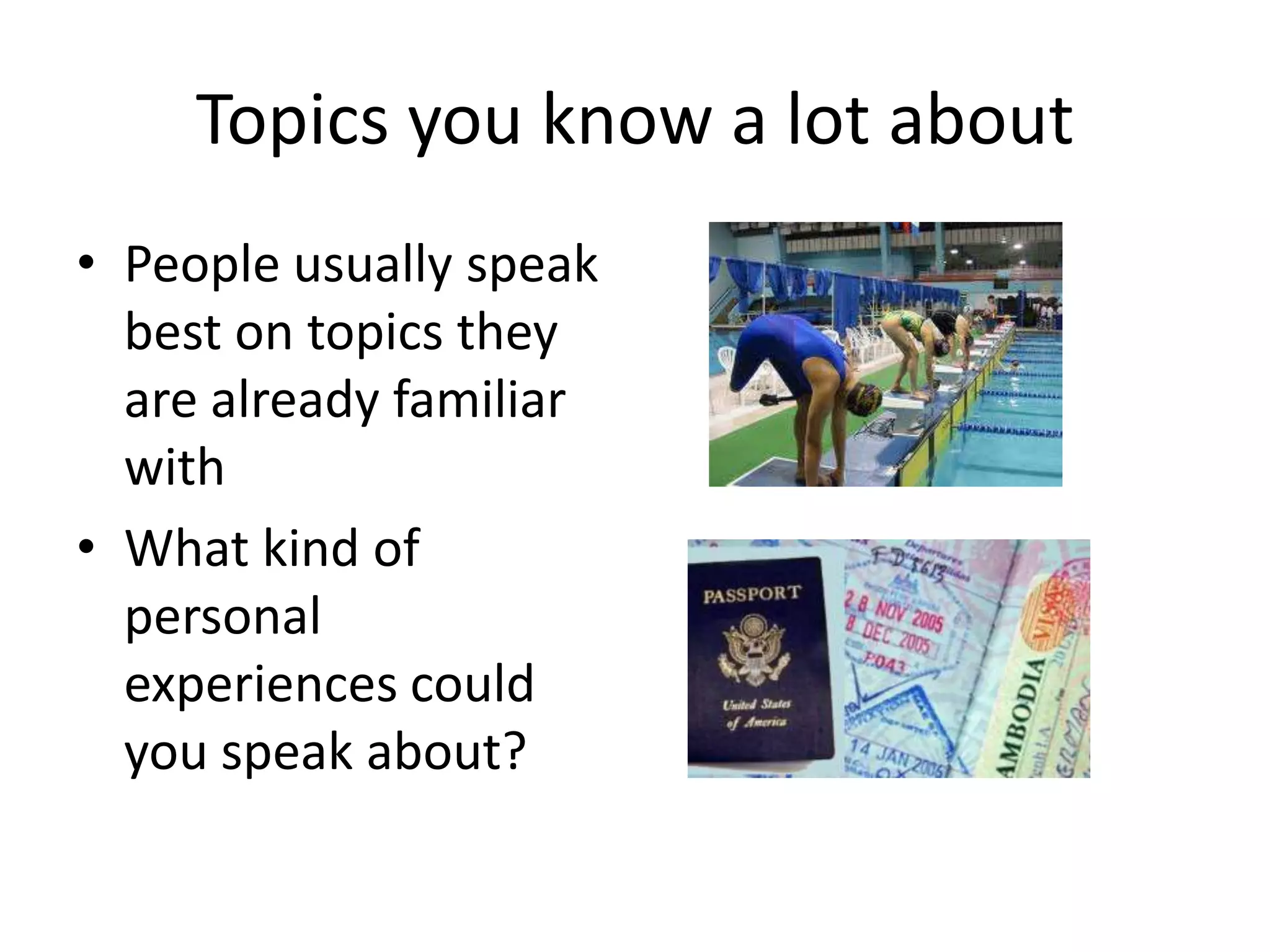
• People usually speak
best on topics they
are already familiar
with
• What kind of
personal
experiences could
you speak about?
Topics you want to know more about
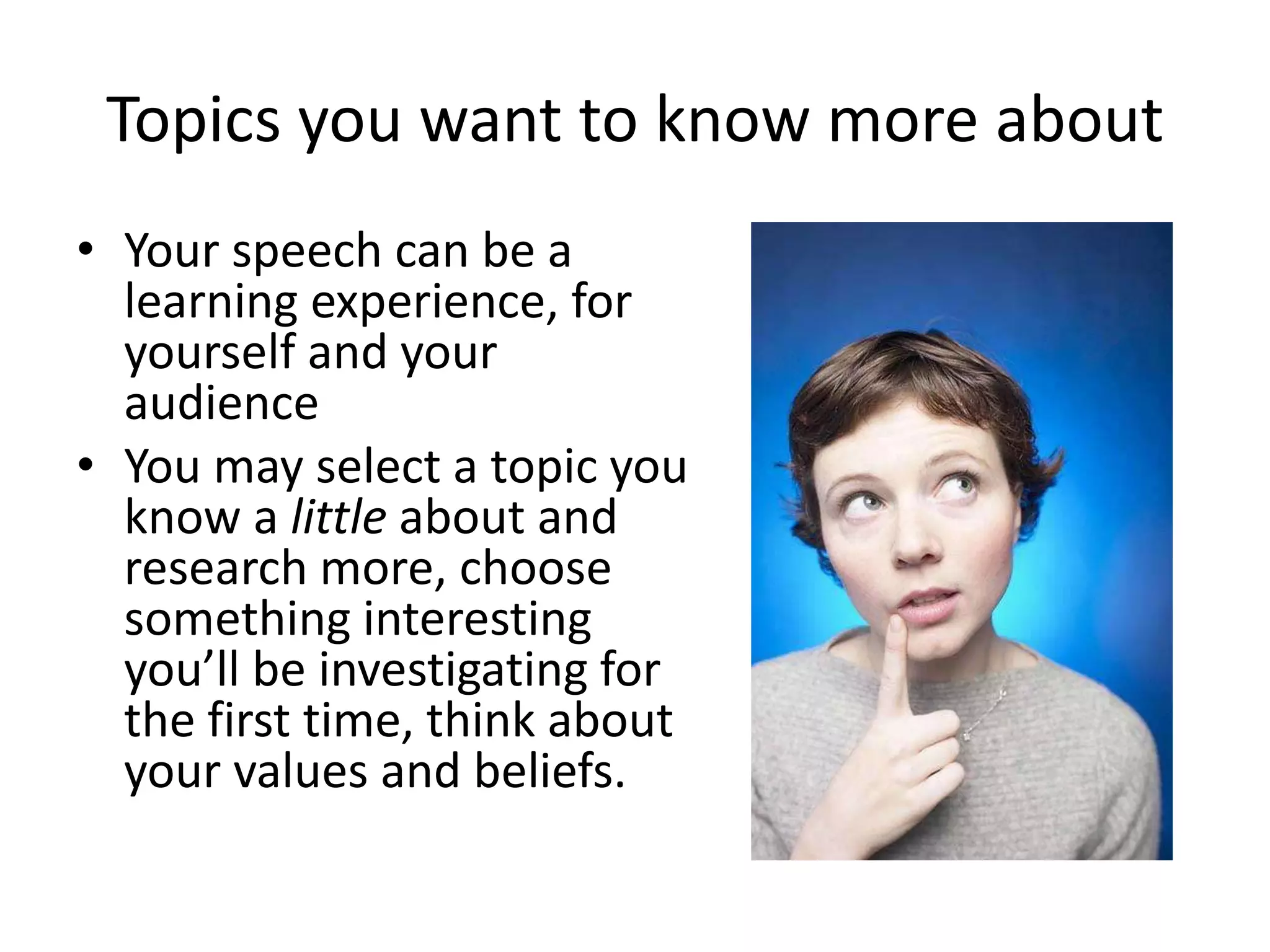
• Your speech can be a
learning experience, for
yourself and your
audience
• You may select a topic you
know a little about and
research more, choose
something interesting
you’ll be investigating for
the first time, think about
your values and beliefs.
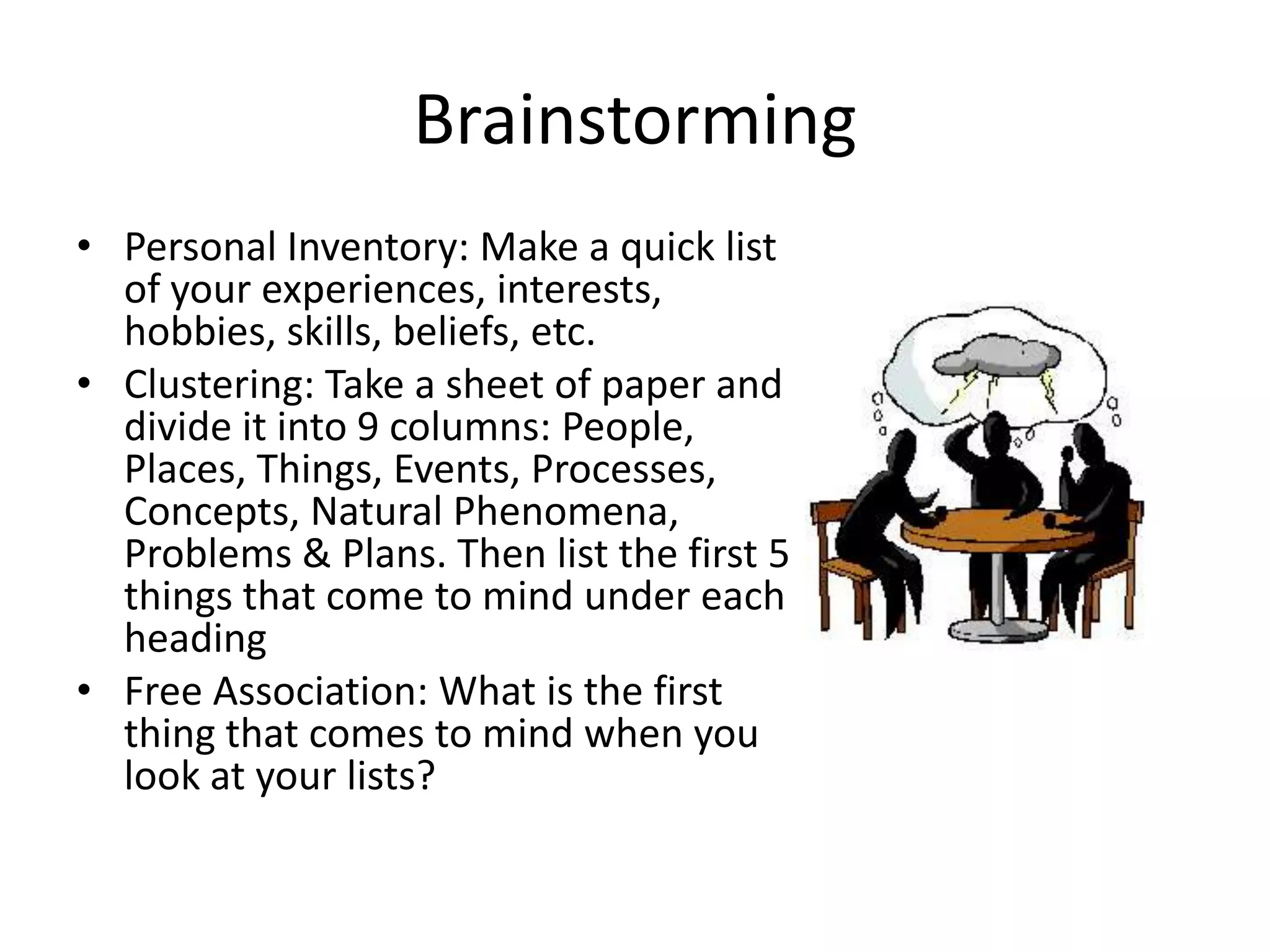
Brainstorming
• Personal Inventory: Make a quick list
of your experiences, interests,
hobbies, skills, beliefs, etc.
• Clustering: Take a sheet of paper and
divide it into 9 columns: People,
Places, Things, Events, Processes,
Concepts, Natural Phenomena,
Problems & Plans. Then list the first 5
things that come to mind under each
heading
• Free Association: What is the first
thing that comes to mind when you
look at your lists?
Brainstorming
• Reference Search: Browse
through reference books
(dictionary, encyclopedia)
and see if any topics catch
your interest
• Internet Search: Google,
Wikipedia
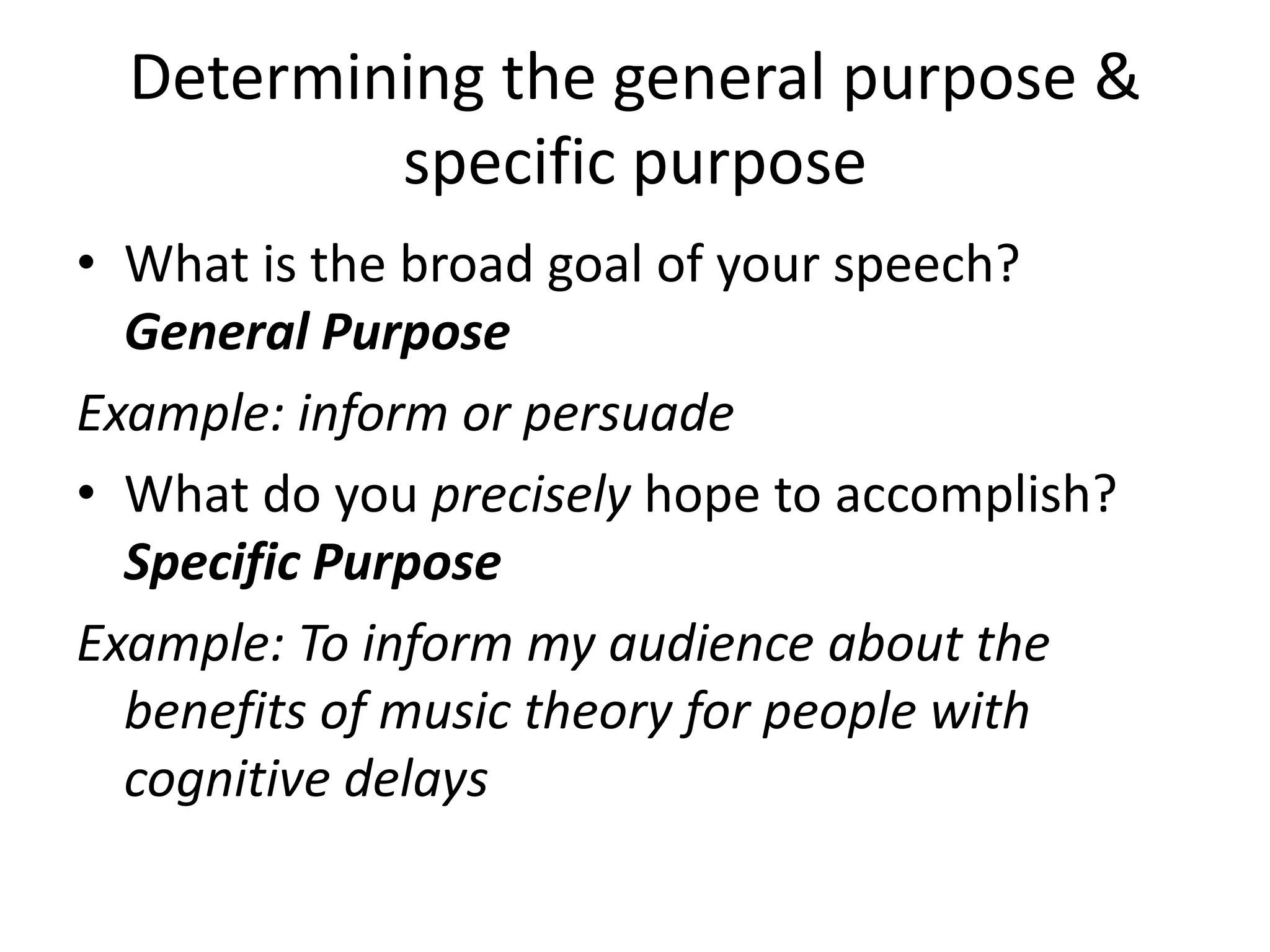
Determining the general purpose &
specific purpose
• What is the broad goal of your speech?
General Purpose
Example: inform or persuade
• What do you precisely hope to accomplish?
Specific Purpose
Example: To inform my audience about the
benefits of music theory for people with
cognitive delays
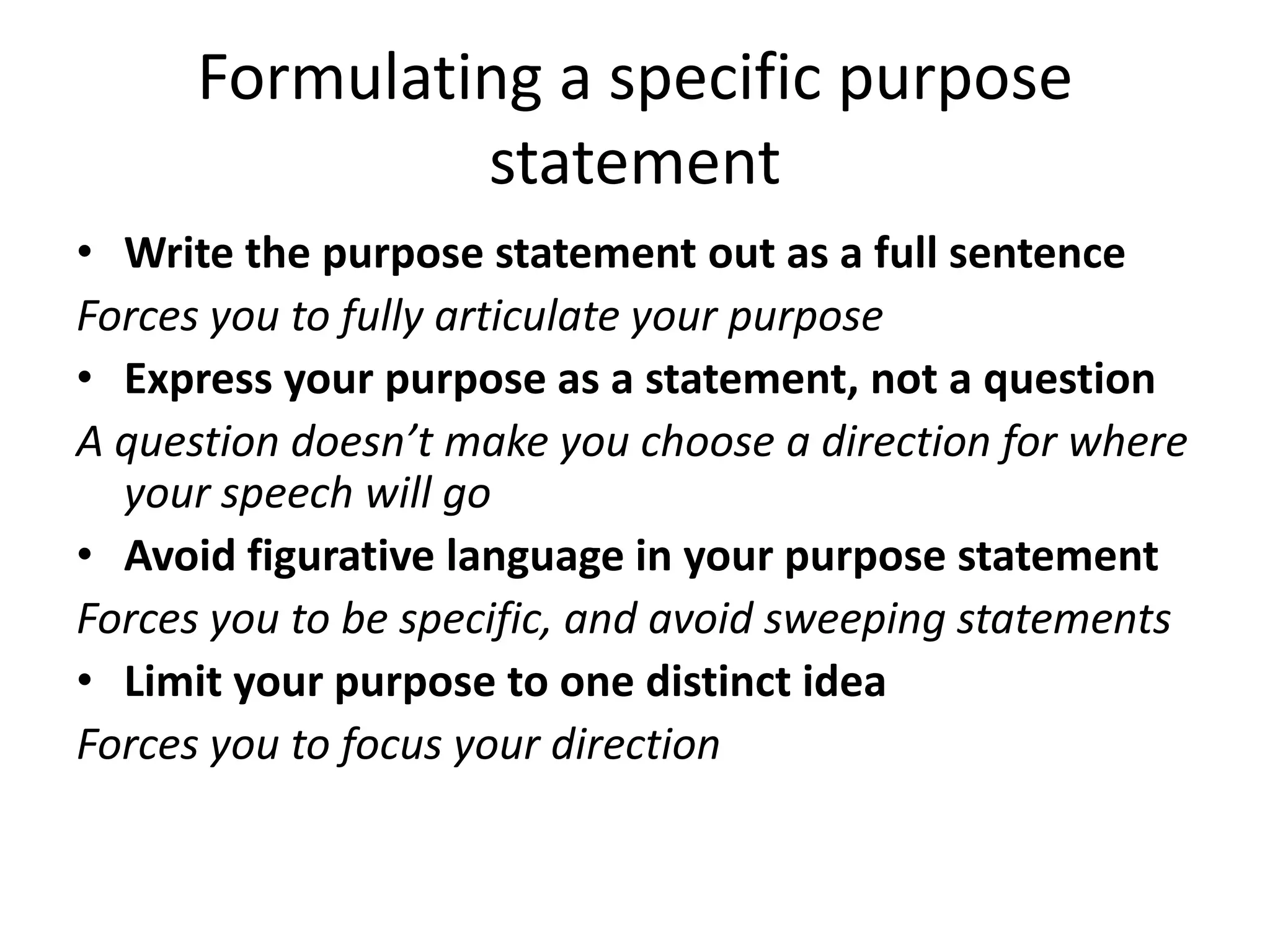
Formulating a specific purpose
statement
• Write the purpose statement out as a full sentence
Forces you to fully articulate your purpose
• Express your purpose as a statement, not a question
A question doesn’t make you choose a direction for where
your speech will go
• Avoid figurative language in your purpose statement
Forces you to be specific, and avoid sweeping statements
• Limit your purpose to one distinct idea
Forces you to focus your direction
Formulating a specific purpose
statement
• Limit your purpose to one distinct idea
Forces you to focus your direction
• Make sure your specific purpose is not too
vague or general
If it is, it’s NOT a specific purpose statement
Questions to ask about your specific
purpose
1. Does my purpose meet the assignment?
2. Can I accomplish my purpose in the time
allotted?
3. Is the purpose relevant to my audience?
4. Is the purpose too trivial for my audience?
5. Is the purpose too technical for my
audience?
The Central Idea
• Central idea: a one sentence
statement that sums up the major
ideas of a speech
• A concise statement about what you
expect to say
• Essentially the same as a thesis
statement in a written paper
• Your residual message – what you
expect the audience to remember
after you’re finished speaking
• The central idea usually emerges after
most of your research is complete, and
you have already decided on the three
main points of your speech.
Guidelines for the central idea
The central idea:
1. Should be expressed in a full
sentence
2. Should not be in the form of
a question
3. Should avoid figurative
language
4. Should not be vague or
overly general

Topic Selection

  • 1.
  • 2.
    Choosing a topic •There are, literally, endless topics for speeches! Two broad categories for potential topics for classroom speeches: 1. Stuff you already know a lot about 2. Stuff you want to know more about
  • 3.
    Topics you knowa lot about • People usually speak best on topics they are already familiar with • What kind of personal experiences could you speak about?
  • 4.
    Topics you wantto know more about • Your speech can be a learning experience, for yourself and your audience • You may select a topic you know a little about and research more, choose something interesting you’ll be investigating for the first time, think about your values and beliefs.
  • 5.
    Brainstorming • Personal Inventory:Make a quick list of your experiences, interests, hobbies, skills, beliefs, etc. • Clustering: Take a sheet of paper and divide it into 9 columns: People, Places, Things, Events, Processes, Concepts, Natural Phenomena, Problems & Plans. Then list the first 5 things that come to mind under each heading • Free Association: What is the first thing that comes to mind when you look at your lists?
  • 6.
    Brainstorming • Reference Search:Browse through reference books (dictionary, encyclopedia) and see if any topics catch your interest • Internet Search: Google, Wikipedia
  • 7.
    Determining the generalpurpose & specific purpose • What is the broad goal of your speech? General Purpose Example: inform or persuade • What do you precisely hope to accomplish? Specific Purpose Example: To inform my audience about the benefits of music theory for people with cognitive delays
  • 8.
    Formulating a specificpurpose statement • Write the purpose statement out as a full sentence Forces you to fully articulate your purpose • Express your purpose as a statement, not a question A question doesn’t make you choose a direction for where your speech will go • Avoid figurative language in your purpose statement Forces you to be specific, and avoid sweeping statements • Limit your purpose to one distinct idea Forces you to focus your direction
  • 9.
    Formulating a specificpurpose statement • Limit your purpose to one distinct idea Forces you to focus your direction • Make sure your specific purpose is not too vague or general If it is, it’s NOT a specific purpose statement
  • 10.
    Questions to askabout your specific purpose 1. Does my purpose meet the assignment? 2. Can I accomplish my purpose in the time allotted? 3. Is the purpose relevant to my audience? 4. Is the purpose too trivial for my audience? 5. Is the purpose too technical for my audience?
  • 11.
    The Central Idea •Central idea: a one sentence statement that sums up the major ideas of a speech • A concise statement about what you expect to say • Essentially the same as a thesis statement in a written paper • Your residual message – what you expect the audience to remember after you’re finished speaking • The central idea usually emerges after most of your research is complete, and you have already decided on the three main points of your speech.
  • 12.
    Guidelines for thecentral idea The central idea: 1. Should be expressed in a full sentence 2. Should not be in the form of a question 3. Should avoid figurative language 4. Should not be vague or overly general