Speech Writing Process
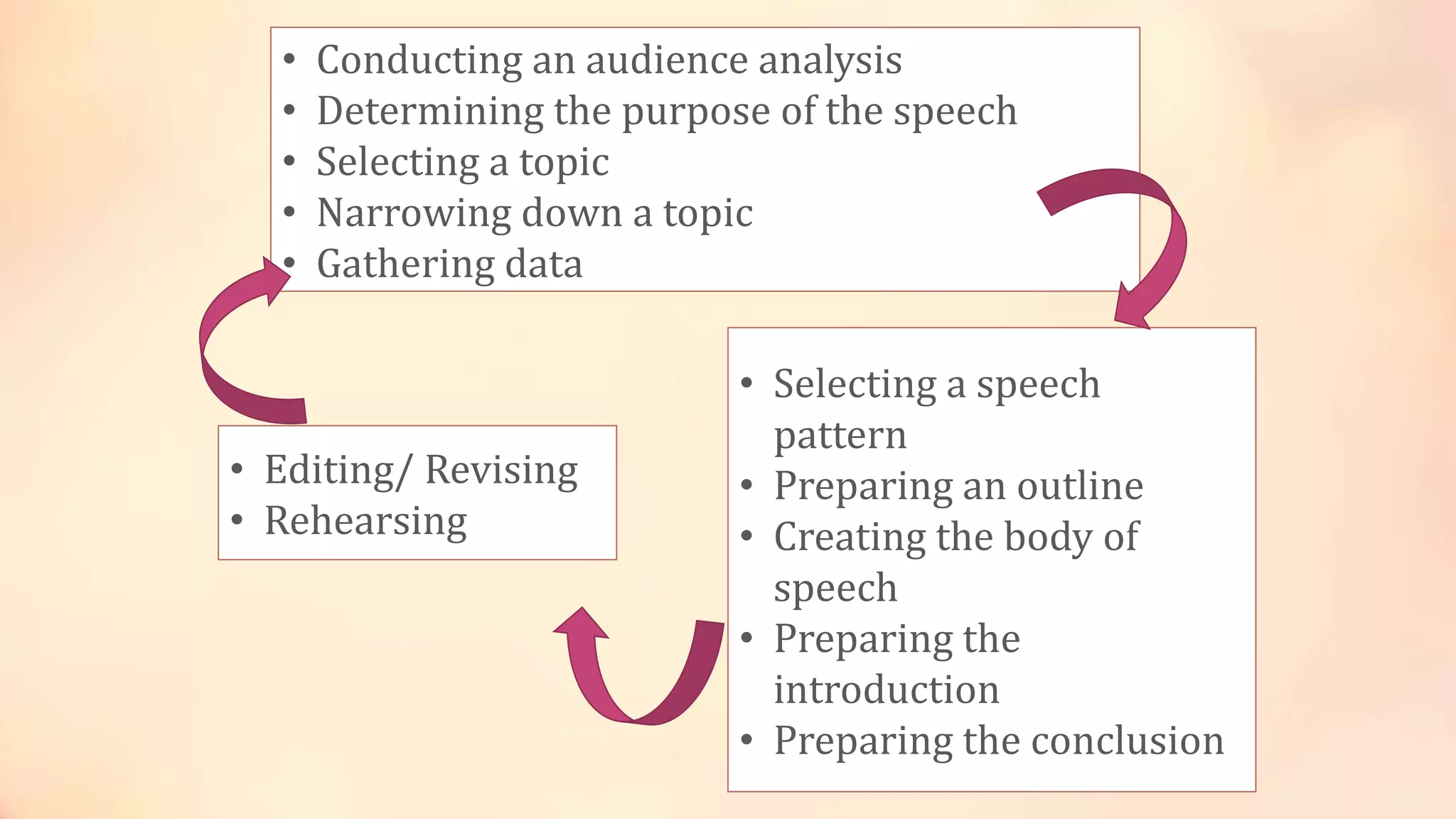
• Conducting an audience analysis
• Determining the purpose of the speech
• Selecting a topic
• Narrowing down a topic
• Gathering data
• Selecting a speech
pattern
• Preparing an outline
• Creating the body of
speech
• Preparing the
introduction
• Preparing the conclusion
• Editing/ Revising
• Rehearsing
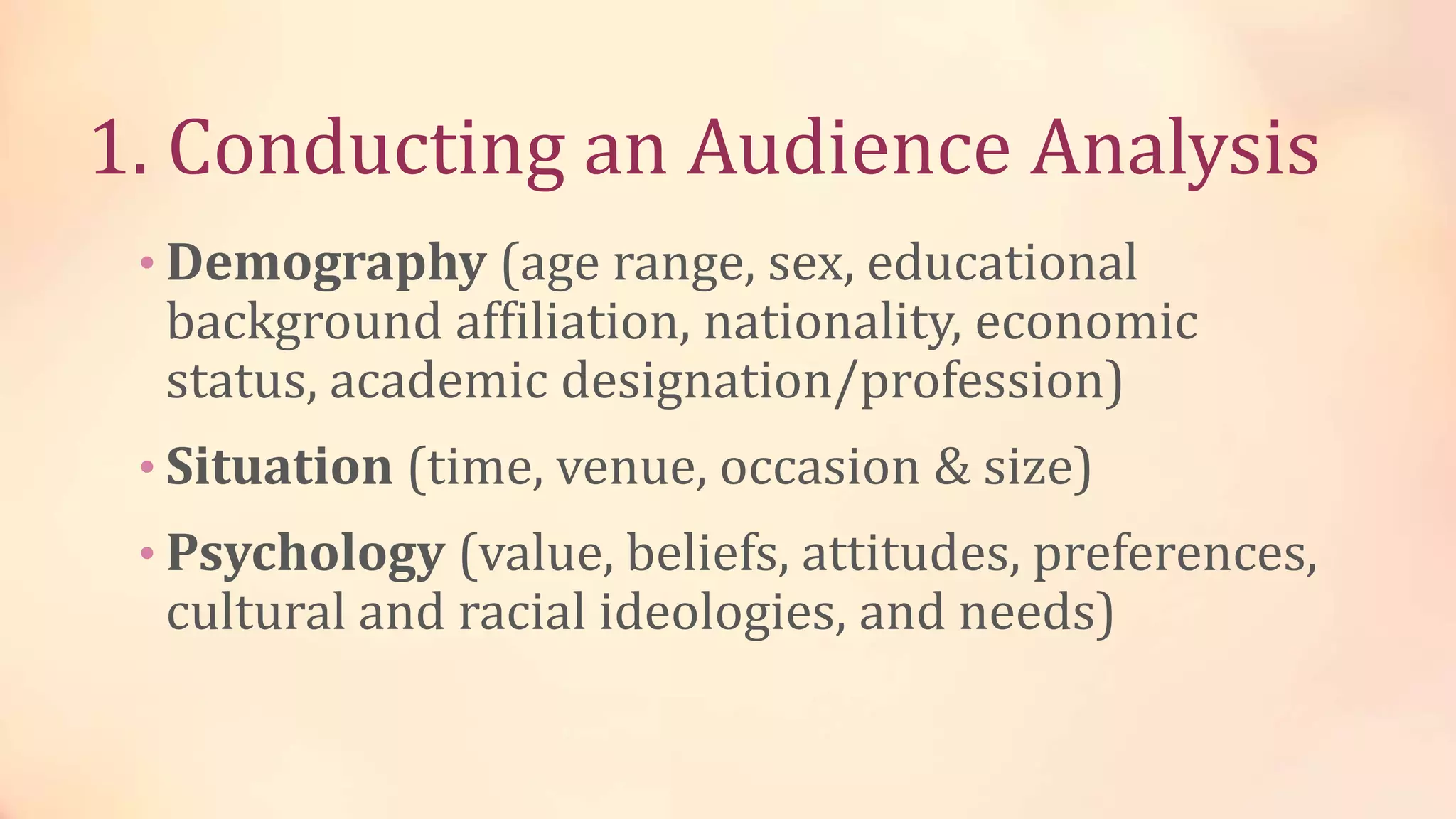
1. Conducting an Audience Analysis
• Demography (age range, sex, educational
background affiliation, nationality, economic
status, academic designation/profession)
• Situation (time, venue, occasion & size)
• Psychology (value, beliefs, attitudes, preferences,
cultural and racial ideologies, and needs)
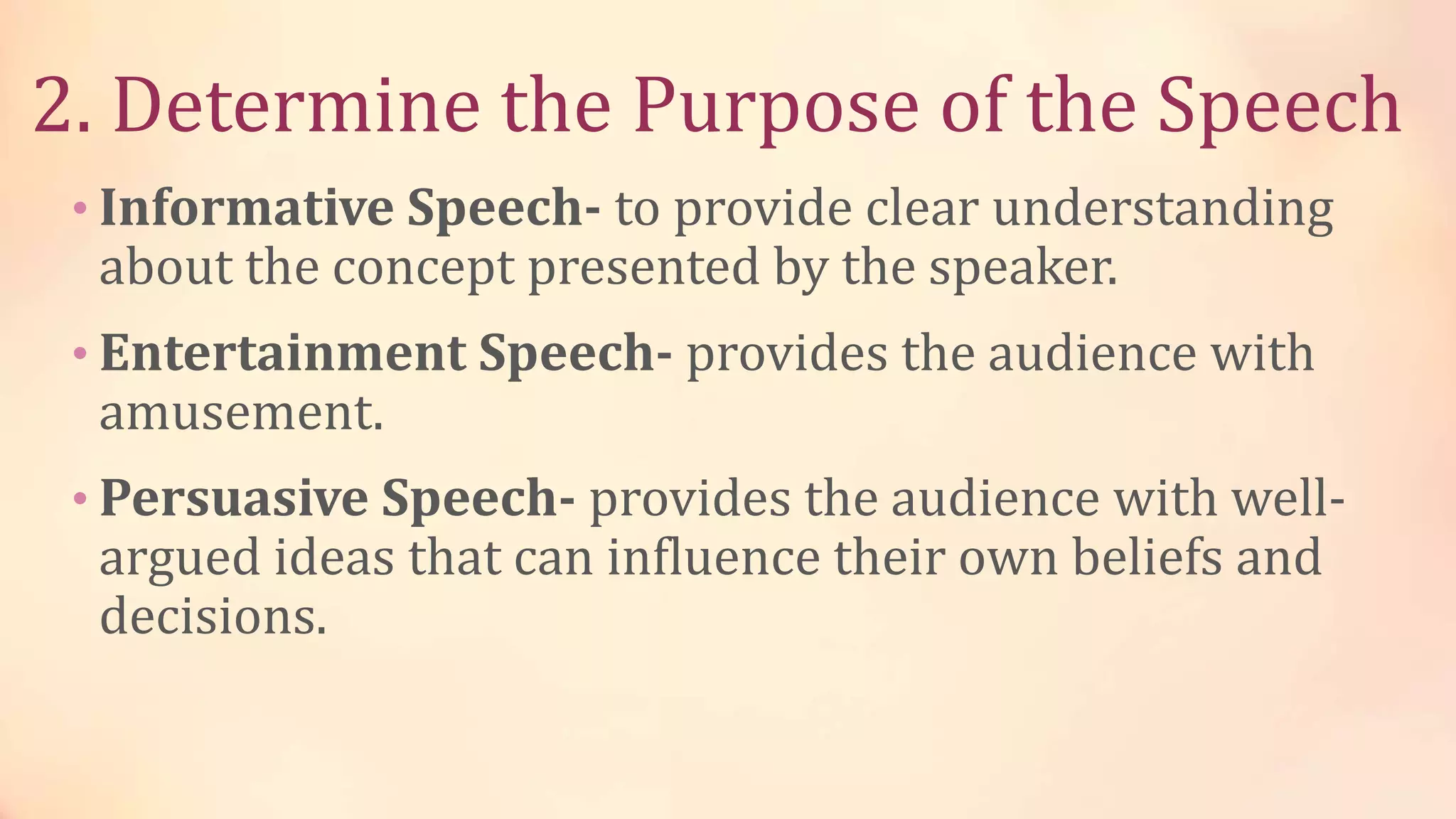
2. Determine the Purpose of the Speech
• Informative Speech- to provide clear understanding
about the concept presented by the speaker.
• Entertainment Speech- provides the audience with
amusement.
• Persuasive Speech- provides the audience with well-
argued ideas that can influence their own beliefs and
decisions.
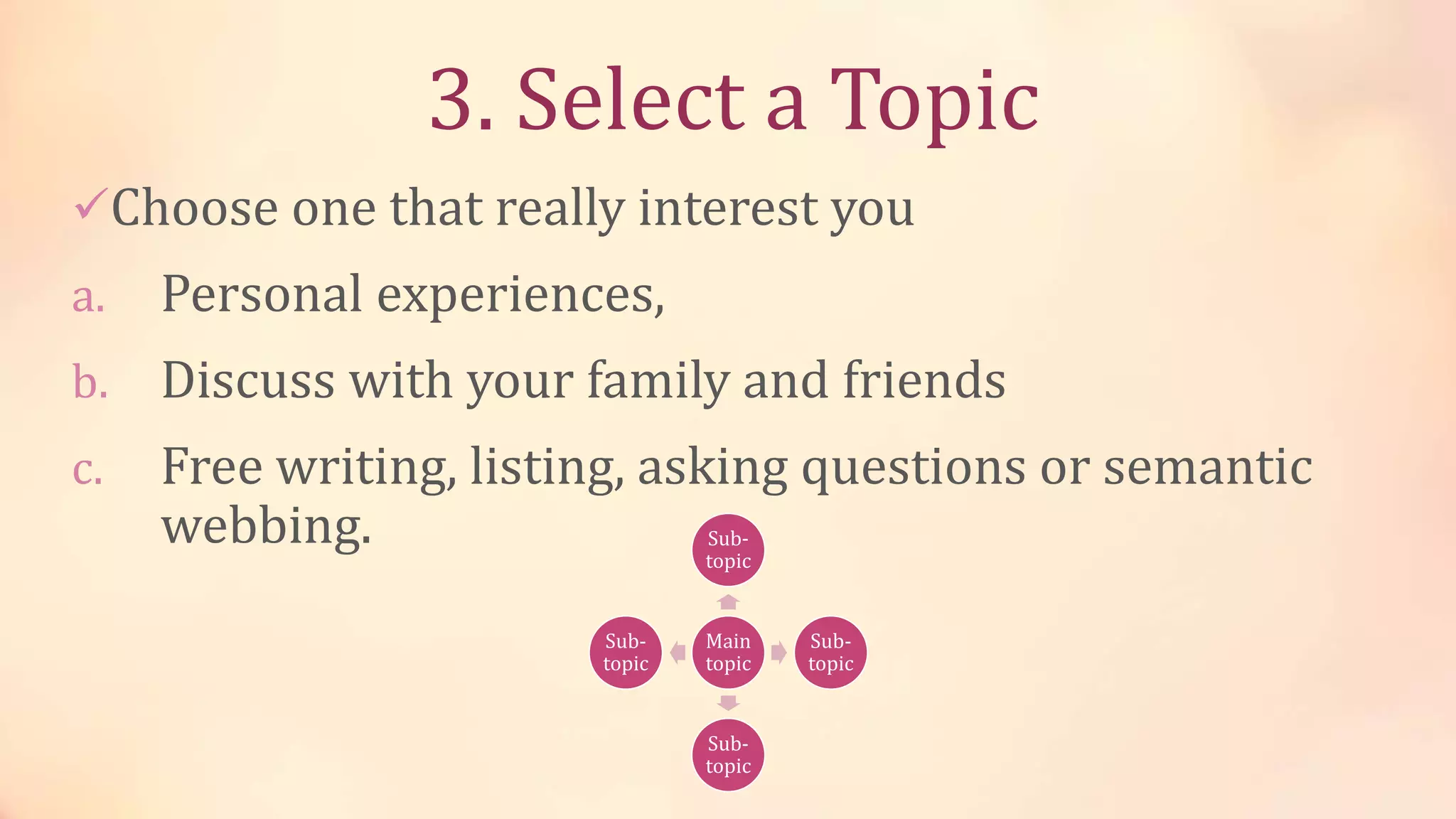
3. Select a Topic
Choose one that really interest you
a. Personal experiences,
b. Discuss with your family and friends
c. Free writing, listing, asking questions or semantic
webbing.
Main
topic
Sub-
topic
Sub-
topic
Sub-
topic
Sub-
topic
4. Narrow Down a Topic
Making your ideas more specific and focus.
5. Gathering Data
The stage where you collect ideas,
information, sources, and references
relevant or related to your specific topic.
6. Select Speech Pattern
It is a structure that will help you
organize the ideas related to your
topic.
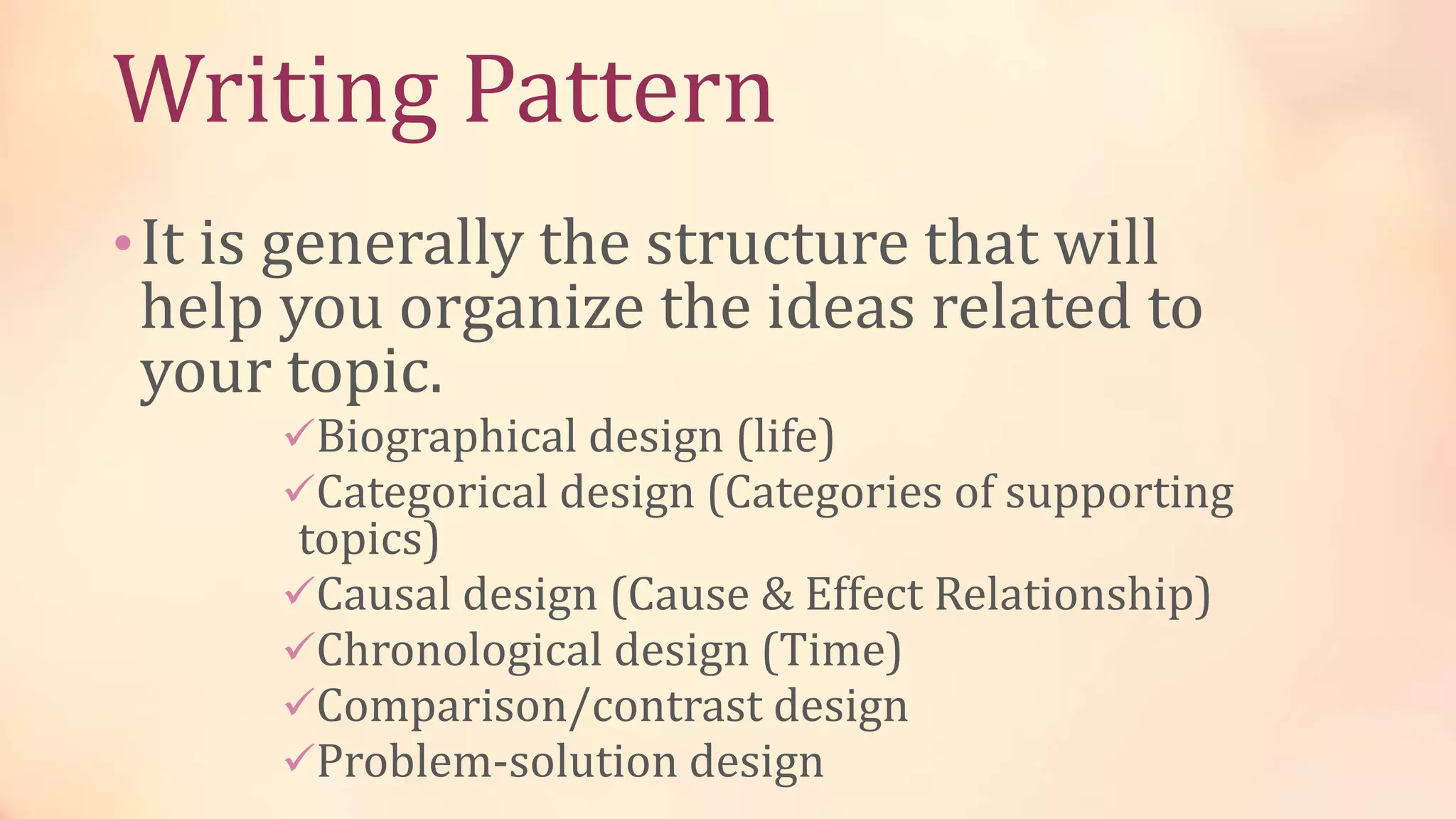
Writing Pattern
•It is generally the structure that will
help you organize the ideas related to
your topic.
Biographical design (life)
Categorical design (Categories of supporting
topics)
Causal design (Cause & Effect Relationship)
Chronological design (Time)
Comparison/contrast design
Problem-solution design
7. Outline
•It is a hierarchical list that shows the
relationship of your ideas.
•It can be in a form of tables, lists and bullets.
• See the e.g. on page 66
STRATEGIES TO HIGHLIGHT THE MAIN
IDEA
•Present real-life or practical examples
•How statistics
•Present comparison
•Shares ideas from the experts or
practitioners
Strategies in Making Introduction
• Use real-life experience and connect that experience to
your topic.
• Use practical examples and explain their connection to
your subject.
• Start with familiar or strong quote and then explain what
it means.
• Use facts or statistics and highlight their importance to
your subject.
• Tell a personal story to illustrate your point.
BODY OF THE SPEECH
•It provides the explanation,
examples, or any details that can
help you deliver your purpose
and explain the main idea of
your speech.
Conclusion
•It restate the main idea of your speech.
Furthermore, it provides a summary,
emphasizes the message, and calls for
action. The conclusion aims to leave the
audience with memorable statement.
Strategies in Making Conclusion
• Begin your conclusion with restatement of your
message.
• Use positive examples, encouraging words, or
memorable lines from songs or stories familiar to your
audience.
• Ask a question or series of questions that can make your
audience reflect or ponder.
Editing/Revising
•Your written speech involves
correcting errors in mechanics,
such as grammar, punctuation,
capitalization, unity, coherence
and other.
Rehearsing
•It gives you an opportunity to identify what works
and what does not work for you and for your target
audience.
•Reading speech aloud
•Recording for own analysis
•Ask for coach or peer feedback

Speech Writing Process.pptx

  • 1.
  • 2.
    • Conducting anaudience analysis • Determining the purpose of the speech • Selecting a topic • Narrowing down a topic • Gathering data • Selecting a speech pattern • Preparing an outline • Creating the body of speech • Preparing the introduction • Preparing the conclusion • Editing/ Revising • Rehearsing
  • 3.
    1. Conducting anAudience Analysis • Demography (age range, sex, educational background affiliation, nationality, economic status, academic designation/profession) • Situation (time, venue, occasion & size) • Psychology (value, beliefs, attitudes, preferences, cultural and racial ideologies, and needs)
  • 4.
    2. Determine thePurpose of the Speech • Informative Speech- to provide clear understanding about the concept presented by the speaker. • Entertainment Speech- provides the audience with amusement. • Persuasive Speech- provides the audience with well- argued ideas that can influence their own beliefs and decisions.
  • 5.
    3. Select aTopic Choose one that really interest you a. Personal experiences, b. Discuss with your family and friends c. Free writing, listing, asking questions or semantic webbing. Main topic Sub- topic Sub- topic Sub- topic Sub- topic
  • 6.
    4. Narrow Downa Topic Making your ideas more specific and focus.
  • 7.
    5. Gathering Data Thestage where you collect ideas, information, sources, and references relevant or related to your specific topic.
  • 8.
    6. Select SpeechPattern It is a structure that will help you organize the ideas related to your topic.
  • 9.
    Writing Pattern •It isgenerally the structure that will help you organize the ideas related to your topic. Biographical design (life) Categorical design (Categories of supporting topics) Causal design (Cause & Effect Relationship) Chronological design (Time) Comparison/contrast design Problem-solution design
  • 10.
    7. Outline •It isa hierarchical list that shows the relationship of your ideas. •It can be in a form of tables, lists and bullets. • See the e.g. on page 66
  • 11.
    STRATEGIES TO HIGHLIGHTTHE MAIN IDEA •Present real-life or practical examples •How statistics •Present comparison •Shares ideas from the experts or practitioners
  • 12.
    Strategies in MakingIntroduction • Use real-life experience and connect that experience to your topic. • Use practical examples and explain their connection to your subject. • Start with familiar or strong quote and then explain what it means. • Use facts or statistics and highlight their importance to your subject. • Tell a personal story to illustrate your point.
  • 13.
    BODY OF THESPEECH •It provides the explanation, examples, or any details that can help you deliver your purpose and explain the main idea of your speech.
  • 14.
    Conclusion •It restate themain idea of your speech. Furthermore, it provides a summary, emphasizes the message, and calls for action. The conclusion aims to leave the audience with memorable statement.
  • 15.
    Strategies in MakingConclusion • Begin your conclusion with restatement of your message. • Use positive examples, encouraging words, or memorable lines from songs or stories familiar to your audience. • Ask a question or series of questions that can make your audience reflect or ponder.
  • 16.
    Editing/Revising •Your written speechinvolves correcting errors in mechanics, such as grammar, punctuation, capitalization, unity, coherence and other.
  • 17.
    Rehearsing •It gives youan opportunity to identify what works and what does not work for you and for your target audience. •Reading speech aloud •Recording for own analysis •Ask for coach or peer feedback

Editor's Notes

  • #7 General idea: to inform Specific purpose: to inform the students on how to be a good communicator Topic: Strategies to become a good communicator Narrowing down a topic through listing: discuss the 7 Cs: Completeness, Conciseness, Consideration, Concreteness, Courtesy, Clearness and Correctness
  • #8 General idea: to inform Specific purpose: to inform the students on how to be a good communicator Topic: Strategies to become a good communicator Narrowing down a topic through listing: discuss the 7 Cs: Completeness, Conciseness, Consideration, Concreteness, Courtesy, Clearness and Correctness