chlamydia
CREATED BY : ABDULLAH AHMED ABDULHAMID
MASTER STUDENT OF LIBYAN ACADEMY / MISRATA BRANCH ON
MICROBIOLOGY DEPARTMENT
Introduction
Chlamydia is a genus of pathogenic bacteria that are obligate intracellular parasites,
Chlamydia infections are the most common bacterial sexually transmitted diseases in humans
and are the leading cause of infectious blindness worldwide.
Chlamydia is a common STD that can infect both men and women. It can cause serious,
permanent damage to a woman’s reproductive system. This can make it difficult or impossible
for her to get pregnant later on. Chlamydia can also cause a potentially fatal ectopic
pregnancy (pregnancy that occurs outside the womb).
Chlamydia is one of the most common sexually transmitted diseases in the U.S. This infection
is easily spread because it often causes no symptoms and may be unknowingly passed to
sexual partners. In fact, about 75% of infections in women and 50% in men are without
symptoms.
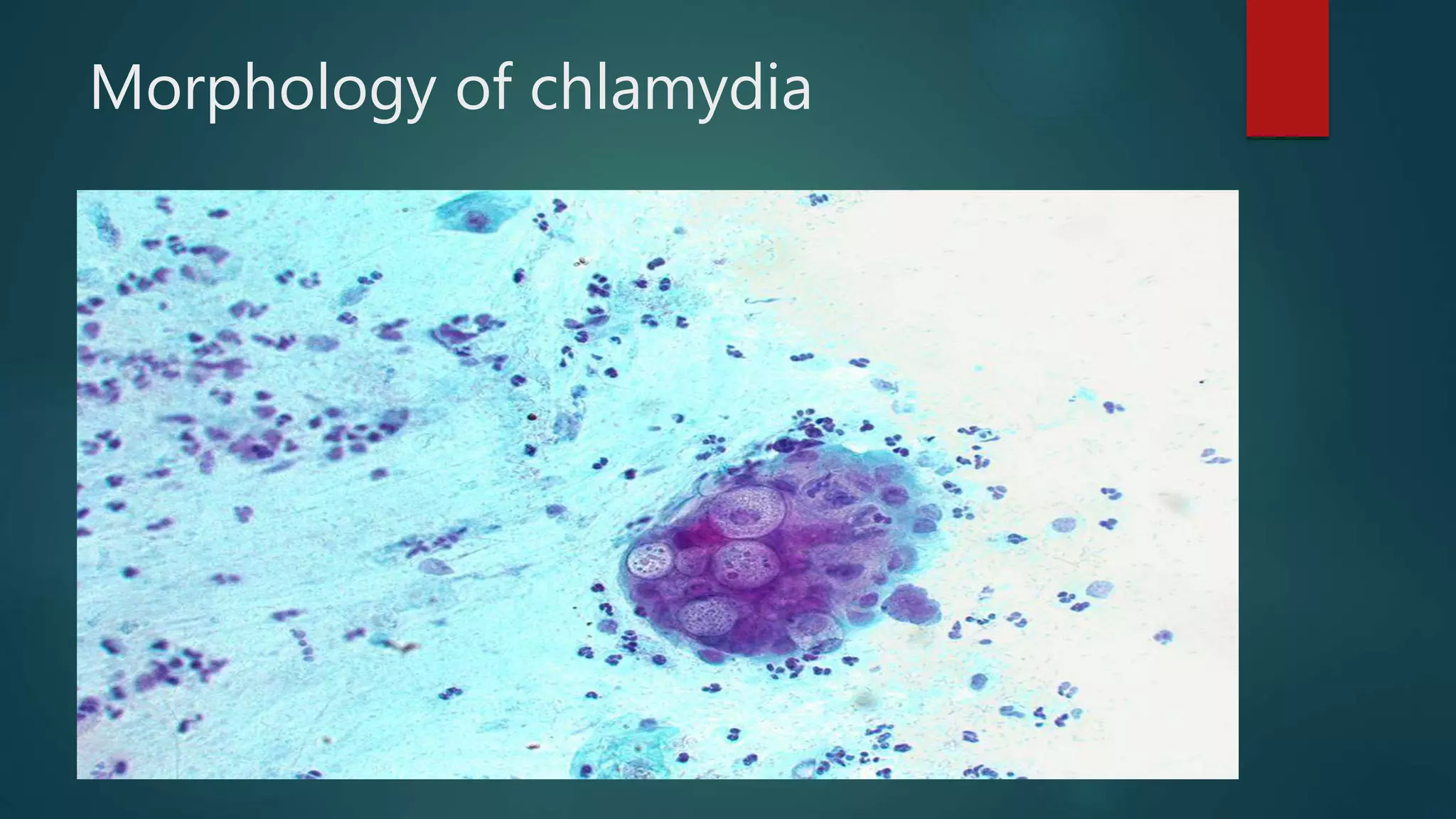
Morphology of chlamydia
Taxonomy
Mode of transmission,symptoms
incubation period and diagnosis
1 You can get chlamydia by having vaginal, anal, or oral sex with someone who has chlamydia.
2 If your sex partner is male you can still get chlamydia even if he does not ejaculate (cum).
3 If you’ve had chlamydia and were treated in the past, you can still get infected again. This can
happen if you have unprotected sex with someone who has chlamydia.
4 If you are pregnant, you can give chlamydia to your baby during childbirth.
‫ققققل‬
Symptoms on mensSymptoms on womens
Small amounts of clear or cloudy discharge from the
tip of the penis
Abnormal vaginal discharge that may have an odor
Painful urinationBleeding between periods
Burning and itching around the opening of the penisPainful periods
Pain and swelling around the testiclesAbdominal pain with fever
Pain when having sex
Itching or burning in or around the vagina
Pain when urinating
Diagnosis of chlamydia
1 serology : the CFT is the most widely used
method for diagnosing chlamydial infections in
the UK
Culture - all chlamydial species can be grown2
in cell culture.
3 Antigen detection - antigen detection
techniques have been widely used to diagnose
adult genital and ocular infections and neonatal
C trachomatis infection.
4 PCR - increasing importance is being placed
on molecular techniques to diagnose
respiratory chlamydial infections
5 Antibody Detection - Many methods have
been employed for the detecting M
pneumoniae antibodies in human serum.
Methods used for the detection of rising titres
of IgG are suitable for patients of all ages
What is the incubation period for chlamydia?
The incubation period for chlamydia is quite variable and may range from
days to months after the initial exposure. The average time from exposure
to the development of symptoms is usually about one to three weeks
after sexual contact with an infected person.
If you are diagnosed with chlamydia, your doctor will prescribe oral
antibiotics. A single dose of azithromycin or taking doxycycline twice daily
for 7 to 14 days are the most common treatments and are the same for
those with or without HIV.
With treatment, the infection should clear up in about a week. Do not
have sex for at least 7 days until you have taken all of your medication,
and do not stop taking the antibiotics even if you feel better.
Your doctor will also recommend that your partner(s) be treated as well to
prevent reinfection and further spread of the disease.
Women with serious infections, such as pelvic inflammatory disease, may
require a longer course of antibiotics or hospitalization for intravenous
antibiotics. Some severe pelvic infections may require surgery in addition
to antibiotic therapy.
References
1 Ward M. "Taxonomy diagram". Chlamydiae.com. Archived from the original on 2010-09-18.
Retrieved 2008-10-28.
2 "Chlamydia trachomatis". Archived from the original on July 2, 2010. Retrieved June 18, 2010
3 American Social Health Association
P.O. Box 13827
Research Triangle Park, NC 27709-3827
CDC National Prevention Information Network (NPIN)4
National Center for HIV, STD and TB Prevention
P.O. Box 6003
Rockville, MD 20849-60034
Chlamydia

Chlamydia

  • 1.
    chlamydia CREATED BY :ABDULLAH AHMED ABDULHAMID MASTER STUDENT OF LIBYAN ACADEMY / MISRATA BRANCH ON MICROBIOLOGY DEPARTMENT
  • 2.
    Introduction Chlamydia is agenus of pathogenic bacteria that are obligate intracellular parasites, Chlamydia infections are the most common bacterial sexually transmitted diseases in humans and are the leading cause of infectious blindness worldwide. Chlamydia is a common STD that can infect both men and women. It can cause serious, permanent damage to a woman’s reproductive system. This can make it difficult or impossible for her to get pregnant later on. Chlamydia can also cause a potentially fatal ectopic pregnancy (pregnancy that occurs outside the womb). Chlamydia is one of the most common sexually transmitted diseases in the U.S. This infection is easily spread because it often causes no symptoms and may be unknowingly passed to sexual partners. In fact, about 75% of infections in women and 50% in men are without symptoms.
  • 3.
  • 4.
  • 5.
    Mode of transmission,symptoms incubationperiod and diagnosis 1 You can get chlamydia by having vaginal, anal, or oral sex with someone who has chlamydia. 2 If your sex partner is male you can still get chlamydia even if he does not ejaculate (cum). 3 If you’ve had chlamydia and were treated in the past, you can still get infected again. This can happen if you have unprotected sex with someone who has chlamydia. 4 If you are pregnant, you can give chlamydia to your baby during childbirth.
  • 6.
    ‫ققققل‬ Symptoms on mensSymptomson womens Small amounts of clear or cloudy discharge from the tip of the penis Abnormal vaginal discharge that may have an odor Painful urinationBleeding between periods Burning and itching around the opening of the penisPainful periods Pain and swelling around the testiclesAbdominal pain with fever Pain when having sex Itching or burning in or around the vagina Pain when urinating
  • 7.
    Diagnosis of chlamydia 1serology : the CFT is the most widely used method for diagnosing chlamydial infections in the UK Culture - all chlamydial species can be grown2 in cell culture. 3 Antigen detection - antigen detection techniques have been widely used to diagnose adult genital and ocular infections and neonatal C trachomatis infection. 4 PCR - increasing importance is being placed on molecular techniques to diagnose respiratory chlamydial infections 5 Antibody Detection - Many methods have been employed for the detecting M pneumoniae antibodies in human serum. Methods used for the detection of rising titres of IgG are suitable for patients of all ages
  • 8.
    What is theincubation period for chlamydia? The incubation period for chlamydia is quite variable and may range from days to months after the initial exposure. The average time from exposure to the development of symptoms is usually about one to three weeks after sexual contact with an infected person. If you are diagnosed with chlamydia, your doctor will prescribe oral antibiotics. A single dose of azithromycin or taking doxycycline twice daily for 7 to 14 days are the most common treatments and are the same for those with or without HIV. With treatment, the infection should clear up in about a week. Do not have sex for at least 7 days until you have taken all of your medication, and do not stop taking the antibiotics even if you feel better. Your doctor will also recommend that your partner(s) be treated as well to prevent reinfection and further spread of the disease. Women with serious infections, such as pelvic inflammatory disease, may require a longer course of antibiotics or hospitalization for intravenous antibiotics. Some severe pelvic infections may require surgery in addition to antibiotic therapy.
  • 10.
    References 1 Ward M."Taxonomy diagram". Chlamydiae.com. Archived from the original on 2010-09-18. Retrieved 2008-10-28. 2 "Chlamydia trachomatis". Archived from the original on July 2, 2010. Retrieved June 18, 2010 3 American Social Health Association P.O. Box 13827 Research Triangle Park, NC 27709-3827 CDC National Prevention Information Network (NPIN)4 National Center for HIV, STD and TB Prevention P.O. Box 6003 Rockville, MD 20849-60034