Chlamydia Infection?
Objectives
•
•
•
•
•
•
At the end of this presentation student will
be able to;
What is Chlamydial infection
What are the causes and risk factors
Clinical menifestations of Chlamydial
infection
Diagnosis and treatment of Chlamydial
infection
complications and prevention of Chlamydial
infection
Introduction Chlamydia
• Chlamydia (Chlamydia trachomatis) is a bacterium that
causes an infection that is very similar to gonorrhea in the
way that it is spread and the symptoms it produces. It is
common and affects approximately 4 million women
annually. Like gonorrhea, the chlamydia bacterium is found
in the cervix and urethra and can live in the throat or
rectum.
bacterium
Conti: introduction
• Both infected men and infected women frequently lack symptoms of
chlamydia infection. Thus, these individuals can unknowingly spread
the infection to others. Another strain (type) of Chlamydia
trachomatis, which can be distinguished in specialized laboratories,
causes the STD known as lymphogranuloma venereum .
What is a Chlamydia Infection
• Chlamydia is a sexually transmitted disease that should be
treated quickly in order to avoid complications. It is caused by
bacteria that are usually spread through sexual contact.
People with chlamydia often don’t have any outward
symptoms. Therefore, if you think you may have been exposed
to the disease, you should get tested right away
Causes and Risk Factors of
Chlamydia Infection
•
•
People of all ages and both sexes can get chlamydia. However,
having sexual relations with several partners without using
protection can greatly increase your chance of getting the
disease.
In addition, men and women under the age of 25 tend to have
a higher risk of being infected with chlamydia. Women, in
particular, also have a higher risk. Additionally, pregnant
women can pass the bacteria to their babies when they are
born. If you are pregnant and there is a chance you have
chlamydia, you should ask to be tested.
Recognizing the Signs of Chlamydia 

•
•
•
•
•
•
. Some of the most common symptoms include:
burning feeling during urination
discharge from the penis or vagina
pain in the lower abdomen
painful sexual intercourse in women
pain in the testicles in men
•
•
•
In some women, the chlamydia infection can spread to the
fallopian tubes, which may cause fever, nausea, and
abnormal bleeding between periods.
Some patients get chlamydia infection in the rectum, in
which case the main symptoms are often discharge, pain,
and bleeding from this area.
If you have had oral sex with someone who has chlamydia,
you may get this infection in your throat, which can lead to
painful swallowing, a cough, and a fever.
Chlamydia symptoms include
•
•
•
•
•
•
•
•
•
•
•
abnormal vaginal discharge (mucus or pus),
smelling yellowish discharge from the cervix,
frequent urges to urinate (much more than usual),
burning sensation or pain during urination
abdominal and/or low back pain,
nausea,
fever (often low-grade fever),
pain during intercourse
vaginal bleeding between periods,
vaginal bleeding after sex,
eye infections (conjunctivitis).
Diagnosing Chlamydia
•
•
•
•
. A urine test will be taken.
You may also have your cervix swabbed if you are female,
while your urethra, where urine flows from, may be
swabbed if you are male.
If there is a chance the Chlamydia is in your rectum or
throat, these areas may be swabbed, as well
Treating Chlamydia
• Since bacteria cause chlamydia, the disease
can often be treated with antibiotics.
Azithromycin is an antibiotic usually
prescribed in a single dose, while
doxycycline must be taken twice per day for
about one week
Female Complications
•
•
•
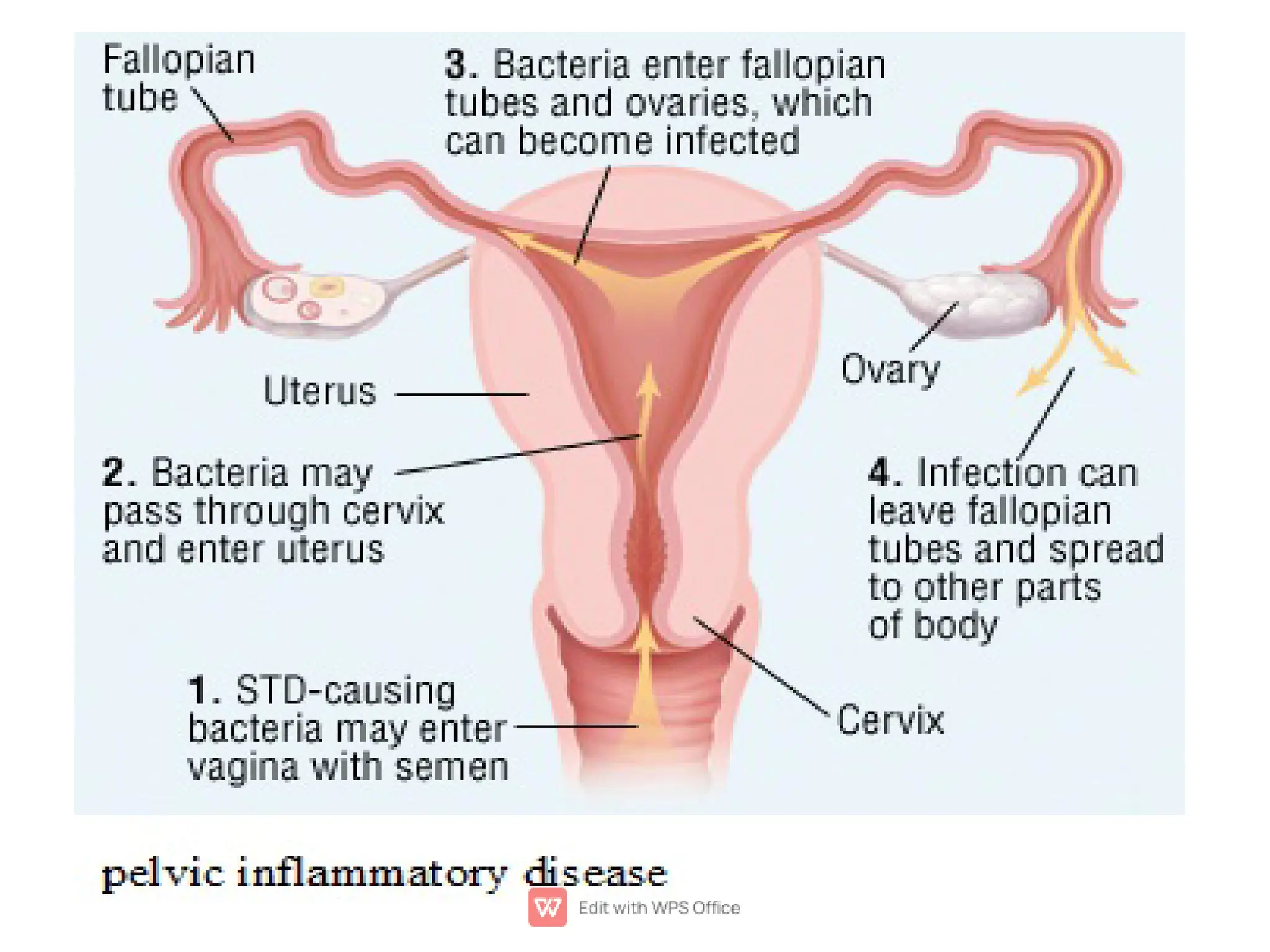
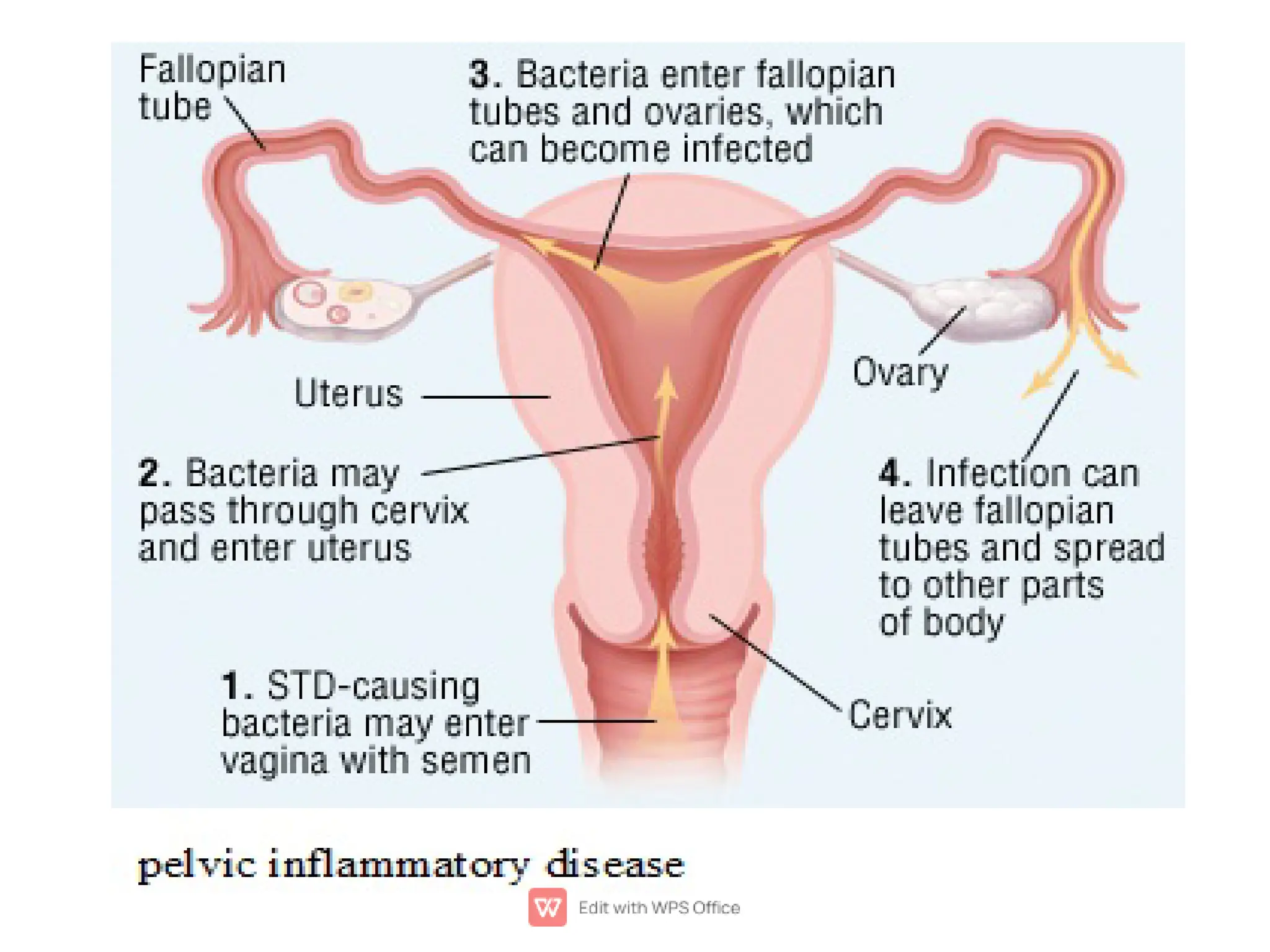
Some women develop pelvic inflammatory disease
(PID), an infection that can damage the uterus,
cervix, and ovaries.
This is a painful disease that often requires
hospital treatment.
Women can also become infertile if chlamydia is
left untreated, since the fallopian tubes may
become scarred. Women who do become pregnant
while they have chlamydia can pass the bacteria
to their babies during birth, which can cause eye
infections and pneumonia in newborns.
Male Complications
•
•
Men can also experience complications when chlamydia is left
untreated. For example, the epididymis, the tube that holds the
testicles in place, may become inflamed, causing pain. In addition, the
infection can spread to the prostate gland, causing a fever, painful
intercourse, and discomfort in the lower back.
These are just some of the most common complications of untreated
chlamydia, which is why it is important to get medical attention right
away. Most people who are treated quickly have no long-term medical
problems.
Prevention
• One of the most effective ways of avoiding chlamydia infection is
by limiting the amount of new sexual partners you have. The
more people you have sexual intercourse with, the greater your
chances of being exposed to the disease. In addition, during each
sexual encounter, you should use a condom.
THANK YOU

Chlamydia.pdf ppt ahn lecture bs nursing

  • 1.
  • 2.
    Objectives • • • • • • At the endof this presentation student will be able to; What is Chlamydial infection What are the causes and risk factors Clinical menifestations of Chlamydial infection Diagnosis and treatment of Chlamydial infection complications and prevention of Chlamydial infection
  • 3.
    Introduction Chlamydia • Chlamydia(Chlamydia trachomatis) is a bacterium that causes an infection that is very similar to gonorrhea in the way that it is spread and the symptoms it produces. It is common and affects approximately 4 million women annually. Like gonorrhea, the chlamydia bacterium is found in the cervix and urethra and can live in the throat or rectum. bacterium
  • 4.
    Conti: introduction • Bothinfected men and infected women frequently lack symptoms of chlamydia infection. Thus, these individuals can unknowingly spread the infection to others. Another strain (type) of Chlamydia trachomatis, which can be distinguished in specialized laboratories, causes the STD known as lymphogranuloma venereum .
  • 5.
    What is aChlamydia Infection • Chlamydia is a sexually transmitted disease that should be treated quickly in order to avoid complications. It is caused by bacteria that are usually spread through sexual contact. People with chlamydia often don’t have any outward symptoms. Therefore, if you think you may have been exposed to the disease, you should get tested right away
  • 6.
    Causes and RiskFactors of Chlamydia Infection • • People of all ages and both sexes can get chlamydia. However, having sexual relations with several partners without using protection can greatly increase your chance of getting the disease. In addition, men and women under the age of 25 tend to have a higher risk of being infected with chlamydia. Women, in particular, also have a higher risk. Additionally, pregnant women can pass the bacteria to their babies when they are born. If you are pregnant and there is a chance you have chlamydia, you should ask to be tested.
  • 7.
    Recognizing the Signsof Chlamydia • • • • • • . Some of the most common symptoms include: burning feeling during urination discharge from the penis or vagina pain in the lower abdomen painful sexual intercourse in women pain in the testicles in men
  • 8.
    • • • In some women,the chlamydia infection can spread to the fallopian tubes, which may cause fever, nausea, and abnormal bleeding between periods. Some patients get chlamydia infection in the rectum, in which case the main symptoms are often discharge, pain, and bleeding from this area. If you have had oral sex with someone who has chlamydia, you may get this infection in your throat, which can lead to painful swallowing, a cough, and a fever.
  • 9.
    Chlamydia symptoms include • • • • • • • • • • • abnormalvaginal discharge (mucus or pus), smelling yellowish discharge from the cervix, frequent urges to urinate (much more than usual), burning sensation or pain during urination abdominal and/or low back pain, nausea, fever (often low-grade fever), pain during intercourse vaginal bleeding between periods, vaginal bleeding after sex, eye infections (conjunctivitis).
  • 11.
    Diagnosing Chlamydia • • • • . Aurine test will be taken. You may also have your cervix swabbed if you are female, while your urethra, where urine flows from, may be swabbed if you are male. If there is a chance the Chlamydia is in your rectum or throat, these areas may be swabbed, as well
  • 12.
    Treating Chlamydia • Sincebacteria cause chlamydia, the disease can often be treated with antibiotics. Azithromycin is an antibiotic usually prescribed in a single dose, while doxycycline must be taken twice per day for about one week
  • 13.
    Female Complications • • • Some womendevelop pelvic inflammatory disease (PID), an infection that can damage the uterus, cervix, and ovaries. This is a painful disease that often requires hospital treatment. Women can also become infertile if chlamydia is left untreated, since the fallopian tubes may become scarred. Women who do become pregnant while they have chlamydia can pass the bacteria to their babies during birth, which can cause eye infections and pneumonia in newborns.
  • 15.
    Male Complications • • Men canalso experience complications when chlamydia is left untreated. For example, the epididymis, the tube that holds the testicles in place, may become inflamed, causing pain. In addition, the infection can spread to the prostate gland, causing a fever, painful intercourse, and discomfort in the lower back. These are just some of the most common complications of untreated chlamydia, which is why it is important to get medical attention right away. Most people who are treated quickly have no long-term medical problems.
  • 16.
    Prevention • One ofthe most effective ways of avoiding chlamydia infection is by limiting the amount of new sexual partners you have. The more people you have sexual intercourse with, the greater your chances of being exposed to the disease. In addition, during each sexual encounter, you should use a condom.
  • 17.