


CHEST TRAUMA
DR. QASIM ALABBOUD
SURGICAL SPECIALIST
CHEST TRAUMA
• Blunt versus penetrating traumaBlunt versus penetrating trauma
• Injury dependent on mechanismInjury dependent on mechanism
• Motor vehicle accidentMotor vehicle accident
• Fall from heightFall from height
• Physical assaultPhysical assault
• Explosive blastExplosive blast
• Gunshot woundGunshot wound
• Stab woundStab wound
CHEST TRAUMA
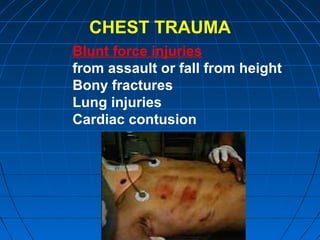
Blunt force injuries
from assault or fall from height
Bony fractures
Lung injuries
Cardiac contusion
CHEST TRAUMA
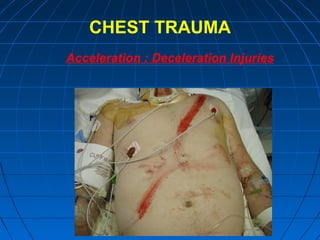
Acceleration : Deceleration Injuries
CHEST TRAUMA
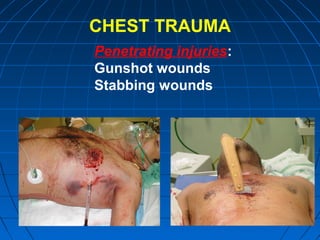
Penetrating injuries:
Gunshot wounds
Stabbing wounds
CHEST TRAUMA
• Improved field diagnosis and treatment
of life threatening conditions
• Rapid evacuation to higher level of care
• High risk of death despite acute
intervention
• Need for prompt diagnosis and
treatment
CHEST TRAUMA
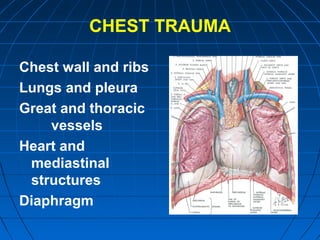
Chest wall and ribs
Lungs and pleura
Great and thoracic
vessels
Heart and
mediastinal
structures
Diaphragm
CHEST TRAUMA
Common Injuries
• Rib fractures
• Sternal fractures
• Open or Closed Pneumothorax
- unilateral / bilateral
• Hemothorax
• Hemopneumothorax
CHEST TRAUMA
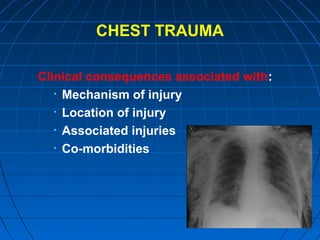
Clinical consequences associated with:
• Mechanism of injury
• Location of injury
• Associated injuries
• Co-morbidities
CHEST TRAUMA
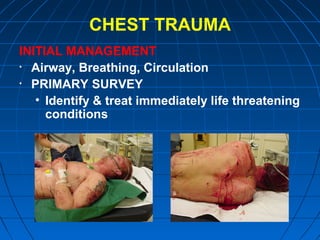
INITIAL MANAGEMENT
• Airway, Breathing, Circulation
• PRIMARY SURVEY
• Identify & treat immediately life threatening
conditions
CHEST TRAUMA
Early intervention directed toward
diagnosing and treating:
• Tension pneumothorax
• Massive hemothorax
• Open pneumothorax
• Cardiac tamponade
• Flail chest
CHEST TRAUMA
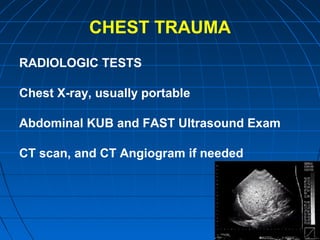
RADIOLOGIC TESTS
Chest X-ray, usually portable
Abdominal KUB and FAST Ultrasound Exam
CT scan, and CT Angiogram if needed
CHEST TRAUMA
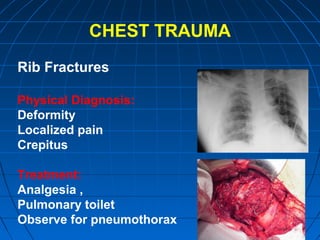
Rib Fractures
Physical Diagnosis:
Deformity
Localized pain
Crepitus
Treatment:
Analgesia ,
Pulmonary toilet
Observe for pneumothorax
CHEST TRAUMA
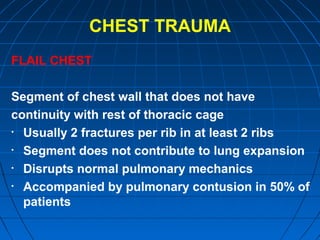
FLAIL CHEST
Segment of chest wall that does not have
continuity with rest of thoracic cage
• Usually 2 fractures per rib in at least 2 ribs
• Segment does not contribute to lung expansion
• Disrupts normal pulmonary mechanics
• Accompanied by pulmonary contusion in 50% of
patients
CHEST TRAUMA
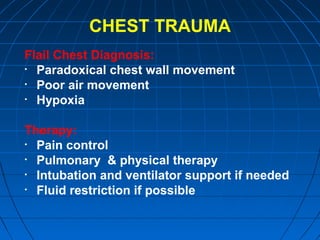
Flail Chest Diagnosis:
• Paradoxical chest wall movement
• Poor air movement
• Hypoxia
Therapy:
• Pain control
• Pulmonary & physical therapy
• Intubation and ventilator support if needed
• Fluid restriction if possible
CHEST TRAUMA
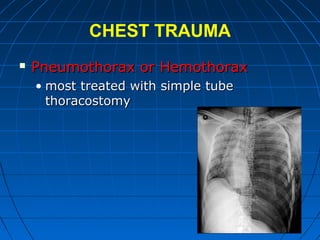
 Pneumothorax or HemothoraxPneumothorax or Hemothorax
• most treated with simple tubemost treated with simple tube
thoracostomythoracostomy
CHEST TRAUMA
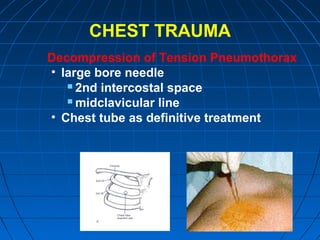
Decompression of Tension Pneumothorax
• large bore needle
 2nd intercostal space
 midclavicular line
• Chest tube as definitive treatment
PULMONARY CONTUSION
• Common with blunt trauma
• May be associated with laceration of
lung parenchyma
• Leakage of blood and fluid into
interstitial spaces of lung
• Significant inflammatory reaction to
blood components in the lung
PULMONARY CONTUSION
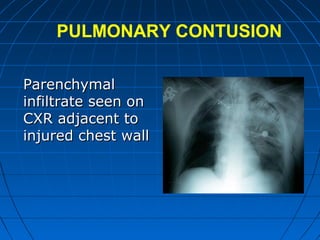
ParenchymalParenchymal
infiltrate seen oninfiltrate seen on
CXR adjacent toCXR adjacent to
injured chest wallinjured chest wall
PULMONARY CONTUSION
Indications for intubation
• Respiratory distress
• Hypoxia
• Other injuries which compromise
respiratory effort, such as abdominal
or neurologic
MASSIVE HEMOTHORAXMASSIVE HEMOTHORAX
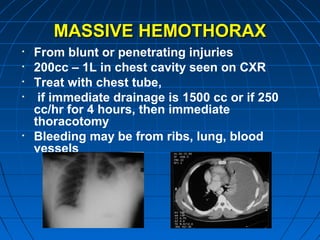
• From blunt or penetrating injuries
• 200cc – 1L in chest cavity seen on CXR
• Treat with chest tube,
• if immediate drainage is 1500 cc or if 250
cc/hr for 4 hours, then immediate
thoracotomy
• Bleeding may be from ribs, lung, blood
vessels
AORTIC RUPTURE
• Abrupt deceleration or compression injury
• Sudden motion of heart or great vessels in
chest
• Often rapidly fatal
• 10% survive to hospital
• 20% survive > 1 hour
• 90% who reach hospital will die
• Early diagnosis and treatment
AORTIC RUPTURE
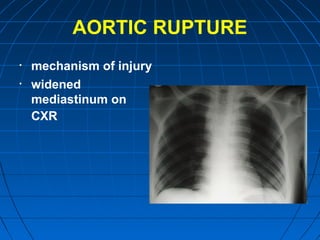
• mechanism of injury
• widened
mediastinum on
CXR
DIAPHRAGM RUPTURE
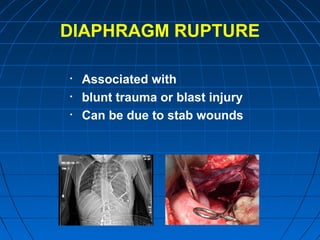
• Associated with
• blunt trauma or blast injury
• Can be due to stab wounds
DIAPHRAGM RUPTURE
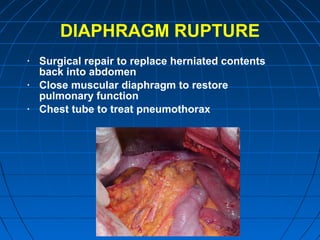
• Surgical repair to replace herniated contents
back into abdomen
• Close muscular diaphragm to restore
pulmonary function
• Chest tube to treat pneumothorax
CHEST TUBE INSERTION
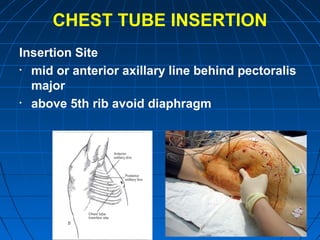
Insertion Site
• mid or anterior axillary line behind pectoralis
major
• above 5th rib avoid diaphragm
CHEST TUBE INSERTION
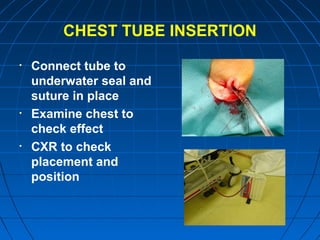
• Connect tube to
underwater seal and
suture in place
• Examine chest to
check effect
• CXR to check
placement and
position
Thank youThank you

Chest trauma

  • 2.
    CHEST TRAUMA DR. QASIMALABBOUD SURGICAL SPECIALIST
  • 3.
    CHEST TRAUMA • Bluntversus penetrating traumaBlunt versus penetrating trauma • Injury dependent on mechanismInjury dependent on mechanism • Motor vehicle accidentMotor vehicle accident • Fall from heightFall from height • Physical assaultPhysical assault • Explosive blastExplosive blast • Gunshot woundGunshot wound • Stab woundStab wound
  • 4.
    CHEST TRAUMA Blunt forceinjuries from assault or fall from height Bony fractures Lung injuries Cardiac contusion
  • 5.
    CHEST TRAUMA Acceleration :Deceleration Injuries
  • 6.
  • 7.
    CHEST TRAUMA • Improvedfield diagnosis and treatment of life threatening conditions • Rapid evacuation to higher level of care • High risk of death despite acute intervention • Need for prompt diagnosis and treatment
  • 8.
    CHEST TRAUMA Chest walland ribs Lungs and pleura Great and thoracic vessels Heart and mediastinal structures Diaphragm
  • 9.
    CHEST TRAUMA Common Injuries •Rib fractures • Sternal fractures • Open or Closed Pneumothorax - unilateral / bilateral • Hemothorax • Hemopneumothorax
  • 10.
    CHEST TRAUMA Clinical consequencesassociated with: • Mechanism of injury • Location of injury • Associated injuries • Co-morbidities
  • 11.
    CHEST TRAUMA INITIAL MANAGEMENT •Airway, Breathing, Circulation • PRIMARY SURVEY • Identify & treat immediately life threatening conditions
  • 12.
    CHEST TRAUMA Early interventiondirected toward diagnosing and treating: • Tension pneumothorax • Massive hemothorax • Open pneumothorax • Cardiac tamponade • Flail chest
  • 13.
    CHEST TRAUMA RADIOLOGIC TESTS ChestX-ray, usually portable Abdominal KUB and FAST Ultrasound Exam CT scan, and CT Angiogram if needed
  • 14.
    CHEST TRAUMA Rib Fractures PhysicalDiagnosis: Deformity Localized pain Crepitus Treatment: Analgesia , Pulmonary toilet Observe for pneumothorax
  • 15.
    CHEST TRAUMA FLAIL CHEST Segmentof chest wall that does not have continuity with rest of thoracic cage • Usually 2 fractures per rib in at least 2 ribs • Segment does not contribute to lung expansion • Disrupts normal pulmonary mechanics • Accompanied by pulmonary contusion in 50% of patients
  • 16.
    CHEST TRAUMA Flail ChestDiagnosis: • Paradoxical chest wall movement • Poor air movement • Hypoxia Therapy: • Pain control • Pulmonary & physical therapy • Intubation and ventilator support if needed • Fluid restriction if possible
  • 17.
    CHEST TRAUMA  Pneumothoraxor HemothoraxPneumothorax or Hemothorax • most treated with simple tubemost treated with simple tube thoracostomythoracostomy
  • 18.
    CHEST TRAUMA Decompression ofTension Pneumothorax • large bore needle  2nd intercostal space  midclavicular line • Chest tube as definitive treatment
  • 19.
    PULMONARY CONTUSION • Commonwith blunt trauma • May be associated with laceration of lung parenchyma • Leakage of blood and fluid into interstitial spaces of lung • Significant inflammatory reaction to blood components in the lung
  • 20.
    PULMONARY CONTUSION ParenchymalParenchymal infiltrate seenoninfiltrate seen on CXR adjacent toCXR adjacent to injured chest wallinjured chest wall
  • 21.
    PULMONARY CONTUSION Indications forintubation • Respiratory distress • Hypoxia • Other injuries which compromise respiratory effort, such as abdominal or neurologic
  • 22.
    MASSIVE HEMOTHORAXMASSIVE HEMOTHORAX •From blunt or penetrating injuries • 200cc – 1L in chest cavity seen on CXR • Treat with chest tube, • if immediate drainage is 1500 cc or if 250 cc/hr for 4 hours, then immediate thoracotomy • Bleeding may be from ribs, lung, blood vessels
  • 23.
    AORTIC RUPTURE • Abruptdeceleration or compression injury • Sudden motion of heart or great vessels in chest • Often rapidly fatal • 10% survive to hospital • 20% survive > 1 hour • 90% who reach hospital will die • Early diagnosis and treatment
  • 24.
    AORTIC RUPTURE • mechanismof injury • widened mediastinum on CXR
  • 25.
    DIAPHRAGM RUPTURE • Associatedwith • blunt trauma or blast injury • Can be due to stab wounds
  • 26.
    DIAPHRAGM RUPTURE • Surgicalrepair to replace herniated contents back into abdomen • Close muscular diaphragm to restore pulmonary function • Chest tube to treat pneumothorax
  • 27.
    CHEST TUBE INSERTION InsertionSite • mid or anterior axillary line behind pectoralis major • above 5th rib avoid diaphragm
  • 28.
    CHEST TUBE INSERTION •Connect tube to underwater seal and suture in place • Examine chest to check effect • CXR to check placement and position
  • 29.