Chest Trauma
Gráinne Murphy
Final Med
April 2002
Introduction
 Chest trauma is often sudden and
dramatic
 Accounts for 25% of all trauma deaths
 2/3 of deaths occur after reaching
hospital
 Serious pathological consequnces:
-hypoxia, hypovolaemia, myocardial
failure
Mechanism of Injury
Penetrating injuries
 E.g. stab wounds etc.
 Primarily peripheral lung
 Haemothorax
 Pneumothorax
 Cardiac, great vessel or oesophageal
injury
 Either:
- direct blow (e.g. rib fracture)
- deceleration injury or
- compression injury
 Rib fracture is the most common sign of
blunt thoracic trauma
 Fracture of scapula, sternum, or first rib
suggests massive force of injury
Blunt injuries
Chest wall injuries
 Rib fractures
 Flail chest
 Open pneumothorax
Rib fractures
 Most common thoracic injury
 Localised pain, tenderness, crepitus
 CXR to exclude other injuries
 Analgesia..avoid taping
 Underestimation of effect
 Upper ribs, clavicle or scapula fracture:
suspect vascular injury
Flail chest
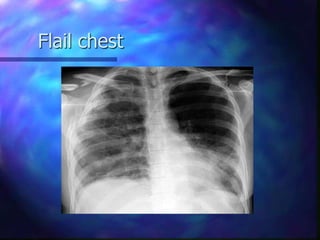
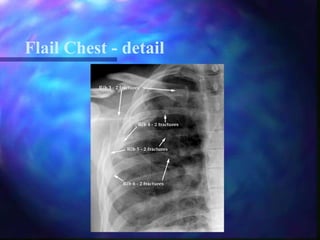
 Multiple rib fractures produce a mobile
fragment which moves paradoxically
with respiration
 Significant force required
 Usually diagnosed clinically
 Rx: ABC
Analgesia
Flail chest
Flail Chest - detail
Open pneumothorax
 Defect in chest wall provides a direct
communication between the pleural
space and the environment
 Lung collapse and paroxysmal shifting
of mediastinum with each respiratory
effort ± tension pneumothorax
 “Sucking chest wound”
 Rx: ABCs…closure of wound…chest
drain
Lung injury
 Pulmonary contusion
 Pneumothorax
 Haemothorax
 Parenchymal injury
 Trachea and bronchial injuries
 Pneumomediastinum
Pneumothorax
 Air in the pleural cavity
 Blunt or penetrating injury that disrupts
the parietal or visceral pleura
 Unilateral signs: movement and breath
sounds, resonant to percussion
 Confirmed by CXR
 Rx: chest drain
Pneumothorax
Tension pneumothorax
 Air enters pleural space and cannot
escape
 P/C: chest pain, dyspnoea
 Dx: - respiratory distress
- tracheal deviation (away)
- absence of breath sounds
- distended neck veins
- hypotension
 Surgical emergency
 Rx: emergency decompression before
CXR
 Either large bore cannula in 2nd ICS,
MCL or insert chest tube
 CXR to confirm site of insertion
Haemothorax
 Blunt or penetrating trauma
 Requires rapid decompression and fluid
resuscitation
 May require surgical intervention
 Clinically: hypovolaemia
absence of breath sounds
dullness to percussion
 CXR may be confused with collapse
Heart, Aorta & Diaphragm
 Blunt cardiac injury
- contusion
- ventricular, septal or valvular
rupture
 Cardiac tamponade
 Ruptured thoracic aorta
 Diaphragmatic rupture
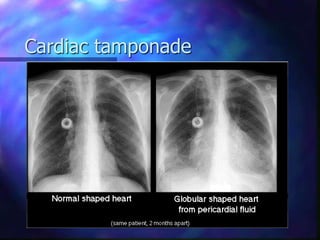
Cardiac Tamponade
 Blood in the pericardial sac
 Most frequently penetrating injuries
 Shock, JVP, PEA, pulsus paradoxus
 Classically, Beck’s triad: -
distended neck veins -
muffled heart sounds -
hypotension
 Rx: Volume resuscitation
Pericardiocentesis
Cardiac tamponade
Aortic rupture
 Usually blunt trauma involving
deceleration forces; especially RTAs
 ~90% die within minutes
 Most common site near ligamentum
arteriosum
 Dx: clinical suspicion, CXR, aortography,
contrast CT or TOE
 Rx: surgical…poor prognosis
Aortic rupture
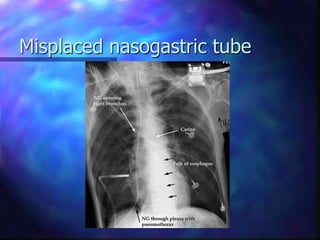
Iatrogenic trauma
 NG tubes: -coiling
-endobronchial placement
-pneumothorax
 Chest tubes: - subcutaneous
- intraparenchymal
- intrafissural
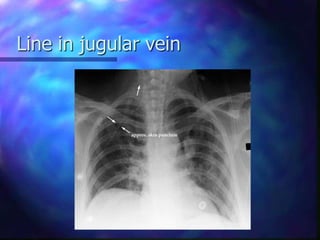
 Central lines: - neck
- coronary sinus
- pneumothorax
Line in jugular vein
Misplaced nasogastric tube
Chest trauma: summary
 Common
 Serious
 Primary goal is to provide oxygen to
vital organs
 Remember
Airway
Breathing
Circulation
 Be alert to change in clinical condition

chest_trauma ATLS..ppt

  • 1.
  • 2.
    Introduction  Chest traumais often sudden and dramatic  Accounts for 25% of all trauma deaths  2/3 of deaths occur after reaching hospital  Serious pathological consequnces: -hypoxia, hypovolaemia, myocardial failure
  • 3.
    Mechanism of Injury Penetratinginjuries  E.g. stab wounds etc.  Primarily peripheral lung  Haemothorax  Pneumothorax  Cardiac, great vessel or oesophageal injury
  • 4.
     Either: - directblow (e.g. rib fracture) - deceleration injury or - compression injury  Rib fracture is the most common sign of blunt thoracic trauma  Fracture of scapula, sternum, or first rib suggests massive force of injury Blunt injuries
  • 5.
    Chest wall injuries Rib fractures  Flail chest  Open pneumothorax
  • 6.
    Rib fractures  Mostcommon thoracic injury  Localised pain, tenderness, crepitus  CXR to exclude other injuries  Analgesia..avoid taping  Underestimation of effect  Upper ribs, clavicle or scapula fracture: suspect vascular injury
  • 7.
    Flail chest  Multiplerib fractures produce a mobile fragment which moves paradoxically with respiration  Significant force required  Usually diagnosed clinically  Rx: ABC Analgesia
  • 8.
  • 9.
  • 10.
    Open pneumothorax  Defectin chest wall provides a direct communication between the pleural space and the environment  Lung collapse and paroxysmal shifting of mediastinum with each respiratory effort ± tension pneumothorax  “Sucking chest wound”  Rx: ABCs…closure of wound…chest drain
  • 11.
    Lung injury  Pulmonarycontusion  Pneumothorax  Haemothorax  Parenchymal injury  Trachea and bronchial injuries  Pneumomediastinum
  • 12.
    Pneumothorax  Air inthe pleural cavity  Blunt or penetrating injury that disrupts the parietal or visceral pleura  Unilateral signs: movement and breath sounds, resonant to percussion  Confirmed by CXR  Rx: chest drain
  • 13.
  • 14.
    Tension pneumothorax  Airenters pleural space and cannot escape  P/C: chest pain, dyspnoea  Dx: - respiratory distress - tracheal deviation (away) - absence of breath sounds - distended neck veins - hypotension
  • 15.
     Surgical emergency Rx: emergency decompression before CXR  Either large bore cannula in 2nd ICS, MCL or insert chest tube  CXR to confirm site of insertion
  • 16.
    Haemothorax  Blunt orpenetrating trauma  Requires rapid decompression and fluid resuscitation  May require surgical intervention  Clinically: hypovolaemia absence of breath sounds dullness to percussion  CXR may be confused with collapse
  • 17.
    Heart, Aorta &Diaphragm  Blunt cardiac injury - contusion - ventricular, septal or valvular rupture  Cardiac tamponade  Ruptured thoracic aorta  Diaphragmatic rupture
  • 18.
    Cardiac Tamponade  Bloodin the pericardial sac  Most frequently penetrating injuries  Shock, JVP, PEA, pulsus paradoxus  Classically, Beck’s triad: - distended neck veins - muffled heart sounds - hypotension  Rx: Volume resuscitation Pericardiocentesis
  • 19.
  • 20.
    Aortic rupture  Usuallyblunt trauma involving deceleration forces; especially RTAs  ~90% die within minutes  Most common site near ligamentum arteriosum  Dx: clinical suspicion, CXR, aortography, contrast CT or TOE  Rx: surgical…poor prognosis
  • 21.
  • 22.
    Iatrogenic trauma  NGtubes: -coiling -endobronchial placement -pneumothorax  Chest tubes: - subcutaneous - intraparenchymal - intrafissural  Central lines: - neck - coronary sinus - pneumothorax
  • 23.
  • 24.
  • 25.
    Chest trauma: summary Common  Serious  Primary goal is to provide oxygen to vital organs  Remember Airway Breathing Circulation  Be alert to change in clinical condition