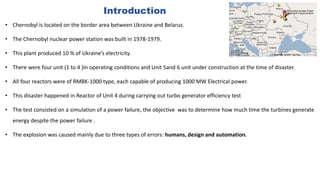
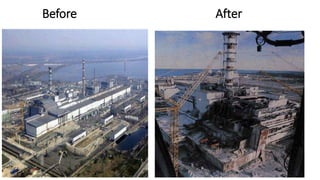
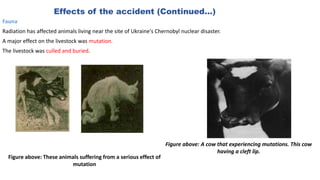
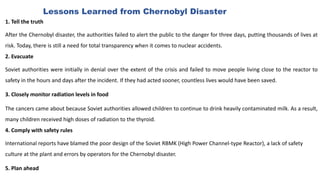
The Chernobyl nuclear disaster of 1986 was the worst nuclear power plant accident in history. On April 26, 1986, a failed safety test at the Chernobyl nuclear power station in Ukraine caused two explosions that released radiation and led to at least 31 deaths. Over 400,000 people were evacuated and large areas became permanently uninhabitable due to high radiation levels. The accident exposed flaws in the reactor design and in the Soviet regulatory system. It demonstrated the need for open communication, rapid evacuation procedures, and careful monitoring of food contamination in the event of a nuclear emergency. The long-term effects on health and the environment continue to be studied.