Chernobyl Disaster: 
Causes and Solutions 
David Cabielles Hernández
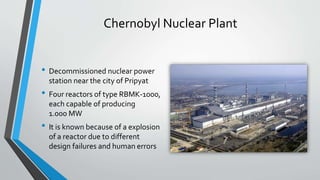
Chernobyl Nuclear Plant 
• Decommissioned nuclear power 
station near the city of Pripyat 
• Four reactors of type RBMK-1000, 
each capable of producing 
1.000MW 
• It is known because of a explosion 
of a reactor due to different 
design failures and human errors
Nuclear Plant Performance – Reactor RBMK-1000 
• Consists of different control 
rods that are responsible for 
regulating the heat with 
nuclear reactions 
• To decrease the heat, more 
rods are inserted into the 
reactor 
• The reactor produce more 
energy if it has more control 
rods down
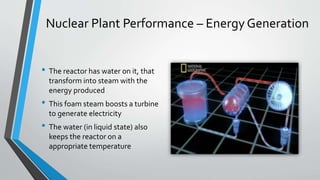
Nuclear Plant Performance – EnergyGeneration 
• The reactor has water on it, that 
transform into steamwith the 
energy produced 
• This foam steam boosts a turbine 
to generate electricity 
• The water (in liquid state) also 
keeps the reactor on a 
appropriate temperature
The Disaster – A “Security Test” 
• The accident is produced 
effecting a security test 
• The test consisted on a 
simulation of a power failure 
• Objective: Determine how 
much time the turbines 
generate energy despite the 
power failure
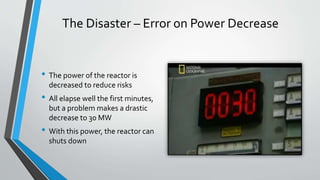
The Disaster – Error on Power Decrease 
• The power of the reactor is 
decreased to reduce risks 
• All elapse well the first minutes, 
but a problem makes a drastic 
decrease to 30 MW 
• With this power, the reactor can 
shuts down
The Disaster – Lack of Communication 
• There are 2 users in diferent 
rooms, responsible of the 
reactor number 4 
• The user on the reactor climbed 
up several control rods to 
recover the power 
• The user that controls the water 
introduce more water than 
necessary (steam can’t be 
produced)
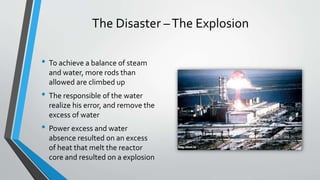
The Disaster –The Explosion 
• To achieve a balance of steam 
and water, more rods than 
allowed are climbed up 
• The responsible of the water 
realize his error, and remove the 
excess of water 
• Power excess and water 
absence resulted on an excess 
of heat that melt the reactor 
core and resulted on a explosion
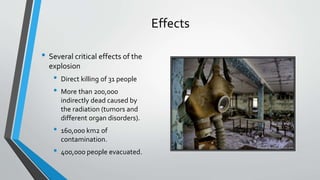
Effects 
• Several critical effects of the 
explosion 
• Direct killing of 31 people 
• More than 200,000 
indirectly dead caused by 
the radiation (tumors and 
different organ disorders). 
• 160,000 km2 of 
contamination. 
• 400,000 people evacuated.
Committed Errors 
• The events preceding the explosion allow highlight three types of errors 
• Human: Lack of communication and making erroneous decisions 
• Design: Unstable reactors and separation of responsible users 
• Automation: The system allows actions that endanger security of the central 
• Noting these errors and the critical effects of the explosion, the question of 
whether the disaster could have been avoided and with which ways arises
Proposed Solutions 
• Based on the commited errors, and looking to other nuclear plants, we 
proposed different solutions for each type of error 
• Human error: its necessary give them sufficient instruction, as well as a 
communication device to know every taken action 
• Design error: Close the reactors of this type, and the new designsmust have the 
controllers in the same room 
• Automation error: System can’t afford to take dangerous actions
Proposed Solution I – Mobile Communication (I) 
• The users have to receive an 
adequate instruction 
• Every action taken must be 
registered 
• When it is registered, it is 
communicated to the other 
controllers 
• The notification is made via 
mobile 
• The user must read and 
confirm themessages before 
take ihis own decisions
Proposed Solution I – Mobile Communication (II)
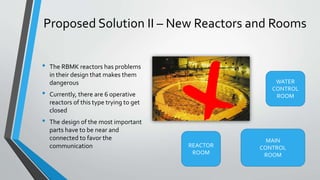
Proposed Solution II – New Reactors and Rooms 
• The RBMK reactors has problems 
in their design that makes them 
dangerous 
• Currently, there are 6 operative 
reactors of this type trying to get 
closed 
• The design of the most important 
parts have to be near and 
connected to favor the 
communication 
WATER 
CONTROL 
ROOM 
REACTOR 
ROOM 
MAIN 
CONTROL 
ROOM
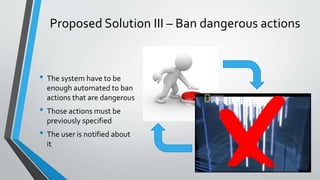
Proposed Solution III – Ban dangerous actions 
• The system have to be 
enough automated to ban 
actions that are dangerous 
• Those actions must be 
previously specified 
• The user is notified about 
it
Conclusions 
• Chernobyl is a decommissioned nuclear power station where occurred one 
of the largest nuclear disasters in history 
• The explosion was caused mainly due to three types of errors: humans, 
design and automation 
• It could be avoided just with a good communication between users, despite 
of the bad design of the reactor and the nuclear plant
Thank you

Chernobyl Disaster - Causes and Solutions

  • 1.
    Chernobyl Disaster: Causesand Solutions David Cabielles Hernández
  • 2.
    Chernobyl Nuclear Plant • Decommissioned nuclear power station near the city of Pripyat • Four reactors of type RBMK-1000, each capable of producing 1.000MW • It is known because of a explosion of a reactor due to different design failures and human errors
  • 3.
    Nuclear Plant Performance– Reactor RBMK-1000 • Consists of different control rods that are responsible for regulating the heat with nuclear reactions • To decrease the heat, more rods are inserted into the reactor • The reactor produce more energy if it has more control rods down
  • 4.
    Nuclear Plant Performance– EnergyGeneration • The reactor has water on it, that transform into steamwith the energy produced • This foam steam boosts a turbine to generate electricity • The water (in liquid state) also keeps the reactor on a appropriate temperature
  • 5.
    The Disaster –A “Security Test” • The accident is produced effecting a security test • The test consisted on a simulation of a power failure • Objective: Determine how much time the turbines generate energy despite the power failure
  • 6.
    The Disaster –Error on Power Decrease • The power of the reactor is decreased to reduce risks • All elapse well the first minutes, but a problem makes a drastic decrease to 30 MW • With this power, the reactor can shuts down
  • 7.
    The Disaster –Lack of Communication • There are 2 users in diferent rooms, responsible of the reactor number 4 • The user on the reactor climbed up several control rods to recover the power • The user that controls the water introduce more water than necessary (steam can’t be produced)
  • 8.
    The Disaster –TheExplosion • To achieve a balance of steam and water, more rods than allowed are climbed up • The responsible of the water realize his error, and remove the excess of water • Power excess and water absence resulted on an excess of heat that melt the reactor core and resulted on a explosion
  • 9.
    Effects • Severalcritical effects of the explosion • Direct killing of 31 people • More than 200,000 indirectly dead caused by the radiation (tumors and different organ disorders). • 160,000 km2 of contamination. • 400,000 people evacuated.
  • 10.
    Committed Errors •The events preceding the explosion allow highlight three types of errors • Human: Lack of communication and making erroneous decisions • Design: Unstable reactors and separation of responsible users • Automation: The system allows actions that endanger security of the central • Noting these errors and the critical effects of the explosion, the question of whether the disaster could have been avoided and with which ways arises
  • 11.
    Proposed Solutions •Based on the commited errors, and looking to other nuclear plants, we proposed different solutions for each type of error • Human error: its necessary give them sufficient instruction, as well as a communication device to know every taken action • Design error: Close the reactors of this type, and the new designsmust have the controllers in the same room • Automation error: System can’t afford to take dangerous actions
  • 12.
    Proposed Solution I– Mobile Communication (I) • The users have to receive an adequate instruction • Every action taken must be registered • When it is registered, it is communicated to the other controllers • The notification is made via mobile • The user must read and confirm themessages before take ihis own decisions
  • 13.
    Proposed Solution I– Mobile Communication (II)
  • 14.
    Proposed Solution II– New Reactors and Rooms • The RBMK reactors has problems in their design that makes them dangerous • Currently, there are 6 operative reactors of this type trying to get closed • The design of the most important parts have to be near and connected to favor the communication WATER CONTROL ROOM REACTOR ROOM MAIN CONTROL ROOM
  • 15.
    Proposed Solution III– Ban dangerous actions • The system have to be enough automated to ban actions that are dangerous • Those actions must be previously specified • The user is notified about it
  • 16.
    Conclusions • Chernobylis a decommissioned nuclear power station where occurred one of the largest nuclear disasters in history • The explosion was caused mainly due to three types of errors: humans, design and automation • It could be avoided just with a good communication between users, despite of the bad design of the reactor and the nuclear plant
  • 17.