CHERNOBYL
DISASTER
26/April/1986
L.S Raheja School Of Architecture
F Y Barch
Made by- A43 Gopal Malpani
A44 Parth Mandore
A45 Matthew Mannayikal
• The Chernobyl disaster was a
nuclear reactor accident in the
Chernobyl Nuclear Power Plant
in the Ukraine, which used to be
a part of the Soviet Union.
• It is considered to be the worst
nuclear power plant disaster in
history and the only level 7
instance on the International
Nuclear Event Scale.
What is nuclear power?
The energy produced by splitting atoms in a nuclear reactor.
Why is it
dangerous?
Nuclear power technology
produces materials that are active
in emitting radiation and are
therefore called "radioactive."
It can destroy cells, cause organs
to shut down or after long and
continuous exposure cause cancer.
•How REACTOR
Works?
1. As the reaction occurs, the uranium
fuel becomes hot
2. The water pumped through the core
in pressure tubes removes the heat from
the fuel
3. The water is then boiled into steam
4. The steam turns the turbines
5. The water is then cooled
6. Then the process repeats
What
Happened
In Plant?
• Reactor #4 was undergoing a test to test the backup
power supply in case of a power loss.
• The power fell too low, allowing the concentration
of xenon-135 to rise.
• The workers continued the test, and in order to
control the rising levels of xenon-135, the control
rods were pulled out.
• The experiment involved shutting down the coolant
pumps, which caused the coolant to rapidly heat up
and boil.
• Pockets of steam formed in the coolant lines. When
the coolant expanded in this particular design, the
power level went up.
• All control rods were ordered to be inserted. As the
rods were inserted, they became deformed and
stuck. The reaction could not be stopped.
Immediate
Impact
• 203 people were hospitalized immediately. 31
of them eventually died. Most of these people
were workers in the plant or local firefighters.
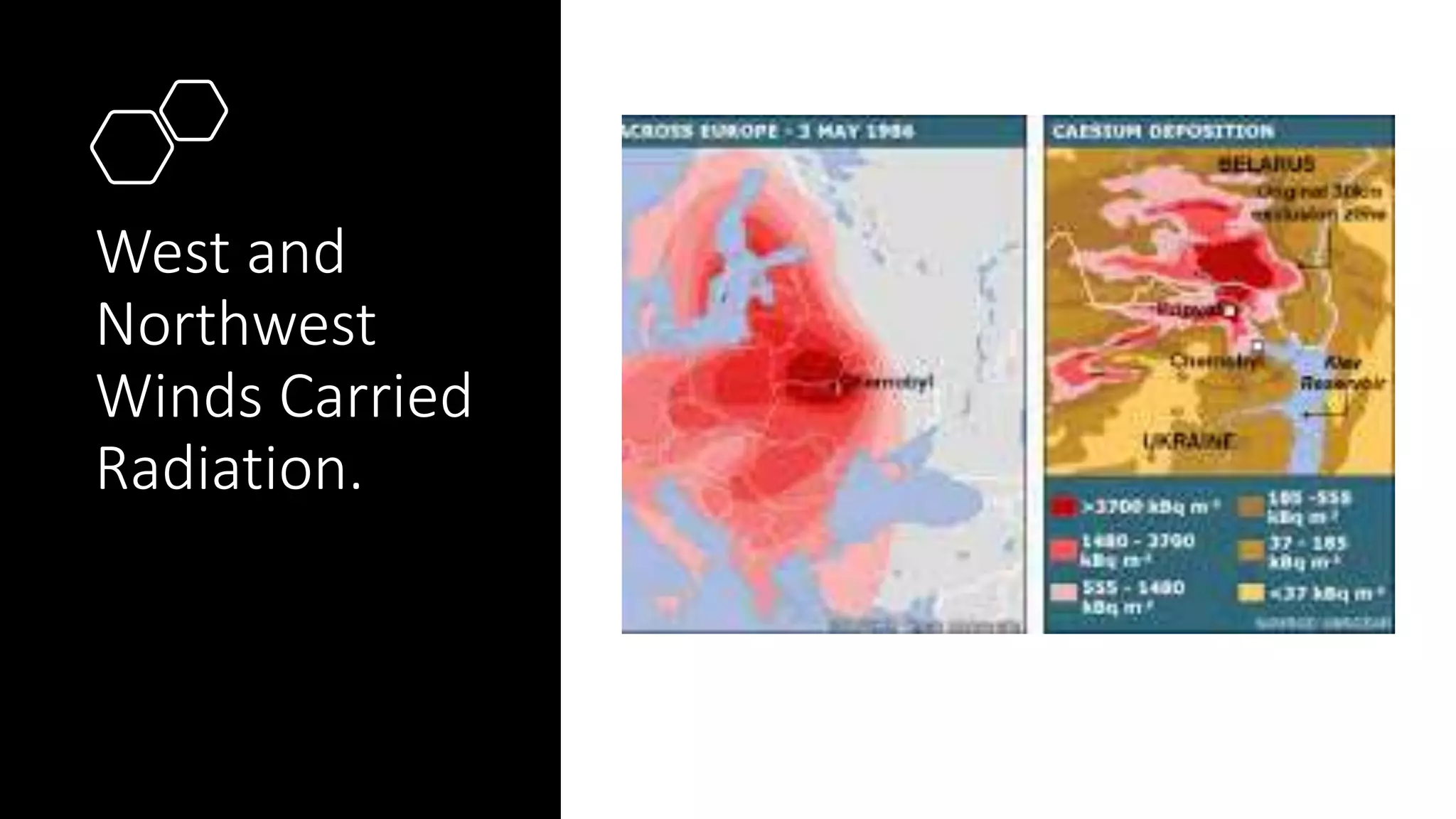
• North West winds from the Black Sea carried
the radiation for many Miles in the following
days. Scandinavian detectors picked up on the
abundance of radiation, but the Soviet
government denied everything.
West and
Northwest
Winds Carried
Radiation.
People were evacuated the day after the
explosion.
A month later 116,000 people in an 18 mile
radius of the plant were evacuated.
Over 300,000 people were moved from the
accident.
Many still live in contaminated areas and the
long term effect is not yet known.
The Soviet Union has not been able to study
effects due to lack of funds and secrecy.
EFFECTS ON THE
ENVIRONMENT
AROUND THE
CHERNOBYL
EXPLOSION
Fallout levels were very high
right around explosion and
affected all wildlife.
Plants had a red hue after
the explosion. These trees
also died from the amount
of radiation they received.
Effects of Radiation
Thyroid Cancer Food and Water
Milk-Farmers have to
watch the radiation
level in milk.
Fish-Cannot be eaten,
as water absorbs
radiation and fats
concentrate it
Radioactive Floods
every spring
Lives ruined
Suicide and
depression
Even healthy people
were traumatized
Thank you

Chernobyl Nuclear Power Plant Disaster

  • 1.
    CHERNOBYL DISASTER 26/April/1986 L.S Raheja SchoolOf Architecture F Y Barch Made by- A43 Gopal Malpani A44 Parth Mandore A45 Matthew Mannayikal
  • 2.
    • The Chernobyldisaster was a nuclear reactor accident in the Chernobyl Nuclear Power Plant in the Ukraine, which used to be a part of the Soviet Union. • It is considered to be the worst nuclear power plant disaster in history and the only level 7 instance on the International Nuclear Event Scale.
  • 3.
    What is nuclearpower? The energy produced by splitting atoms in a nuclear reactor.
  • 4.
    Why is it dangerous? Nuclearpower technology produces materials that are active in emitting radiation and are therefore called "radioactive." It can destroy cells, cause organs to shut down or after long and continuous exposure cause cancer.
  • 5.
    •How REACTOR Works? 1. Asthe reaction occurs, the uranium fuel becomes hot 2. The water pumped through the core in pressure tubes removes the heat from the fuel 3. The water is then boiled into steam 4. The steam turns the turbines 5. The water is then cooled 6. Then the process repeats
  • 6.
    What Happened In Plant? • Reactor#4 was undergoing a test to test the backup power supply in case of a power loss. • The power fell too low, allowing the concentration of xenon-135 to rise. • The workers continued the test, and in order to control the rising levels of xenon-135, the control rods were pulled out. • The experiment involved shutting down the coolant pumps, which caused the coolant to rapidly heat up and boil. • Pockets of steam formed in the coolant lines. When the coolant expanded in this particular design, the power level went up. • All control rods were ordered to be inserted. As the rods were inserted, they became deformed and stuck. The reaction could not be stopped.
  • 7.
    Immediate Impact • 203 peoplewere hospitalized immediately. 31 of them eventually died. Most of these people were workers in the plant or local firefighters. • North West winds from the Black Sea carried the radiation for many Miles in the following days. Scandinavian detectors picked up on the abundance of radiation, but the Soviet government denied everything.
  • 8.
  • 9.
    People were evacuatedthe day after the explosion. A month later 116,000 people in an 18 mile radius of the plant were evacuated. Over 300,000 people were moved from the accident. Many still live in contaminated areas and the long term effect is not yet known. The Soviet Union has not been able to study effects due to lack of funds and secrecy.
  • 10.
    EFFECTS ON THE ENVIRONMENT AROUNDTHE CHERNOBYL EXPLOSION Fallout levels were very high right around explosion and affected all wildlife. Plants had a red hue after the explosion. These trees also died from the amount of radiation they received.
  • 11.
    Effects of Radiation ThyroidCancer Food and Water Milk-Farmers have to watch the radiation level in milk. Fish-Cannot be eaten, as water absorbs radiation and fats concentrate it Radioactive Floods every spring Lives ruined Suicide and depression Even healthy people were traumatized
  • 12.