Chernobyl disaster
Seminar topic 1
The worst manmade disaster in human history
Where is Chernobyl?
Geographical map
Background
• Reaktor Bolshoy Moshehnosty Kipyashiy
• RBMK, a Russian acronym translated roughly means “reactor (of) high
power (of the) channel (type)”
• Reactor cooled by water and moderated by graphite
RMBK Reactor
Fuel assembler
Reactor Plant Scenario
1. As the reaction occurs, the uranium fuel becomes hot
2. The water pumped through the core in pressure tubes removes the
heat from the fuel
3. The water is then boiled into steam
4. The steam turns the turbines
5. The water is then cooled
6. Then the process repeats
Day of disaster
25 April 1986
• 01:00 The preparation for the test
• 13:47 Lowering of the reactor power halted at 1,600 MWt
• 14:00 The ECCS was isolated
• 23:10 The power reduction resumed
26 April 1986
• 24:00 Operation shift change
• 24:28 Power level is now 500 MWt and kept decreasing to 30 MWt
• 24:40 The operator withdrew some control rods
• 01:00 Power had risen to 200 MWt
• 01:03 Connecting the fourth main cooling pump to the left loop of the
system 200 MWt
• 01:07 Connecting the fourth main cooling pump to the right of the loop
system - this was a violation of NOP
26 April 1986 (cont.)
• 01:19 Increased feed water flow to the steam drums and removed more
control rods -violation of NOP
• 01:23 The test was started
• 01:23:10 Automatic rods withdrawn from the core
• 01:23:21 Two groups of automated control rods were back to the core
26 April 1986 (cont.)
• 01:23:30 Power kept increasing
• 01:23:40 Emergency button pushed
• 01:23:44 Power is at 300000 MWth
• 01:23:48 1st thermal explosion
• 01:23:55 2nd explosion
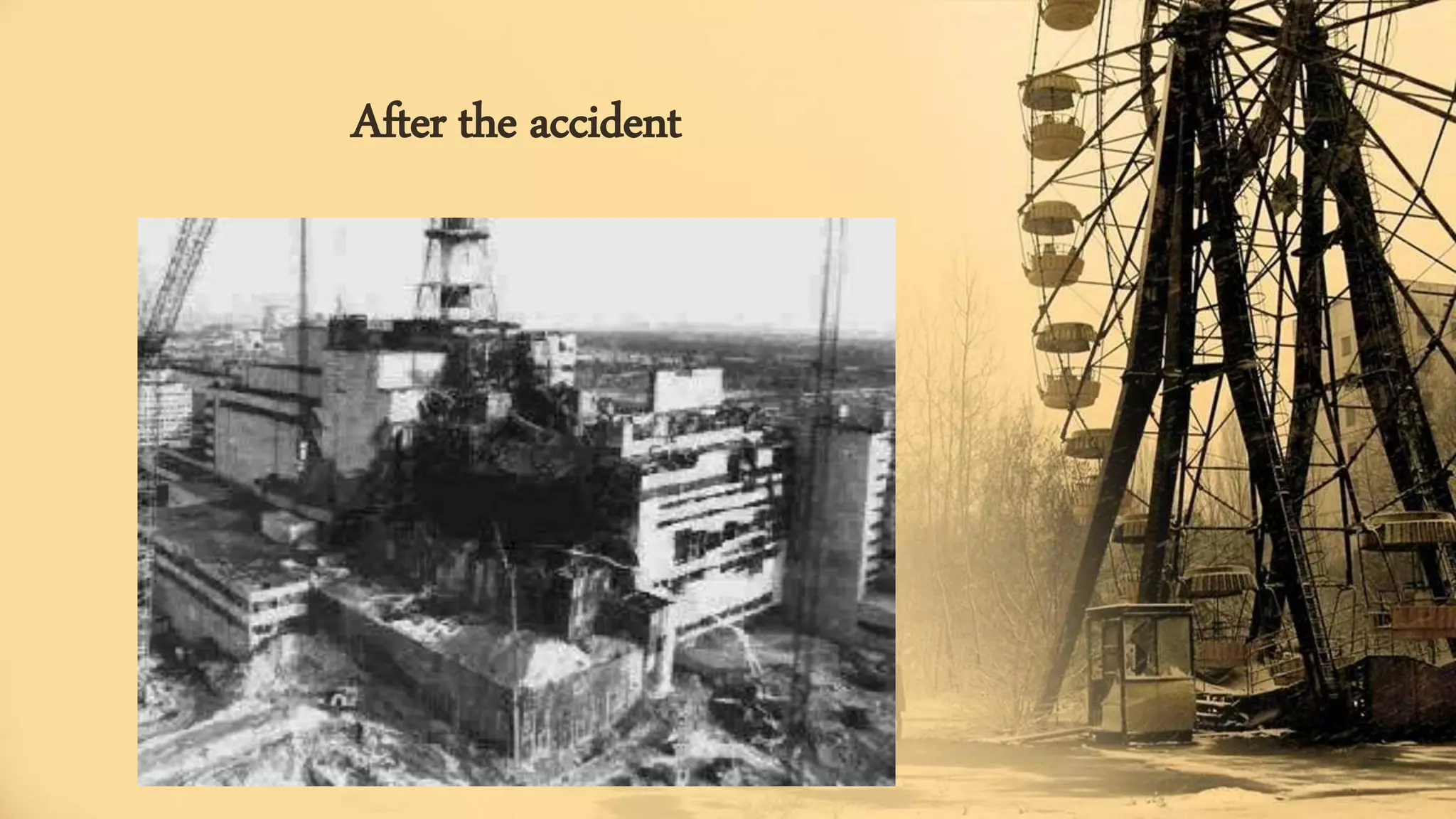
After the accident
Human Errors
• Isolation of the emergency core cooling system
• Unsafe amount of control rods withdrawn
• Connection of the four main cooling pumps to the right and left of the
system
Human Errors (cont.)
• Mental model
• The operator did not have a good mental model of the system itself
• Overconfidence
• By having an electrical engineer on site for an electrical test
• No confirmation of cues obtained from the system
• Beta too high
• Many missed signals before the accident
System Analysis
• Use of graphite as a moderator
• Lack of a well-built containment structure
• Inadequate instrumentation and alarms for an emergency situation
• There were no physical controls that prevented the operators from
operating the reactor in its unstable state
Summary of Facts
• April 26, 1986:
• Chernobyl nuclear power plant
• Operator errors cause a reactor explosion
• Explosion releases 190 tons of radioactive gasses into the atmosphere
• Fire starts that lasts 10 days
• People:
• 7 million lived in contaminated areas; 3 million were children
• Wind:
• Carries radiation far distances
Radioactive fallout
Direct Casualties
• 5.5 million people still live in contaminated areas
• 31 people died in 3 months of radiation poisoning
• 134 emergency workers suffered from acute radiation sickness
• 25,000 rescue workers died since then of diseases caused by radiation
• Cancer afflicts many others
• Increased birth defects, miscarriages, and stillbirths
Indirect Casualties
•By the year 2000 there were 1800 case of thyroid
cancer in children and adolescent
•High number of suicide and violent death among
Firemen, policemen, and other recovery workers
Left overs
Professor legasov
Vladimir Gorbachev
Radiation problems
liquidators
Radiation levels
• Normal occurring background radiation range is about 1.5-3.5
millisievert.
• Levels of radiation at Chernobyl. The radiation levels in the worst-hit
areas of the reactor building, including the control room, have been
estimated at 300Sv/hr. fatal dose in just over a minute.
• Now a days it is reduced to 34 Sv/hr. a lethel dose in 10-20 mins.
Problems Today
• The Sarcophagus
• After the disaster, a huge cement box was built around the radioactive material
• It is falling apart!
• According to a 2003 report by the Russian Atomic Energy Minister, Alexander Rumyantsev, "the concrete shell
surrounding the Chernobyl nuclear reactor is in real danger of collapsing at any time."
• A new Sarcophagus is scheduled to be completed in 2009.
Recent photo of Chernobyl with sarcophagus
losses
• Environmental loss
• Economic loss $935 billion(670000 crores)
• Death count-54
• Life of lakhs of people
• Farm lands
• Pripyat river
Recommendations
• Have proper Standard Operating Procedures (SOP) for both normal and
emergency situations
• Have scheduled trainings and practices for normal and emergency
situations
• Always have a reactor expert on site
• Have operators confirm any cues from the system before making
hypothesis or take action
• Have a team work kind of environment such that every body is involved
Thank you

Chernobyl tragedy

  • 1.
  • 2.
    The worst manmadedisaster in human history
  • 3.
  • 4.
  • 5.
    Background • Reaktor BolshoyMoshehnosty Kipyashiy • RBMK, a Russian acronym translated roughly means “reactor (of) high power (of the) channel (type)” • Reactor cooled by water and moderated by graphite
  • 6.
  • 7.
  • 8.
    Reactor Plant Scenario 1.As the reaction occurs, the uranium fuel becomes hot 2. The water pumped through the core in pressure tubes removes the heat from the fuel 3. The water is then boiled into steam 4. The steam turns the turbines 5. The water is then cooled 6. Then the process repeats
  • 9.
    Day of disaster 25April 1986 • 01:00 The preparation for the test • 13:47 Lowering of the reactor power halted at 1,600 MWt • 14:00 The ECCS was isolated • 23:10 The power reduction resumed
  • 10.
    26 April 1986 •24:00 Operation shift change • 24:28 Power level is now 500 MWt and kept decreasing to 30 MWt • 24:40 The operator withdrew some control rods • 01:00 Power had risen to 200 MWt • 01:03 Connecting the fourth main cooling pump to the left loop of the system 200 MWt • 01:07 Connecting the fourth main cooling pump to the right of the loop system - this was a violation of NOP
  • 11.
    26 April 1986(cont.) • 01:19 Increased feed water flow to the steam drums and removed more control rods -violation of NOP • 01:23 The test was started • 01:23:10 Automatic rods withdrawn from the core • 01:23:21 Two groups of automated control rods were back to the core
  • 12.
    26 April 1986(cont.) • 01:23:30 Power kept increasing • 01:23:40 Emergency button pushed • 01:23:44 Power is at 300000 MWth • 01:23:48 1st thermal explosion • 01:23:55 2nd explosion
  • 13.
  • 14.
    Human Errors • Isolationof the emergency core cooling system • Unsafe amount of control rods withdrawn • Connection of the four main cooling pumps to the right and left of the system
  • 15.
    Human Errors (cont.) •Mental model • The operator did not have a good mental model of the system itself • Overconfidence • By having an electrical engineer on site for an electrical test • No confirmation of cues obtained from the system • Beta too high • Many missed signals before the accident
  • 16.
    System Analysis • Useof graphite as a moderator • Lack of a well-built containment structure • Inadequate instrumentation and alarms for an emergency situation • There were no physical controls that prevented the operators from operating the reactor in its unstable state
  • 17.
    Summary of Facts •April 26, 1986: • Chernobyl nuclear power plant • Operator errors cause a reactor explosion • Explosion releases 190 tons of radioactive gasses into the atmosphere • Fire starts that lasts 10 days • People: • 7 million lived in contaminated areas; 3 million were children • Wind: • Carries radiation far distances
  • 18.
  • 19.
    Direct Casualties • 5.5million people still live in contaminated areas • 31 people died in 3 months of radiation poisoning • 134 emergency workers suffered from acute radiation sickness • 25,000 rescue workers died since then of diseases caused by radiation • Cancer afflicts many others • Increased birth defects, miscarriages, and stillbirths
  • 20.
    Indirect Casualties •By theyear 2000 there were 1800 case of thyroid cancer in children and adolescent •High number of suicide and violent death among Firemen, policemen, and other recovery workers
  • 21.
  • 22.
  • 23.
  • 24.
  • 25.
  • 26.
    Radiation levels • Normaloccurring background radiation range is about 1.5-3.5 millisievert. • Levels of radiation at Chernobyl. The radiation levels in the worst-hit areas of the reactor building, including the control room, have been estimated at 300Sv/hr. fatal dose in just over a minute. • Now a days it is reduced to 34 Sv/hr. a lethel dose in 10-20 mins.
  • 27.
    Problems Today • TheSarcophagus • After the disaster, a huge cement box was built around the radioactive material • It is falling apart! • According to a 2003 report by the Russian Atomic Energy Minister, Alexander Rumyantsev, "the concrete shell surrounding the Chernobyl nuclear reactor is in real danger of collapsing at any time." • A new Sarcophagus is scheduled to be completed in 2009.
  • 28.
    Recent photo ofChernobyl with sarcophagus
  • 29.
    losses • Environmental loss •Economic loss $935 billion(670000 crores) • Death count-54 • Life of lakhs of people • Farm lands • Pripyat river
  • 30.
    Recommendations • Have properStandard Operating Procedures (SOP) for both normal and emergency situations • Have scheduled trainings and practices for normal and emergency situations • Always have a reactor expert on site • Have operators confirm any cues from the system before making hypothesis or take action • Have a team work kind of environment such that every body is involved
  • 31.