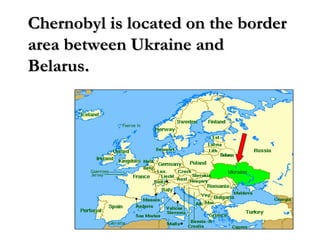
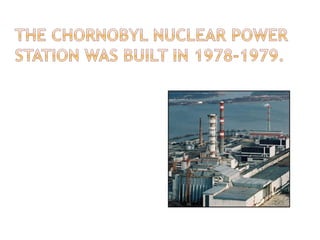
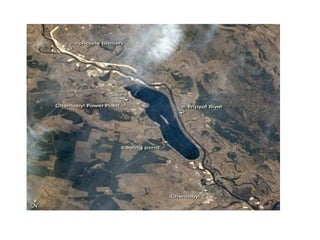
Chernobyl is located on the borderChernobyl is located on the border
area between Ukraine andarea between Ukraine and
Belarus.Belarus.
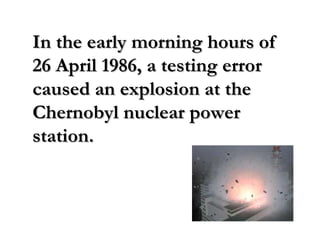
In the early morning hours ofIn the early morning hours of
26 April 1986, a testing error26 April 1986, a testing error
caused an explosion at thecaused an explosion at the
Chernobyl nuclear powerChernobyl nuclear power
station.station.
Children went to school andChildren went to school and
played outside.played outside.
Gardeners worked onGardeners worked on
their plots outdoors.their plots outdoors.
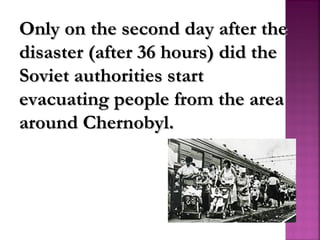
Only on the second day after theOnly on the second day after the
disaster (after 36 hours) did thedisaster (after 36 hours) did the
Soviet authorities startSoviet authorities start
evacuating people from the areaevacuating people from the area
around Chernobyl.around Chernobyl.
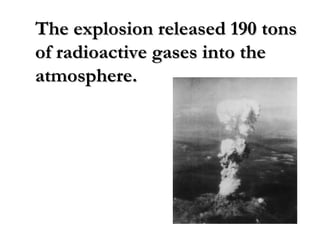
The explosion released 190 tonsThe explosion released 190 tons
of radioactive gases into theof radioactive gases into the
atmosphere.atmosphere.
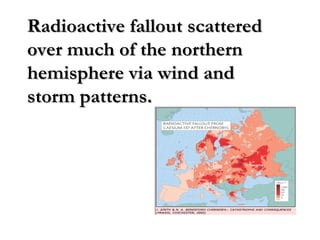
Radioactive fallout scatteredRadioactive fallout scattered
over much of the northernover much of the northern
hemisphere via wind andhemisphere via wind and
storm patterns.storm patterns.
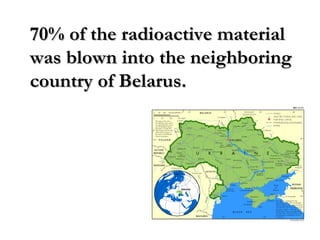
70% of the radioactive material70% of the radioactive material
was blown into the neighboringwas blown into the neighboring
country of Belarus.country of Belarus.
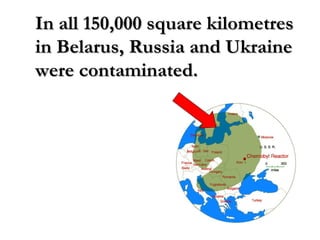
In all 150,000 square kilometresIn all 150,000 square kilometres
in Belarus, Russia and Ukrainein Belarus, Russia and Ukraine
were contaminated.were contaminated.
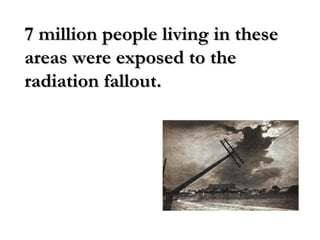
7 million people living in these7 million people living in these
areas were exposed to theareas were exposed to the
radiation fallout.radiation fallout.
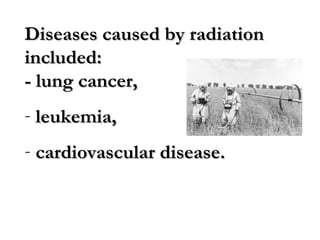
Diseases caused by radiationDiseases caused by radiation
included:included:
- lung cancer,- lung cancer,
- leukemia,leukemia,
- cardiovascular disease.cardiovascular disease.
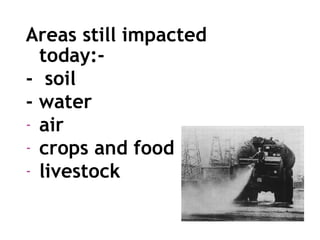
Areas still impacted
today:-
- soil
- water
- air
- crops and food
- livestock
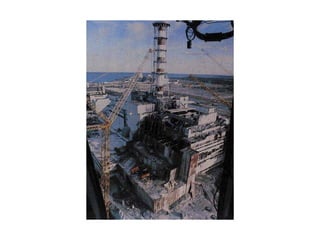
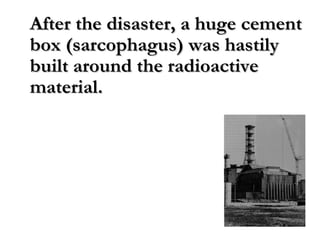
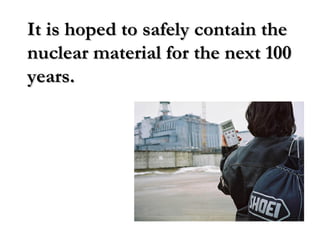
After the disaster, a huge cementAfter the disaster, a huge cement
box (sarcophagus) was hastilybox (sarcophagus) was hastily
built around the radioactivebuilt around the radioactive
material.material.
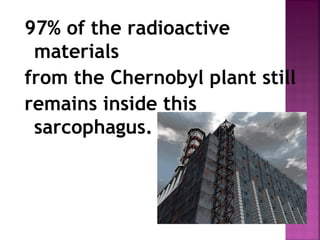
97% of the radioactive
materials
from the Chernobyl plant still
remains inside this
sarcophagus.
It is hoped to safely contain theIt is hoped to safely contain the
nuclear material for the next 100nuclear material for the next 100
years.years.
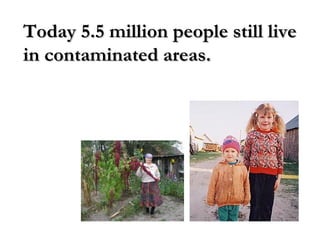
Today 5.5 million people still liveToday 5.5 million people still live
in contaminated areas.in contaminated areas.
 It is carried out by Phytotech, a
phytoremediation company in Monmouth
Junction.
 Rafts with sunflowers growing on them float
on a small pond at the Chernobyl nuclear
accident site in the Ukraine.
 This sunflower project is one of many
international efforts at phytoremediation
Chernobyl Disaster

Chernobyl Disaster

  • 3.
    Chernobyl is locatedon the borderChernobyl is located on the border area between Ukraine andarea between Ukraine and Belarus.Belarus.
  • 7.
    In the earlymorning hours ofIn the early morning hours of 26 April 1986, a testing error26 April 1986, a testing error caused an explosion at thecaused an explosion at the Chernobyl nuclear powerChernobyl nuclear power station.station.
  • 10.
    Children went toschool andChildren went to school and played outside.played outside. Gardeners worked onGardeners worked on their plots outdoors.their plots outdoors.
  • 11.
    Only on thesecond day after theOnly on the second day after the disaster (after 36 hours) did thedisaster (after 36 hours) did the Soviet authorities startSoviet authorities start evacuating people from the areaevacuating people from the area around Chernobyl.around Chernobyl.
  • 13.
    The explosion released190 tonsThe explosion released 190 tons of radioactive gases into theof radioactive gases into the atmosphere.atmosphere.
  • 14.
    Radioactive fallout scatteredRadioactivefallout scattered over much of the northernover much of the northern hemisphere via wind andhemisphere via wind and storm patterns.storm patterns.
  • 15.
    70% of theradioactive material70% of the radioactive material was blown into the neighboringwas blown into the neighboring country of Belarus.country of Belarus.
  • 16.
    In all 150,000square kilometresIn all 150,000 square kilometres in Belarus, Russia and Ukrainein Belarus, Russia and Ukraine were contaminated.were contaminated.
  • 17.
    7 million peopleliving in these7 million people living in these areas were exposed to theareas were exposed to the radiation fallout.radiation fallout.
  • 19.
    Diseases caused byradiationDiseases caused by radiation included:included: - lung cancer,- lung cancer, - leukemia,leukemia, - cardiovascular disease.cardiovascular disease.
  • 21.
    Areas still impacted today:- -soil - water - air - crops and food - livestock
  • 23.
    After the disaster,a huge cementAfter the disaster, a huge cement box (sarcophagus) was hastilybox (sarcophagus) was hastily built around the radioactivebuilt around the radioactive material.material.
  • 24.
    97% of theradioactive materials from the Chernobyl plant still remains inside this sarcophagus.
  • 25.
    It is hopedto safely contain theIt is hoped to safely contain the nuclear material for the next 100nuclear material for the next 100 years.years.
  • 26.
    Today 5.5 millionpeople still liveToday 5.5 million people still live in contaminated areas.in contaminated areas.
  • 27.
     It iscarried out by Phytotech, a phytoremediation company in Monmouth Junction.  Rafts with sunflowers growing on them float on a small pond at the Chernobyl nuclear accident site in the Ukraine.  This sunflower project is one of many international efforts at phytoremediation