The Emotional Brain
Ennapadam S. Krishnamoorthy
MD, DCN(Lond) PhD (Lond),
FRCP (Lond, Edin, Glas), MAMS
Vincent van Gogh
• Extremely productive- over 2000
works in a short lifetime
• Bursts of creativity- in one short period
in Arles (1888-89) he produced 200
paintings, 200 watercolors, and wrote
200 letters to his brother Theo- 1700
pages, shortest 6 pages long
• Hypergraphic in letter and painting
Vincent van Gogh
• Had seizures while painting as
demonstrated by the rough brush strokes
“Over the Ravine”
• Demonstrated the gamut of sexual
behaviors, hypo & hypersexuality,
bisexuality
• Intensely emotional, could not terminate
arguments easily
• Auditory hallucinations
And if thine offend thee,And if thine offend thee,
pluck it outpluck it out
Emotion and the Brain
• While the hypothalamus was required for the
expression of emotion the experience of emotion
required the cortex, the stream of feeling
depending on the strong connections between the
cortex and the hypothalamus.
• Papez, 1937
A life without emotions?
• To appreciate the significance of emotions, just
imagine life without them. Instead of the daily
highs and lows we experience, life would be a
great empty plane of existence without
significance. Without question, the expression of
emotion is a large part of being human.
• Bear, Connors & Paradiso
• Neuroscience- Exploring the Brain
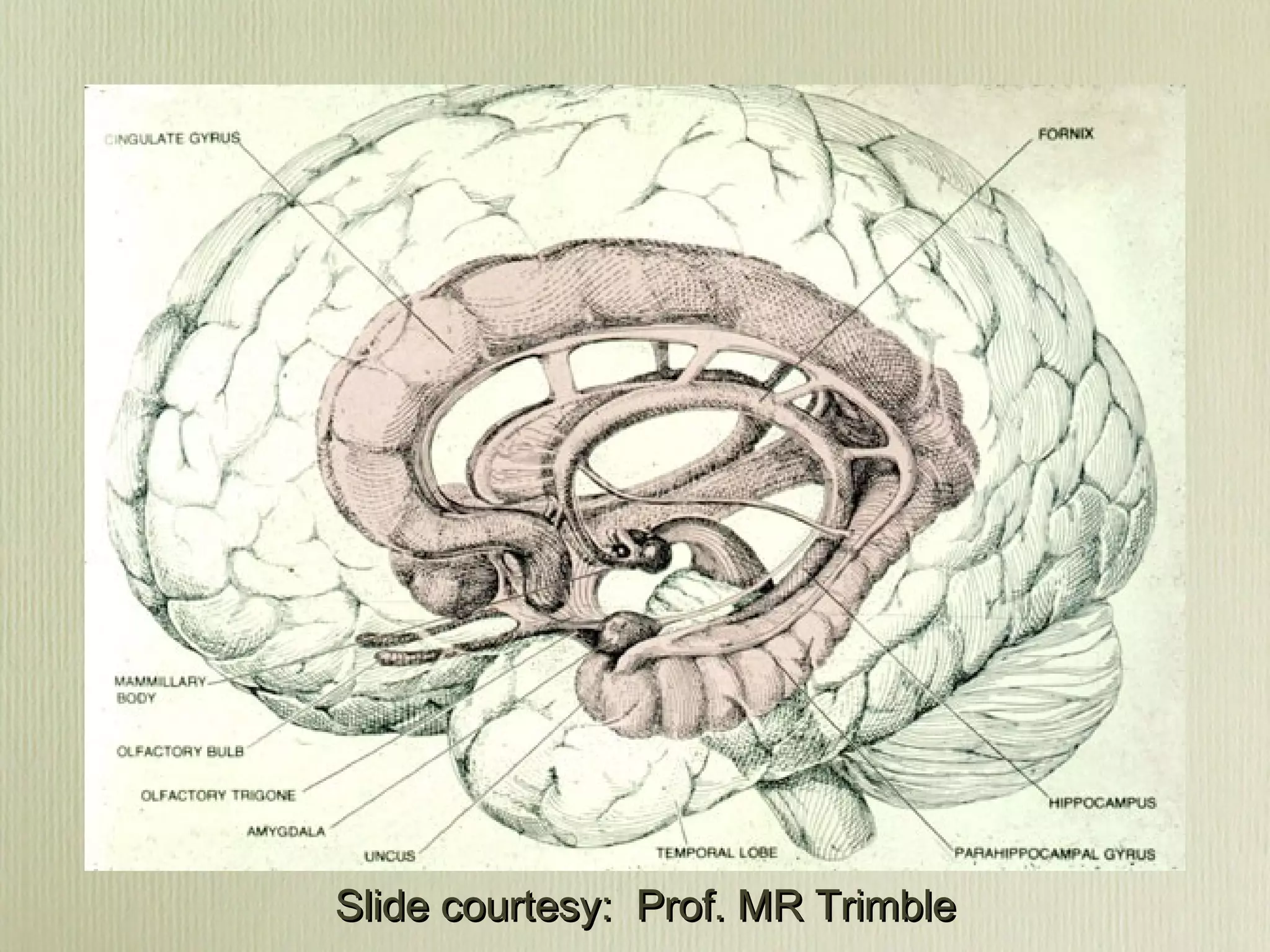
James Papez
• Proposed that on the
medial wall of the brain
there is an emotion
system that links the
cortex with the
hypothalamus
• Believed that the
experience of emotion
was determined by
activity in the cingulate
cortex and less directly,
other cortical areas
HippocampusHippocampus
HypothalamusHypothalamusAnterior NucleusAnterior Nucleus
Of ThalamusOf Thalamus
CingulateCingulate
CortexCortex
NEOCORTEXNEOCORTEX
EmotionalEmotional
expressionexpression
EmotionalEmotional
experienceexperience
Slide courtesy: Prof. MR TrimbleSlide courtesy: Prof. MR Trimble
Amygdala (Greek for Almond)
• Lies in the pole of the temporal lobe, just below the
cortex on the medial side. Is a complex of nucleii
• Afferents to the amygdala come from all sensory
systems, each with a different projective pattern
• Removal of the amygdala causes fearlessness;
electrical stimulation of the intact amygdala leads to
increased vigilance or attention; lateral amygdala- fear
and violent aggression
Subnuclei of the Amygdala
M = Medial Nucleus; CE = Central Nucleus; PAS = Periamygdaloid Cortex;
B = Basal Nucleus; AB = Accessory Basal Nucleus; L = Lateral Nucleus;
Paralaminar Nucleus
• Creativity & Emotion
• The right hemisphere nexus
• Suffered from depression
• Also may have had euphoria
• Emotionality and creativity linked
• Blended poetry and music
• Also blended religious fervor with passionate
nationalism
• Was his trinity talking?
Subramanya BharathiSubramanya Bharathi
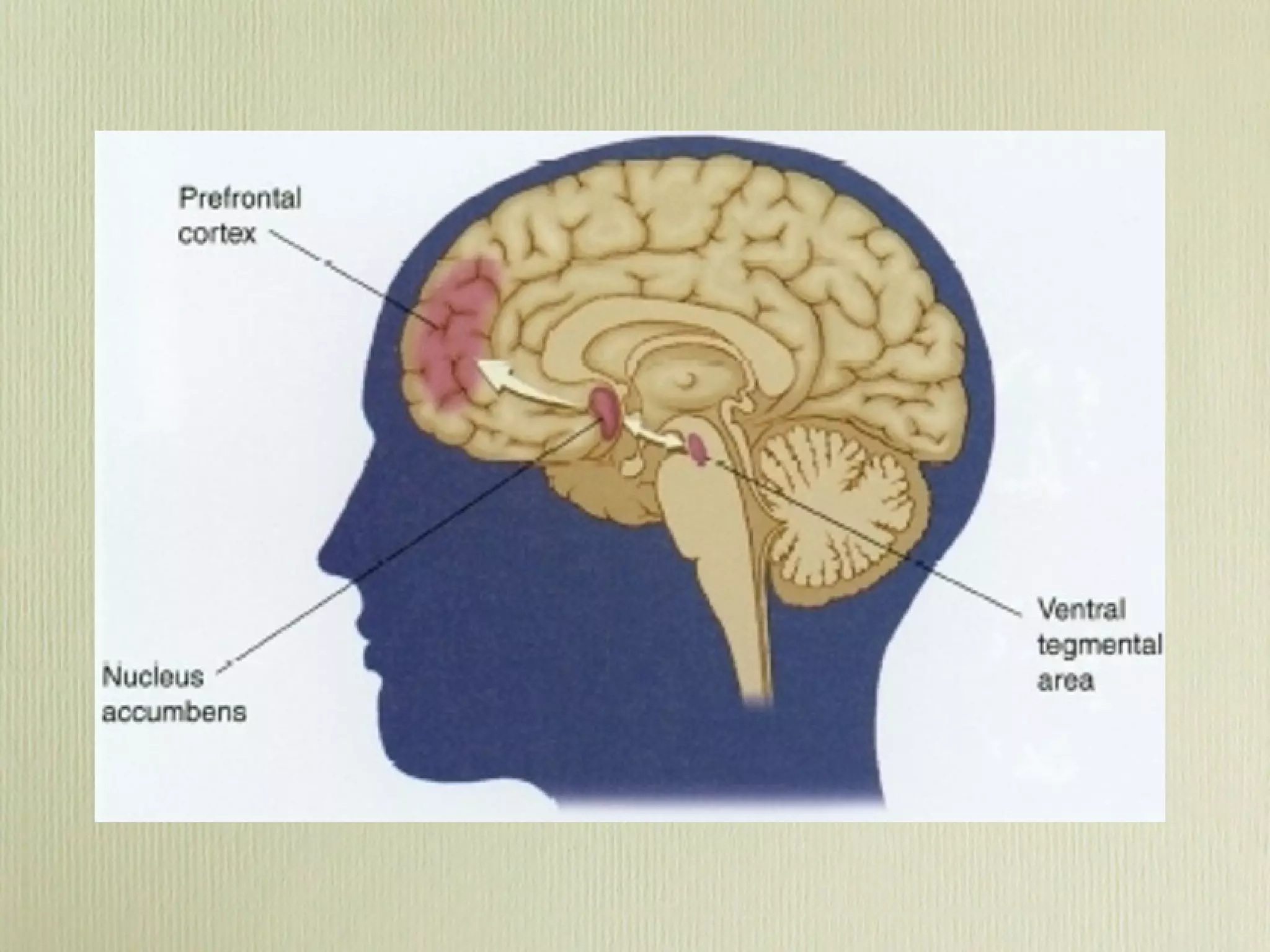
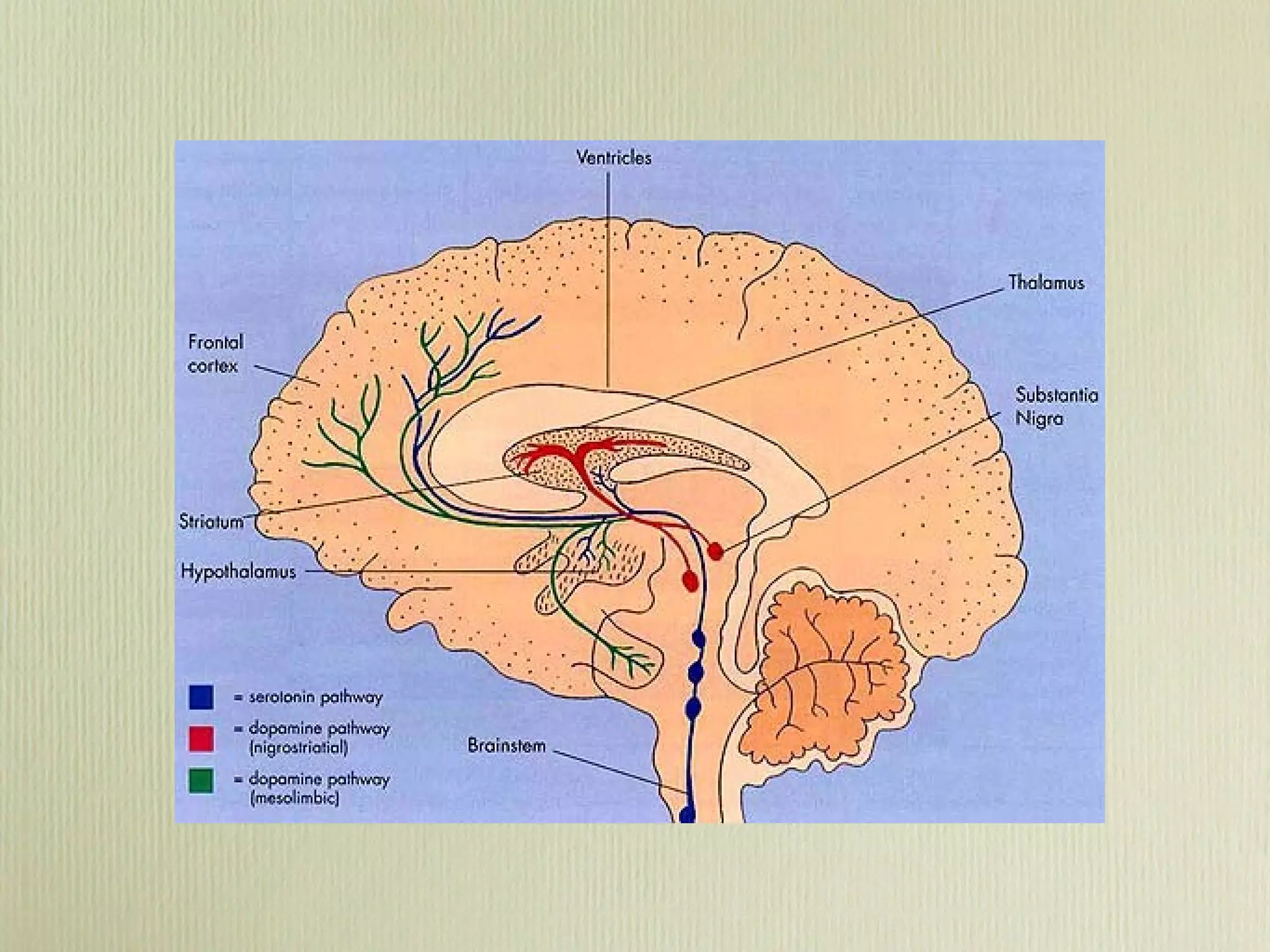
The neurobiology of positive
emotions. Burgdorf J, Panksepp J
Neurosci Biobehav Rev. 2006;30(2):173-87.
• There is now a convergence of evidence to
suggest that various regions of the limbic
system, including especially ventral striatal
dopamine systems are implemented in an
anticipatory (appetitive) positive affective state.
• Dopamine independent mechanisms utilizing
opiate and GABA receptors in the ventral
striatum, amygdala and orbital frontal cortex are
important in elaborating consummatory PA (i.e.
sensory pleasure) states, and various
neuropeptides mediate homeostatic
satisfactions.
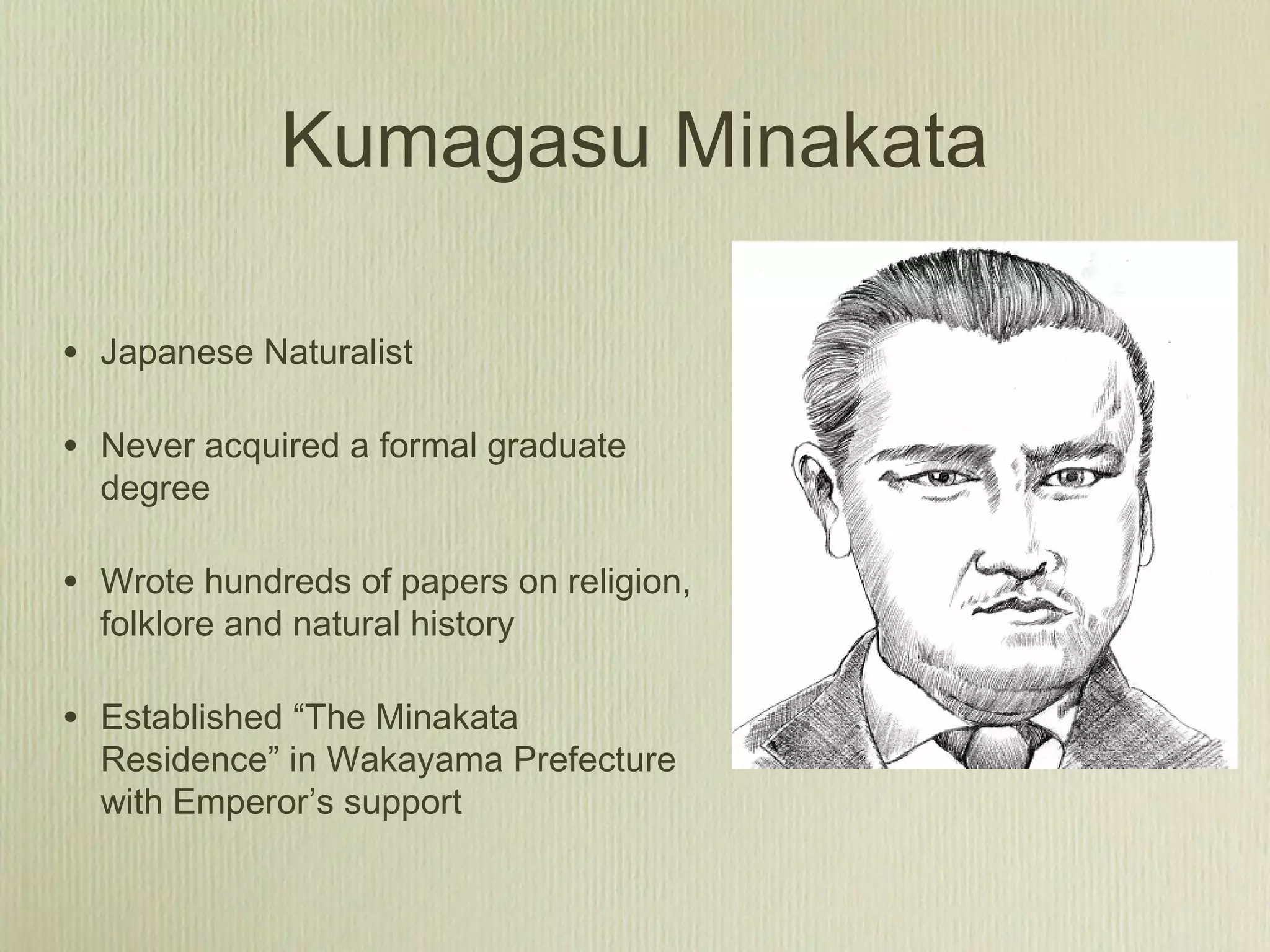
Kumagasu Minakata
• Japanese Naturalist
• Never acquired a formal graduate
degree
• Wrote hundreds of papers on religion,
folklore and natural history
• Established “The Minakata
Residence” in Wakayama Prefecture
with Emperor’s support
Kumagasu Minakata
• Was actively involved in the anti-
shrine consolidation protests and the
nature conservation movement
• Was a virgin until age 41
• Wrote minuscule letters in compact
space- tremendous number of articles
• Intense, emotional, short tempered,
irritable
Kumagasu Minakata
• Had temporal lobe
epilepsy with deja vu
experiences
• Using MRI to study his
post-mortem brain, Murai
and colleagues found
Right Hippocampal
Atrophy
Inter-ictal behavioral
syndrome of Temporal Lobe
Epilepsy• Syndrome described by Gastaut & Geschwind
and characterised by
• intensified and labile emotionality
• viscosity (orderliness, excessive attention to detail
and persistence)
• hyposexuality
• religiosity
• hypergraphia
Sensory- Limbic Hyperconnection- an
explanation for the behavioral
features
• increased electrical activity-temporal lobe
• u
• enhanced connection between sensory input
and limbic processing
• u
• sensory experience suffused with emotional
coloration
Laterality & inter-ictal
behavioral syndrome
• RIGHT SIDED FOCUS
• (EMOTIVE)
• emotionality
• elation and sadness
• Tendency to ‘polish’
image
LEFT SIDED FOCUS
(IDEATIVE)
sense of personal destiny
philosophical interests
Tendency to ‘tarnish’ image
Hippocampus and Geschwind’s
triad
• 33 subjects (23 men) with
refractory partial seizures
completed NBI
• Patients scoring high and low on
patient and carer NBI sub-scales
assessed
• Groups were matched for
frequency/ severity using
NHSSS
• Hyper-religiosity inversely
associated with right
hippocampal volume
 We compared epilepsy
patients with very severe
BHA (>3 SD) and those
with no BHA
 High psychiatric co-
morbidity in both groups-
no statistical difference
 Group with BHA-self ratings
emotions, fear, guilt,
sadness; carer ratings:
hyposexuality,
hypergraphia, dependency
Wuerfel et al, JNNP 2004; 1.        
75
(4); 640-2.
Wuerfel et al, JNNP 2004; 1.        
75
(4); 640-2.
Tebartz van Elst L. Epi & Behav 2003:
4; 291-7
Tebartz van Elst L. Epi & Behav 2003:
4; 291-7
Temperament & Brain
Dominance
• Left brain dominant
individuals tend to be
more ideological and
philosophical in their
approach; more
motivated by social and
pragmatic, rather than
emotional concerns;
more diligent, purposeful,
capable of greater
tenacity and driven more
often by a sense of duty.
• Right brain dominant
people have a better
appreciation of the world
around them, greater
creative ability; a proclivity
for the finer aspects of life;
and tend to be more mood
and emotion driven in
making their choices; both
day to day ones and those
that are life- defining.
Right Hemisphere & Creative
Endeavor
• The use of language, poetry and metaphor
produces heightened activity in the right
hemisphere
• Creative pursuits are strongly associated with
disorders of the mind- bipolar affective disorder
and schizophrenia
• In poetry there are several examples of such
overlap
DAY EXPERIENCE
Day-1
He has a painful lump on his neck, the size of a marble, that appears to be
contracted muscle
Day-2
He is well until after breakfast; lies down to rest. Found later, rolling on the bed,
tossing about, moaning, as if in great pain, unable to communicate clearly. This
is followed by a fit of shivering, clenching his teeth, gripping his hands tight.
Complains of a painful headache; eyes are described as being "full of strange
unconsciousness". Rosalind, chosen to be with him, hugs him, holds his hands
and rubs them comfortingly; he feels better.
Day-3
Characterized alternately by periods of lying down quietly followed by periods of
moaning and trembling, which are triggered in particular by sounds. Does not
eat at meal times but becomes curiously quiet, as if he wants to allow those
taking care of him to eat.
Day-4
Described as "the day on which we saw the glorious climax". Seemed to be in great
suffering; intensification of trembling and heat; consciousness became more and
more intermittent; every movement causes him to jump out of his skin; perceives
dirt everywhere; talks all the time about Adyar and members of the Purple Order
there; repeatedly says “I want to go to India, why have you brought me here?”.
Ends up sitting in a dark corner.
At sundown, he asks to be left alone but later joins group on Verandah, carrying a
cushion; he ends up sitting as far away from the group as possible; does not
attend to the group there, is found to be murmuring incoherently; He is then
persuaded to go and sit under a "pepper tree" in expectation of "the Master's
JK- The Prelude
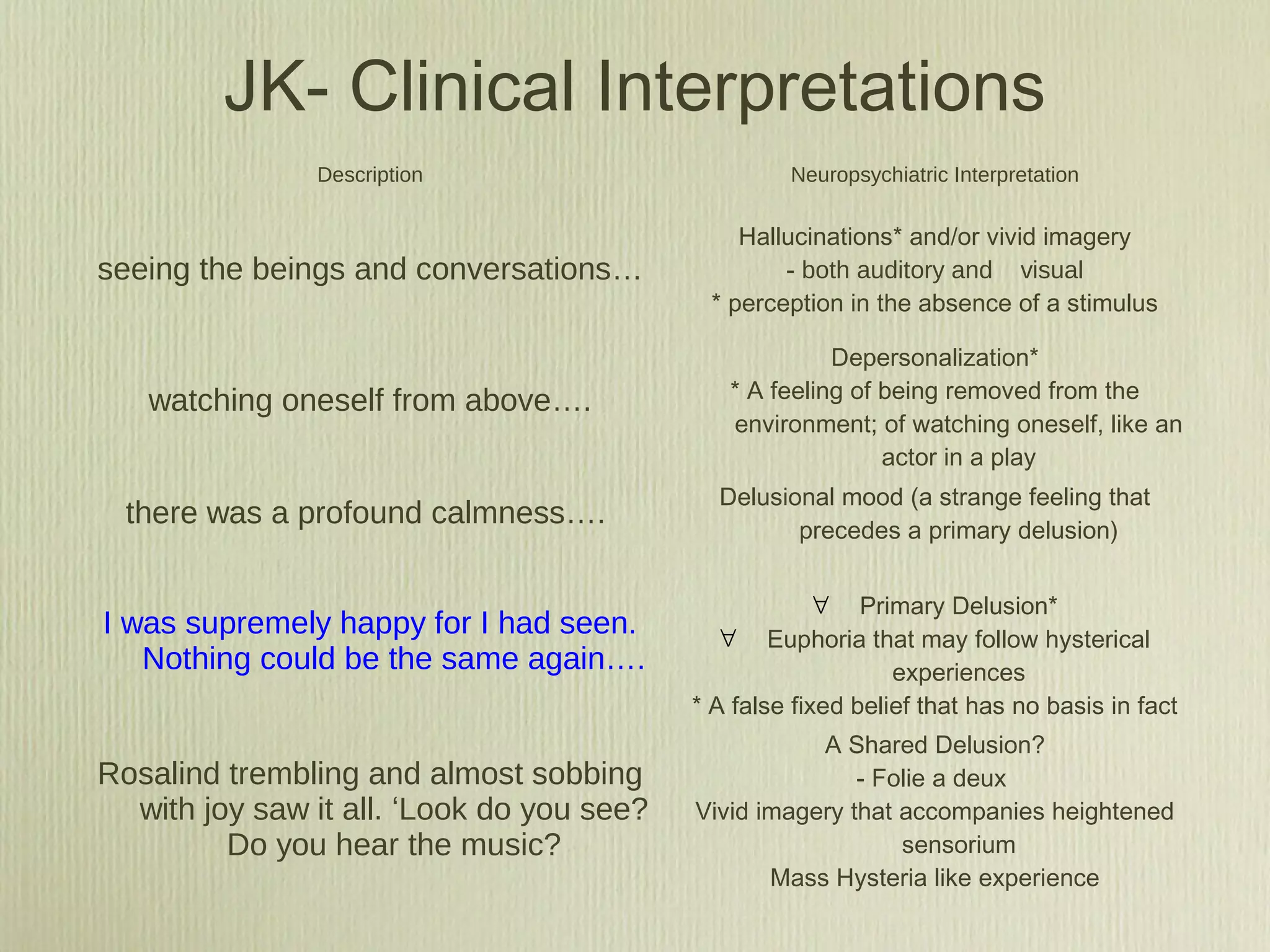
Description Neuropsychiatric Interpretation
seeing the beings and conversations…
Hallucinations* and/or vivid imagery
- both auditory and visual
* perception in the absence of a stimulus
watching oneself from above….
Depersonalization*
* A feeling of being removed from the
environment; of watching oneself, like an
actor in a play
there was a profound calmness….
Delusional mood (a strange feeling that
precedes a primary delusion)
I was supremely happy for I had seen.
Nothing could be the same again….
∀ Primary Delusion*
∀ Euphoria that may follow hysterical
experiences
* A false fixed belief that has no basis in fact
Rosalind trembling and almost sobbing
with joy saw it all. ‘Look do you see?
Do you hear the music?
A Shared Delusion?
- Folie a deux
Vivid imagery that accompanies heightened
sensorium
Mass Hysteria like experience
JK- Clinical Interpretations
JK- The Turning Point
Transformation
• “I have drunk at the clear and pure waters at the
source of the fountain of life and my thirst was
appeased. Never could I be thirsty, never more
could I be in utter darkness. I have seen the light.
I have found compassion which heals all sorrow
and suffering; it is not for myself but for the world.
I have stood in the mountain top and gazed at the
mighty beings. Never can I be in utter darkness.”
JK- The Turning Point
Transformation
• “I have seen the glorious and healing light. The
fountain of truth has been revealed to me, the
darkness has been dispersed. Love in all its glory
has intoxicated my heart; my heart can never be
closed. I have drunk at the fountain of joy and
eternal beauty. I am god intoxicated.”
Neurosci Lett. 2006 Sep 25;405(3):186-90
Neural correlates of a mystical experience in Carmelite nuns.
Beauregard M.
• The main goal of this functional magnetic resonance
imaging (fMRI) study was to identify the neural
correlates of a mystical experience. The brain activity of
Carmelite nuns was measured while they were
subjectively in a state of union with God.
• This state was associated with significant loci of
activation in the right medial orbitofrontal cortex, right
middle temporal cortex, right inferior and superior
parietal lobules, right caudate, left medial prefrontal
cortex, left anterior cingulate cortex, left inferior parietal
lobule, left insula, left caudate, and left brainstem.
• Other loci of activation were seen in the extra-striate
visual cortex. These results suggest that mystical
experiences are mediated by several brain regions and
systems.
Neurosci Lett. 2008 Oct 17;444(1):1-4. 2008.
EEG activity in Carmelite nuns during a mystical
experience. Beauregard M, Paquette V.
• The main objective of this study was to measure EEG spectral
power and coherence in 14 Carmelite nuns during a mystical
experience. EEG activity was recorded from 19 scalp locations
during a resting state, a control condition and a mystical condition.
• In the mystical condition compared to control condition, electrode
sites showed greater theta power at F3, C3, P3, Fz, Cz and Pz, and
greater gamma1 power was detected at T4 and P4.
• Higher delta/beta ratio, theta/alpha ratio and theta/beta ratio were
found for several electrode sites. In addition, FP1-C3 pair of
electrodes displayed greater coherence for theta band while F4-P4,
F4-T6, F8-T6 and C4-P4 pairs of electrodes showed greater
coherence for alpha band.
• These results indicate that mystical experiences are mediated by
marked changes in EEG power and coherence. These changes
implicate several cortical areas of the brain in both hemispheres.
Are transformational
experiences a reflection of the
soul? That undeterminable part
of the human psyche…
The Soul
A noun variously defined as the psyche,
inspiration & energy
May be considered the vital force that inspires,
energises and stimulates us
We can study its manifestations and effects in
all human activity having these qualities
Michael R Trimble “Soul in the Brain”
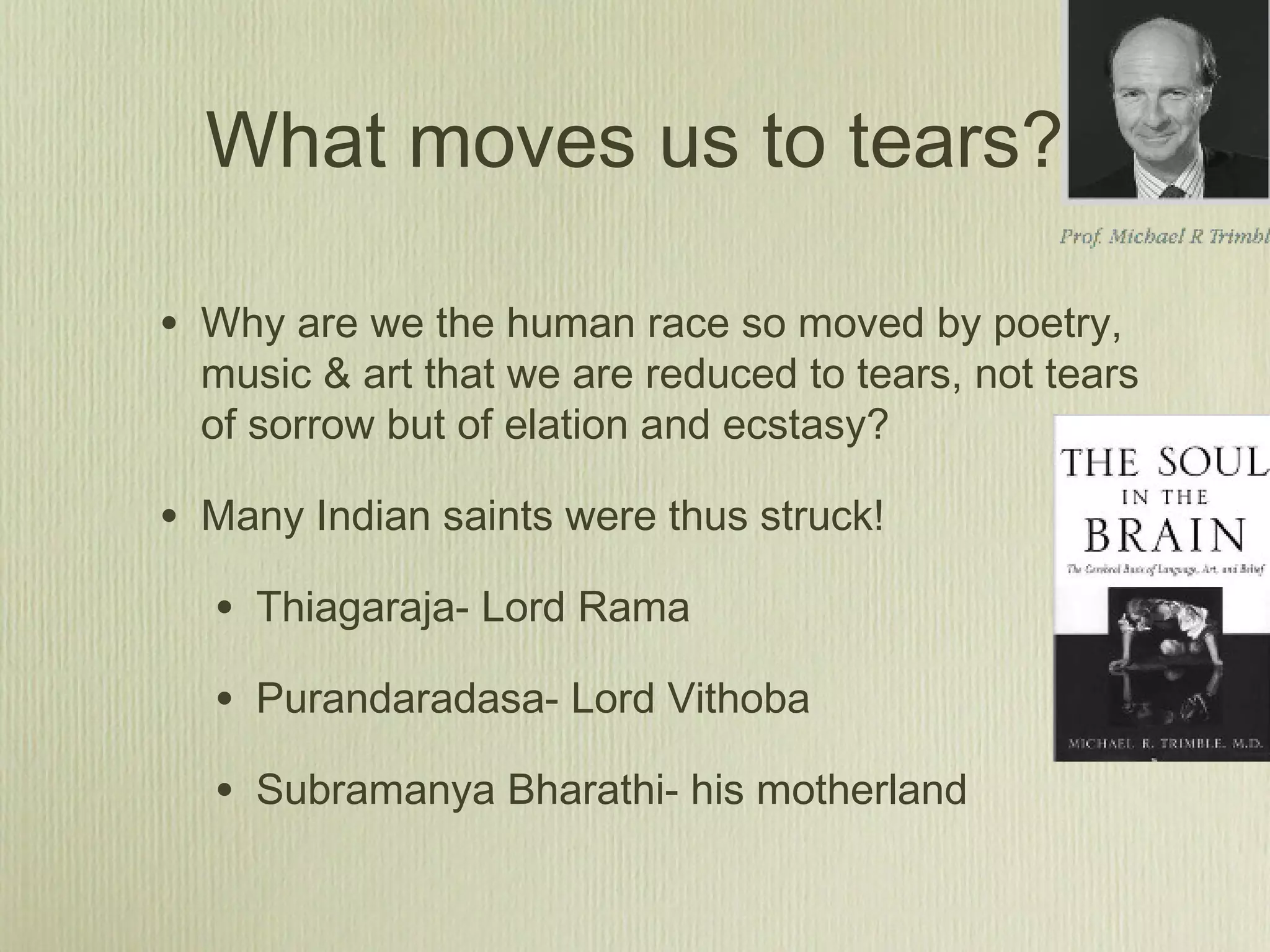
What moves us to tears?
• Why are we the human race so moved by poetry,
music & art that we are reduced to tears, not tears
of sorrow but of elation and ecstasy?
• Many Indian saints were thus struck!
• Thiagaraja- Lord Rama
• Purandaradasa- Lord Vithoba
• Subramanya Bharathi- his motherland
The Soul in the Brain
• Trimble’s work is important as it attempts to link up
neuroscience with art and aesthetics
• It postulates that creative expression may be a vicarious
marker of the human soul and may have a critical mass of
brain structures underpinning it
• This does not prove that these markers house the human
soul, not even that they are true soul representation
Eureka moments- when your
brain, mind and soul start trinity
talking…
• In these moments there is sudden clarity that often follows
a period of confusion and turmoil.
• In these moments we often experience unique insights,
contemplate momentous decisions and possibly take
definitive steps that may have an impact on our whole life.
• In these moments we experience deep understanding of
the self and the world around us
• Clearly these are precious moments when our thoughts,
beliefs and emotions meet with our inspiration.
• When our brain, mind and soul meet! Trinity talking…
The possibility that one could study the soul by associating inspirational human experience, religion,The possibility that one could study the soul by associating inspirational human experience, religion,
music, poetry and literature, with the brain, is tantalizing to say the least.music, poetry and literature, with the brain, is tantalizing to say the least. Michael Trimble,Michael Trimble, Soul in the BrainSoul in the Brain
Inspirational Genius
• Trinity Talking
The genesis of inspirational
moments
• Pathos & bewilderment
• The moment of clarity and inspiration- Eureka
Moment
• Creative Expression- not only aesthetic, but also
in thought, feeling, emotion; as also professional
and institutional
• inspiration+expression= a form of GENIUS
• Neuroscience can learn much from the study of
creative expression
The Emotional Brain

The Emotional Brain

  • 1.
    The Emotional Brain EnnapadamS. Krishnamoorthy MD, DCN(Lond) PhD (Lond), FRCP (Lond, Edin, Glas), MAMS
  • 2.
    Vincent van Gogh •Extremely productive- over 2000 works in a short lifetime • Bursts of creativity- in one short period in Arles (1888-89) he produced 200 paintings, 200 watercolors, and wrote 200 letters to his brother Theo- 1700 pages, shortest 6 pages long • Hypergraphic in letter and painting
  • 3.
    Vincent van Gogh •Had seizures while painting as demonstrated by the rough brush strokes “Over the Ravine” • Demonstrated the gamut of sexual behaviors, hypo & hypersexuality, bisexuality • Intensely emotional, could not terminate arguments easily • Auditory hallucinations And if thine offend thee,And if thine offend thee, pluck it outpluck it out
  • 4.
    Emotion and theBrain • While the hypothalamus was required for the expression of emotion the experience of emotion required the cortex, the stream of feeling depending on the strong connections between the cortex and the hypothalamus. • Papez, 1937
  • 5.
    A life withoutemotions? • To appreciate the significance of emotions, just imagine life without them. Instead of the daily highs and lows we experience, life would be a great empty plane of existence without significance. Without question, the expression of emotion is a large part of being human. • Bear, Connors & Paradiso • Neuroscience- Exploring the Brain
  • 6.
    James Papez • Proposedthat on the medial wall of the brain there is an emotion system that links the cortex with the hypothalamus • Believed that the experience of emotion was determined by activity in the cingulate cortex and less directly, other cortical areas HippocampusHippocampus HypothalamusHypothalamusAnterior NucleusAnterior Nucleus Of ThalamusOf Thalamus CingulateCingulate CortexCortex NEOCORTEXNEOCORTEX EmotionalEmotional expressionexpression EmotionalEmotional experienceexperience
  • 7.
    Slide courtesy: Prof.MR TrimbleSlide courtesy: Prof. MR Trimble
  • 9.
    Amygdala (Greek forAlmond) • Lies in the pole of the temporal lobe, just below the cortex on the medial side. Is a complex of nucleii • Afferents to the amygdala come from all sensory systems, each with a different projective pattern • Removal of the amygdala causes fearlessness; electrical stimulation of the intact amygdala leads to increased vigilance or attention; lateral amygdala- fear and violent aggression
  • 10.
    Subnuclei of theAmygdala M = Medial Nucleus; CE = Central Nucleus; PAS = Periamygdaloid Cortex; B = Basal Nucleus; AB = Accessory Basal Nucleus; L = Lateral Nucleus; Paralaminar Nucleus
  • 12.
    • Creativity &Emotion • The right hemisphere nexus
  • 13.
    • Suffered fromdepression • Also may have had euphoria • Emotionality and creativity linked • Blended poetry and music • Also blended religious fervor with passionate nationalism • Was his trinity talking? Subramanya BharathiSubramanya Bharathi
  • 14.
    The neurobiology ofpositive emotions. Burgdorf J, Panksepp J Neurosci Biobehav Rev. 2006;30(2):173-87. • There is now a convergence of evidence to suggest that various regions of the limbic system, including especially ventral striatal dopamine systems are implemented in an anticipatory (appetitive) positive affective state. • Dopamine independent mechanisms utilizing opiate and GABA receptors in the ventral striatum, amygdala and orbital frontal cortex are important in elaborating consummatory PA (i.e. sensory pleasure) states, and various neuropeptides mediate homeostatic satisfactions.
  • 17.
    Kumagasu Minakata • JapaneseNaturalist • Never acquired a formal graduate degree • Wrote hundreds of papers on religion, folklore and natural history • Established “The Minakata Residence” in Wakayama Prefecture with Emperor’s support
  • 18.
    Kumagasu Minakata • Wasactively involved in the anti- shrine consolidation protests and the nature conservation movement • Was a virgin until age 41 • Wrote minuscule letters in compact space- tremendous number of articles • Intense, emotional, short tempered, irritable
  • 19.
    Kumagasu Minakata • Hadtemporal lobe epilepsy with deja vu experiences • Using MRI to study his post-mortem brain, Murai and colleagues found Right Hippocampal Atrophy
  • 20.
    Inter-ictal behavioral syndrome ofTemporal Lobe Epilepsy• Syndrome described by Gastaut & Geschwind and characterised by • intensified and labile emotionality • viscosity (orderliness, excessive attention to detail and persistence) • hyposexuality • religiosity • hypergraphia
  • 21.
    Sensory- Limbic Hyperconnection-an explanation for the behavioral features • increased electrical activity-temporal lobe • u • enhanced connection between sensory input and limbic processing • u • sensory experience suffused with emotional coloration
  • 22.
    Laterality & inter-ictal behavioralsyndrome • RIGHT SIDED FOCUS • (EMOTIVE) • emotionality • elation and sadness • Tendency to ‘polish’ image LEFT SIDED FOCUS (IDEATIVE) sense of personal destiny philosophical interests Tendency to ‘tarnish’ image
  • 23.
    Hippocampus and Geschwind’s triad •33 subjects (23 men) with refractory partial seizures completed NBI • Patients scoring high and low on patient and carer NBI sub-scales assessed • Groups were matched for frequency/ severity using NHSSS • Hyper-religiosity inversely associated with right hippocampal volume  We compared epilepsy patients with very severe BHA (>3 SD) and those with no BHA  High psychiatric co- morbidity in both groups- no statistical difference  Group with BHA-self ratings emotions, fear, guilt, sadness; carer ratings: hyposexuality, hypergraphia, dependency Wuerfel et al, JNNP 2004; 1.         75 (4); 640-2. Wuerfel et al, JNNP 2004; 1.         75 (4); 640-2. Tebartz van Elst L. Epi & Behav 2003: 4; 291-7 Tebartz van Elst L. Epi & Behav 2003: 4; 291-7
  • 25.
    Temperament & Brain Dominance •Left brain dominant individuals tend to be more ideological and philosophical in their approach; more motivated by social and pragmatic, rather than emotional concerns; more diligent, purposeful, capable of greater tenacity and driven more often by a sense of duty. • Right brain dominant people have a better appreciation of the world around them, greater creative ability; a proclivity for the finer aspects of life; and tend to be more mood and emotion driven in making their choices; both day to day ones and those that are life- defining.
  • 26.
    Right Hemisphere &Creative Endeavor • The use of language, poetry and metaphor produces heightened activity in the right hemisphere • Creative pursuits are strongly associated with disorders of the mind- bipolar affective disorder and schizophrenia • In poetry there are several examples of such overlap
  • 27.
    DAY EXPERIENCE Day-1 He hasa painful lump on his neck, the size of a marble, that appears to be contracted muscle Day-2 He is well until after breakfast; lies down to rest. Found later, rolling on the bed, tossing about, moaning, as if in great pain, unable to communicate clearly. This is followed by a fit of shivering, clenching his teeth, gripping his hands tight. Complains of a painful headache; eyes are described as being "full of strange unconsciousness". Rosalind, chosen to be with him, hugs him, holds his hands and rubs them comfortingly; he feels better. Day-3 Characterized alternately by periods of lying down quietly followed by periods of moaning and trembling, which are triggered in particular by sounds. Does not eat at meal times but becomes curiously quiet, as if he wants to allow those taking care of him to eat. Day-4 Described as "the day on which we saw the glorious climax". Seemed to be in great suffering; intensification of trembling and heat; consciousness became more and more intermittent; every movement causes him to jump out of his skin; perceives dirt everywhere; talks all the time about Adyar and members of the Purple Order there; repeatedly says “I want to go to India, why have you brought me here?”. Ends up sitting in a dark corner. At sundown, he asks to be left alone but later joins group on Verandah, carrying a cushion; he ends up sitting as far away from the group as possible; does not attend to the group there, is found to be murmuring incoherently; He is then persuaded to go and sit under a "pepper tree" in expectation of "the Master's JK- The Prelude
  • 28.
    Description Neuropsychiatric Interpretation seeingthe beings and conversations… Hallucinations* and/or vivid imagery - both auditory and visual * perception in the absence of a stimulus watching oneself from above…. Depersonalization* * A feeling of being removed from the environment; of watching oneself, like an actor in a play there was a profound calmness…. Delusional mood (a strange feeling that precedes a primary delusion) I was supremely happy for I had seen. Nothing could be the same again…. ∀ Primary Delusion* ∀ Euphoria that may follow hysterical experiences * A false fixed belief that has no basis in fact Rosalind trembling and almost sobbing with joy saw it all. ‘Look do you see? Do you hear the music? A Shared Delusion? - Folie a deux Vivid imagery that accompanies heightened sensorium Mass Hysteria like experience JK- Clinical Interpretations
  • 29.
    JK- The TurningPoint Transformation • “I have drunk at the clear and pure waters at the source of the fountain of life and my thirst was appeased. Never could I be thirsty, never more could I be in utter darkness. I have seen the light. I have found compassion which heals all sorrow and suffering; it is not for myself but for the world. I have stood in the mountain top and gazed at the mighty beings. Never can I be in utter darkness.”
  • 30.
    JK- The TurningPoint Transformation • “I have seen the glorious and healing light. The fountain of truth has been revealed to me, the darkness has been dispersed. Love in all its glory has intoxicated my heart; my heart can never be closed. I have drunk at the fountain of joy and eternal beauty. I am god intoxicated.”
  • 31.
    Neurosci Lett. 2006Sep 25;405(3):186-90 Neural correlates of a mystical experience in Carmelite nuns. Beauregard M. • The main goal of this functional magnetic resonance imaging (fMRI) study was to identify the neural correlates of a mystical experience. The brain activity of Carmelite nuns was measured while they were subjectively in a state of union with God. • This state was associated with significant loci of activation in the right medial orbitofrontal cortex, right middle temporal cortex, right inferior and superior parietal lobules, right caudate, left medial prefrontal cortex, left anterior cingulate cortex, left inferior parietal lobule, left insula, left caudate, and left brainstem. • Other loci of activation were seen in the extra-striate visual cortex. These results suggest that mystical experiences are mediated by several brain regions and systems.
  • 32.
    Neurosci Lett. 2008Oct 17;444(1):1-4. 2008. EEG activity in Carmelite nuns during a mystical experience. Beauregard M, Paquette V. • The main objective of this study was to measure EEG spectral power and coherence in 14 Carmelite nuns during a mystical experience. EEG activity was recorded from 19 scalp locations during a resting state, a control condition and a mystical condition. • In the mystical condition compared to control condition, electrode sites showed greater theta power at F3, C3, P3, Fz, Cz and Pz, and greater gamma1 power was detected at T4 and P4. • Higher delta/beta ratio, theta/alpha ratio and theta/beta ratio were found for several electrode sites. In addition, FP1-C3 pair of electrodes displayed greater coherence for theta band while F4-P4, F4-T6, F8-T6 and C4-P4 pairs of electrodes showed greater coherence for alpha band. • These results indicate that mystical experiences are mediated by marked changes in EEG power and coherence. These changes implicate several cortical areas of the brain in both hemispheres.
  • 33.
    Are transformational experiences areflection of the soul? That undeterminable part of the human psyche…
  • 34.
    The Soul A nounvariously defined as the psyche, inspiration & energy May be considered the vital force that inspires, energises and stimulates us We can study its manifestations and effects in all human activity having these qualities Michael R Trimble “Soul in the Brain”
  • 35.
    What moves usto tears? • Why are we the human race so moved by poetry, music & art that we are reduced to tears, not tears of sorrow but of elation and ecstasy? • Many Indian saints were thus struck! • Thiagaraja- Lord Rama • Purandaradasa- Lord Vithoba • Subramanya Bharathi- his motherland
  • 36.
    The Soul inthe Brain • Trimble’s work is important as it attempts to link up neuroscience with art and aesthetics • It postulates that creative expression may be a vicarious marker of the human soul and may have a critical mass of brain structures underpinning it • This does not prove that these markers house the human soul, not even that they are true soul representation
  • 37.
    Eureka moments- whenyour brain, mind and soul start trinity talking… • In these moments there is sudden clarity that often follows a period of confusion and turmoil. • In these moments we often experience unique insights, contemplate momentous decisions and possibly take definitive steps that may have an impact on our whole life. • In these moments we experience deep understanding of the self and the world around us • Clearly these are precious moments when our thoughts, beliefs and emotions meet with our inspiration. • When our brain, mind and soul meet! Trinity talking… The possibility that one could study the soul by associating inspirational human experience, religion,The possibility that one could study the soul by associating inspirational human experience, religion, music, poetry and literature, with the brain, is tantalizing to say the least.music, poetry and literature, with the brain, is tantalizing to say the least. Michael Trimble,Michael Trimble, Soul in the BrainSoul in the Brain
  • 38.
  • 39.
    The genesis ofinspirational moments • Pathos & bewilderment • The moment of clarity and inspiration- Eureka Moment • Creative Expression- not only aesthetic, but also in thought, feeling, emotion; as also professional and institutional • inspiration+expression= a form of GENIUS • Neuroscience can learn much from the study of creative expression