5th ANAEROBIC
DIGESTION RESEARCH
AND DEVELOPMENT
(R&D) FORUM
CHARLOTTE MORTON
CHIEF EXECUTIVE, ADBA
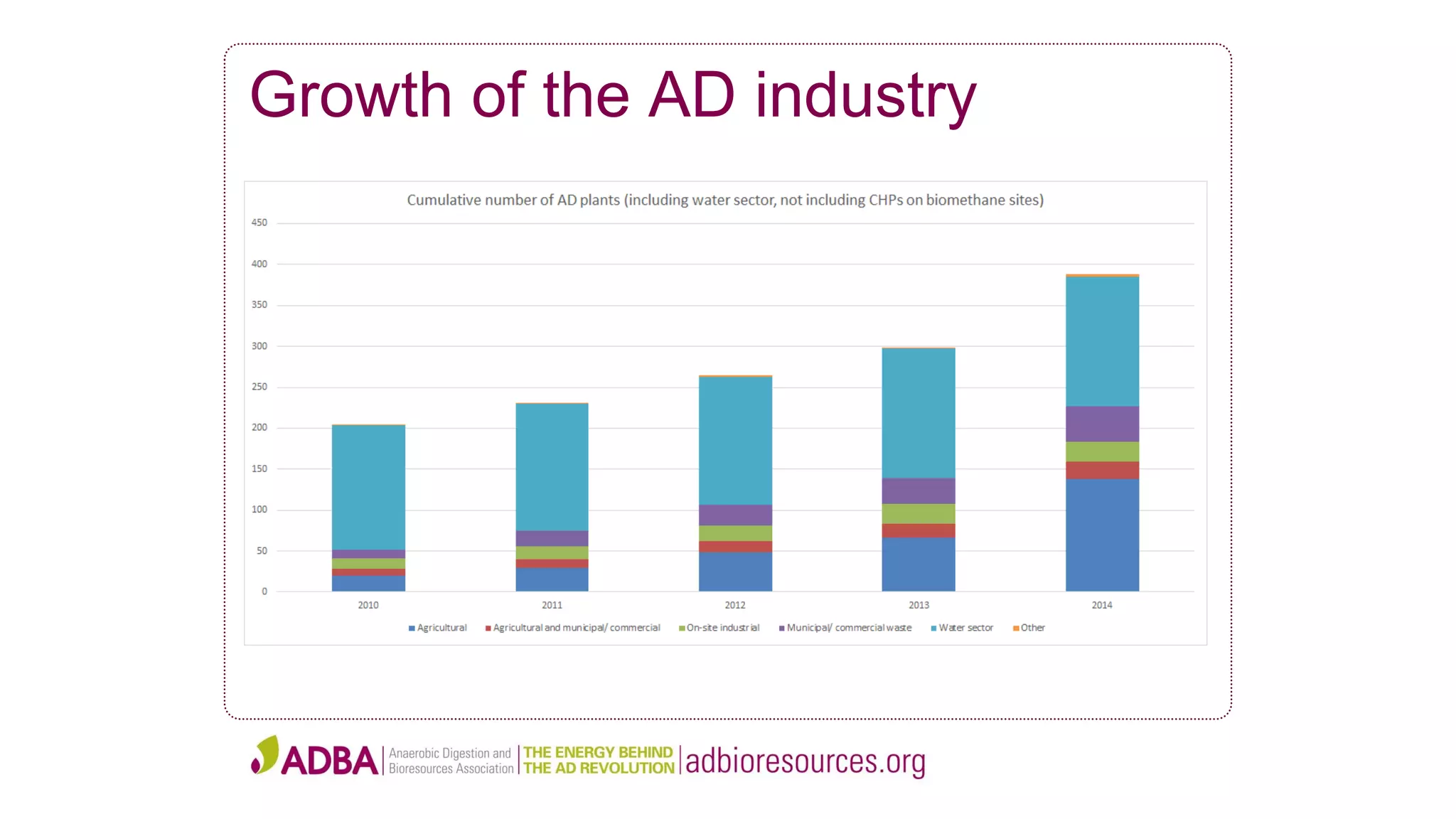
Growth of the AD industry
‘Conventional’ potential
ADBA 2025 "high" potential scenario
Feedstock type Million wet tonnes
TWh useable
energy (after 10%
parasitic)
Household food waste 4 4.4
C&I food waste 5 4.9
Farm animal wastes and bedding 76 8
Crops 11 12
Other potential sources 3 2
Sewage sludge 37 4.5
Total 137 35.4
Policy ‘breaks’
“Squeezing
subsidy. Driving
cost innovation.”
Unlocking new potential with R&D
ADBA 2025 "high" potential scenario
Feedstock type
TWh useable energy
(after 10% parasitic)
Useable energy after R&D
(after 10% parasitic)
Household food waste 4 5
C&I food waste 5 6
Farm animal wastes and bedding 8 9
Crops 12 17
Sewage sludge 5 5
Other potential sources 2
Nature conservation managed 0.4
Straw 3
Uncontaminated organic street sweepings (e.g. leaves) and park waste (e.g. grass
cuttings and leaves). Pretreatment, dry AD.
3
Household garden waste (e.g. grass cuttings and leaves). Pretreatment, dry AD. 3
Orchard waste (e.g. apple pomace) 1
AD integrated into greenhouse horticulture with waste heat, co2 use 2
Glycerol - dependant on biodiesel industry 0.5
Fish processing waste - conventional sources 0.5
Higher value food production integration such as hydroponics, aquaponics and
aquaculture (overlap with greenhouses)
2
Microalgae (e.g. using nutrients from sewage sludge, digestate etc. and waste
heat, co2 and water from AD plants). Also potential to use excess grid electricity.
4
Macroalgae (e.g. seaweed etc.) 1
Power-to-gas via hydrogen with AD 31.8
Total 35.4 95.3
Domestic gas demand 300 270
Percent of domestic gas demand 12% 35%
Day 1
• Charles Banks and Chris Goodall
• Biorefining
• New feedstocks
• Securing funding for R&D
Day 2
• Digestate
• R&D in the food industry
• New technologies to improve operational
performance
• Sustainability
• Thames Water

Charlotte Morton

  • 1.
    5th ANAEROBIC DIGESTION RESEARCH ANDDEVELOPMENT (R&D) FORUM CHARLOTTE MORTON CHIEF EXECUTIVE, ADBA
  • 2.
    Growth of theAD industry
  • 3.
    ‘Conventional’ potential ADBA 2025"high" potential scenario Feedstock type Million wet tonnes TWh useable energy (after 10% parasitic) Household food waste 4 4.4 C&I food waste 5 4.9 Farm animal wastes and bedding 76 8 Crops 11 12 Other potential sources 3 2 Sewage sludge 37 4.5 Total 137 35.4
  • 4.
  • 5.
    Unlocking new potentialwith R&D ADBA 2025 "high" potential scenario Feedstock type TWh useable energy (after 10% parasitic) Useable energy after R&D (after 10% parasitic) Household food waste 4 5 C&I food waste 5 6 Farm animal wastes and bedding 8 9 Crops 12 17 Sewage sludge 5 5 Other potential sources 2 Nature conservation managed 0.4 Straw 3 Uncontaminated organic street sweepings (e.g. leaves) and park waste (e.g. grass cuttings and leaves). Pretreatment, dry AD. 3 Household garden waste (e.g. grass cuttings and leaves). Pretreatment, dry AD. 3 Orchard waste (e.g. apple pomace) 1 AD integrated into greenhouse horticulture with waste heat, co2 use 2 Glycerol - dependant on biodiesel industry 0.5 Fish processing waste - conventional sources 0.5 Higher value food production integration such as hydroponics, aquaponics and aquaculture (overlap with greenhouses) 2 Microalgae (e.g. using nutrients from sewage sludge, digestate etc. and waste heat, co2 and water from AD plants). Also potential to use excess grid electricity. 4 Macroalgae (e.g. seaweed etc.) 1 Power-to-gas via hydrogen with AD 31.8 Total 35.4 95.3 Domestic gas demand 300 270 Percent of domestic gas demand 12% 35%
  • 6.
    Day 1 • CharlesBanks and Chris Goodall • Biorefining • New feedstocks • Securing funding for R&D
  • 7.
    Day 2 • Digestate •R&D in the food industry • New technologies to improve operational performance • Sustainability • Thames Water