


Launching of bioinnovateprogrammePROJECT 5: INTEGRATED PROCESS FOR SUSTAINABLE AGROPROCESS WASTE TREATMENT AND CLIMATE CHANGE MITIGATION IN EASTERN AFRICAK.N. Njau, Joseph Kyambadde and Mekibib David DawitBio-Innovate Launch, ILRI, Nairobi, 16 March 2011
Participating InstitutionsWSP & Constructed Wetland Research and Development GroupUniversity of Dar es SalaamP.O. Box 35131Dar es Salaam.Department of BiochemistryMakerere UniversityP.O. Box 7062 KampalaEnvironmental Science Programme,College of Natural Sciences, Addis Ababa University,P O Box 1176, Addis AbabaNational University of Rwanda, Faculty of Science,Department of ChemistryRwanda
Collaborating InstitutionsSITE OWNERSBanana Investments Ltd, P.O. Box 10123, Arusha, Tanzania Modjo Tannery, P.O. Box 3, Addis Ababa, EthiopiaBassajjabalaba Hides and Skins (City Abattoir), P.O. Box 20000, Kampala, UgandaIMPLEMENTING PARTNERSAGENDA/ENVICON – TanzaniaWWS Design and Development -TanzaniaCentre for Research in Energy and Energy Conservation (CREEC) - UgandaForum for Environment, and Environment and Development Action (ENDA) – EthiopiaAKUT Burkard and Partner, GermanyCAMARTECH
Consortium ManagementPrincipal Investigator (Tanzania):	Dr. Karoli N. Njau
Tel. +255-22-2410368
Mobile: +255 754 296 993
Email: knjau30@yahoo.com Co- Principal Investigator (Uganda):	 Dr. Joseph Kyambadde
Tel: +256 414 530555
Mob: +256 772 510824
Email: joseph.kyambadde@gmail.com Co- Principal Investigator (Ethiopia): Dr. Mekibib David Dawit
Telephone: +251 (0) 116551910
mekibib1@hotmail.com Co- Principal Investigator (Rwanda): Dr.  NsengimanaHermogène
Cell phone: +25008416745
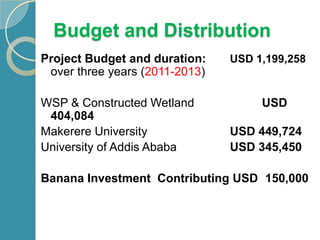
E-mail: nhermo@yahoo.fr, Budget and DistributionProject Budget and duration:USD 1,199,258 over three years (2011-2013)WSP & Constructed Wetland 		USD 404,084 Makerere University			USD449,724 University of Addis Ababa 		USD345,450Banana Investment  Contributing USD	 150,000
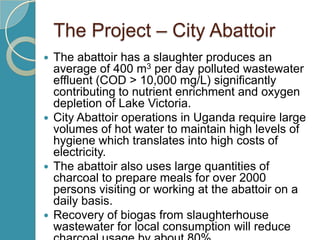
The Project – City AbattoirThe abattoir has a slaughter produces an average of 400 m3 per day polluted wastewater effluent (COD > 10,000 mg/L) significantly contributing to nutrient enrichment and oxygen depletion of Lake Victoria.
City Abattoir operations in Uganda require large volumes of hot water to maintain high levels of hygiene which translates into high costs of electricity.
The abattoir also uses large quantities of charcoal to prepare meals for over 2000 persons visiting or working at the abattoir on a daily basis.
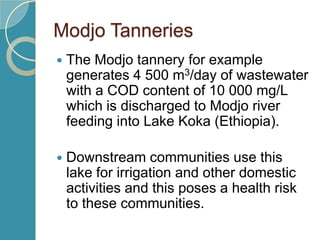
Recovery of biogas from slaughterhouse wastewater for local consumption will reduce charcoal usage by about 80%Modjo TanneriesThe Modjo tannery for example generates 4 500 m3/day of wastewater with a COD content of 10 000 mg/L which is discharged to Modjo river feeding into Lake Koka (Ethiopia).
Downstream communities use this lake for irrigation and other domestic activities and this poses a health risk to these communities. Banana Investments LtdIn Tanzania, Banana Investments Ltd processes 25 metric tons of peeled ripe bananas per week to produce wine in a process that produces about 400 m3 of high-strength wastewater (BOD, 3000 mg/L) per day.
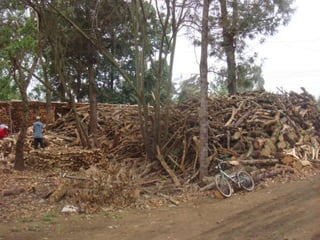
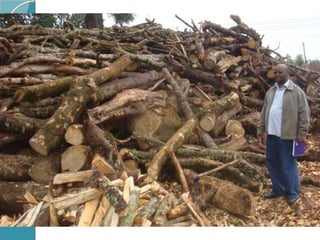
The enterprise unsustainably uses 3600 cubic meters of wood fuel per year costing the company USD 50,000 per annum
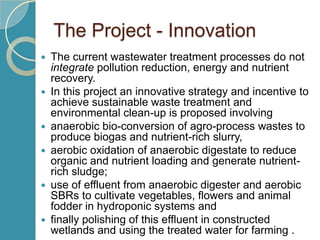
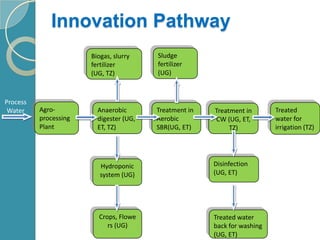
The Project - InnovationThe current wastewater treatment processes do not integrate pollution reduction, energy and nutrient recovery.

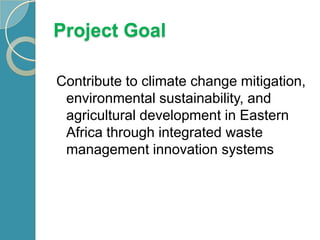
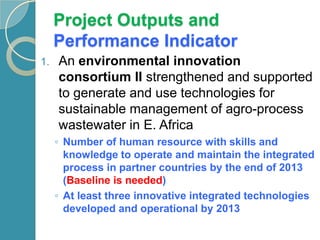
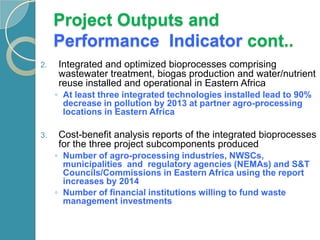
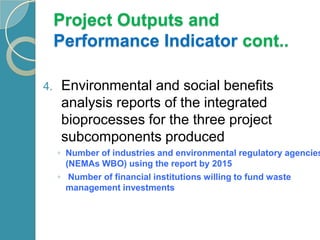
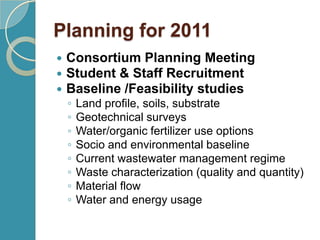
Integrated process for sustainable agro process waste treatment and climate change mitigation in eastern Africa

  • 1.
    Launching of bioinnovateprogrammePROJECT5: INTEGRATED PROCESS FOR SUSTAINABLE AGROPROCESS WASTE TREATMENT AND CLIMATE CHANGE MITIGATION IN EASTERN AFRICAK.N. Njau, Joseph Kyambadde and Mekibib David DawitBio-Innovate Launch, ILRI, Nairobi, 16 March 2011
  • 2.
    Participating InstitutionsWSP &Constructed Wetland Research and Development GroupUniversity of Dar es SalaamP.O. Box 35131Dar es Salaam.Department of BiochemistryMakerere UniversityP.O. Box 7062 KampalaEnvironmental Science Programme,College of Natural Sciences, Addis Ababa University,P O Box 1176, Addis AbabaNational University of Rwanda, Faculty of Science,Department of ChemistryRwanda
  • 3.
    Collaborating InstitutionsSITE OWNERSBananaInvestments Ltd, P.O. Box 10123, Arusha, Tanzania Modjo Tannery, P.O. Box 3, Addis Ababa, EthiopiaBassajjabalaba Hides and Skins (City Abattoir), P.O. Box 20000, Kampala, UgandaIMPLEMENTING PARTNERSAGENDA/ENVICON – TanzaniaWWS Design and Development -TanzaniaCentre for Research in Energy and Energy Conservation (CREEC) - UgandaForum for Environment, and Environment and Development Action (ENDA) – EthiopiaAKUT Burkard and Partner, GermanyCAMARTECH
  • 4.
    Consortium ManagementPrincipal Investigator(Tanzania): Dr. Karoli N. Njau
  • 5.
  • 6.
  • 7.
    Email: knjau30@yahoo.com Co- PrincipalInvestigator (Uganda): Dr. Joseph Kyambadde
  • 8.
  • 9.
  • 10.
    Email: joseph.kyambadde@gmail.com Co- PrincipalInvestigator (Ethiopia): Dr. Mekibib David Dawit
  • 11.
  • 12.
    mekibib1@hotmail.com Co- Principal Investigator(Rwanda): Dr. NsengimanaHermogène
  • 13.
  • 14.
    E-mail: nhermo@yahoo.fr, Budgetand DistributionProject Budget and duration:USD 1,199,258 over three years (2011-2013)WSP & Constructed Wetland USD 404,084 Makerere University USD449,724 University of Addis Ababa USD345,450Banana Investment Contributing USD 150,000
  • 15.
    The Project –City AbattoirThe abattoir has a slaughter produces an average of 400 m3 per day polluted wastewater effluent (COD > 10,000 mg/L) significantly contributing to nutrient enrichment and oxygen depletion of Lake Victoria.
  • 16.
    City Abattoir operationsin Uganda require large volumes of hot water to maintain high levels of hygiene which translates into high costs of electricity.
  • 17.
    The abattoir alsouses large quantities of charcoal to prepare meals for over 2000 persons visiting or working at the abattoir on a daily basis.
  • 18.
    Recovery of biogasfrom slaughterhouse wastewater for local consumption will reduce charcoal usage by about 80%Modjo TanneriesThe Modjo tannery for example generates 4 500 m3/day of wastewater with a COD content of 10 000 mg/L which is discharged to Modjo river feeding into Lake Koka (Ethiopia).
  • 19.
    Downstream communities usethis lake for irrigation and other domestic activities and this poses a health risk to these communities. Banana Investments LtdIn Tanzania, Banana Investments Ltd processes 25 metric tons of peeled ripe bananas per week to produce wine in a process that produces about 400 m3 of high-strength wastewater (BOD, 3000 mg/L) per day.
  • 20.
    The enterprise unsustainablyuses 3600 cubic meters of wood fuel per year costing the company USD 50,000 per annum
  • 22.
    The Project -InnovationThe current wastewater treatment processes do not integrate pollution reduction, energy and nutrient recovery.