UNIT TWO:
BIOLOGICAL BASES OF BEHAVIOR
The Biology Behind the Psychology
 “Everything Psychological is ultimately Biological.”
 What does this say to you?
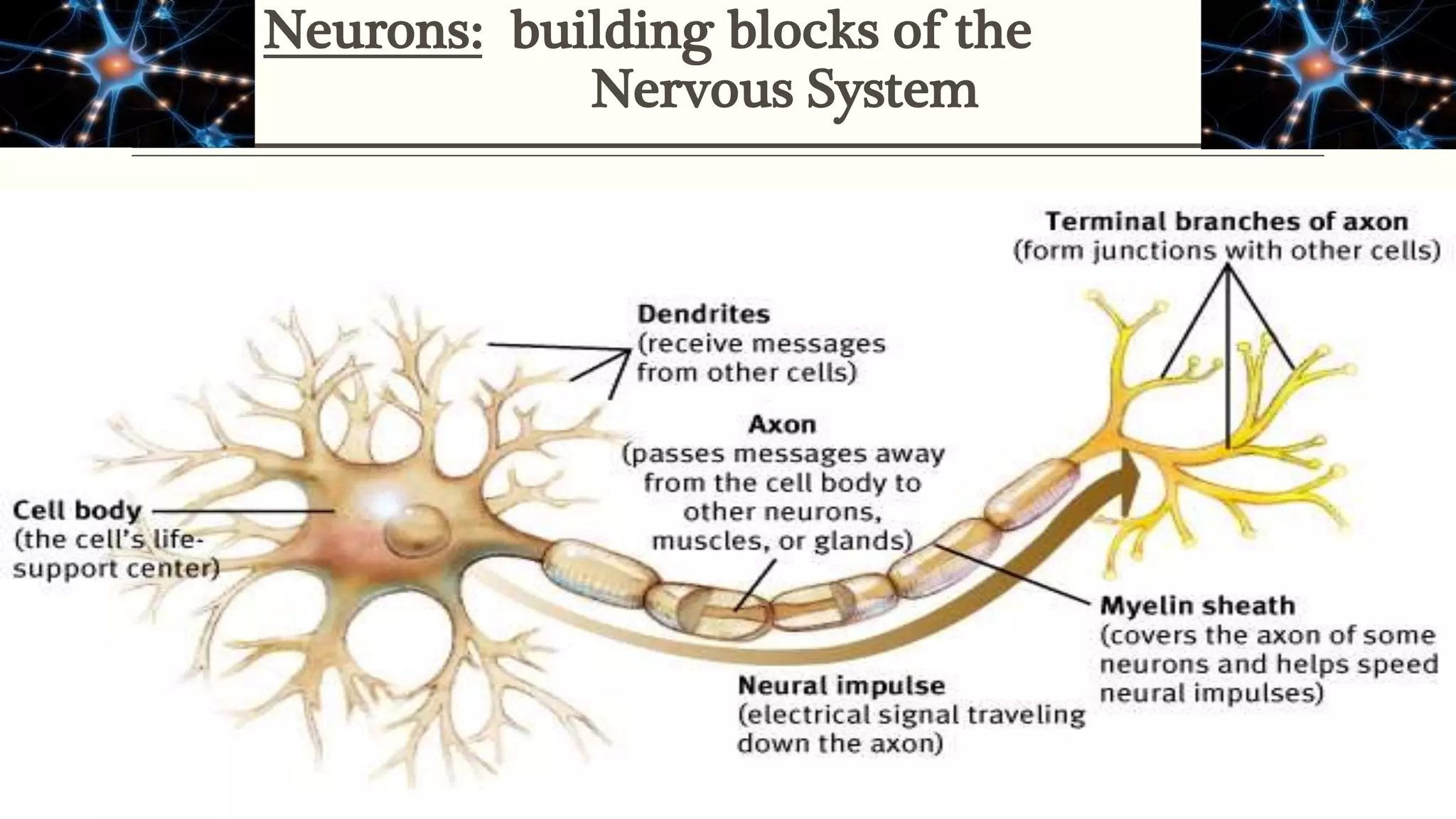
Neurons: building blocks of the
Nervous System
Demonstrations
Action Potential
Synaptic Transmission
Types of Neurons
 Sensory Neurons (afferent) ~ 2 million
 Sends messages from sense organs  brain
 Motor Neurons (efferent) ~ 2-3 million
 Sends messages from brain  muscles, organs, glands
 Interneurons ~ Billions & Billions
 Relay messages between sensory & motor neurons
 Glial cells – “The forgotten cell”
 Glue cells which help connections, insulate, and clean up
Nervous System
 Structurally and functionally divided into three divisions
 CNS (Central Nervous System) located at the body region
 PNS (Peripheral Nervous System) functionally peripheral
 ANS (Autonomic Nervous System) functionally involuntary
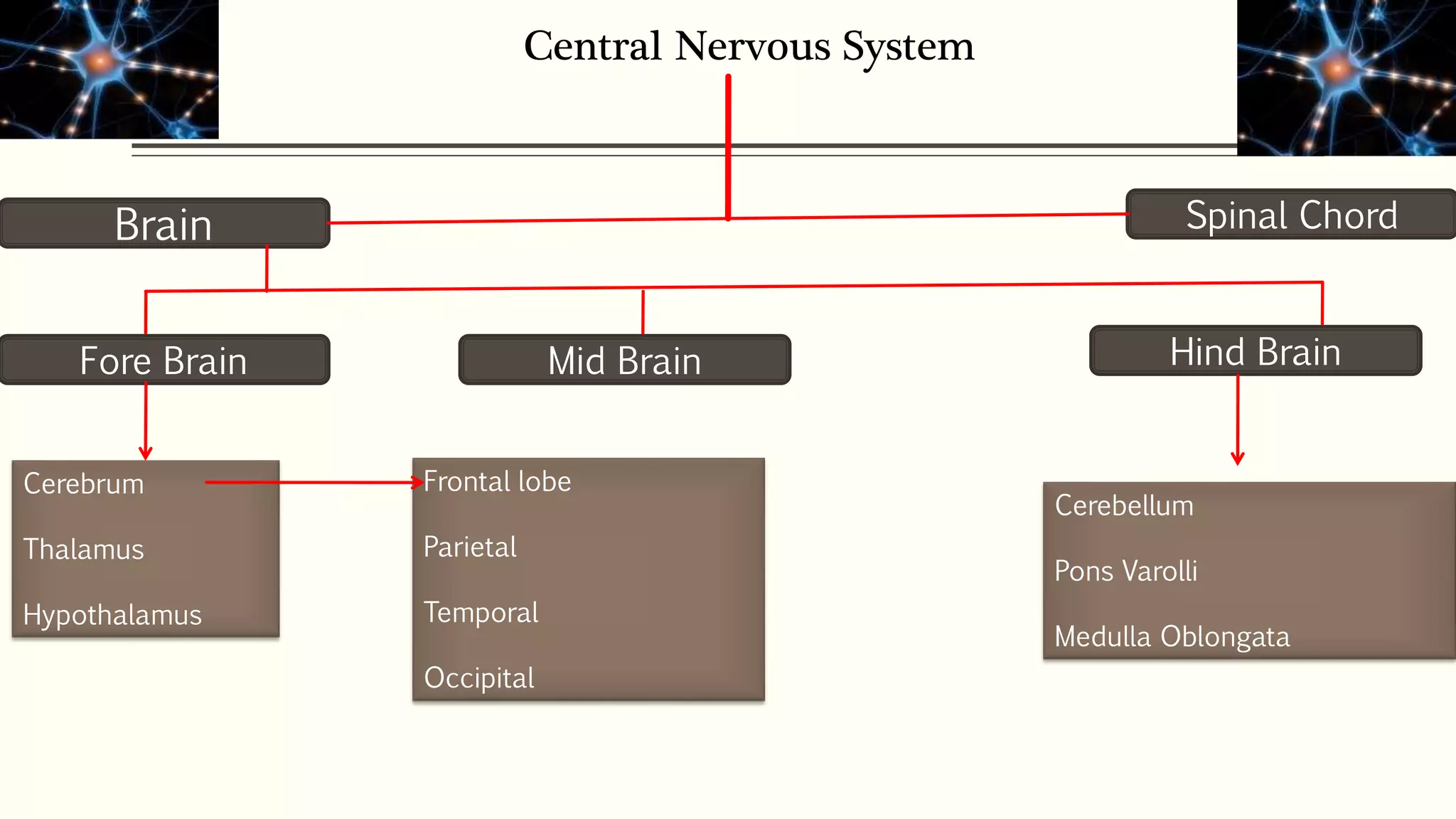
Central Nervous System
Brain Spinal Chord
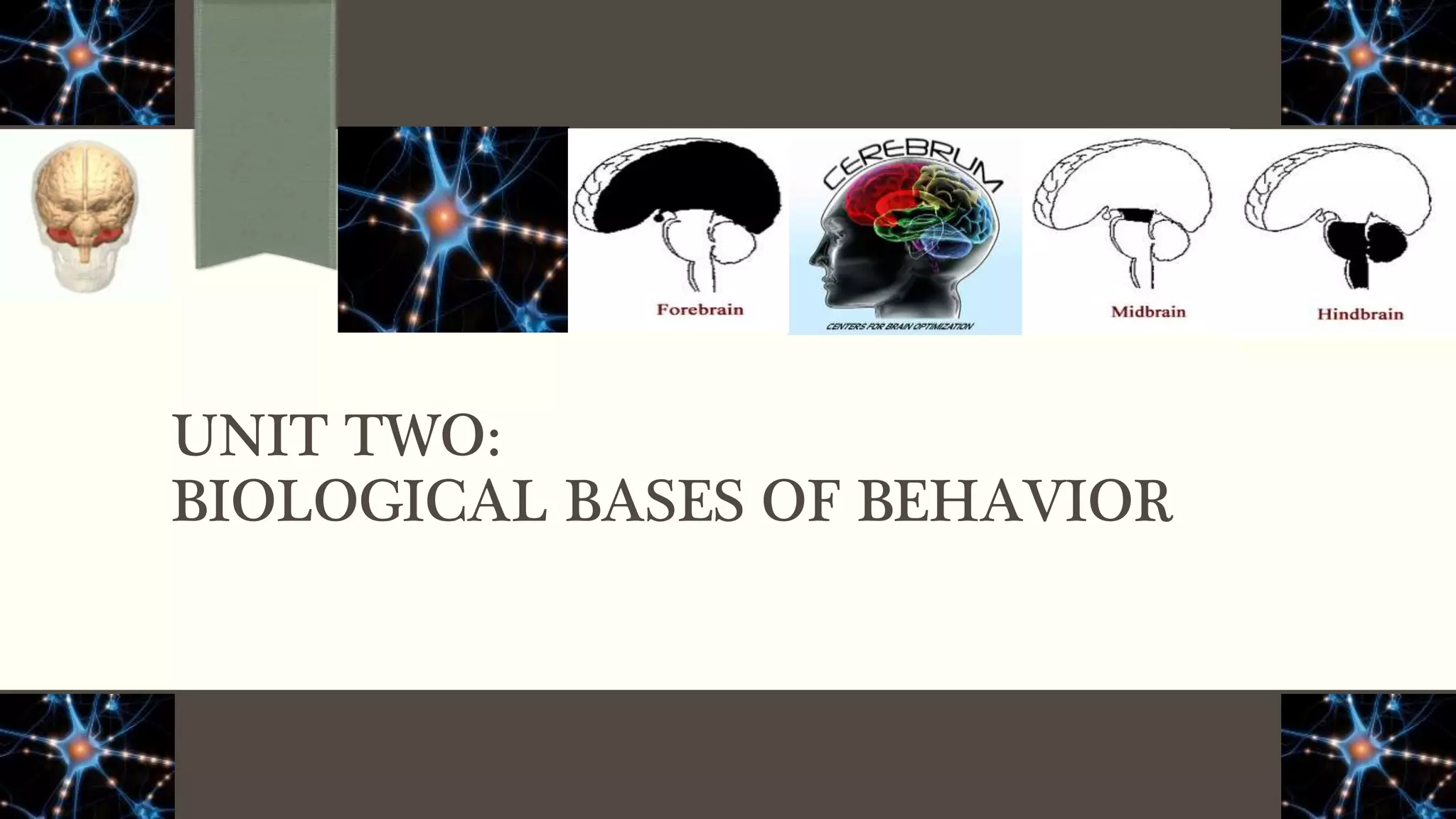
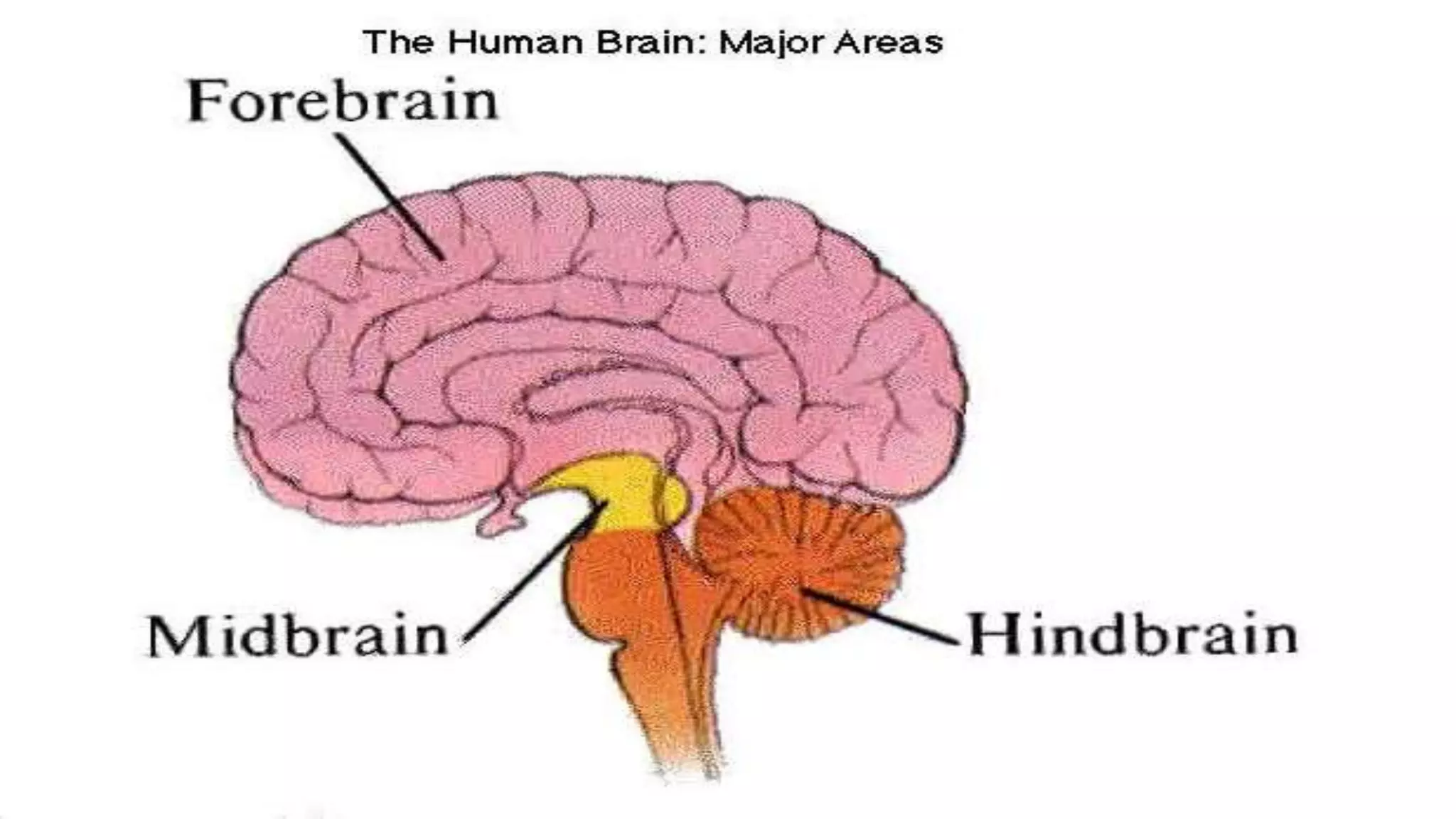
Fore Brain Mid Brain Hind Brain
Cerebrum
Thalamus
Hypothalamus
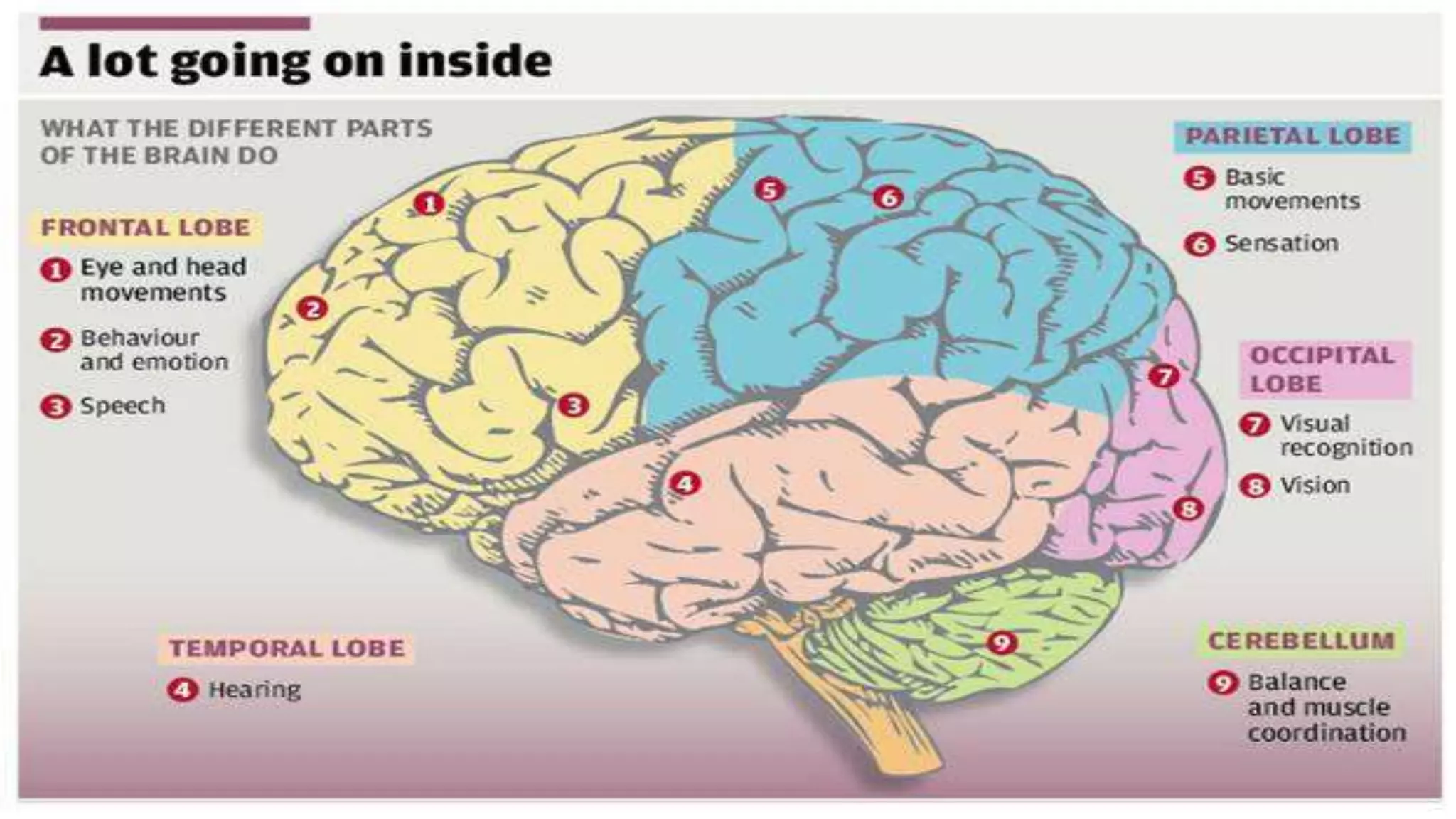
Frontal lobe
Parietal
Temporal
Occipital
Cerebellum
Pons Varolli
Medulla Oblongata
THE BRAIN
How does our brain produce behavior and mental
processes?
1) Forebrain
The main area of the forebrain, governs emotion, learning, thinking, remembering and
sense perception.
a) Cerebrum
 It is the largest part of brain & Divided into left and right cerebral hemisphere .
 It is associated with higher brain function such as thought and action
 The cerebral cortex is divided into four sections, called "lobes“.
i) Parietal lobe located in in the central fissure from the frontal
lobe.
• function: information to the skin senses (touch, temperature and
pressure).
• If left hemisphere is damage may lose ability to read/ write and
difficulty of knowing the parts of the body.
• If right hemisphere : difficulty of recognizing the left part of the
body.
Four lobes:
ii) Frontal lobe – nearest to the face ( motor cortex) Function: controls the
body movement.
iii) Occipital lobe – near the back of the head.
Function: sensory area for awareness ( visual)
Damage in the right hemisphere – loss of vision in the left.
If in the left – loss vision ion the right.
iv) Temporal lobe - along the side of each hemisphere. Function: concern
with hearing
Damage in left hemisphere – inability to understand spoken words.
If in the right – can recognize speech but unable to recognize other
organizations of sounds.
Contd…
b)Thalamus:
 The thalamus is a large, dual lobed mass of grey matter buried under the cerebral
cortex.
 It is involved in sensory perception and regulation of motor functions.
 The thalamus is a limbic system structure and it connects areas of the cerebral
cortex .
 Which are involved in sensory perception and movement with other parts of the
brain and spinal cord that also have a role in sensation and movement.
 As a regulator of sensory information, the thalamus also controls sleep and awake
states of consciousness.
c) Hypothalamus
 The hypothalamus controls the autonomic nervous system.
 The autonomic nervous system is the portion of the nervous system responsible for
maintaining homeostasis.
 Thus, damage to the hypothalamus results in severe imbalances in the internal
environment.
 The hypothalamus contains the thirst center, the hunger center and the body's
thermostat.
 Thus, damage to the hypothalamus frequently results in water, glucose and
temperature imbalances.
 The hypothalamus controls the hypophysis (pituitary gland).
Note : Hypophysis refer to Pituitary gland
Contd…
 The hypophysis is the most important endocrine gland in the body
and is often referred to as the "master gland".
 The hyopohysis is referred to as the master gland because it controls
most of the other endocrine glands in the body such as the thyroid,
adrenal gland, testis and ovaries.
 By controlling the hypophysis the hypothalamus exerts control over
most endocrine glands.
 The hypothalamus is the site of emotions and the effect emotions can
have on the body.
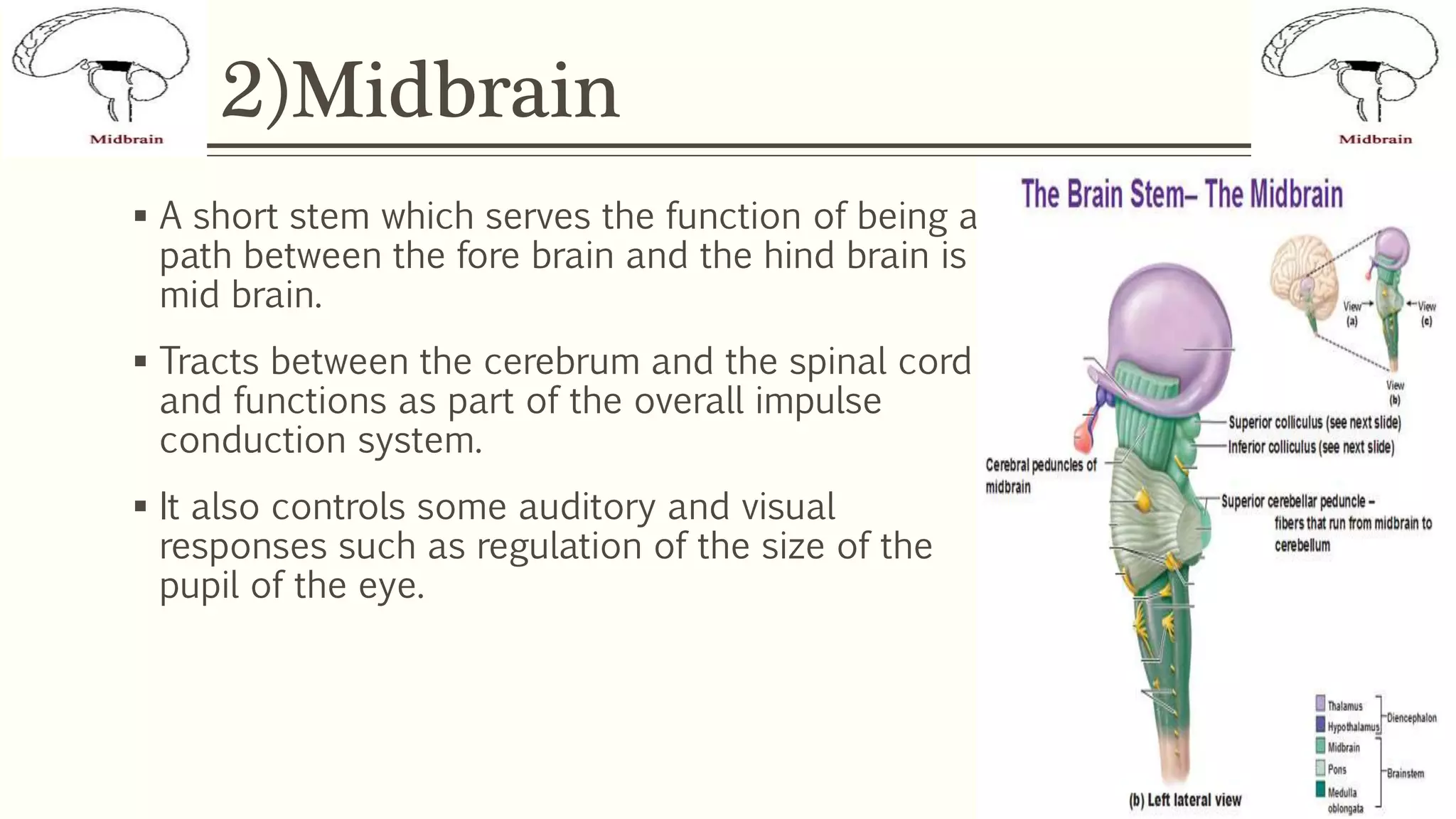
2)Midbrain
 A short stem which serves the function of being a
path between the fore brain and the hind brain is
mid brain.
 Tracts between the cerebrum and the spinal cord
and functions as part of the overall impulse
conduction system.
 It also controls some auditory and visual
responses such as regulation of the size of the
pupil of the eye.
3)Hindbrain - includes
 hindbrain is a developmental categorization of portions of
the central nervous system in vertebrates.
 It includes Medulla , Pons & Cerebellum
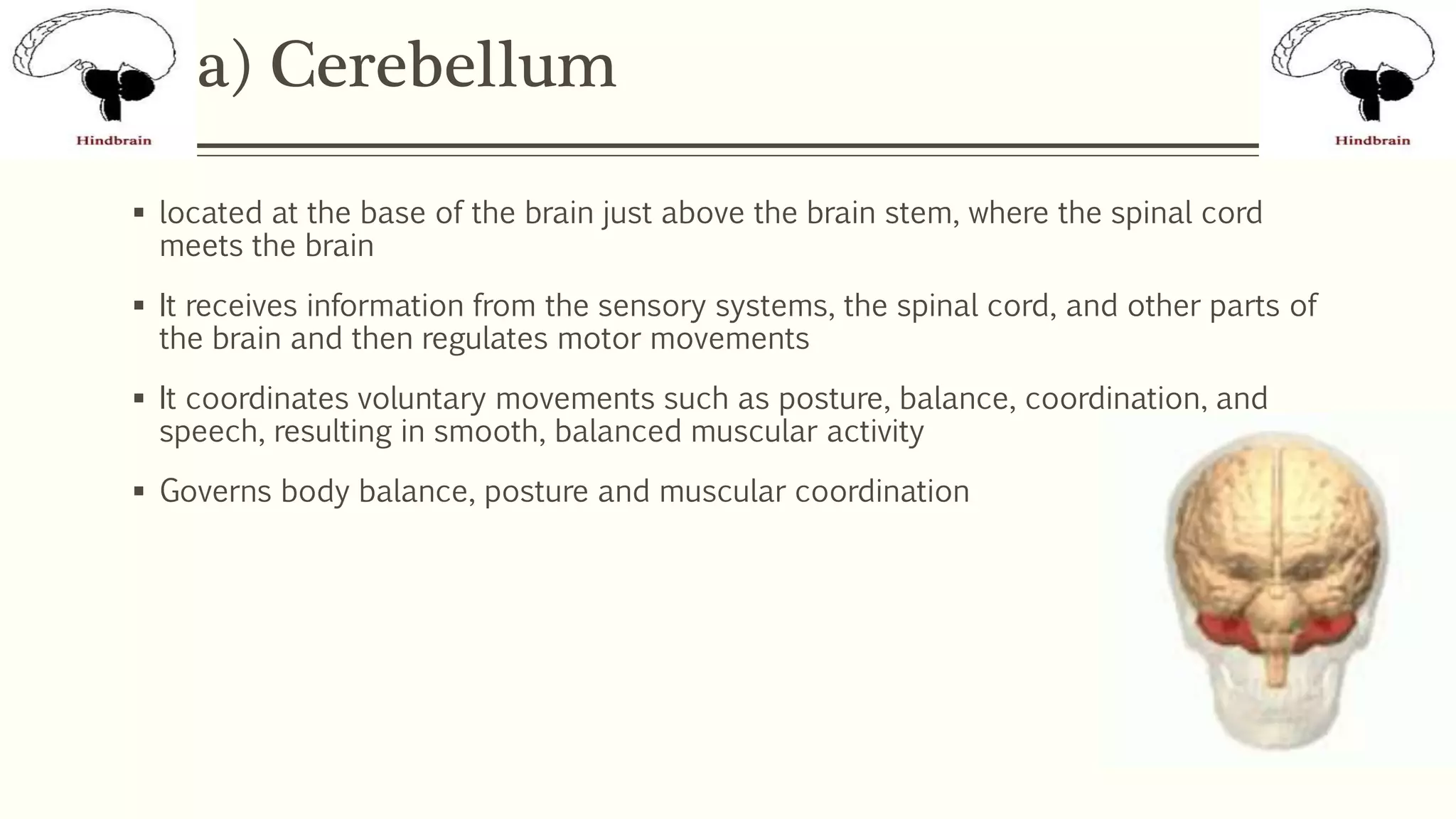
a) Cerebellum
 located at the base of the brain just above the brain stem, where the spinal cord
meets the brain
 It receives information from the sensory systems, the spinal cord, and other parts of
the brain and then regulates motor movements
 It coordinates voluntary movements such as posture, balance, coordination, and
speech, resulting in smooth, balanced muscular activity
 Governs body balance, posture and muscular coordination
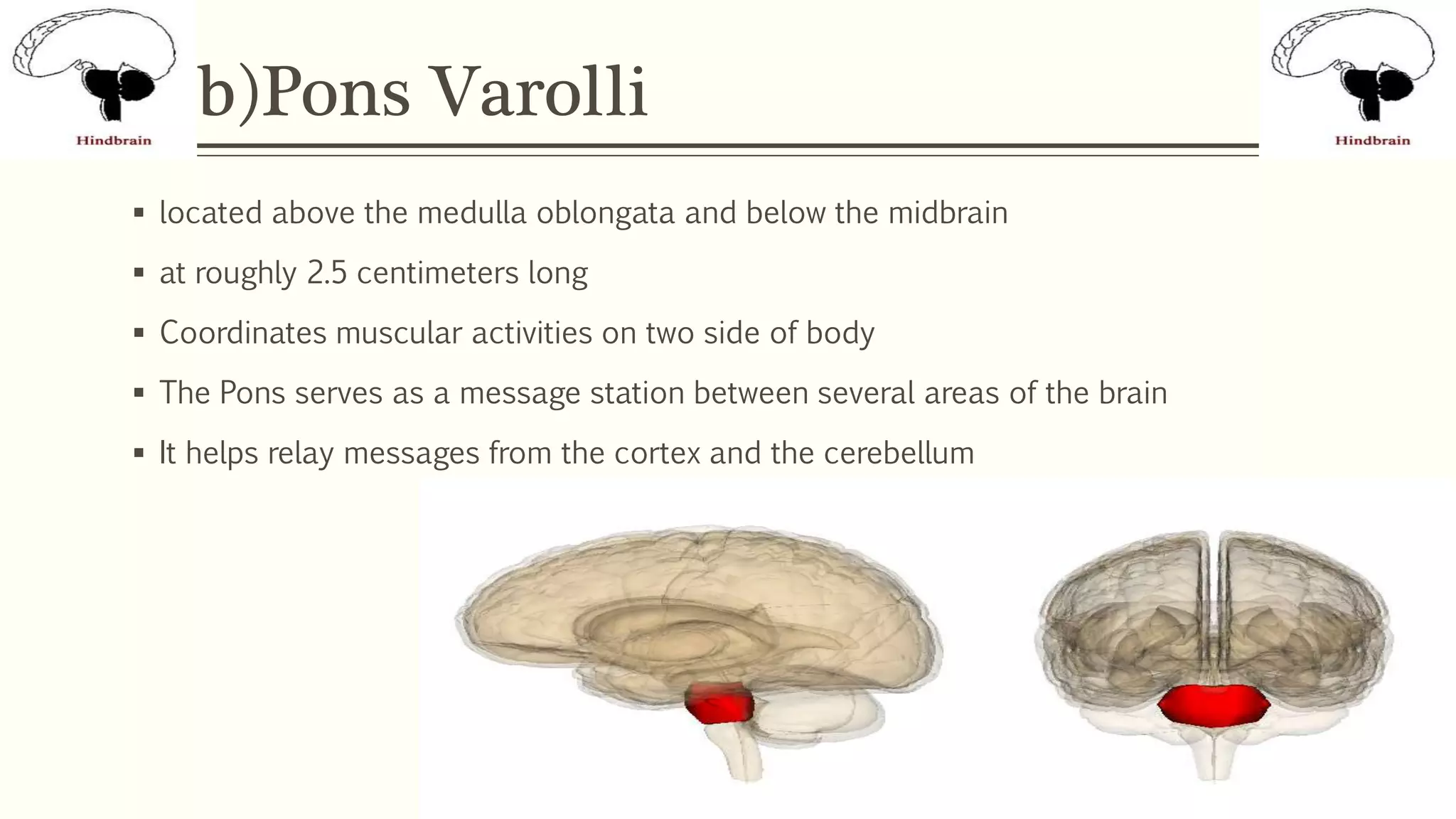
b)Pons Varolli
 located above the medulla oblongata and below the midbrain
 at roughly 2.5 centimeters long
 Coordinates muscular activities on two side of body
 The Pons serves as a message station between several areas of the brain
 It helps relay messages from the cortex and the cerebellum
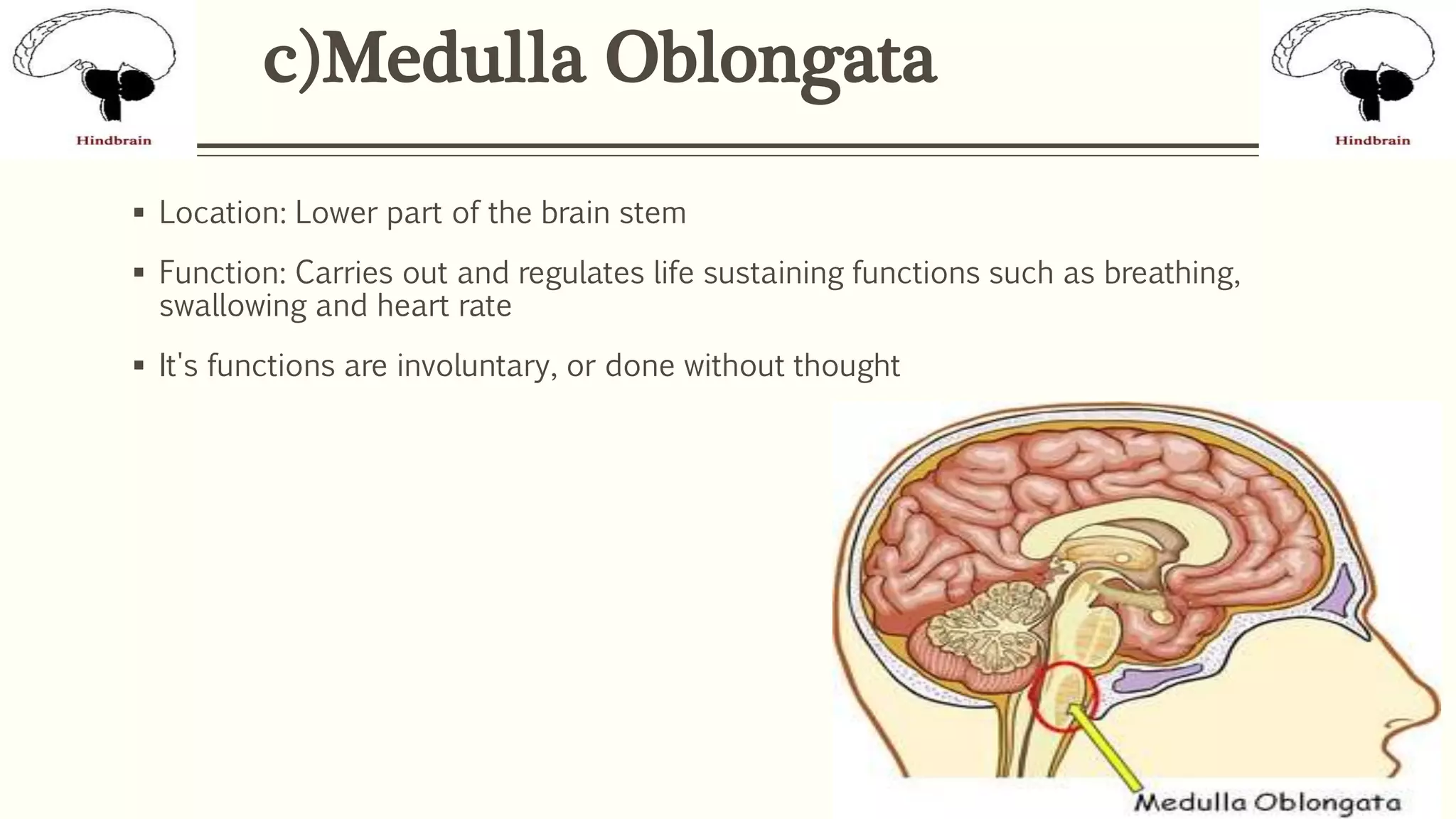
c)Medulla Oblongata
 Location: Lower part of the brain stem
 Function: Carries out and regulates life sustaining functions such as breathing,
swallowing and heart rate
 It's functions are involuntary, or done without thought
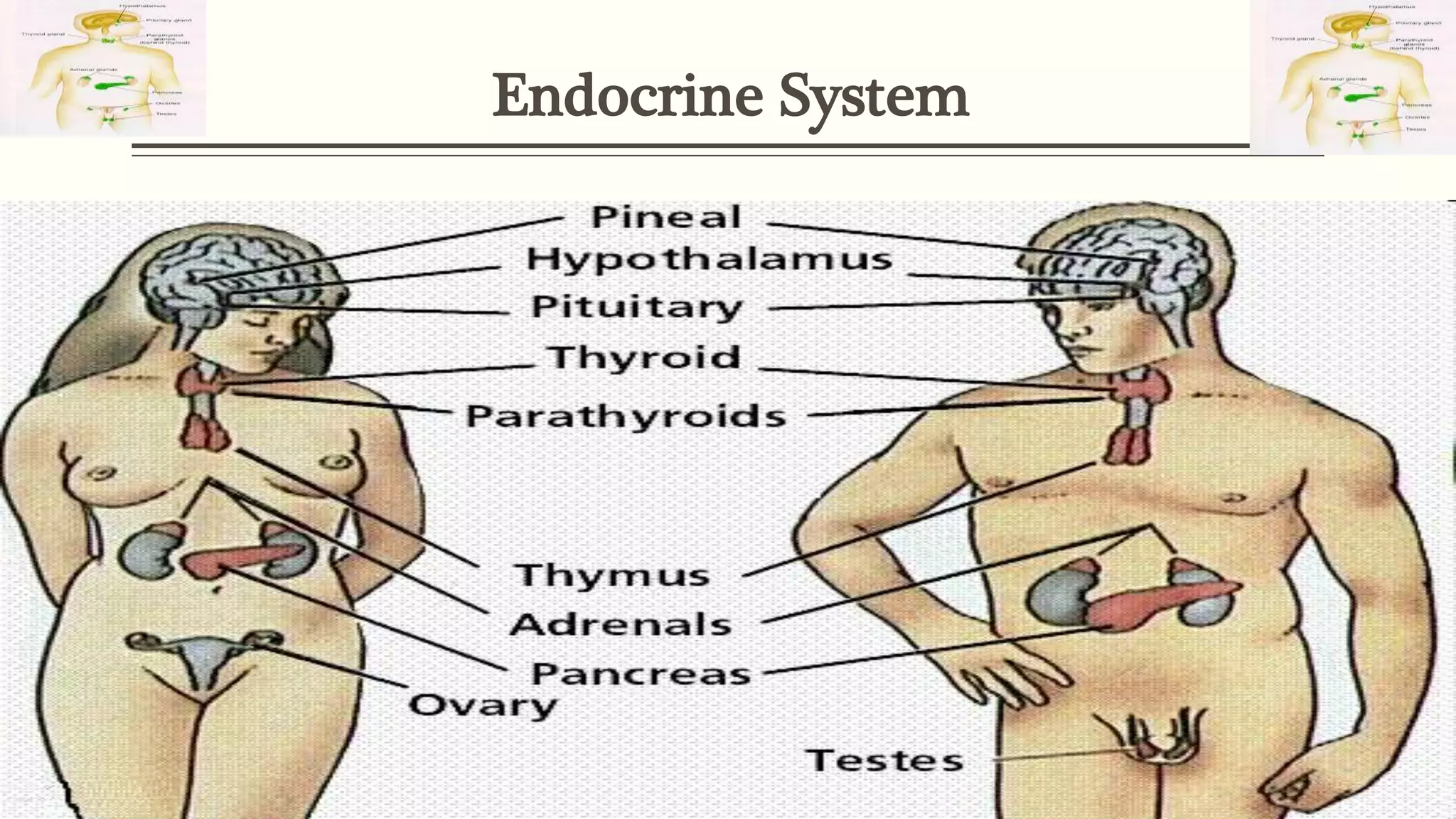
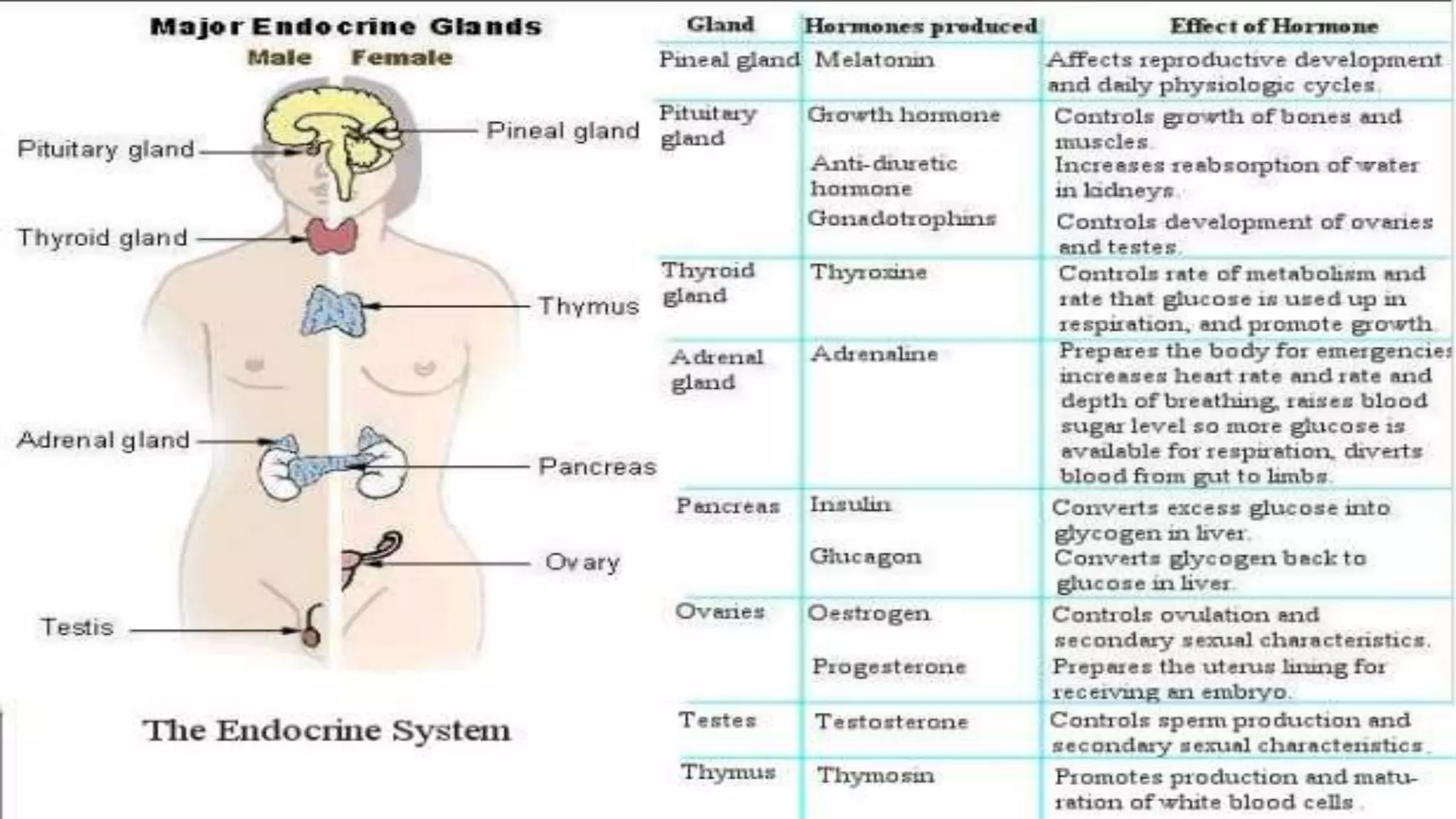
Endocrine System
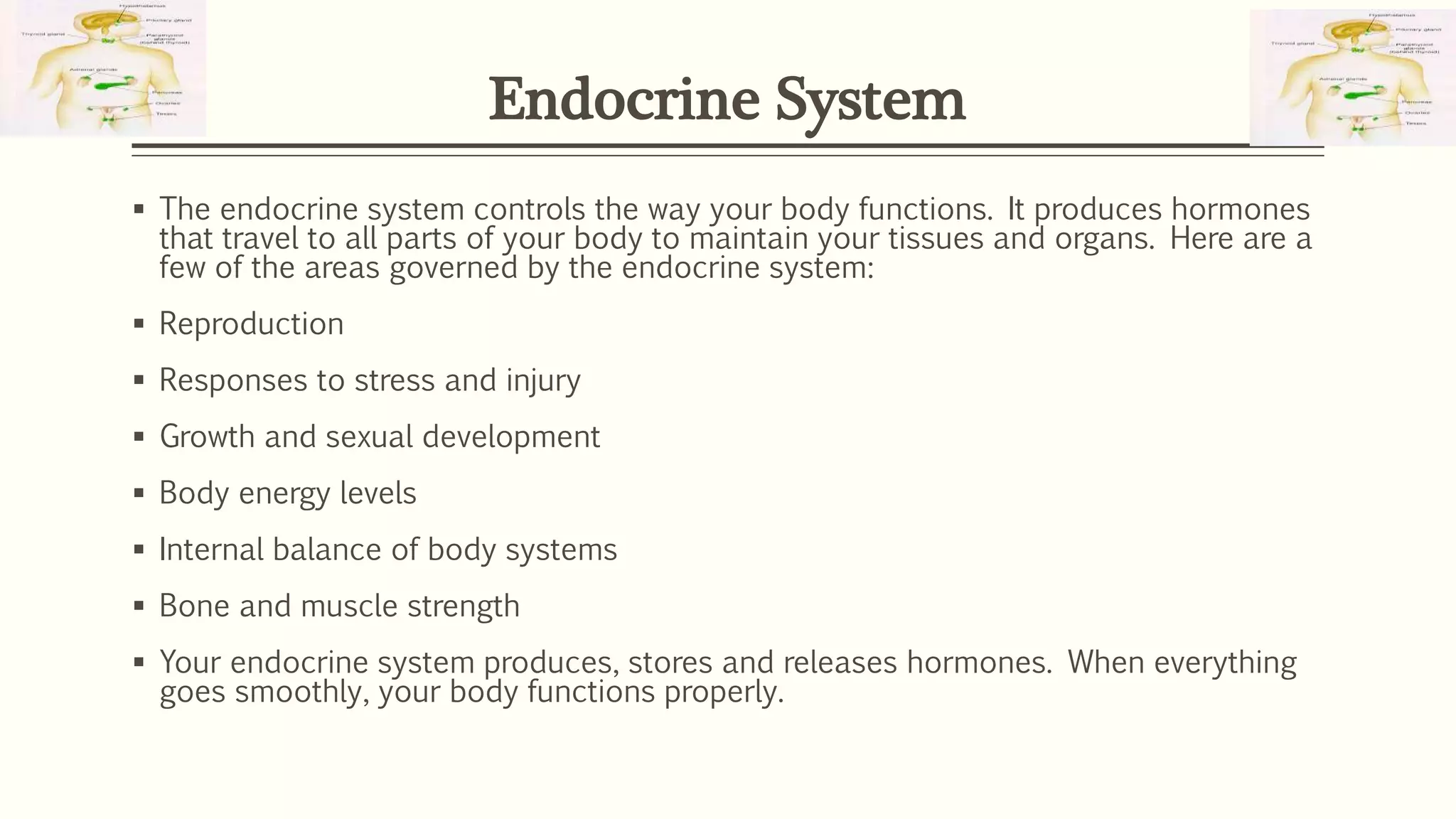
 The endocrine system controls the way your body functions. It produces hormones
that travel to all parts of your body to maintain your tissues and organs. Here are a
few of the areas governed by the endocrine system:
 Reproduction
 Responses to stress and injury
 Growth and sexual development
 Body energy levels
 Internal balance of body systems
 Bone and muscle strength
 Your endocrine system produces, stores and releases hormones. When everything
goes smoothly, your body functions properly.
Endocrine System
THANK YOU !!!

Chapter2 Biological Bases of Behavior

  • 1.
  • 2.
    The Biology Behindthe Psychology  “Everything Psychological is ultimately Biological.”  What does this say to you?
  • 3.
    Neurons: building blocksof the Nervous System
  • 4.
  • 5.
    Types of Neurons Sensory Neurons (afferent) ~ 2 million  Sends messages from sense organs  brain  Motor Neurons (efferent) ~ 2-3 million  Sends messages from brain  muscles, organs, glands  Interneurons ~ Billions & Billions  Relay messages between sensory & motor neurons  Glial cells – “The forgotten cell”  Glue cells which help connections, insulate, and clean up
  • 6.
    Nervous System  Structurallyand functionally divided into three divisions  CNS (Central Nervous System) located at the body region  PNS (Peripheral Nervous System) functionally peripheral  ANS (Autonomic Nervous System) functionally involuntary
  • 7.
    Central Nervous System BrainSpinal Chord Fore Brain Mid Brain Hind Brain Cerebrum Thalamus Hypothalamus Frontal lobe Parietal Temporal Occipital Cerebellum Pons Varolli Medulla Oblongata
  • 8.
    THE BRAIN How doesour brain produce behavior and mental processes?
  • 10.
    1) Forebrain The mainarea of the forebrain, governs emotion, learning, thinking, remembering and sense perception. a) Cerebrum  It is the largest part of brain & Divided into left and right cerebral hemisphere .  It is associated with higher brain function such as thought and action  The cerebral cortex is divided into four sections, called "lobes“.
  • 12.
    i) Parietal lobelocated in in the central fissure from the frontal lobe. • function: information to the skin senses (touch, temperature and pressure). • If left hemisphere is damage may lose ability to read/ write and difficulty of knowing the parts of the body. • If right hemisphere : difficulty of recognizing the left part of the body. Four lobes:
  • 13.
    ii) Frontal lobe– nearest to the face ( motor cortex) Function: controls the body movement. iii) Occipital lobe – near the back of the head. Function: sensory area for awareness ( visual) Damage in the right hemisphere – loss of vision in the left. If in the left – loss vision ion the right. iv) Temporal lobe - along the side of each hemisphere. Function: concern with hearing Damage in left hemisphere – inability to understand spoken words. If in the right – can recognize speech but unable to recognize other organizations of sounds. Contd…
  • 14.
    b)Thalamus:  The thalamusis a large, dual lobed mass of grey matter buried under the cerebral cortex.  It is involved in sensory perception and regulation of motor functions.  The thalamus is a limbic system structure and it connects areas of the cerebral cortex .  Which are involved in sensory perception and movement with other parts of the brain and spinal cord that also have a role in sensation and movement.  As a regulator of sensory information, the thalamus also controls sleep and awake states of consciousness.
  • 15.
    c) Hypothalamus  Thehypothalamus controls the autonomic nervous system.  The autonomic nervous system is the portion of the nervous system responsible for maintaining homeostasis.  Thus, damage to the hypothalamus results in severe imbalances in the internal environment.  The hypothalamus contains the thirst center, the hunger center and the body's thermostat.  Thus, damage to the hypothalamus frequently results in water, glucose and temperature imbalances.  The hypothalamus controls the hypophysis (pituitary gland). Note : Hypophysis refer to Pituitary gland
  • 16.
    Contd…  The hypophysisis the most important endocrine gland in the body and is often referred to as the "master gland".  The hyopohysis is referred to as the master gland because it controls most of the other endocrine glands in the body such as the thyroid, adrenal gland, testis and ovaries.  By controlling the hypophysis the hypothalamus exerts control over most endocrine glands.  The hypothalamus is the site of emotions and the effect emotions can have on the body.
  • 17.
    2)Midbrain  A shortstem which serves the function of being a path between the fore brain and the hind brain is mid brain.  Tracts between the cerebrum and the spinal cord and functions as part of the overall impulse conduction system.  It also controls some auditory and visual responses such as regulation of the size of the pupil of the eye.
  • 18.
    3)Hindbrain - includes hindbrain is a developmental categorization of portions of the central nervous system in vertebrates.  It includes Medulla , Pons & Cerebellum
  • 19.
    a) Cerebellum  locatedat the base of the brain just above the brain stem, where the spinal cord meets the brain  It receives information from the sensory systems, the spinal cord, and other parts of the brain and then regulates motor movements  It coordinates voluntary movements such as posture, balance, coordination, and speech, resulting in smooth, balanced muscular activity  Governs body balance, posture and muscular coordination
  • 20.
    b)Pons Varolli  locatedabove the medulla oblongata and below the midbrain  at roughly 2.5 centimeters long  Coordinates muscular activities on two side of body  The Pons serves as a message station between several areas of the brain  It helps relay messages from the cortex and the cerebellum
  • 21.
    c)Medulla Oblongata  Location:Lower part of the brain stem  Function: Carries out and regulates life sustaining functions such as breathing, swallowing and heart rate  It's functions are involuntary, or done without thought
  • 22.
  • 23.
     The endocrinesystem controls the way your body functions. It produces hormones that travel to all parts of your body to maintain your tissues and organs. Here are a few of the areas governed by the endocrine system:  Reproduction  Responses to stress and injury  Growth and sexual development  Body energy levels  Internal balance of body systems  Bone and muscle strength  Your endocrine system produces, stores and releases hormones. When everything goes smoothly, your body functions properly. Endocrine System
  • 25.