- Research psychology
-Applied psychology









Abnormal psychology
Biological psychology
Cognitive psychology
Comparative psychology
Developmental psychology
Personality psychology
Quantitative psychology
Social psychology









Clinical psychology
Counseling psychology
Educational psychology
Psychology and Law
Health psychology
Human factors psychology
Industrial and organizational psychology
School psychology


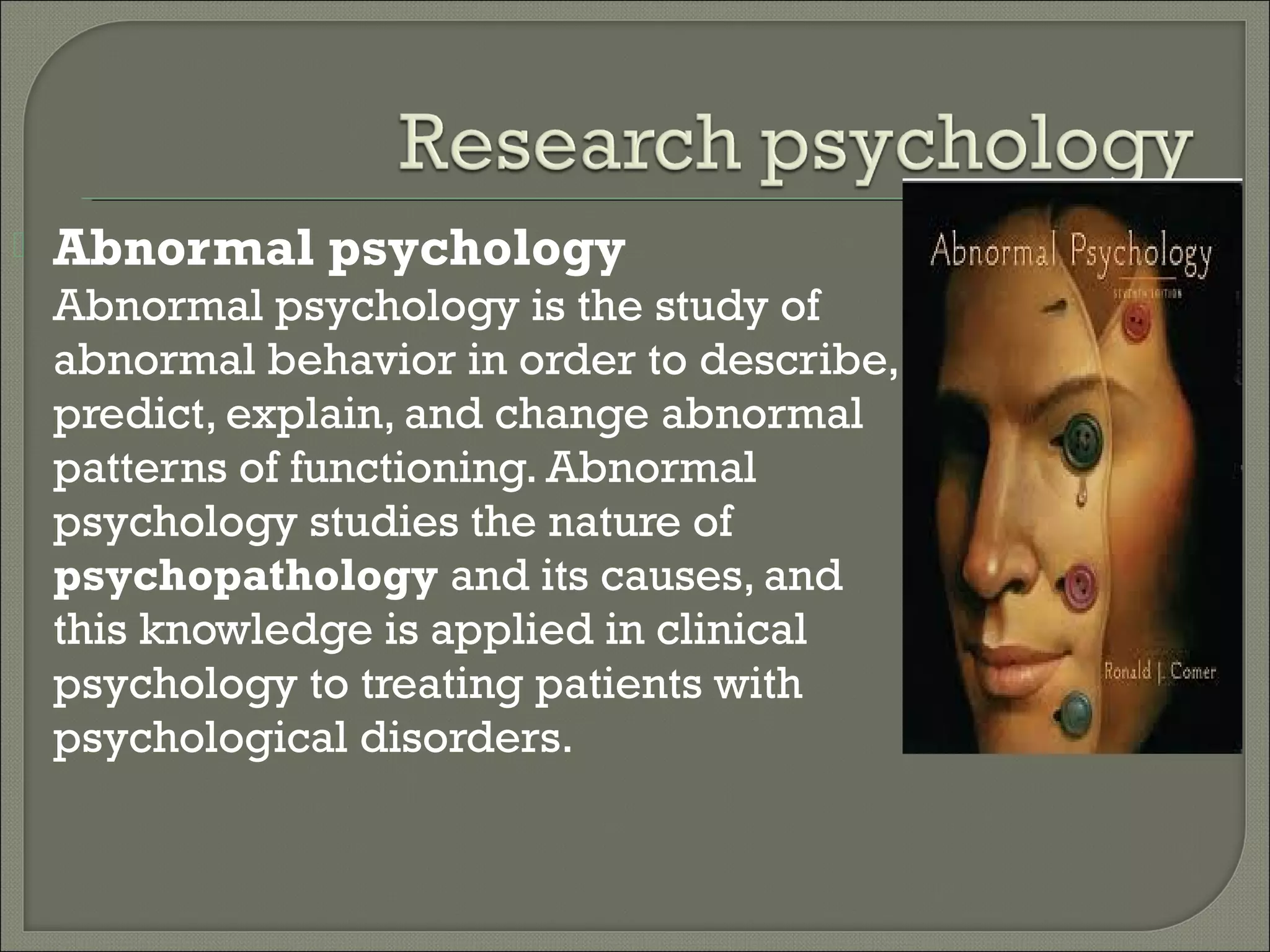
Abnormal psychology
Abnormal psychology is the study of
abnormal behavior in order to describe,
predict, explain, and change abnormal
patterns of functioning. Abnormal
psychology studies the nature of
psychopathology and its causes, and
this knowledge is applied in clinical
psychology to treating patients with
psychological disorders.
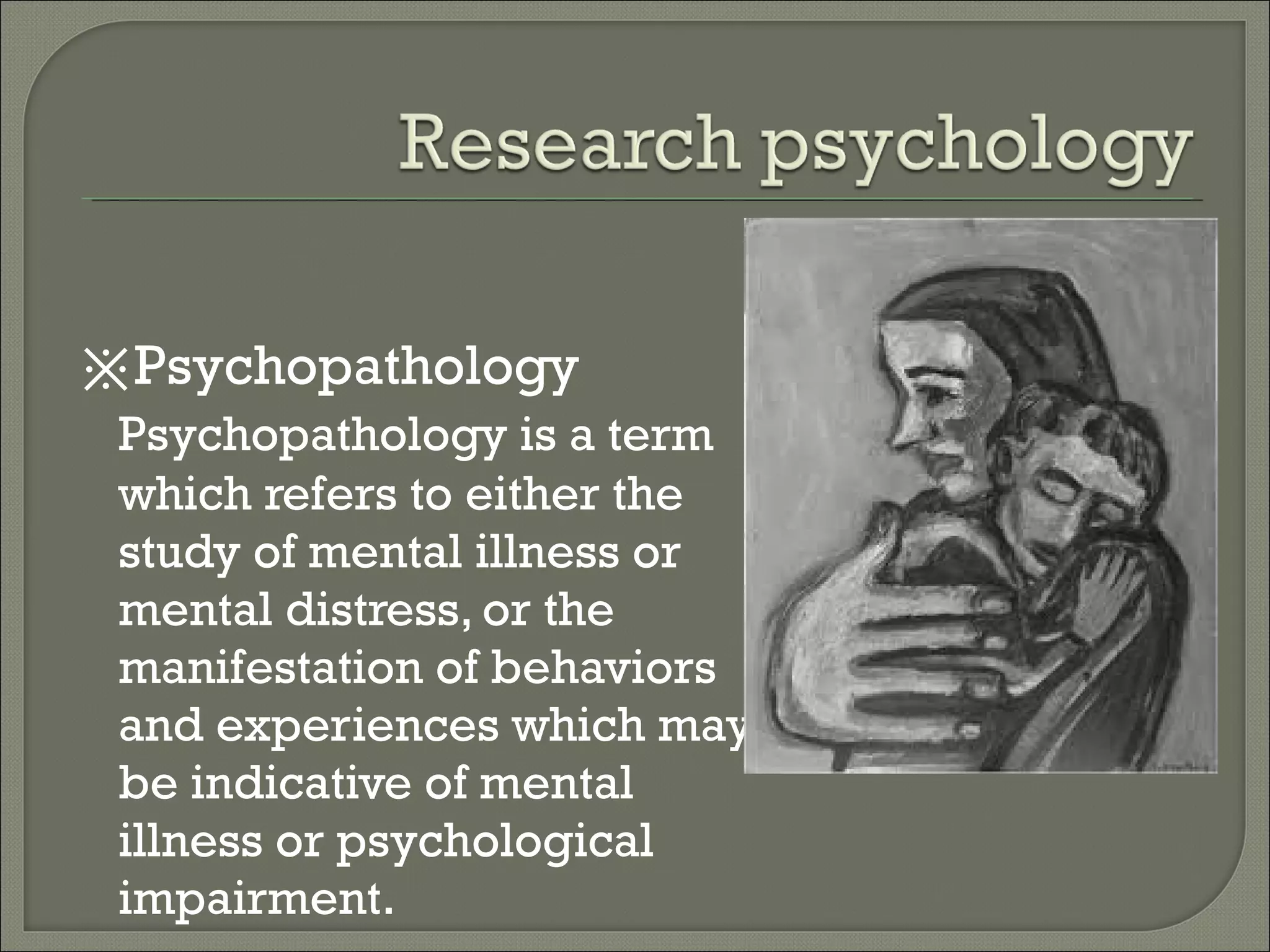
※Psychopathology
Psychopathology is a term
which refers to either the
study of mental illness or
mental distress, or the
manifestation of behaviors
and experiences which may
be indicative of mental
illness or psychological
impairment.


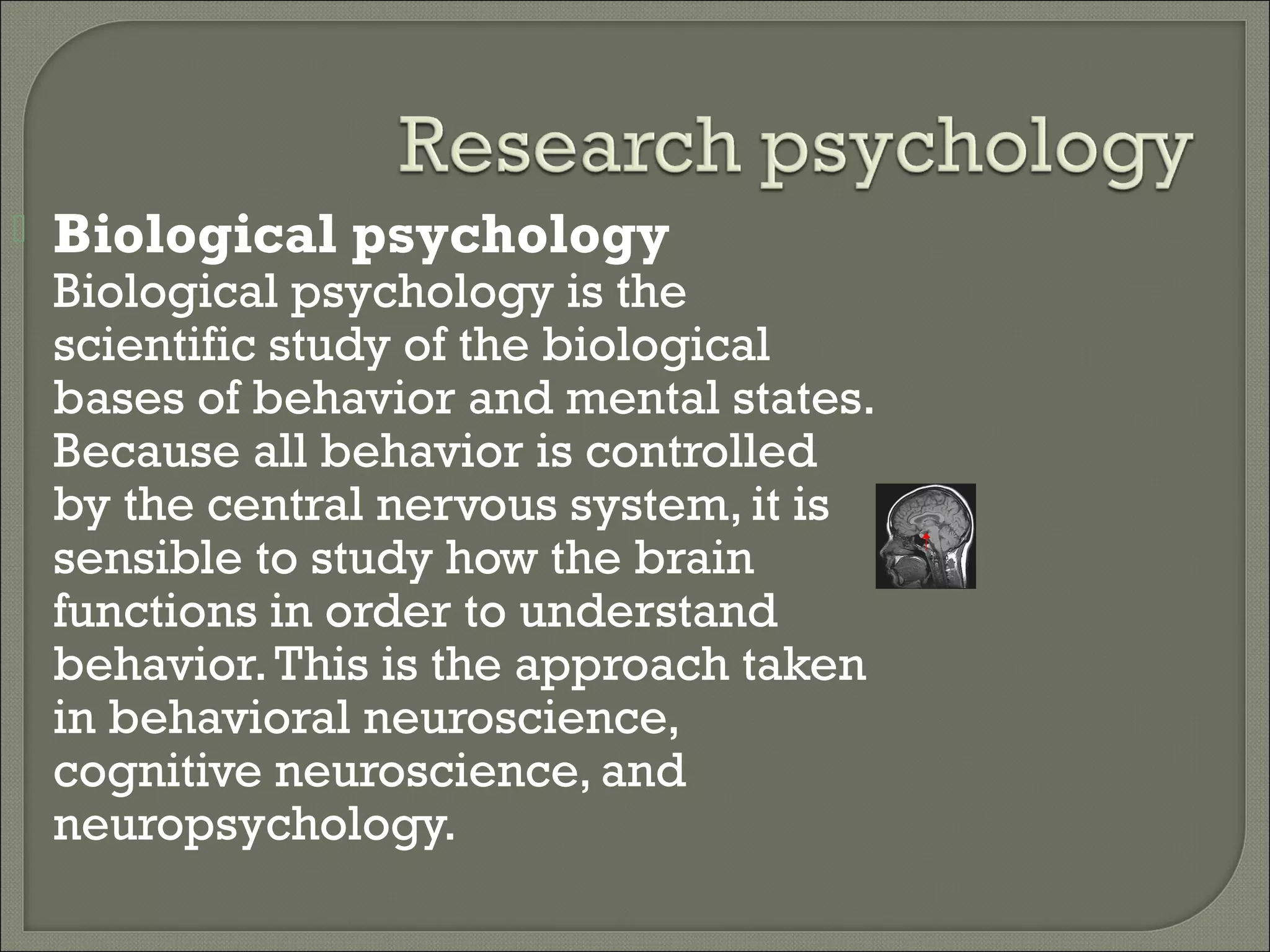
Biological psychology

Biological psychology is the
scientific study of the biological
bases of behavior and mental states.
Because all behavior is controlled
by the central nervous system, it is
sensible to study how the brain
functions in order to understand
behavior. This is the approach taken
in behavioral neuroscience,
cognitive neuroscience, and
neuropsychology.


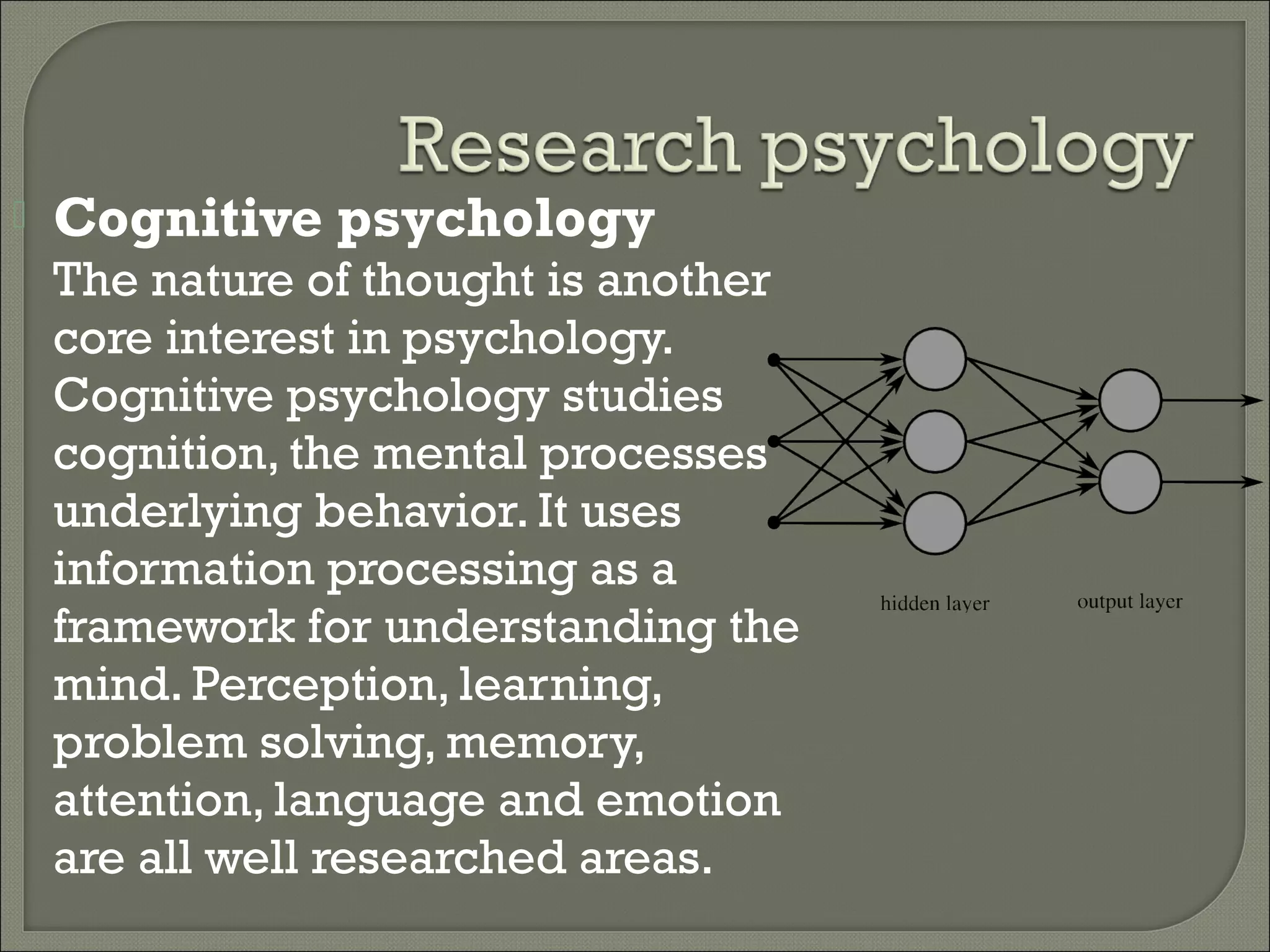
Cognitive psychology

The nature of thought is another
core interest in psychology.
Cognitive psychology studies
cognition, the mental processes
underlying behavior. It uses
information processing as a
framework for understanding the
mind. Perception, learning,
problem solving, memory,
attention, language and emotion
are all well researched areas.


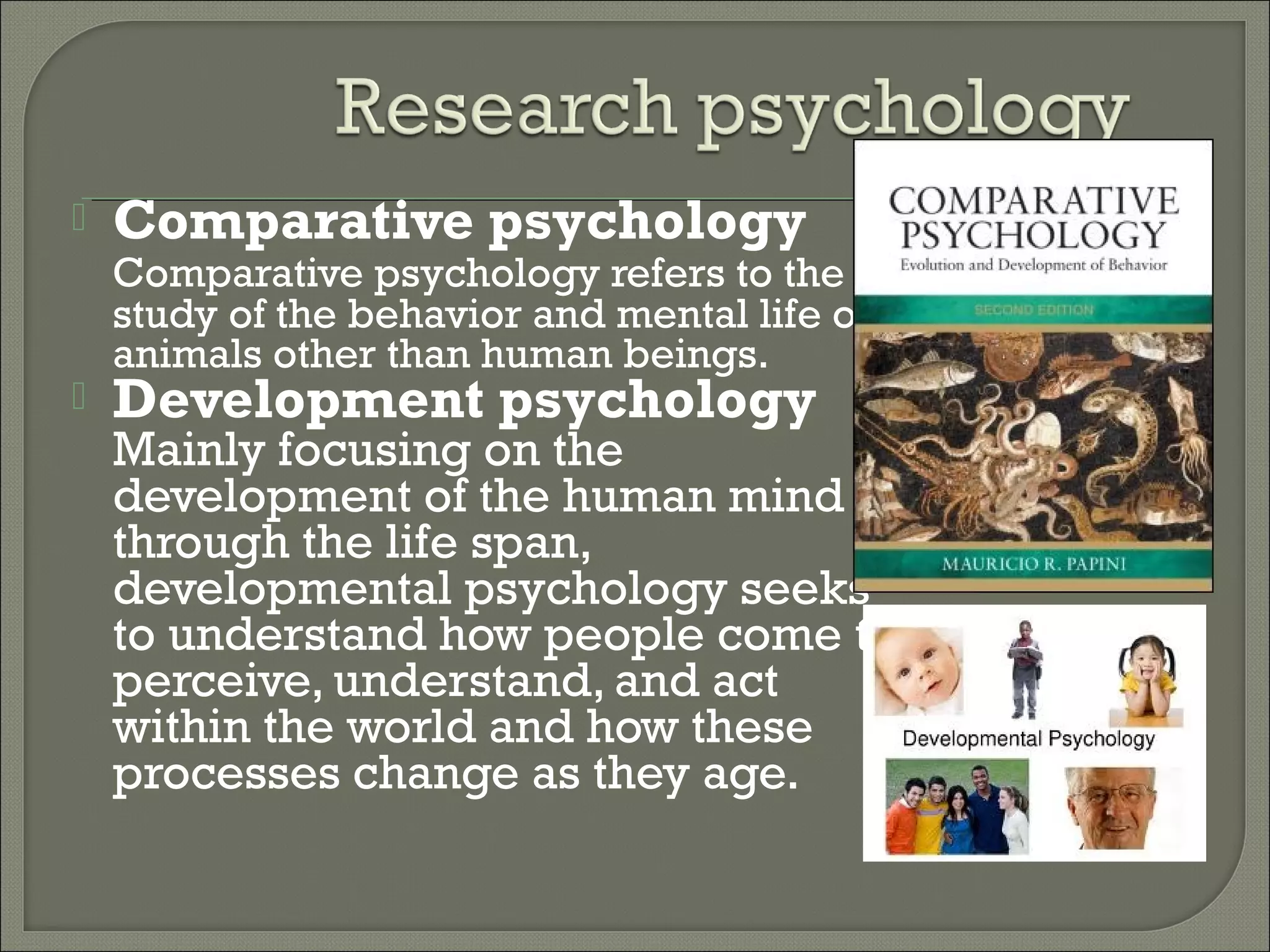
Comparative psychology

Comparative psychology refers to the
study of the behavior and mental life of
animals other than human beings.


Development psychology

Mainly focusing on the
development of the human mind
through the life span,
developmental psychology seeks
to understand how people come to
perceive, understand, and act
within the world and how these
processes change as they age.


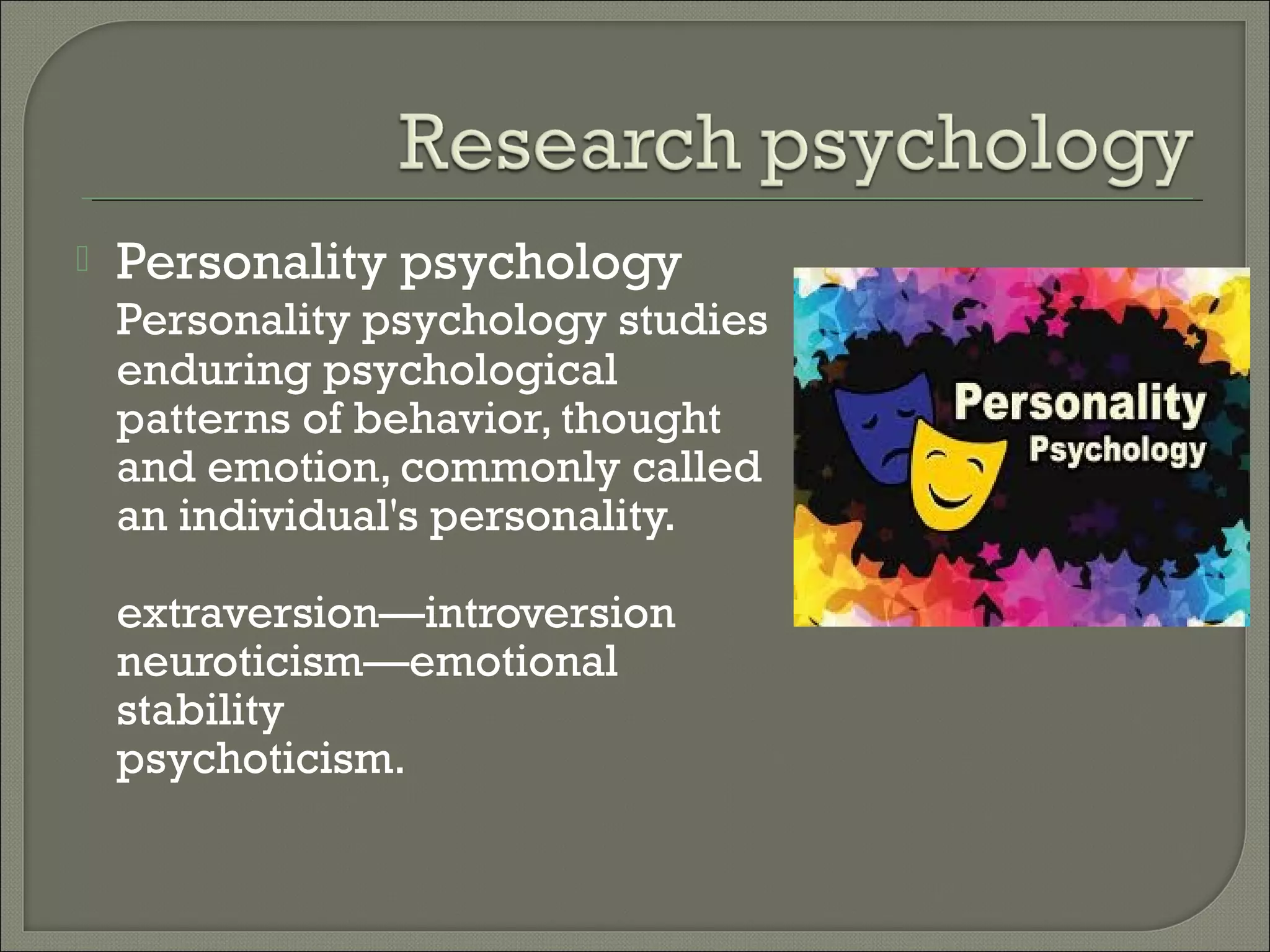
Personality psychology
Personality psychology studies
enduring psychological
patterns of behavior, thought
and emotion, commonly called
an individual's personality.
extraversion—introversion
neuroticism—emotional
stability
psychoticism.


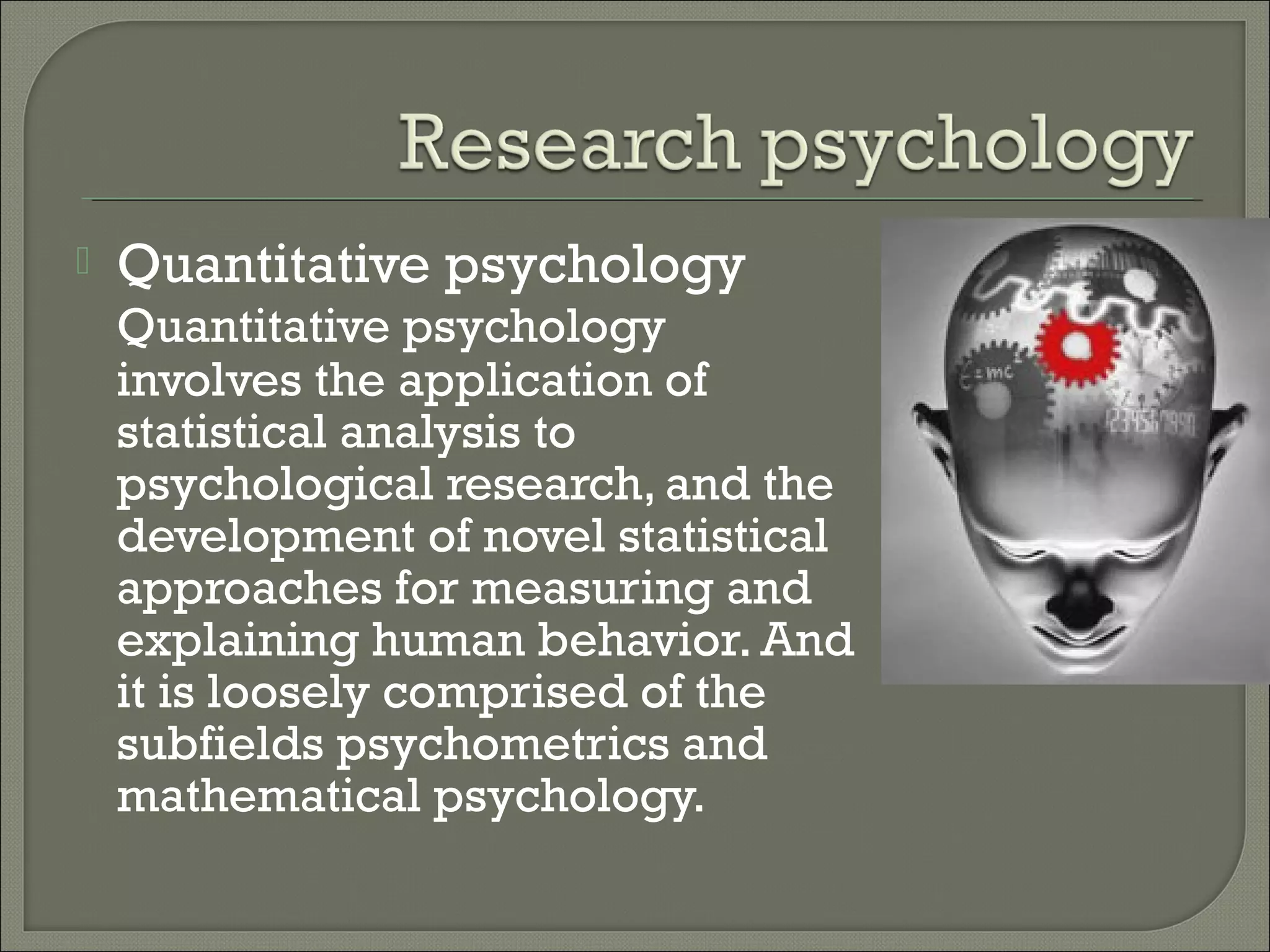
Quantitative psychology
involves the application of
statistical analysis to
psychological research, and the
development of novel statistical
approaches for measuring and
explaining human behavior. And
it is loosely comprised of the
subfields psychometrics and
mathematical psychology.


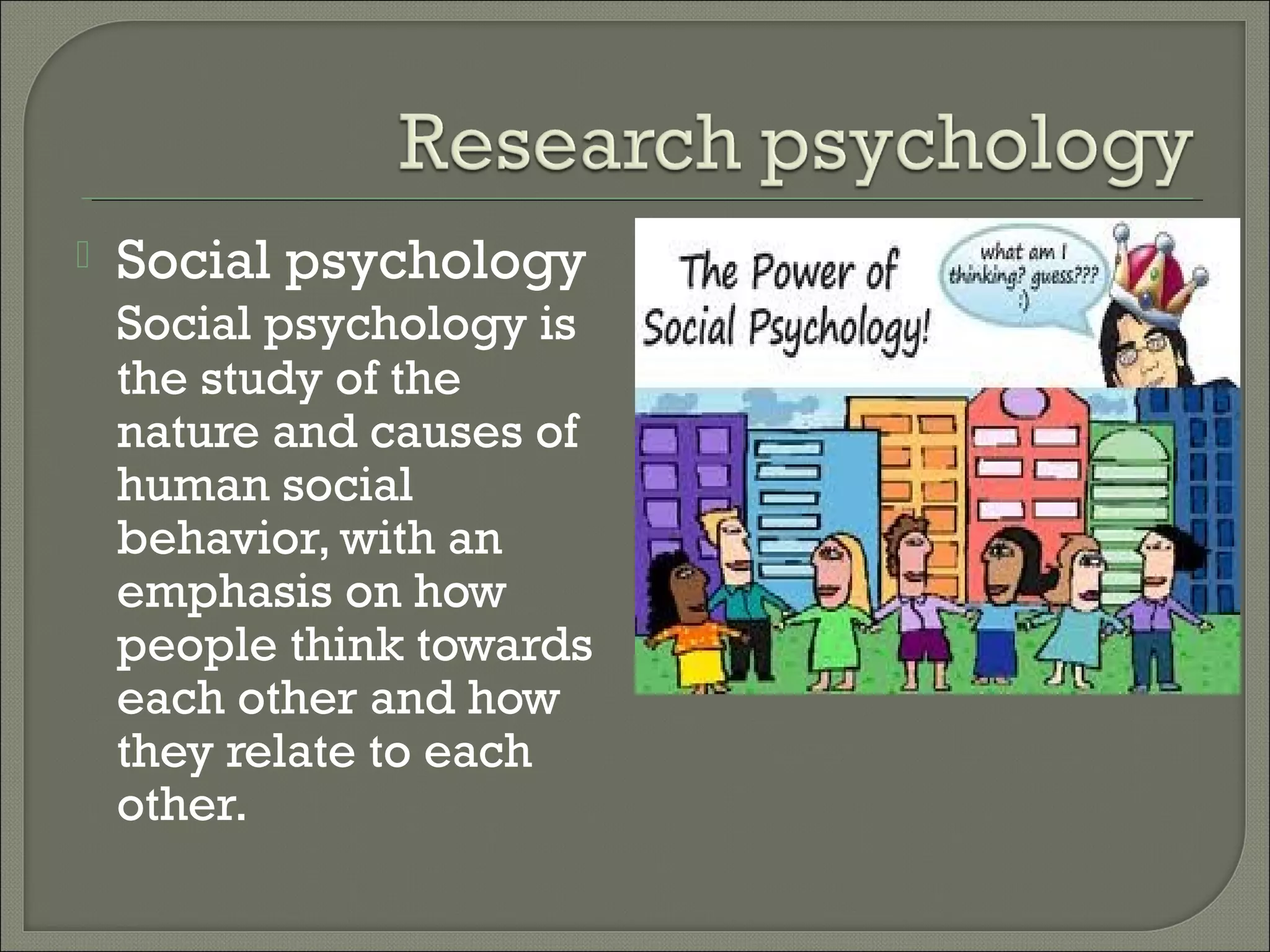
Social psychology
Social psychology is
the study of the
nature and causes of
human social
behavior, with an
emphasis on how
people think towards
each other and how
they relate to each
other.


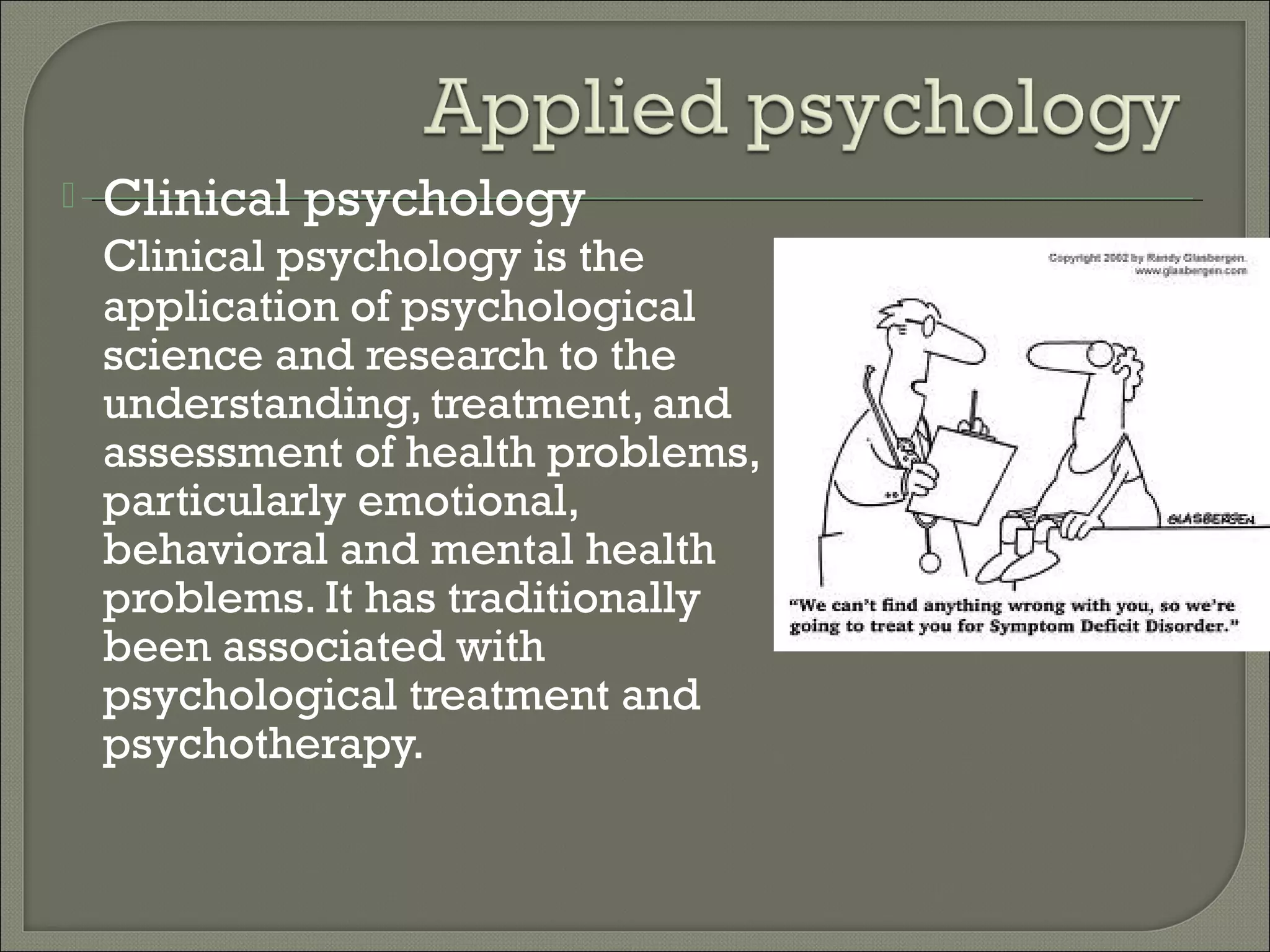
Clinical psychology
Clinical psychology is the
application of psychological
science and research to the
understanding, treatment, and
assessment of health problems,
particularly emotional,
behavioral and mental health
problems. It has traditionally
been associated with
psychological treatment and
psychotherapy.
The work performed by clinical psychologists tends to be
done inside various therapy models. A popular model is the
Cognitive-Behavioral therapy (CBT) framework. One of the
most famous CBT therapies is cognitive therapy.
※Cognitive therapy

focused on depression and developed a list of
"errors" in thinking that he proposed could cause or
maintain depression, including arbitrary inference,
selective abstraction, over-generalization, and
magnification (of negatives) and minimization (of
positives). Cognitive therapy seeks to identify and
change "distorted" or "unrealistic" ways of thinking,
and therefore to influence emotion and behavior.


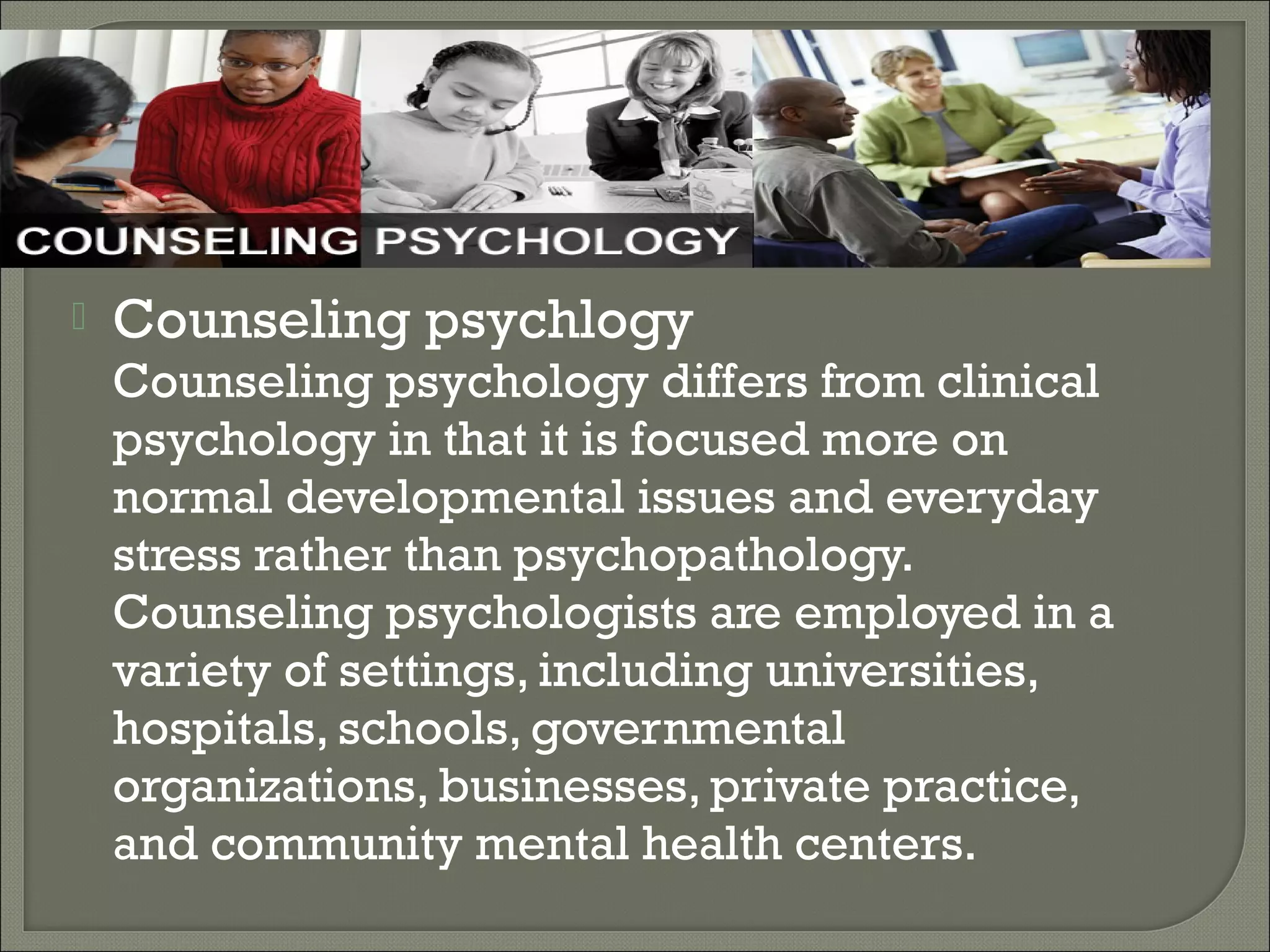
Counseling psychlogy

Counseling psychology differs from clinical
psychology in that it is focused more on
normal developmental issues and everyday
stress rather than psychopathology.
Counseling psychologists are employed in a
variety of settings, including universities,
hospitals, schools, governmental
organizations, businesses, private practice,
and community mental health centers.


Educational psychology
Educational psychology is the study of how humans
learn in educational settings, the effectiveness of
educational interventions, the psychology of teaching.



Psychology and law

Together, Forensic psychology and Legal
Psychology compose the area known as
Psychology and Law.
※Forensic psychology
Forensic psychology is the application of
psychological principles and knowledge to
various legal activities. Typical issues include
child custody disputes, child abuse or neglect,
assessing personal capacity to manage one's
affairs, matters of competency to stand trial,
criminal responsibility, personal injury, and
advising judges in matters relating to
sentencing regarding various mitigants and the
actuarial assessment of future risk.


Health psychology

Health psychology is the application of psychological
theory and research to health, illness and health care.
Health psychology is concerned with the psychology of
a much wider range of health-related behavior
including healthy eating, the doctor-patient
relationship, a patient's understanding of health
information, and beliefs about illness.


Human factors psychology

Human factors psychology is the study of how cognitive
and psychological processes affect our interaction with
tools and objects in the environment.


Industrial and organizational psychology
Industrial and organizational psychology (I/O)
is among the newest fields in psychology.
Industrial Psychology focuses on improving,
evaluating, and predicting job performance
while Organizational Psychology focuses on
how organizations impact and interact with
individuals.


School psychology

School psychology is the area of
discipline that is dedicated to helping
young people succeed academically,
socially, and emotionally. School
psychologists collaborate with
educators, parents, and other
professionals to create safe, healthy,
and supportive learning environments
for all students that strengthen
connections between home and school.
By- NITIKA VERMA
Class- 11th – C

The scope of psychology

  • 1.
  • 2.
            Abnormal psychology Biological psychology Cognitivepsychology Comparative psychology Developmental psychology Personality psychology Quantitative psychology Social psychology
  • 3.
            Clinical psychology Counseling psychology Educationalpsychology Psychology and Law Health psychology Human factors psychology Industrial and organizational psychology School psychology
  • 4.
     Abnormal psychology Abnormal psychologyis the study of abnormal behavior in order to describe, predict, explain, and change abnormal patterns of functioning. Abnormal psychology studies the nature of psychopathology and its causes, and this knowledge is applied in clinical psychology to treating patients with psychological disorders.
  • 5.
    ※Psychopathology Psychopathology is aterm which refers to either the study of mental illness or mental distress, or the manifestation of behaviors and experiences which may be indicative of mental illness or psychological impairment.
  • 6.
     Biological psychology Biological psychologyis the scientific study of the biological bases of behavior and mental states. Because all behavior is controlled by the central nervous system, it is sensible to study how the brain functions in order to understand behavior. This is the approach taken in behavioral neuroscience, cognitive neuroscience, and neuropsychology.
  • 7.
     Cognitive psychology The natureof thought is another core interest in psychology. Cognitive psychology studies cognition, the mental processes underlying behavior. It uses information processing as a framework for understanding the mind. Perception, learning, problem solving, memory, attention, language and emotion are all well researched areas.
  • 8.
     Comparative psychology Comparative psychologyrefers to the study of the behavior and mental life of animals other than human beings.  Development psychology Mainly focusing on the development of the human mind through the life span, developmental psychology seeks to understand how people come to perceive, understand, and act within the world and how these processes change as they age.
  • 9.
     Personality psychology Personality psychologystudies enduring psychological patterns of behavior, thought and emotion, commonly called an individual's personality. extraversion—introversion neuroticism—emotional stability psychoticism.
  • 10.
     Quantitative psychology Quantitative psychology involvesthe application of statistical analysis to psychological research, and the development of novel statistical approaches for measuring and explaining human behavior. And it is loosely comprised of the subfields psychometrics and mathematical psychology.
  • 11.
     Social psychology Social psychologyis the study of the nature and causes of human social behavior, with an emphasis on how people think towards each other and how they relate to each other.
  • 12.
     Clinical psychology Clinical psychologyis the application of psychological science and research to the understanding, treatment, and assessment of health problems, particularly emotional, behavioral and mental health problems. It has traditionally been associated with psychological treatment and psychotherapy.
  • 13.
    The work performedby clinical psychologists tends to be done inside various therapy models. A popular model is the Cognitive-Behavioral therapy (CBT) framework. One of the most famous CBT therapies is cognitive therapy. ※Cognitive therapy focused on depression and developed a list of "errors" in thinking that he proposed could cause or maintain depression, including arbitrary inference, selective abstraction, over-generalization, and magnification (of negatives) and minimization (of positives). Cognitive therapy seeks to identify and change "distorted" or "unrealistic" ways of thinking, and therefore to influence emotion and behavior.
  • 14.
     Counseling psychlogy Counseling psychologydiffers from clinical psychology in that it is focused more on normal developmental issues and everyday stress rather than psychopathology. Counseling psychologists are employed in a variety of settings, including universities, hospitals, schools, governmental organizations, businesses, private practice, and community mental health centers.
  • 15.
     Educational psychology Educational psychologyis the study of how humans learn in educational settings, the effectiveness of educational interventions, the psychology of teaching.  Psychology and law Together, Forensic psychology and Legal Psychology compose the area known as Psychology and Law.
  • 16.
    ※Forensic psychology Forensic psychologyis the application of psychological principles and knowledge to various legal activities. Typical issues include child custody disputes, child abuse or neglect, assessing personal capacity to manage one's affairs, matters of competency to stand trial, criminal responsibility, personal injury, and advising judges in matters relating to sentencing regarding various mitigants and the actuarial assessment of future risk.
  • 17.
     Health psychology Health psychologyis the application of psychological theory and research to health, illness and health care. Health psychology is concerned with the psychology of a much wider range of health-related behavior including healthy eating, the doctor-patient relationship, a patient's understanding of health information, and beliefs about illness.  Human factors psychology Human factors psychology is the study of how cognitive and psychological processes affect our interaction with tools and objects in the environment.
  • 18.
     Industrial and organizationalpsychology Industrial and organizational psychology (I/O) is among the newest fields in psychology. Industrial Psychology focuses on improving, evaluating, and predicting job performance while Organizational Psychology focuses on how organizations impact and interact with individuals.
  • 19.
     School psychology School psychologyis the area of discipline that is dedicated to helping young people succeed academically, socially, and emotionally. School psychologists collaborate with educators, parents, and other professionals to create safe, healthy, and supportive learning environments for all students that strengthen connections between home and school.
  • 20.