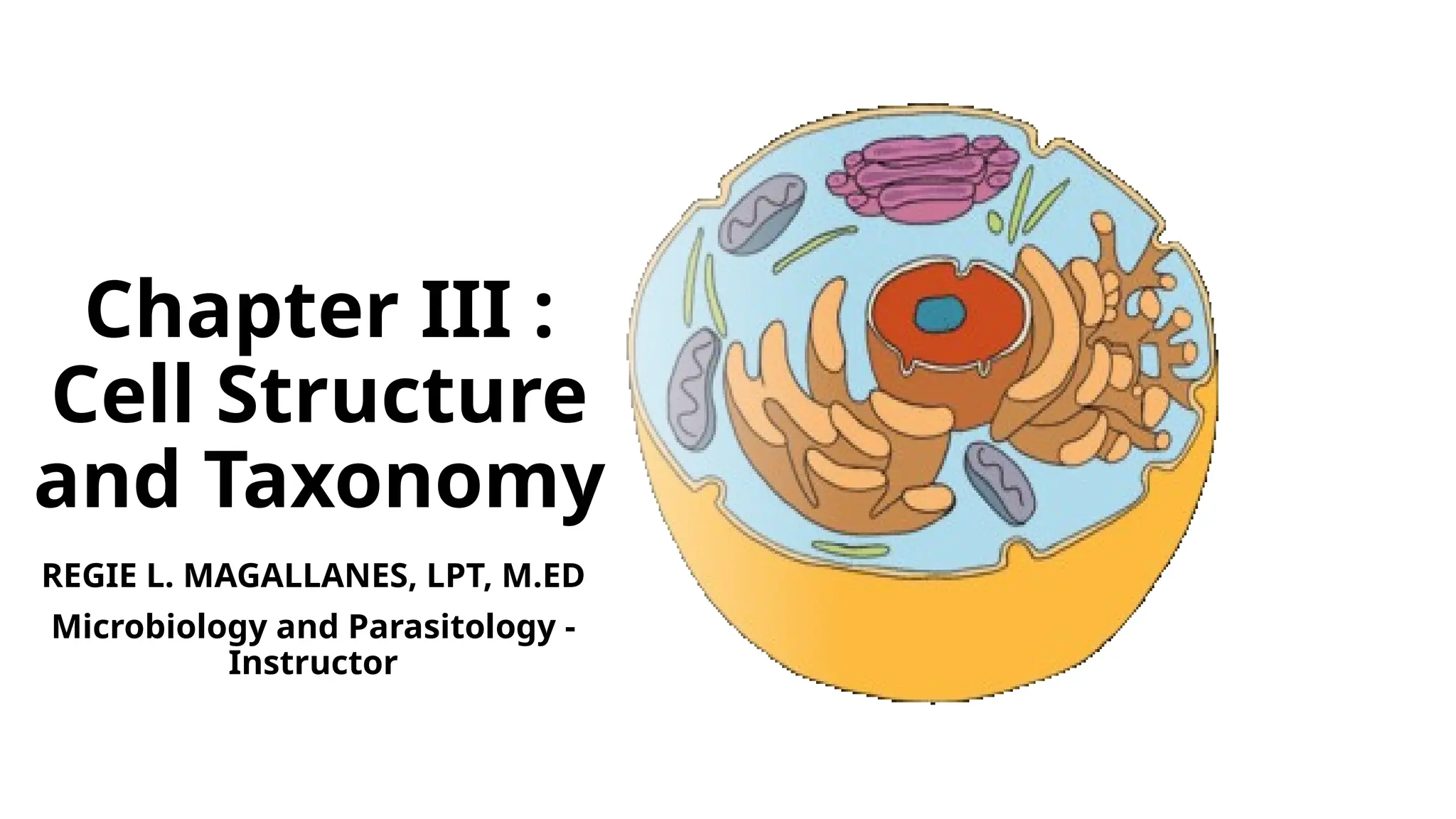
Chapter III :
Cell Structure
and Taxonomy
REGIE L. MAGALLANES, LPT, M.ED
Microbiology and Parasitology -
Instructor
At the end of the unit, the student
should be able to:
1. Describe the parts and functions of
eukaryotic and prokaryotic cells.
2. Differentiate the contributions of Hooke,
Schleiden and Schwann, and Virchow to the
study of cells.
3. Compare and contrast animal and bacterial
cells.
Introduction
to
Microorganis
ms
A. Definitions
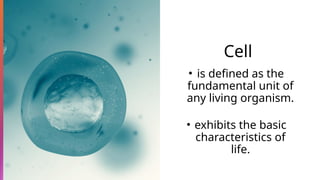
Cell
• is defined as the
fundamental unit of
any living organism.
• exhibits the basic
characteristics of
life.
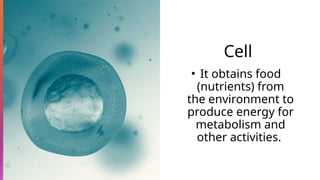
Cell
• It obtains food
(nutrients) from
the environment to
produce energy for
metabolism and
other activities.
Classification
1. Prokaryotes
2. Eukaryotes
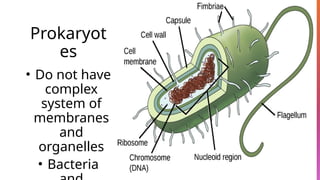
Prokaryot
es
• Do not have
complex
system of
membranes
and
organelles
• Bacteria
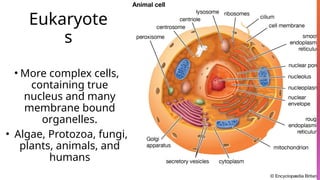
Eukaryote
s
• More complex cells,
containing true
nucleus and many
membrane bound
organelles.
• Algae, Protozoa, fungi,
plants, animals, and
humans
Metabolism
• Refers to all the chemical
reactions that occur within a cell.
Importance of metabolism –
growth, reproduction, and
irritability
Mutation
•Accidental changes in genetical
material.
B. Eucaryotes
Eucaryotes
Eucaryotes
• From a Greek word meaning
“true nucleus”.
•DNA is enclosed by a nuclear
membrane.
•Eucaryotic cells reproduce either
by mitosis or meiosis.
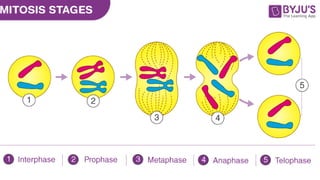
Mitosis
•Refers to nuclear division – the equal
division of one nucleus into two
genetically identical Nuclei.
•Chromosomes are copied and allocated
equally two daughter cells.
•The genosomes of the offspring are
identical to the parent’s genome.
•Either haploid or diploid cells can divide
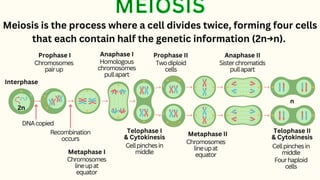
Meiosis
•Two parents give rise to offspring that
have unique combinations of genes
inherited from both parents.
•Only diploid cells can undergo meiosis.
•Diploid cells are changed into haploid
cells.
Ex: Human diploid cells – 46 chromosomes
Human haploid cells – 23
Eucaryotic
Cell Structure
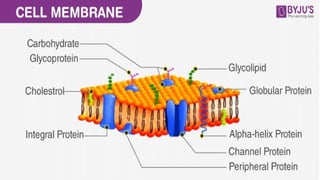
Cell Membrane
• Is like a “skin” around the cell, separating
the contents of the cell from the outside
world.
•Regulates the passage of nutrients, waste
products, and secretions into and out of
the cell. – selective permeability. (only
certain substances may enter and leave
the cell)
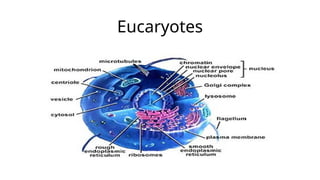
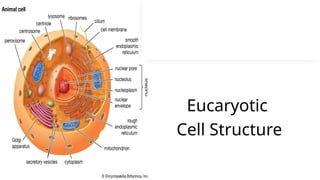
Nucleus
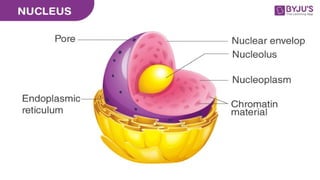
• “Command center” of the cell because it unifies, controls,
and integrates the functions of the entire cell.
Three components: Nucleoplasms, Chromosomes, Nuclear
membrane
a. Nucleoplasm – a type of protoplasm that is the
gelatinous matrix or base material of the nucleus.
b. Chromosomes – are embedded or suspended in the
nucleoplasm.
c. Nuclear membrane – the “skin” around the nucleus; it
contains holes (nuclear pores) through which large
molecules can enter the nucleus.
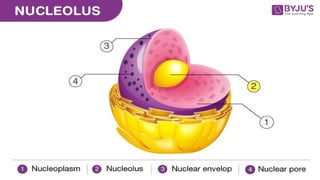
Nucleolus
•Where rRNA molecules are
manufactured.
•The rRNA molecules then become
part of the structure of
ribosomes.
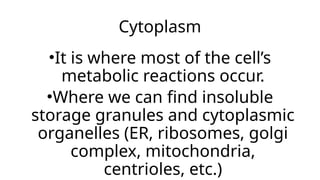
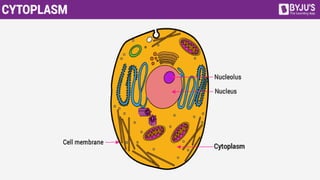
Cytoplasm
•It is where most of the cell’s
metabolic reactions occur.
•Where we can find insoluble
storage granules and cytoplasmic
organelles (ER, ribosomes, golgi
complex, mitochondria,
centrioles, etc.)
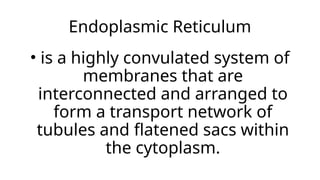
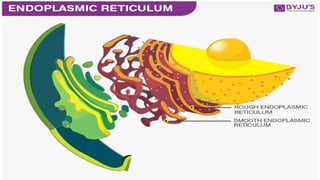
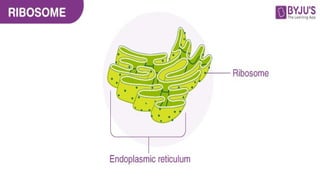
Endoplasmic Reticulum
• is a highly convulated system of
membranes that are
interconnected and arranged to
form a transport network of
tubules and flatened sacs within
the cytoplasm.
Ribosomes
• Consist mainly of ribosomal RNA (rRNA) and protein.
• Plays an important role in the synthesis
(manufacture) of essential proteins.
• Two subunits: 60S subunit & 40S subunit. –
produced in the nucleus.
• The subunits are then transported to the cytoplasm
where they remain separate until such time as they
join together with a messenger RNA (mRNA)
molecule to initiate protein synthesis. When united,
the 60S and 40S form an 80S ribosome.
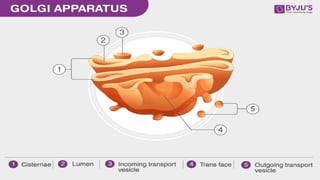
Golgi Complex
•Connects or communicate with ER.
•It completes the transformation of newly
synthesized CHONs into mature
functional ones and packages them into
vesicles for storage within the cell or
export outside the cell.
•Referred to as “packaging plants”.
Lysosomes
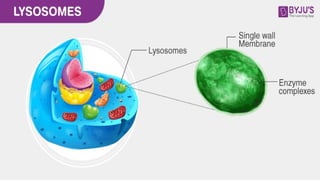
•Small vesicle that originate at the GC.
They contain lysozyme that breakdown
foreign material taken into the cell by
phagocytosis.
•Lysozyme also aid in breaking down worn
out parts of the cell and may destroy the
entire cell by autolysis.
Peroxisomes
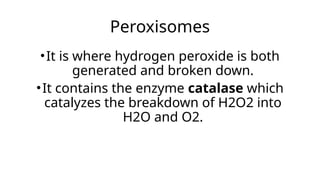
•It is where hydrogen peroxide is both
generated and broken down.
•It contains the enzyme catalase which
catalyzes the breakdown of H2O2 into
H2O and O2.
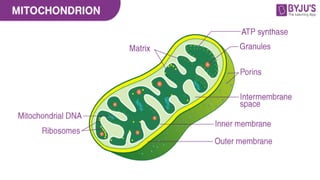
Mitochondria
• “Power plants” ; “Power houses” or
“Energy factories”.
•It is where most of the ATP molecules are
formed by cellular respiration.
ATP- Adenosine Triphosphate (energy
necessary for cellular function.
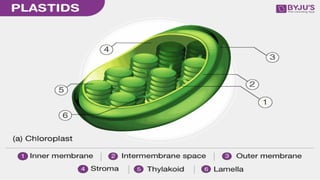
Plastids
• Energy- producing organelle in plant
cells.
•Sites of photosynthesis- conversion of
light energy into chemical energy.
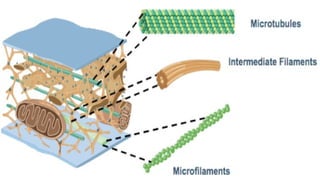
Cytoskeleton
• Three types of cytoskeletal fibers: microtubules,
microfilaments, intermediate filaments.
• Serve to strengthen, support, and stiffen the cell and
give the cell its shape.
• Microtubules and microfilaments are essential for
cell division, contraction, motility, and the movement
of chromosomes within the cell.
• Microtubules are composed of spherical protein
subunits called tubulins.
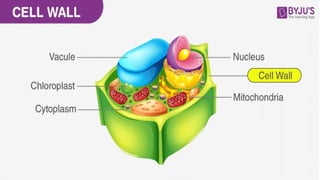
Cell Wall
• External structure that provides rigidity, shape, and
protection.
• Simpler in structure in eukaryotic cells and may
contain cellulose, pectin, lignin, chitin, and some
mineral salts.
• Cell walls of algae and plants – contain a
polysaccharide, cellulose.
• Cell walls of fungi – contain a polysaccharide, chitin.
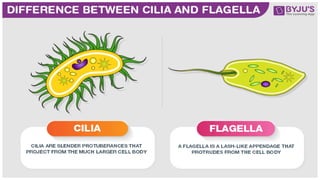
Flagella & Cilia
a.Flagella – responsible for
motility
b.Cilia – are also organelles of
locomotion.
c.Eukaryotic flagella and cilia are
structurally more complex than
bacterial flagella.
C. Procaryotes
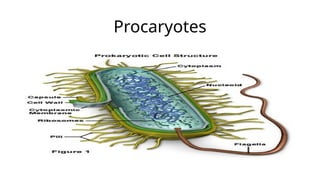
Procaryotes
•From a Greek word meaning
“prenucleus”.
•Are about 10 times smaller than
Eukaryotes.
•Possess no membranes other than
the cell membrane that encloses the
cytoplasm.
Procaryotes
Binary Fission
The parent cell (one cell) in half to
become two daughter cells. DNA

replication (duplication of
chromosomes) must occur prior to the
actual splitting of the parent cell so
that each daughter cell will possess the
same genetic information as the
parent cell.
Procaryotic
Cell Membrane
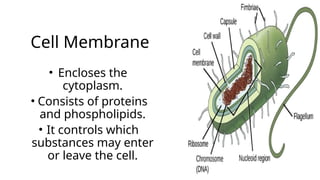
Cell Membrane
• Encloses the
cytoplasm.
• Consists of proteins
and phospholipids.
• It controls which
substances may enter
or leave the cell.
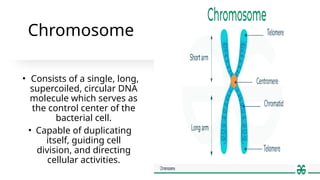
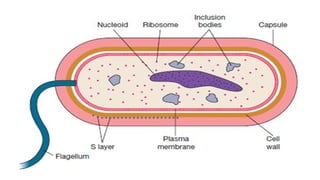
Chromosome
• Consists of a single, long,
supercoiled, circular DNA
molecule which serves as
the control center of the
bacterial cell.
• Capable of duplicating
itself, guiding cell
division, and directing
cellular activities.
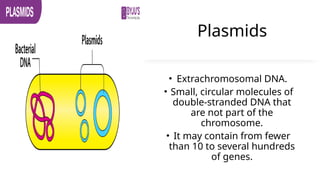
Plasmids
• Extrachromosomal DNA.
• Small, circular molecules of
double-stranded DNA that
are not part of the
chromosome.
• It may contain from fewer
than 10 to several hundreds
of genes.
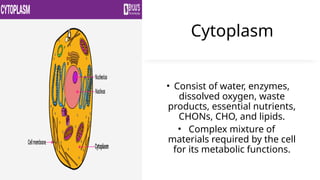
Cytoplasm
• Consist of water, enzymes,
dissolved oxygen, waste
products, essential nutrients,
CHONs, CHO, and lipids.
• Complex mixture of
materials required by the cell
for its metabolic functions.
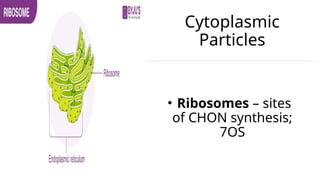
Cytoplasmic
Particles
• Ribosomes – sites
of CHON synthesis;
7OS
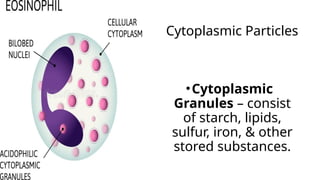
Cytoplasmic Particles
•Cytoplasmic
Granules – consist
of starch, lipids,
sulfur, iron, & other
stored substances.
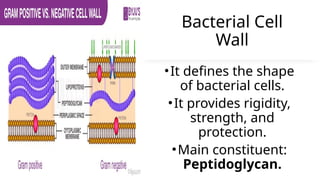
Bacterial Cell
Wall
•It defines the shape
of bacterial cells.
•It provides rigidity,
strength, and
protection.
•Main constituent:
Peptidoglycan.
Bacterial Cell Wall
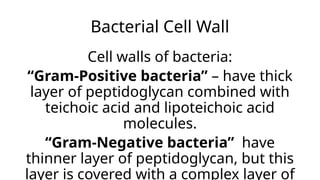
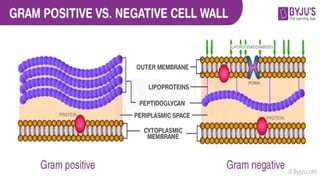
Cell walls of bacteria:
“Gram-Positive bacteria” – have thick
layer of peptidoglycan combined with
teichoic acid and lipoteichoic acid
molecules.
“Gram-Negative bacteria” have
thinner layer of peptidoglycan, but this
layer is covered with a complex layer of
Bacterial Cell
Wall
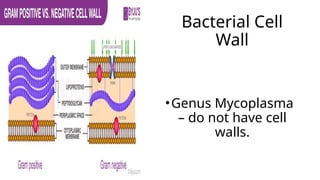
•Genus Mycoplasma
– do not have cell
walls.
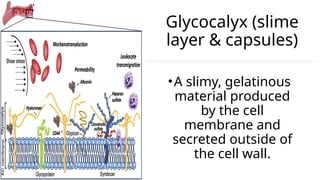
Glycocalyx (slime
layer & capsules)
•A slimy, gelatinous
material produced
by the cell
membrane and
secreted outside of
the cell wall.
Glycocalyx (slime layer & capsules)
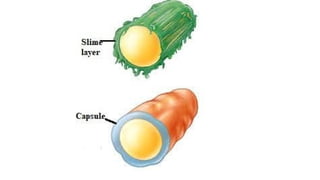
A. Slime Layer- is not highly organized
and is not firmly attached to the cell
wall.
- enable certain bacteria to glide or
slide along solid surfaces.
ex: Pseudomonas sp. – produce a slime
layer that plays a role in the disease
that it cause.
Glycocalyx (slime layer & capsules)
B. Capsule – is highly organized and firmly attached
to the cell wall.
- Consist of polysaccharides, which may be combined
with lipids and proteins, depending on the bacterial
species.
ex: H. influenza, K. pneumonia, N. meningitides, S.
pneumonia.
- capsules serve an antiphagocytic function.
- can be detected using a negative stain whereby the
bacterial cell and background become stained.
Flagella
- Are thread-like protein (flagellin)
appendages that enable bacteria to move
(motile).
The number and arrangement of flagella
can be used for classification and
identification purposes.
ex: Salmonella sp.
Flagella
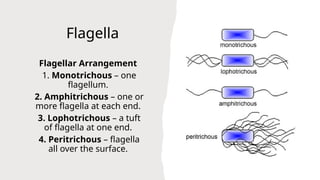
Flagellar Arrangement
1. Monotrichous – one
flagellum.
2. Amphitrichous – one or
more flagella at each end.
3. Lophotrichous – a tuft
of flagella at one end.
4. Peritrichous – flagella
all over the surface.
Flagella
Test for motility:
a. Wet mount and Hanging drop method –
differentiates true motility from Brownian
movement.
b. growth in a semi-solid medium
Motile- growth of bacteria is away from the
inoculation line.
Non- Motile – growth of bacteria is confined
along the inoculation line.
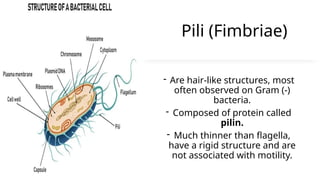
Pili (Fimbriae)
- Are hair-like structures, most
often observed on Gram (-)
bacteria.
- Composed of protein called
pilin.
- Much thinner than flagella,
have a rigid structure and are
not associated with motility.
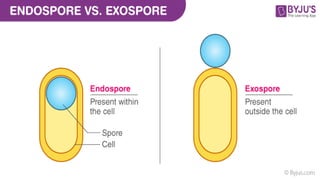
Spores (Endospores)
•Sporulation- process of spore formation-
resistant to heat, cold, drying and most
chemicals.
•When dried spore lands on a moist,
nutrient-rich surface, it germinates, and a
new vegetative bacterial cell emerges.
ex: Bacillus sp., Clostridium sp.
Spores (Endospores)
Location of spores within the cell:
a. Central – spore is produced at the
center of cell.
b. Terminal – spore is produced at the
very end of cell.
c. Subterminal - spore is produced
elsewhere in the cell.
Spores (Endospores)
Location of spores within the cell:
a. Central – spore is produced at the
center of cell.
b. Terminal – spore is produced at the
very end of cell.
c. Subterminal - spore is produced
elsewhere in the cell.
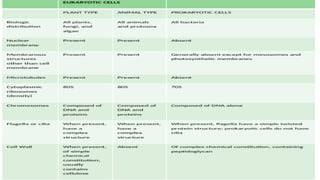
D. Comparison
Between Eucaryotic
and Procaryotic Cells
E. Prokaryotic Cell
Reproduction
Prokaryotic Cell Reproduction
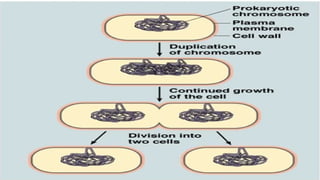
•Prokaryotic cells reproduce by binary
fission.
• One cell (parent cell) splits into half to
become two daughter cells.
• Before a prokaryotic cell can divide into
half, its chromosomes must be
duplicated.
• Generation time- varies from one
F. Eukaryotic Cell
Reproduction
Eukaryotic Cell Reproduction
• Eukaryotic cell reproduce in a process
called mitosis.
•Mitosis the type of division that gives rise
to daughter cells for the purpose of tissue
growth, regeneration or asexual
(vegetative) reproduction.
G. Taxonomy
Taxonomy
• Taxonomy is the science of classification
of living organism.
Consists of 3 but interrelated areas:
1. Classification- arrangement of
organisms into taxonomic groups
(taxa).
2. Nomenclature- assignment of names.
3. Identification- process of determining
H. Microbial
Classification
Microbial
Classification
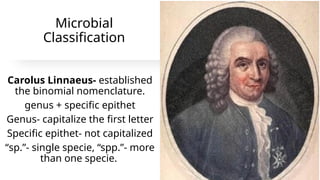
Carolus Linnaeus- established
the binomial nomenclature.
genus + specific epithet
Genus- capitalize the first letter
Specific epithet- not capitalized
“sp.”- single specie, “spp.”- more
than one specie.
I. Taxonomic
Hierarchies
Taxonomic Hierarchies
• Species- group of related organism/strains
• Genus- collection of related species
• Family- collection of similar genera
• Order- collection of similar families
• Class- collection of similar orders
• Phylum/Division- collection of similar classes
• Kingdom- collection of similar phyla/divisions
• Domain- collection of similar kingdoms
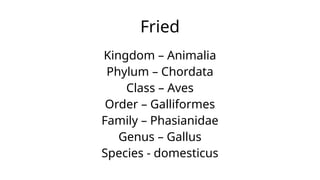
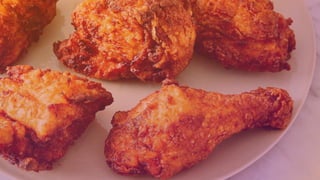
Fried
Kingdom – Animalia
Phylum – Chordata
Class – Aves
Order – Galliformes
Family – Phasianidae
Genus – Gallus
Species - domesticus
Ensalada Solanum melongena
with Mangifera indica.
BAHAY KUBO
Bahay-kubo, kahit munti
Ang halaman doon ay sari-sari
Pachyrhizus erasus at Solanum melongena Psophocarpus
tetragonolobus at Arachis hypogaea Vigna unguiculata spp.
sesquipedalis, purpureus), Phaseolus lunatus Benincasa hispida
, Luffa acutangula, Lagenaria sinceraria Cucurbita maxima At tsaka
mayro’n pang Raphanus sativus, Brassica juncea Allium cepa,
Lycopercum esculentum, Allium sativum at Zingiber officinale
Sa paligid-ligid ay puno ng Sesamum indicum
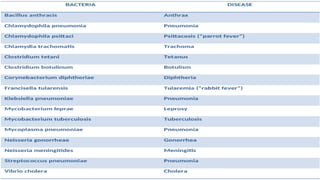
J. Examples of
Bacteria Named after
the Diseases That
Taxonomic Hierarchies
K. The 5 Kingdom
Classifications
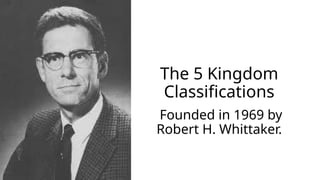
The 5 Kingdom
Classifications
Founded in 1969 by
Robert H. Whittaker.
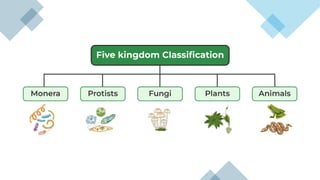
The 5 Kingdom Classifications
• Bacteria and archaeans are in the Kingdom Prokaryotes (or
Monera).
• Algae and Protozoa are in the Kingdom Protista (organisms
in this kingdom are reffered to as protists).
• Fungi are in the Kingdom Fungi.
• Plants are in the Kingdom Plantae.
• Animals are in the Kingdom Animalia.
• Viruses are not included in the Five-Kingdom System of
Classification because they are acellular.
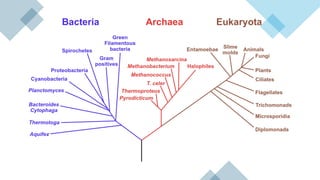
Modern Classifications
• In 1978, Carl R. Woese proposed
elevating the three cell types to a level
above kingdom, called DOMAIN.
Cells are classified into three types:
1. ARCHAEBACTERIA
2. EUBACTERIA
3. EUKARYA
Let’s
Recap!
•Structural Differences
•Prokaryotic cells are simpler and smaller than
eukaryotic cells, lacking a nucleus and membrane-
bound organelles.
•Eukaryotic cells have a complex structure with a
true nucleus and various organelles performing
specific functions.
•Reproduction Methods
•Prokaryotic cells reproduce quickly through
binary fission.
•Eukaryotic cells can reproduce both asexually
(mitosis) and sexually (meiosis), allowing for
genetic diversity.
•Taxonomy Principles
•The hierarchical system of classification helps in
organizing and understanding the relationships
among different organisms.
•Accurate identification and naming are crucial for
the study and communication of biological
research.
Chapter III Cell Structure and Taxonomy.pptx

Chapter III Cell Structure and Taxonomy.pptx

  • 1.
    Chapter III : CellStructure and Taxonomy REGIE L. MAGALLANES, LPT, M.ED Microbiology and Parasitology - Instructor
  • 2.
    At the endof the unit, the student should be able to: 1. Describe the parts and functions of eukaryotic and prokaryotic cells. 2. Differentiate the contributions of Hooke, Schleiden and Schwann, and Virchow to the study of cells. 3. Compare and contrast animal and bacterial cells.
  • 3.
  • 4.
  • 5.
    Cell • is definedas the fundamental unit of any living organism. • exhibits the basic characteristics of life.
  • 6.
    Cell • It obtainsfood (nutrients) from the environment to produce energy for metabolism and other activities.
  • 7.
  • 8.
    Prokaryot es • Do nothave complex system of membranes and organelles • Bacteria
  • 9.
    Eukaryote s • More complexcells, containing true nucleus and many membrane bound organelles. • Algae, Protozoa, fungi, plants, animals, and humans
  • 10.
    Metabolism • Refers toall the chemical reactions that occur within a cell. Importance of metabolism – growth, reproduction, and irritability
  • 11.
  • 12.
  • 13.
  • 14.
    Eucaryotes • From aGreek word meaning “true nucleus”. •DNA is enclosed by a nuclear membrane. •Eucaryotic cells reproduce either by mitosis or meiosis.
  • 15.
    Mitosis •Refers to nucleardivision – the equal division of one nucleus into two genetically identical Nuclei. •Chromosomes are copied and allocated equally two daughter cells. •The genosomes of the offspring are identical to the parent’s genome. •Either haploid or diploid cells can divide
  • 17.
    Meiosis •Two parents giverise to offspring that have unique combinations of genes inherited from both parents. •Only diploid cells can undergo meiosis. •Diploid cells are changed into haploid cells. Ex: Human diploid cells – 46 chromosomes Human haploid cells – 23
  • 19.
  • 20.
    Cell Membrane • Islike a “skin” around the cell, separating the contents of the cell from the outside world. •Regulates the passage of nutrients, waste products, and secretions into and out of the cell. – selective permeability. (only certain substances may enter and leave the cell)
  • 22.
    Nucleus • “Command center”of the cell because it unifies, controls, and integrates the functions of the entire cell. Three components: Nucleoplasms, Chromosomes, Nuclear membrane a. Nucleoplasm – a type of protoplasm that is the gelatinous matrix or base material of the nucleus. b. Chromosomes – are embedded or suspended in the nucleoplasm. c. Nuclear membrane – the “skin” around the nucleus; it contains holes (nuclear pores) through which large molecules can enter the nucleus.
  • 24.
    Nucleolus •Where rRNA moleculesare manufactured. •The rRNA molecules then become part of the structure of ribosomes.
  • 26.
    Cytoplasm •It is wheremost of the cell’s metabolic reactions occur. •Where we can find insoluble storage granules and cytoplasmic organelles (ER, ribosomes, golgi complex, mitochondria, centrioles, etc.)
  • 28.
    Endoplasmic Reticulum • isa highly convulated system of membranes that are interconnected and arranged to form a transport network of tubules and flatened sacs within the cytoplasm.
  • 30.
    Ribosomes • Consist mainlyof ribosomal RNA (rRNA) and protein. • Plays an important role in the synthesis (manufacture) of essential proteins. • Two subunits: 60S subunit & 40S subunit. – produced in the nucleus. • The subunits are then transported to the cytoplasm where they remain separate until such time as they join together with a messenger RNA (mRNA) molecule to initiate protein synthesis. When united, the 60S and 40S form an 80S ribosome.
  • 32.
    Golgi Complex •Connects orcommunicate with ER. •It completes the transformation of newly synthesized CHONs into mature functional ones and packages them into vesicles for storage within the cell or export outside the cell. •Referred to as “packaging plants”.
  • 34.
    Lysosomes •Small vesicle thatoriginate at the GC. They contain lysozyme that breakdown foreign material taken into the cell by phagocytosis. •Lysozyme also aid in breaking down worn out parts of the cell and may destroy the entire cell by autolysis.
  • 36.
    Peroxisomes •It is wherehydrogen peroxide is both generated and broken down. •It contains the enzyme catalase which catalyzes the breakdown of H2O2 into H2O and O2.
  • 38.
    Mitochondria • “Power plants”; “Power houses” or “Energy factories”. •It is where most of the ATP molecules are formed by cellular respiration. ATP- Adenosine Triphosphate (energy necessary for cellular function.
  • 40.
    Plastids • Energy- producingorganelle in plant cells. •Sites of photosynthesis- conversion of light energy into chemical energy.
  • 42.
    Cytoskeleton • Three typesof cytoskeletal fibers: microtubules, microfilaments, intermediate filaments. • Serve to strengthen, support, and stiffen the cell and give the cell its shape. • Microtubules and microfilaments are essential for cell division, contraction, motility, and the movement of chromosomes within the cell. • Microtubules are composed of spherical protein subunits called tubulins.
  • 44.
    Cell Wall • Externalstructure that provides rigidity, shape, and protection. • Simpler in structure in eukaryotic cells and may contain cellulose, pectin, lignin, chitin, and some mineral salts. • Cell walls of algae and plants – contain a polysaccharide, cellulose. • Cell walls of fungi – contain a polysaccharide, chitin.
  • 46.
    Flagella & Cilia a.Flagella– responsible for motility b.Cilia – are also organelles of locomotion. c.Eukaryotic flagella and cilia are structurally more complex than bacterial flagella.
  • 48.
  • 49.
    Procaryotes •From a Greekword meaning “prenucleus”. •Are about 10 times smaller than Eukaryotes. •Possess no membranes other than the cell membrane that encloses the cytoplasm.
  • 50.
  • 51.
    Binary Fission The parentcell (one cell) in half to become two daughter cells. DNA replication (duplication of chromosomes) must occur prior to the actual splitting of the parent cell so that each daughter cell will possess the same genetic information as the parent cell.
  • 53.
  • 54.
    Cell Membrane • Enclosesthe cytoplasm. • Consists of proteins and phospholipids. • It controls which substances may enter or leave the cell.
  • 55.
    Chromosome • Consists ofa single, long, supercoiled, circular DNA molecule which serves as the control center of the bacterial cell. • Capable of duplicating itself, guiding cell division, and directing cellular activities.
  • 56.
    Plasmids • Extrachromosomal DNA. •Small, circular molecules of double-stranded DNA that are not part of the chromosome. • It may contain from fewer than 10 to several hundreds of genes.
  • 57.
    Cytoplasm • Consist ofwater, enzymes, dissolved oxygen, waste products, essential nutrients, CHONs, CHO, and lipids. • Complex mixture of materials required by the cell for its metabolic functions.
  • 58.
    Cytoplasmic Particles • Ribosomes –sites of CHON synthesis; 7OS
  • 59.
    Cytoplasmic Particles •Cytoplasmic Granules –consist of starch, lipids, sulfur, iron, & other stored substances.
  • 60.
    Bacterial Cell Wall •It definesthe shape of bacterial cells. •It provides rigidity, strength, and protection. •Main constituent: Peptidoglycan.
  • 61.
    Bacterial Cell Wall Cellwalls of bacteria: “Gram-Positive bacteria” – have thick layer of peptidoglycan combined with teichoic acid and lipoteichoic acid molecules. “Gram-Negative bacteria” have thinner layer of peptidoglycan, but this layer is covered with a complex layer of
  • 63.
  • 64.
    Glycocalyx (slime layer &capsules) •A slimy, gelatinous material produced by the cell membrane and secreted outside of the cell wall.
  • 65.
    Glycocalyx (slime layer& capsules) A. Slime Layer- is not highly organized and is not firmly attached to the cell wall. - enable certain bacteria to glide or slide along solid surfaces. ex: Pseudomonas sp. – produce a slime layer that plays a role in the disease that it cause.
  • 67.
    Glycocalyx (slime layer& capsules) B. Capsule – is highly organized and firmly attached to the cell wall. - Consist of polysaccharides, which may be combined with lipids and proteins, depending on the bacterial species. ex: H. influenza, K. pneumonia, N. meningitides, S. pneumonia. - capsules serve an antiphagocytic function. - can be detected using a negative stain whereby the bacterial cell and background become stained.
  • 69.
    Flagella - Are thread-likeprotein (flagellin) appendages that enable bacteria to move (motile). The number and arrangement of flagella can be used for classification and identification purposes. ex: Salmonella sp.
  • 70.
    Flagella Flagellar Arrangement 1. Monotrichous– one flagellum. 2. Amphitrichous – one or more flagella at each end. 3. Lophotrichous – a tuft of flagella at one end. 4. Peritrichous – flagella all over the surface.
  • 71.
    Flagella Test for motility: a.Wet mount and Hanging drop method – differentiates true motility from Brownian movement. b. growth in a semi-solid medium Motile- growth of bacteria is away from the inoculation line. Non- Motile – growth of bacteria is confined along the inoculation line.
  • 72.
    Pili (Fimbriae) - Arehair-like structures, most often observed on Gram (-) bacteria. - Composed of protein called pilin. - Much thinner than flagella, have a rigid structure and are not associated with motility.
  • 73.
    Spores (Endospores) •Sporulation- processof spore formation- resistant to heat, cold, drying and most chemicals. •When dried spore lands on a moist, nutrient-rich surface, it germinates, and a new vegetative bacterial cell emerges. ex: Bacillus sp., Clostridium sp.
  • 75.
    Spores (Endospores) Location ofspores within the cell: a. Central – spore is produced at the center of cell. b. Terminal – spore is produced at the very end of cell. c. Subterminal - spore is produced elsewhere in the cell.
  • 76.
    Spores (Endospores) Location ofspores within the cell: a. Central – spore is produced at the center of cell. b. Terminal – spore is produced at the very end of cell. c. Subterminal - spore is produced elsewhere in the cell.
  • 77.
  • 79.
  • 81.
    Prokaryotic Cell Reproduction •Prokaryoticcells reproduce by binary fission. • One cell (parent cell) splits into half to become two daughter cells. • Before a prokaryotic cell can divide into half, its chromosomes must be duplicated. • Generation time- varies from one
  • 82.
  • 83.
    Eukaryotic Cell Reproduction •Eukaryotic cell reproduce in a process called mitosis. •Mitosis the type of division that gives rise to daughter cells for the purpose of tissue growth, regeneration or asexual (vegetative) reproduction.
  • 84.
  • 85.
    Taxonomy • Taxonomy isthe science of classification of living organism. Consists of 3 but interrelated areas: 1. Classification- arrangement of organisms into taxonomic groups (taxa). 2. Nomenclature- assignment of names. 3. Identification- process of determining
  • 86.
  • 87.
    Microbial Classification Carolus Linnaeus- established thebinomial nomenclature. genus + specific epithet Genus- capitalize the first letter Specific epithet- not capitalized “sp.”- single specie, “spp.”- more than one specie.
  • 88.
  • 89.
    Taxonomic Hierarchies • Species-group of related organism/strains • Genus- collection of related species • Family- collection of similar genera • Order- collection of similar families • Class- collection of similar orders • Phylum/Division- collection of similar classes • Kingdom- collection of similar phyla/divisions • Domain- collection of similar kingdoms
  • 90.
    Fried Kingdom – Animalia Phylum– Chordata Class – Aves Order – Galliformes Family – Phasianidae Genus – Gallus Species - domesticus
  • 92.
  • 94.
    BAHAY KUBO Bahay-kubo, kahitmunti Ang halaman doon ay sari-sari Pachyrhizus erasus at Solanum melongena Psophocarpus tetragonolobus at Arachis hypogaea Vigna unguiculata spp. sesquipedalis, purpureus), Phaseolus lunatus Benincasa hispida , Luffa acutangula, Lagenaria sinceraria Cucurbita maxima At tsaka mayro’n pang Raphanus sativus, Brassica juncea Allium cepa, Lycopercum esculentum, Allium sativum at Zingiber officinale Sa paligid-ligid ay puno ng Sesamum indicum
  • 95.
    J. Examples of BacteriaNamed after the Diseases That
  • 96.
  • 97.
    K. The 5Kingdom Classifications
  • 98.
    The 5 Kingdom Classifications Foundedin 1969 by Robert H. Whittaker.
  • 99.
    The 5 KingdomClassifications • Bacteria and archaeans are in the Kingdom Prokaryotes (or Monera). • Algae and Protozoa are in the Kingdom Protista (organisms in this kingdom are reffered to as protists). • Fungi are in the Kingdom Fungi. • Plants are in the Kingdom Plantae. • Animals are in the Kingdom Animalia. • Viruses are not included in the Five-Kingdom System of Classification because they are acellular.
  • 101.
    Modern Classifications • In1978, Carl R. Woese proposed elevating the three cell types to a level above kingdom, called DOMAIN. Cells are classified into three types: 1. ARCHAEBACTERIA 2. EUBACTERIA 3. EUKARYA
  • 103.
  • 104.
    •Structural Differences •Prokaryotic cellsare simpler and smaller than eukaryotic cells, lacking a nucleus and membrane- bound organelles. •Eukaryotic cells have a complex structure with a true nucleus and various organelles performing specific functions.
  • 105.
    •Reproduction Methods •Prokaryotic cellsreproduce quickly through binary fission. •Eukaryotic cells can reproduce both asexually (mitosis) and sexually (meiosis), allowing for genetic diversity.
  • 106.
    •Taxonomy Principles •The hierarchicalsystem of classification helps in organizing and understanding the relationships among different organisms. •Accurate identification and naming are crucial for the study and communication of biological research.