JOURNAL 
Symbolic Interactionists (p. 251) contend 
that a person is socialized to accept that 
social class is a result of hard work, talent 
and effort. Do you agree? Explain your 
answer. 
SOCIAL 
STRATIFICATION AND 
SOCIAL CLASS 
Chapter 8 Section 1 & 2
Social Stratification and Social 
Class 
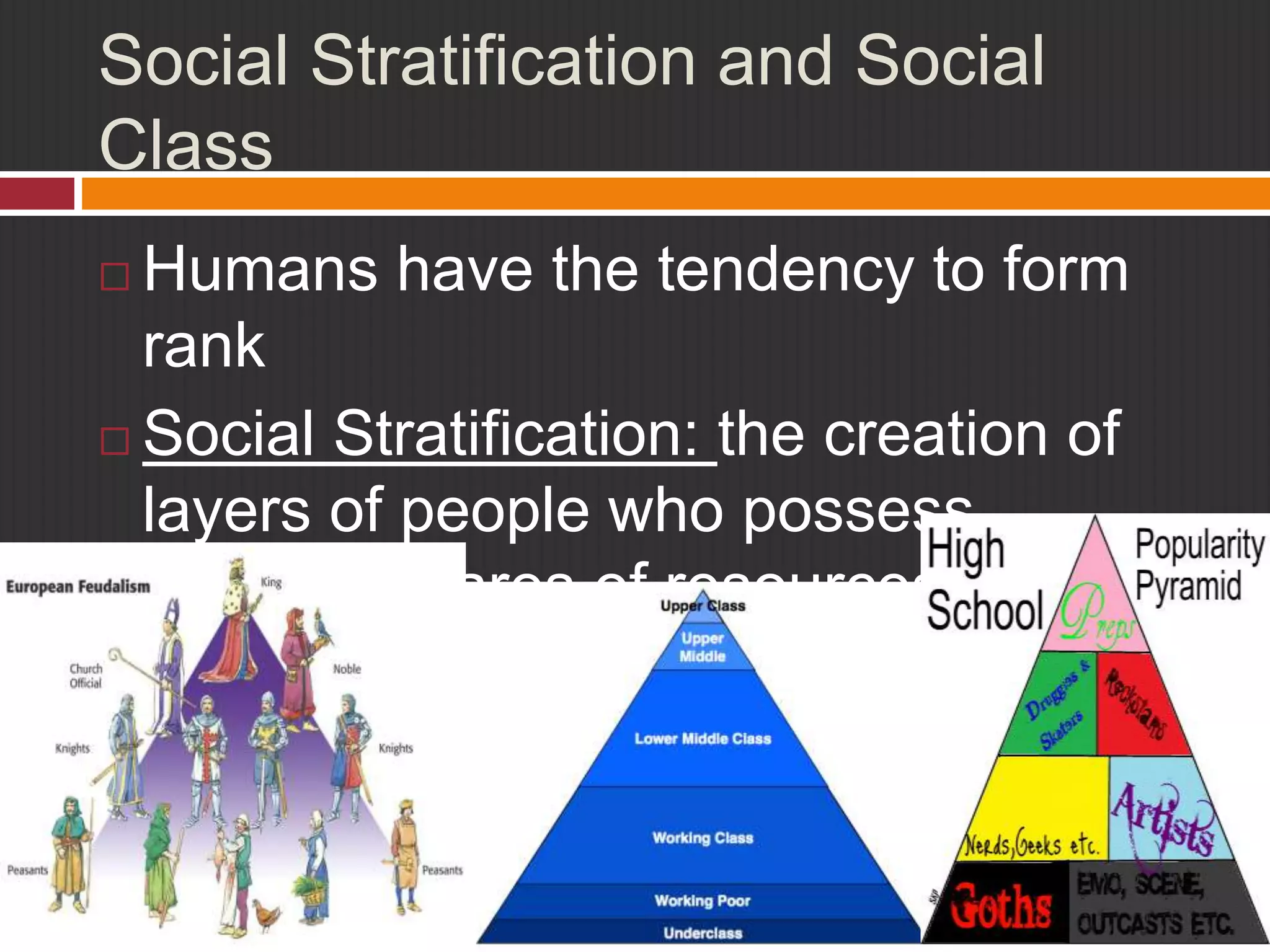
 Humans have the tendency to form 
rank 
 Social Stratification: the creation of 
layers of people who possess 
unequal shares of resources.
Social Classes 
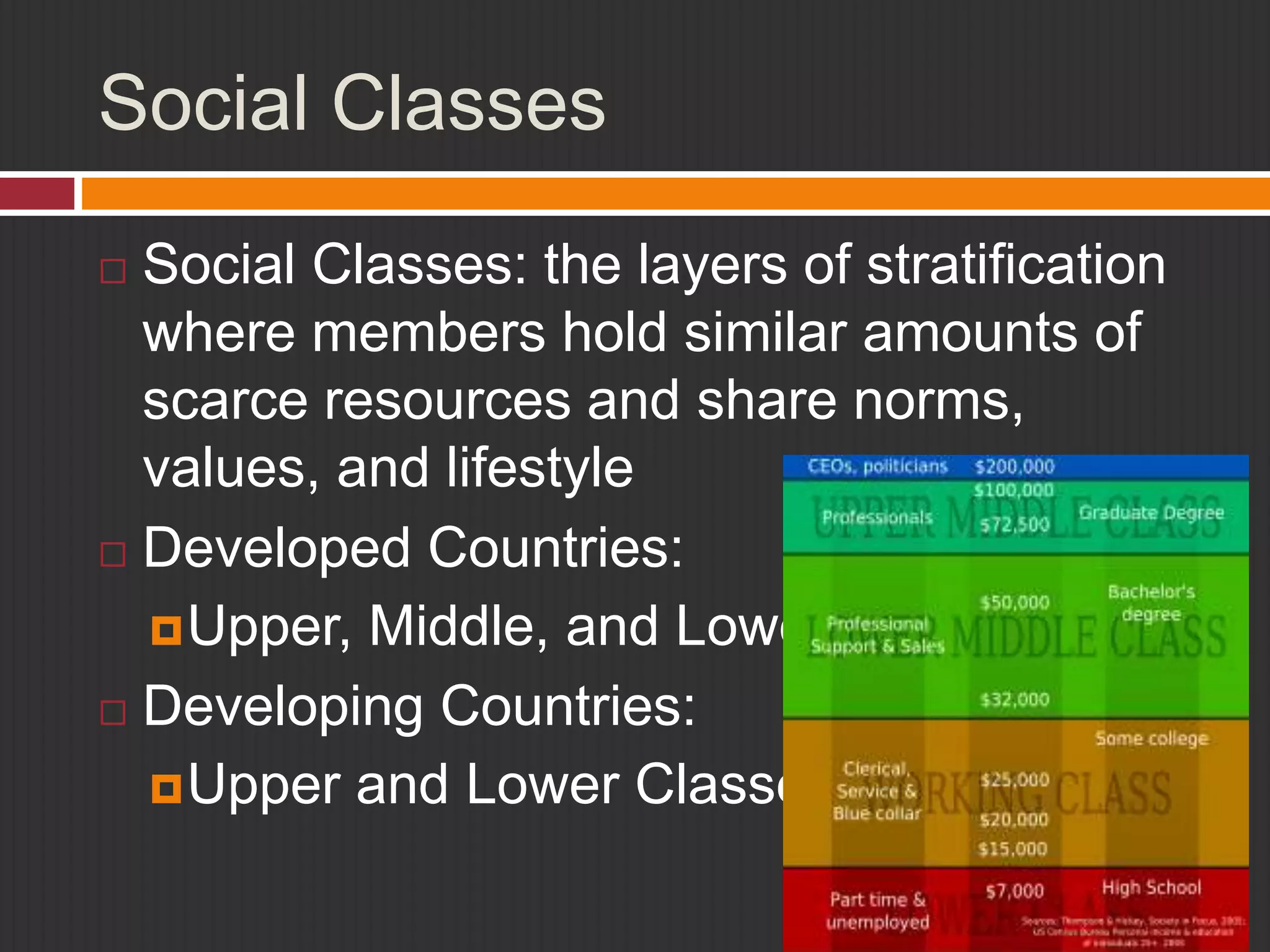
 Social Classes: the layers of stratification 
where members hold similar amounts of 
scarce resources and share norms, 
values, and lifestyle 
 Developed Countries: 
Upper, Middle, and Lower Classes 
 Developing Countries: 
Upper and Lower Classes
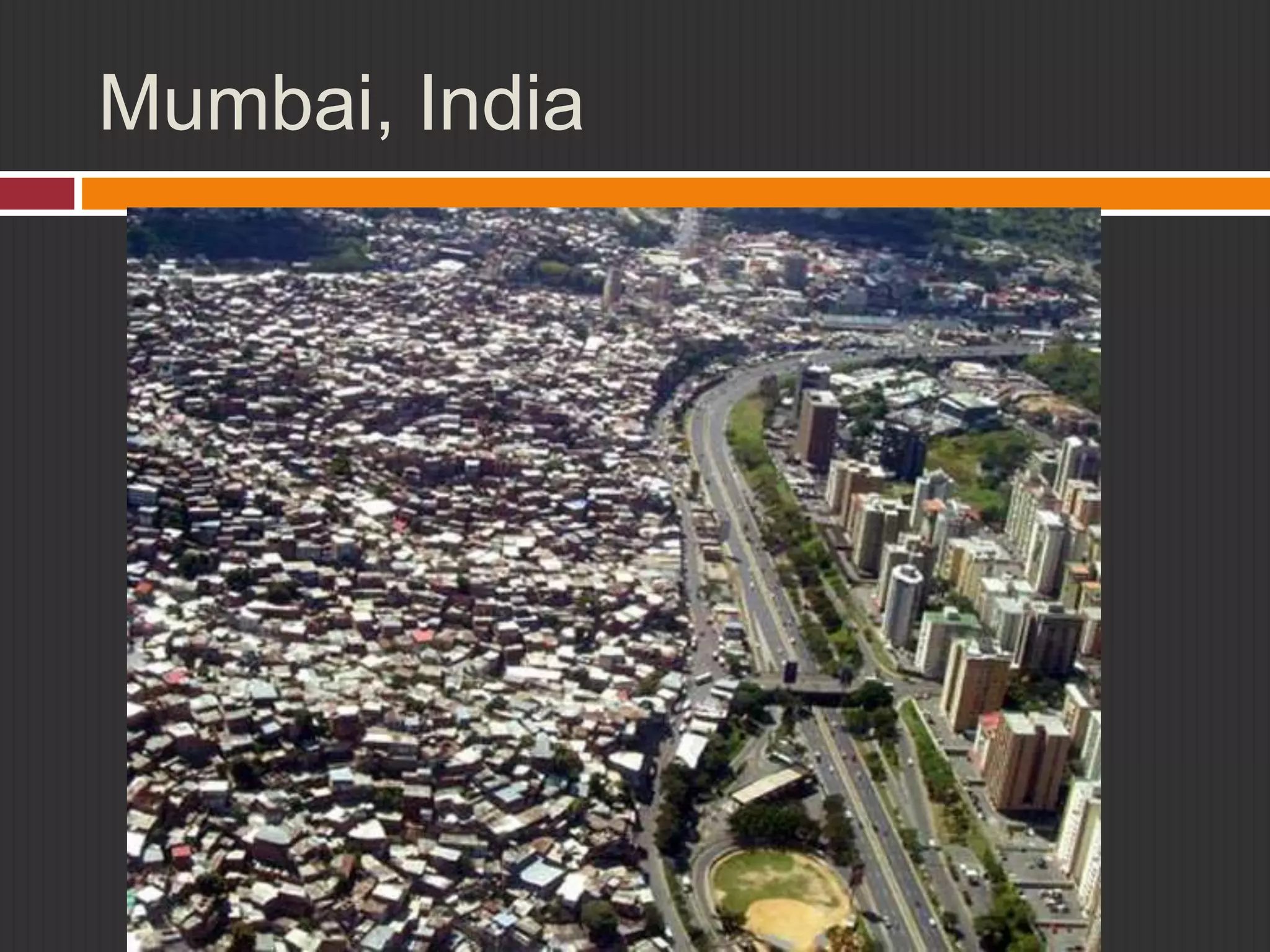
Mumbai, India
The Economic Dimension 
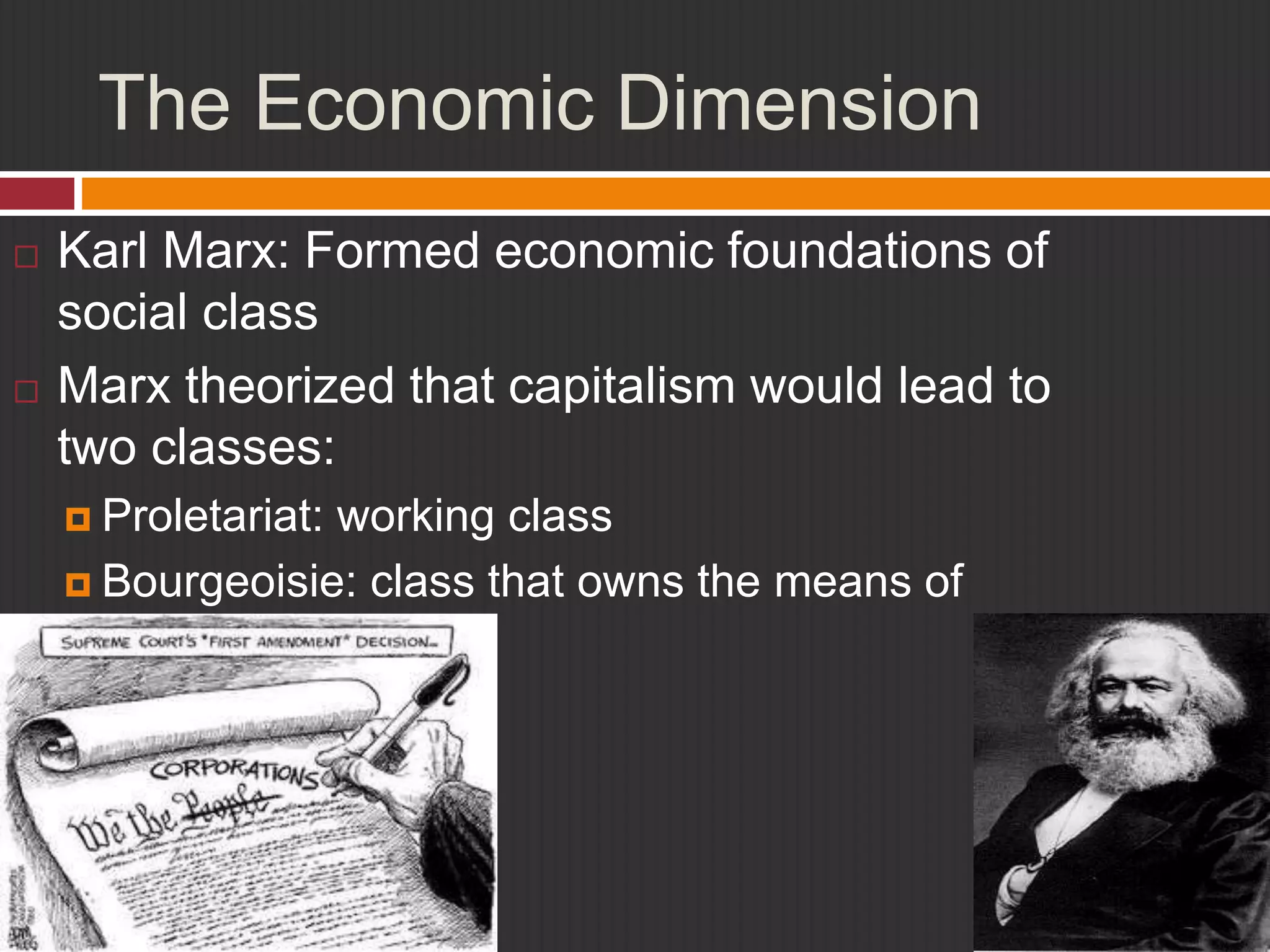
 Karl Marx: Formed economic foundations of 
social class 
 Marx theorized that capitalism would lead to 
two classes: 
 Proletariat: working class 
 Bourgeoisie: class that owns the means of 
production
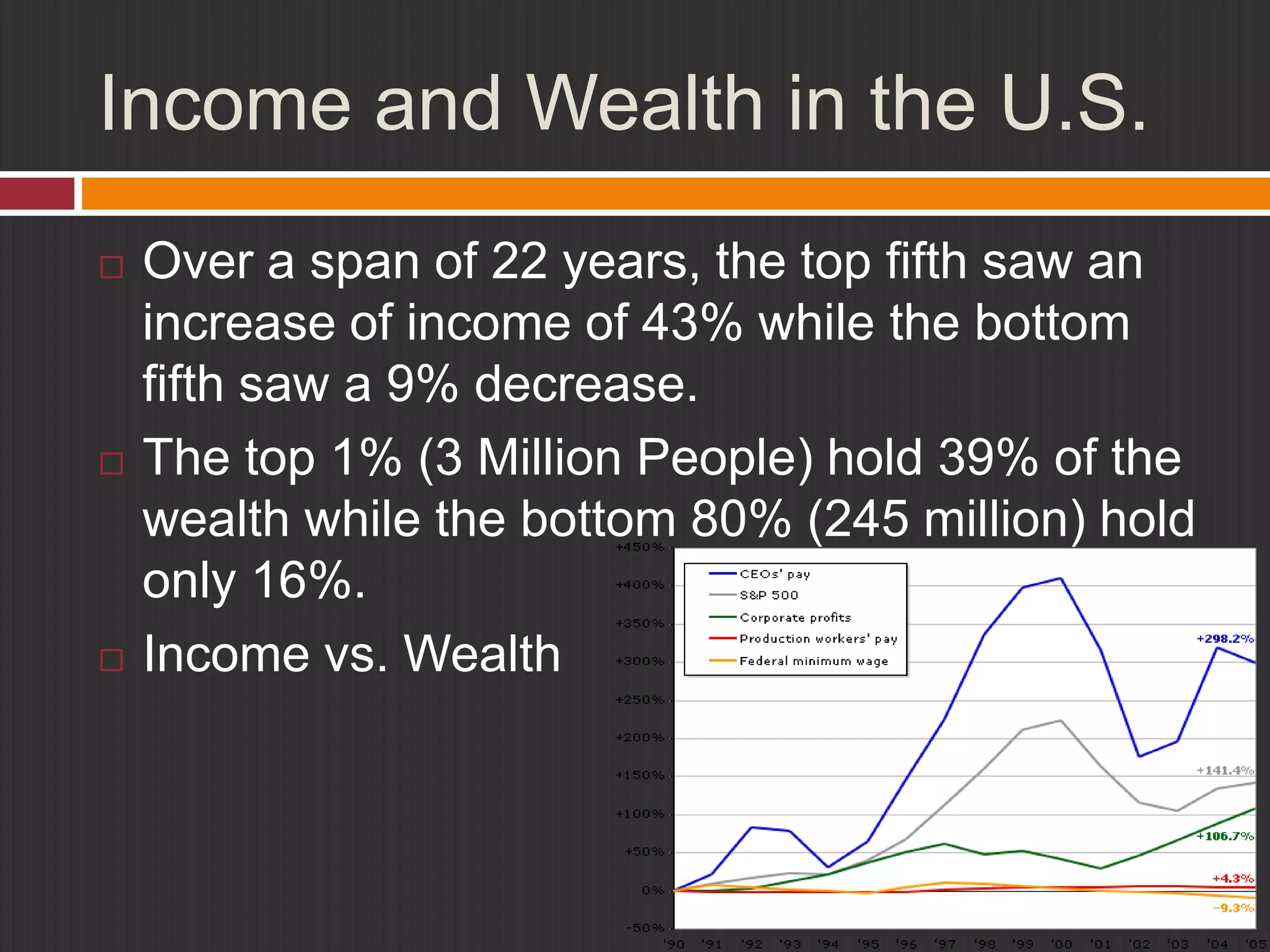
Income and Wealth in the U.S. 
 Over a span of 22 years, the top fifth saw an 
increase of income of 43% while the bottom 
fifth saw a 9% decrease. 
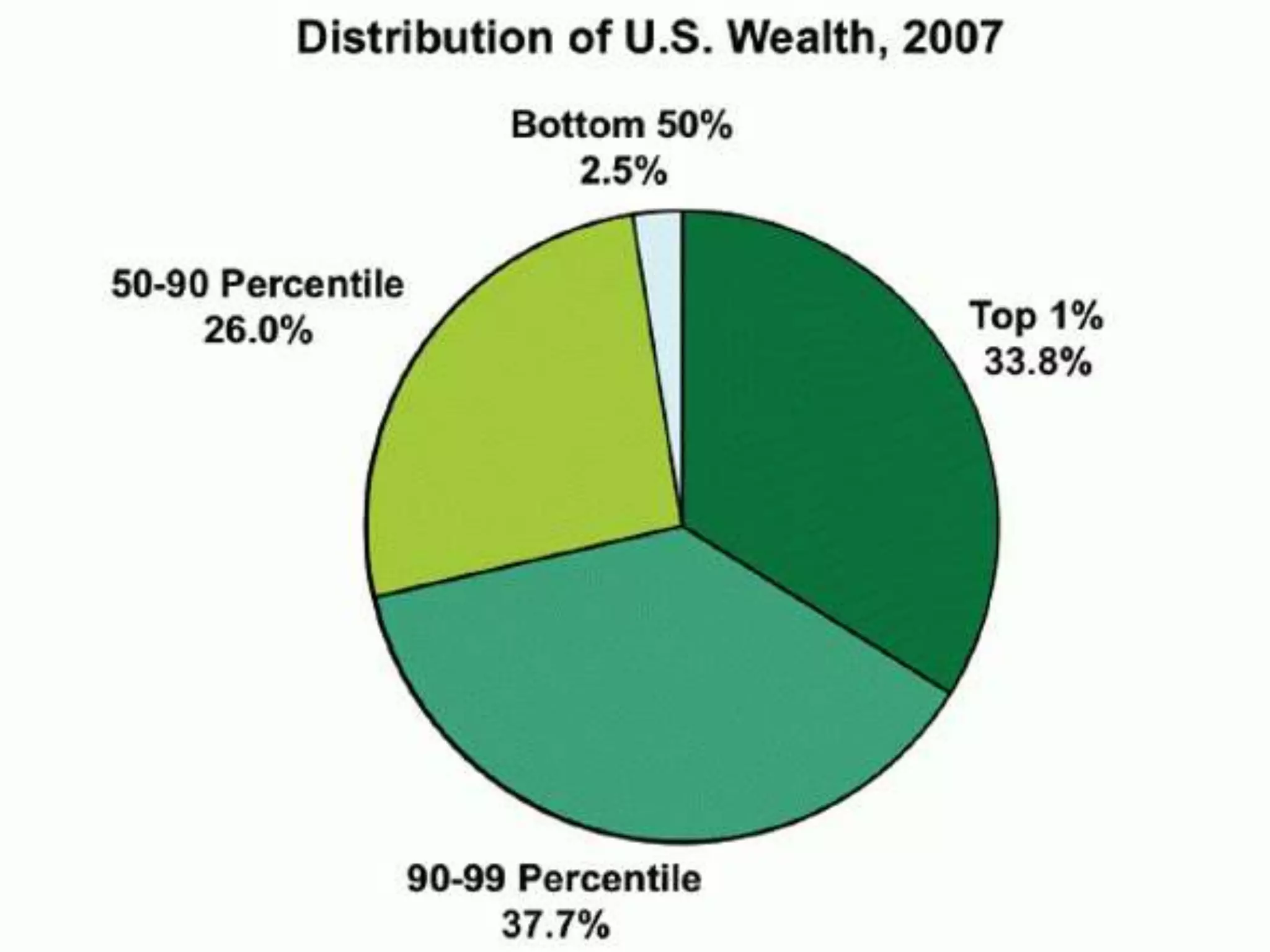
 The top 1% (3 Million People) hold 39% of the 
wealth while the bottom 80% (245 million) hold 
only 16%. 
 Income vs. Wealth
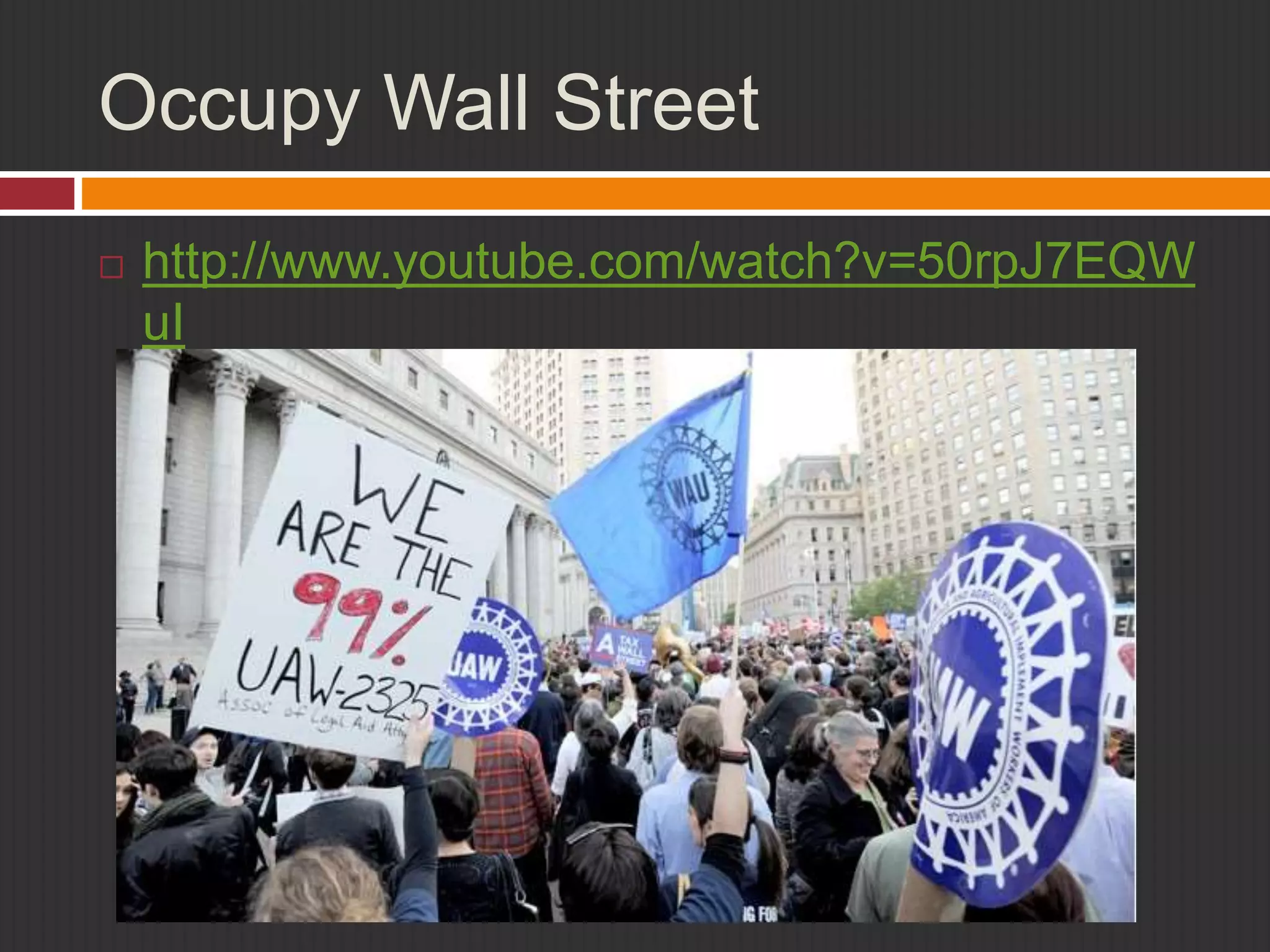
Occupy Wall Street 
 http://www.youtube.com/watch?v=50rpJ7EQW 
uI
Power Dimension 
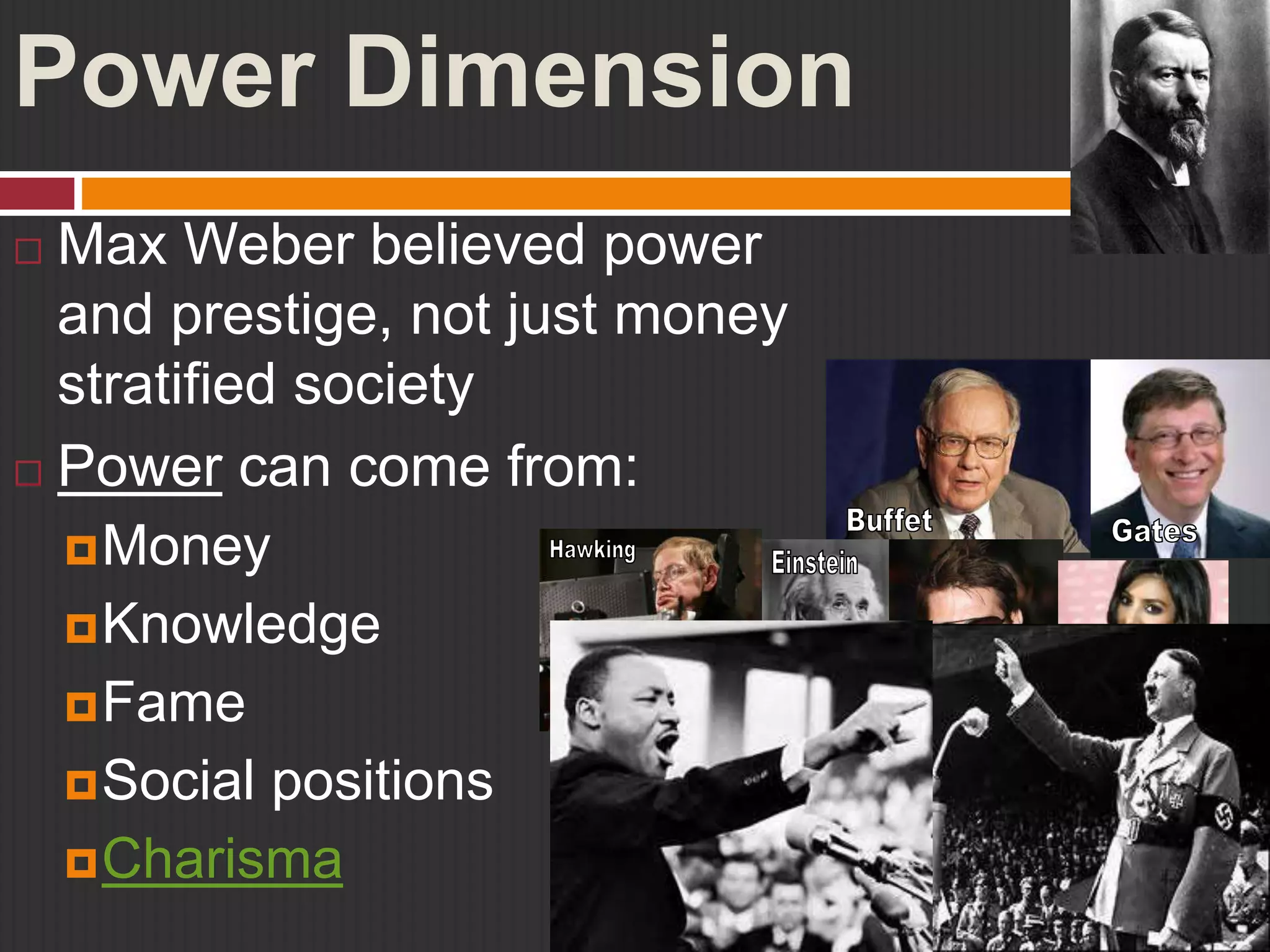
 Max Weber believed power 
and prestige, not just money 
stratified society 
 Power can come from: 
Money 
Knowledge 
Fame 
Social positions 
Charisma
Prestige Dimension 
Prestige: Recognition, respect, and 
admiration connected to social 
positions. 
Defined by the culture you are in 
Voluntarily given, not claimed 
Similar prestige=similar lifestyles 
Most important social positions are 
the most presigious
Explanations of Stratification 
Chapter 8 Section 2
Functionalist View 
 Most qualified people fill most 
important positions. 
 Some jobs are more important than 
others and require special skills. 
 Money and prestige are awarded for 
sacrifice
Conflict Theory View 
 Some people are willing to exploit 
others (Marx-exploiter & exploited) 
 Those in power are able to spread a 
belief system that legitimizes their 
position (Schools, Media) 
 Lower class accepts these ideas and 
values – False Consciousness
Symbolic Interactionism and 
Stratification 
 People are socialized to accept 
existing structure 
 Lower class-Lower self esteem 
System tells them that they are 
inferior 
 Upper class- Higher self esteem 
System tells them that they are 
superior
SOCIAL CLASSES IN 
AMERICA 
Chapter 8 Section 3
United States Social Classes 
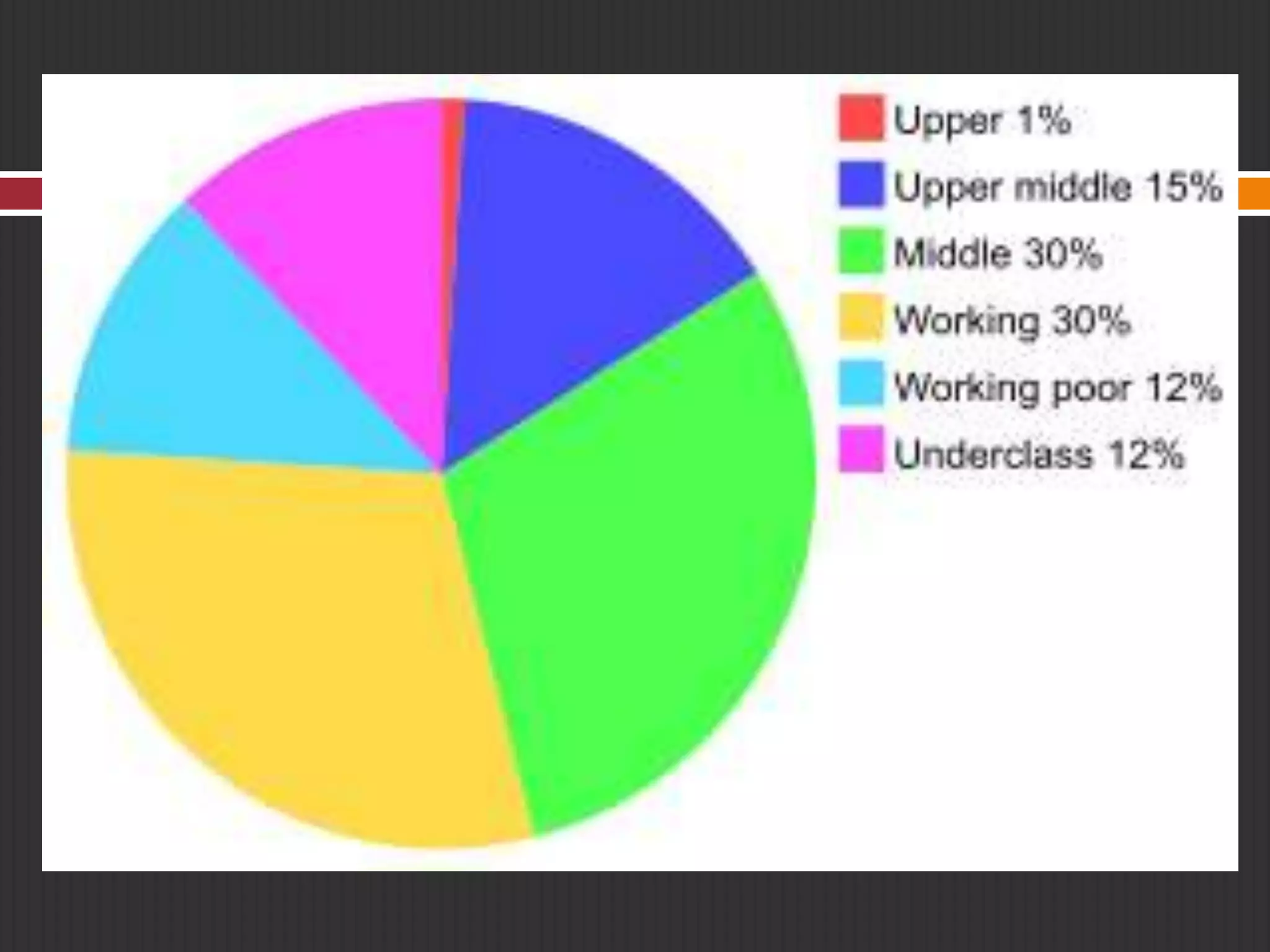
 6 typical social classes 
 Unlike in India, the United States never 
really developed class consciousness: 
identification with a particular social class. 
 Classes are subject to change 
Full of exceptions
The Upper Class 
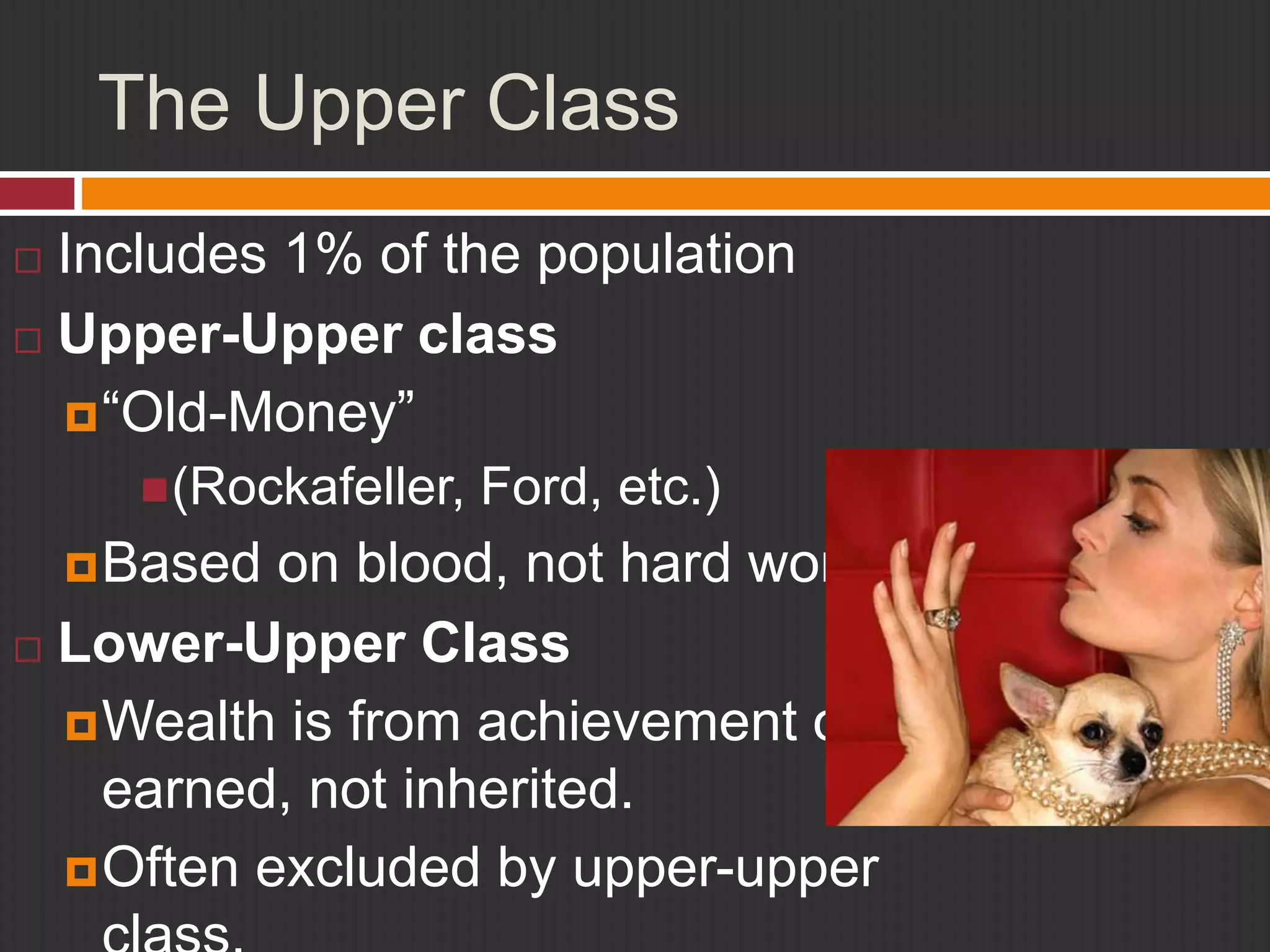
 Includes 1% of the population 
 Upper-Upper class 
“Old-Money” 
(Rockafeller, Ford, etc.) 
Based on blood, not hard work. 
 Lower-Upper Class 
Wealth is from achievement or 
earned, not inherited. 
Often excluded by upper-upper 
class.
The Upper Middle Class 
Upper Middle Class 
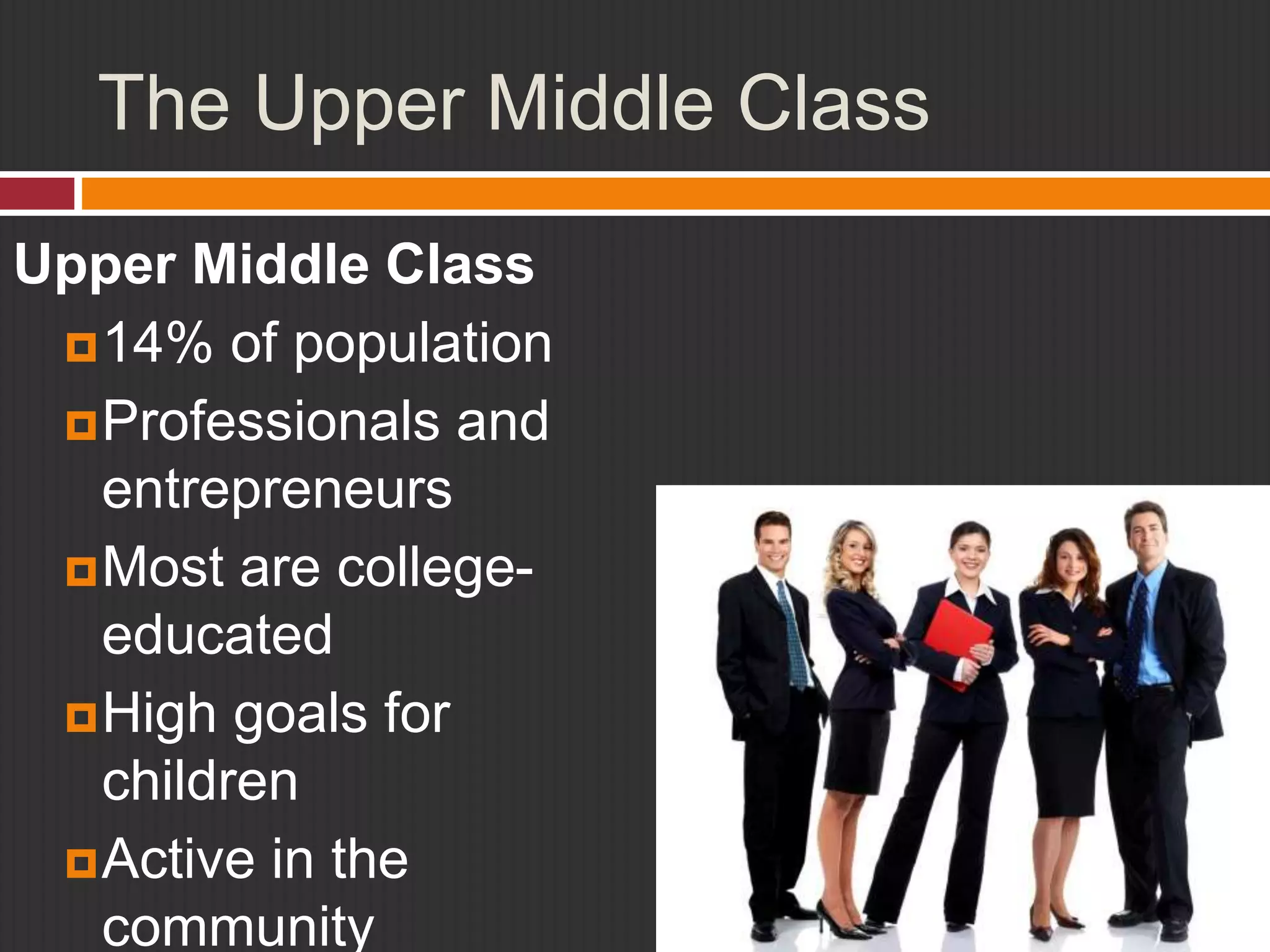
14% of population 
Professionals and 
entrepreneurs 
Most are college-educated 
High goals for 
children 
Active in the 
community
The Middle Class 
 Middle-Middle Class 
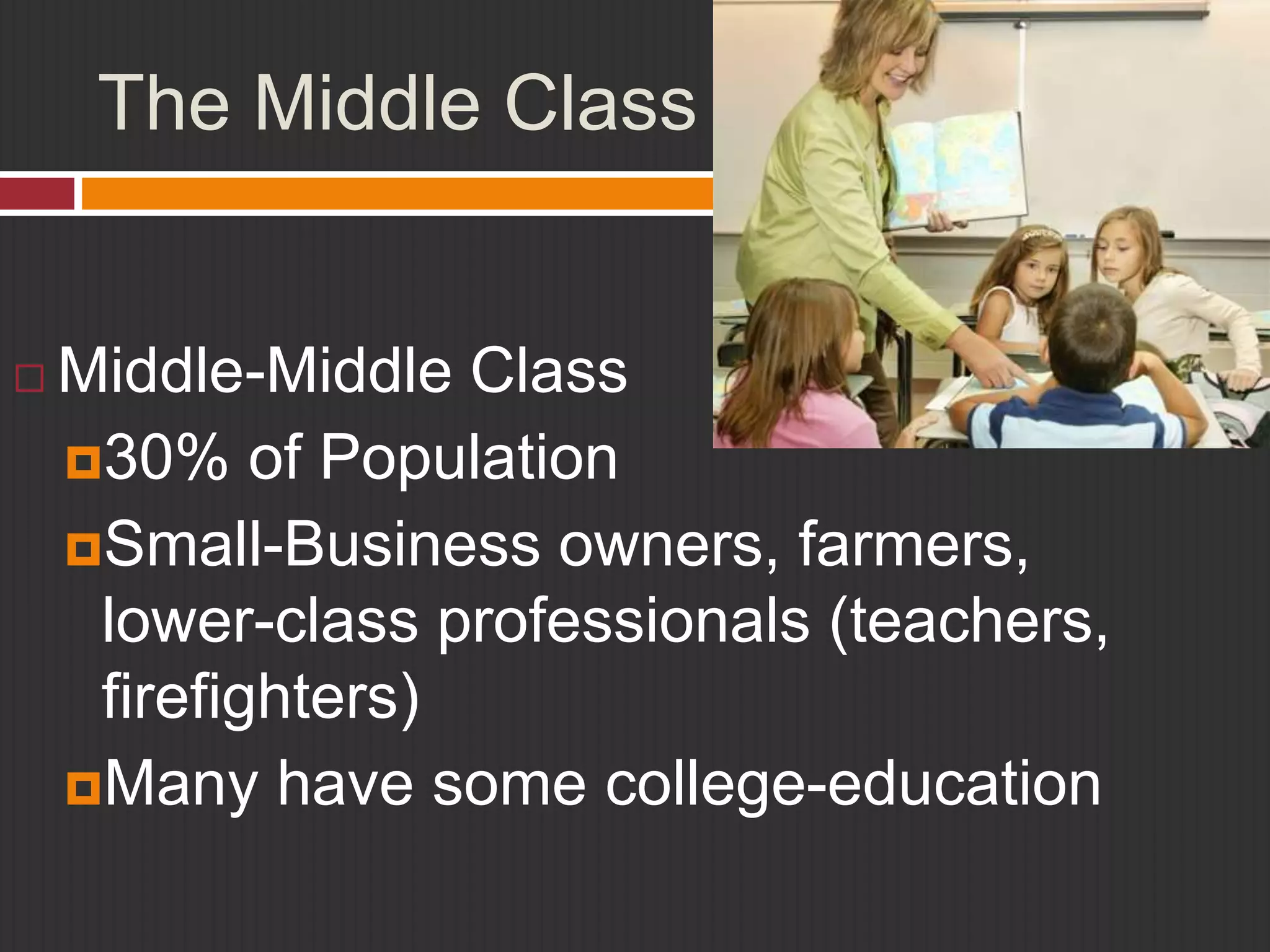
30% of Population 
Small-Business owners, farmers, 
lower-class professionals (teachers, 
firefighters) 
Many have some college-education
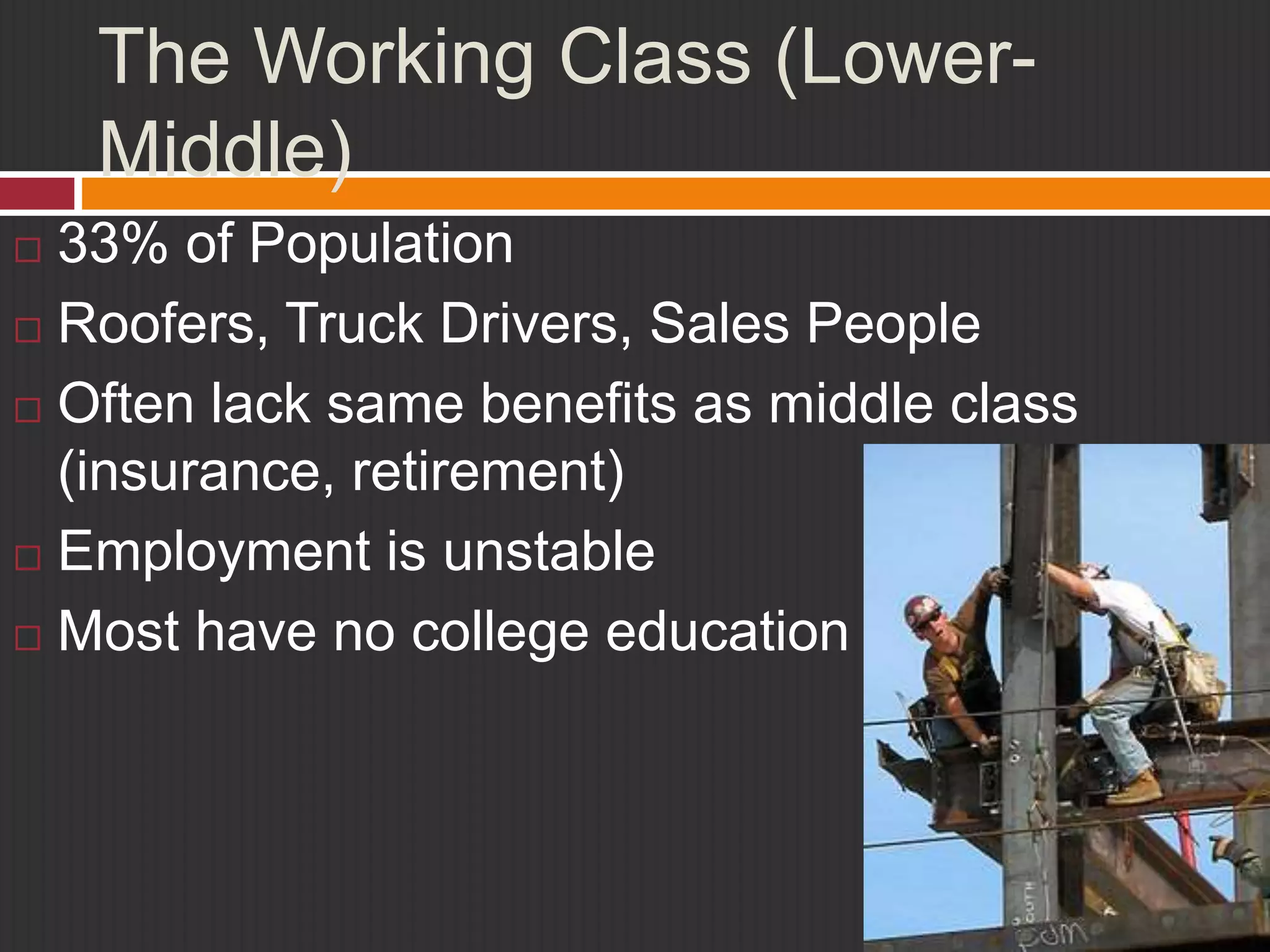
The Working Class (Lower- 
Middle) 
 33% of Population 
 Roofers, Truck Drivers, Sales People 
 Often lack same benefits as middle class 
(insurance, retirement) 
 Employment is unstable 
 Most have no college education
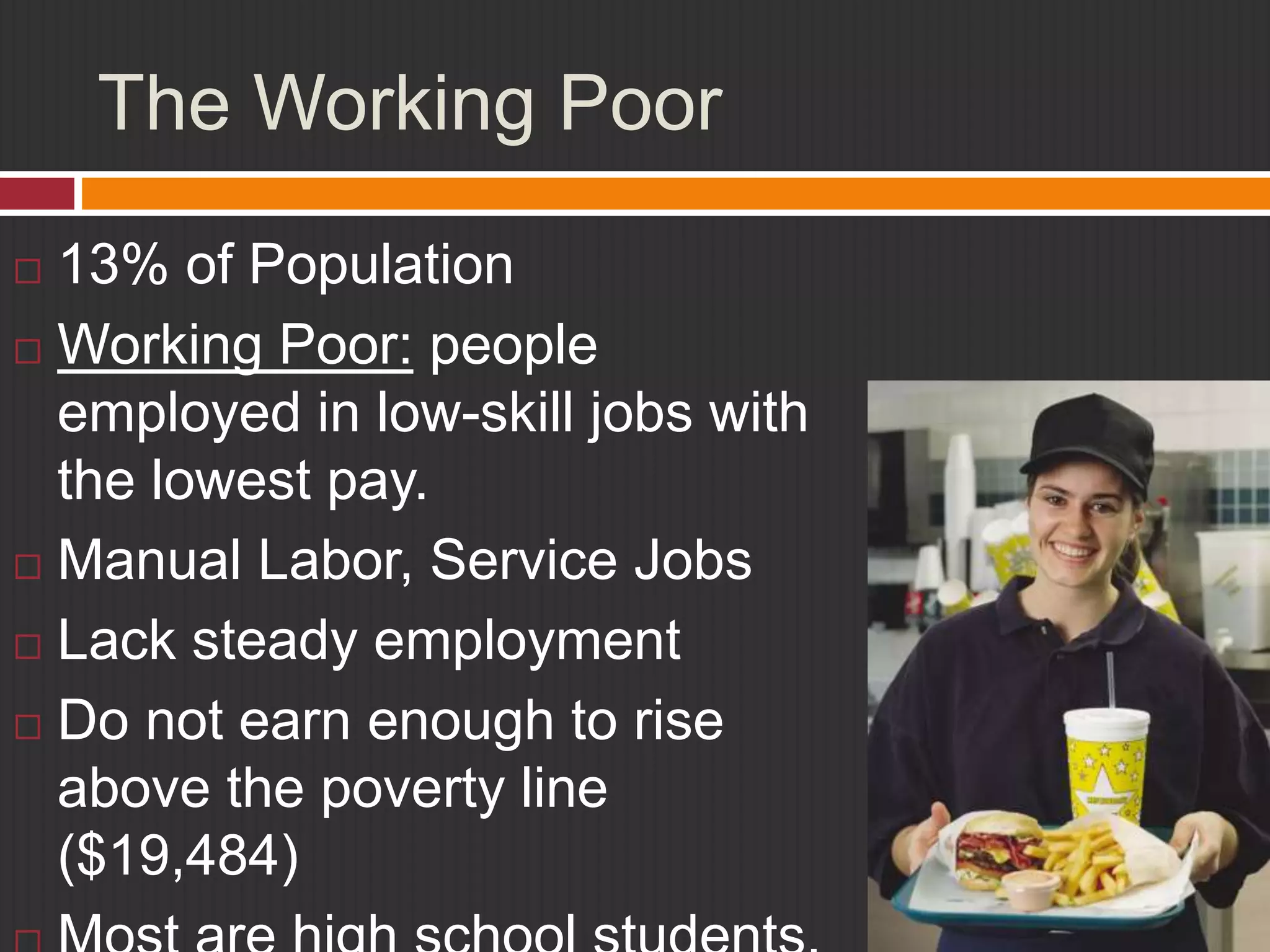
The Working Poor 
 13% of Population 
 Working Poor: people 
employed in low-skill jobs with 
the lowest pay. 
 Manual Labor, Service Jobs 
 Lack steady employment 
 Do not earn enough to rise 
above the poverty line 
($19,484) 
 Most are high school students,
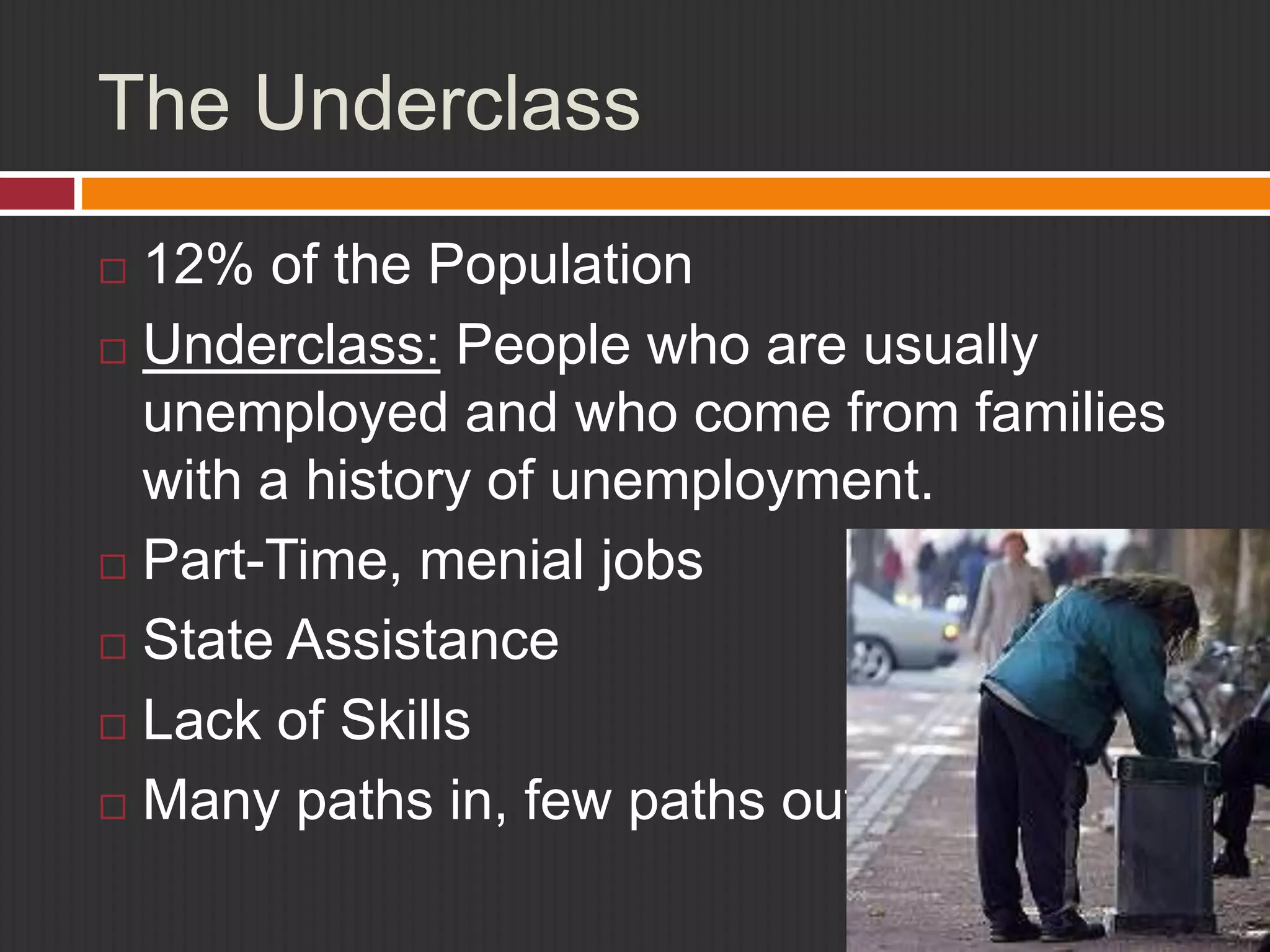
The Underclass 
 12% of the Population 
 Underclass: People who are usually 
unemployed and who come from families 
with a history of unemployment. 
 Part-Time, menial jobs 
 State Assistance 
 Lack of Skills 
 Many paths in, few paths out
POVERTY IN 
AMERICA 
Chapter 8 Section 4
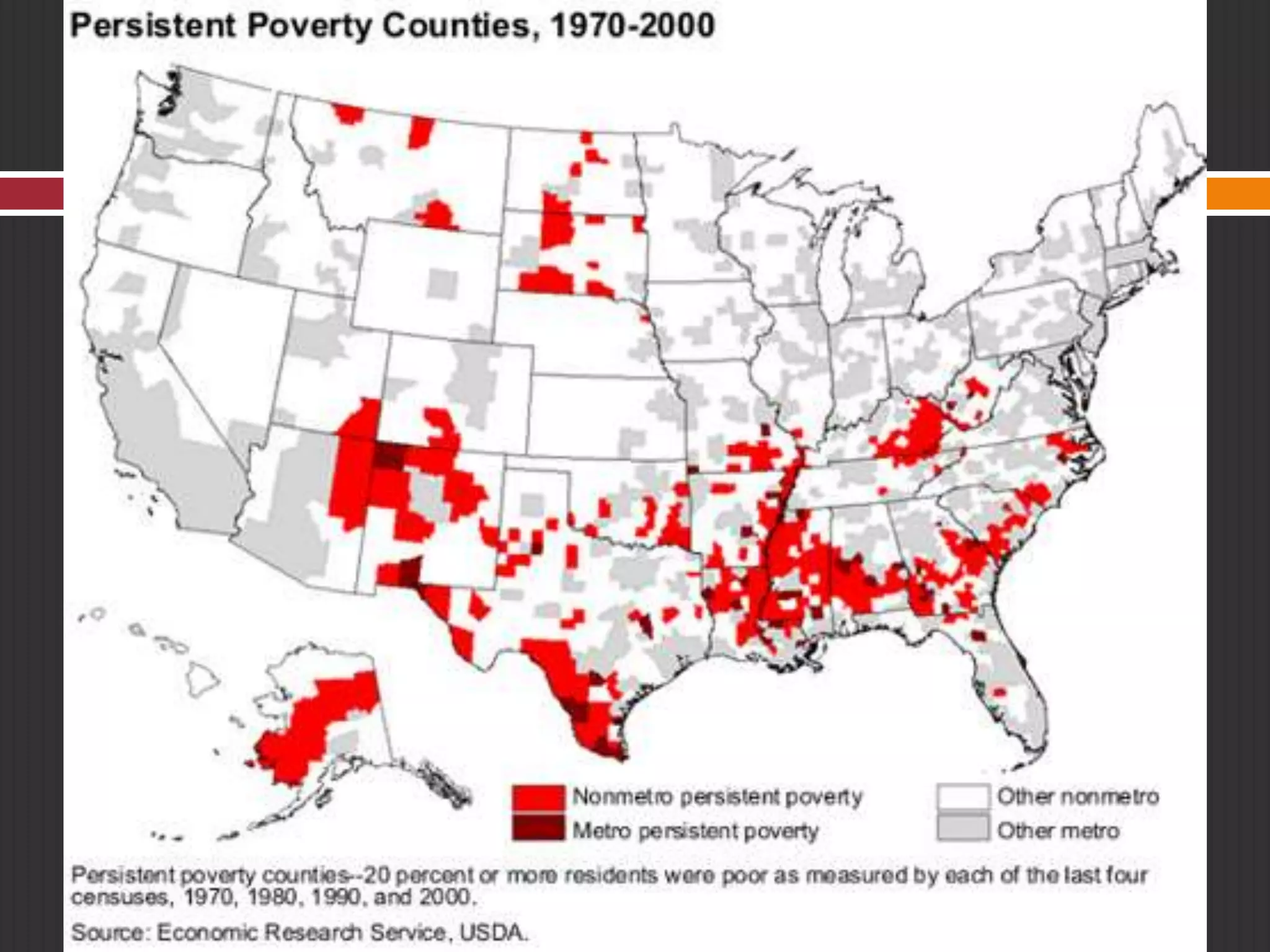
Measuring Poverty 
Absolute Poverty: The absence of 
enough money to secure life’s 
necessities 
Relative Poverty: Comparing the 
bottom of society to the top.
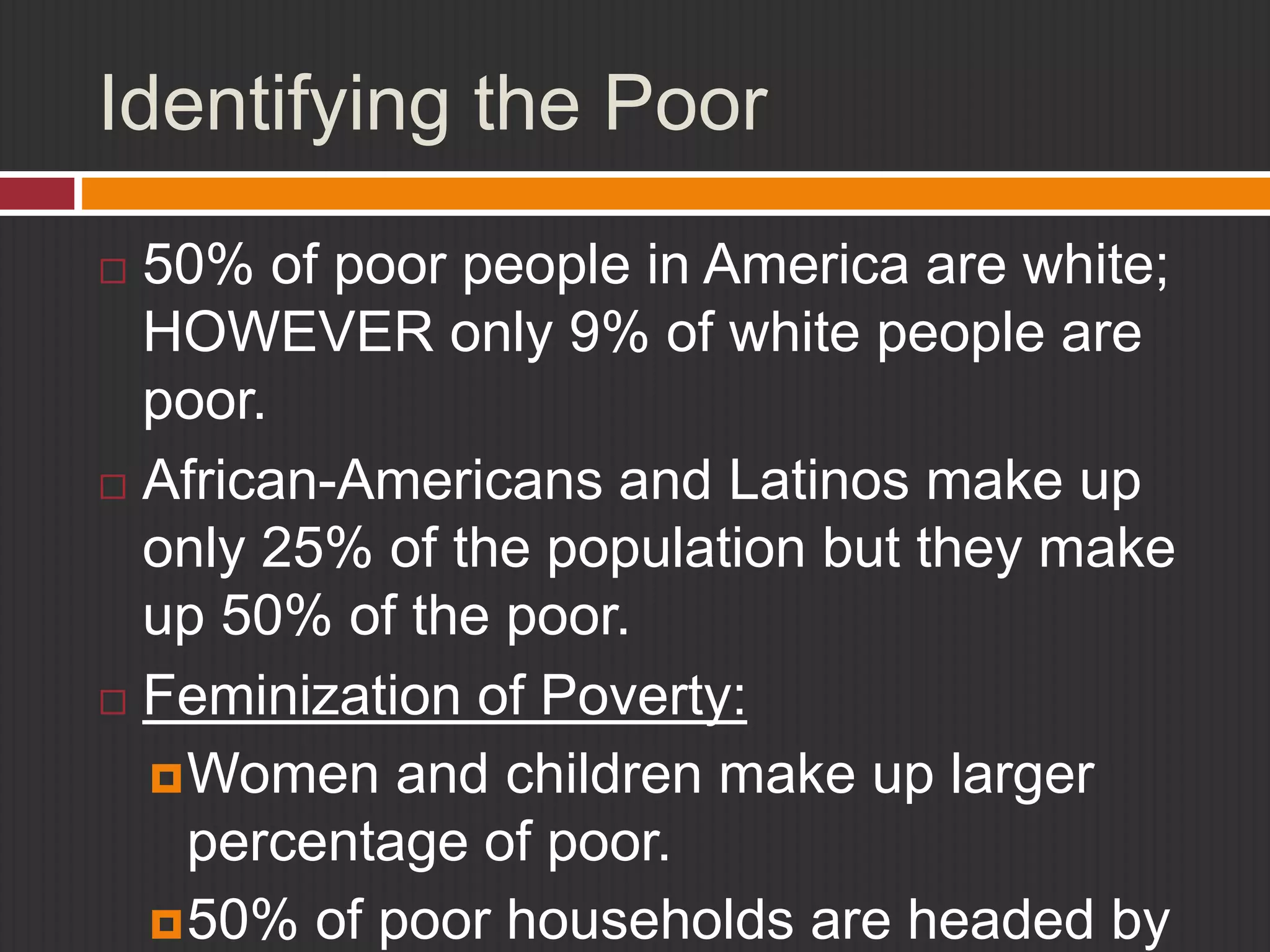
Identifying the Poor 
 50% of poor people in America are white; 
HOWEVER only 9% of white people are 
poor. 
 African-Americans and Latinos make up 
only 25% of the population but they make 
up 50% of the poor. 
 Feminization of Poverty: 
Women and children make up larger 
percentage of poor. 
50% of poor households are headed by
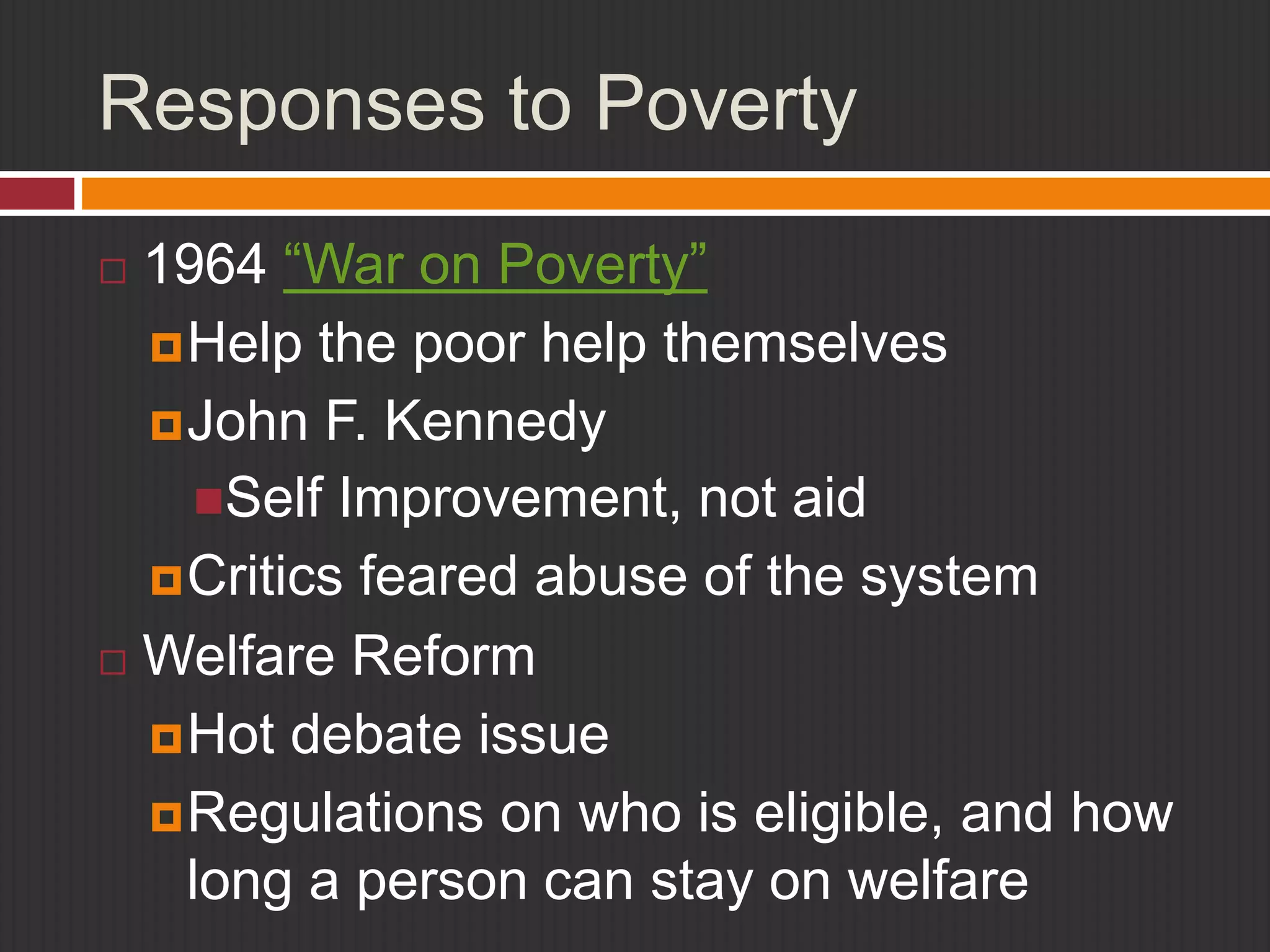
Responses to Poverty 
 1964 “War on Poverty” 
Help the poor help themselves 
John F. Kennedy 
Self Improvement, not aid 
Critics feared abuse of the system 
 Welfare Reform 
Hot debate issue 
Regulations on who is eligible, and how 
long a person can stay on welfare
SOCIAL MOBILITY 
Chapter 8 Section 5
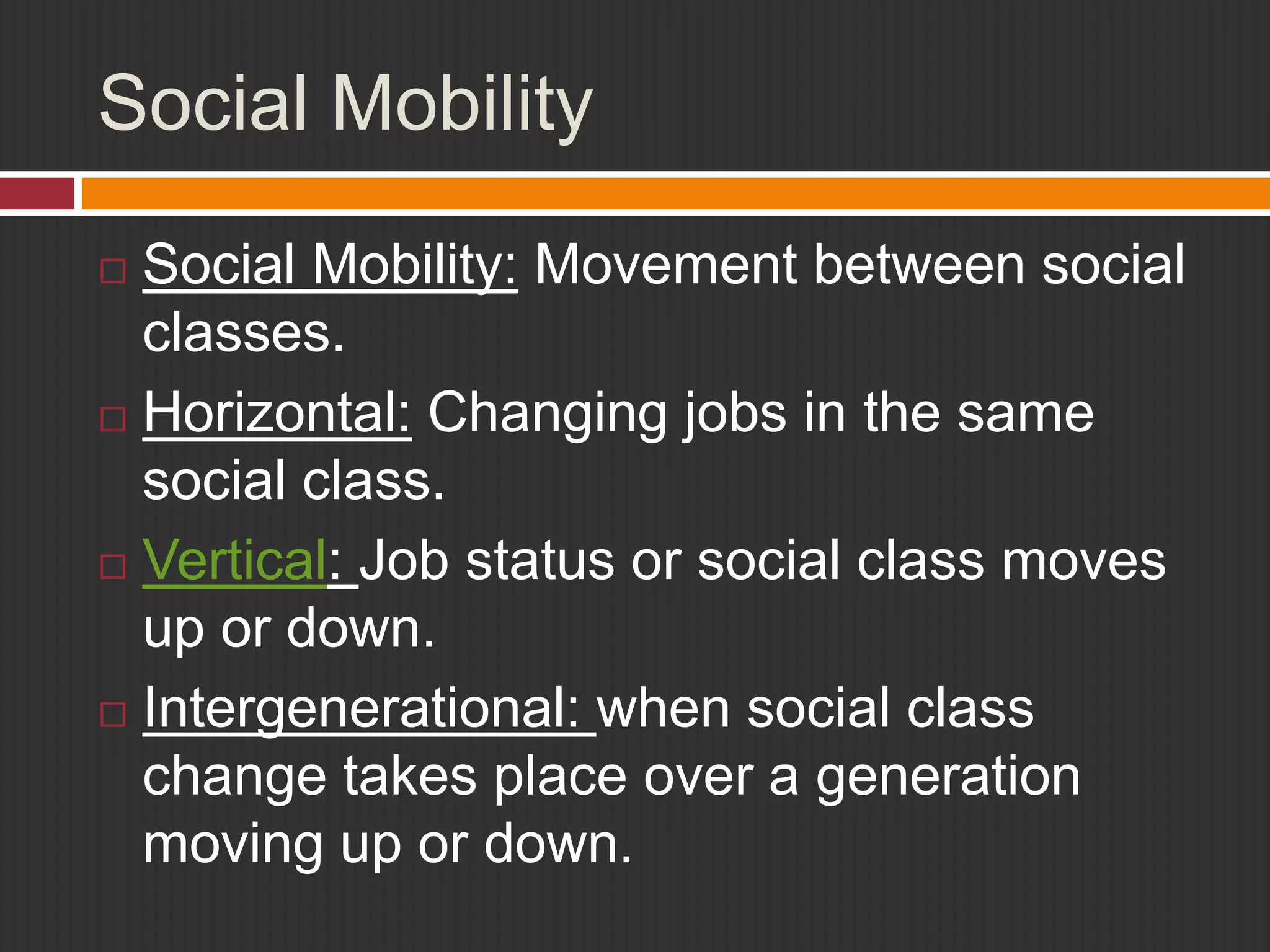
Social Mobility 
 Social Mobility: Movement between social 
classes. 
 Horizontal: Changing jobs in the same 
social class. 
 Vertical: Job status or social class moves 
up or down. 
 Intergenerational: when social class 
change takes place over a generation 
moving up or down.
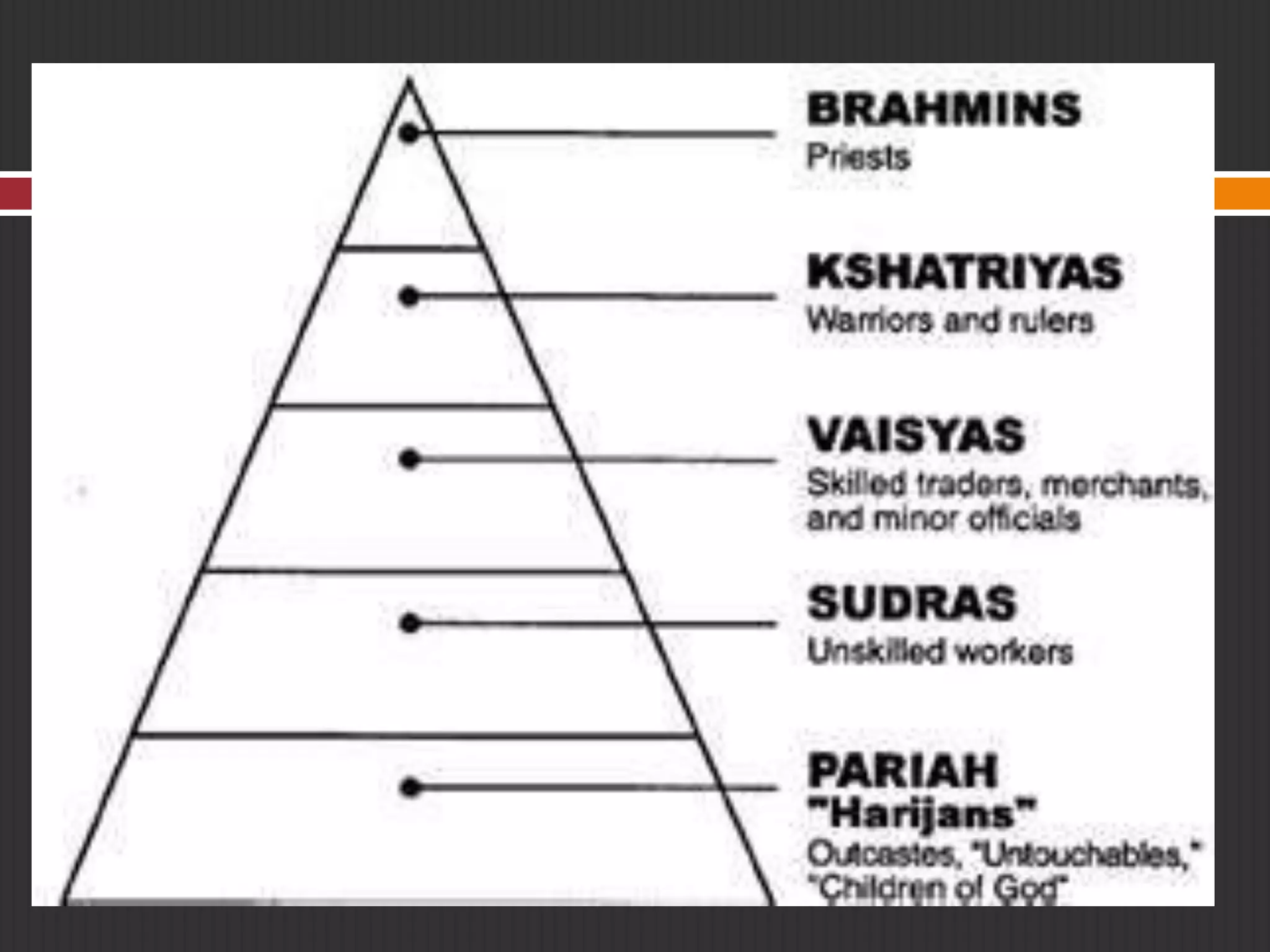
Caste System 
 Social class is inherited and mobility 
cannot occur. 
 Statuses and jobs are assigned at 
birth. 
 Can be based on race, job, and 
religion. 
How do these systems stay in place?
Open-Class System 
 Social class is based on merit and individual 
effort. 
 Movement is allowed and common. 
 Not always the case in the United States 
because of built in disadvantages for 
minorities and lower classes.
Up & Down Mobility 
 U.S. offers more opportunities than most 
countries to move up. 
 Most still fail to move up. 
 Boom of upward mobility after WWII. 
 Today there is more downward mobility 
because people lack the education 
necessary to obtain high-paying jobs.

Chapter 8-Social Stratification

  • 1.
    JOURNAL Symbolic Interactionists(p. 251) contend that a person is socialized to accept that social class is a result of hard work, talent and effort. Do you agree? Explain your answer. SOCIAL STRATIFICATION AND SOCIAL CLASS Chapter 8 Section 1 & 2
  • 2.
    Social Stratification andSocial Class  Humans have the tendency to form rank  Social Stratification: the creation of layers of people who possess unequal shares of resources.
  • 3.
    Social Classes Social Classes: the layers of stratification where members hold similar amounts of scarce resources and share norms, values, and lifestyle  Developed Countries: Upper, Middle, and Lower Classes  Developing Countries: Upper and Lower Classes
  • 4.
  • 5.
    The Economic Dimension  Karl Marx: Formed economic foundations of social class  Marx theorized that capitalism would lead to two classes:  Proletariat: working class  Bourgeoisie: class that owns the means of production
  • 6.
    Income and Wealthin the U.S.  Over a span of 22 years, the top fifth saw an increase of income of 43% while the bottom fifth saw a 9% decrease.  The top 1% (3 Million People) hold 39% of the wealth while the bottom 80% (245 million) hold only 16%.  Income vs. Wealth
  • 7.
    Occupy Wall Street  http://www.youtube.com/watch?v=50rpJ7EQW uI
  • 9.
    Power Dimension Max Weber believed power and prestige, not just money stratified society  Power can come from: Money Knowledge Fame Social positions Charisma
  • 10.
    Prestige Dimension Prestige:Recognition, respect, and admiration connected to social positions. Defined by the culture you are in Voluntarily given, not claimed Similar prestige=similar lifestyles Most important social positions are the most presigious
  • 11.
    Explanations of Stratification Chapter 8 Section 2
  • 12.
    Functionalist View Most qualified people fill most important positions.  Some jobs are more important than others and require special skills.  Money and prestige are awarded for sacrifice
  • 13.
    Conflict Theory View  Some people are willing to exploit others (Marx-exploiter & exploited)  Those in power are able to spread a belief system that legitimizes their position (Schools, Media)  Lower class accepts these ideas and values – False Consciousness
  • 14.
    Symbolic Interactionism and Stratification  People are socialized to accept existing structure  Lower class-Lower self esteem System tells them that they are inferior  Upper class- Higher self esteem System tells them that they are superior
  • 15.
    SOCIAL CLASSES IN AMERICA Chapter 8 Section 3
  • 16.
    United States SocialClasses  6 typical social classes  Unlike in India, the United States never really developed class consciousness: identification with a particular social class.  Classes are subject to change Full of exceptions
  • 18.
    The Upper Class  Includes 1% of the population  Upper-Upper class “Old-Money” (Rockafeller, Ford, etc.) Based on blood, not hard work.  Lower-Upper Class Wealth is from achievement or earned, not inherited. Often excluded by upper-upper class.
  • 19.
    The Upper MiddleClass Upper Middle Class 14% of population Professionals and entrepreneurs Most are college-educated High goals for children Active in the community
  • 20.
    The Middle Class  Middle-Middle Class 30% of Population Small-Business owners, farmers, lower-class professionals (teachers, firefighters) Many have some college-education
  • 21.
    The Working Class(Lower- Middle)  33% of Population  Roofers, Truck Drivers, Sales People  Often lack same benefits as middle class (insurance, retirement)  Employment is unstable  Most have no college education
  • 22.
    The Working Poor  13% of Population  Working Poor: people employed in low-skill jobs with the lowest pay.  Manual Labor, Service Jobs  Lack steady employment  Do not earn enough to rise above the poverty line ($19,484)  Most are high school students,
  • 23.
    The Underclass 12% of the Population  Underclass: People who are usually unemployed and who come from families with a history of unemployment.  Part-Time, menial jobs  State Assistance  Lack of Skills  Many paths in, few paths out
  • 24.
    POVERTY IN AMERICA Chapter 8 Section 4
  • 25.
    Measuring Poverty AbsolutePoverty: The absence of enough money to secure life’s necessities Relative Poverty: Comparing the bottom of society to the top.
  • 26.
    Identifying the Poor  50% of poor people in America are white; HOWEVER only 9% of white people are poor.  African-Americans and Latinos make up only 25% of the population but they make up 50% of the poor.  Feminization of Poverty: Women and children make up larger percentage of poor. 50% of poor households are headed by
  • 28.
    Responses to Poverty  1964 “War on Poverty” Help the poor help themselves John F. Kennedy Self Improvement, not aid Critics feared abuse of the system  Welfare Reform Hot debate issue Regulations on who is eligible, and how long a person can stay on welfare
  • 29.
  • 30.
    Social Mobility Social Mobility: Movement between social classes.  Horizontal: Changing jobs in the same social class.  Vertical: Job status or social class moves up or down.  Intergenerational: when social class change takes place over a generation moving up or down.
  • 31.
    Caste System Social class is inherited and mobility cannot occur.  Statuses and jobs are assigned at birth.  Can be based on race, job, and religion. How do these systems stay in place?
  • 33.
    Open-Class System Social class is based on merit and individual effort.  Movement is allowed and common.  Not always the case in the United States because of built in disadvantages for minorities and lower classes.
  • 34.
    Up & DownMobility  U.S. offers more opportunities than most countries to move up.  Most still fail to move up.  Boom of upward mobility after WWII.  Today there is more downward mobility because people lack the education necessary to obtain high-paying jobs.