Downloaded 124 times
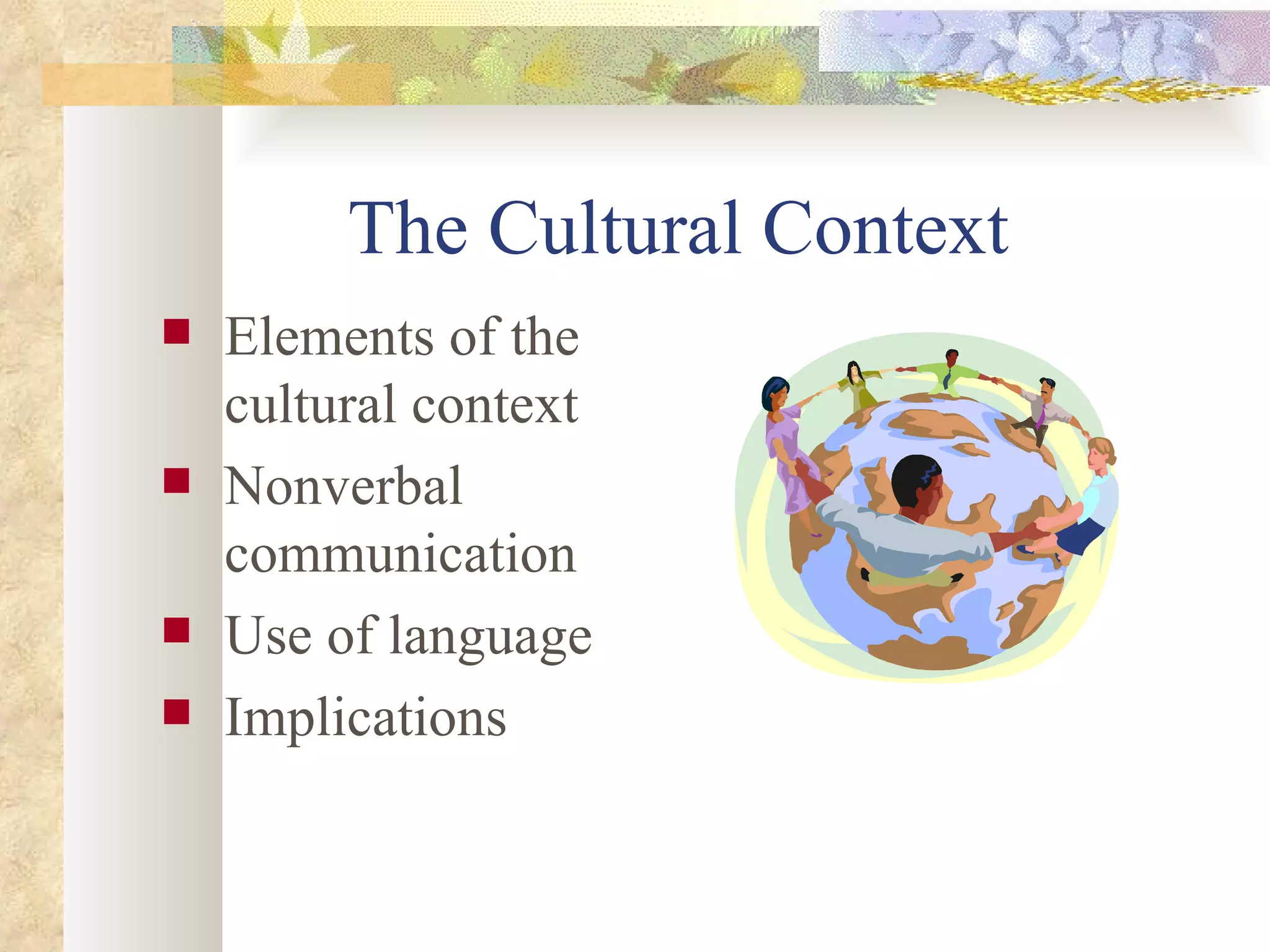
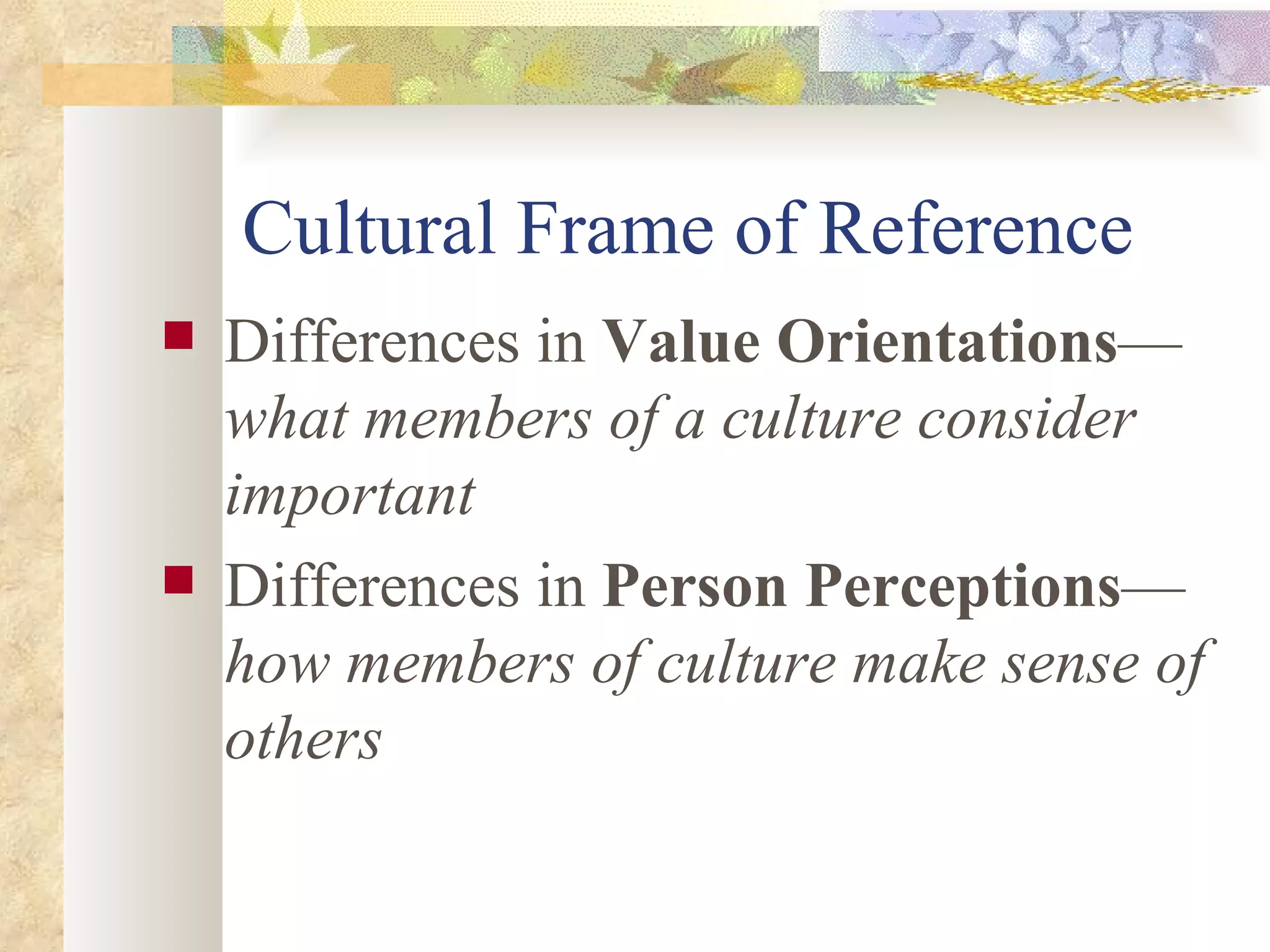
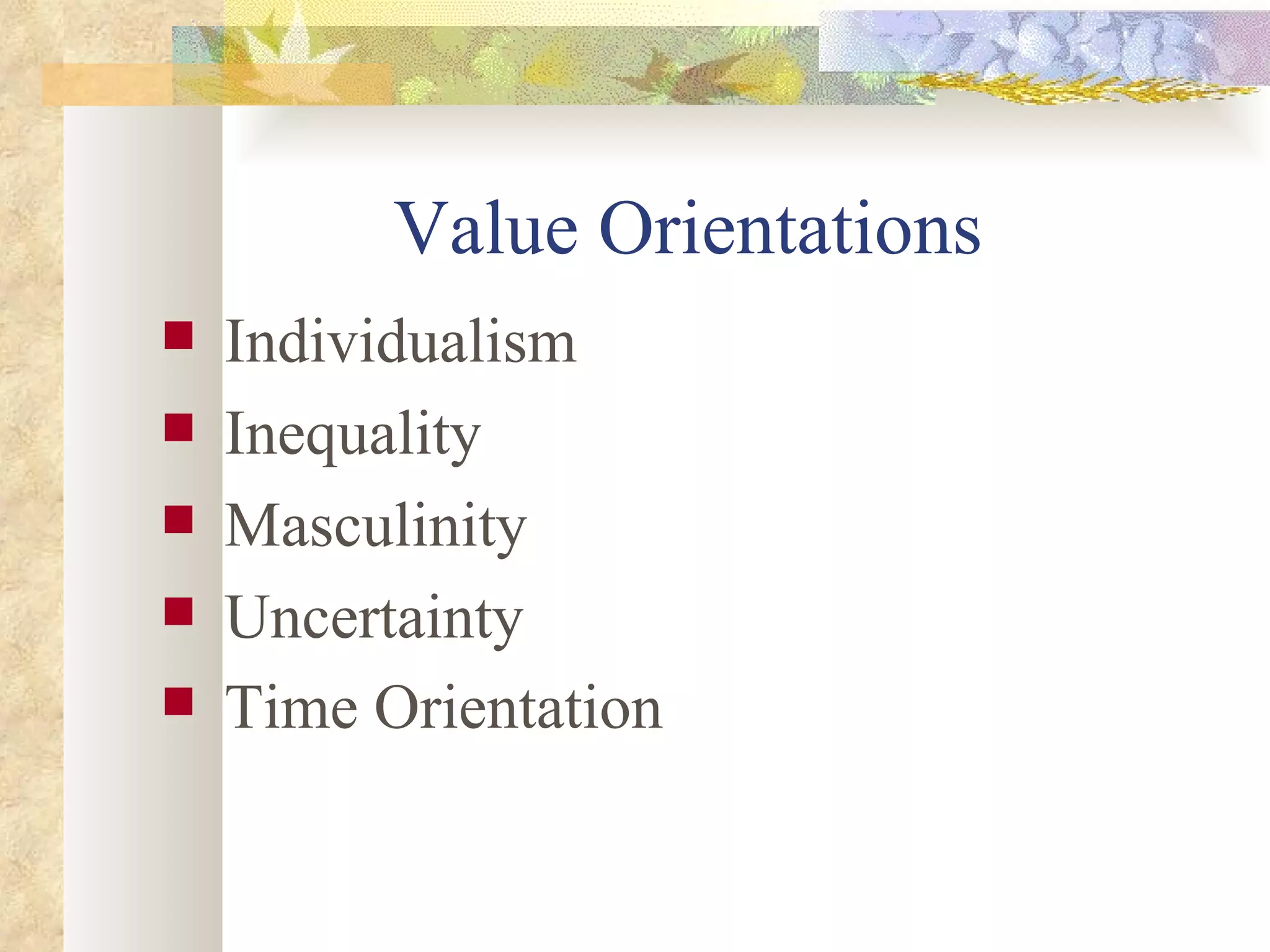
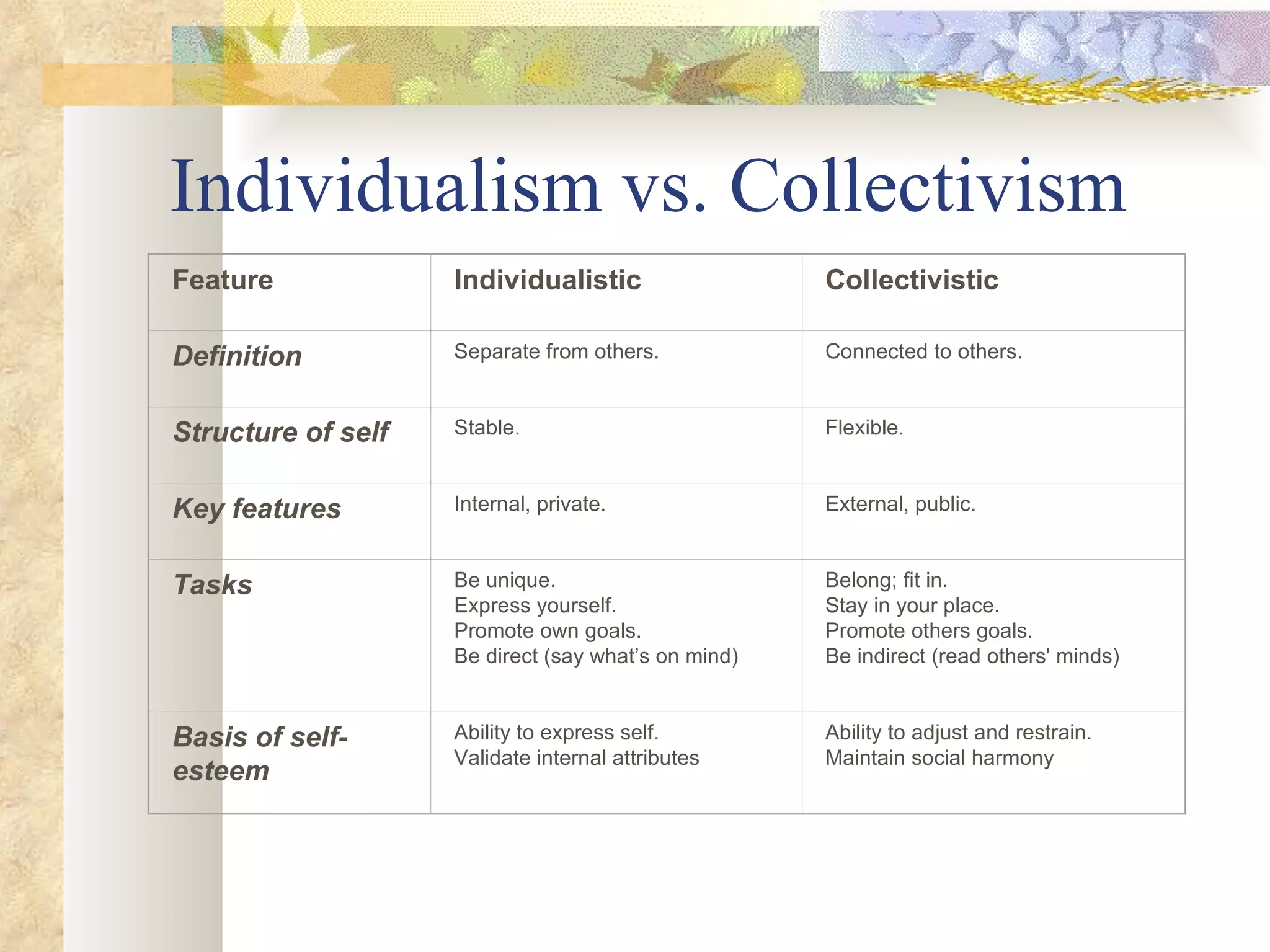
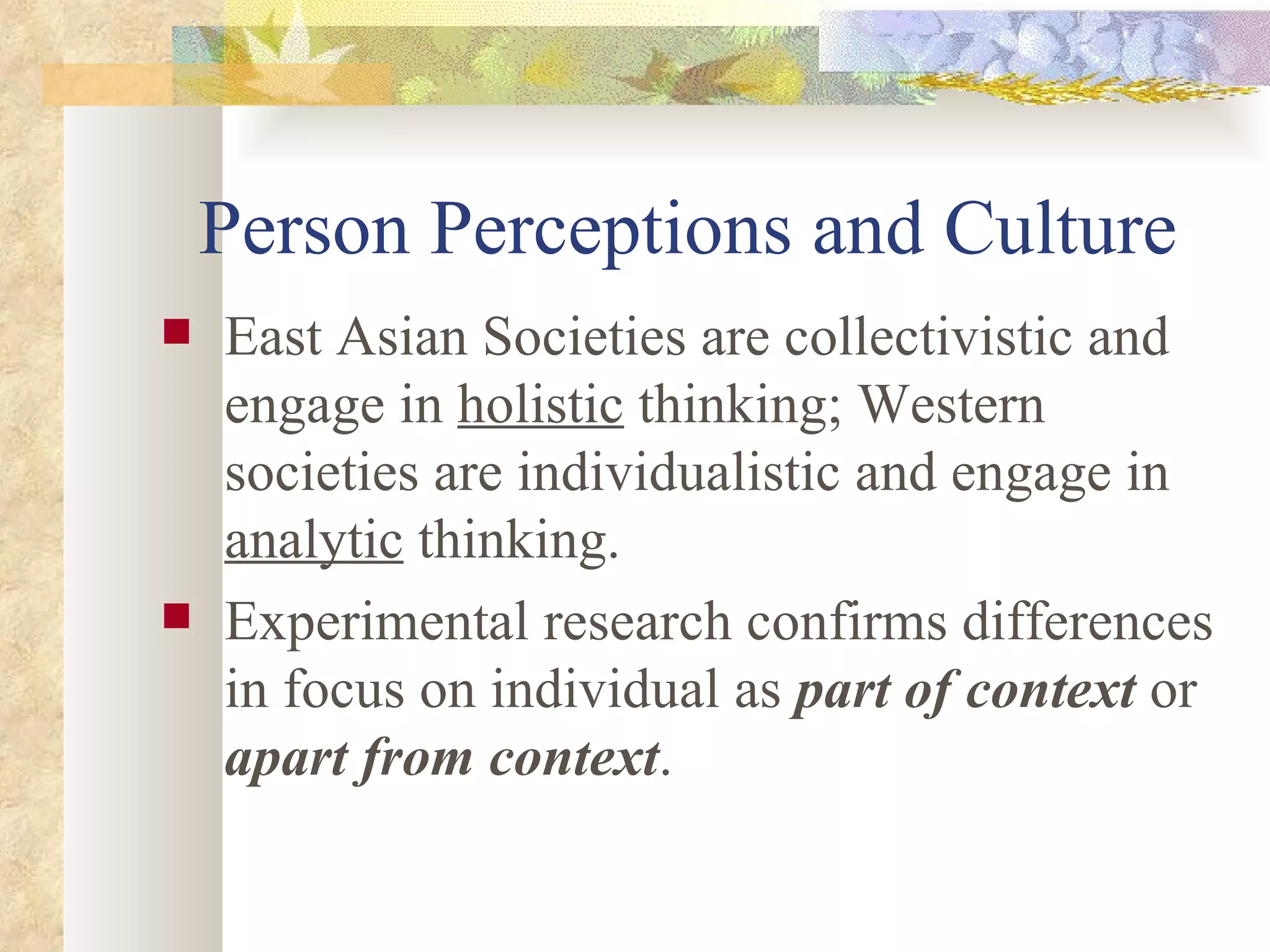
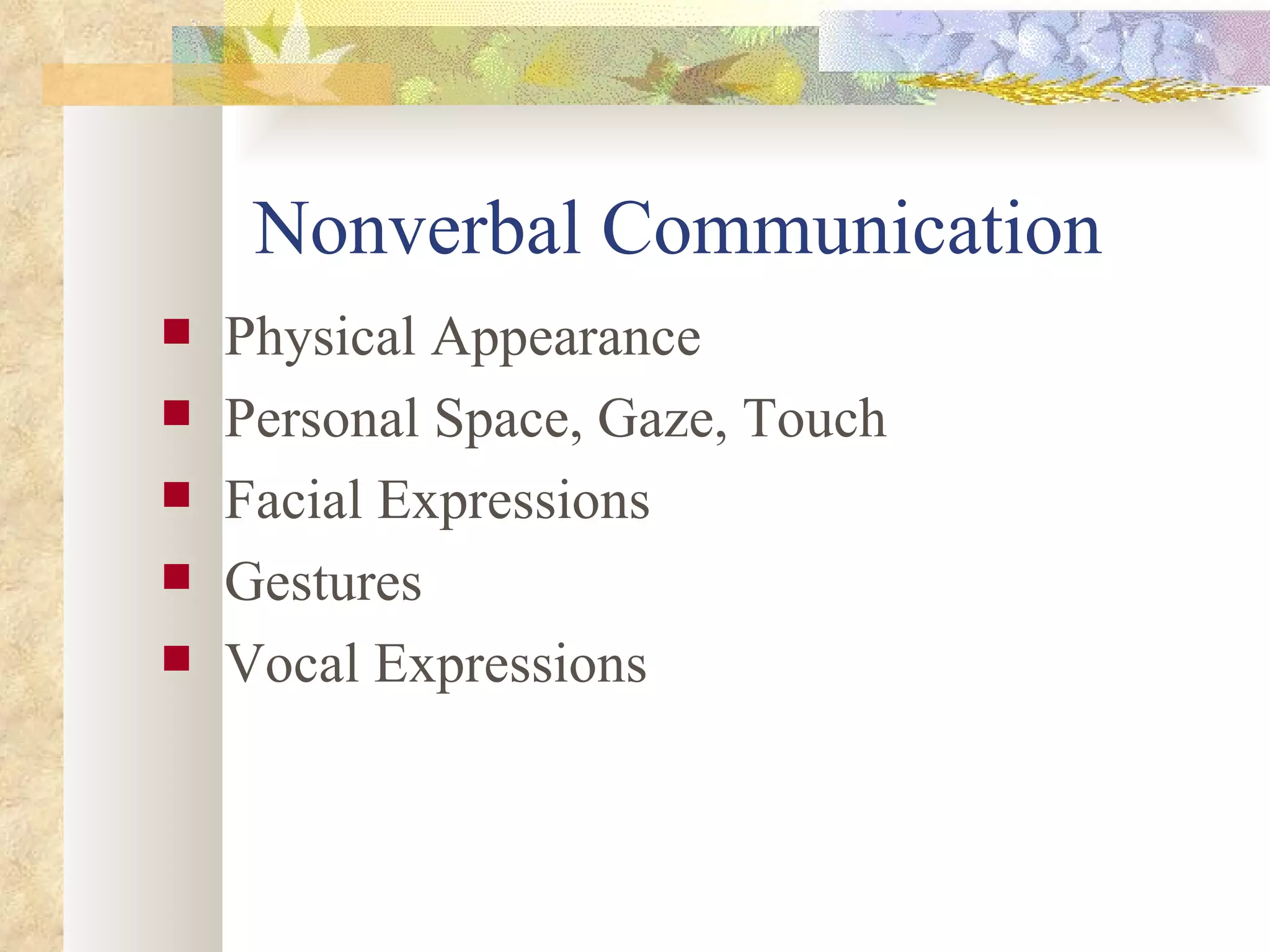
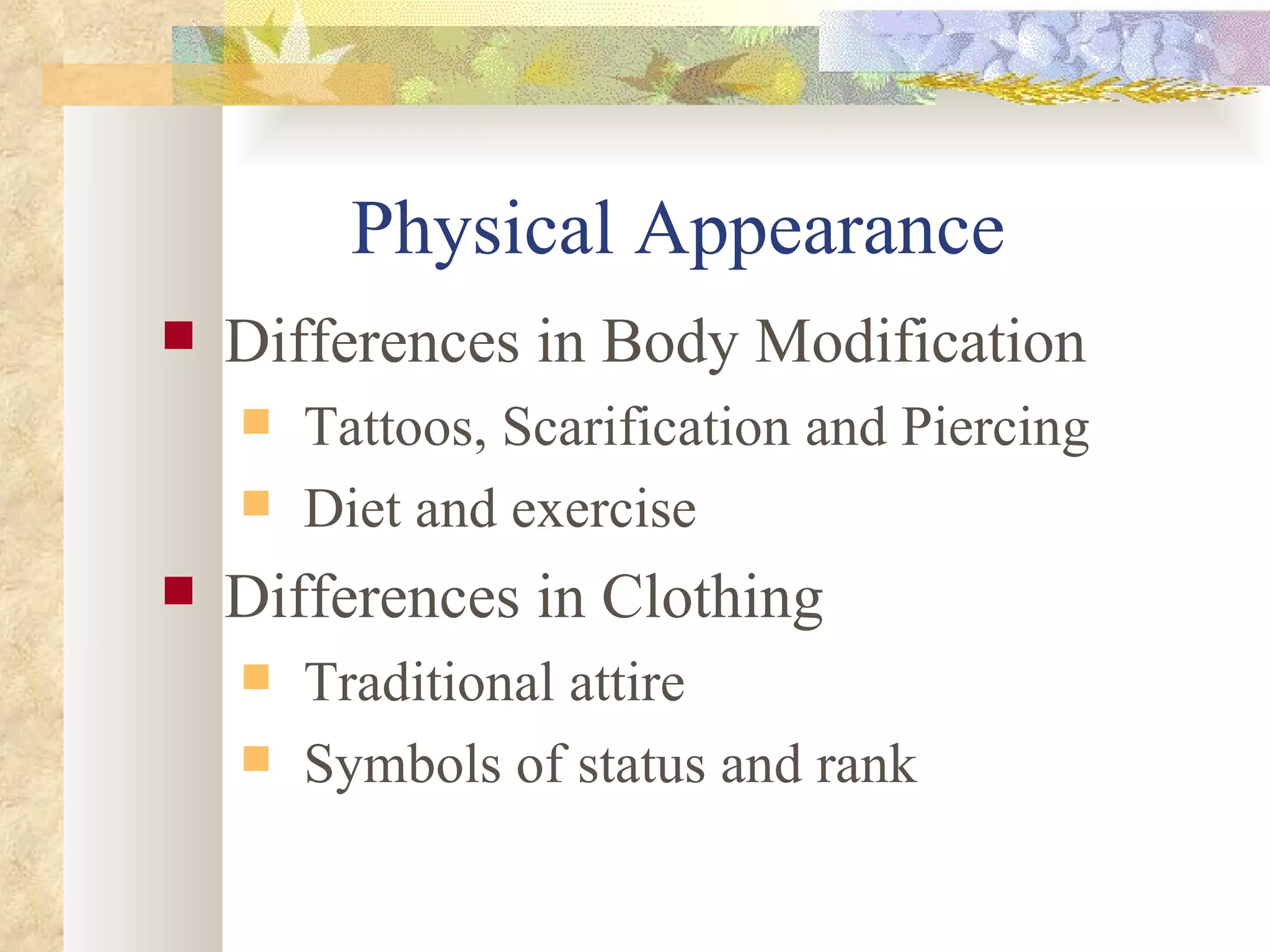
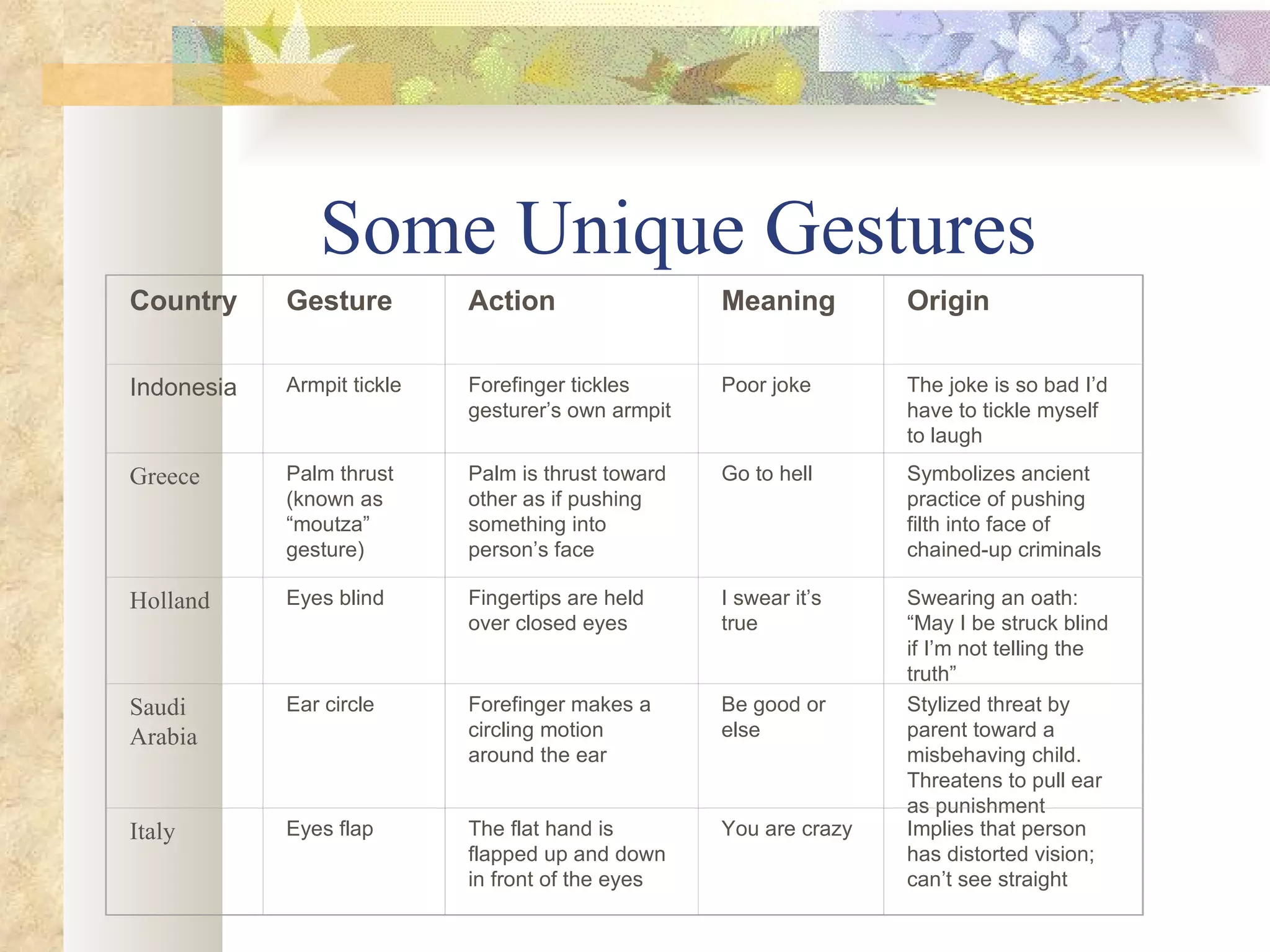

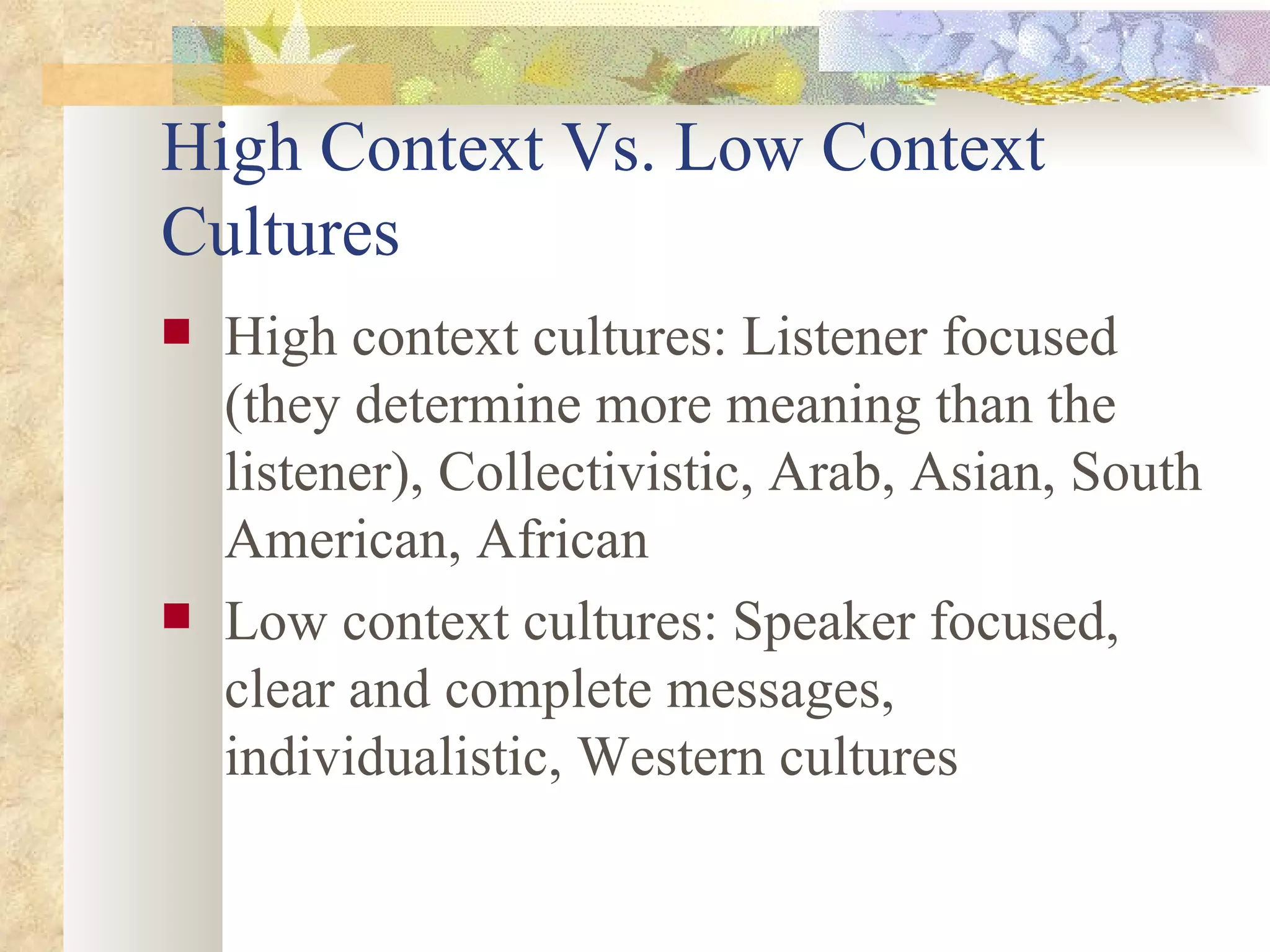
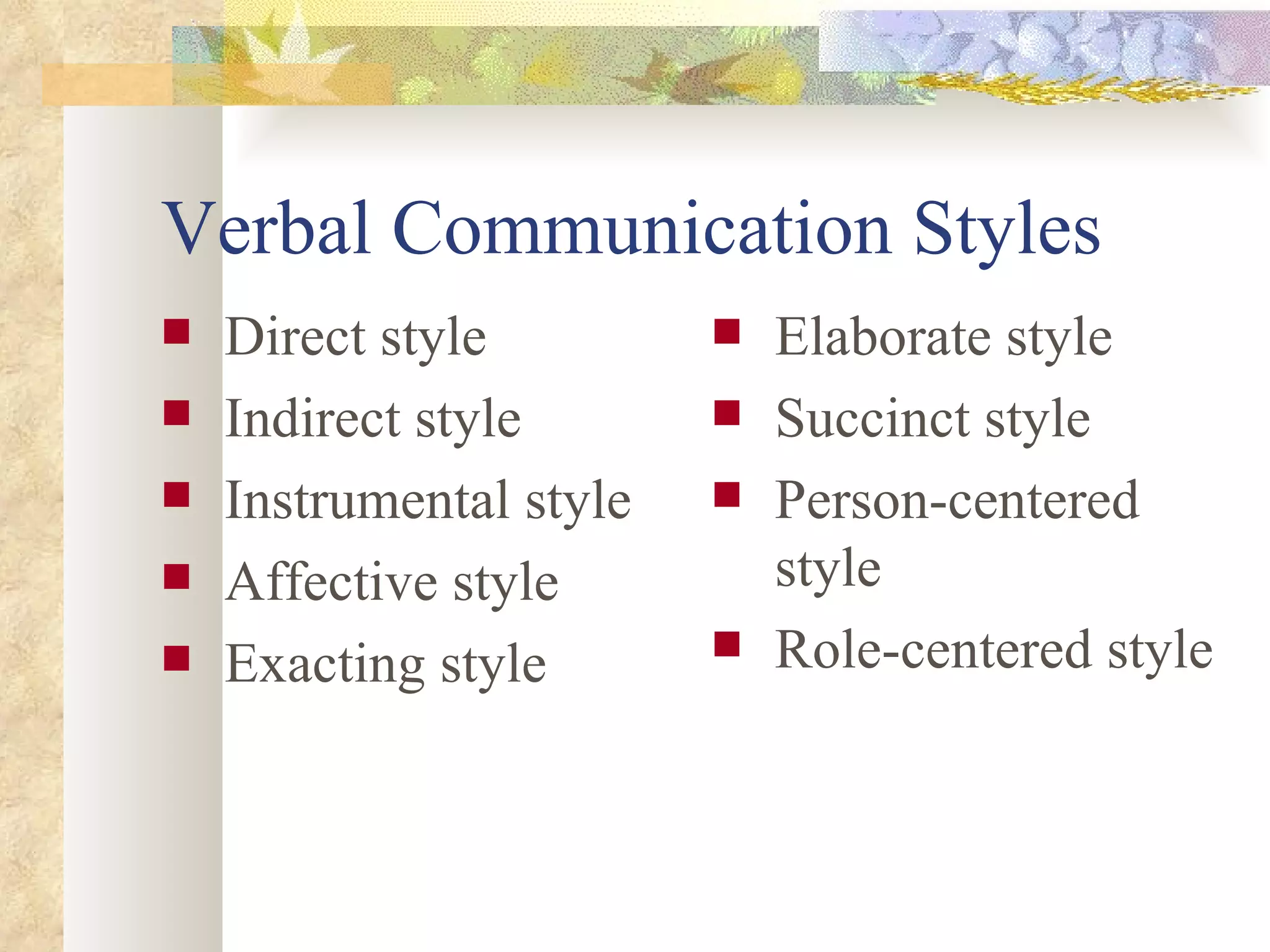
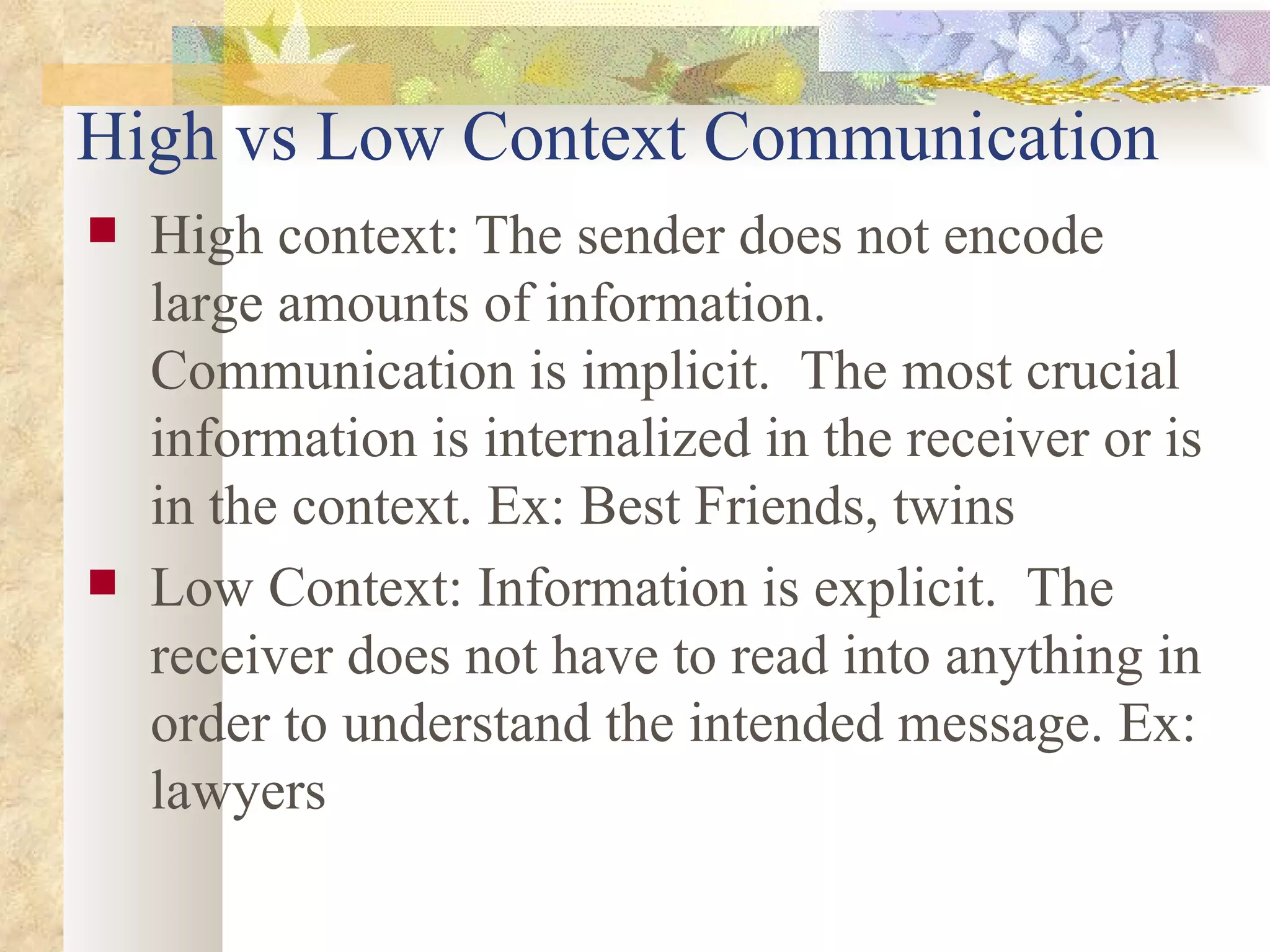

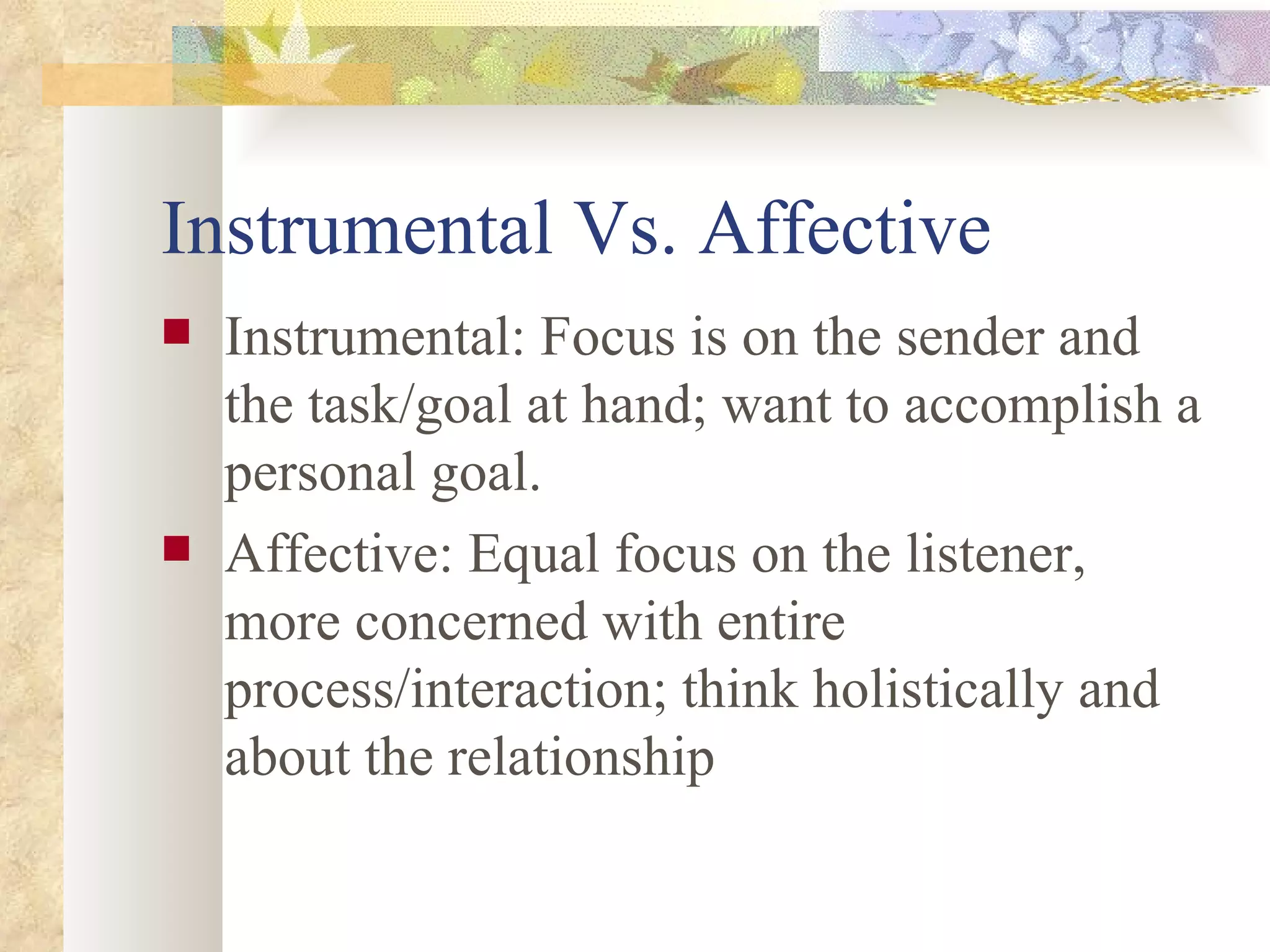
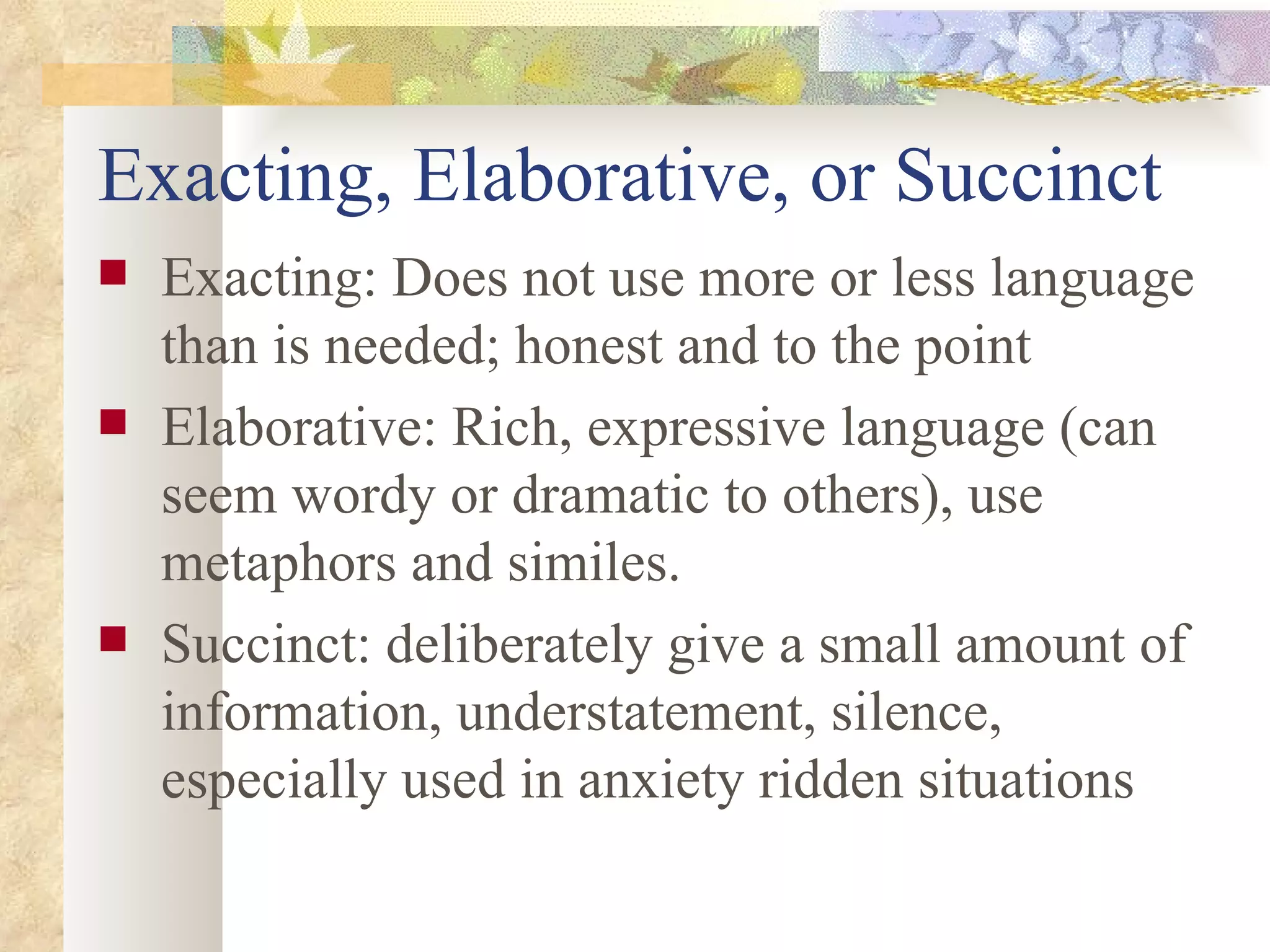
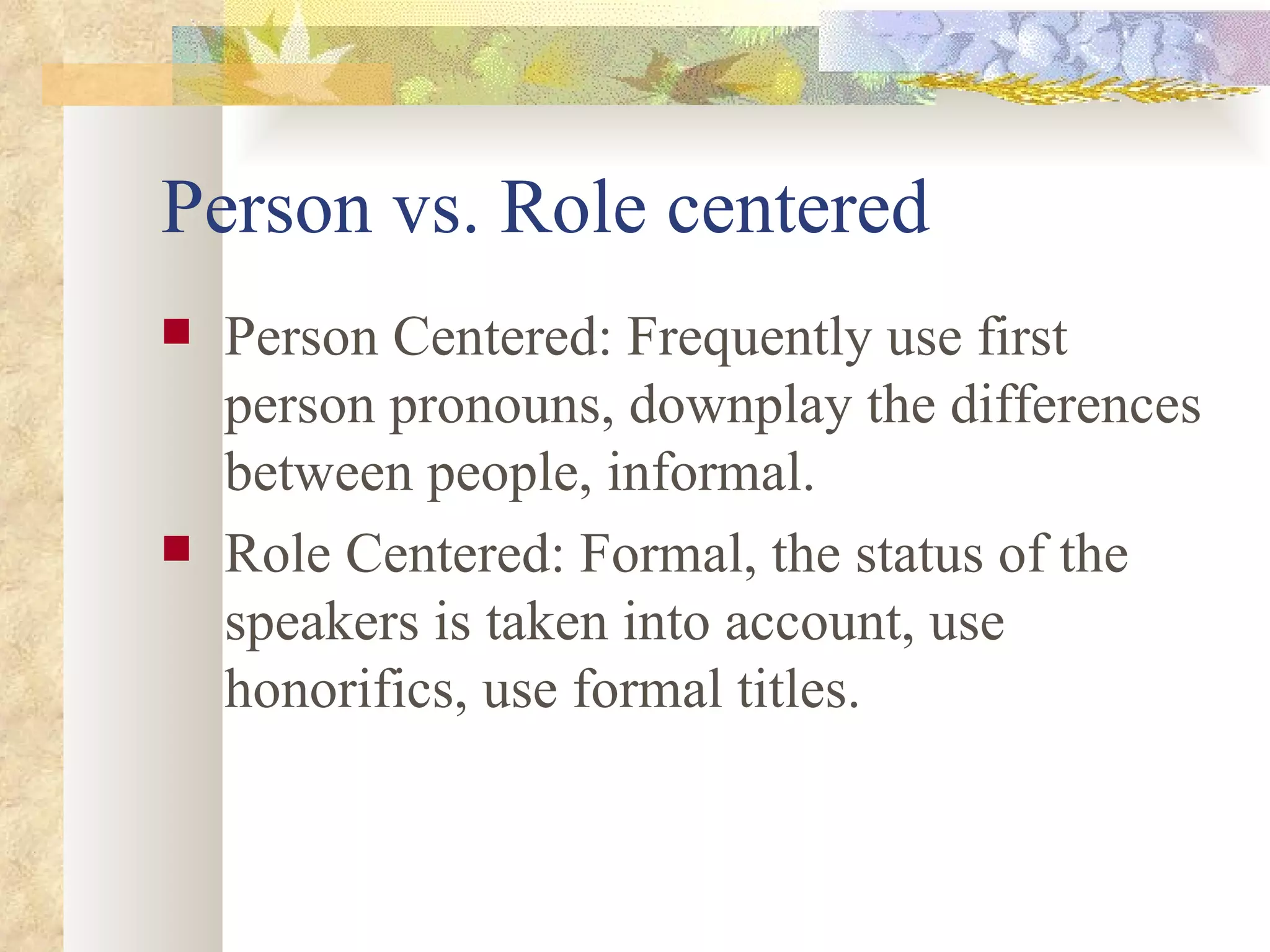
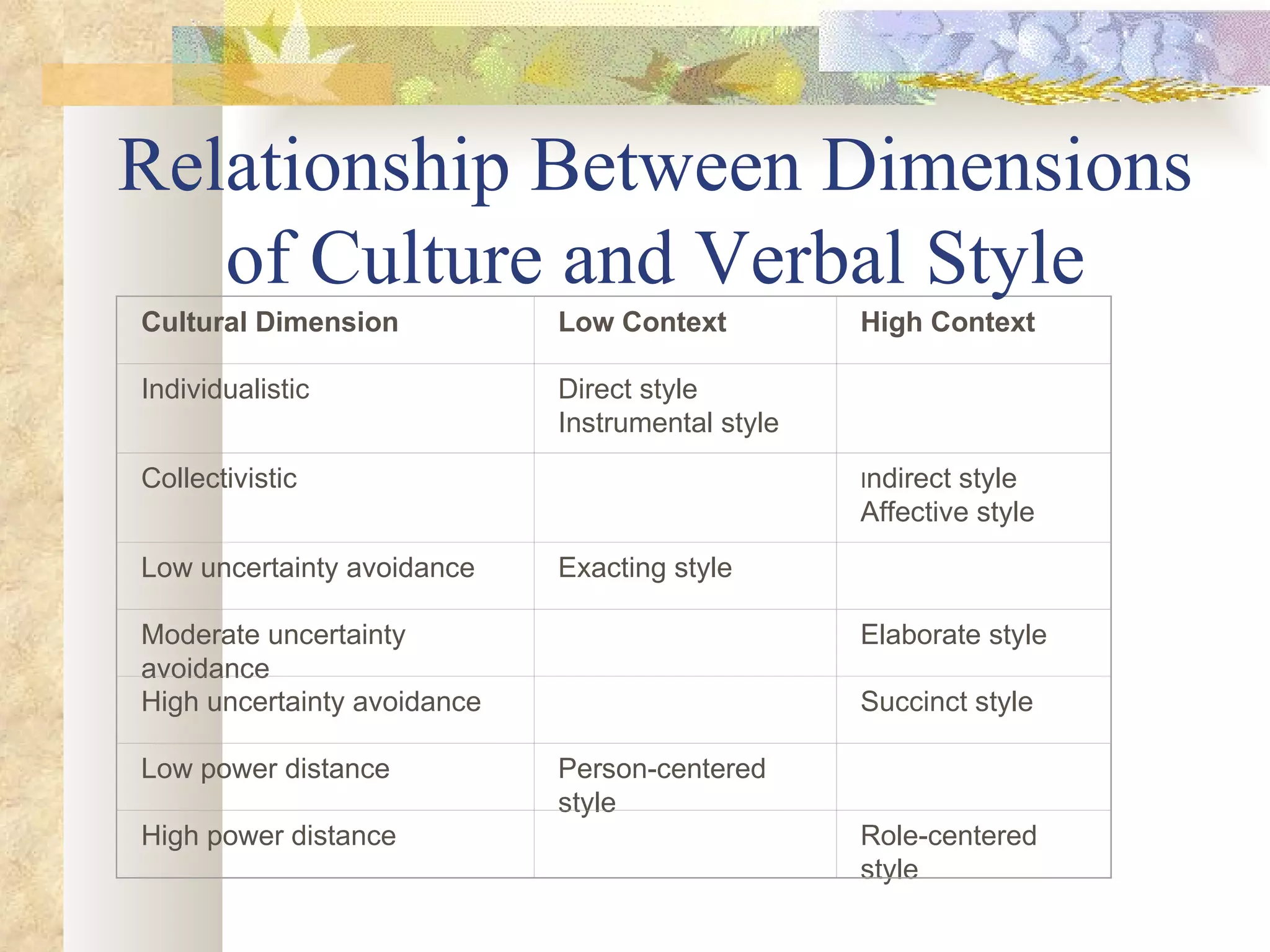


Culture refers to shared beliefs, values, and behaviors that are learned and passed down between generations. It influences elements of communication like nonverbal behaviors and language use. There are differences in cultural frames of reference, such as individualism vs collectivism and person perceptions between cultures. Nonverbal communication varies across cultures in areas like physical appearance, personal space, gestures, and vocal expressions. Language also differs between cultures and can influence thought according to the Sapir-Whorf hypothesis. Verbal communication styles range on dimensions such as direct vs indirect and these relate to cultural dimensions like individualism and power distance. Understanding these cultural contexts is important for effective intercultural encounters.


