Memory Chapter   7
Initial Studies Hermann Ebbinghaus – late 1800s
Memory Recognition Recall
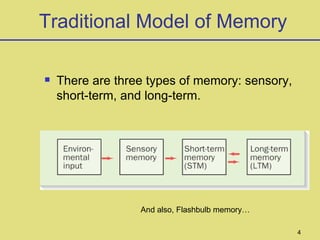
Traditional Model of Memory There are three types of memory: sensory, short-term, and long-term. And also, Flashbulb memory…
 
Flashbulb Memory Procedural Memory Memory for how to do things: Ride a bike Skateboard Play an instrument Performance of skills is task specific Alterations in neural processing structures are most likely the cause of procedural skills
Other Approaches Tip-of-the-tongue (TOT): used to study the network of semantic memories The study of flashbulb memories has provided information about episodic memory.
Information-Processing Model A parallel between the computer and human memory.
Other Approaches Craik and Lockhart > only one type of memory.  The level of processing may determine the permanence of the storage of this memory. Chapter 7 Memory Schemas will help me remember
Memory The number of sessions, distribution of practice, meaningfulness of items, similarity of items, and serial position (latency, recency effects) of items influence human learning.
Forgetting Proactive Interference: old material interferes new. Retroactive interference: new material interferes old.
Amnesia Retrograde amnesia May occur when memories are not allowed to consolidate or set. Anterograde amnesia New information cannot be stored, although old memories remain intact Can result from damage to hippocampus
Mnemonics Imagery  Peg-word Acronyms  Acrostics The method of loci
Other Encoding specificity > associated with retrieval It has been suggested that memories of childhood sexual abuse may be repressed and recalled during adulthood.  Often suggestions made by a therapist.

Chapter 7 Psych 1 Online Stud

  • 1.
  • 2.
    Initial Studies HermannEbbinghaus – late 1800s
  • 3.
  • 4.
    Traditional Model ofMemory There are three types of memory: sensory, short-term, and long-term. And also, Flashbulb memory…
  • 5.
  • 6.
    Flashbulb Memory ProceduralMemory Memory for how to do things: Ride a bike Skateboard Play an instrument Performance of skills is task specific Alterations in neural processing structures are most likely the cause of procedural skills
  • 7.
    Other Approaches Tip-of-the-tongue(TOT): used to study the network of semantic memories The study of flashbulb memories has provided information about episodic memory.
  • 8.
    Information-Processing Model Aparallel between the computer and human memory.
  • 9.
    Other Approaches Craikand Lockhart > only one type of memory. The level of processing may determine the permanence of the storage of this memory. Chapter 7 Memory Schemas will help me remember
  • 10.
    Memory The numberof sessions, distribution of practice, meaningfulness of items, similarity of items, and serial position (latency, recency effects) of items influence human learning.
  • 11.
    Forgetting Proactive Interference:old material interferes new. Retroactive interference: new material interferes old.
  • 12.
    Amnesia Retrograde amnesiaMay occur when memories are not allowed to consolidate or set. Anterograde amnesia New information cannot be stored, although old memories remain intact Can result from damage to hippocampus
  • 13.
    Mnemonics Imagery Peg-word Acronyms Acrostics The method of loci
  • 14.
    Other Encoding specificity> associated with retrieval It has been suggested that memories of childhood sexual abuse may be repressed and recalled during adulthood. Often suggestions made by a therapist.

Editor's Notes

  • #2 Prepared by Michael J. Renner, Ph.D. These slides ©1999 Prentice Hall Psychology Publishing.