Different Kinds of
Conscience
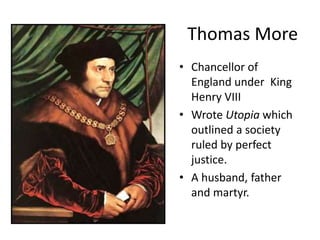
Thomas More
• Chancellor of
England under King
Henry VIII
• Wrote Utopia which
outlined a society
ruled by perfect
justice.
• A husband, father
and martyr.
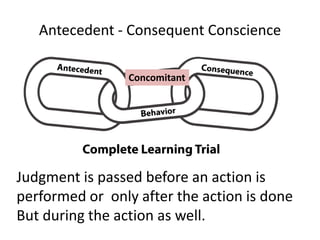
Antecedent - Consequent Conscience
Judgment is passed before an action is
performed or only after the action is done
But during the action as well.
Concomitant
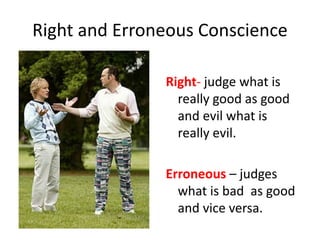
Right and Erroneous Conscience
Right- judge what is
really good as good
and evil what is
really evil.
Erroneous – judges
what is bad as good
and vice versa.
CONSCIENCE
• SINCERITY • CORRECTNESS
It is not enough to be sincere.
It is important to be correct.
1. Certain Conscience
Subjective assurance
of the lawfulness
or unlawfulness of
certain actions to
be done or to be
admitted.
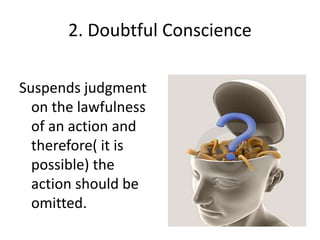
2. Doubtful Conscience
Suspends judgment
on the lawfulness
of an action and
therefore( it is
possible) the
action should be
omitted.
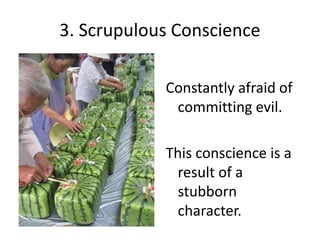
3. Scrupulous Conscience
Constantly afraid of
committing evil.
This conscience is a
result of a
stubborn
character.
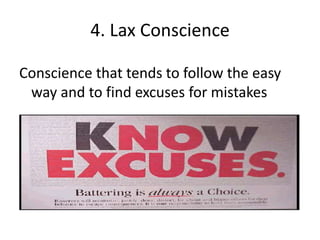
4. Lax Conscience
Conscience that tends to follow the easy
way and to find excuses for mistakes
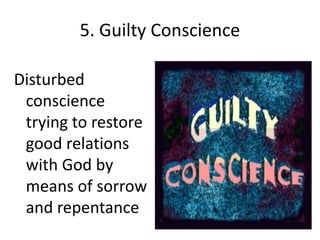
5. Guilty Conscience
Disturbed
conscience
trying to restore
good relations
with God by
means of sorrow
and repentance
Situational Analysis
1. Andy sees a wallet in an open locker next to his in
the lobby locker area. He takes it out an finds
P500 bill in it. The wallet does not belong to any
of his friends. He is tempted to take the P500, but
decides that this would be stealing. He puts the
wallet back in the locker and closes it.
Andy chose correctly. He knows that theft is wrong
and that it destroys trust. His conscience was
correctly formed and led him to choose the value
of honesty.
Situational Analysis
2. Barbara went to a party and got drunk. (This is
serious matter because a person cannot think
rationally or choose freely. Something essential
has been destroyed).
When she went to the party, Barbara honestly
didn’t see anything wrong with drinking. Later,
when she discussed her behavior with her
parents, she claimed that no one ever told her
that drunkenness was seriously wrong.
In Barbara’s case, her conscience errs because of
lack of information. It happens to youngsters
whose parents are very prejudiced.
People with erroneous conscience must make a
sincere effort to overcome their ignorant
consciences. Everyone has a duty to grow in
knowledge of right and wrong.
Situational Analysis
3. George copies homework from his friends,
makes cheat sheets for tests, and plagiarizes
materials for his class papers. His does this in
all his classes. When discussions about
cheating come up in class, he mentally blocks
them out.
He once told a friend, “No one is going to tell me
what to do.”
George has a lax conscience. He doesn’t care
about others. He closes his mind to what is
true and good. His only interest is himself. He
is insincere and doesn’t want to try to walk to
a virtuous path.
Questions?
Is it possible to have a good
conscience even if we make
poor moral choices?
When can we say that a conscience is
MATURE and when can we say that
it is IMMATURE?
Consider the following case:
Jessica, Anne, Gelo and Rey were out with some
other friends celebrating at the beginning of
Christmas vacation. Someone in their class
suggested how much fun it would be to
“trash” some of the Christmas decorations on
the lawns in the neighborhood around the
school.
Jessica, Anne, Gelo, Rey decided not to join in.
Why?
Mature or Less than Mature Conscience
Rey was already in trouble with the school
administration. He could not afford another bad
report on his record.
Jessica would be ashamed if her parents found out.
She loves them and doesn’t want to do anything
to embarrass them.
Anne quickly dismissed this “fun prank” as being a
basic violation of other people’s rights.
Gelo wanted to join in the fun, but since none of
her group wanted to, she decided to stick with
them.
MATURE
• A conscience that
weighs decisions
• It considers basic
dignity of others and
the respect due
them.
• It looks to God’s law
of love and is open
to truth and
goodness.
IMMATURE
• A conscience that
act out of other (not
so good) motives.
• For example
– a need to avoid
punishment
– desire for rewards
– wish to please
others
Is it better to do right things with
wrong reasons or wrong things
for the right reason?
Explain your answer.

Different Kinds of Conscience

  • 1.
  • 2.
    Thomas More • Chancellorof England under King Henry VIII • Wrote Utopia which outlined a society ruled by perfect justice. • A husband, father and martyr.
  • 3.
    Antecedent - ConsequentConscience Judgment is passed before an action is performed or only after the action is done But during the action as well. Concomitant
  • 4.
    Right and ErroneousConscience Right- judge what is really good as good and evil what is really evil. Erroneous – judges what is bad as good and vice versa.
  • 5.
    CONSCIENCE • SINCERITY •CORRECTNESS It is not enough to be sincere. It is important to be correct.
  • 6.
    1. Certain Conscience Subjectiveassurance of the lawfulness or unlawfulness of certain actions to be done or to be admitted.
  • 7.
    2. Doubtful Conscience Suspendsjudgment on the lawfulness of an action and therefore( it is possible) the action should be omitted.
  • 8.
    3. Scrupulous Conscience Constantlyafraid of committing evil. This conscience is a result of a stubborn character.
  • 9.
    4. Lax Conscience Consciencethat tends to follow the easy way and to find excuses for mistakes
  • 10.
    5. Guilty Conscience Disturbed conscience tryingto restore good relations with God by means of sorrow and repentance
  • 11.
    Situational Analysis 1. Andysees a wallet in an open locker next to his in the lobby locker area. He takes it out an finds P500 bill in it. The wallet does not belong to any of his friends. He is tempted to take the P500, but decides that this would be stealing. He puts the wallet back in the locker and closes it. Andy chose correctly. He knows that theft is wrong and that it destroys trust. His conscience was correctly formed and led him to choose the value of honesty.
  • 12.
    Situational Analysis 2. Barbarawent to a party and got drunk. (This is serious matter because a person cannot think rationally or choose freely. Something essential has been destroyed). When she went to the party, Barbara honestly didn’t see anything wrong with drinking. Later, when she discussed her behavior with her parents, she claimed that no one ever told her that drunkenness was seriously wrong.
  • 13.
    In Barbara’s case,her conscience errs because of lack of information. It happens to youngsters whose parents are very prejudiced. People with erroneous conscience must make a sincere effort to overcome their ignorant consciences. Everyone has a duty to grow in knowledge of right and wrong.
  • 14.
    Situational Analysis 3. Georgecopies homework from his friends, makes cheat sheets for tests, and plagiarizes materials for his class papers. His does this in all his classes. When discussions about cheating come up in class, he mentally blocks them out. He once told a friend, “No one is going to tell me what to do.”
  • 15.
    George has alax conscience. He doesn’t care about others. He closes his mind to what is true and good. His only interest is himself. He is insincere and doesn’t want to try to walk to a virtuous path.
  • 16.
  • 17.
    Is it possibleto have a good conscience even if we make poor moral choices?
  • 18.
    When can wesay that a conscience is MATURE and when can we say that it is IMMATURE?
  • 19.
    Consider the followingcase: Jessica, Anne, Gelo and Rey were out with some other friends celebrating at the beginning of Christmas vacation. Someone in their class suggested how much fun it would be to “trash” some of the Christmas decorations on the lawns in the neighborhood around the school. Jessica, Anne, Gelo, Rey decided not to join in. Why?
  • 20.
    Mature or Lessthan Mature Conscience Rey was already in trouble with the school administration. He could not afford another bad report on his record. Jessica would be ashamed if her parents found out. She loves them and doesn’t want to do anything to embarrass them. Anne quickly dismissed this “fun prank” as being a basic violation of other people’s rights. Gelo wanted to join in the fun, but since none of her group wanted to, she decided to stick with them.
  • 21.
    MATURE • A consciencethat weighs decisions • It considers basic dignity of others and the respect due them. • It looks to God’s law of love and is open to truth and goodness. IMMATURE • A conscience that act out of other (not so good) motives. • For example – a need to avoid punishment – desire for rewards – wish to please others
  • 22.
    Is it betterto do right things with wrong reasons or wrong things for the right reason? Explain your answer.