Smart	
  City	
  Concept	
  and	
  Solu2on	
  
	
  AUST	
  Summer	
  Course	
  2015	
  
Chapter	
  6	
  :	
  Smart	
  District	
  
hea2ng/cooling	
  
Professor	
  Isam	
  SHAHROUR	
  	
  
Isam.shahrour@univ-­‐lille1.fr	
  
Organiza(on	
  of	
  the	
  chapter	
  	
  
-­‐  Hea(ng/cooling	
  energy	
  consump(on	
  	
  
-­‐  The	
  district	
  hea(ng/cooling	
  system	
  
-­‐  Key	
  figures	
  
-­‐  The	
  Smart	
  hea(ng/cooling	
  system	
  
-­‐  Strict	
  hea(ng	
  pilot	
  –	
  SunRise	
  project	
  
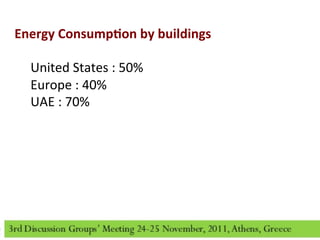
Energy	
  Consump2on	
  by	
  buildings	


United	
  States	
  :	
  50%	
  
Europe	
  :	
  40%	
  
UAE	
  :	
  70%	


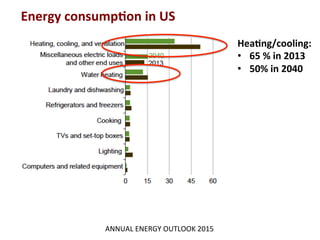
Energy	
  consump2on	
  in	
  US	
  	
  
ANNUAL	
  ENERGY	
  OUTLOOK	
  2015	
  
Hea2ng/cooling:	
  	
  
•  65	
  %	
  in	
  2013	
  
•  50%	
  in	
  2040	
  	
  
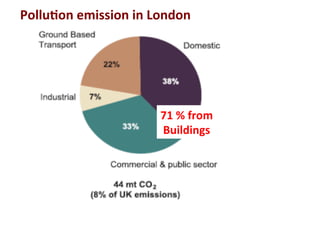
Pollu2on	
  emission	
  in	
  London	
  	
  
71	
  %	
  from	
  	
  
Buildings	
  
Energy	
  consump2on	
  in	
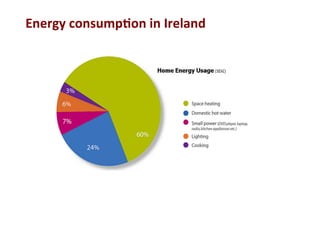
  Ireland	
  	
  
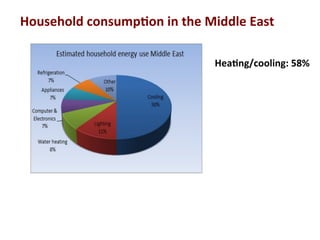
Household	
  consump2on	
  in	
  the	
  Middle	
  East	
  
Hea2ng/cooling:	
  58%	
  	
  
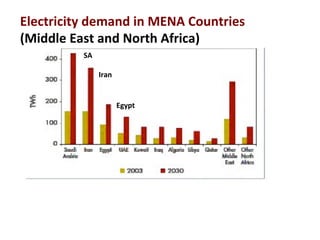
Electricity	
  demand	
  in	
  MENA	
  Countries	
  
(Middle	
  East	
  and	
  North	
  Africa)	
  	
  
SA	
  
Iran	
  
Egypt	
  
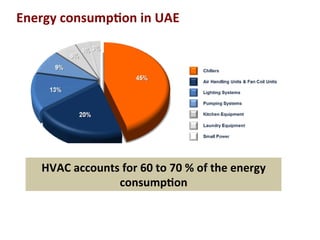
Energy	
  consump2on	
  in	
  UAE	
  
HVAC	
  accounts	
  for	
  60	
  to	
  70	
  %	
  of	
  the	
  energy	
  
consump2on	
  
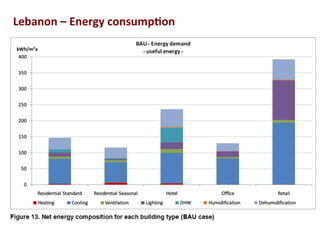
Lebanon	
  –	
  Energy	
  consump2on	
  
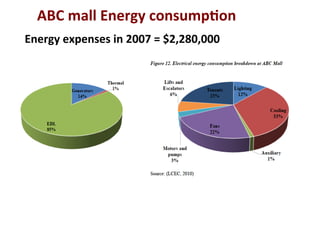
ABC	
  mall	
  Energy	
  consump2on	
  	
  
Energy	
  expenses	
  in	
  2007	
  =	
  $2,280,000	


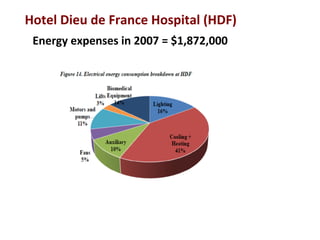
Hotel	
  Dieu	
  de	
  France	
  Hospital	
  (HDF)	
  	
  
Energy	
  expenses	
  in	
  2007	
  =	
  $1,872,000	


Organiza(on	
  of	
  the	
  chapter	
  	
  
-­‐  Hea(ng	
  cooling	
  energy	
  consump(on	
  	
  
-­‐  The	
  district	
  hea(ng/cooling	
  system	
  
-­‐  Key	
  figures	
  
-­‐  The	
  Smart	
  hea(ng/cooling	
  system	
  
-­‐  Strict	
  hea(ng	
  pilot	
  –	
  SunRise	
  project	
  
Industrial	
  
buildings	
  
Offices,	
  Services	
  
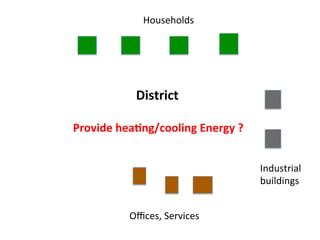
Provide	
  hea2ng/cooling	
  Energy	
  ?	
  	
  
District	
  	
  
Households	
  
Industrial	
  
buildings	
  
Offices,	
  Services	
  
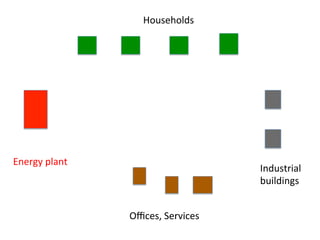
Energy	
  plant	
  
Households	
  
Industrial	
  
buildings	
  
Offices,	
  Services	
  
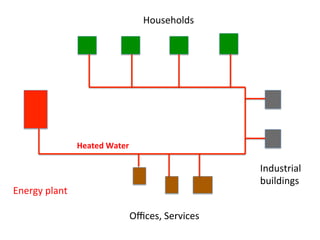
Energy	
  plant	
  
Heated	
  Water	
  	
  
Households	
  
Households	
  
Industrial	
  
buildings	
  
Offices,	
  Services	
  
Energy	
  plant	
  
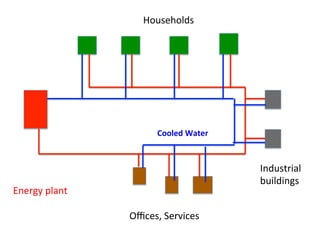
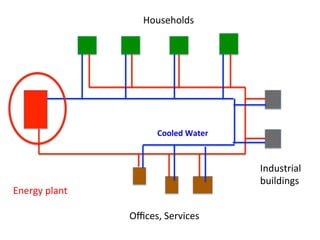
Cooled	
  Water	
  	
  
Households	
  
Industrial	
  
buildings	
  
Offices,	
  Services	
  
Energy	
  plant	
  
Cooled	
  Water	
  	
  
Conven2onal	
  energy:	
  	
  
•  Coal,	
  	
  
•  Natural	
  gas,	
  
•  	
  Oil	
  	
  
Energy	
  source	
  
Energy	
  recovery:	
  
•  waste	
  incinera(on,	
  
•  	
  waste	
  water,	
  	
  
•  data	
  centers	
  
•  Industrial	
  process	
  	
  
Renewable	
  energy:	
  
•  biomass,	
  	
  
•  deep	
  geothermal	
  
•  Solar	
  (Denmark	
  and	
  Germany)	
  
Energy	
  sources	
  
Sweden	
  faces	
  a	
  lack	
  of	
  garbage	
  for	
  energy	
  
genera2on.	
  	
  It	
  has	
  to	
  import	
  garbage.	
  
Video	
  :	
  A2	
  Impor(ng	
  garbage	
  for	
  energy	
  is	
  good	
  business	
  for	
  Sweden	
  
Energy	
  sources	
  
•  Conven(onal	
  energy	
  for	
  high	
  temperature	
  
•  Industrial	
  heat	
  recovery:	
  intermediate	
  temperature	
  
•  Geothermal	
  and	
  waste	
  water	
  for	
  low	
  temperature	
  (10-­‐30	
  °	
  C)	
  
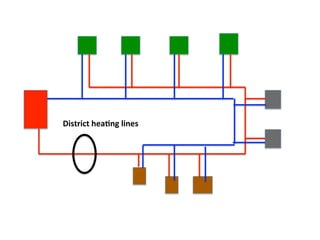
District	
  hea2ng	
  lines	
  
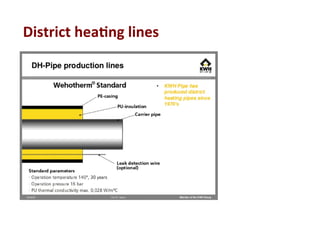
District	
  hea2ng	
  lines	
  	
  
District	
  hea2ng	
  lines	
  	
  
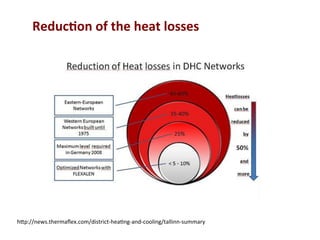
h^p://news.thermaflex.com/district-­‐hea(ng-­‐and-­‐cooling/tallinn-­‐summary	
  
Reduc2on	
  of	
  the	
  heat	
  losses	
  
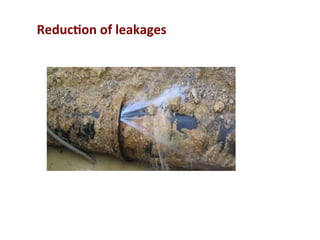
Reduc2on	
  of	
  leakages	


Over-­‐heated	
  water	
  (110	
  °	
  C	
  and	
  180°	
  C):	
  
	
  Buildings	
  requiring	
  high	
  temperature	
  (laundries,	
  industries	
  
Heat	
  transfer	
  fluids	
  
Hot	
  water	
  (between	
  60	
  °	
  C	
  and	
  110	
  °	
  C):	
  
	
  Residen(al	
  buildings	
  or	
  offices	
  
Steam	
  (200	
  °	
  C	
  to	
  300	
  °	
  C)	
  	
  :	
  
Mainly	
  used	
  for	
  industry	
  
Used	
  in	
  Paris	
  
Substa2on	
  
Substa2on	
  -­‐	
  Heat	
  exchanger	
  
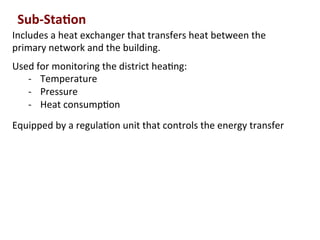
Includes	
  a	
  heat	
  exchanger	
  that	
  transfers	
  heat	
  between	
  the	
  
primary	
  network	
  and	
  the	
  building.	
  
Sub-­‐Sta2on	
  
Used	
  for	
  monitoring	
  the	
  district	
  hea(ng:	
  
-­‐  Temperature	
  
-­‐  Pressure	
  
-­‐  Heat	
  consump(on	
  	
  
Equipped	
  by	
  a	
  regula(on	
  unit	
  that	
  controls	
  the	
  energy	
  transfer	
  
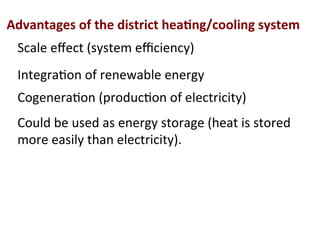
Advantages	
  of	
  the	
  district	
  hea2ng/cooling	
  system	
  
Scale	
  effect	
  (system	
  efficiency)	
  
Cogenera(on	
  (produc(on	
  of	
  electricity)	
  
Could	
  be	
  used	
  as	
  energy	
  storage	
  (heat	
  is	
  stored	
  
more	
  easily	
  than	
  electricity).	
  
Integra(on	
  of	
  renewable	
  energy	
  	
  
District	
  Hea2ng	
  Challenges	
  	
  
District	
  Hea2ng	
  Challenges	
  	
  
Break	
  in	
  a	
  hea(ng	
  pipe,	
  Paris,	
  May	
  2009	


Challenges	
  in	
  Smart	
  Hea2ng	
  :	
  Security	


Movies	
  :	
  
A1	
  District	
  Hea2ng	
  	
  
A2	
  Wonderful	
  World	
  of	
  District	
  Hea2ng	
  
A2	
  Impor2ng	
  garbage	
  for	
  energy	
  is	
  good	
  business	
  for	
  Sweden	
  
A3	
  CHP	
  Overview	


A4	
  District	
  hea(ng	
  &	
  cooling	
  from	
  Denmark	
  
A5	
  The	
  cogenera(on	
  and	
  district	
  hea(ng	
  plants	
  in	
  Turin,	
  Italy	
  
A6	
  District	
  Cooling	
  Plant	
  Abu	
  Dhabi,	
  UAE	
  
A8	
  Thermal	
  Chicago	
  district	
  cooling	
  system	


B1	
  SmartPower	
  Combined	
  Heat	
  and	
  Power	
  (CHP)	
  
B2	
  Smart	
  Celsius	
  Project	


Organiza(on	
  of	
  the	
  chapter	
  	
  
-­‐  Hea(ng	
  cooling	
  energy	
  consump(on	
  	
  
-­‐  The	
  district	
  hea(ng/cooling	
  system	
  
-­‐  Key	
  figures	
  
-­‐  The	
  Smart	
  hea(ng/cooling	
  system	
  
-­‐  Strict	
  hea(ng	
  pilot	
  –	
  SunRise	
  project	
  
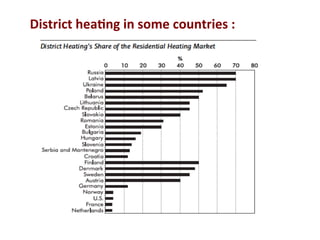
District	
  hea2ng	
  in	
  some	
  countries	
  :	
  
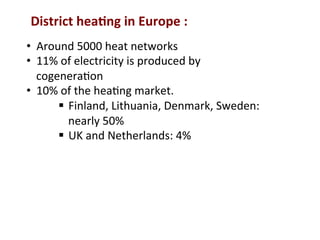
District	
  hea2ng	
  in	
  Europe	
  :	
  
•  Around	
  5000	
  heat	
  networks	
  
•  11%	
  of	
  electricity	
  is	
  produced	
  by	
  
cogenera(on	
  
•  10%	
  of	
  the	
  hea(ng	
  market.	
  
§  Finland,	
  Lithuania,	
  Denmark,	
  Sweden:	
  
nearly	
  50%	
  
§  UK	
  and	
  Netherlands:	
  4%	
  
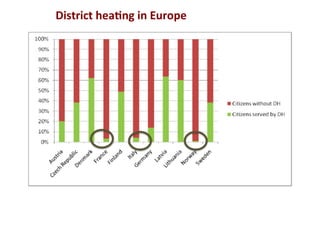
District	
  hea2ng	
  in	
  Europe	
  
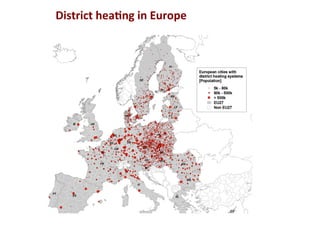
District	
  hea2ng	
  in	
  Europe	
  
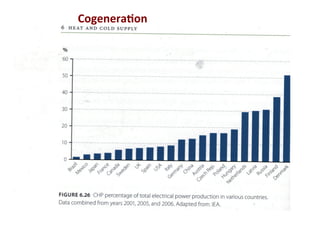
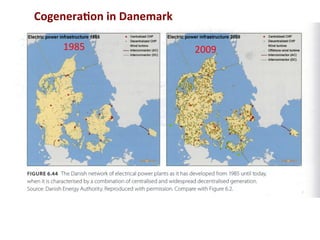
Cogenera2on	
  
Cogenera2on	
  in	
  Danemark	
  
2009	
  1985	
  
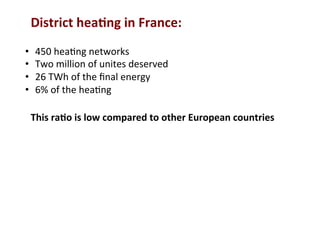
District	
  hea2ng	
  in	
  France:	
  
•  450	
  hea(ng	
  networks	
  
•  Two	
  million	
  of	
  unites	
  deserved	
  	
  
•  26	
  TWh	
  of	
  the	
  final	
  energy	
  
•  6%	
  of	
  the	
  hea(ng	
  
This	
  ra2o	
  is	
  low	
  compared	
  to	
  other	
  European	
  countries	
  
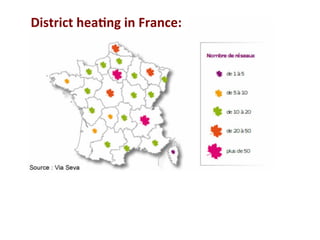
District	
  hea2ng	
  in	
  France:	
  
District	
  hea2ng	
  in	
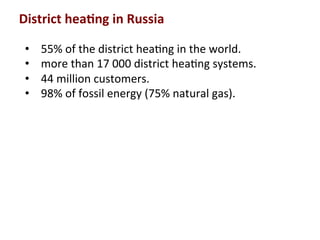
  Russia	
  
•  55%	
  of	
  the	
  district	
  hea(ng	
  in	
  the	
  world.	
  
•  more	
  than	
  17	
  000	
  district	
  hea(ng	
  systems.	
  
•  44	
  million	
  customers.	
  
•  98%	
  of	
  fossil	
  energy	
  (75%	
  natural	
  gas).	
  
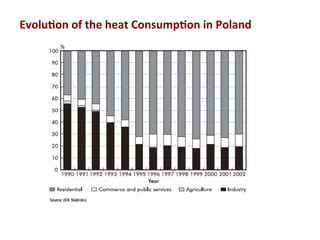
Evolu2on	
  of	
  the	
  heat	
  Consump2on	
  in	
  Poland	
  
District	
  hea2ng	
  in	
  United	
  States	
  
•  4%	
  of	
  the	
  hea(ng	
  demand	
  
•  New	
  York	
  network	
  district	
  hea(ng	
  (1882)	
  is	
  the	
  
largest	
  in	
  the	
  world	


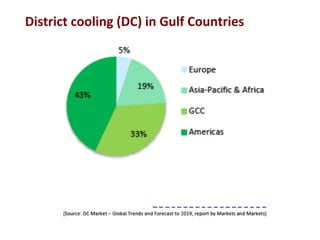
District	
  cooling	
  (DC)	
  in	
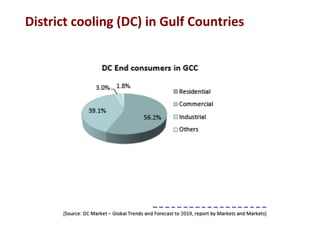
  Gulf	
  Countries	
  
District	
  cooling	
  (DC)	
  in	
  Gulf	
  Countries	
  
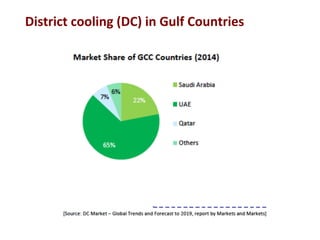
District	
  cooling	
  (DC)	
  in	
  Gulf	
  Countries	
  
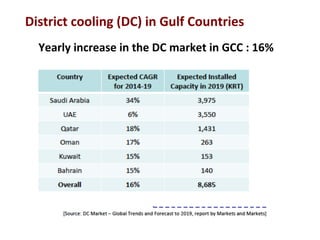
Yearly	
  increase	
  in	
  the	
  DC	
  market	
  in	
  GCC	
  :	
  16%	
  	
  
District	
  cooling	
  (DC)	
  in	
  Gulf	
  Countries	
  
Organiza2on	
  of	
  the	
  chapter	
  	
  
-­‐  Hea(ng	
  cooling	
  energy	
  consump(on	
  	
  
-­‐  The	
  district	
  hea(ng/cooling	
  system	
  
-­‐  Key	
  figures	
  
-­‐  Smart	
  hea2ng/cooling	
  system	
  
-­‐  Strict	
  hea(ng	
  pilot	
  –	
  SunRise	
  project	
  
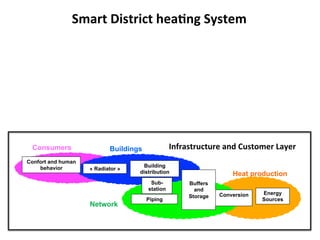
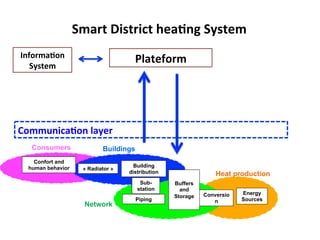
« Radiator »
Building
distribution
Sub-
station
Piping
Buffers
and
Storage Conversion Energy
Sources
Buildings
Network
Heat production
Confort and human
behavior
Consumers
Smart	
  District	
  hea2ng	
  System	
  
Infrastructure	
  and	
  Customer	
  Layer	
  	
  
56	
  
« Radiator »
Building
distribution
Sub-
station
Piping
Buffers
and
Storage Conversio
n
Energy
Sources
Buildings
Network
Heat production
Confort and
human behavior
Consumers
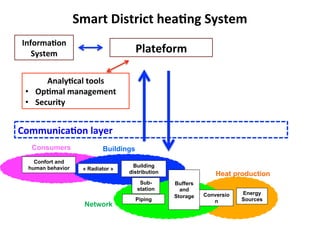
Communica2on	
  layer	
  	
  
Plateform	
  Informa2on	
  
System	
  
Smart	
  District	
  hea2ng	
  System	
  
57	
  
« Radiator »
Building
distribution
Sub-
station
Piping
Buffers
and
Storage Conversio
n
Energy
Sources
Buildings
Network
Heat production
Confort and
human behavior
Consumers
Communica2on	
  layer	
  	
  
Plateform	
  
Informa2on	
  
System	
  
Smart	
  District	
  hea2ng	
  System	
  
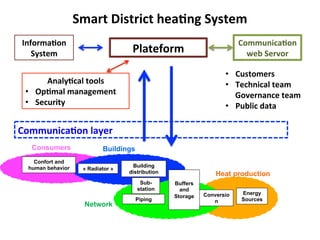
Analy2cal	
  tools	
  
•  Op2mal	
  management	
  	
  
•  Security	
  
58	
  
« Radiator »
Building
distribution
Sub-
station
Piping
Buffers
and
Storage Conversio
n
Energy
Sources
Buildings
Network
Heat production
Confort and
human behavior
Consumers
Communica2on	
  layer	
  	
  
Plateform	
  
Informa2on	
  
System	
  
Smart	
  District	
  hea2ng	
  System	
  
Analy2cal	
  tools	
  
•  Op2mal	
  management	
  	
  
•  Security	
  
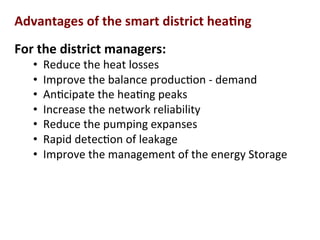
Communica2on	


web	
  Servor	
  
•  Customers	
  
•  Technical	
  team	
  
Governance	
  team	
  	
  
•  Public	
  data	
  
Advantages	
  of	
  the	
  smart	
  district	
  hea2ng	
  
For	
  the	
  district	
  managers:	
  	
  
•  Reduce	
  the	
  heat	
  losses	
  	
  
•  Improve	
  the	
  balance	
  produc(on	
  -­‐	
  demand	
  
•  An(cipate	
  the	
  hea(ng	
  peaks	
  
•  Increase	
  the	
  network	
  reliability	
  
•  Reduce	
  the	
  pumping	
  expanses	
  	
  
•  Rapid	
  detec(on	
  of	
  leakage	
  
•  Improve	
  the	
  management	
  of	
  the	
  energy	
  Storage	


For	
  the	
  Ci2es	
  
§  	
  Mapping	
  the	
  heat	
  consump(on	
  in	
  the	
  city	
  
(renova(ons	
  priori(es)	
  
§  Mapping	
  the	
  heat	
  loss	
  in	
  the	
  network	
  (network	
  
renova(on	
  priori(es)	
  
§  Improve	
  the	
  asset	
  management	
  
Advantages	
  of	
  the	
  smart	
  district	
  hea2ng	
  
For	
  customers	
  	
  
Real	
  (me	
  informa(on	
  on	
  the	
  heat	
  consump(on	
  
•  Energy	
  savings	
  based	
  on	
  data	
  and	
  saving	
  incen(ve	
  	
  
•  Benchmarking	
  
Apport	
  des	
  réseaux	
  intelligents	
  
Organiza2on	
  of	
  the	
  chapter	
  	
  
-­‐  Hea(ng	
  cooling	
  energy	
  consump(on	
  	
  
-­‐  The	
  district	
  hea(ng/cooling	
  system	
  
-­‐  Key	
  figures	
  
-­‐  The	
  Smart	
  hea2ng/cooling	
  system	
  
-­‐  Strict	
  hea2ng	
  pilot	
  –	
  SunRise	
  project	
  
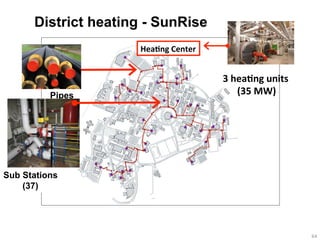
SunRise	
  District	
  Hea2ng	
  
Primary	
  network:	
  9	
  km	
  
Secondary	
  network:	
  8	
  	
  km	
  
primary	
  substa(ons	
  :	
  37	
  
District heating - SunRise
64	
  
Présentation
Pipes
Sub Stations
(37)
Hea2ng	
  Center	
  
3	
  hea2ng	
  units	
  
	
  (35	
  MW)	
  
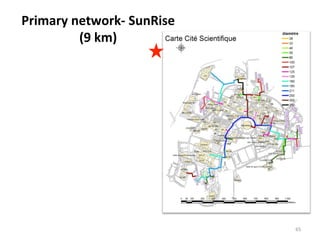
Primary	
  network-­‐	
  SunRise	
  
(9	
  km)	


65	
  
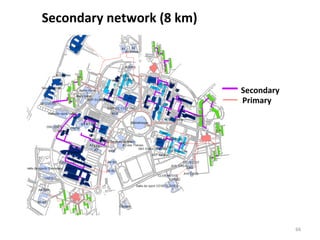
Secondary	
  network	
  (8	
  km)	
  
66	
  
Primary	


Secondary	


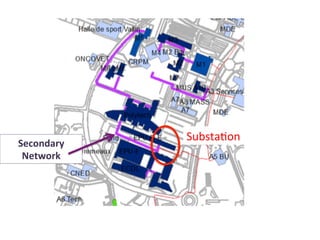
Substa(on	
  
Secondary	
  
Network	


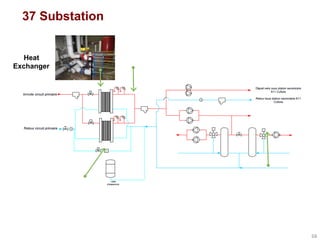
37 Substation
68	
  
Heat
Exchanger
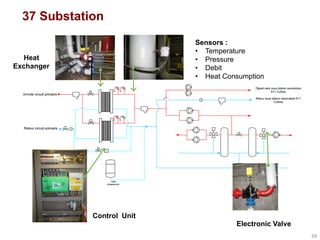
37 Substation
69	
  
Heat
Exchanger
Electronic Valve
Sensors :
•  Temperature
•  Pressure
•  Debit
•  Heat Consumption
Control Unit
The	
  substa2on:	
  
•  Equipped	
  by	
  a	
  local	
  management	
  unit	
  
•  Connected	
  to	
  a	
  bi-­‐direc(onal	
  data	
  transmission	
  fiber	
  
•  Transmits	
  	
  data	
  concerning	
  flow,	
  power,	
  valve	
  status,	
  ...	
  
•  On-­‐line	
  controlled	
  
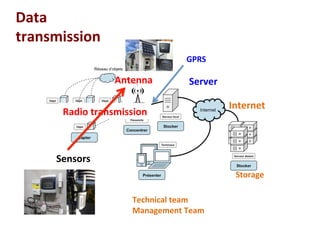
Data	
  
transmission	
  
Sensors	
  
GPRS	
  
Server	
  	
  
Internet	
  
Storage	
  
Technical	
  team	
  
Management	
  Team	
  
Radio	
  transmission	
  
Antenna	
  
72	
  
Hourly	
  Consump2on	
  –	
  Building	
  M1	
  (January	
  2012)	
  
Heat	
  Consump2on	
  –	
  Building	
  M1	
  (2009)	
  
Heat	
  Consump(on	
  	
  
External	
  Temperature	
  	
  
Heat	
  Consump2on	
  –	
  Building	
  M1	
  
Working	
  day	
  
RMSE	
  =	
  1.199	
  
R²	


  =	
  0.854	
  
74	
  
Heat	
  Consump2on	
  
External	
  Temperature	
  
RMSE	
  =	
  1.181	
  
R²	


  =	
  0.827	
  
75	
  
Heat	
  Consump2on	
  –	
  Building	
  M1	
  
Week	
  -­‐	
  end	
  Heat	
  Consump2on	
  
External	
  Temperature	
  
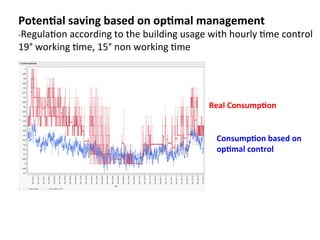
Real	
  Consump2on	
  	
  
Consump2on	
  based	
  on	
  
op2mal	
  control	


Poten2al	
  saving	
  based	
  on	
  op2mal	
  management	
  	
  
-­‐Regula(on	
  according	
  to	
  the	
  building	
  usage	
  with	
  hourly	
  (me	
  control	
  	
  
19°	
  working	
  (me,	
  15°	
  non	
  working	
  (me	
  
Conclusion	
  	
  
Hea2ng/Cooling	
  cons2tutes	
  a	
  major	
  issue	
  in	
  the	
  world	
  	
  
-­‐  High	
  energy	
  consump(on	
  
-­‐  High	
  pollu(on	
  emission	
  
-­‐  Quality	
  of	
  life	
  
-­‐  Big	
  market	


Conclusion	
  	
  
District	
  Hea2ng/Cooling	
  presents	
  major	
  advantages;	
  
-­‐  Energy	
  saving	
  (scale	
  effect)	
  
-­‐  Integra(on	
  of	
  renewable	
  energy	
  
-­‐  Co-­‐genera(on	
  (hea(ng	
  +	
  electrical	
  produc(on)	
  
-­‐  Increase	
  in	
  safety	
  	
  
-­‐  Energy	
  storage	
  
Conclusion	
  	
  
Smart	
  district	
  Hea2ng/Cooling	
  offers	
  major	
  advantages:	
  
•  Real	
  (me	
  data	
  and	
  control	
  
•  Be^er	
  understanding	
  of	
  the	
  system	
  (produc(on,	
  heat	
  
transport,	
  substa(on	
  and	
  consump(on)	
  
•  Improves	
  the	
  balance	
  heat	
  produc(on	
  –	
  demand	
  
•  Op(mize	
  the	
  hea(ng	
  temperature	
  	
  
•  Reduces	
  the	
  heat	
  losses	
  	
  
•  Increases	
  the	
  network	
  reliability	
  
•  Reduces	
  the	
  pumping	
  expanses	
  	
  
•  Rapid	
  detec(on	
  of	
  leakage	
  
Movies	
  :	
  
A1	
  District	
  Hea2ng	
  	
  
A2	
  Wonderful	
  World	
  of	
  District	
  Hea2ng	
  
A3	
  CHP	
  Overview	


A4	
  District	
  hea(ng	
  &	
  cooling	
  from	
  Denmark	
  
A5	
  The	
  cogenera(on	
  and	
  district	
  hea(ng	
  plants	
  in	
  Turin,	
  Italy	
  
A6	
  District	
  Cooling	
  Plant	
  Abu	
  Dhabi,	
  UAE	
  
A7	
  Saudi	
  Tabreed	
  Corporate	
  Video	
  
A8	
  Thermal	
  Chicago	
  district	
  cooling	
  system	
  
B1	
  SmartPower	
  Combined	
  Heat	
  and	
  Power	
  (CHP)	
  
B2	
  Smart	
  Celsius	
  Project	


THANK	
  YOU	
  

Chapter 6 : Smart District heating/cooling, Summer Course, AUST 2015

  • 1.
    Smart  City  Concept  and  Solu2on    AUST  Summer  Course  2015   Chapter  6  :  Smart  District   hea2ng/cooling   Professor  Isam  SHAHROUR     Isam.shahrour@univ-­‐lille1.fr  
  • 2.
    Organiza(on  of  the  chapter     -­‐  Hea(ng/cooling  energy  consump(on     -­‐  The  district  hea(ng/cooling  system   -­‐  Key  figures   -­‐  The  Smart  hea(ng/cooling  system   -­‐  Strict  hea(ng  pilot  –  SunRise  project  
  • 3.
    Energy  Consump2on  by  buildings     United  States  :  50%   Europe  :  40%   UAE  :  70%      
  • 4.
    Energy  consump2on  in  US     ANNUAL  ENERGY  OUTLOOK  2015   Hea2ng/cooling:     •  65  %  in  2013   •  50%  in  2040    
  • 5.
    Pollu2on  emission  in  London     71  %  from     Buildings  
  • 6.
  • 7.
    Household  consump2on  in  the  Middle  East   Hea2ng/cooling:  58%    
  • 8.
    Electricity  demand  in  MENA  Countries   (Middle  East  and  North  Africa)     SA   Iran   Egypt  
  • 9.
    Energy  consump2on  in  UAE   HVAC  accounts  for  60  to  70  %  of  the  energy   consump2on  
  • 10.
    Lebanon  –  Energy  consump2on  
  • 11.
    ABC  mall  Energy  consump2on     Energy  expenses  in  2007  =  $2,280,000      
  • 12.
    Hotel  Dieu  de  France  Hospital  (HDF)     Energy  expenses  in  2007  =  $1,872,000      
  • 13.
    Organiza(on  of  the  chapter     -­‐  Hea(ng  cooling  energy  consump(on     -­‐  The  district  hea(ng/cooling  system   -­‐  Key  figures   -­‐  The  Smart  hea(ng/cooling  system   -­‐  Strict  hea(ng  pilot  –  SunRise  project  
  • 14.
    Industrial   buildings   Offices,  Services   Provide  hea2ng/cooling  Energy  ?     District     Households  
  • 15.
    Industrial   buildings   Offices,  Services   Energy  plant   Households  
  • 16.
    Industrial   buildings   Offices,  Services   Energy  plant   Heated  Water     Households  
  • 17.
    Households   Industrial   buildings   Offices,  Services   Energy  plant   Cooled  Water    
  • 18.
    Households   Industrial   buildings   Offices,  Services   Energy  plant   Cooled  Water    
  • 19.
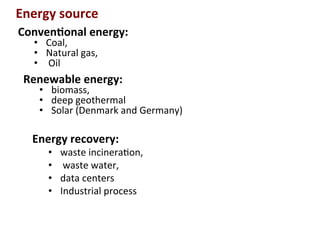
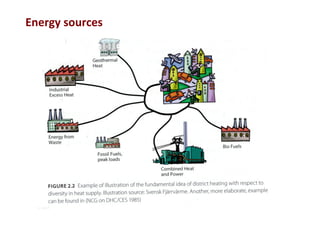
    Conven2onal  energy:     •  Coal,     •  Natural  gas,   •   Oil     Energy  source   Energy  recovery:   •  waste  incinera(on,   •   waste  water,     •  data  centers   •  Industrial  process     Renewable  energy:   •  biomass,     •  deep  geothermal   •  Solar  (Denmark  and  Germany)  
  • 20.
  • 21.
    Sweden  faces  a  lack  of  garbage  for  energy   genera2on.    It  has  to  import  garbage.   Video  :  A2  Impor(ng  garbage  for  energy  is  good  business  for  Sweden  
  • 22.
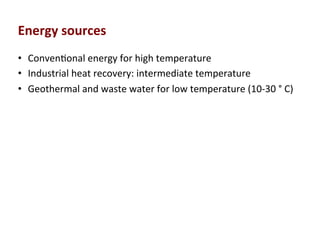
    Energy  sources   • Conven(onal  energy  for  high  temperature   •  Industrial  heat  recovery:  intermediate  temperature   •  Geothermal  and  waste  water  for  low  temperature  (10-­‐30  °  C)  
  • 23.
  • 24.
  • 25.
  • 26.
  • 27.
  • 28.
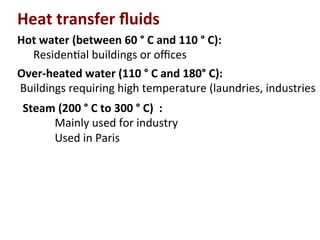
    Over-­‐heated  water  (110  °  C  and  180°  C):    Buildings  requiring  high  temperature  (laundries,  industries   Heat  transfer  fluids   Hot  water  (between  60  °  C  and  110  °  C):    Residen(al  buildings  or  offices   Steam  (200  °  C  to  300  °  C)    :   Mainly  used  for  industry   Used  in  Paris  
  • 29.
  • 31.
  • 32.
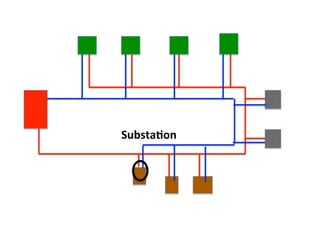
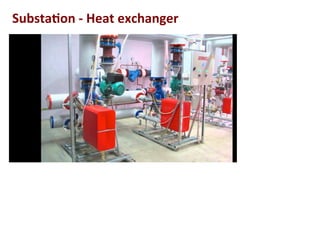
    Includes  a  heat  exchanger  that  transfers  heat  between  the   primary  network  and  the  building.   Sub-­‐Sta2on   Used  for  monitoring  the  district  hea(ng:   -­‐  Temperature   -­‐  Pressure   -­‐  Heat  consump(on     Equipped  by  a  regula(on  unit  that  controls  the  energy  transfer  
  • 33.
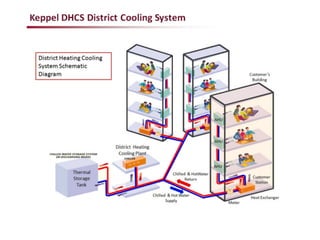
    Advantages  of  the  district  hea2ng/cooling  system   Scale  effect  (system  efficiency)   Cogenera(on  (produc(on  of  electricity)   Could  be  used  as  energy  storage  (heat  is  stored   more  easily  than  electricity).   Integra(on  of  renewable  energy    
  • 34.
  • 35.
  • 36.
    Break  in  a  hea(ng  pipe,  Paris,  May  2009       Challenges  in  Smart  Hea2ng  :  Security      
  • 37.
    Movies  :   A1  District  Hea2ng     A2  Wonderful  World  of  District  Hea2ng   A2  Impor2ng  garbage  for  energy  is  good  business  for  Sweden   A3  CHP  Overview     A4  District  hea(ng  &  cooling  from  Denmark   A5  The  cogenera(on  and  district  hea(ng  plants  in  Turin,  Italy   A6  District  Cooling  Plant  Abu  Dhabi,  UAE   A8  Thermal  Chicago  district  cooling  system     B1  SmartPower  Combined  Heat  and  Power  (CHP)   B2  Smart  Celsius  Project    
  • 38.
    Organiza(on  of  the  chapter     -­‐  Hea(ng  cooling  energy  consump(on     -­‐  The  district  hea(ng/cooling  system   -­‐  Key  figures   -­‐  The  Smart  hea(ng/cooling  system   -­‐  Strict  hea(ng  pilot  –  SunRise  project  
  • 39.
    District  hea2ng  in  some  countries  :  
  • 40.
    District  hea2ng  in  Europe  :   •  Around  5000  heat  networks   •  11%  of  electricity  is  produced  by   cogenera(on   •  10%  of  the  hea(ng  market.   §  Finland,  Lithuania,  Denmark,  Sweden:   nearly  50%   §  UK  and  Netherlands:  4%  
  • 41.
  • 42.
  • 43.
  • 44.
  • 45.
    District  hea2ng  in  France:   •  450  hea(ng  networks   •  Two  million  of  unites  deserved     •  26  TWh  of  the  final  energy   •  6%  of  the  hea(ng   This  ra2o  is  low  compared  to  other  European  countries  
  • 46.
  • 47.
    District  hea2ng  in  Russia   •  55%  of  the  district  hea(ng  in  the  world.   •  more  than  17  000  district  hea(ng  systems.   •  44  million  customers.   •  98%  of  fossil  energy  (75%  natural  gas).  
  • 48.
    Evolu2on  of  the  heat  Consump2on  in  Poland  
  • 49.
    District  hea2ng  in  United  States   •  4%  of  the  hea(ng  demand   •  New  York  network  district  hea(ng  (1882)  is  the   largest  in  the  world      
  • 50.
    District  cooling  (DC)  in  Gulf  Countries  
  • 51.
    District  cooling  (DC)  in  Gulf  Countries  
  • 52.
    District  cooling  (DC)  in  Gulf  Countries  
  • 53.
    Yearly  increase  in  the  DC  market  in  GCC  :  16%     District  cooling  (DC)  in  Gulf  Countries  
  • 54.
    Organiza2on  of  the  chapter     -­‐  Hea(ng  cooling  energy  consump(on     -­‐  The  district  hea(ng/cooling  system   -­‐  Key  figures   -­‐  Smart  hea2ng/cooling  system   -­‐  Strict  hea(ng  pilot  –  SunRise  project  
  • 55.
    « Radiator » Building distribution Sub- station Piping Buffers and StorageConversion Energy Sources Buildings Network Heat production Confort and human behavior Consumers Smart  District  hea2ng  System   Infrastructure  and  Customer  Layer    
  • 56.
    56   « Radiator» Building distribution Sub- station Piping Buffers and Storage Conversio n Energy Sources Buildings Network Heat production Confort and human behavior Consumers Communica2on  layer     Plateform  Informa2on   System   Smart  District  hea2ng  System  
  • 57.
    57   « Radiator» Building distribution Sub- station Piping Buffers and Storage Conversio n Energy Sources Buildings Network Heat production Confort and human behavior Consumers Communica2on  layer     Plateform   Informa2on   System   Smart  District  hea2ng  System   Analy2cal  tools   •  Op2mal  management     •  Security  
  • 58.
    58   « Radiator» Building distribution Sub- station Piping Buffers and Storage Conversio n Energy Sources Buildings Network Heat production Confort and human behavior Consumers Communica2on  layer     Plateform   Informa2on   System   Smart  District  hea2ng  System   Analy2cal  tools   •  Op2mal  management     •  Security   Communica2on       web  Servor   •  Customers   •  Technical  team   Governance  team     •  Public  data  
  • 59.
    Advantages  of  the  smart  district  hea2ng   For  the  district  managers:     •  Reduce  the  heat  losses     •  Improve  the  balance  produc(on  -­‐  demand   •  An(cipate  the  hea(ng  peaks   •  Increase  the  network  reliability   •  Reduce  the  pumping  expanses     •  Rapid  detec(on  of  leakage   •  Improve  the  management  of  the  energy  Storage    
  • 60.
    For  the  Ci2es   §   Mapping  the  heat  consump(on  in  the  city   (renova(ons  priori(es)   §  Mapping  the  heat  loss  in  the  network  (network   renova(on  priori(es)   §  Improve  the  asset  management   Advantages  of  the  smart  district  hea2ng  
  • 61.
    For  customers     Real  (me  informa(on  on  the  heat  consump(on   •  Energy  savings  based  on  data  and  saving  incen(ve     •  Benchmarking   Apport  des  réseaux  intelligents  
  • 62.
    Organiza2on  of  the  chapter     -­‐  Hea(ng  cooling  energy  consump(on     -­‐  The  district  hea(ng/cooling  system   -­‐  Key  figures   -­‐  The  Smart  hea2ng/cooling  system   -­‐  Strict  hea2ng  pilot  –  SunRise  project  
  • 63.
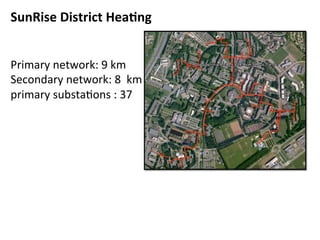
    SunRise  District  Hea2ng   Primary  network:  9  km   Secondary  network:  8    km   primary  substa(ons  :  37  
  • 64.
    District heating -SunRise 64   Présentation Pipes Sub Stations (37) Hea2ng  Center   3  hea2ng  units    (35  MW)  
  • 65.
    Primary  network-­‐  SunRise   (9  km)     65  
  • 66.
    Secondary  network  (8  km)   66   Primary                         Secondary                          
  • 67.
    Substa(on   Secondary   Network                          
  • 68.
  • 69.
    37 Substation 69   Heat Exchanger ElectronicValve Sensors : •  Temperature •  Pressure •  Debit •  Heat Consumption Control Unit
  • 70.
    The  substa2on:   • Equipped  by  a  local  management  unit   •  Connected  to  a  bi-­‐direc(onal  data  transmission  fiber   •  Transmits    data  concerning  flow,  power,  valve  status,  ...   •  On-­‐line  controlled  
  • 71.
    Data   transmission   Sensors   GPRS   Server     Internet   Storage   Technical  team   Management  Team   Radio  transmission   Antenna  
  • 72.
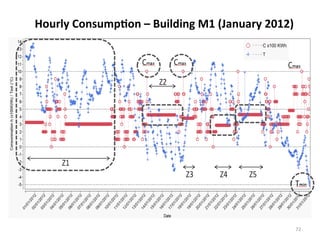
    72   Hourly  Consump2on  –  Building  M1  (January  2012)  
  • 73.
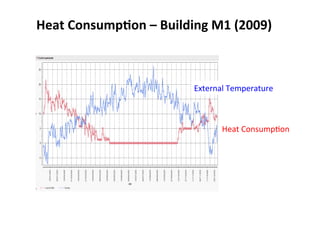
    Heat  Consump2on  –  Building  M1  (2009)   Heat  Consump(on     External  Temperature    
  • 74.
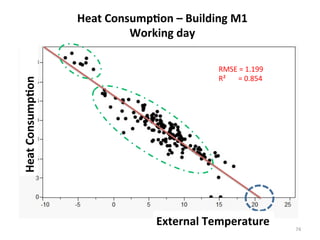
    Heat  Consump2on  –  Building  M1   Working  day   RMSE  =  1.199   R²              =  0.854   74   Heat  Consump2on   External  Temperature  
  • 75.
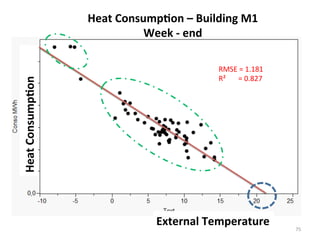
    RMSE  =  1.181   R²              =  0.827   75   Heat  Consump2on  –  Building  M1   Week  -­‐  end  Heat  Consump2on   External  Temperature  
  • 76.
    Real  Consump2on     Consump2on  based  on   op2mal  control       Poten2al  saving  based  on  op2mal  management     -­‐Regula(on  according  to  the  building  usage  with  hourly  (me  control     19°  working  (me,  15°  non  working  (me  
  • 77.
    Conclusion     Hea2ng/Cooling  cons2tutes  a  major  issue  in  the  world     -­‐  High  energy  consump(on   -­‐  High  pollu(on  emission   -­‐  Quality  of  life   -­‐  Big  market        
  • 78.
    Conclusion     District  Hea2ng/Cooling  presents  major  advantages;   -­‐  Energy  saving  (scale  effect)   -­‐  Integra(on  of  renewable  energy   -­‐  Co-­‐genera(on  (hea(ng  +  electrical  produc(on)   -­‐  Increase  in  safety     -­‐  Energy  storage  
  • 79.
    Conclusion     Smart  district  Hea2ng/Cooling  offers  major  advantages:   •  Real  (me  data  and  control   •  Be^er  understanding  of  the  system  (produc(on,  heat   transport,  substa(on  and  consump(on)   •  Improves  the  balance  heat  produc(on  –  demand   •  Op(mize  the  hea(ng  temperature     •  Reduces  the  heat  losses     •  Increases  the  network  reliability   •  Reduces  the  pumping  expanses     •  Rapid  detec(on  of  leakage  
  • 80.
    Movies  :   A1  District  Hea2ng     A2  Wonderful  World  of  District  Hea2ng   A3  CHP  Overview     A4  District  hea(ng  &  cooling  from  Denmark   A5  The  cogenera(on  and  district  hea(ng  plants  in  Turin,  Italy   A6  District  Cooling  Plant  Abu  Dhabi,  UAE   A7  Saudi  Tabreed  Corporate  Video   A8  Thermal  Chicago  district  cooling  system   B1  SmartPower  Combined  Heat  and  Power  (CHP)   B2  Smart  Celsius  Project    
  • 81.