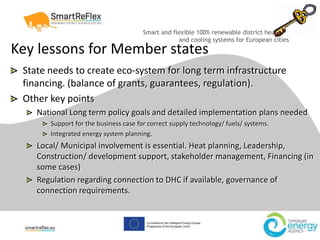
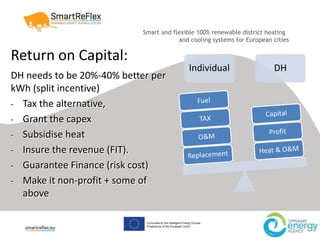
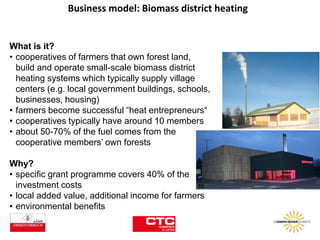
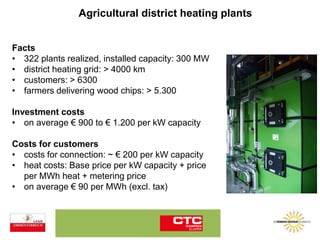
The document discusses the development of smart and flexible 100% renewable district heating and cooling systems in rural regions, highlighting the differences between Danish and German models concerning consumer satisfaction, ownership, and investment. Key lessons include the importance of long-term infrastructure financing, local involvement, and a supportive ecosystem to enhance the business viability of district heating. It also presents a case study of biomass district heating in Upper Austria, emphasizing the role of cooperatives and potential opportunities for rural district heating initiatives.