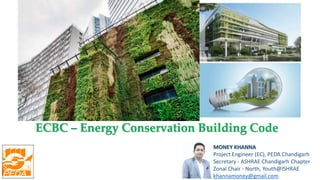
ECBC – Energy Conservation Building Code
MONEY KHANNA
Project Engineer (EC), PEDA Chandigarh
Secretary - ASHRAE Chandigarh Chapter
Zonal Chair - North, Youth@ISHRAE
khannamoney@gmail.com
Why Buildings?
What is Energy Efficient Building?
Why Energy Efficient Buildings?
Some Facts –
Are you Aware?
Impacts of
Global Warming
are already here….
The Rising Sea Levels…
Coastal flooding…
Frequent Severe Storms
Costly and growing health impacts
The Melting Glaciers
Unprecedented
Snow-Fall
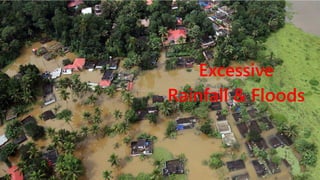
Excessive
Rainfall & Floods
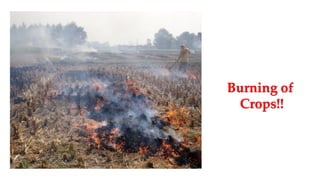
Burning of
Crops!!
Destructive wildfires….
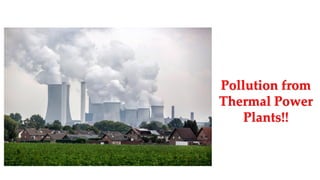
Pollution from
Thermal Power
Plants!!
Burning of
Waste /
Crackers!!
Intense heat waves
Extreme Drought conditions
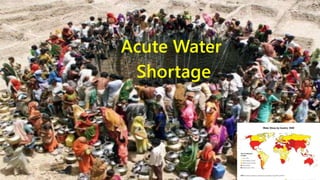
Acute Water
Shortage
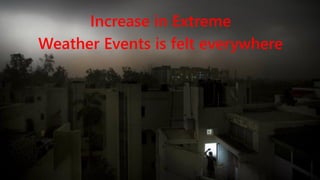
Increase in Extreme
Weather Events is felt everywhere
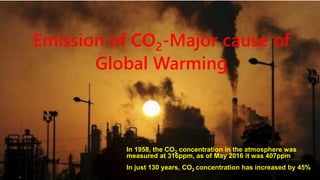
Emission of CO2-Major cause of
Global Warming
In 1958, the CO2 concentration in the atmosphere was
measured at 316ppm, as of May 2016 it was 407ppm
In just 130 years, CO2 concentration has increased by 45%
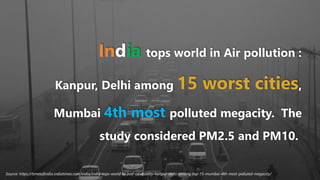
India tops world in Air pollution :
Kanpur, Delhi among 15 worst cities,
Mumbai 4th most polluted megacity. The
study considered PM2.5 and PM10.
Source: https://timesofindia.indiatimes.com/india/india-tops-world-in-bad-air-quality-kanpur-delhi-among-top-15-mumbai-4th-most-polluted-megacity/
Smog!!
Air Pollution!!
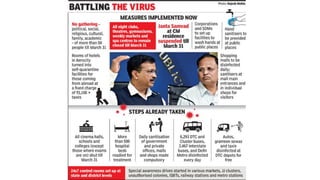
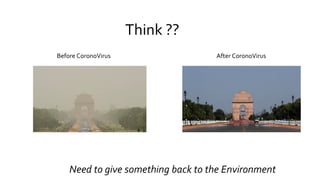
Before CoronoVirus After CoronoVirus
Need to give something back to the Environment
Think ??
See the
Environment
Around Us!!
Vision
Peaceful and Sustainable Earth will
give us strength for the Future!!
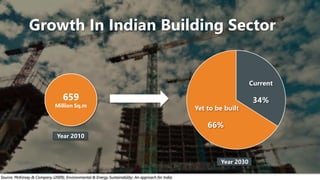
659
Million Sq.m
Year 2010
Year 2030
Yet to be built
66%
Current
34%
Source: McKinsey & Company (2009), Environmental & Energy Sustainability: An approach for India
Growth In Indian Building Sector
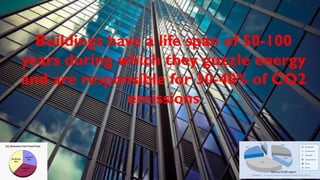
Source-ICLEI report
Buildings have a life span of 50-100
years during which they guzzle energy
and are responsible for 30-40% of CO2
emissions
We’re a country of
1.35 billion
People and still counting….
Source: http://www.worldometers.info/world-population/india-population/
Which is equivalent to 17.74% of the
total world population
We never know the worth of Water
till the well is dry!
- Thomas Fuller -
Do you Know?
Green
Land!!
Heat Sinks to Heat Island
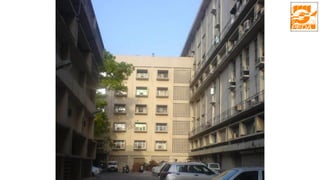
Context of our Cities
http://www.flickr.com/photos/85296574@N00/189385186/sizes/o/
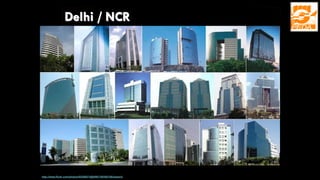
Delhi / NCR
http://www.flickr.com/photos/85296574@N00/188742872/sizes/o/in/set-72157594199106864/
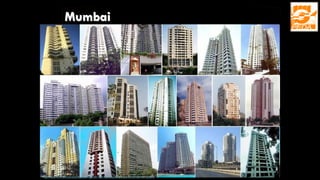
Mumbai
http://www.flickr.com/photos/85296574@N00/101301544/sizes/o/in/set-72157594199106864/
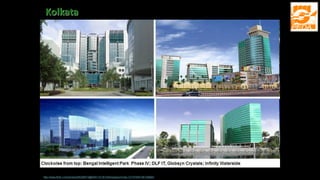
Kolkata
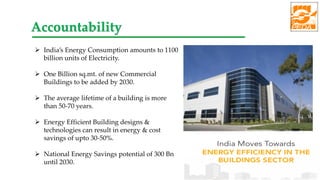
Accountability
 India’s Energy Consumption amounts to 1100
billion units of Electricity.
 One Billion sq.mt. of new Commercial
Buildings to be added by 2030.
 The average lifetime of a building is more
than 50-70 years.
 Energy Efficient Building designs &
technologies can result in energy & cost
savings of upto 30-50%.
 National Energy Savings potential of 300 Bn
until 2030.
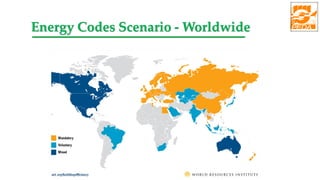
Energy Codes Scenario - Worldwide
ECBC
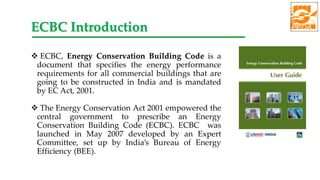
 ECBC, Energy Conservation Building Code is a
document that specifies the energy performance
requirements for all commercial buildings that are
going to be constructed in India and is mandated
by EC Act, 2001.
 The Energy Conservation Act 2001 empowered the
central government to prescribe an Energy
Conservation Building Code (ECBC). ECBC was
launched in May 2007 developed by an Expert
Committee, set up by India’s Bureau of Energy
Efficiency (BEE).
ECBC Introduction
 ECBC –Energy Conservation Building Code
 Initially the code has been launched by Bureau of Energy Efficiency
(BEE), Ministry of Power, Govt. of India
 As per the code, State Governments initially amended/amending the
code as per their climatic conditions, temperature, requirements, scope
etc.
 Some of the states have been amended and then notified to make
mandatory use of ECBC in upcoming Commercial Buildings in the
state.
ECBC Notification
 The Objective of ECBC is to provide Minimum Requirements for
Energy Efficient Design and Construction of Buildings and their
systems.
 The ECBC is applicable to buildings or building complexes that
have-
• Connected Load in excess of 100kW** OR
• Contract Demand in excess of 120 kVA**
• Recommended for all buildings with conditioned area > 500m2**
Objective & Scope
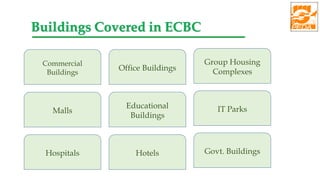
Commercial
Buildings
Office Buildings
Group Housing
Complexes
Malls
Educational
Buildings
IT Parks
Hospitals Hotels Govt. Buildings
Buildings Covered in ECBC
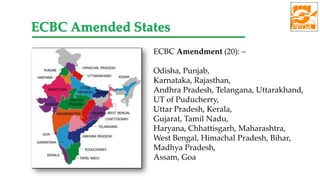
ECBC Amendment (20): –
Odisha, Punjab,
Karnataka, Rajasthan,
Andhra Pradesh, Telangana, Uttarakhand,
UT of Puducherry,
Uttar Pradesh, Kerala,
Gujarat, Tamil Nadu,
Haryana, Chhattisgarh, Maharashtra,
West Bengal, Himachal Pradesh, Bihar,
Madhya Pradesh,
Assam, Goa
ECBC Amended States
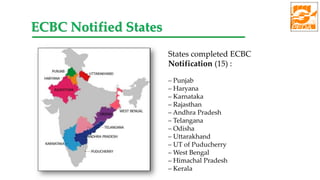
States completed ECBC
Notification (15) :
– Punjab
– Haryana
– Karnataka
– Rajasthan
– Andhra Pradesh
– Telangana
– Odisha
– Uttarakhand
– UT of Puducherry
– West Bengal
– Himachal Pradesh
– Kerala
ECBC Notified States
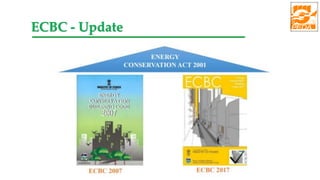
ECBC - Update
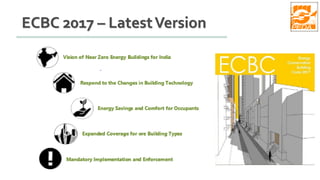
ECBC 2017 – LatestVersion
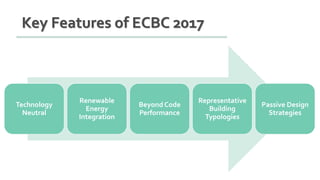
Key Features of ECBC 2017
Technology
Neutral
Renewable
Energy
Integration
Beyond Code
Performance
Representative
Building
Typologies
Passive Design
Strategies
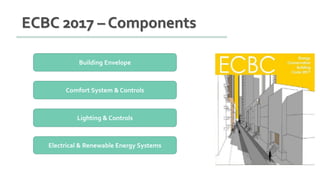
ECBC 2017 – Components
Building Envelope
Comfort System & Controls
Lighting & Controls
Electrical & Renewable Energy Systems
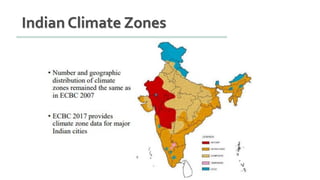
Indian Climate Zones
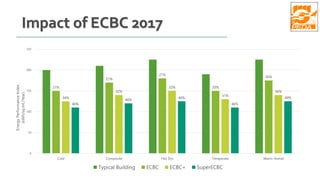
Impact of ECBC 2017
21%
21%
21%
20%
26%
34%
32%
32%
31%
36%
46%
46%
44%
46%
49%
0
50
100
150
200
250
Cold Composite Hot Dry Temperate Warm Humid
EnergyPerformanceIndex
(kWh/sq.mt./Year)
Typical Building ECBC ECBC+ SuperECBC
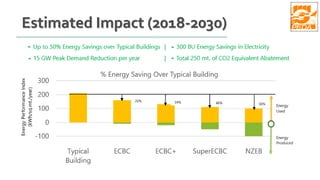
Estimated Impact (2018-2030)
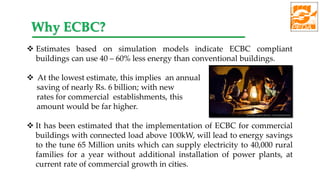
 Estimates based on simulation models indicate ECBC compliant
buildings can use 40 – 60% less energy than conventional buildings.
 At the lowest estimate, this implies an annual
saving of nearly Rs. 6 billion; with new
rates for commercial establishments, this
amount would be far higher.
 It has been estimated that the implementation of ECBC for commercial
buildings with connected load above 100kW, will lead to energy savings
to the tune 65 Million units which can supply electricity to 40,000 rural
families for a year without additional installation of power plants, at
current rate of commercial growth in cities.
Why ECBC?
ECBC-R– ECBC for Residential Buildings
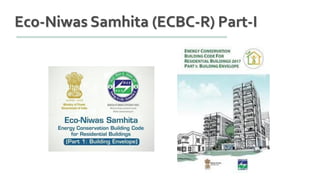
Eco-Niwas Samhita (ECBC-R) Part-I
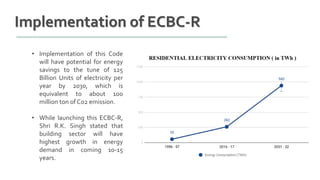
Implementation of ECBC-R
• Implementation of this Code
will have potential for energy
savings to the tune of 125
Billion Units of electricity per
year by 2030, which is
equivalent to about 100
million ton of Co2 emission.
• While launching this ECBC-R,
Shri R.K. Singh stated that
building sector will have
highest growth in energy
demand in coming 10-15
years.
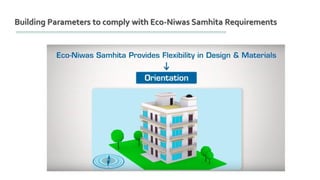
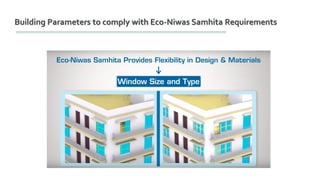
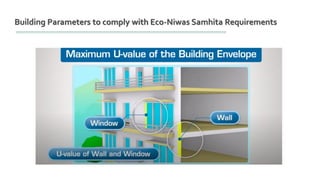
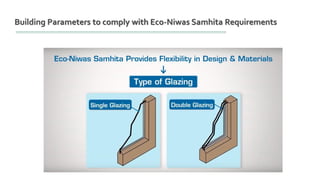
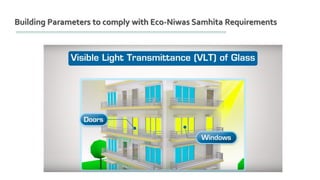
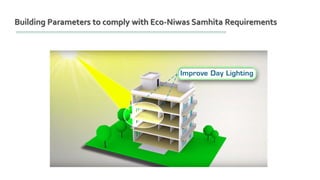
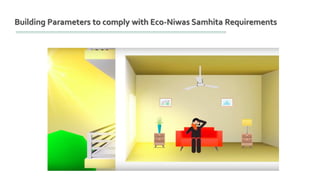
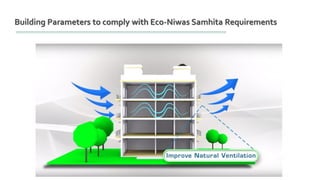
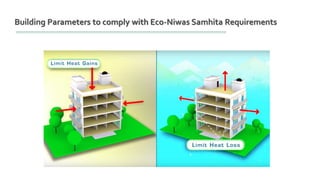
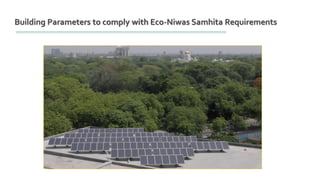
Building Parameters to comply with Eco-Niwas Samhita Requirements
Recommended Building Materials for
ECBC/Energy Efficient/Green Buildings
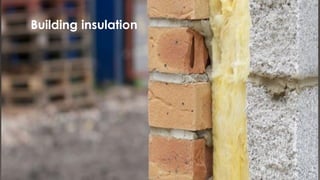
Building insulation
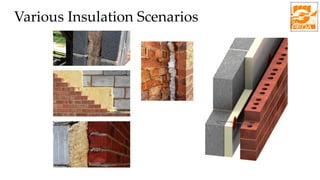
Various Insulation Scenarios
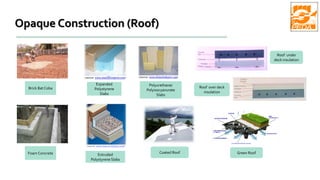
Opaque Construction (Roof)
Expanded
Polystyrene
Slabs
Extruded
Polystyrene Slabs
Polyurethane/
Polyisocyanurate
Slabs
Brick Bat Coba
Foam Concrete Coated Roof Green Roof
Roof under
deck insulation
Roof over deck
insulation
Cool roof coating
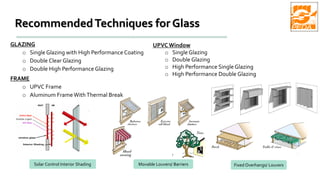
RecommendedTechniques for Glass
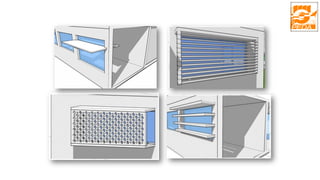
Movable Louvers/ Barriers Fixed Overhangs/ Louvers
GLAZING
o Single Glazing with High Performance Coating
o Double Clear Glazing
o Double High Performance Glazing
FRAME
o UPVC Frame
o Aluminum FrameWithThermal Break
UPVCWindow
o Single Glazing
o Double Glazing
o High Performance Single Glazing
o High Performance Double Glazing
Solar Control Interior Shading
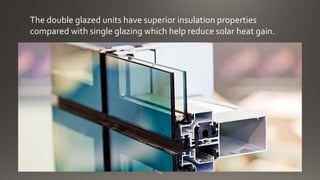
The double glazed units have superior insulation properties
compared with single glazing which help reduce solar heat gain.
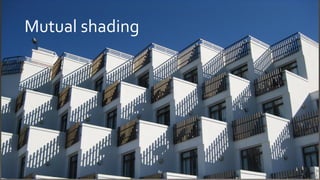
Mutual shading
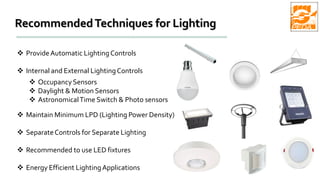
RecommendedTechniques for Lighting
 ProvideAutomatic LightingControls
 Internal and External LightingControls
 OccupancySensors
 Daylight & Motion Sensors
 AstronomicalTime Switch & Photo sensors
 Maintain Minimum LPD (Lighting Power Density)
 SeparateControls for Separate Lighting
 Recommended to use LED fixtures
 Energy Efficient LightingApplications
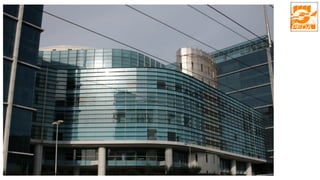
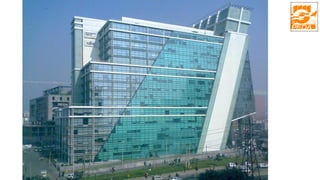
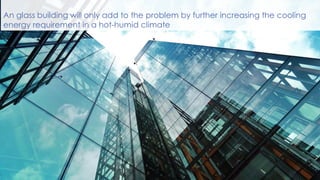
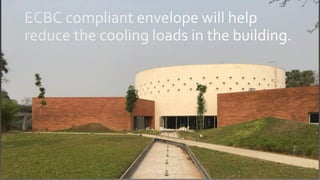
An glass building will only add to the problem by further increasing the cooling
energy requirement in a hot-humid climate
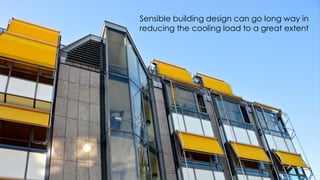
Sensible building design can go long way in
reducing the cooling load to a great extent
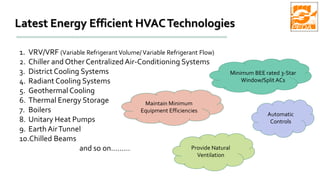
Latest Energy Efficient HVACTechnologies
1. VRV/VRF (Variable Refrigerant Volume/ Variable Refrigerant Flow)
2. Chiller and Other CentralizedAir-Conditioning Systems
3. District Cooling Systems
4. Radiant Cooling Systems
5. GeothermalCooling
6. Thermal Energy Storage
7. Boilers
8. Unitary Heat Pumps
9. Earth AirTunnel
10.Chilled Beams
and so on………
Minimum BEE rated 3-Star
Window/Split ACs
Maintain Minimum
Equipment Efficiencies
Automatic
Controls
Provide Natural
Ventilation
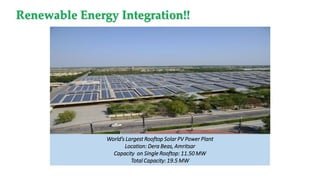
Renewable Energy Projects
World’s Largest Rooftop Solar PV Power Plant
Location: Dera Beas, Amritsar
Capacity on Single Rooftop: 11.50 MW
Total Capacity: 19.5 MW
Renewable Energy Integration!!
Case Studies
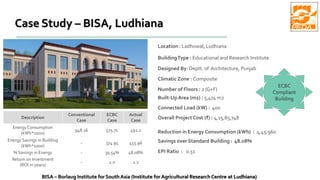
Case Study – BISA, Ludhiana
BISA – Borlaug Institute for SouthAsia (Institute for Agricultural Research Centre at Ludhiana)
Location : Ladhowal, Ludhiana
BuildingType : Educational and Research Institute
Designed By: Deptt. of Architecture, Punjab
Climatic Zone : Composite
Number of Floors : 2 (G+F)
Built-UpArea (m2) : 5,474 m2
Connected Load (kW) : 400
Overall Project Cost (₹) : 4,15,85,748
Reduction in Energy Consumption (kWh) : 4,45,960
Savings over Standard Building : 48.08%
EPI Ratio : 0.51
ECBC
Compliant
Building
Description
Conventional
Case
ECBC
Case
Actual
Case
Energy Consumption
(kWh*1000)
948.16 575.71 492.2
Energy Savings in Building
(kWh*1000)
- 374.95 455.96
% Savings in Energy - 39.54% 48.08%
Return on Investment
(ROI in years)
- 2.0 2.1
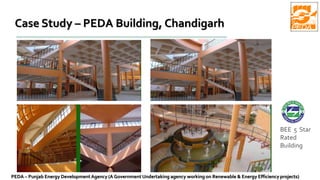
Case Study – PEDA Building, Chandigarh
BEE 5 Star
Rated
Building
PEDA – Punjab Energy DevelopmentAgency (A Government Undertaking agency working on Renewable & Energy Efficiency projects)
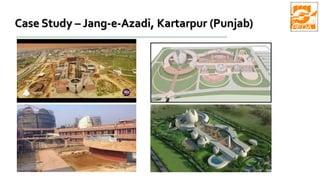
Case Study – Jang-e-Azadi, Kartarpur (Punjab)
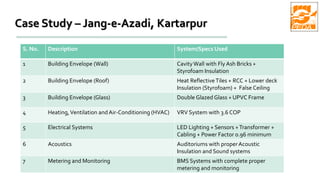
Case Study – Jang-e-Azadi, Kartarpur
S. No. Description System/Specs Used
1 Building Envelope (Wall) CavityWall with Fly Ash Bricks +
Styrofoam Insulation
2 Building Envelope (Roof) Heat ReflectiveTiles + RCC + Lower deck
Insulation (Styrofoam) + False Ceiling
3 Building Envelope (Glass) Double Glazed Glass + UPVC Frame
4 Heating,Ventilation andAir-Conditioning (HVAC) VRV System with 3.6 COP
5 Electrical Systems LED Lighting + Sensors +Transformer +
Cabling + Power Factor 0.96 minimum
6 Acoustics Auditoriums with properAcoustic
Insulation and Sound systems
7 Metering and Monitoring BMS Systems with complete proper
metering and monitoring
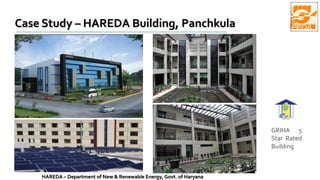
Case Study – HAREDA Building, Panchkula
GRIHA 5
Star Rated
Building
HAREDA – Department of New & Renewable Energy, Govt. of Haryana
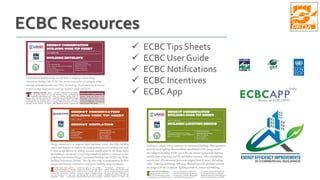
ECBC Resources
 ECBCTips Sheets
 ECBC User Guide
 ECBC Notifications
 ECBC Incentives
 ECBCApp
A Way Forward
- Implementation of ECBC in design and construction of upcoming buildings in the
states.
- Every Stakeholders (Architects/Builder/Consultants/Contractors/Engineers) should
provide extending support to make ECBC Compliant Buildings.
-To maintain regular mechanism for ECBC Implementation in the states.
*******Energy Efficiency!!*******
Objective
Save our Planet!
Make Eco-Friendly and Environment Responsive Buildings!
Energy Efficient & Green Buildings………!!
Set AC @24oC
Take Pledge
Target-
To reduce the Energy Consumption.
Save Earth!! Save Planet!!
Save Energy!! Save Water!! Save Waste!!
The Future ends with US……….
Thank You!
MONEY KHANNA
IGBC AP, GRIHA CP, GEM CP
BEE Certified ECBC Master Trainer
Secretary – ASHRAE Chandigarh Chapter
Founding Member - IBPSA-India
Zonal Chair - Programs, North – ISHRAE HQ
CWC Member – FSAI Chandigarh Sub-Chapter
Member – IAEMP, IAQA, khannamoney@gmail.com
+91 - 96800-39127

Ecbc ppt mk

  • 1.
    ECBC – EnergyConservation Building Code MONEY KHANNA Project Engineer (EC), PEDA Chandigarh Secretary - ASHRAE Chandigarh Chapter Zonal Chair - North, Youth@ISHRAE khannamoney@gmail.com
  • 3.
    Why Buildings? What isEnergy Efficient Building? Why Energy Efficient Buildings?
  • 4.
  • 5.
  • 6.
    The Rising SeaLevels… Coastal flooding…
  • 7.
  • 8.
    Costly and growinghealth impacts The Melting Glaciers
  • 9.
  • 10.
  • 11.
  • 12.
  • 13.
  • 14.
  • 15.
  • 16.
  • 17.
  • 18.
    Increase in Extreme WeatherEvents is felt everywhere
  • 19.
    Emission of CO2-Majorcause of Global Warming In 1958, the CO2 concentration in the atmosphere was measured at 316ppm, as of May 2016 it was 407ppm In just 130 years, CO2 concentration has increased by 45%
  • 20.
    India tops worldin Air pollution : Kanpur, Delhi among 15 worst cities, Mumbai 4th most polluted megacity. The study considered PM2.5 and PM10. Source: https://timesofindia.indiatimes.com/india/india-tops-world-in-bad-air-quality-kanpur-delhi-among-top-15-mumbai-4th-most-polluted-megacity/
  • 21.
  • 23.
    Before CoronoVirus AfterCoronoVirus Need to give something back to the Environment Think ??
  • 24.
  • 26.
    Vision Peaceful and SustainableEarth will give us strength for the Future!!
  • 27.
    659 Million Sq.m Year 2010 Year2030 Yet to be built 66% Current 34% Source: McKinsey & Company (2009), Environmental & Energy Sustainability: An approach for India Growth In Indian Building Sector
  • 28.
    Source-ICLEI report Buildings havea life span of 50-100 years during which they guzzle energy and are responsible for 30-40% of CO2 emissions
  • 29.
    We’re a countryof 1.35 billion People and still counting…. Source: http://www.worldometers.info/world-population/india-population/ Which is equivalent to 17.74% of the total world population
  • 30.
    We never knowthe worth of Water till the well is dry! - Thomas Fuller -
  • 31.
  • 32.
  • 33.
    Heat Sinks toHeat Island
  • 34.
  • 38.
  • 39.
  • 40.
  • 41.
    Accountability  India’s EnergyConsumption amounts to 1100 billion units of Electricity.  One Billion sq.mt. of new Commercial Buildings to be added by 2030.  The average lifetime of a building is more than 50-70 years.  Energy Efficient Building designs & technologies can result in energy & cost savings of upto 30-50%.  National Energy Savings potential of 300 Bn until 2030.
  • 42.
  • 43.
  • 44.
     ECBC, EnergyConservation Building Code is a document that specifies the energy performance requirements for all commercial buildings that are going to be constructed in India and is mandated by EC Act, 2001.  The Energy Conservation Act 2001 empowered the central government to prescribe an Energy Conservation Building Code (ECBC). ECBC was launched in May 2007 developed by an Expert Committee, set up by India’s Bureau of Energy Efficiency (BEE). ECBC Introduction
  • 45.
     ECBC –EnergyConservation Building Code  Initially the code has been launched by Bureau of Energy Efficiency (BEE), Ministry of Power, Govt. of India  As per the code, State Governments initially amended/amending the code as per their climatic conditions, temperature, requirements, scope etc.  Some of the states have been amended and then notified to make mandatory use of ECBC in upcoming Commercial Buildings in the state. ECBC Notification
  • 46.
     The Objectiveof ECBC is to provide Minimum Requirements for Energy Efficient Design and Construction of Buildings and their systems.  The ECBC is applicable to buildings or building complexes that have- • Connected Load in excess of 100kW** OR • Contract Demand in excess of 120 kVA** • Recommended for all buildings with conditioned area > 500m2** Objective & Scope
  • 47.
    Commercial Buildings Office Buildings Group Housing Complexes Malls Educational Buildings ITParks Hospitals Hotels Govt. Buildings Buildings Covered in ECBC
  • 48.
    ECBC Amendment (20):– Odisha, Punjab, Karnataka, Rajasthan, Andhra Pradesh, Telangana, Uttarakhand, UT of Puducherry, Uttar Pradesh, Kerala, Gujarat, Tamil Nadu, Haryana, Chhattisgarh, Maharashtra, West Bengal, Himachal Pradesh, Bihar, Madhya Pradesh, Assam, Goa ECBC Amended States
  • 49.
    States completed ECBC Notification(15) : – Punjab – Haryana – Karnataka – Rajasthan – Andhra Pradesh – Telangana – Odisha – Uttarakhand – UT of Puducherry – West Bengal – Himachal Pradesh – Kerala ECBC Notified States
  • 50.
  • 51.
    ECBC 2017 –LatestVersion
  • 52.
    Key Features ofECBC 2017 Technology Neutral Renewable Energy Integration Beyond Code Performance Representative Building Typologies Passive Design Strategies
  • 53.
    ECBC 2017 –Components Building Envelope Comfort System & Controls Lighting & Controls Electrical & Renewable Energy Systems
  • 54.
  • 55.
    Impact of ECBC2017 21% 21% 21% 20% 26% 34% 32% 32% 31% 36% 46% 46% 44% 46% 49% 0 50 100 150 200 250 Cold Composite Hot Dry Temperate Warm Humid EnergyPerformanceIndex (kWh/sq.mt./Year) Typical Building ECBC ECBC+ SuperECBC
  • 56.
  • 57.
     Estimates basedon simulation models indicate ECBC compliant buildings can use 40 – 60% less energy than conventional buildings.  At the lowest estimate, this implies an annual saving of nearly Rs. 6 billion; with new rates for commercial establishments, this amount would be far higher.  It has been estimated that the implementation of ECBC for commercial buildings with connected load above 100kW, will lead to energy savings to the tune 65 Million units which can supply electricity to 40,000 rural families for a year without additional installation of power plants, at current rate of commercial growth in cities. Why ECBC?
  • 58.
    ECBC-R– ECBC forResidential Buildings
  • 59.
  • 60.
    Implementation of ECBC-R •Implementation of this Code will have potential for energy savings to the tune of 125 Billion Units of electricity per year by 2030, which is equivalent to about 100 million ton of Co2 emission. • While launching this ECBC-R, Shri R.K. Singh stated that building sector will have highest growth in energy demand in coming 10-15 years.
  • 61.
    Building Parameters tocomply with Eco-Niwas Samhita Requirements
  • 62.
    Building Parameters tocomply with Eco-Niwas Samhita Requirements
  • 63.
    Building Parameters tocomply with Eco-Niwas Samhita Requirements
  • 64.
    Building Parameters tocomply with Eco-Niwas Samhita Requirements
  • 65.
    Building Parameters tocomply with Eco-Niwas Samhita Requirements
  • 66.
    Building Parameters tocomply with Eco-Niwas Samhita Requirements
  • 67.
    Building Parameters tocomply with Eco-Niwas Samhita Requirements
  • 68.
    Building Parameters tocomply with Eco-Niwas Samhita Requirements
  • 69.
    Building Parameters tocomply with Eco-Niwas Samhita Requirements
  • 70.
    Building Parameters tocomply with Eco-Niwas Samhita Requirements
  • 71.
    Recommended Building Materialsfor ECBC/Energy Efficient/Green Buildings
  • 72.
  • 73.
  • 75.
    Opaque Construction (Roof) Expanded Polystyrene Slabs Extruded PolystyreneSlabs Polyurethane/ Polyisocyanurate Slabs Brick Bat Coba Foam Concrete Coated Roof Green Roof Roof under deck insulation Roof over deck insulation
  • 76.
  • 77.
    RecommendedTechniques for Glass MovableLouvers/ Barriers Fixed Overhangs/ Louvers GLAZING o Single Glazing with High Performance Coating o Double Clear Glazing o Double High Performance Glazing FRAME o UPVC Frame o Aluminum FrameWithThermal Break UPVCWindow o Single Glazing o Double Glazing o High Performance Single Glazing o High Performance Double Glazing Solar Control Interior Shading
  • 79.
    The double glazedunits have superior insulation properties compared with single glazing which help reduce solar heat gain.
  • 81.
  • 82.
    RecommendedTechniques for Lighting ProvideAutomatic LightingControls  Internal and External LightingControls  OccupancySensors  Daylight & Motion Sensors  AstronomicalTime Switch & Photo sensors  Maintain Minimum LPD (Lighting Power Density)  SeparateControls for Separate Lighting  Recommended to use LED fixtures  Energy Efficient LightingApplications
  • 83.
    An glass buildingwill only add to the problem by further increasing the cooling energy requirement in a hot-humid climate
  • 84.
    Sensible building designcan go long way in reducing the cooling load to a great extent
  • 85.
    Latest Energy EfficientHVACTechnologies 1. VRV/VRF (Variable Refrigerant Volume/ Variable Refrigerant Flow) 2. Chiller and Other CentralizedAir-Conditioning Systems 3. District Cooling Systems 4. Radiant Cooling Systems 5. GeothermalCooling 6. Thermal Energy Storage 7. Boilers 8. Unitary Heat Pumps 9. Earth AirTunnel 10.Chilled Beams and so on……… Minimum BEE rated 3-Star Window/Split ACs Maintain Minimum Equipment Efficiencies Automatic Controls Provide Natural Ventilation
  • 87.
    Renewable Energy Projects World’sLargest Rooftop Solar PV Power Plant Location: Dera Beas, Amritsar Capacity on Single Rooftop: 11.50 MW Total Capacity: 19.5 MW Renewable Energy Integration!!
  • 88.
  • 89.
    Case Study –BISA, Ludhiana BISA – Borlaug Institute for SouthAsia (Institute for Agricultural Research Centre at Ludhiana) Location : Ladhowal, Ludhiana BuildingType : Educational and Research Institute Designed By: Deptt. of Architecture, Punjab Climatic Zone : Composite Number of Floors : 2 (G+F) Built-UpArea (m2) : 5,474 m2 Connected Load (kW) : 400 Overall Project Cost (₹) : 4,15,85,748 Reduction in Energy Consumption (kWh) : 4,45,960 Savings over Standard Building : 48.08% EPI Ratio : 0.51 ECBC Compliant Building Description Conventional Case ECBC Case Actual Case Energy Consumption (kWh*1000) 948.16 575.71 492.2 Energy Savings in Building (kWh*1000) - 374.95 455.96 % Savings in Energy - 39.54% 48.08% Return on Investment (ROI in years) - 2.0 2.1
  • 90.
    Case Study –PEDA Building, Chandigarh BEE 5 Star Rated Building PEDA – Punjab Energy DevelopmentAgency (A Government Undertaking agency working on Renewable & Energy Efficiency projects)
  • 91.
    Case Study –Jang-e-Azadi, Kartarpur (Punjab)
  • 92.
    Case Study –Jang-e-Azadi, Kartarpur S. No. Description System/Specs Used 1 Building Envelope (Wall) CavityWall with Fly Ash Bricks + Styrofoam Insulation 2 Building Envelope (Roof) Heat ReflectiveTiles + RCC + Lower deck Insulation (Styrofoam) + False Ceiling 3 Building Envelope (Glass) Double Glazed Glass + UPVC Frame 4 Heating,Ventilation andAir-Conditioning (HVAC) VRV System with 3.6 COP 5 Electrical Systems LED Lighting + Sensors +Transformer + Cabling + Power Factor 0.96 minimum 6 Acoustics Auditoriums with properAcoustic Insulation and Sound systems 7 Metering and Monitoring BMS Systems with complete proper metering and monitoring
  • 93.
    Case Study –HAREDA Building, Panchkula GRIHA 5 Star Rated Building HAREDA – Department of New & Renewable Energy, Govt. of Haryana
  • 94.
    ECBC Resources  ECBCTipsSheets  ECBC User Guide  ECBC Notifications  ECBC Incentives  ECBCApp
  • 95.
    A Way Forward -Implementation of ECBC in design and construction of upcoming buildings in the states. - Every Stakeholders (Architects/Builder/Consultants/Contractors/Engineers) should provide extending support to make ECBC Compliant Buildings. -To maintain regular mechanism for ECBC Implementation in the states. *******Energy Efficiency!!*******
  • 96.
  • 97.
    Save our Planet! MakeEco-Friendly and Environment Responsive Buildings! Energy Efficient & Green Buildings………!!
  • 98.
    Set AC @24oC TakePledge Target- To reduce the Energy Consumption.
  • 99.
    Save Earth!! SavePlanet!! Save Energy!! Save Water!! Save Waste!! The Future ends with US……….
  • 100.
    Thank You! MONEY KHANNA IGBCAP, GRIHA CP, GEM CP BEE Certified ECBC Master Trainer Secretary – ASHRAE Chandigarh Chapter Founding Member - IBPSA-India Zonal Chair - Programs, North – ISHRAE HQ CWC Member – FSAI Chandigarh Sub-Chapter Member – IAEMP, IAQA, khannamoney@gmail.com +91 - 96800-39127