
Chapter 4 
The Earth’s 
Atmosphere
COMPOSITION OF THE 
ATMOSPHERE 
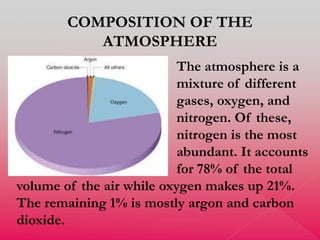
The atmosphere is a 
mixture of different 
gases, oxygen, and 
nitrogen. Of these, 
nitrogen is the most 
abundant. It accounts 
for 78% of the total 
volume of the air while oxygen makes up 21%. 
The remaining 1% is mostly argon and carbon 
dioxide.
EVOLUTION OF 
EARTH’S 
ATMOSPHERE
The gases of the atmosphere most important 
to man – nitrogen, oxygen, carbon dioxide, 
and water vapour, are rare in the universe. 
The modern atmosphere is sometimes 
referred to as Earth’s “third atmosphere”, 
in order to to distinguish the current 
chemical composition from two notable 
different previous compositions
The elements Hydrogen H and Helium He 
are the primarily chemical composition of 
the original atmosphere. Earth’s original 
atmosphere was probably just 
hydrogen and helium, because these 
were the main gases in the dusty, 
gassy disk around the Sun from which 
the planets formed.
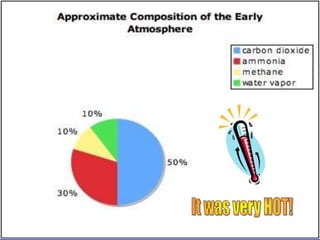
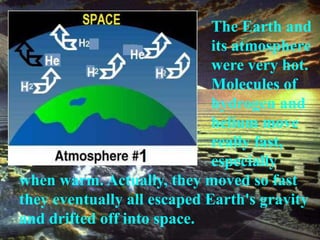
The Earth and 
its atmosphere 
were very hot. 
Molecules of 
hydrogen and 
helium move 
really fast, 
especially 
when warm. Actually, they moved so fast 
they eventually all escaped Earth's gravity 
and drifted off into space.
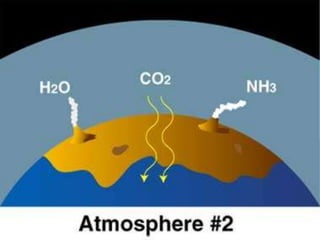
Earth’s “second atmosphere” came from 
Earth itself. There were lots of volcanoes, 
many more than today, because Earth’s 
crust was still forming. The volcanoes 
released 
1.steam (H2O, with two hydrogen atoms 
and one oxygen atom), 
2.carbon dioxide (CO2, with one carbon 
atoms and two oxygen atoms), 
3.ammonia (NH3, with one nitrogen 
atom and three hydrogen atoms).
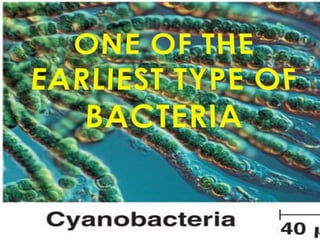
CYANOBACTERIA- the bacteria shaped like 
these existed approximately 3.3 billion years 
ago and was the first oxygen producing 
evolving phototropic organisms. During the 
period of 2.7 to 2.2 billion years ago they were 
conversion of the earth’s atmosphere from 
ANOXIC STATE (from state without oxygen) to 
OXIC STATE (a state with oxygen)
Photosynthesizing plants later evolved 
and continued releasing oxygen and 
sequestering carbon dioxide. 
Bacteria would also convert to ammonia 
into nitrogen. But most of the nitrogen 
currently present in the atmosphere 
results from sunlight-powered photolysis 
of ammonia released steadily over the 
aeons from volcanoes.
OXYGEN-NITROGEN atmosphere is the 
“third atmosphere”. 
Between 200 and 250 million years ago, 
up to 35% of the atmosphere was oxygen. 
The modern atmosphere has a 
composition which is enforced by ocean 
blue green algae aw well as geological 
processes.
THE ATMOSPHERE IS VERY 
IMPORTANT BECAUSE; 
1. All living organism needs this vapor 
or gas if they are continue living. 
2. Air is escaping in the outer atmosphere 
and it constantly being replaced by the 
Earth’s crust. The amount of air in the 
atmosphere don’t change much in its 
ratio, as a result all living organisms 
that depends in it for living also change 
slowly, if there is a sudden change in 
the atmosphere life would change with 
it
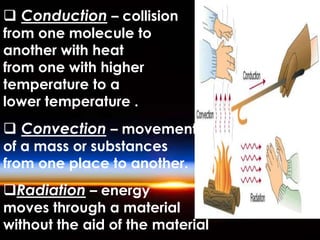
 Conduction – collision 
from one molecule to 
another with heat 
from one with higher 
temperature to a 
lower temperature . 
 Convection – movement 
of a mass or substances 
from one place to another. 
Radiation – energy 
moves through a material 
without the aid of the material
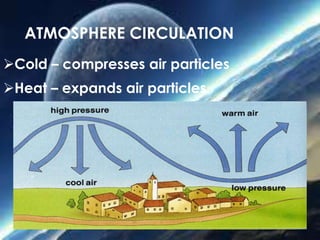
ATMOSPHERE CIRCULATION 
Cold – compresses air particles 
Heat – expands air particles
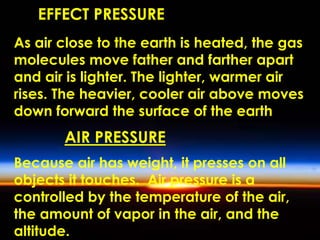
EFFECT PRESSURE 
As air close to the earth is heated, the gas 
molecules move father and farther apart 
and air is lighter. The lighter, warmer air 
rises. The heavier, cooler air above moves 
down forward the surface of the earth 
AIR PRESSURE 
Because air has weight, it presses on all 
objects it touches. Air pressure is a 
controlled by the temperature of the air, 
the amount of vapor in the air, and the 
altitude.
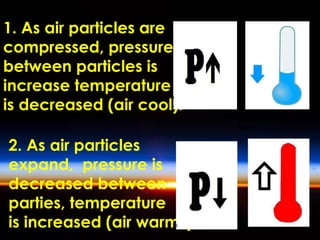
1. As air particles are 
compressed, pressure 
between particles is 
increase temperature 
is decreased (air cool). 
2. As air particles 
expand, pressure is 
decreased between 
parties, temperature 
is increased (air warms).
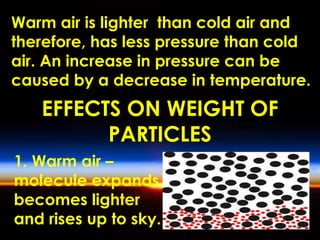
Warm air is lighter than cold air and 
therefore, has less pressure than cold 
air. An increase in pressure can be 
caused by a decrease in temperature. 
EFFECTS ON WEIGHT OF 
PARTICLES 
1. Warm air – 
molecule expands, 
becomes lighter 
and rises up to sky.
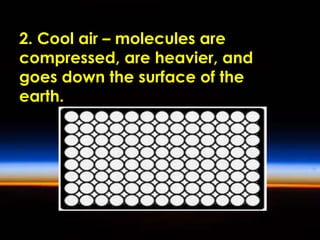
2. Cool air – molecules are 
compressed, are heavier, and 
goes down the surface of the 
earth.

Chapter 4 - The Earth's Atmosphere

  • 2.
    Chapter 4 TheEarth’s Atmosphere
  • 3.
    COMPOSITION OF THE ATMOSPHERE The atmosphere is a mixture of different gases, oxygen, and nitrogen. Of these, nitrogen is the most abundant. It accounts for 78% of the total volume of the air while oxygen makes up 21%. The remaining 1% is mostly argon and carbon dioxide.
  • 5.
  • 6.
    The gases ofthe atmosphere most important to man – nitrogen, oxygen, carbon dioxide, and water vapour, are rare in the universe. The modern atmosphere is sometimes referred to as Earth’s “third atmosphere”, in order to to distinguish the current chemical composition from two notable different previous compositions
  • 7.
    The elements HydrogenH and Helium He are the primarily chemical composition of the original atmosphere. Earth’s original atmosphere was probably just hydrogen and helium, because these were the main gases in the dusty, gassy disk around the Sun from which the planets formed.
  • 8.
    The Earth and its atmosphere were very hot. Molecules of hydrogen and helium move really fast, especially when warm. Actually, they moved so fast they eventually all escaped Earth's gravity and drifted off into space.
  • 9.
    Earth’s “second atmosphere”came from Earth itself. There were lots of volcanoes, many more than today, because Earth’s crust was still forming. The volcanoes released 1.steam (H2O, with two hydrogen atoms and one oxygen atom), 2.carbon dioxide (CO2, with one carbon atoms and two oxygen atoms), 3.ammonia (NH3, with one nitrogen atom and three hydrogen atoms).
  • 12.
    CYANOBACTERIA- the bacteriashaped like these existed approximately 3.3 billion years ago and was the first oxygen producing evolving phototropic organisms. During the period of 2.7 to 2.2 billion years ago they were conversion of the earth’s atmosphere from ANOXIC STATE (from state without oxygen) to OXIC STATE (a state with oxygen)
  • 13.
    Photosynthesizing plants laterevolved and continued releasing oxygen and sequestering carbon dioxide. Bacteria would also convert to ammonia into nitrogen. But most of the nitrogen currently present in the atmosphere results from sunlight-powered photolysis of ammonia released steadily over the aeons from volcanoes.
  • 14.
    OXYGEN-NITROGEN atmosphere isthe “third atmosphere”. Between 200 and 250 million years ago, up to 35% of the atmosphere was oxygen. The modern atmosphere has a composition which is enforced by ocean blue green algae aw well as geological processes.
  • 15.
    THE ATMOSPHERE ISVERY IMPORTANT BECAUSE; 1. All living organism needs this vapor or gas if they are continue living. 2. Air is escaping in the outer atmosphere and it constantly being replaced by the Earth’s crust. The amount of air in the atmosphere don’t change much in its ratio, as a result all living organisms that depends in it for living also change slowly, if there is a sudden change in the atmosphere life would change with it
  • 16.
     Conduction –collision from one molecule to another with heat from one with higher temperature to a lower temperature .  Convection – movement of a mass or substances from one place to another. Radiation – energy moves through a material without the aid of the material
  • 17.
    ATMOSPHERE CIRCULATION Cold– compresses air particles Heat – expands air particles
  • 18.
    EFFECT PRESSURE Asair close to the earth is heated, the gas molecules move father and farther apart and air is lighter. The lighter, warmer air rises. The heavier, cooler air above moves down forward the surface of the earth AIR PRESSURE Because air has weight, it presses on all objects it touches. Air pressure is a controlled by the temperature of the air, the amount of vapor in the air, and the altitude.
  • 19.
    1. As airparticles are compressed, pressure between particles is increase temperature is decreased (air cool). 2. As air particles expand, pressure is decreased between parties, temperature is increased (air warms).
  • 20.
    Warm air islighter than cold air and therefore, has less pressure than cold air. An increase in pressure can be caused by a decrease in temperature. EFFECTS ON WEIGHT OF PARTICLES 1. Warm air – molecule expands, becomes lighter and rises up to sky.
  • 21.
    2. Cool air– molecules are compressed, are heavier, and goes down the surface of the earth.