MEMOS
MEMOS
 Records information of immediate importance
 Brief, informal, but can contain official announcements
 Used in-house
 Format can be used with reports and proposals
 Must follow company’s protocol
 Timely
 Send to the right people only
 Follows audience, style & tone
FUNCTIONS OF A MEMO
 Make an announcement
 Provide instructions
 Clarify a policy, procedure or issue
 Changes a policy or procedure
 Alerts employees to a problem or issue
 Offers general information
 Provides a brief summary
 Makes a request
 Offers a suggestion or recommendation
 Provides a record of an important matter
 Confirms an outcome
 Calls a meeting
MEMOS: EMAIL vs. HARD COPY
 Hard copy should be sent when the memo contains
confidential information that you do not want to risk being
seen by the wrong person.
Memo Protocol and Company
Politics
 Reflect a company’s image
 Must be timely
 Must always be timely, professional and tactful
 Most companies have their own memo protocol
 Don’t send a memo to someone who doesn’t need it
MEMO FORMAT
• Must include the following fields
• TO line
• FROM line
• Date line
• Always write out the date. July 1, 2010 NOT 07/01/10.
• Subject line
• Be as accurate and specific as possible
• Do NOT include a greeting or closing
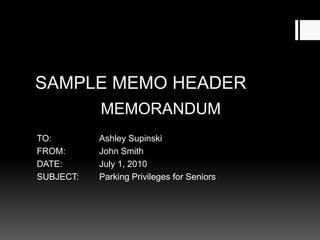
SAMPLE MEMO HEADER
MEMORANDUM
TO: Ashley Supinski
FROM: John Smith
DATE: July 1, 2010
SUBJECT: Parking Privileges for Seniors
Questions Your Memo Must
Answer
 When?
 Who?
 Where?
 Why?
 Costs?
 Technology?
 What’s next?
Style & Tone
 Audience will determine the memo’s style and tone
 Co-Worker: Casual, Conversational, Friendly & Cooperative
 Manage: More formal. Respectful, even official, posture
Memo Organization
 Introduction
 Body (Discussion)
 Conclusion
 Organizational Markers
 Headings
 Numbered/Bulleted Lists
 Underlining/Boldfacing
Blogs
What They Are/Do
 Evolving website or daily newspaper
 Managers and employees write short articles
 Posts are short, conversational articles giving readers current
and relevant news/information
 Posts are generally only a few paragraphs long and written 2-
3 times a week
Blogs are Interactive
 Allow for a group conversation
 Interaction is the key to the blog’s success
 Blogs need to:
 Attract readers
 Build relationships
 Promote and market products or services
 Respond to suggestions
Types of Blogs
 Internal
 Designed exclusively for use in-house
 External
 Essential marketing and public relations tools in the world of e-
commerce
Guidelines for Writing Business
Blogs
 Use the right tone to attract readers
 Follow the company protocol
 Target your audience
 Make your blog persuasive
 Write concisely and sincerely
 Document your sources, including visuals

Chapter 3 memos and blogs

  • 1.
  • 2.
    MEMOS  Records informationof immediate importance  Brief, informal, but can contain official announcements  Used in-house  Format can be used with reports and proposals  Must follow company’s protocol  Timely  Send to the right people only  Follows audience, style & tone
  • 3.
    FUNCTIONS OF AMEMO  Make an announcement  Provide instructions  Clarify a policy, procedure or issue  Changes a policy or procedure  Alerts employees to a problem or issue  Offers general information  Provides a brief summary  Makes a request  Offers a suggestion or recommendation  Provides a record of an important matter  Confirms an outcome  Calls a meeting
  • 4.
    MEMOS: EMAIL vs.HARD COPY  Hard copy should be sent when the memo contains confidential information that you do not want to risk being seen by the wrong person.
  • 5.
    Memo Protocol andCompany Politics  Reflect a company’s image  Must be timely  Must always be timely, professional and tactful  Most companies have their own memo protocol  Don’t send a memo to someone who doesn’t need it
  • 6.
    MEMO FORMAT • Mustinclude the following fields • TO line • FROM line • Date line • Always write out the date. July 1, 2010 NOT 07/01/10. • Subject line • Be as accurate and specific as possible • Do NOT include a greeting or closing
  • 7.
    SAMPLE MEMO HEADER MEMORANDUM TO:Ashley Supinski FROM: John Smith DATE: July 1, 2010 SUBJECT: Parking Privileges for Seniors
  • 8.
    Questions Your MemoMust Answer  When?  Who?  Where?  Why?  Costs?  Technology?  What’s next?
  • 9.
    Style & Tone Audience will determine the memo’s style and tone  Co-Worker: Casual, Conversational, Friendly & Cooperative  Manage: More formal. Respectful, even official, posture
  • 10.
    Memo Organization  Introduction Body (Discussion)  Conclusion  Organizational Markers  Headings  Numbered/Bulleted Lists  Underlining/Boldfacing
  • 11.
  • 12.
    What They Are/Do Evolving website or daily newspaper  Managers and employees write short articles  Posts are short, conversational articles giving readers current and relevant news/information  Posts are generally only a few paragraphs long and written 2- 3 times a week
  • 13.
    Blogs are Interactive Allow for a group conversation  Interaction is the key to the blog’s success  Blogs need to:  Attract readers  Build relationships  Promote and market products or services  Respond to suggestions
  • 14.
    Types of Blogs Internal  Designed exclusively for use in-house  External  Essential marketing and public relations tools in the world of e- commerce
  • 15.
    Guidelines for WritingBusiness Blogs  Use the right tone to attract readers  Follow the company protocol  Target your audience  Make your blog persuasive  Write concisely and sincerely  Document your sources, including visuals

Editor's Notes

  • #2 Image Credit: http://www.freeclipartnow.com/office/supplies/notes-memos/
  • #3 Not in SWAW Concise 3rd ed.
  • #5 Not in SWAW Concise 3rd ed.
  • #6 LectureExample – pg. 71, Figure 3.1Protocol: Accepted ways in which the in-house communications are formatted, organized, written, and routed.Know your company’s department Chain of Command – where will your memo go?
  • #7 Examples: Pg. 71 (Figure 3.1), 72 (Figure 3.2), 73 (Figure 3.3)
  • #9 PG. 74-75
  • #11 LectureIntroductionTells readers clearly about the issue, policy, or problem that promoted the memoExplains, briefly, any background information the reader needs to knowSpecific about what you are going to do to solve a problemBody (Discussion)State why a problem, procedure, or decision is important; who will be affected? What are the consequences?Indicate why and what changes are necessaryGive precise dates, times, and locationsConclusionAsk readers if they have any questionsRequest a reply – in writing, over the telephone, via email, etc. – by a certain dateProvide a list of recommendations that the readers are to accept, revise, or reject
  • #12 Image Credit
  • #15 FunctionsInternal:Inform employees about vital company newsHelp employees better understand and perform their jobsConduct virtual meetingsEnhance collaborationProvide a forum for workplace discussionsImprove employee participation and morale by inviting suggestions and questionsExternal:Announce and sell new products, services or technologyShare information about employee achievementsDescribe the company’s contributions to the community or environment
  • #16 Handout from 10th edition.