Marketing Management Chapter 22 Managing A Holistic Marketing Organization
This document discusses trends in marketing practices and organizing marketing departments. It covers functional, geographic, product-based, and matrix organizational structures. Product managers develop strategies, plans, and campaigns and interact with various teams. Matrices combine functional and brand/product structures. The role of marketing at a corporate level is to promote customer orientation. Social responsibility, cause-related marketing, and social marketing campaigns are also discussed. Marketing control involves annual plans, profitability, efficiency, and strategy. Marketing audits comprehensively examine objectives and performance.
Chapter Questions Whatare important trends in marketing practices? What are the keys to effective internal marketing? How can companies be responsible social marketers? How can a company improve its marketing implementation skills? What tools are available to help companies monitor and improve their marketing activities? 22-
Tasks Performed byBrand Managers Develop long-range and competitive strategy for each product Prepare annual marketing plan and sales forecast Work with advertising and merchandising agencies to develop campaigns Increase support of the product among channel members Gather continuous intelligence on product performance, customer attitudes Initiate product improvements 22-
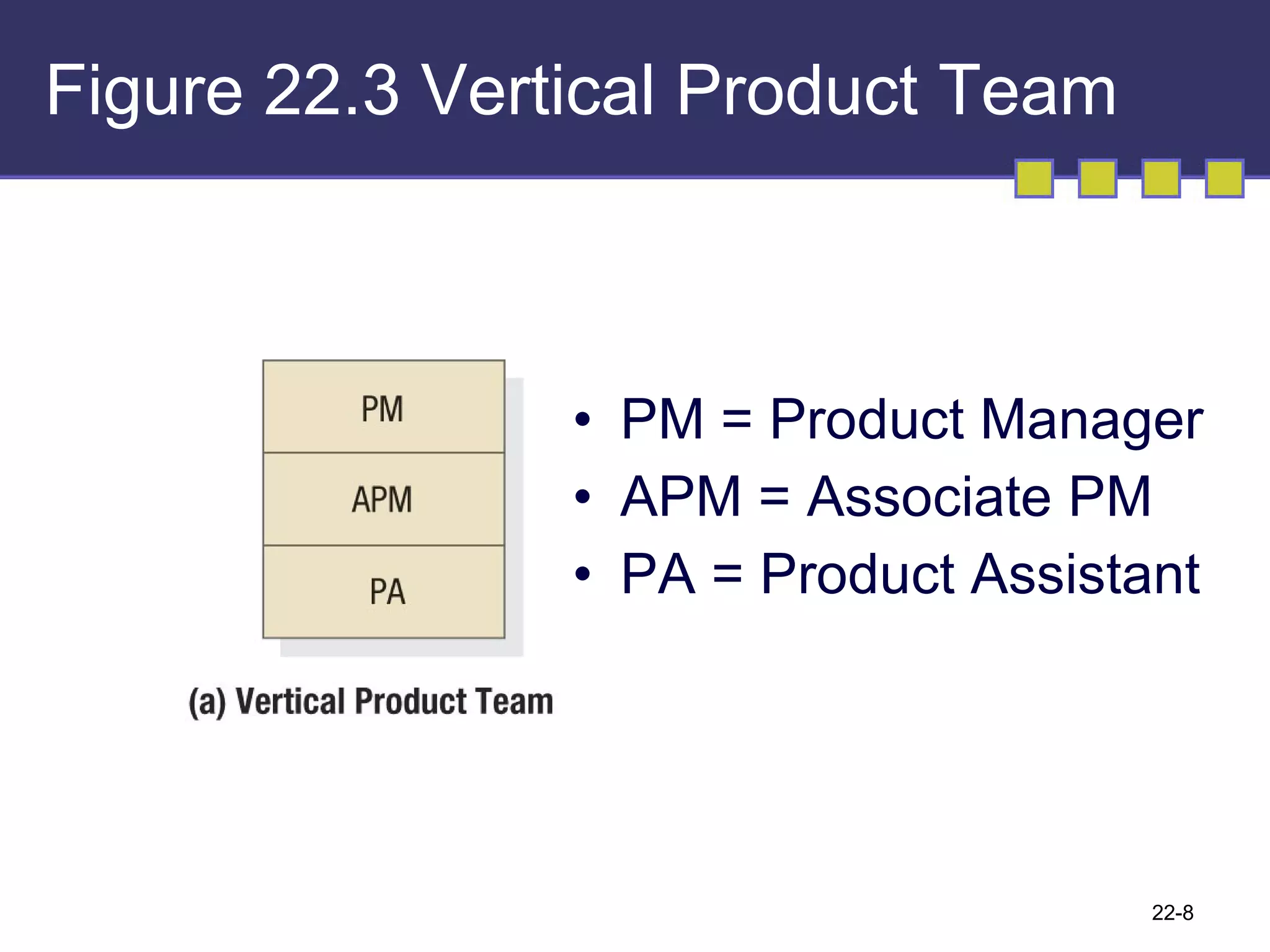
Figure 22.3 VerticalProduct Team 22- PM = Product Manager APM = Associate PM PA = Product Assistant
9.
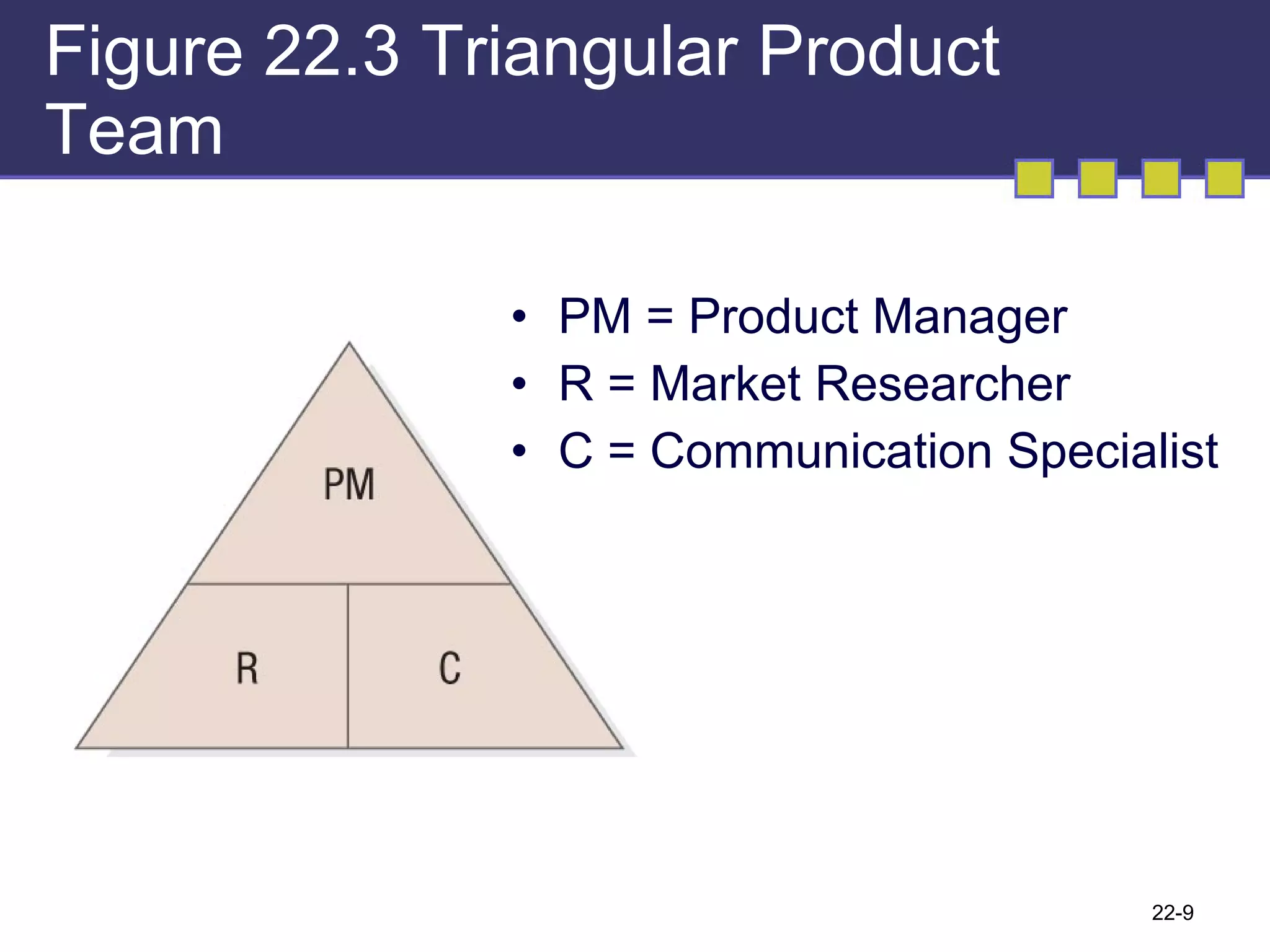
Figure 22.3 TriangularProduct Team 22- PM = Product Manager R = Market Researcher C = Communication Specialist
10.
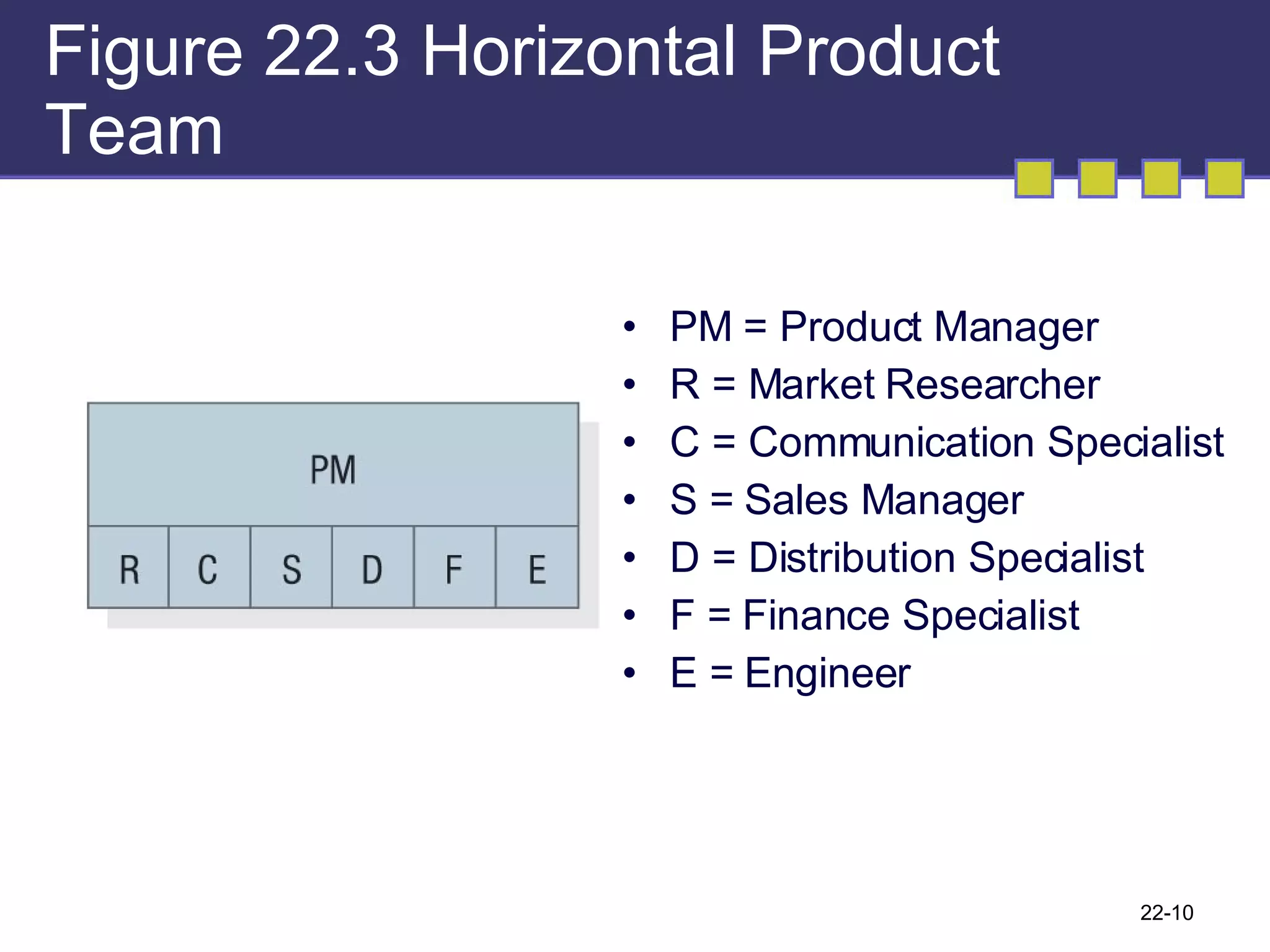
Figure 22.3 HorizontalProduct Team 22- PM = Product Manager R = Market Researcher C = Communication Specialist S = Sales Manager D = Distribution Specialist F = Finance Specialist E = Engineer
Role of Marketingat the Corporate Level To promote a culture of customer orientation To be an advocate for the customer To assess market attractiveness To develop firm’s overall value proposition, the vision, and articulation of how it proposes to deliver superior value to customers 22-
Top-Rated Companies for Social Responsibility Johnson & Johnson Coca-Cola Wal-Mart Anheuser-Busch Hewlett-Packard Walt Disney Microsoft IBM McDonald’s 3M UPS FedEx Target Home Depot 22-
Cause-Related Marketing 22-Marketing that links the firm’s contributions to a designated cause to customers engaging directly or indirectly in revenue-producing transactions with the firm.
18.
Corporate Social Marketing22- Marketing efforts that have at least one non-economic objective related to the social welfare and uses the resources of the company and/or its partners.
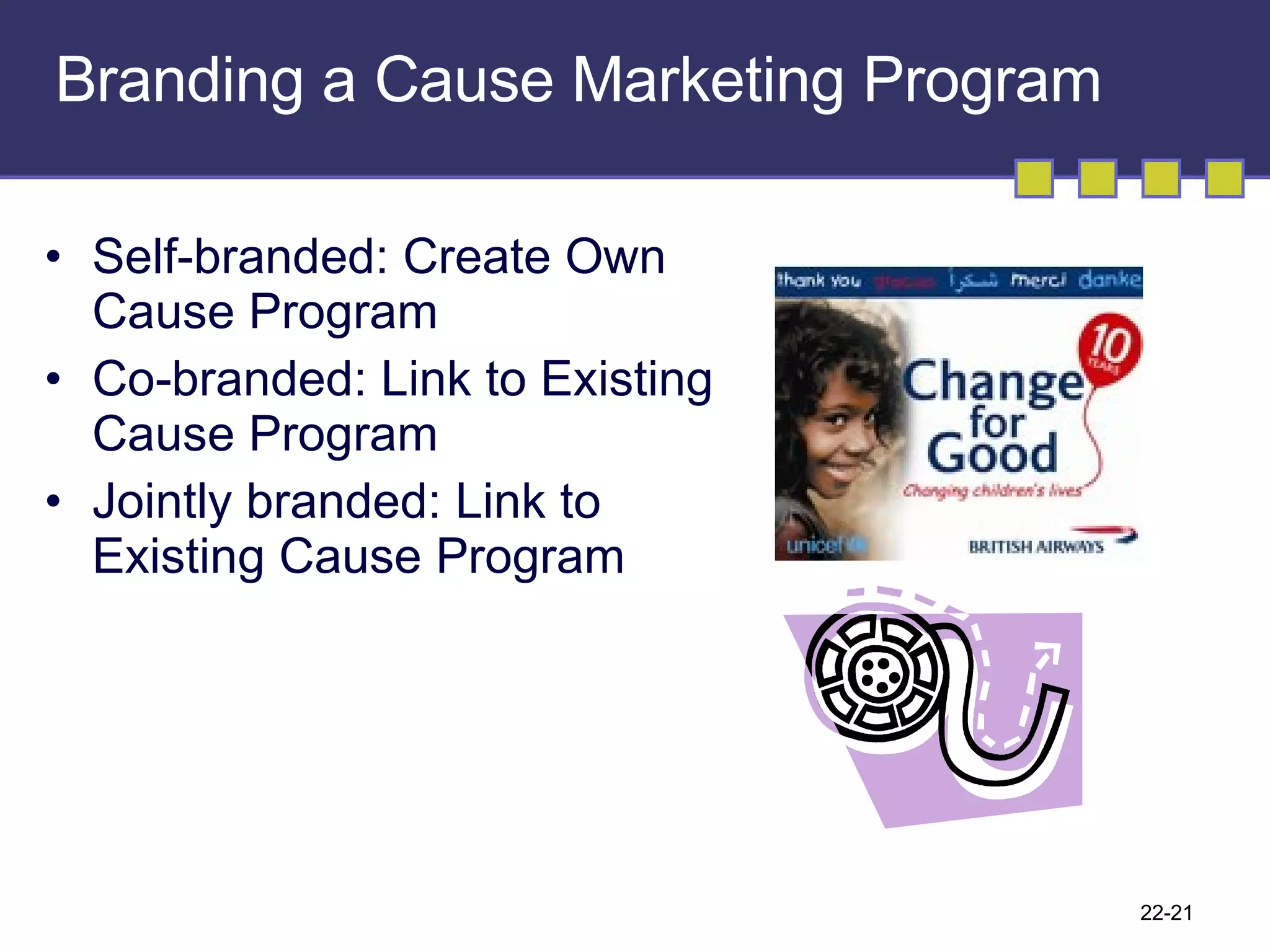
Branding a CauseMarketing Program Self-branded: Create Own Cause Program Co-branded: Link to Existing Cause Program Jointly branded: Link to Existing Cause Program 22-
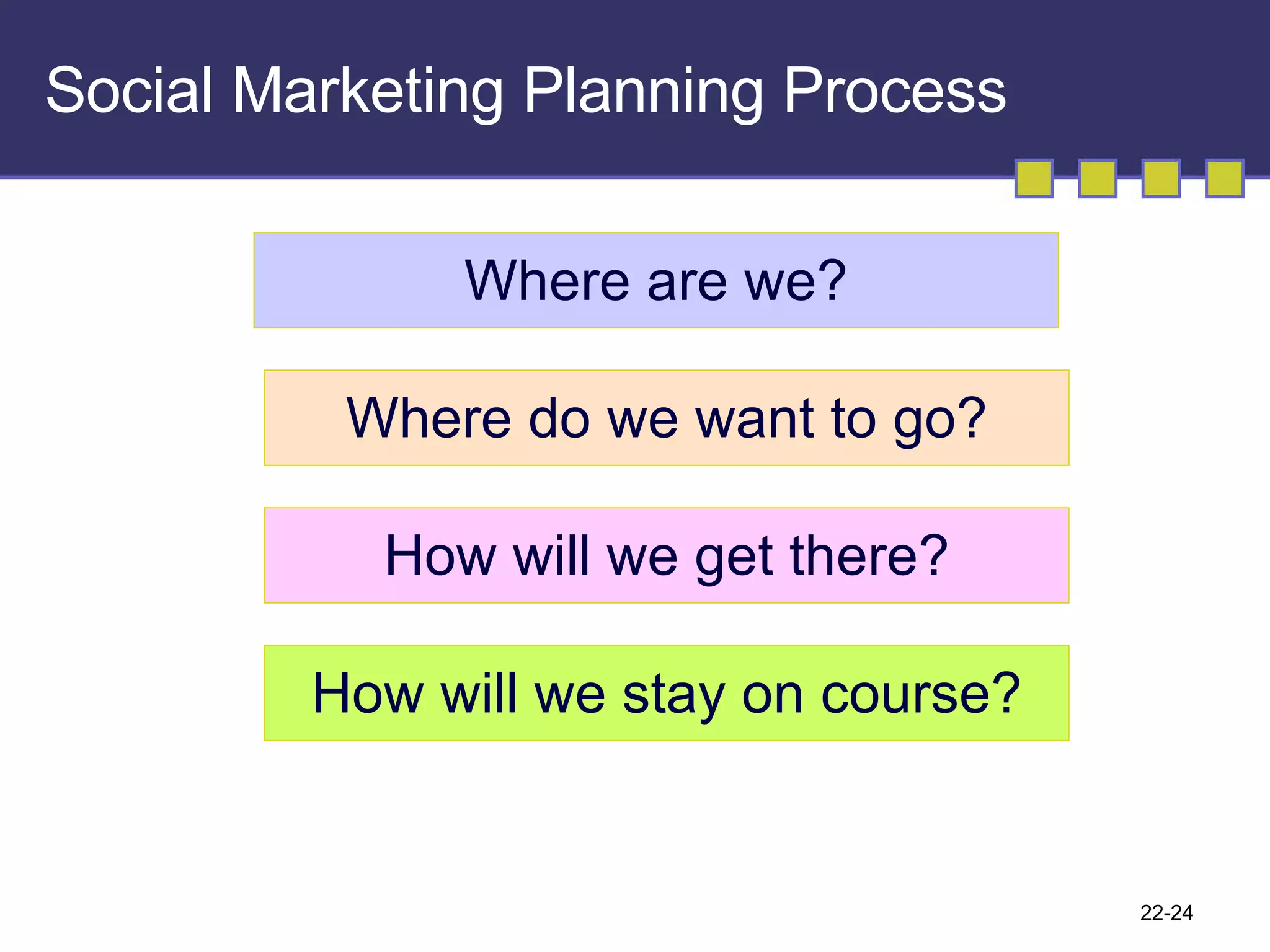
Social Marketing PlanningProcess 22- Where are we? Where do we want to go? How will we get there? How will we stay on course?
25.
Necessary Skills forImplementing Marketing Programs Diagnostic skills Identification of company level Implementation skills Evaluation skills 22-
26.
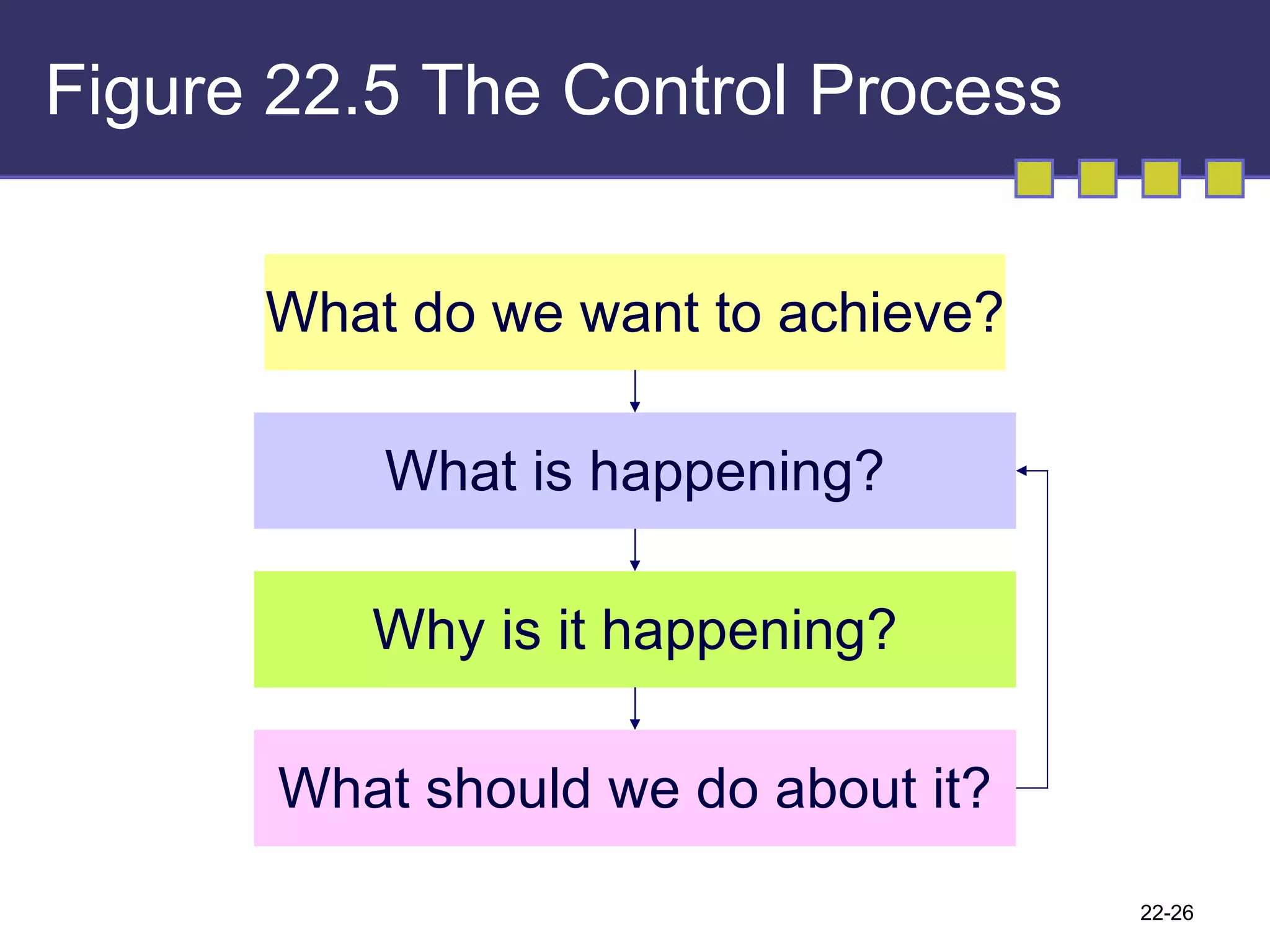
Figure 22.5 TheControl Process 22- What do we want to achieve? What is happening? Why is it happening? What should we do about it?
27.
Types of MarketingControl 22- Annual plan control Profitability control Efficiency control Strategic control
28.
Marketing Audit 22-Comprehensive, systematic, independent periodic examination of a company’s or business unit’s marketing environment, objectives, strategies, and activities with a view to determining problem areas and opportunities, and recommending a plan of action to improve the company’s marketing performance.
Marketing Debate 22-Is marketing management an art or a science? Take a position: Marketing management is largely an artistic exercise and therefore highly subjective. 2. Marketing management is largely a scientific exercise with well-established guidelines and criteria.
31.
Marketing Discussion 22-How does cause or corporate social marketing affect your personal consumer behavior? Do you ever buy or not buy any products because of a company’ environmental policies or programs? Why or why not?