CHAPTER 3
THE INTERNET MACRO-
ENVIRONMENT
NUR AQILAH BINTI ZAINUDIN
2014416824
BM240 3B
LEARNING OBJECTIVES
• Identify how the macro-environment might affect an
organization's digital marketing strategy, planning,
implementation and performance
• Consider legal, moral and ethical constraints of digital
marketing
• Evaluate the wider significance of macro-environmental-forces
• Identify aspects of each of the macro-environmental forces that
are particularly relevant to digital marketing
INTRODUCTION
focusing on potential
relevance of each
digital marketing
strategy
main reason for keeping track of
changes in the macro-environment is
to be aware of how changes in social
behaviour, new laws, technological
innovation can create opportunities or
threats.
can create differentiation and
competitive advantages which
enable the business to survive
and prosper.
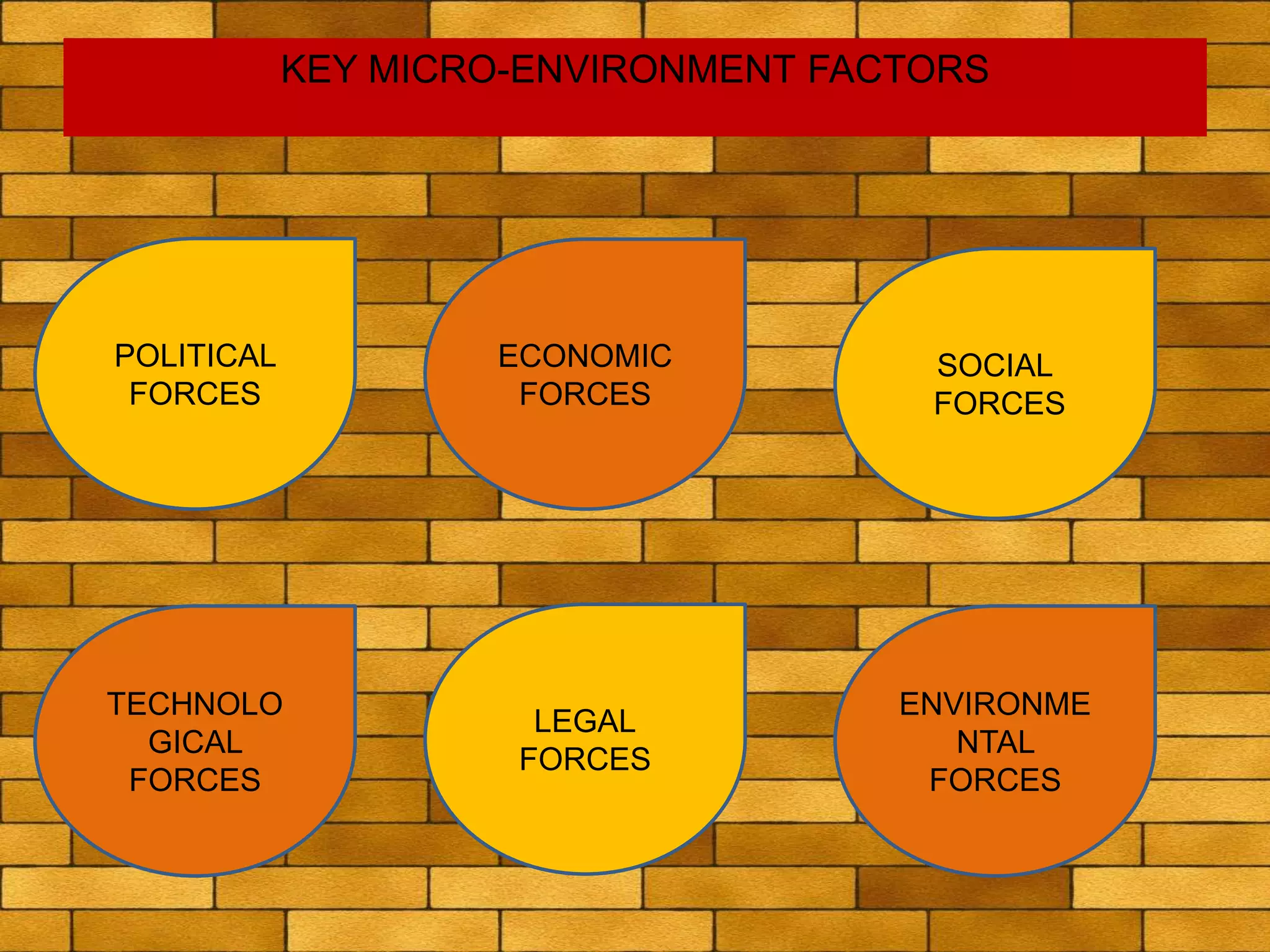
KEY MICRO-ENVIRONMENT FACTORS
POLITICAL
FORCES
TECHNOLO
GICAL
FORCES
LEGAL
FORCES
ECONOMIC
FORCES
ENVIRONME
NTAL
FORCES
SOCIAL
FORCES
TECHNOLOGICAL FORCES
Technological forces change in the
technological which influence marketing
opportunities like create new product
development opportunities, introduce
new ways to access target markets
through channel integration, create new
form of access platforms and
applications.
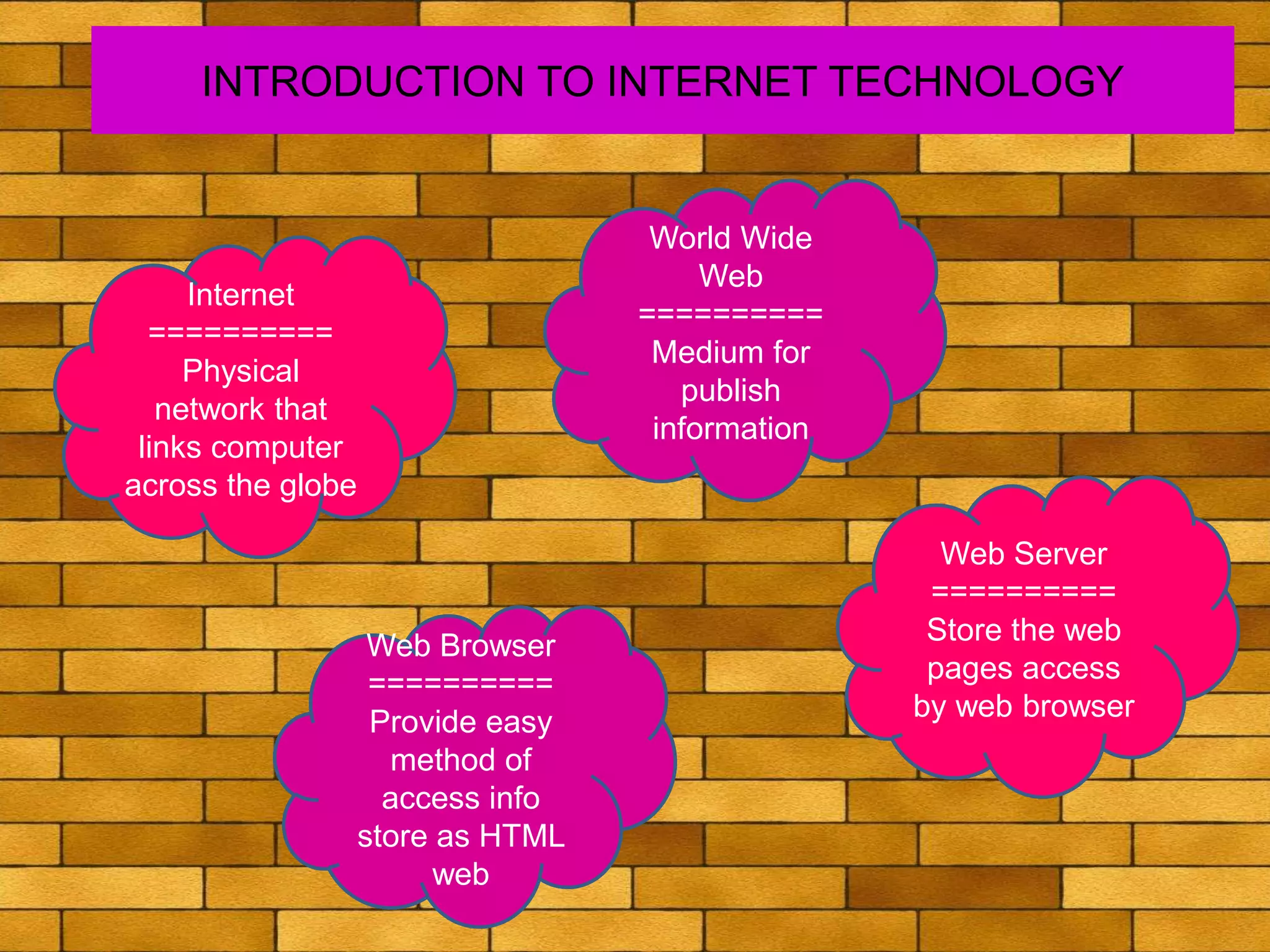
INTRODUCTION TO INTERNET TECHNOLOGY
Internet
==========
Physical
network that
links computer
across the globe
World Wide
Web
==========
Medium for
publish
information
Web Server
==========
Store the web
pages access
by web browser
Web Browser
==========
Provide easy
method of
access info
store as HTML
web
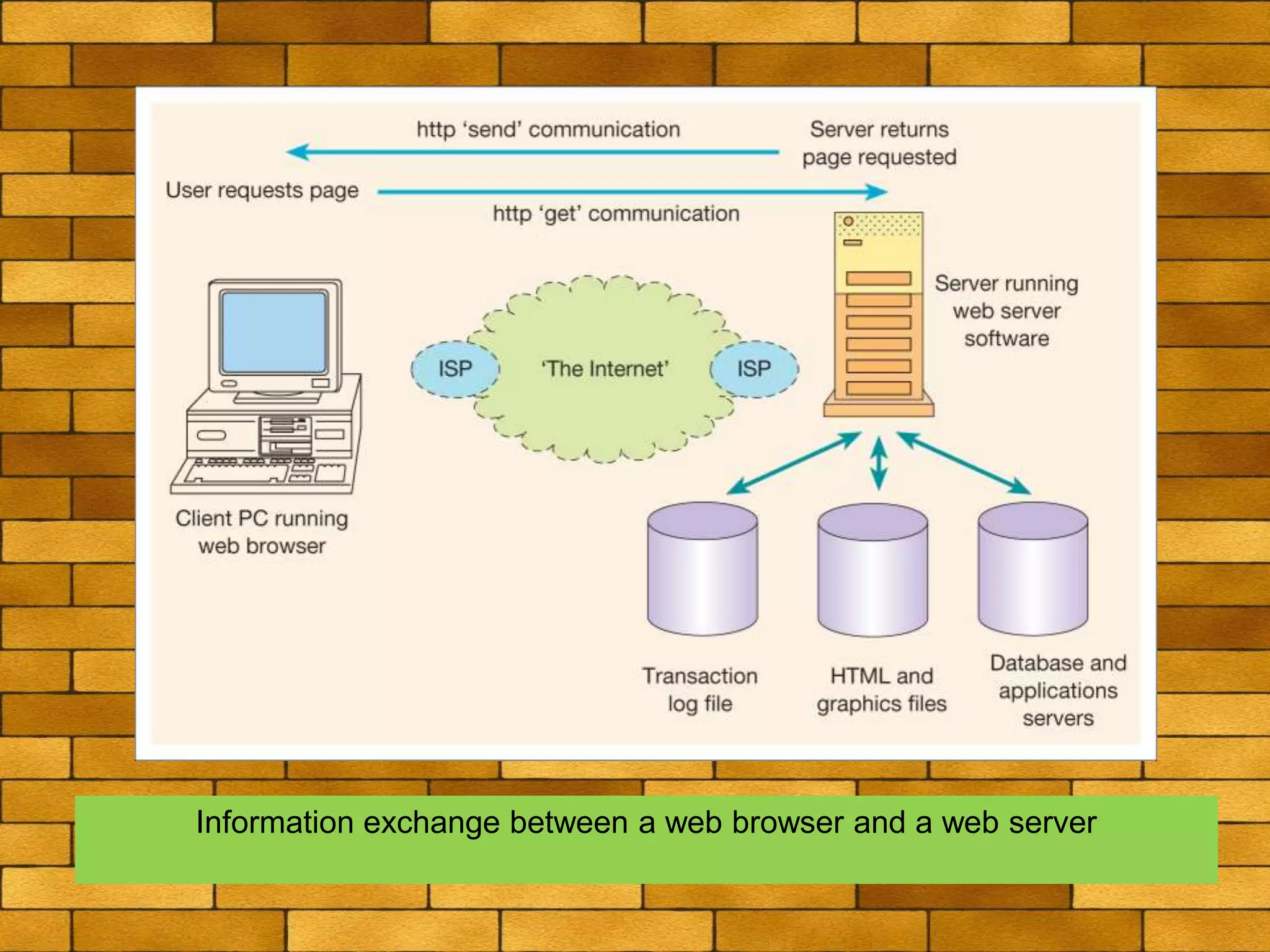
Information exchange between a web browser and a web server
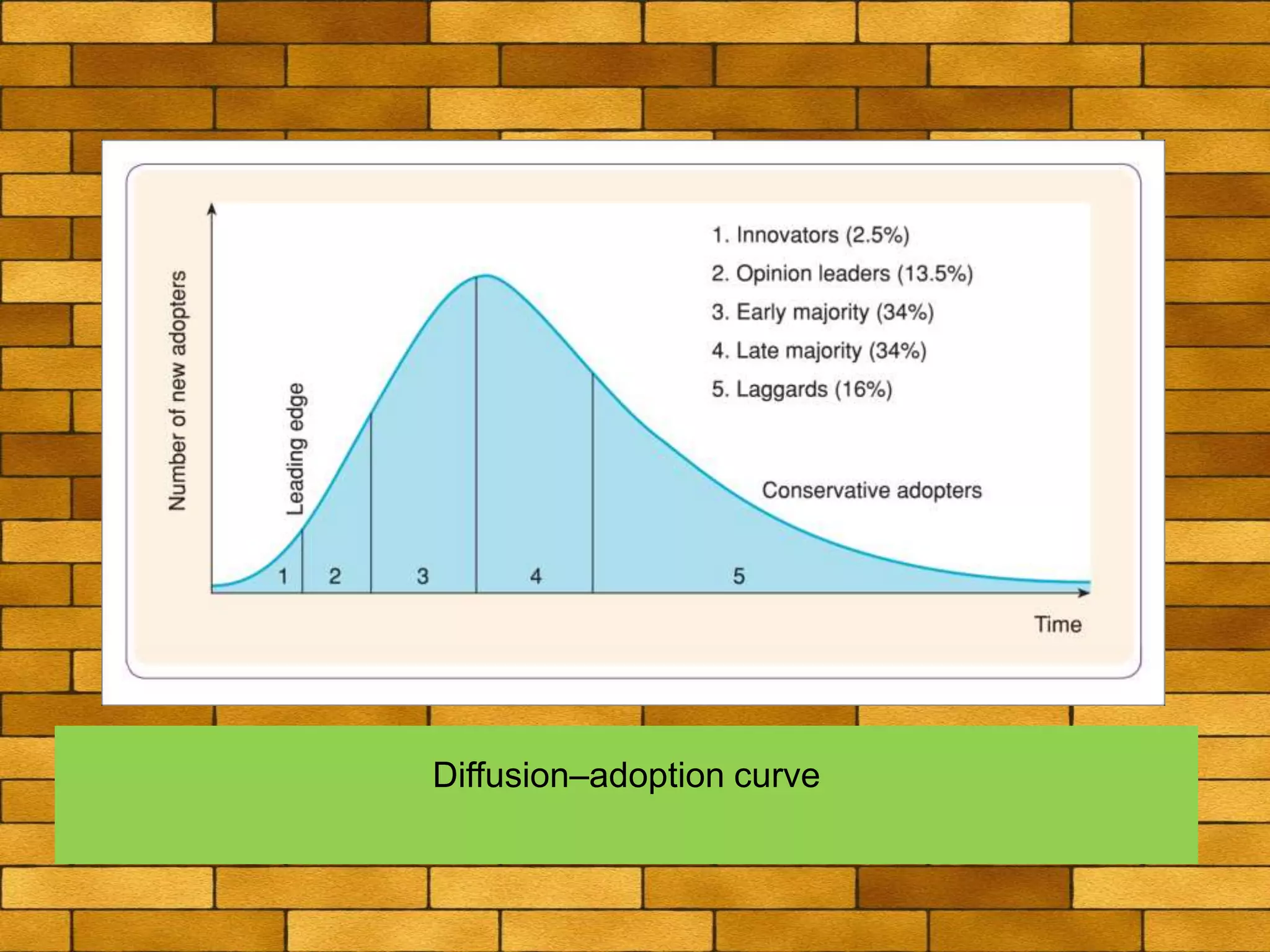
Diffusion–adoption curve
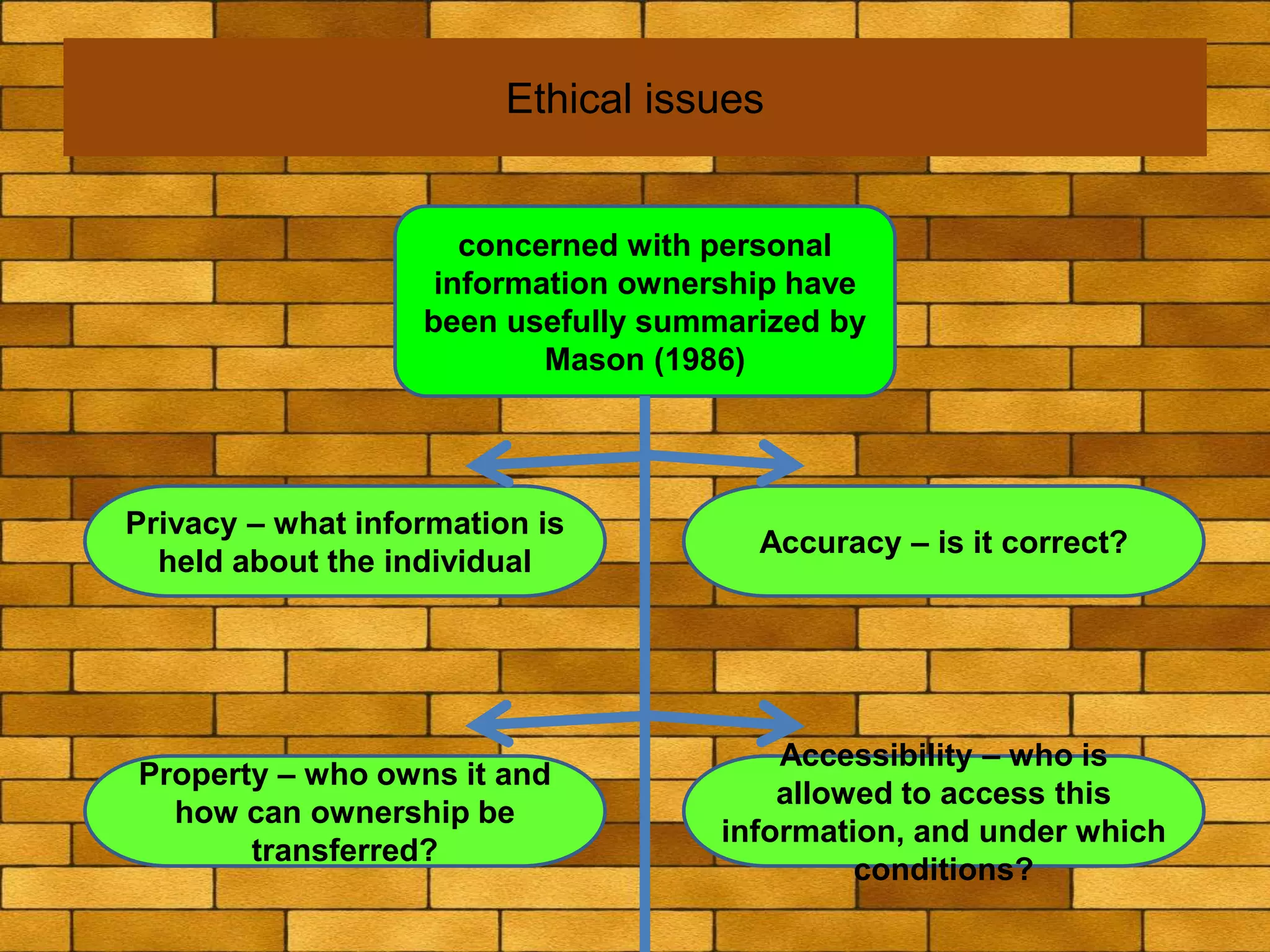
Ethical issues
concerned with personal
information ownership have
been usefully summarized by
Mason (1986)
Privacy – what information is
held about the individual
Accuracy – is it correct?
Accessibility – who is
allowed to access this
information, and under which
conditions?
Property – who owns it and
how can ownership be
transferred?
ECONOMIC FORCES
Cause variation in economic conditions
affect trading opportunities influence
consumer spending and business
performance, have significant
implications for digital marketing
planning.
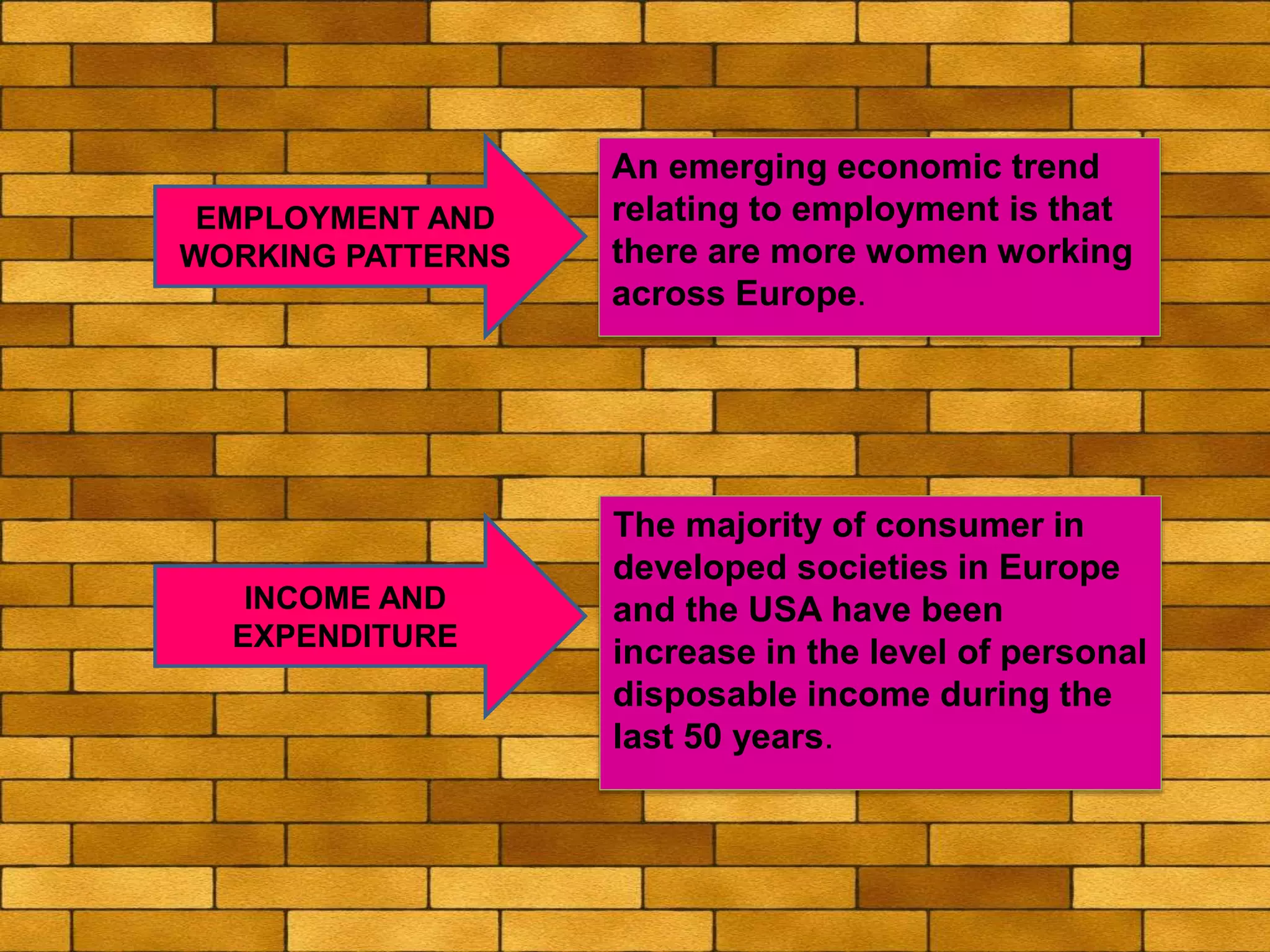
EMPLOYMENT AND
WORKING PATTERNS
An emerging economic trend
relating to employment is that
there are more women working
across Europe.
INCOME AND
EXPENDITURE
The majority of consumer in
developed societies in Europe
and the USA have been
increase in the level of personal
disposable income during the
last 50 years.
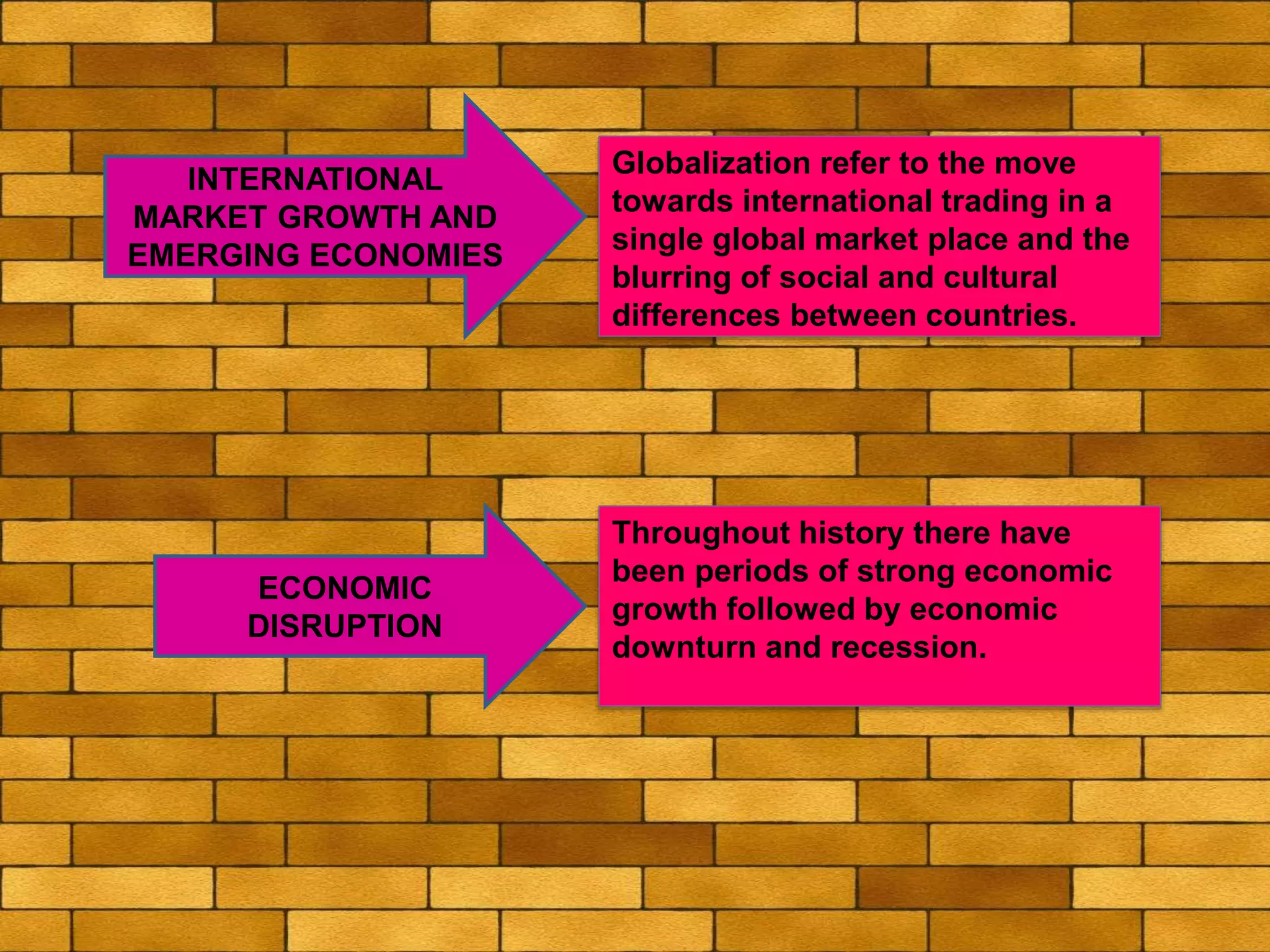
INTERNATIONAL
MARKET GROWTH AND
EMERGING ECONOMIES
Globalization refer to the move
towards international trading in a
single global market place and the
blurring of social and cultural
differences between countries.
ECONOMIC
DISRUPTION
Throughout history there have
been periods of strong economic
growth followed by economic
downturn and recession.
POLITICAL FORCES
National governments and
transnational have an
important role in
determining the future
adoption and control of
the internet and the rules
by which it is governed
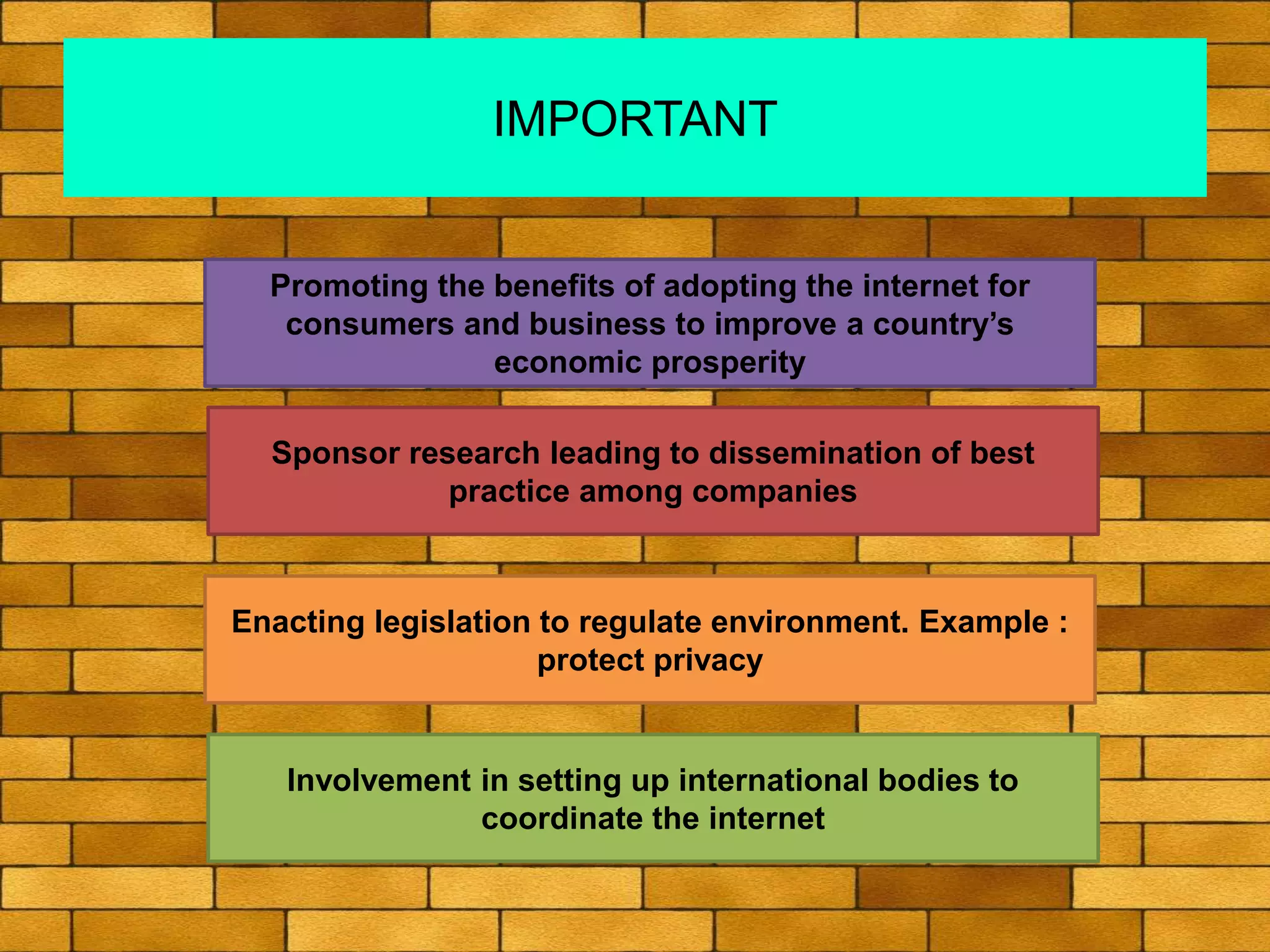
IMPORTANT
Promoting the benefits of adopting the internet for
consumers and business to improve a country’s
economic prosperity
Sponsor research leading to dissemination of best
practice among companies
Enacting legislation to regulate environment. Example :
protect privacy
Involvement in setting up international bodies to
coordinate the internet
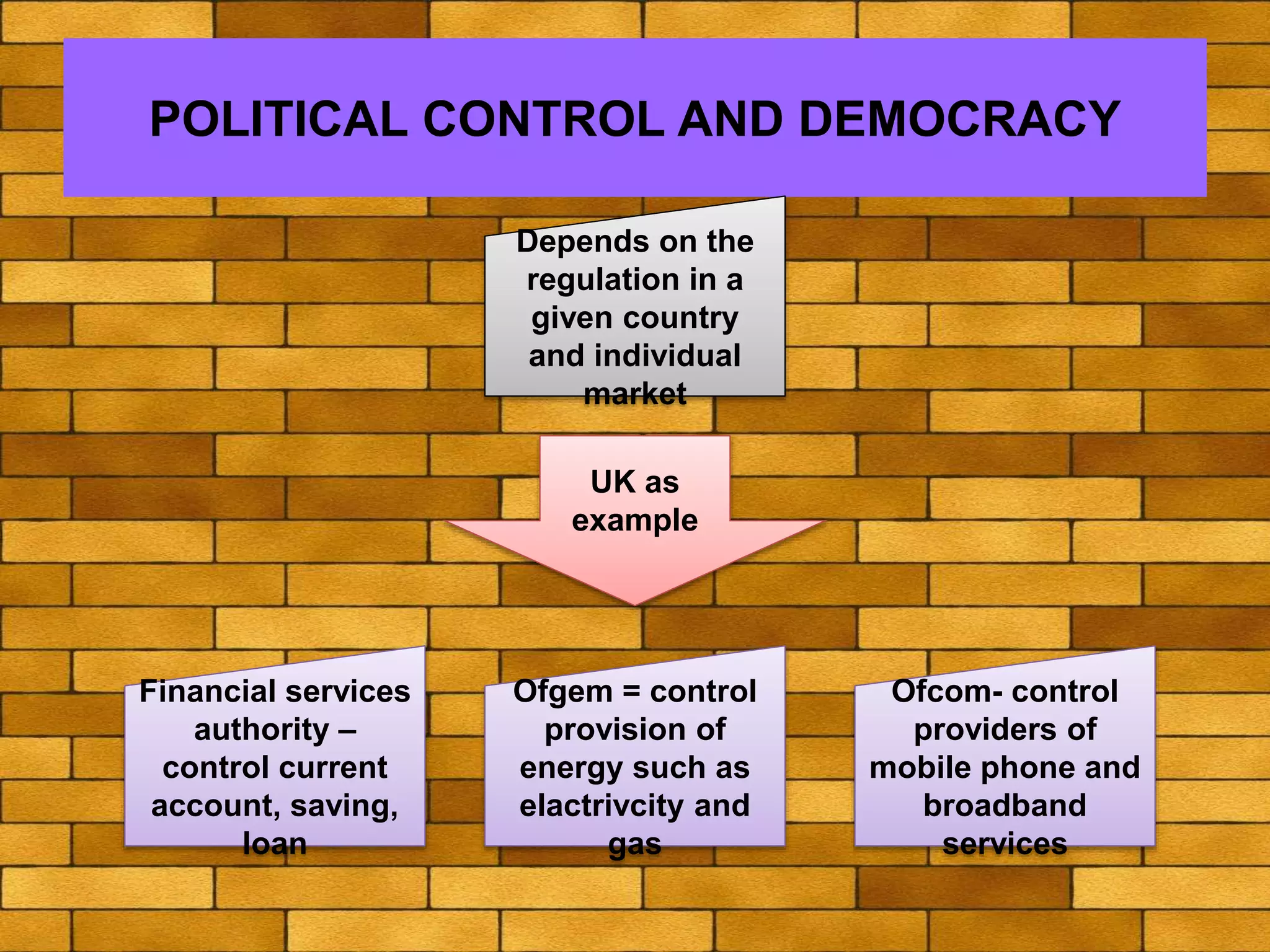
POLITICAL CONTROL AND DEMOCRACY
Depends on the
regulation in a
given country
and individual
market
UK as
example
Financial services
authority –
control current
account, saving,
loan
Ofgem = control
provision of
energy such as
elactrivcity and
gas
Ofcom- control
providers of
mobile phone and
broadband
services
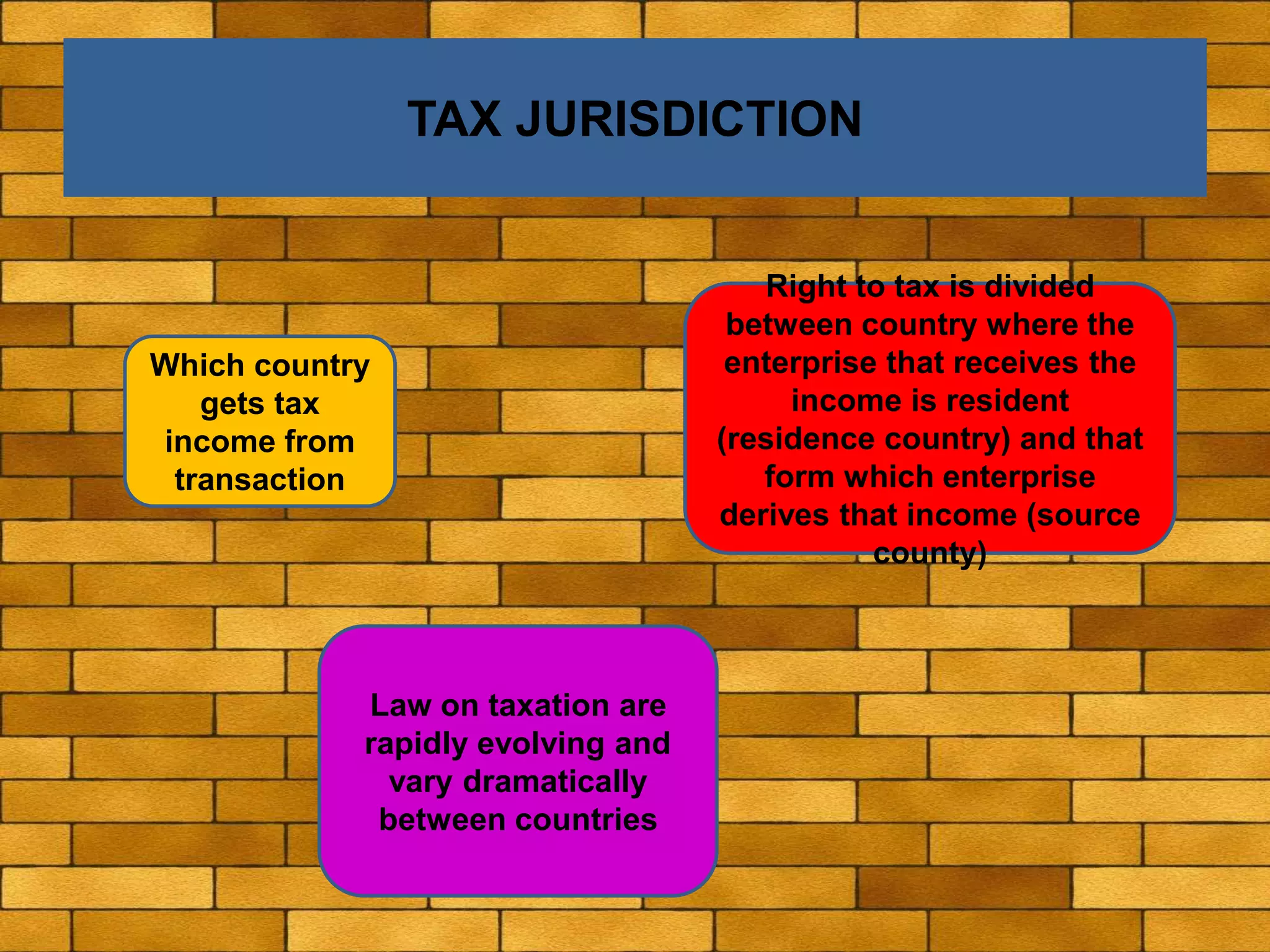
TAX JURISDICTION
Which country
gets tax
income from
transaction
Right to tax is divided
between country where the
enterprise that receives the
income is resident
(residence country) and that
form which enterprise
derives that income (source
county)
Law on taxation are
rapidly evolving and
vary dramatically
between countries
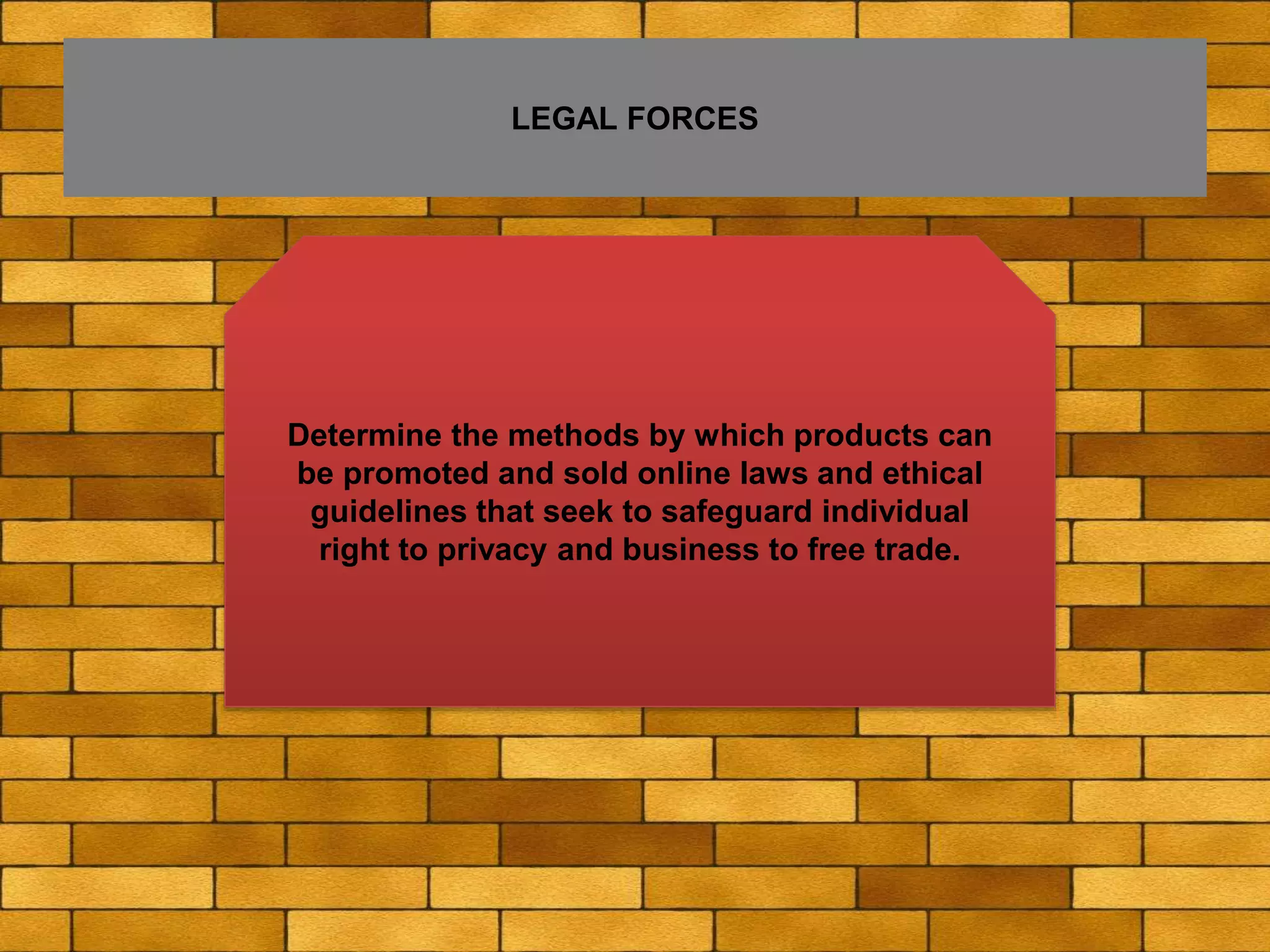
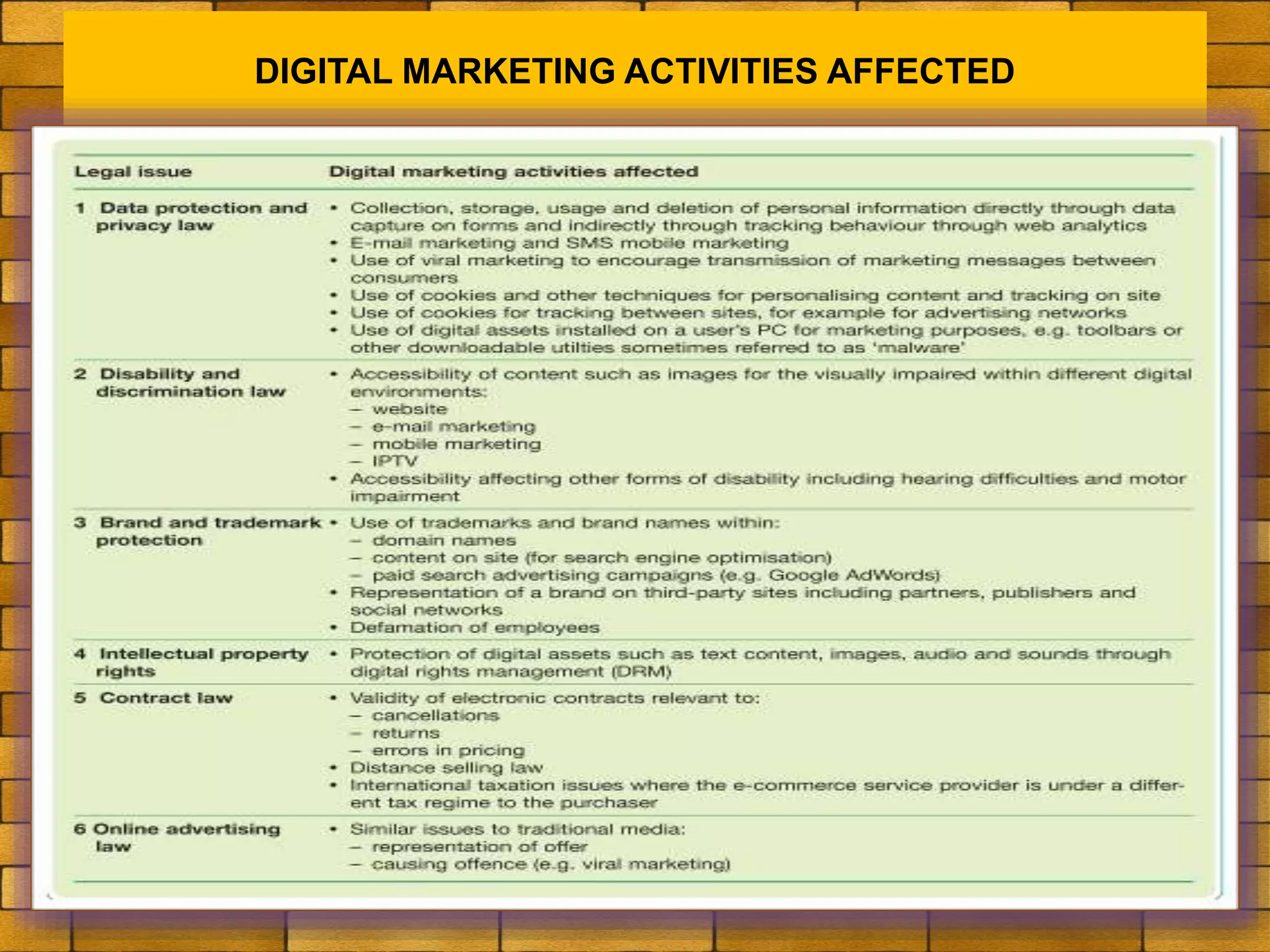
LEGAL FORCES
Determine the methods by which products can
be promoted and sold online laws and ethical
guidelines that seek to safeguard individual
right to privacy and business to free trade.
DIGITAL MARKETING ACTIVITIES AFFECTED
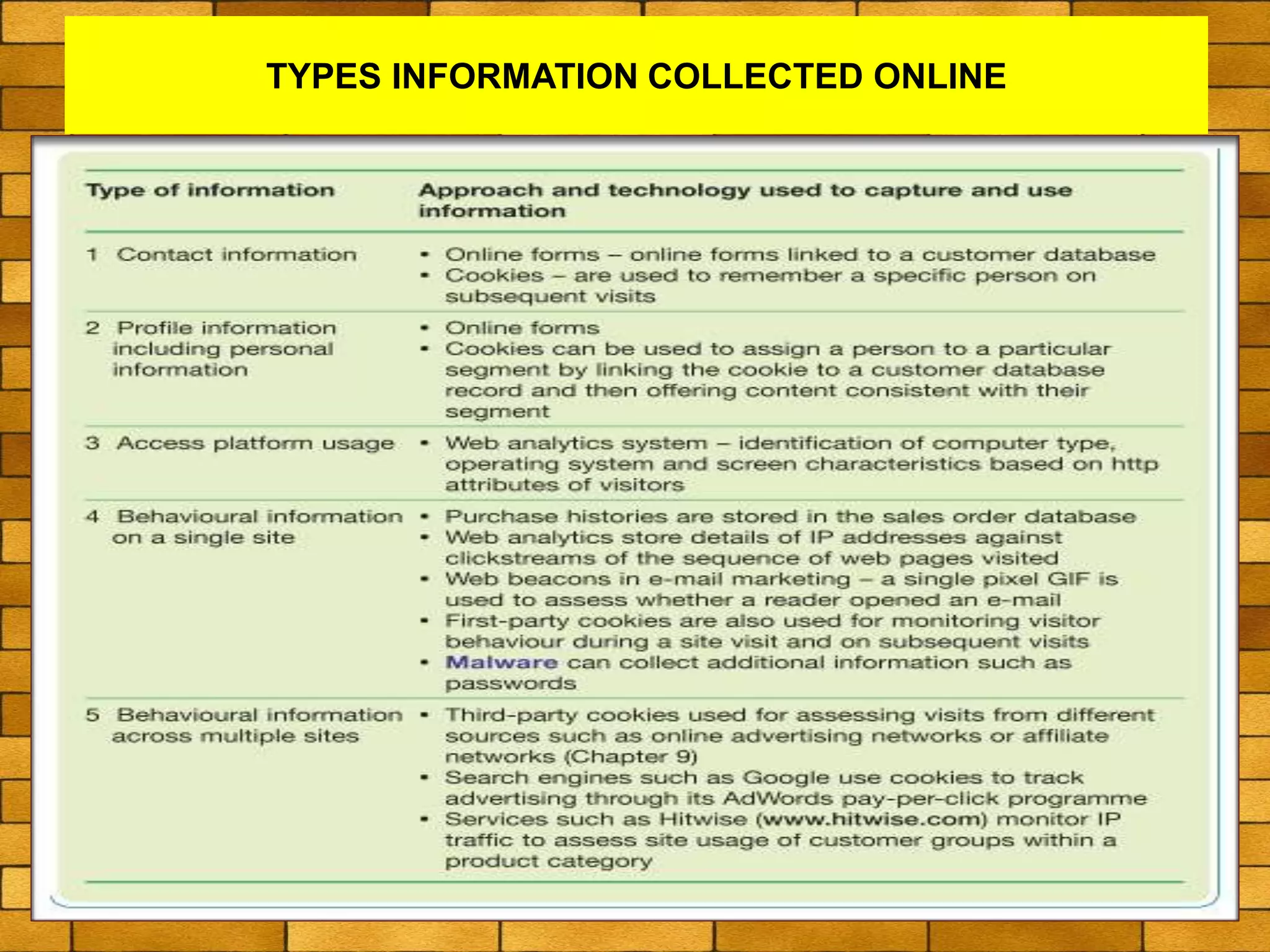
TYPES INFORMATION COLLECTED ONLINE
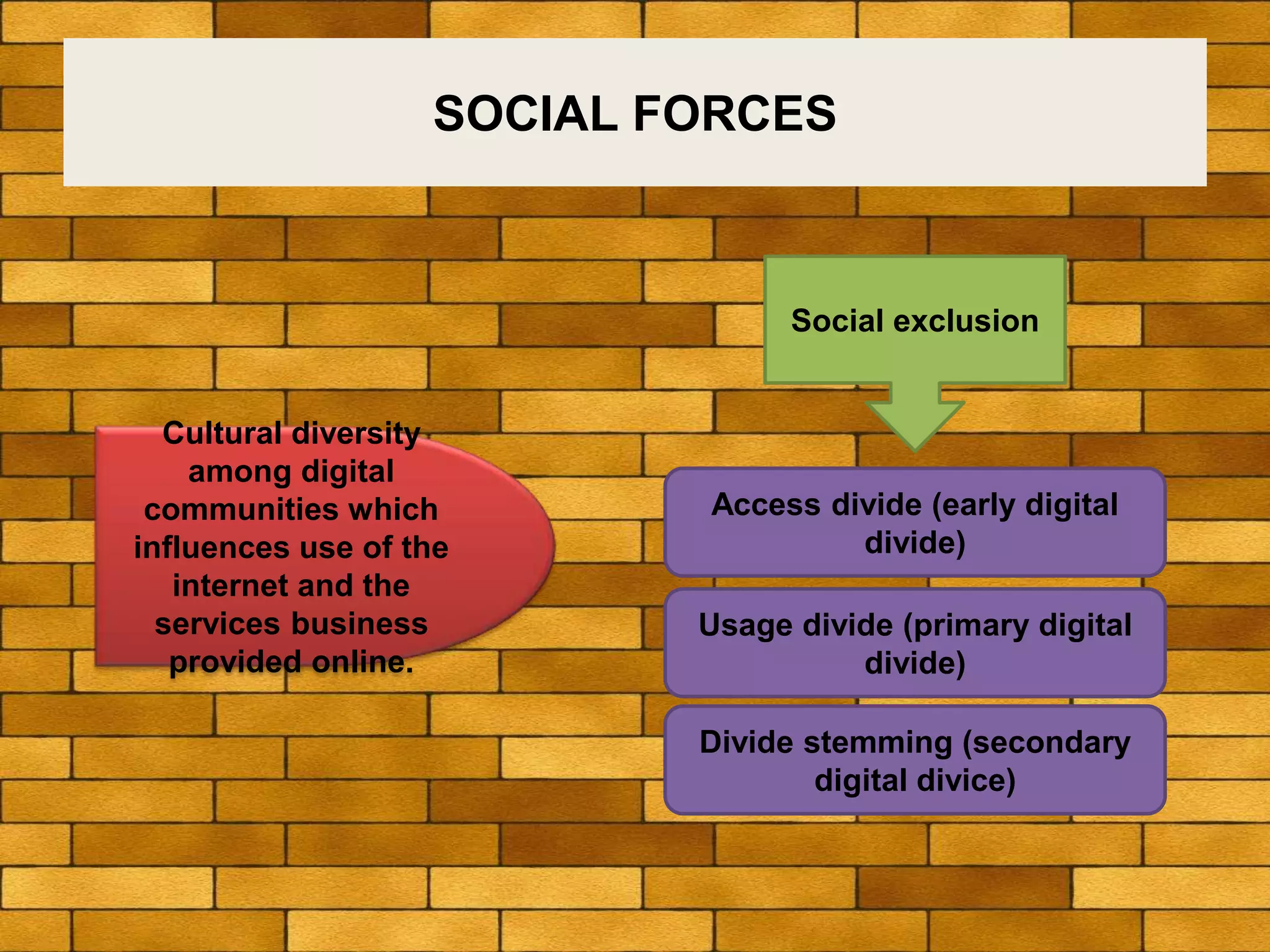
SOCIAL FORCES
Cultural diversity
among digital
communities which
influences use of the
internet and the
services business
provided online.
Social exclusion
Access divide (early digital
divide)
Usage divide (primary digital
divide)
Divide stemming (secondary
digital divice)
CULTURAL FORCES
The local language
and culture of a
country or region
can dramatically
affect of users of a
web service Environmental and
green issues
related to internet
usage.
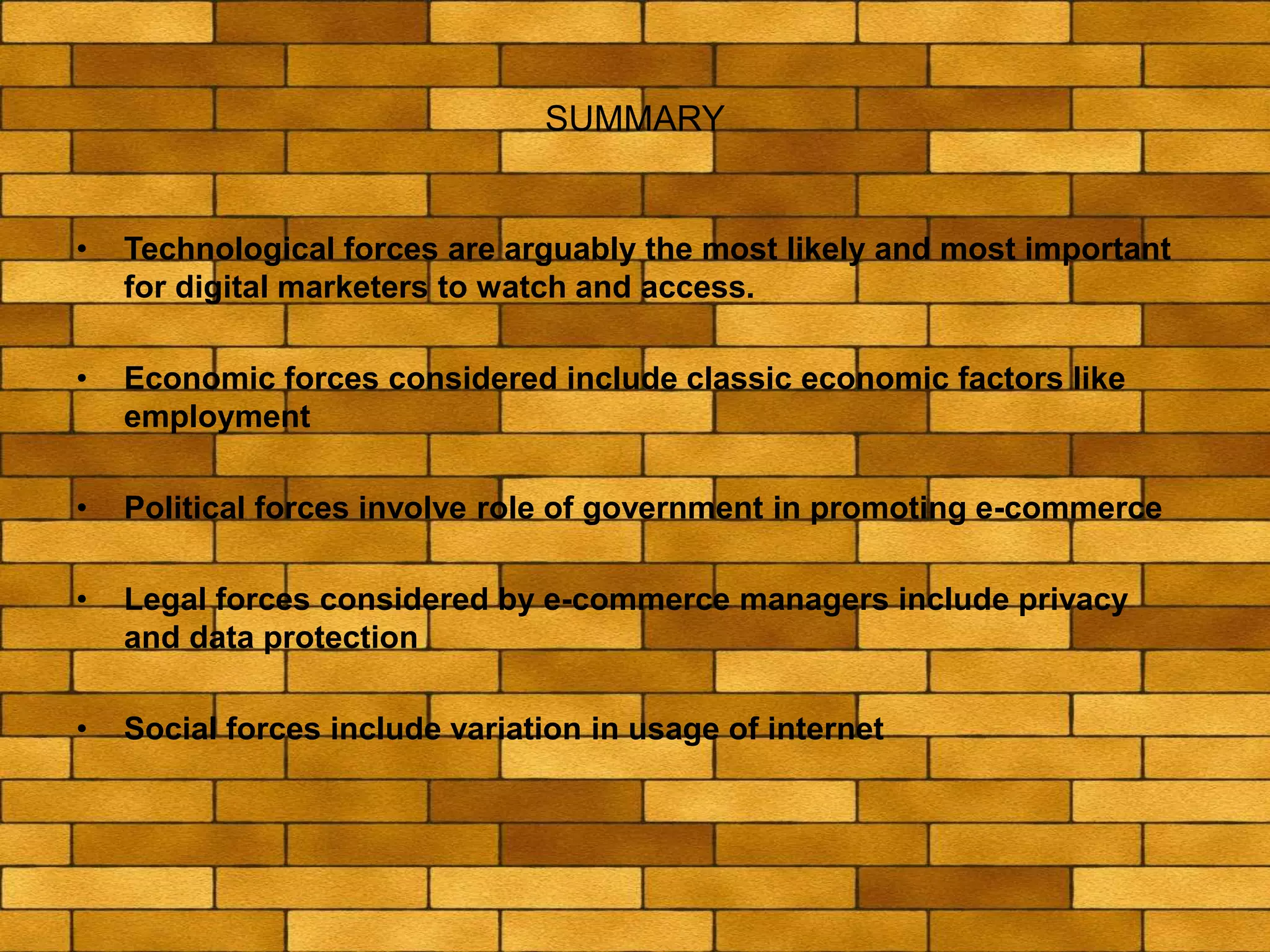
SUMMARY
• Technological forces are arguably the most likely and most important
for digital marketers to watch and access.
• Economic forces considered include classic economic factors like
employment
• Political forces involve role of government in promoting e-commerce
• Legal forces considered by e-commerce managers include privacy
and data protection
• Social forces include variation in usage of internet
Chapter 3  DIGITAL MARKETING

Chapter 3 DIGITAL MARKETING

  • 1.
    CHAPTER 3 THE INTERNETMACRO- ENVIRONMENT NUR AQILAH BINTI ZAINUDIN 2014416824 BM240 3B
  • 2.
    LEARNING OBJECTIVES • Identifyhow the macro-environment might affect an organization's digital marketing strategy, planning, implementation and performance • Consider legal, moral and ethical constraints of digital marketing • Evaluate the wider significance of macro-environmental-forces • Identify aspects of each of the macro-environmental forces that are particularly relevant to digital marketing
  • 3.
    INTRODUCTION focusing on potential relevanceof each digital marketing strategy main reason for keeping track of changes in the macro-environment is to be aware of how changes in social behaviour, new laws, technological innovation can create opportunities or threats. can create differentiation and competitive advantages which enable the business to survive and prosper.
  • 4.
  • 5.
    TECHNOLOGICAL FORCES Technological forceschange in the technological which influence marketing opportunities like create new product development opportunities, introduce new ways to access target markets through channel integration, create new form of access platforms and applications.
  • 6.
    INTRODUCTION TO INTERNETTECHNOLOGY Internet ========== Physical network that links computer across the globe World Wide Web ========== Medium for publish information Web Server ========== Store the web pages access by web browser Web Browser ========== Provide easy method of access info store as HTML web
  • 7.
    Information exchange betweena web browser and a web server
  • 8.
  • 9.
    Ethical issues concerned withpersonal information ownership have been usefully summarized by Mason (1986) Privacy – what information is held about the individual Accuracy – is it correct? Accessibility – who is allowed to access this information, and under which conditions? Property – who owns it and how can ownership be transferred?
  • 10.
    ECONOMIC FORCES Cause variationin economic conditions affect trading opportunities influence consumer spending and business performance, have significant implications for digital marketing planning.
  • 11.
    EMPLOYMENT AND WORKING PATTERNS Anemerging economic trend relating to employment is that there are more women working across Europe. INCOME AND EXPENDITURE The majority of consumer in developed societies in Europe and the USA have been increase in the level of personal disposable income during the last 50 years.
  • 12.
    INTERNATIONAL MARKET GROWTH AND EMERGINGECONOMIES Globalization refer to the move towards international trading in a single global market place and the blurring of social and cultural differences between countries. ECONOMIC DISRUPTION Throughout history there have been periods of strong economic growth followed by economic downturn and recession.
  • 13.
    POLITICAL FORCES National governmentsand transnational have an important role in determining the future adoption and control of the internet and the rules by which it is governed
  • 14.
    IMPORTANT Promoting the benefitsof adopting the internet for consumers and business to improve a country’s economic prosperity Sponsor research leading to dissemination of best practice among companies Enacting legislation to regulate environment. Example : protect privacy Involvement in setting up international bodies to coordinate the internet
  • 15.
    POLITICAL CONTROL ANDDEMOCRACY Depends on the regulation in a given country and individual market UK as example Financial services authority – control current account, saving, loan Ofgem = control provision of energy such as elactrivcity and gas Ofcom- control providers of mobile phone and broadband services
  • 16.
    TAX JURISDICTION Which country getstax income from transaction Right to tax is divided between country where the enterprise that receives the income is resident (residence country) and that form which enterprise derives that income (source county) Law on taxation are rapidly evolving and vary dramatically between countries
  • 17.
    LEGAL FORCES Determine themethods by which products can be promoted and sold online laws and ethical guidelines that seek to safeguard individual right to privacy and business to free trade.
  • 18.
  • 19.
  • 20.
    SOCIAL FORCES Cultural diversity amongdigital communities which influences use of the internet and the services business provided online. Social exclusion Access divide (early digital divide) Usage divide (primary digital divide) Divide stemming (secondary digital divice)
  • 21.
    CULTURAL FORCES The locallanguage and culture of a country or region can dramatically affect of users of a web service Environmental and green issues related to internet usage.
  • 22.
    SUMMARY • Technological forcesare arguably the most likely and most important for digital marketers to watch and access. • Economic forces considered include classic economic factors like employment • Political forces involve role of government in promoting e-commerce • Legal forces considered by e-commerce managers include privacy and data protection • Social forces include variation in usage of internet