CHAPTER 2
ONLINE MARKETPLACE
ANALYSIS : MICRO-
ENVIRONMENT
PREPARED BY : NUR AQILAH BT ZAINUDIN
BM240(3B)
Learning objectives
 Identify the elements of an organization’s online marketplace
that have implications for developing a digital marketing
strategy
 Evaluate techniques for reviewing the importance of different
actors in the microenvironment: customers, intermediaries,
suppliers and competitors as part of the development of
digital marketing strategy
 Review changes to business and revenue models enabled by
digital markets.
Introduction
 All organization operate within environment that influences
the performance of their business
 Organization that monitor, understand and respond
appropriately to changes in environment that have the
greatest opportunity to compete effectively in the online
market.
What is micro-environment?
The actor(stakeholder) and
their interactions which
influence how an organization
responds in its marketplace
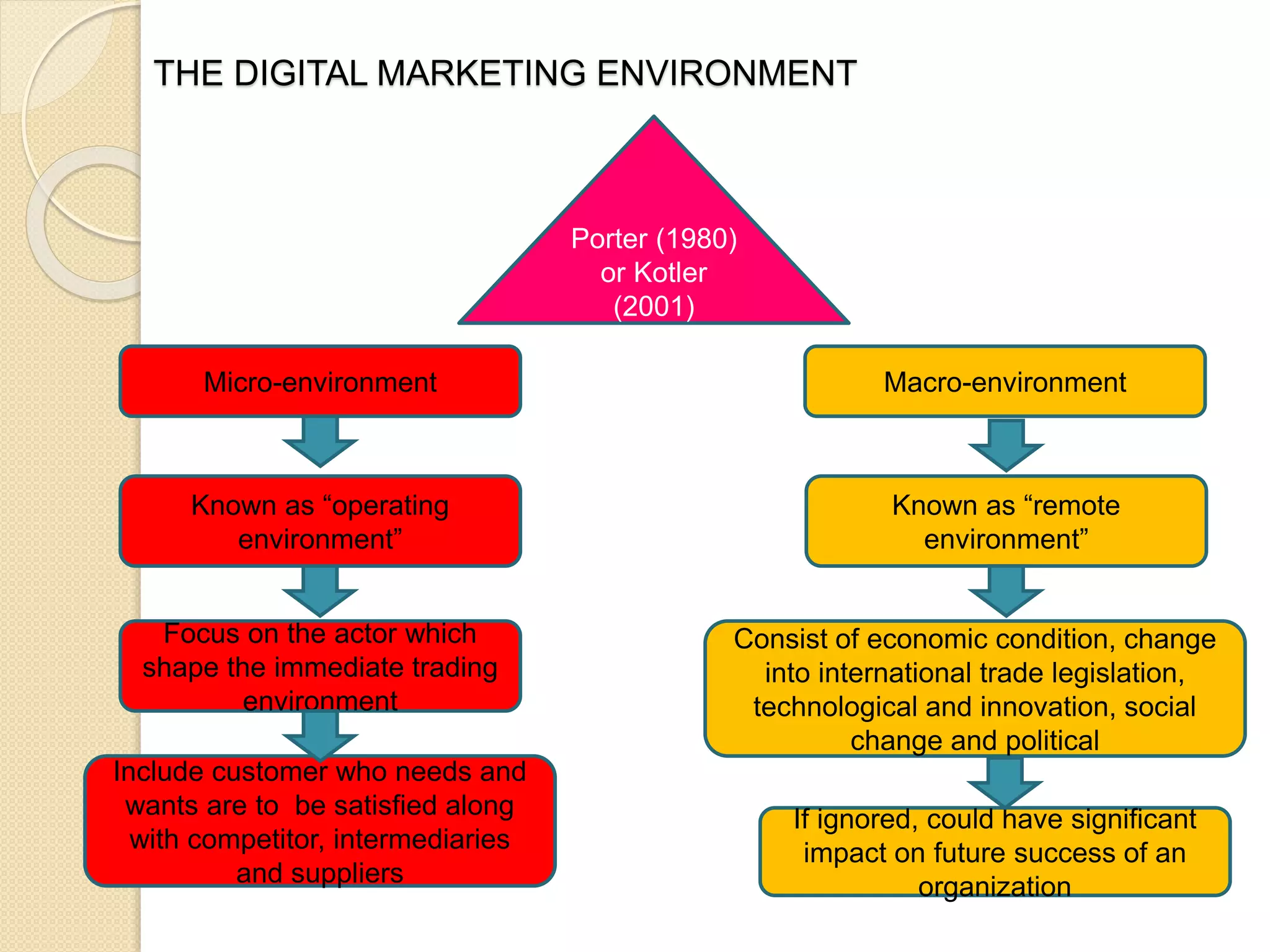
THE DIGITAL MARKETING ENVIRONMENT
Micro-environment
Porter (1980)
or Kotler
(2001)
Known as “operating
environment”
Focus on the actor which
shape the immediate trading
environment
Include customer who needs and
wants are to be satisfied along
with competitor, intermediaries
and suppliers
Macro-environment
Known as “remote
environment”
Consist of economic condition, change
into international trade legislation,
technological and innovation, social
change and political
If ignored, could have significant
impact on future success of an
organization
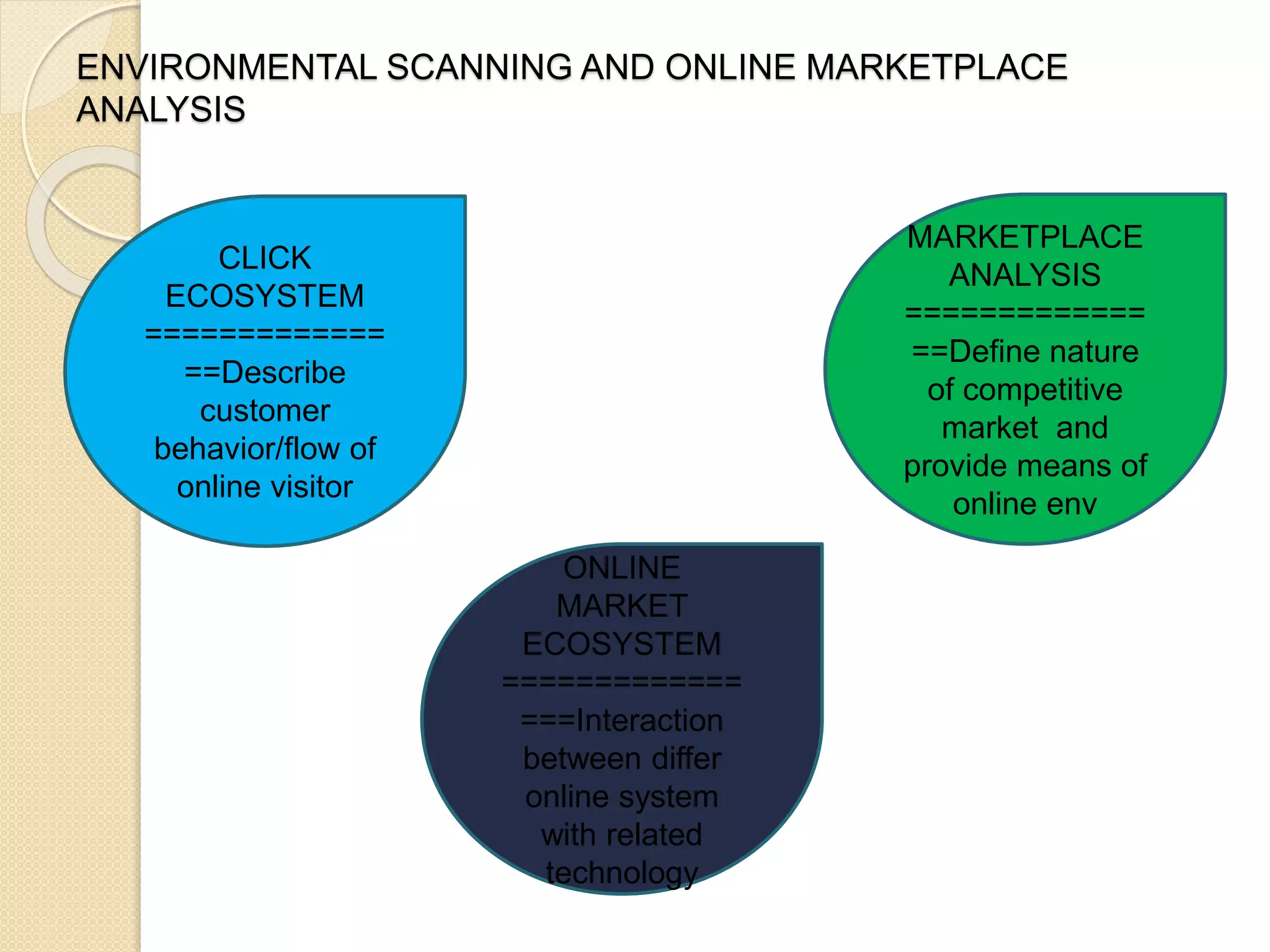
ENVIRONMENTAL SCANNING AND ONLINE MARKETPLACE
ANALYSIS
CLICK
ECOSYSTEM
=============
==Describe
customer
behavior/flow of
online visitor
MARKETPLACE
ANALYSIS
=============
==Define nature
of competitive
market and
provide means of
online env
ONLINE
MARKET
ECOSYSTEM
=============
===Interaction
between differ
online system
with related
technology
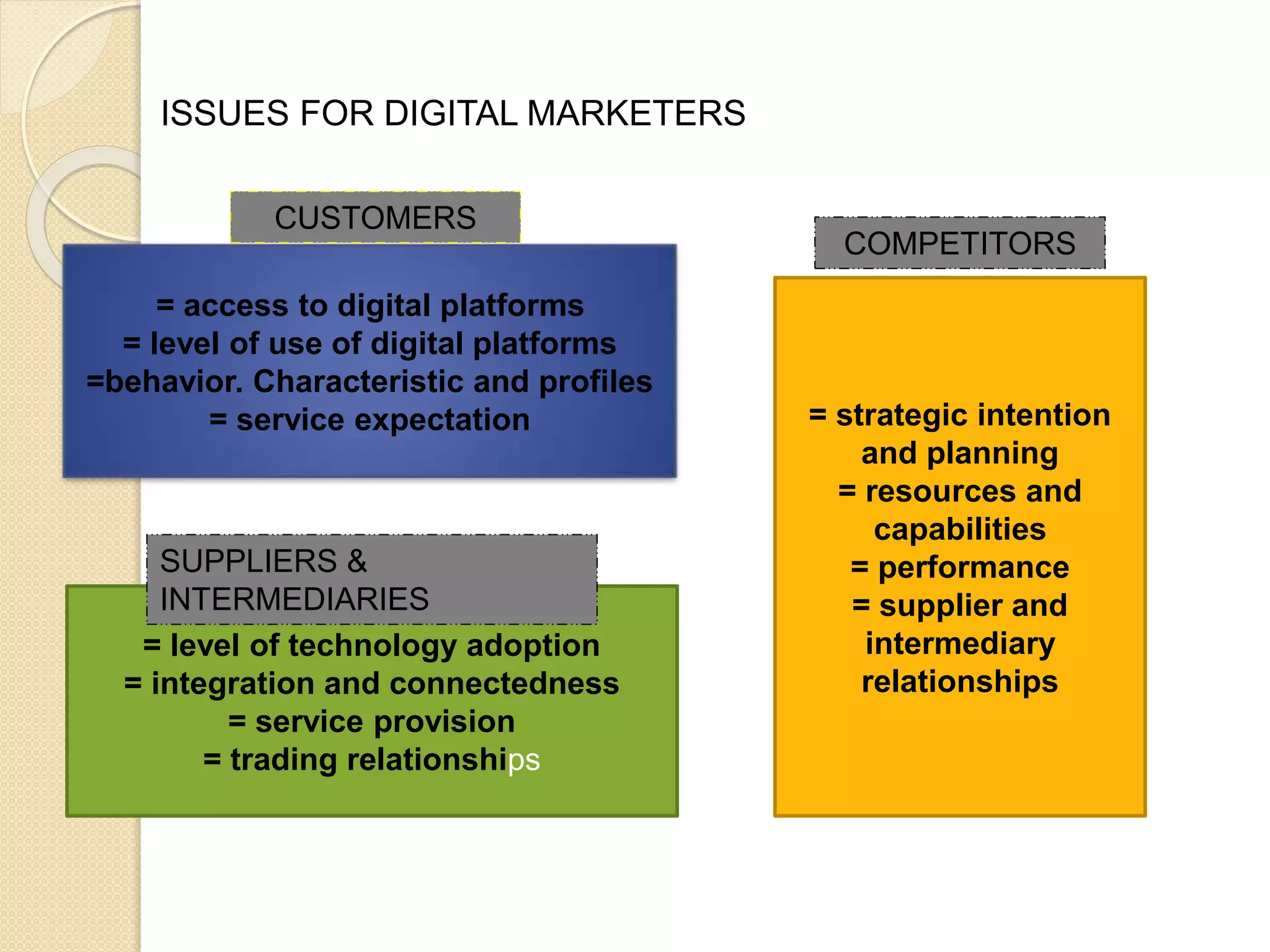
ISSUES FOR DIGITAL MARKETERS
= access to digital platforms
= level of use of digital platforms
=behavior. Characteristic and profiles
= service expectation
= level of technology adoption
= integration and connectedness
= service provision
= trading relationships
= strategic intention
and planning
= resources and
capabilities
= performance
= supplier and
intermediary
relationships
CUSTOMERS
COMPETITORS
SUPPLIERS &
INTERMEDIARIES
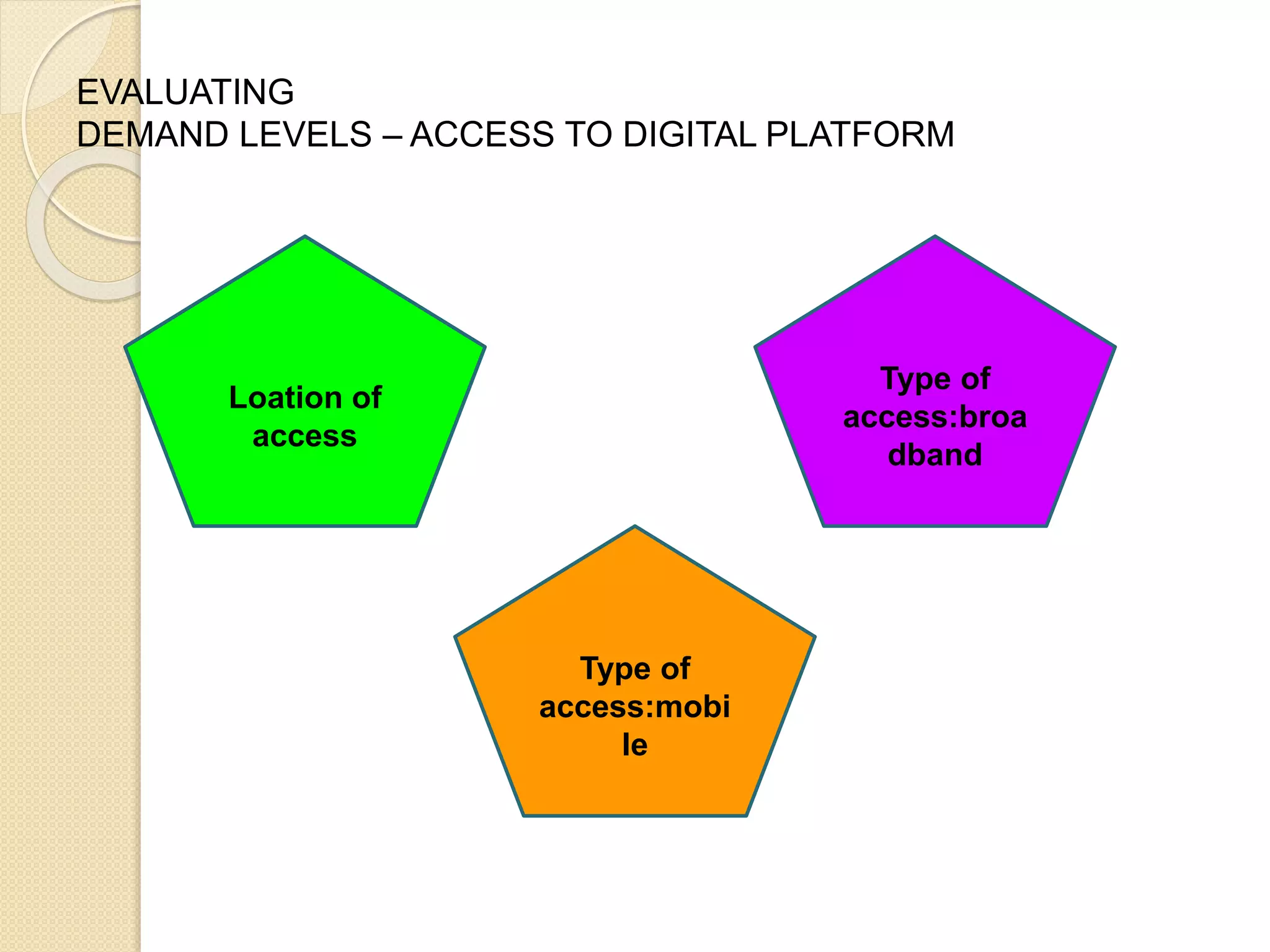
EVALUATING
DEMAND LEVELS – ACCESS TO DIGITAL PLATFORM
Loation of
access
Type of
access:broa
dband
Type of
access:mobi
le
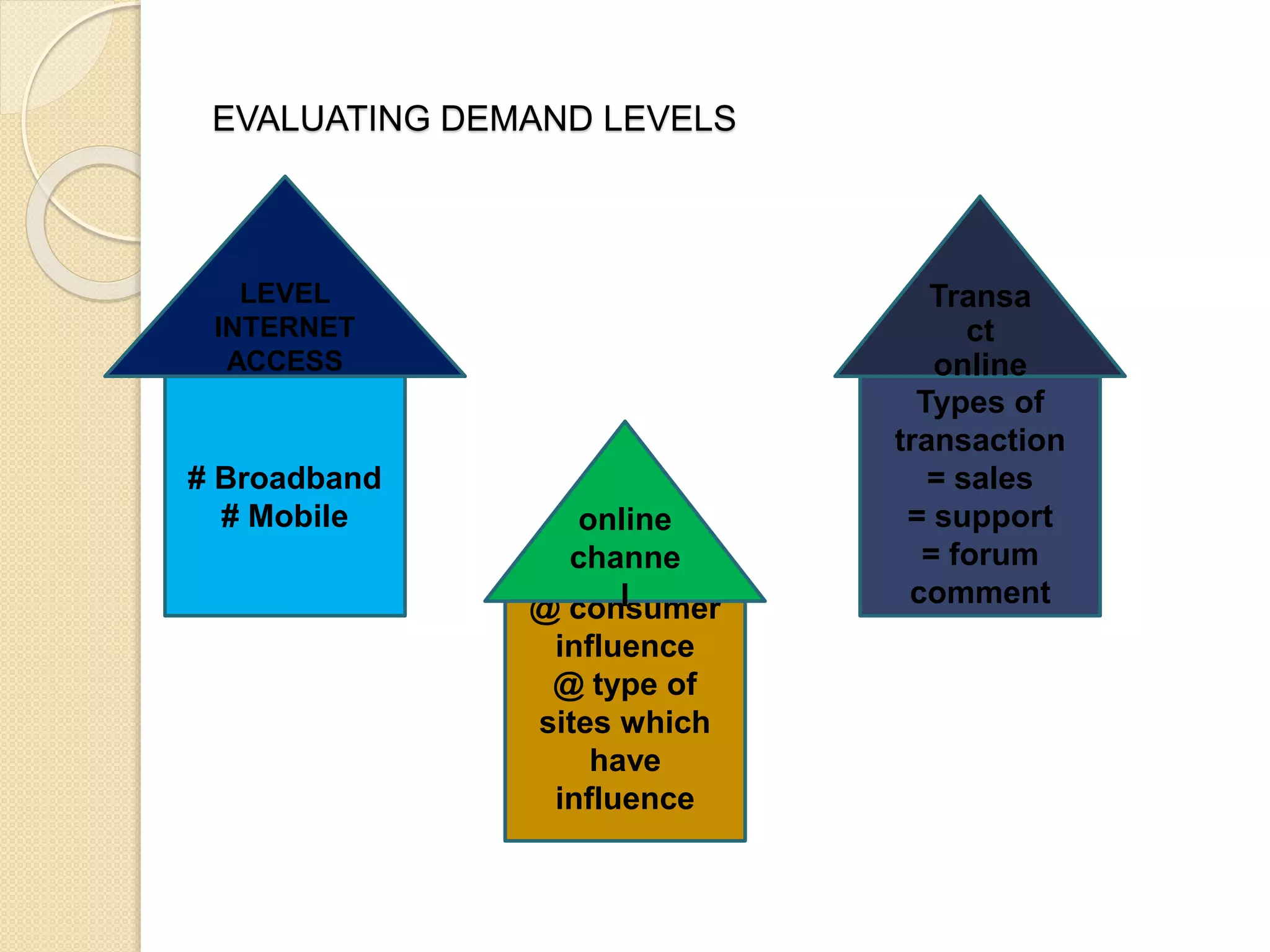
EVALUATING DEMAND LEVELS
# Broadband
# Mobile
Types of
transaction
= sales
= support
= forum
comment@ consumer
influence
@ type of
sites which
have
influence
LEVEL
INTERNET
ACCESS
Transa
ct
online
online
channe
l
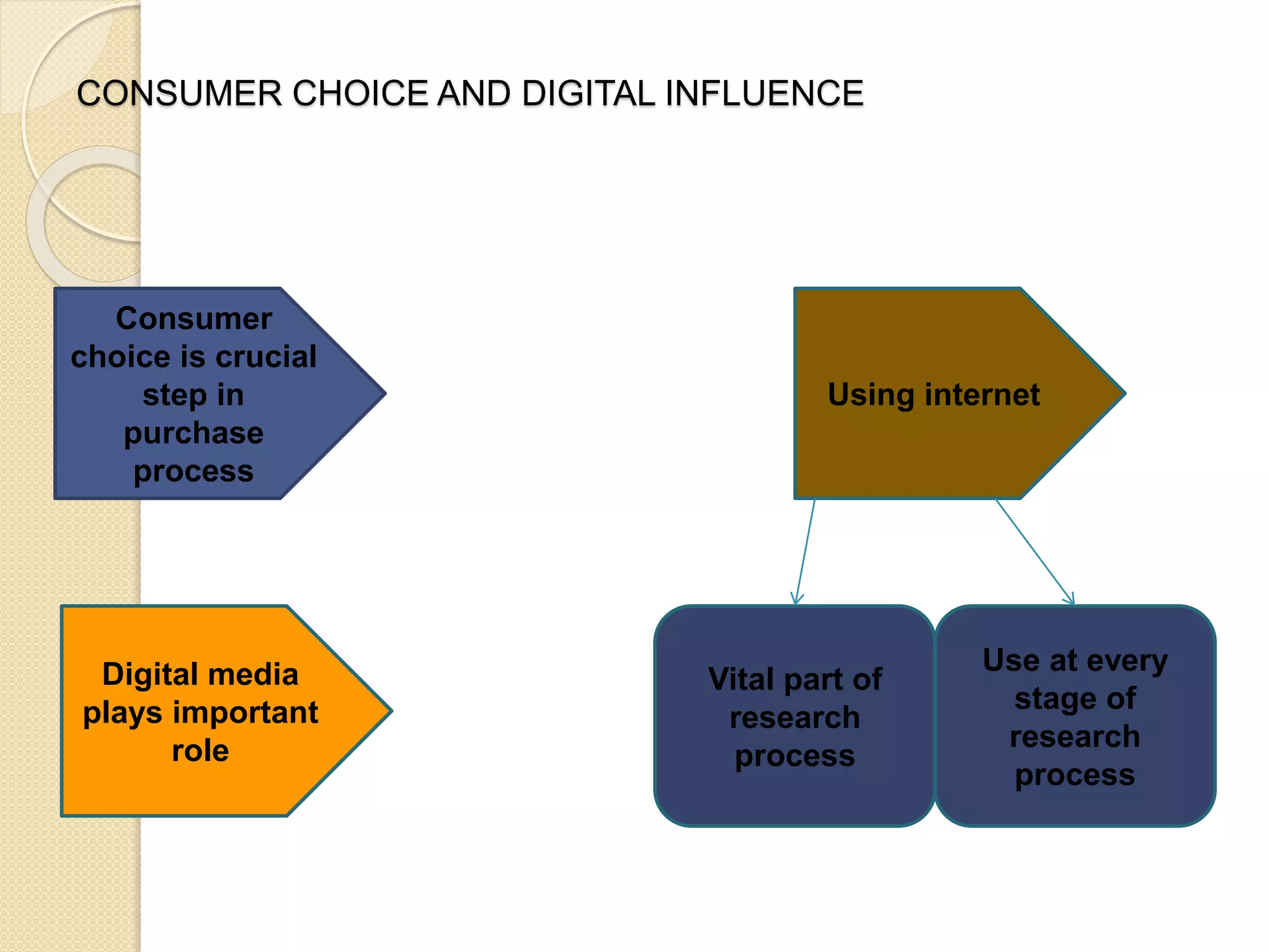
CONSUMER CHOICE AND DIGITAL INFLUENCE
Consumer
choice is crucial
step in
purchase
process
Digital media
plays important
role
Using internet
Vital part of
research
process
Use at every
stage of
research
process
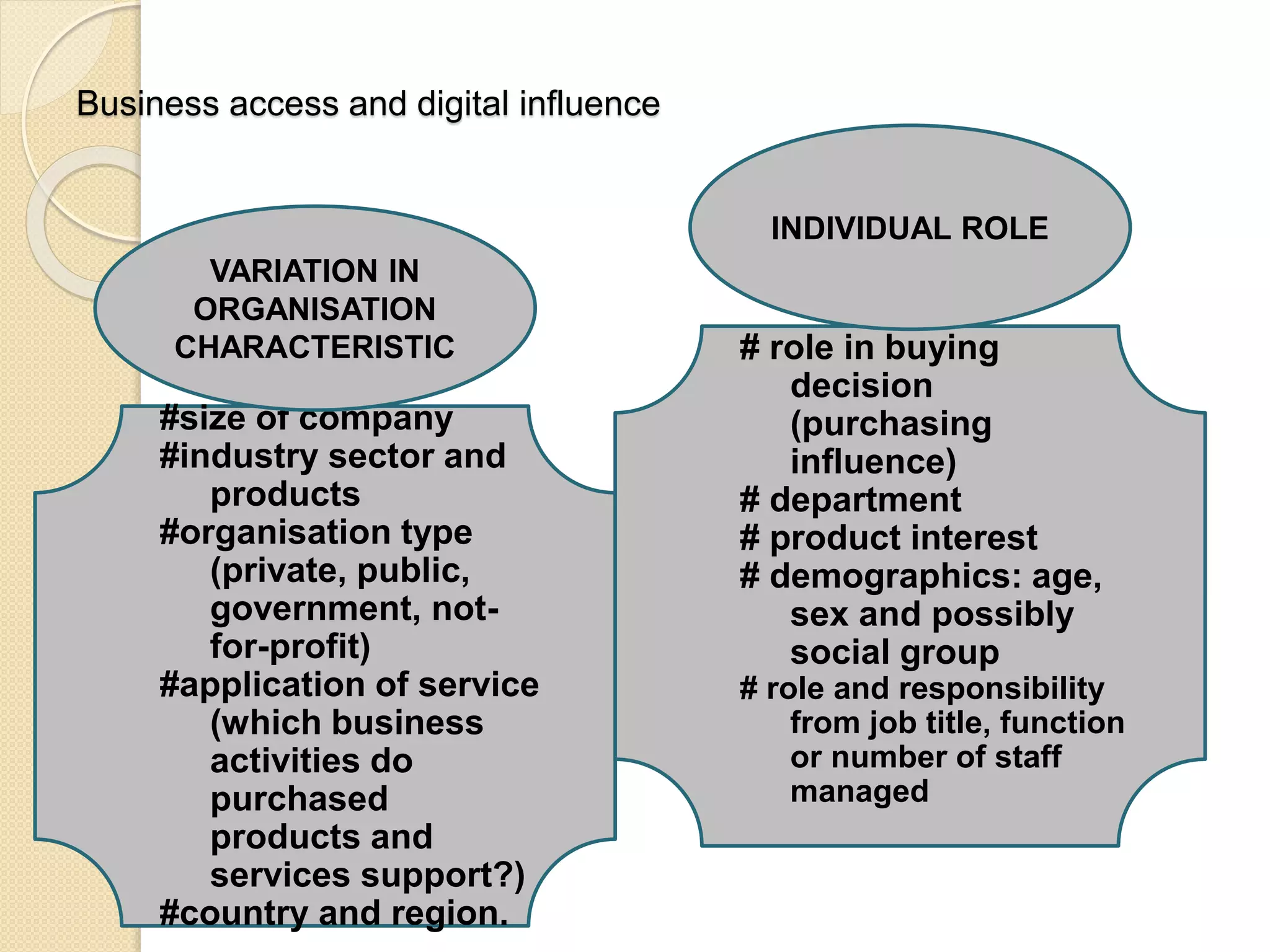
Business access and digital influence
#size of company
#industry sector and
products
#organisation type
(private, public,
government, not-
for-profit)
#application of service
(which business
activities do
purchased
products and
services support?)
#country and region.
# role in buying
decision
(purchasing
influence)
# department
# product interest
# demographics: age,
sex and possibly
social group
# role and responsibility
from job title, function
or number of staff
managed
VARIATION IN
ORGANISATION
CHARACTERISTIC
INDIVIDUAL ROLE
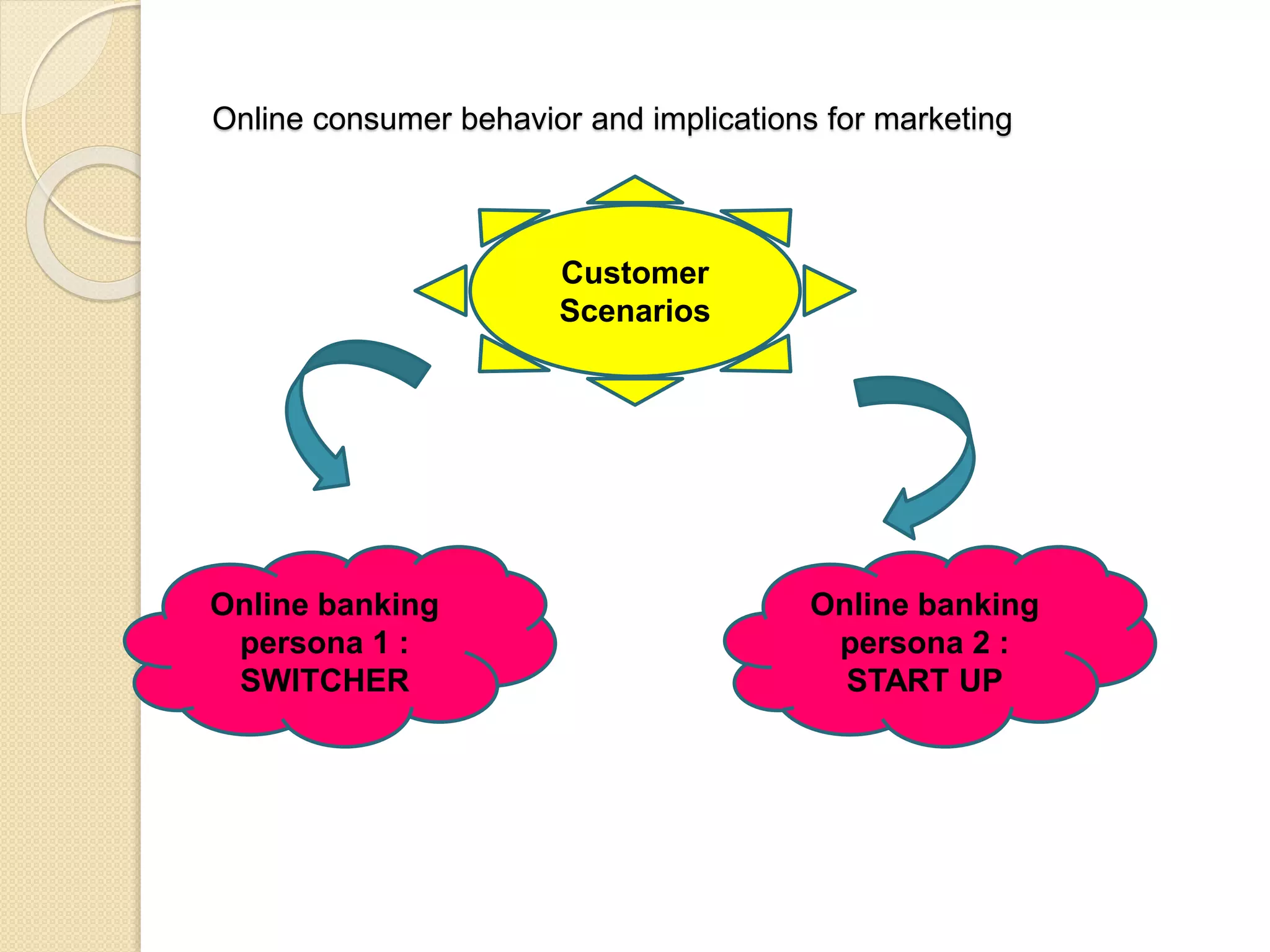
Online consumer behavior and implications for marketing
Customer
Scenarios
Online banking
persona 1 :
SWITCHER
Online banking
persona 2 :
START UP
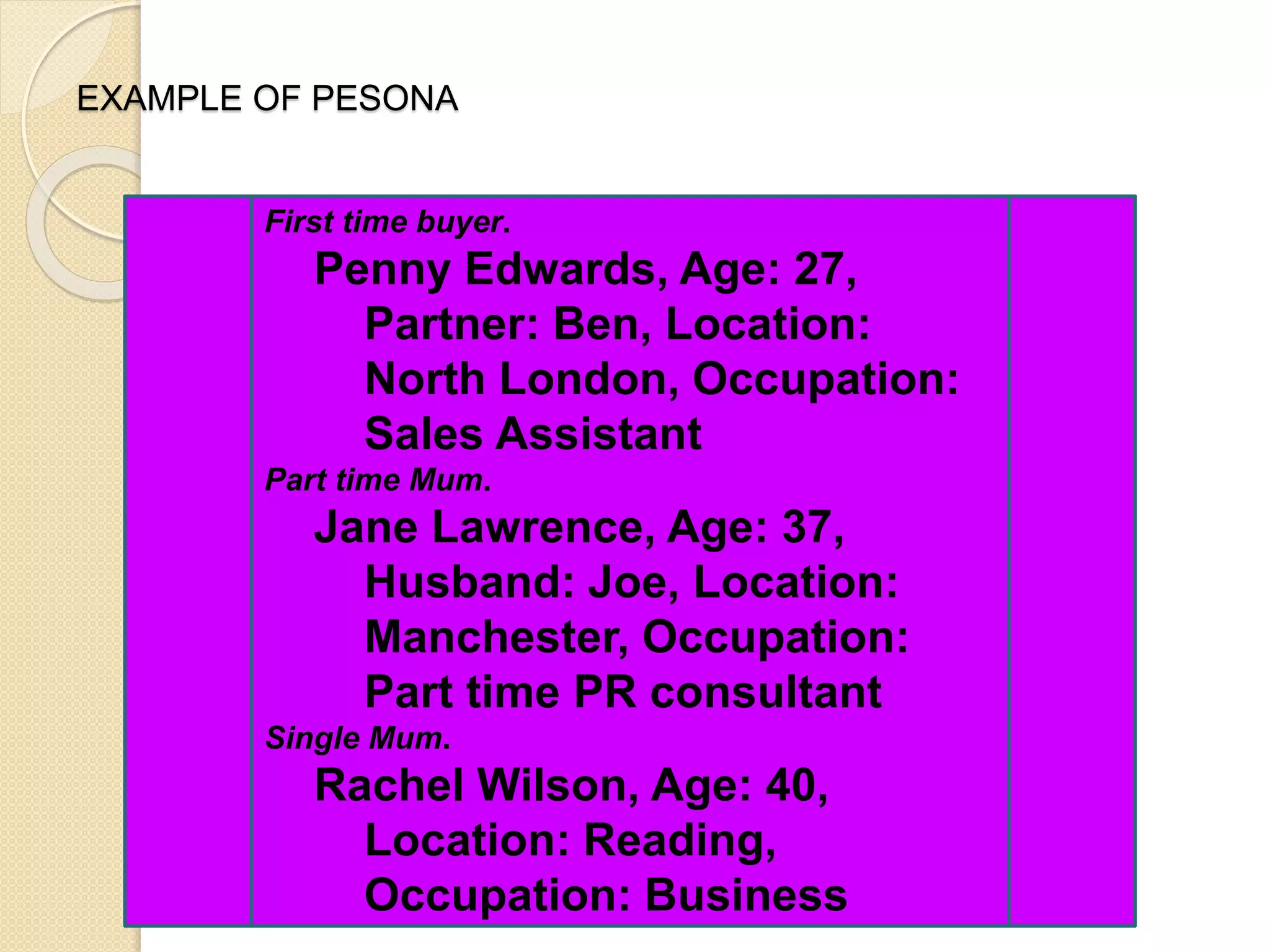
EXAMPLE OF PESONA
First time buyer.
Penny Edwards, Age: 27,
Partner: Ben, Location:
North London, Occupation:
Sales Assistant
Part time Mum.
Jane Lawrence, Age: 37,
Husband: Joe, Location:
Manchester, Occupation:
Part time PR consultant
Single Mum.
Rachel Wilson, Age: 40,
Location: Reading,
Occupation: Business
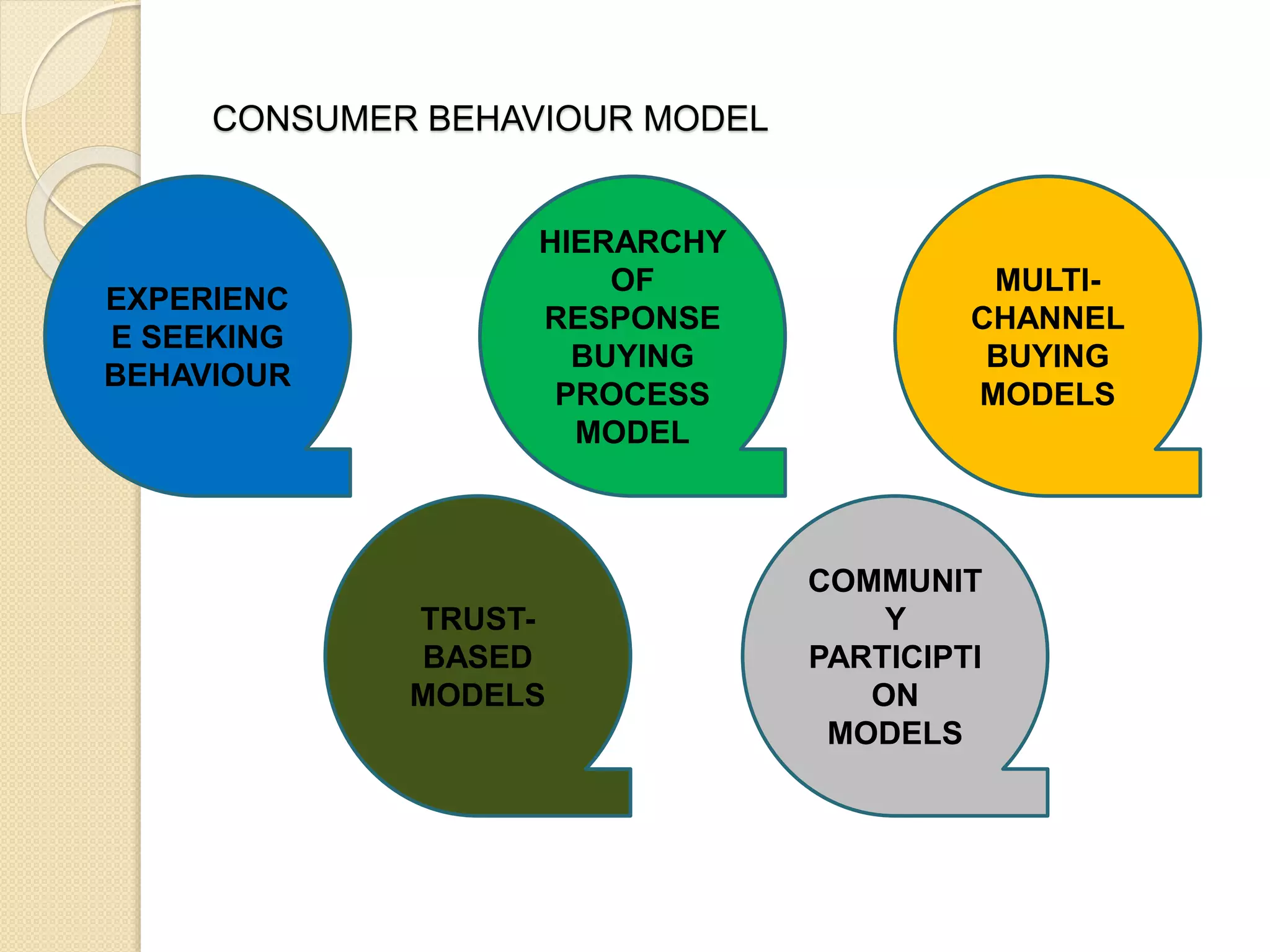
CONSUMER BEHAVIOUR MODEL
EXPERIENC
E SEEKING
BEHAVIOUR
HIERARCHY
OF
RESPONSE
BUYING
PROCESS
MODEL
MULTI-
CHANNEL
BUYING
MODELS
TRUST-
BASED
MODELS
COMMUNIT
Y
PARTICIPTI
ON
MODELS
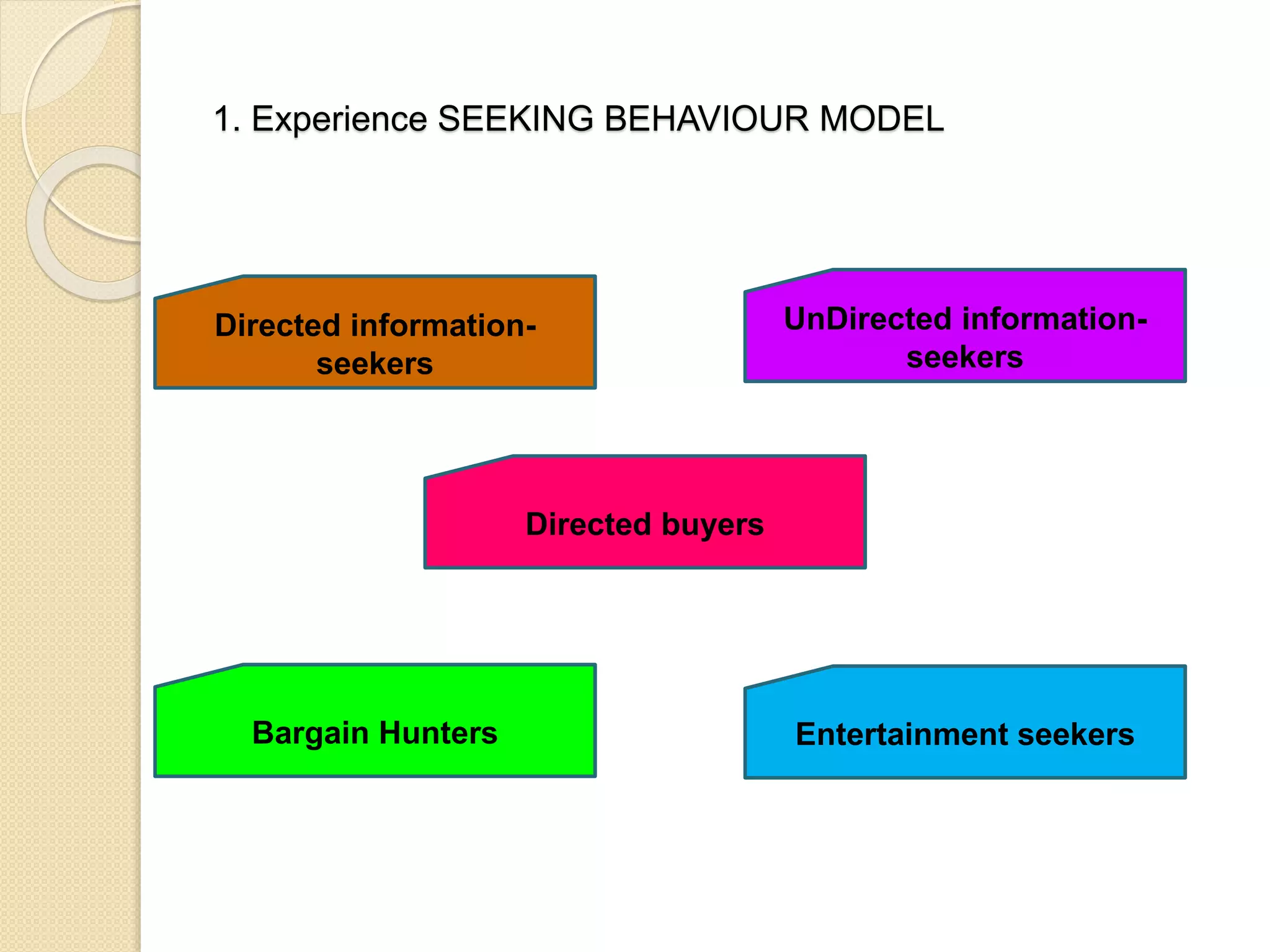
1. Experience SEEKING BEHAVIOUR MODEL
Directed information-
seekers
UnDirected information-
seekers
Directed buyers
Bargain Hunters Entertainment seekers
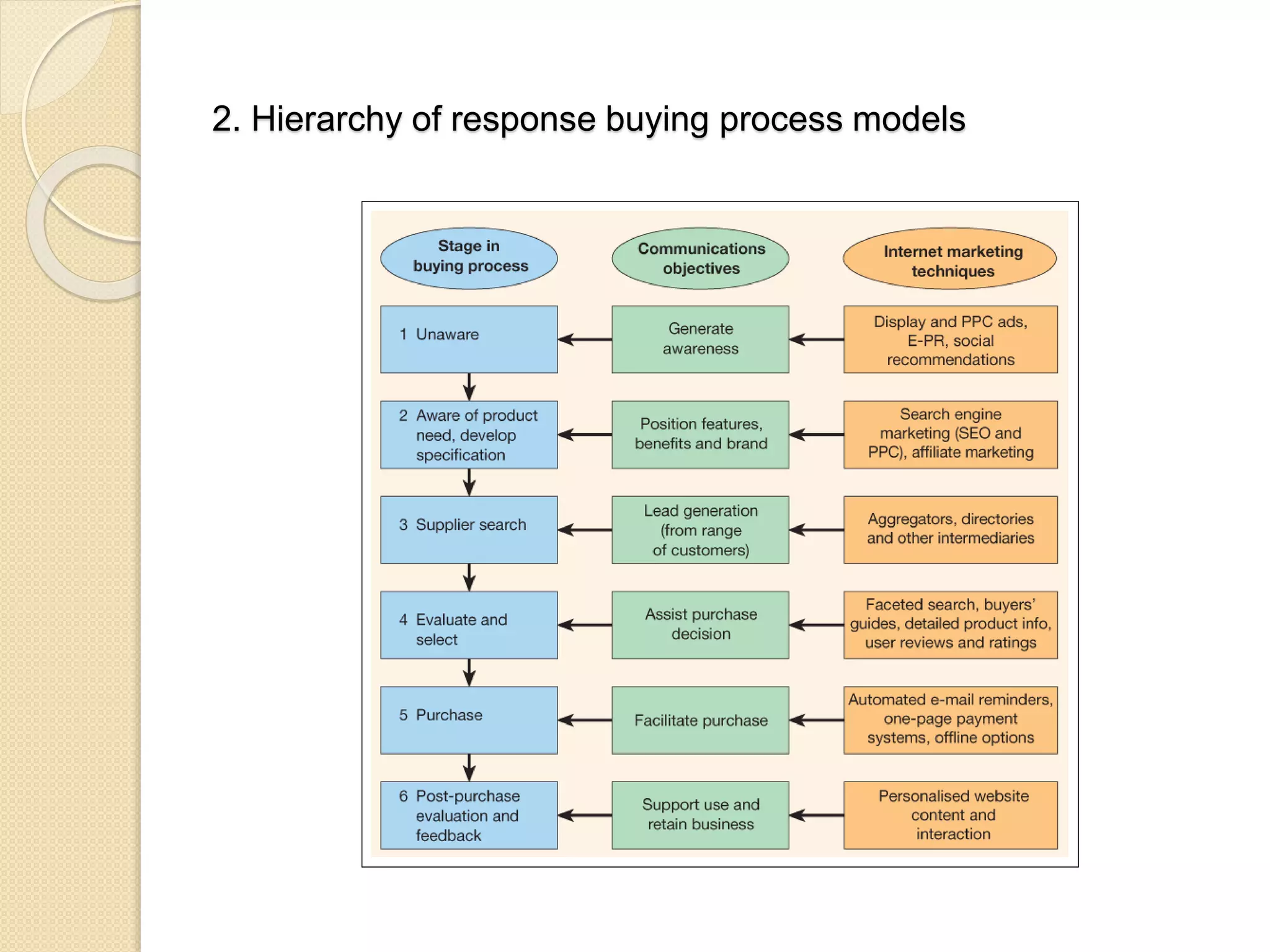
2. Hierarchy of response buying process models
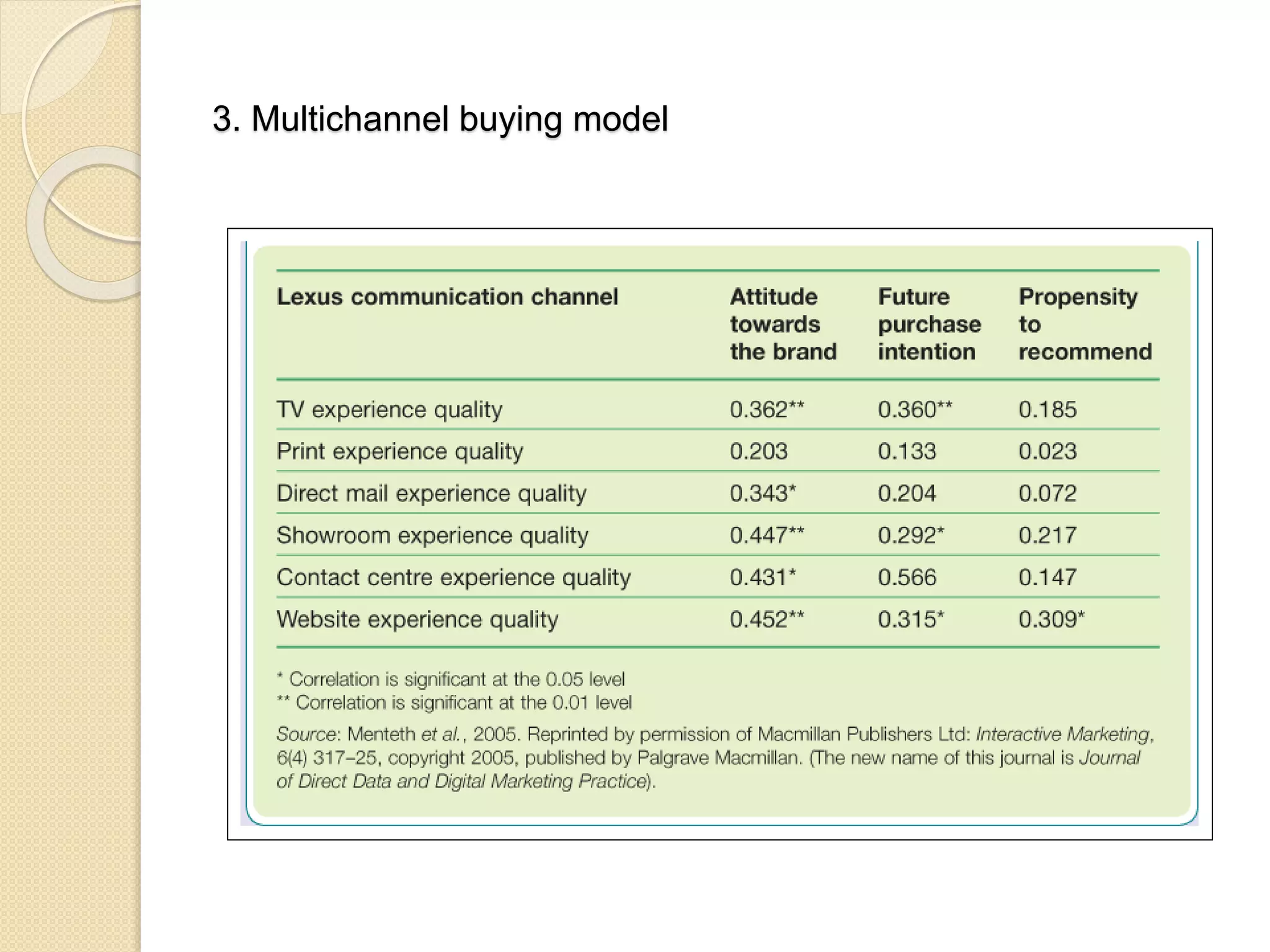
3. Multichannel buying model
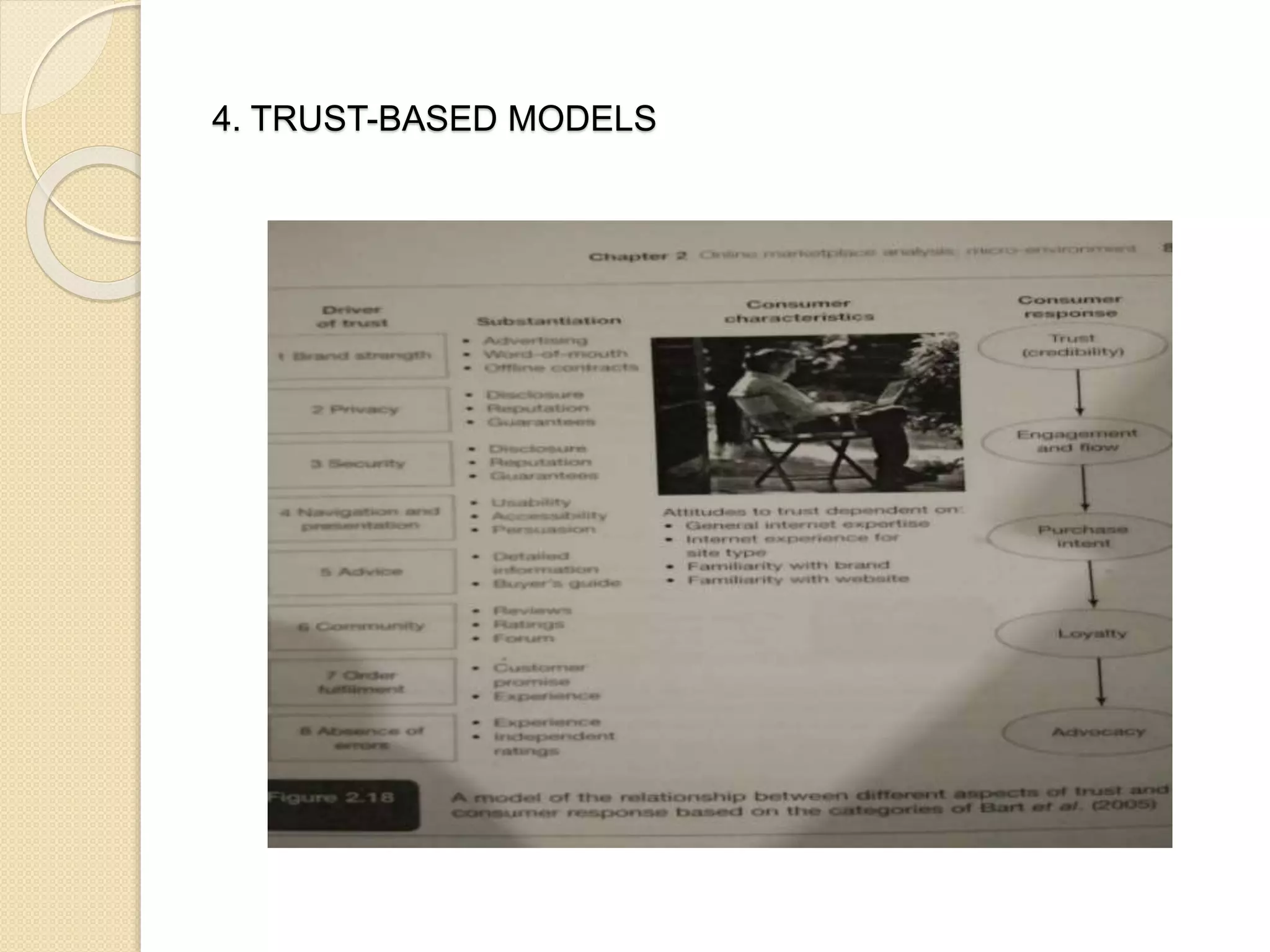
4. TRUST-BASED MODELS
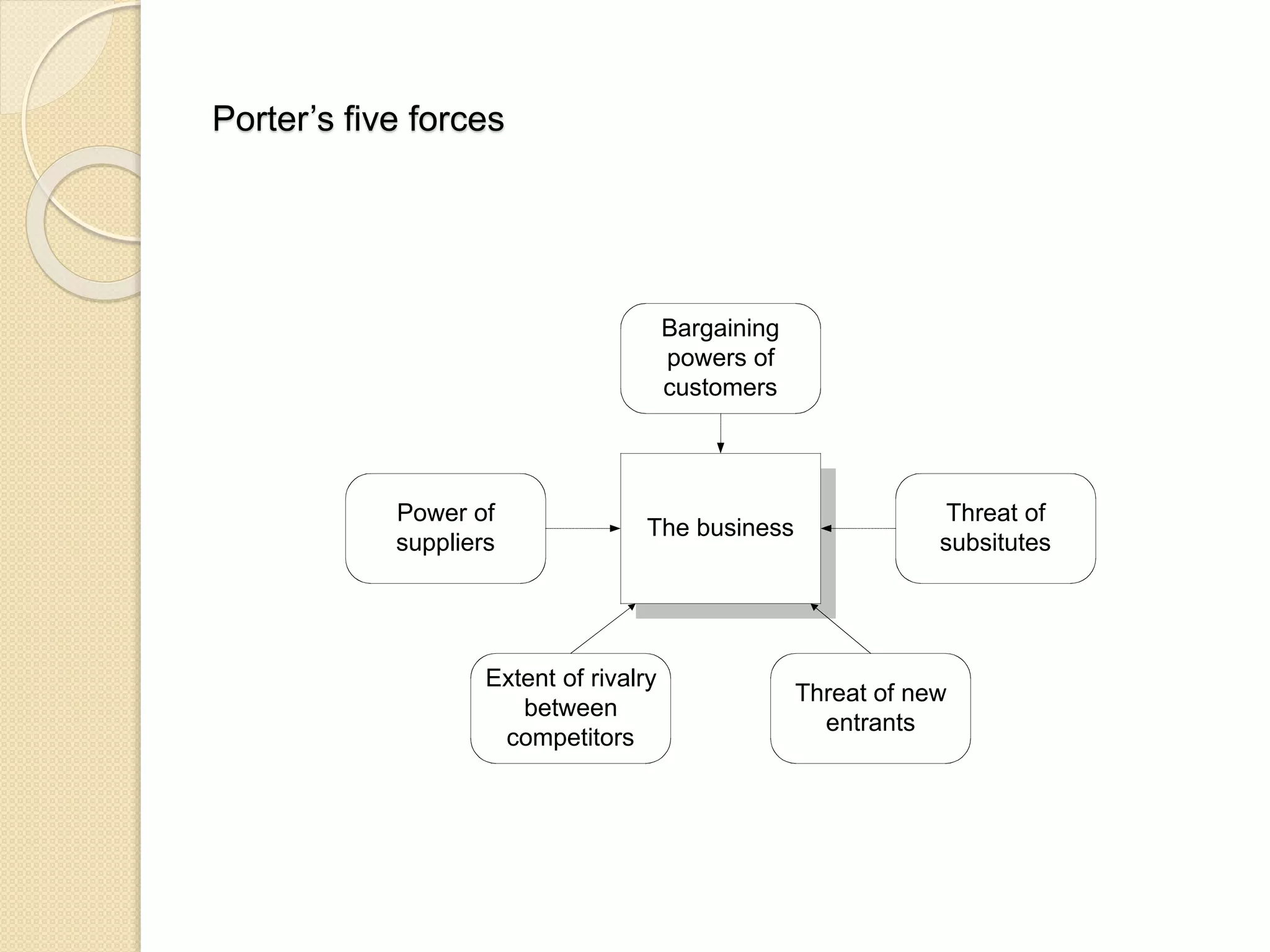
Porter’s five forces
Power of
suppliers
Bargaining
powers of
customers
Extent of rivalry
between
competitors
Threat of
subsitutes
Threat of new
entrants
The business
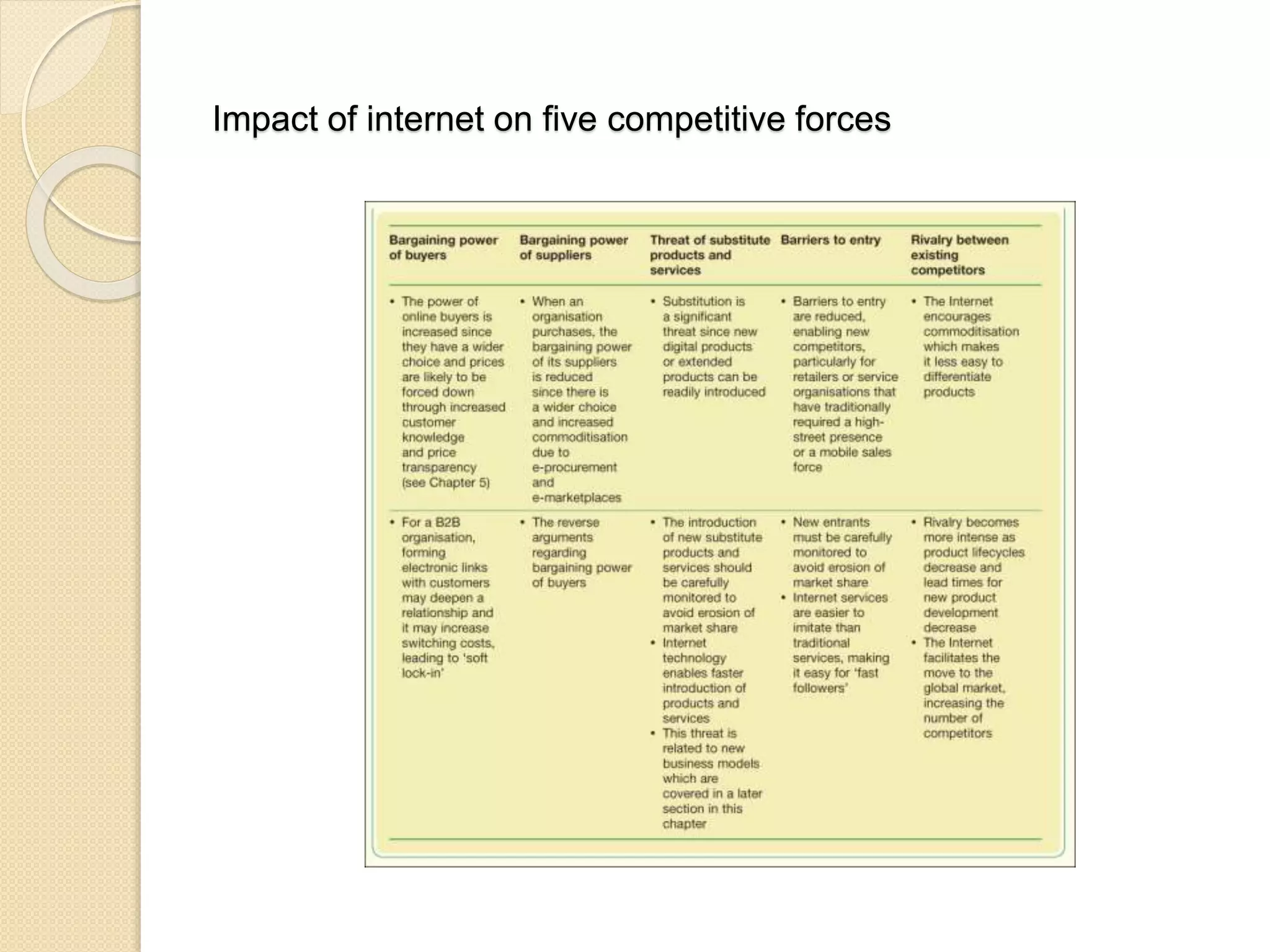
Impact of internet on five competitive forces
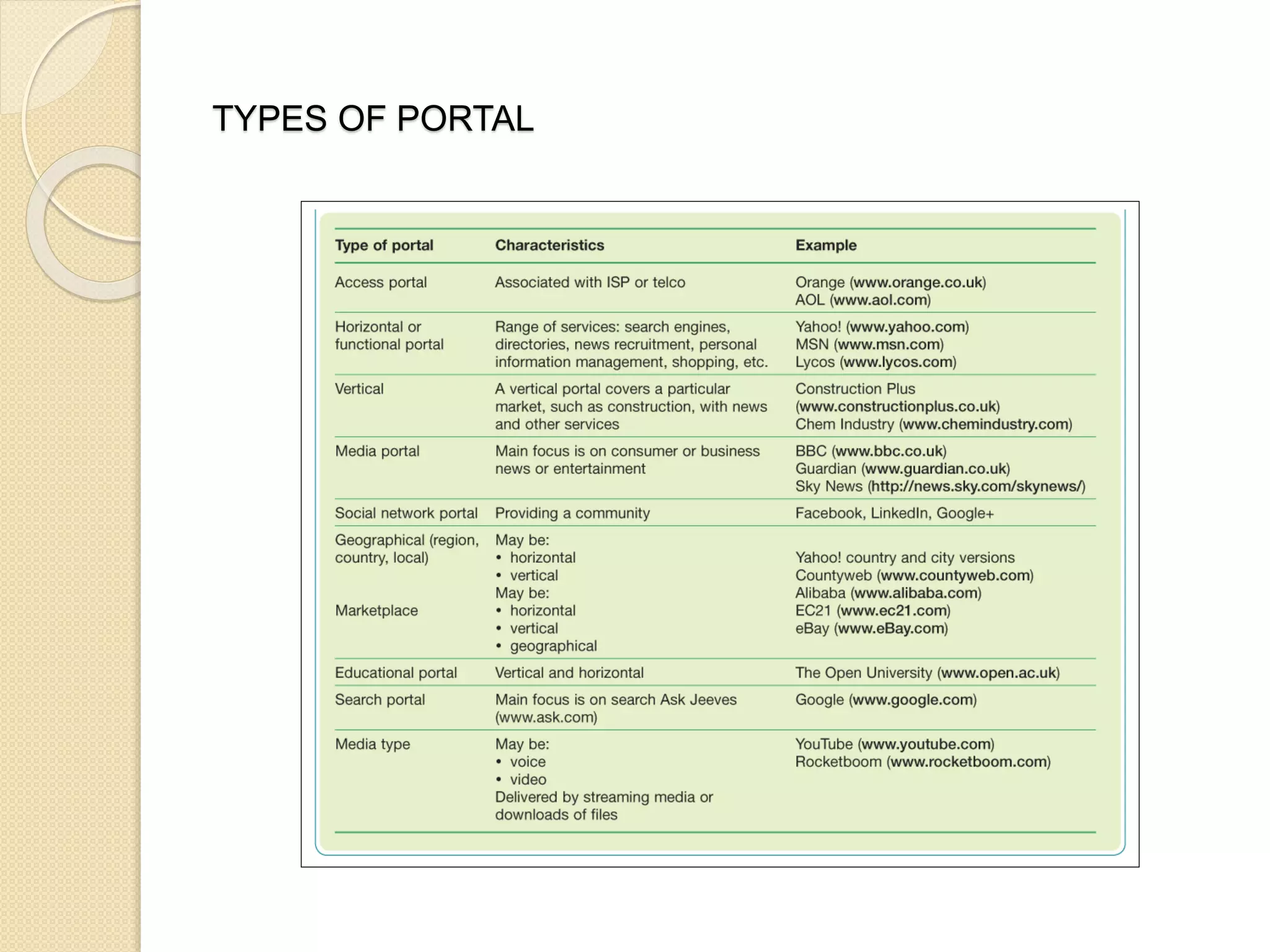
TYPES OF PORTAL
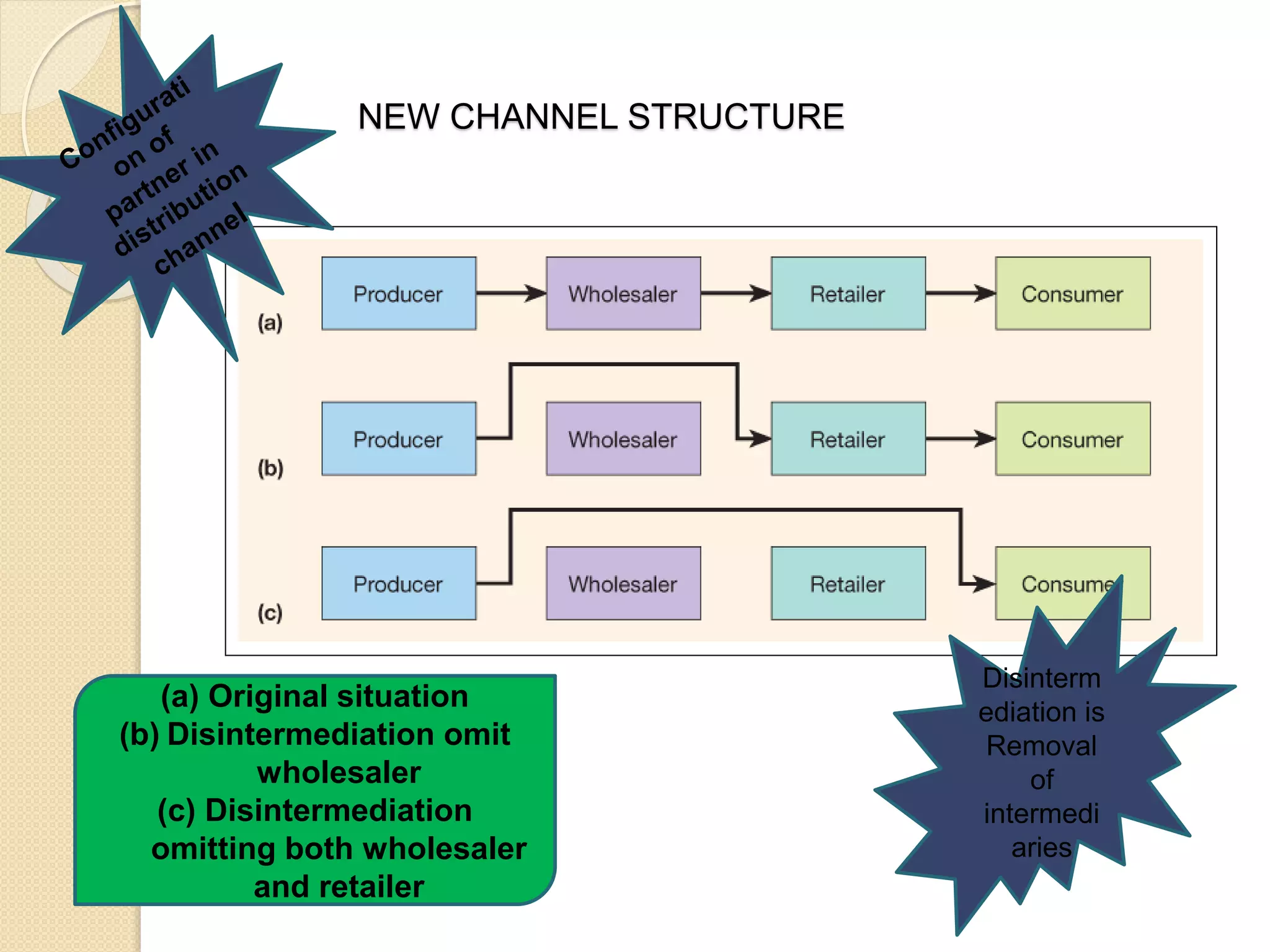
NEW CHANNEL STRUCTURE
(a) Original situation
(b) Disintermediation omit
wholesaler
(c) Disintermediation
omitting both wholesaler
and retailer
Disinterm
ediation is
Removal
of
intermedi
aries
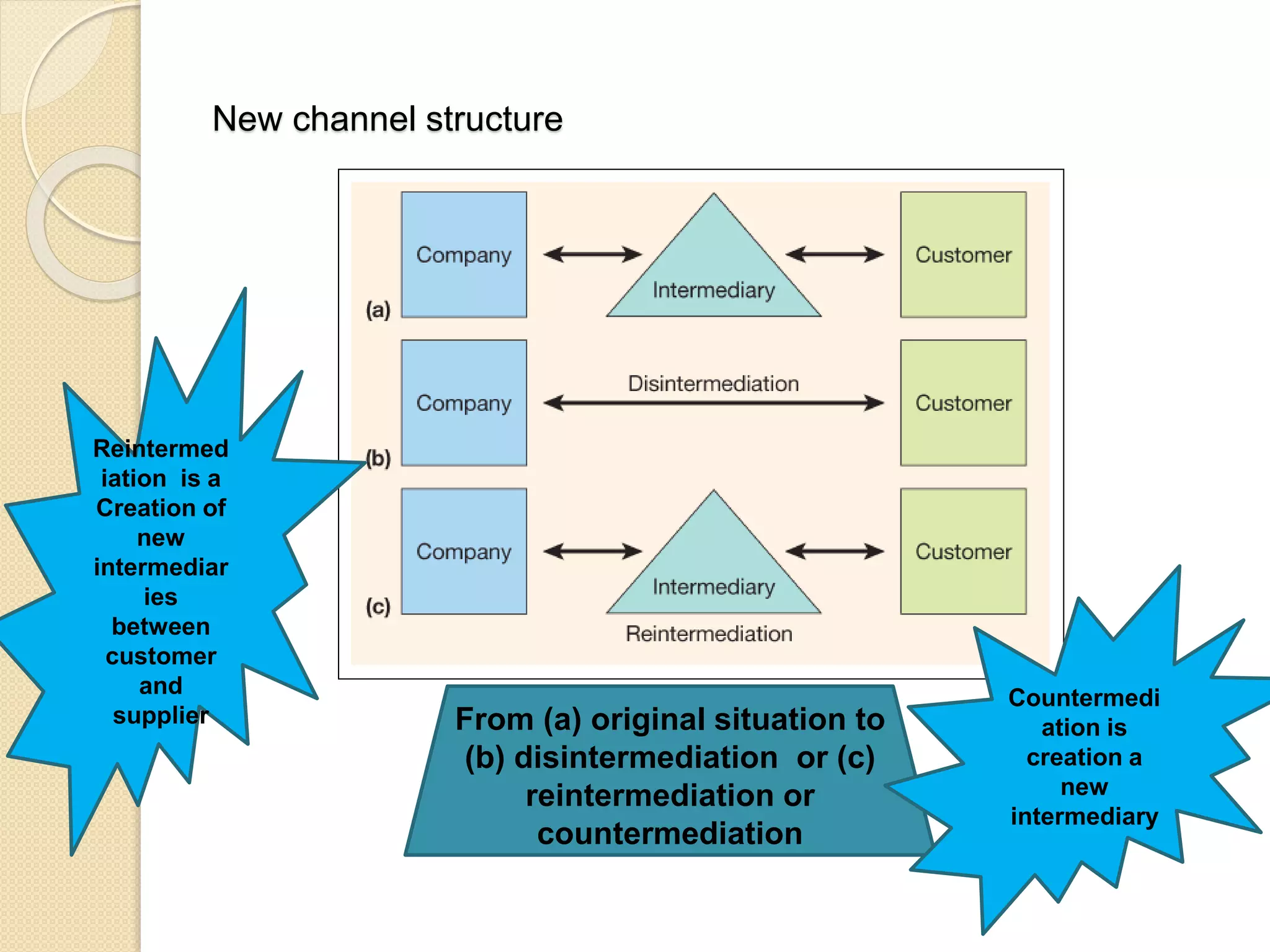
New channel structure
From (a) original situation to
(b) disintermediation or (c)
reintermediation or
countermediation
Reintermed
iation is a
Creation of
new
intermediar
ies
between
customer
and
supplier
Countermedi
ation is
creation a
new
intermediary
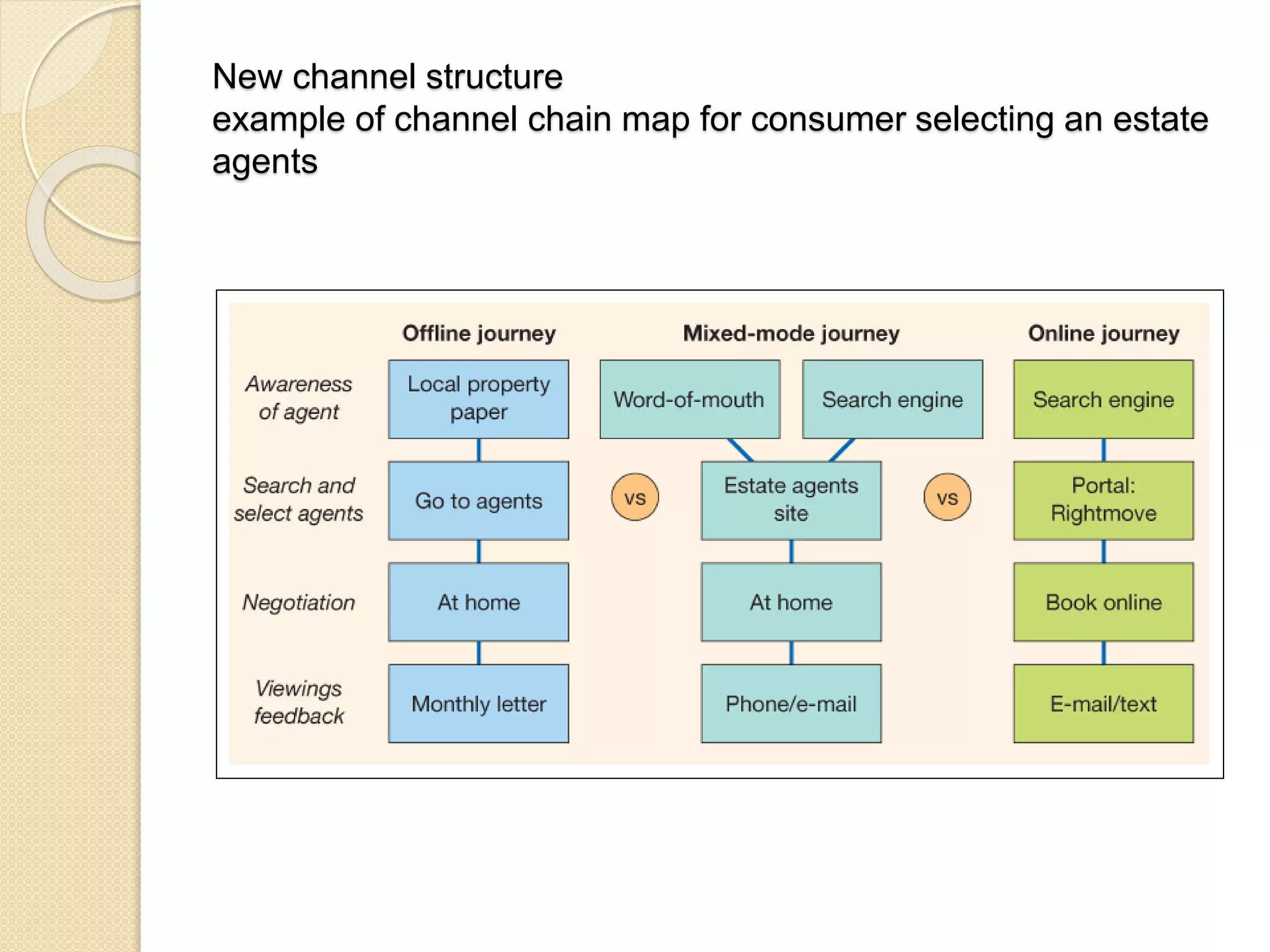
New channel structure
example of channel chain map for consumer selecting an estate
agents
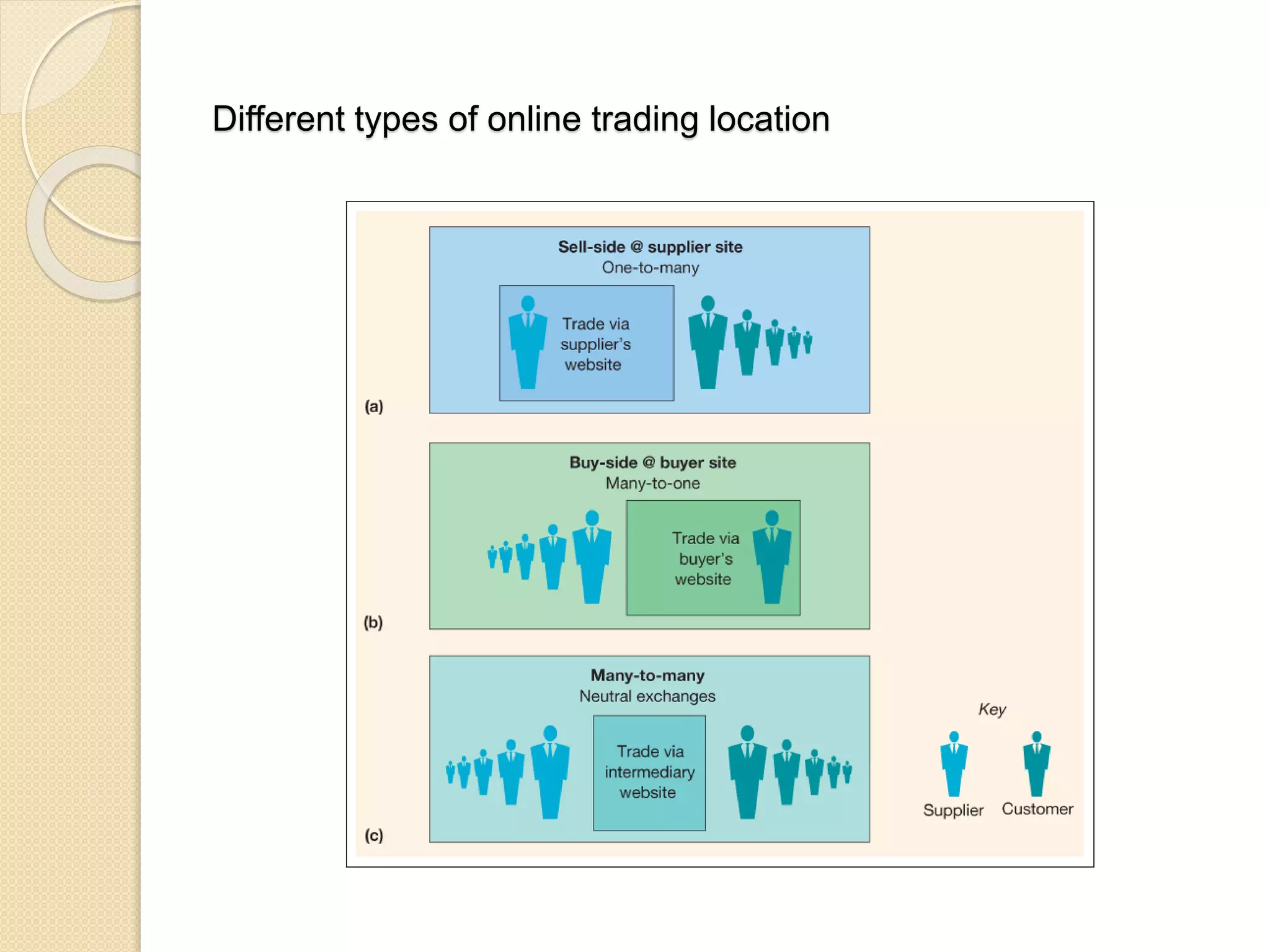
Different types of online trading location
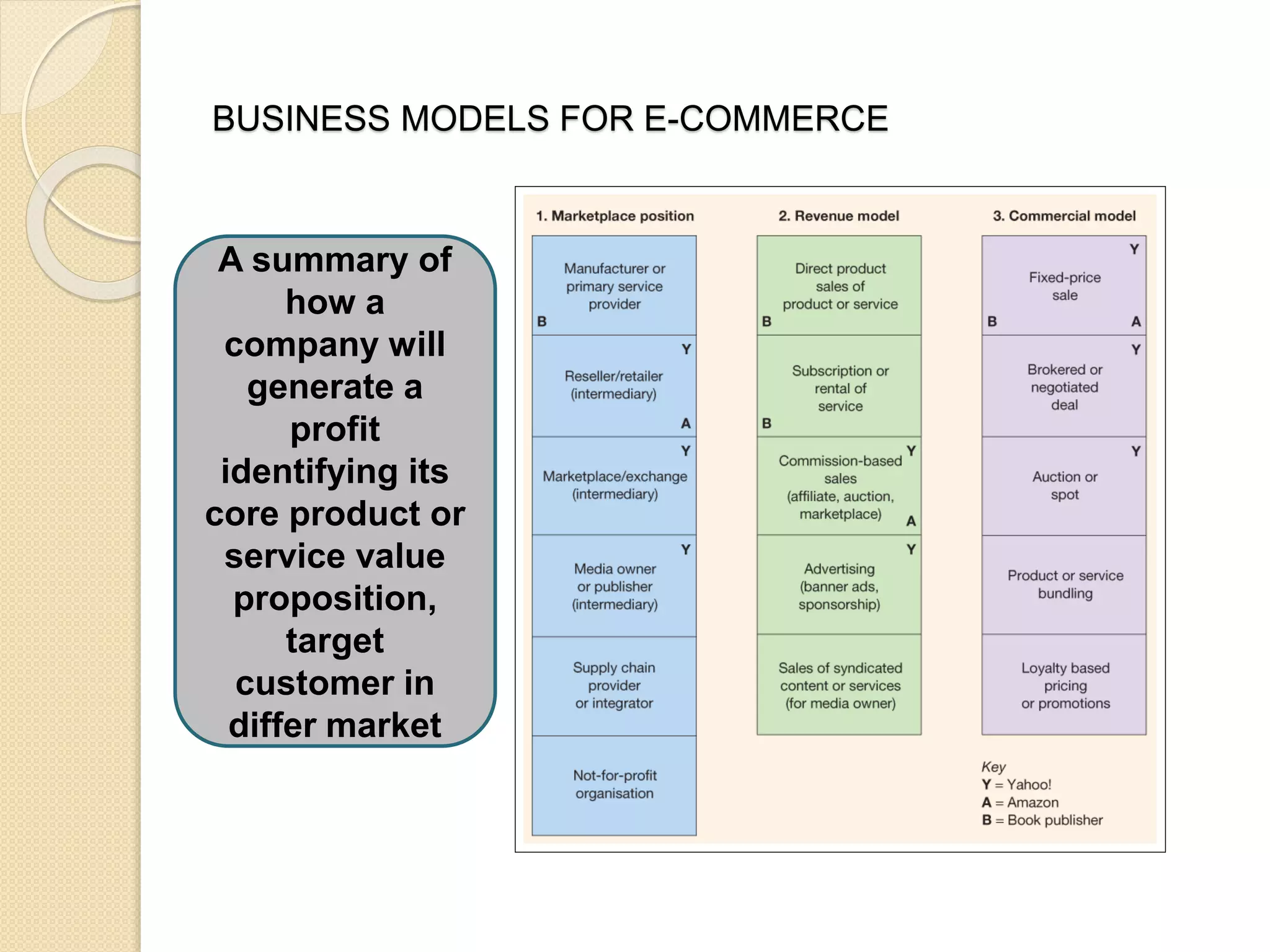
BUSINESS MODELS FOR E-COMMERCE
A summary of
how a
company will
generate a
profit
identifying its
core product or
service value
proposition,
target
customer in
differ market
SUMMARY
 We have explored each of the groups of actors in micro-
environment. From consumer perspective, we have identifies
variables that are likely to be the most effective foundation for
developing targeting strategies
 Suppliers and intermediaries have an important role to play in
digital marketing
 Considered the impact of internet on marketing channel
Chapter 2 DIGITAL MARKETING

Chapter 2 DIGITAL MARKETING

  • 1.
    CHAPTER 2 ONLINE MARKETPLACE ANALYSIS: MICRO- ENVIRONMENT PREPARED BY : NUR AQILAH BT ZAINUDIN BM240(3B)
  • 2.
    Learning objectives  Identifythe elements of an organization’s online marketplace that have implications for developing a digital marketing strategy  Evaluate techniques for reviewing the importance of different actors in the microenvironment: customers, intermediaries, suppliers and competitors as part of the development of digital marketing strategy  Review changes to business and revenue models enabled by digital markets.
  • 3.
    Introduction  All organizationoperate within environment that influences the performance of their business  Organization that monitor, understand and respond appropriately to changes in environment that have the greatest opportunity to compete effectively in the online market.
  • 4.
    What is micro-environment? Theactor(stakeholder) and their interactions which influence how an organization responds in its marketplace
  • 5.
    THE DIGITAL MARKETINGENVIRONMENT Micro-environment Porter (1980) or Kotler (2001) Known as “operating environment” Focus on the actor which shape the immediate trading environment Include customer who needs and wants are to be satisfied along with competitor, intermediaries and suppliers Macro-environment Known as “remote environment” Consist of economic condition, change into international trade legislation, technological and innovation, social change and political If ignored, could have significant impact on future success of an organization
  • 6.
    ENVIRONMENTAL SCANNING ANDONLINE MARKETPLACE ANALYSIS CLICK ECOSYSTEM ============= ==Describe customer behavior/flow of online visitor MARKETPLACE ANALYSIS ============= ==Define nature of competitive market and provide means of online env ONLINE MARKET ECOSYSTEM ============= ===Interaction between differ online system with related technology
  • 7.
    ISSUES FOR DIGITALMARKETERS = access to digital platforms = level of use of digital platforms =behavior. Characteristic and profiles = service expectation = level of technology adoption = integration and connectedness = service provision = trading relationships = strategic intention and planning = resources and capabilities = performance = supplier and intermediary relationships CUSTOMERS COMPETITORS SUPPLIERS & INTERMEDIARIES
  • 8.
    EVALUATING DEMAND LEVELS –ACCESS TO DIGITAL PLATFORM Loation of access Type of access:broa dband Type of access:mobi le
  • 9.
    EVALUATING DEMAND LEVELS #Broadband # Mobile Types of transaction = sales = support = forum comment@ consumer influence @ type of sites which have influence LEVEL INTERNET ACCESS Transa ct online online channe l
  • 10.
    CONSUMER CHOICE ANDDIGITAL INFLUENCE Consumer choice is crucial step in purchase process Digital media plays important role Using internet Vital part of research process Use at every stage of research process
  • 11.
    Business access anddigital influence #size of company #industry sector and products #organisation type (private, public, government, not- for-profit) #application of service (which business activities do purchased products and services support?) #country and region. # role in buying decision (purchasing influence) # department # product interest # demographics: age, sex and possibly social group # role and responsibility from job title, function or number of staff managed VARIATION IN ORGANISATION CHARACTERISTIC INDIVIDUAL ROLE
  • 12.
    Online consumer behaviorand implications for marketing Customer Scenarios Online banking persona 1 : SWITCHER Online banking persona 2 : START UP
  • 13.
    EXAMPLE OF PESONA Firsttime buyer. Penny Edwards, Age: 27, Partner: Ben, Location: North London, Occupation: Sales Assistant Part time Mum. Jane Lawrence, Age: 37, Husband: Joe, Location: Manchester, Occupation: Part time PR consultant Single Mum. Rachel Wilson, Age: 40, Location: Reading, Occupation: Business
  • 14.
    CONSUMER BEHAVIOUR MODEL EXPERIENC ESEEKING BEHAVIOUR HIERARCHY OF RESPONSE BUYING PROCESS MODEL MULTI- CHANNEL BUYING MODELS TRUST- BASED MODELS COMMUNIT Y PARTICIPTI ON MODELS
  • 15.
    1. Experience SEEKINGBEHAVIOUR MODEL Directed information- seekers UnDirected information- seekers Directed buyers Bargain Hunters Entertainment seekers
  • 16.
    2. Hierarchy ofresponse buying process models
  • 17.
  • 18.
  • 20.
    Porter’s five forces Powerof suppliers Bargaining powers of customers Extent of rivalry between competitors Threat of subsitutes Threat of new entrants The business
  • 21.
    Impact of interneton five competitive forces
  • 22.
  • 23.
    NEW CHANNEL STRUCTURE (a)Original situation (b) Disintermediation omit wholesaler (c) Disintermediation omitting both wholesaler and retailer Disinterm ediation is Removal of intermedi aries
  • 24.
    New channel structure From(a) original situation to (b) disintermediation or (c) reintermediation or countermediation Reintermed iation is a Creation of new intermediar ies between customer and supplier Countermedi ation is creation a new intermediary
  • 25.
    New channel structure exampleof channel chain map for consumer selecting an estate agents
  • 26.
    Different types ofonline trading location
  • 27.
    BUSINESS MODELS FORE-COMMERCE A summary of how a company will generate a profit identifying its core product or service value proposition, target customer in differ market
  • 28.
    SUMMARY  We haveexplored each of the groups of actors in micro- environment. From consumer perspective, we have identifies variables that are likely to be the most effective foundation for developing targeting strategies  Suppliers and intermediaries have an important role to play in digital marketing  Considered the impact of internet on marketing channel