Joel G. Soria, MD
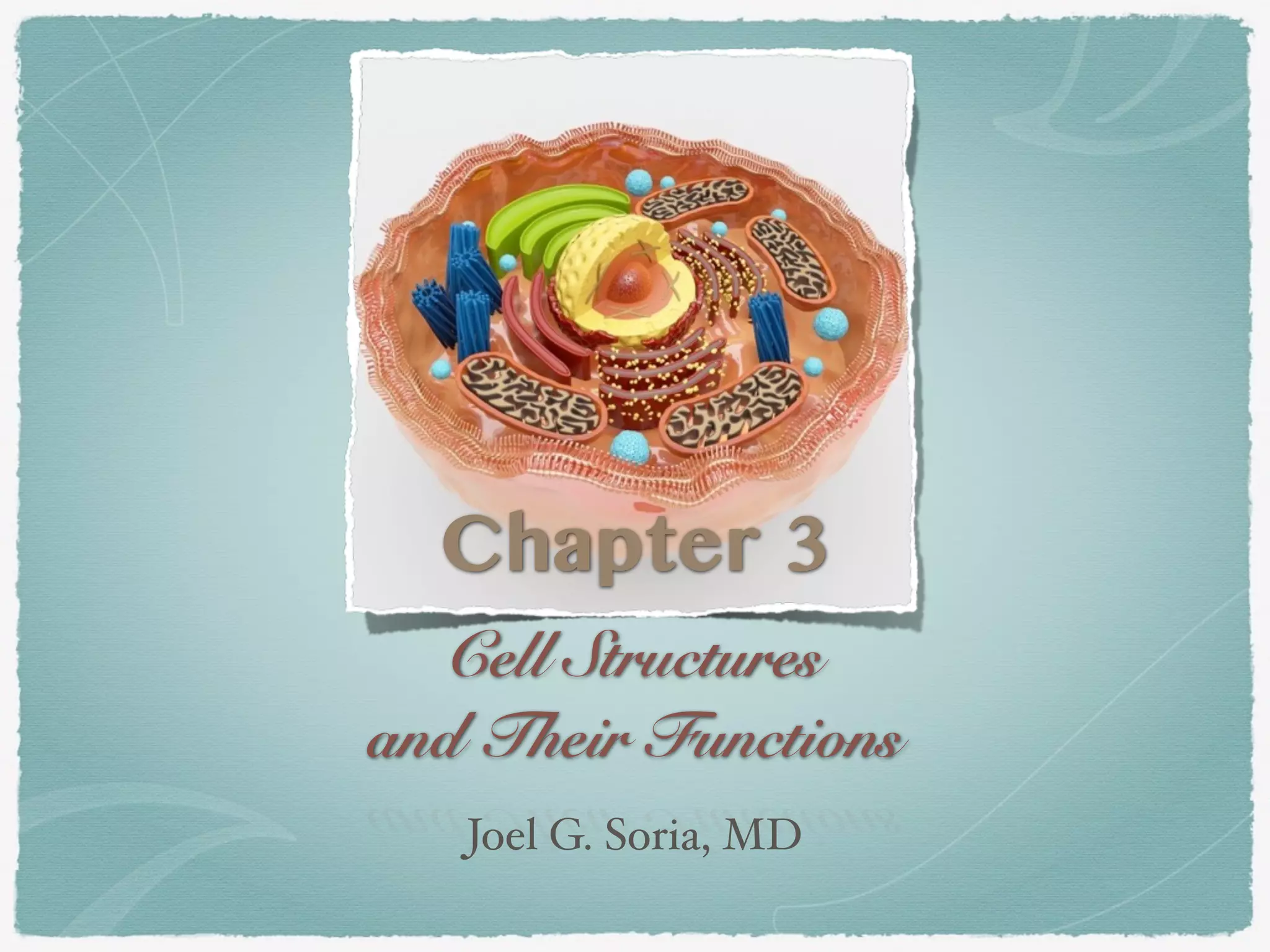
Chapter 3
Cell Structures 

and Their Functions
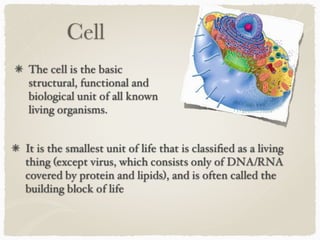
Cell
The cell is the basic
structural, functional and
biological unit of all known
living organisms.
It is the smallest unit of life that is classified as a living
thing (except virus, which consists only of DNA/RNA
covered by protein and lipids), and is often called the
building block of life
Functions of the Cell
1. Cell Metabolism and Energy Use
2. Synthesis of molecules
3. Communication
4. Reproduction and Inheritance
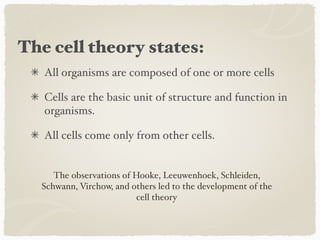
The cell theory states:
All organisms are composed of one or more cells
Cells are the basic unit of structure and function in
organisms.
All cells come only from other cells.
The observations of Hooke, Leeuwenhoek, Schleiden,
Schwann, Virchow, and others led to the development of the
cell theory
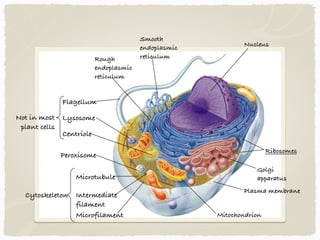
Plasma membrane
Golgi

apparatus
Ribosomes
Nucleus
Smooth 

endoplasmic

reticulumRough

endoplasmic

reticulum
Mitochondrion
Not in most
plant cells
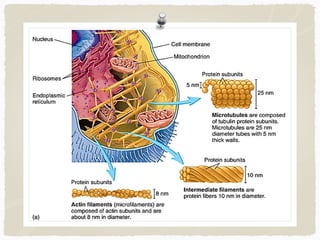
Cytoskeleton
Flagellum
Lysosome
Centriole
Peroxisome
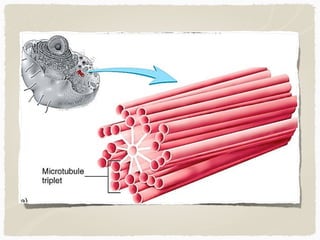
Microtubule
Intermediate

filament
Microfilament
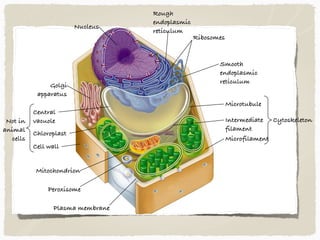
Nucleus
Golgi

apparatus
Not in

animal

cells
Central

vacuole
Chloroplast
Cell wall
Mitochondrion
Peroxisome
Plasma membrane
Rough

endoplasmic

reticulum
Ribosomes
Smooth

endoplasmic

reticulum
Cytoskeleton
Microtubule
Intermediate

filament
Microfilament
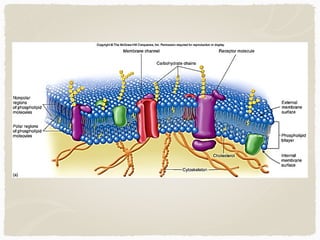
Cell Membrane
The outermost component of a cell
Extracellular / Intracellular
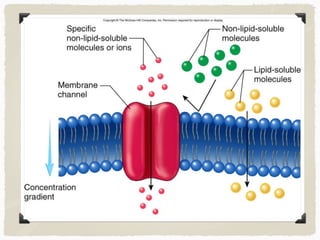
Selective permeable wall which determines what moves
into and out of the cell
Double phospholipid layer
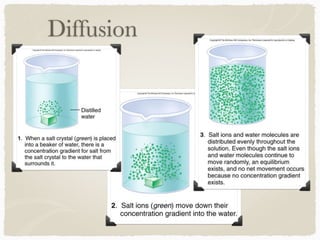
Diffusion - with the concentration gradient through the lipid
portion of the cell membrane or through membrane channels
No ATP required
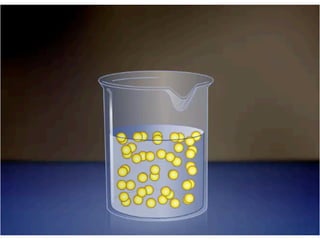
Solution – Generally composed of one or more substances, called
Solutes, dissolved in a predominantly liquid or gas called Solvents.
Solutes tend to move from higher to lower area of concentration
Concentration Gradient is the difference in the concentration of a
solute in a solvent divided by the distance between the two points.
Diffusion
Diffusion
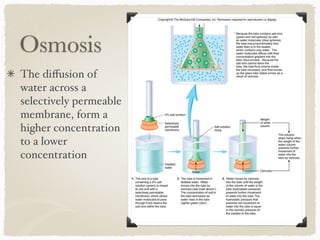
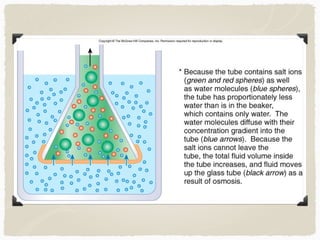
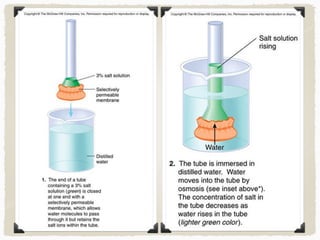
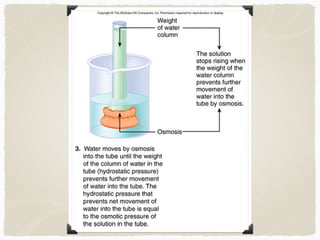
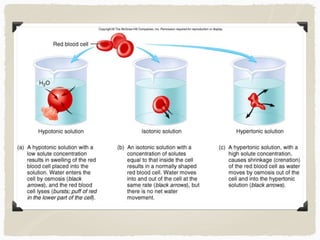
Osmosis
The diffusion of
water across a
selectively permeable
membrane, form a
higher concentration
to a lower
concentration
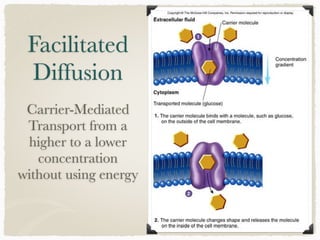
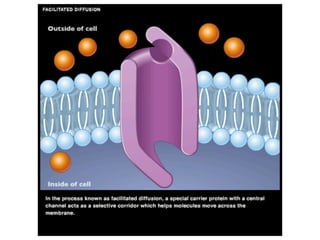
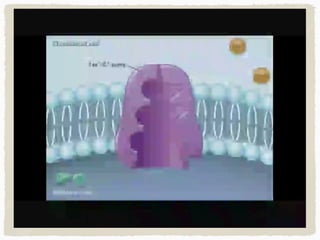
Facilitated Diffusion
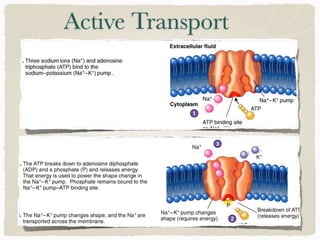
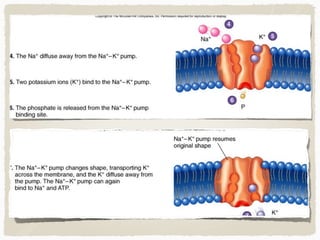
Active Transport
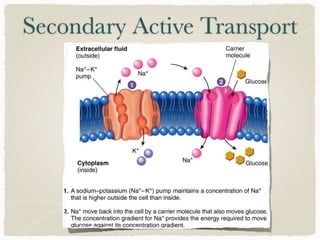
Secondary Active Transport
Carrier-Mediated Transport Mechanism
Facilitated
Diffusion
Carrier-Mediated
Transport from a
higher to a lower
concentration
without using energy
Active Transport
Secondary Active Transport
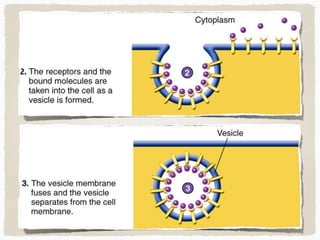
Endocytosis
Pinocytosis vs Phagocytosis
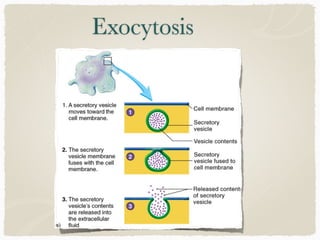
Exocytosis
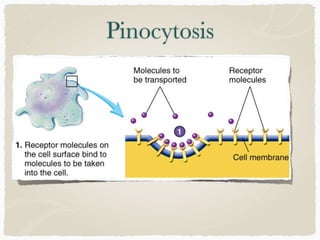
Pinocytosis
Exocytosis
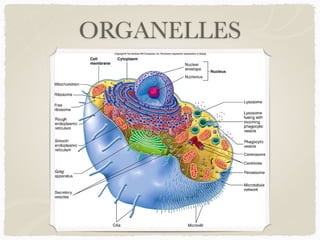
ORGANELLES
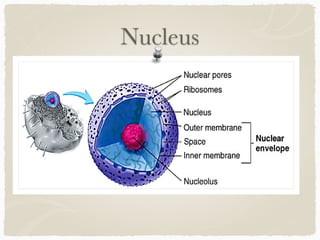
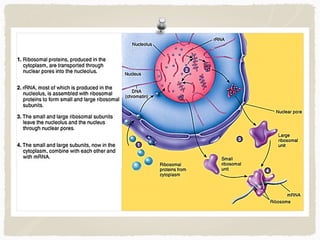
Nucleus
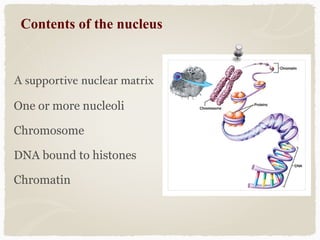
Contents of the nucleus
A supportive nuclear matrix
One or more nucleoli
Chromosome
DNA bound to histones
Chromatin
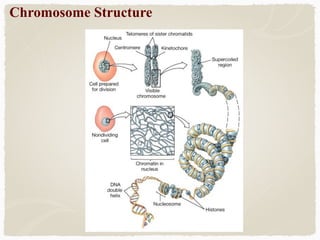
Chromosome Structure
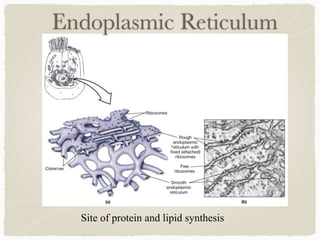
Endoplasmic Reticulum
Site of protein and lipid synthesis
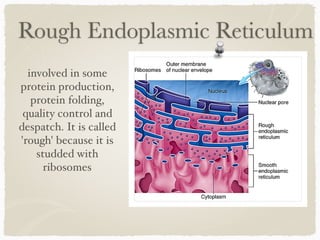
Rough Endoplasmic Reticulum
involved in some
protein production,
protein folding,
quality control and
despatch. It is called
'rough' because it is
studded with
ribosomes
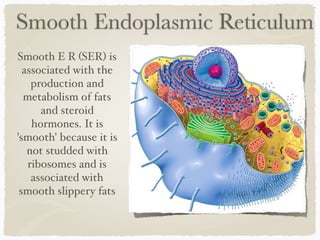
Smooth Endoplasmic Reticulum
Smooth E R (SER) is
associated with the
production and
metabolism of fats
and steroid
hormones. It is
'smooth' because it is
not studded with
ribosomes and is
associated with
smooth slippery fats
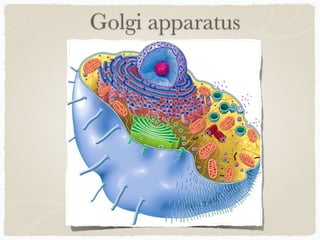
Golgi apparatus
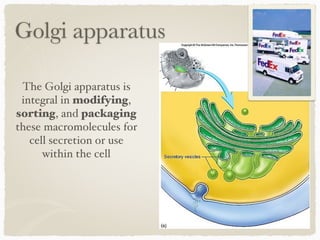
Golgi apparatus
The Golgi apparatus is
integral in modifying,
sorting, and packaging
these macromolecules for
cell secretion or use
within the cell
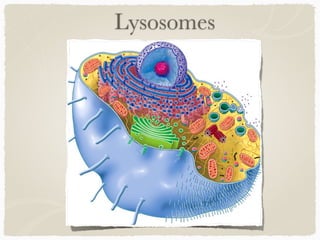
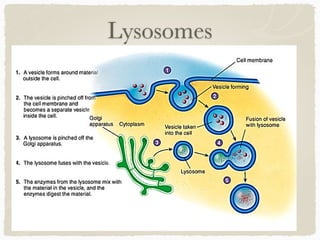
Lysosomes
Lysosomes
• Lysosomes are
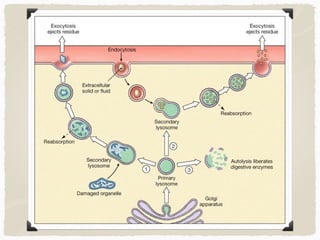
Lysosomes and Peroxisomes
•Filled with digestive enzymes
•Responsible for autolysis of injured cells
•Peroxisomes
•Carry enzymes that neutralize toxins
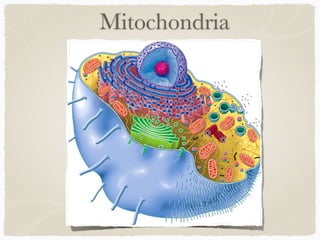
Mitochondria
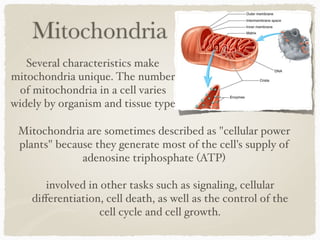
Mitochondria
Several characteristics make
mitochondria unique. The number
of mitochondria in a cell varies
widely by organism and tissue type
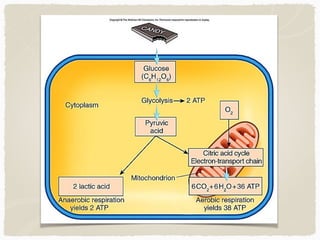
Mitochondria are sometimes described as "cellular power
plants" because they generate most of the cell's supply of
adenosine triphosphate (ATP)
involved in other tasks such as signaling, cellular
differentiation, cell death, as well as the control of the
cell cycle and cell growth.
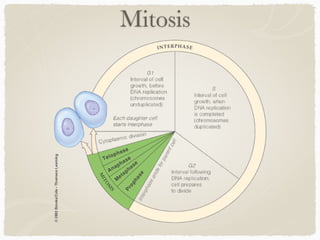
Mitosis
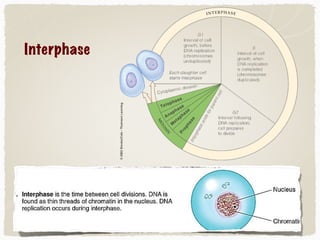
Interphase
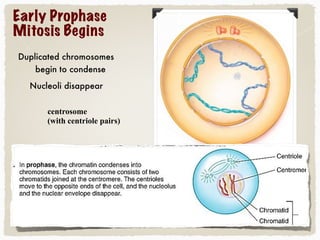
Early Prophase
Mitosis Begins
Duplicated chromosomes
begin to condense
Nucleoli disappear
centrosome
(with centriole pairs)
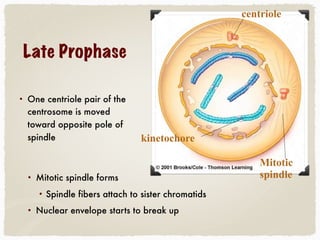
Late Prophase
• One centriole pair of the
centrosome is moved
toward opposite pole of
spindle
centriole
Mitotic
spindle
kinetochore
• Mitotic spindle forms
• Spindle fibers attach to sister chromatids
• Nuclear envelope starts to break up
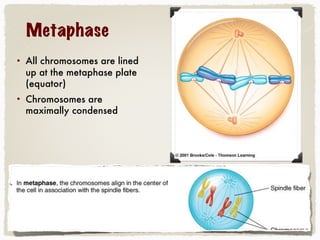
Metaphase
• All chromosomes are lined
up at the metaphase plate
(equator)
• Chromosomes are
maximally condensed
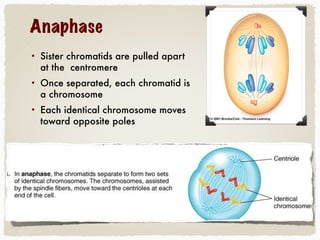
Anaphase
• Sister chromatids are pulled apart
at the centromere
• Once separated, each chromatid is
a chromosome
• Each identical chromosome moves
toward opposite poles
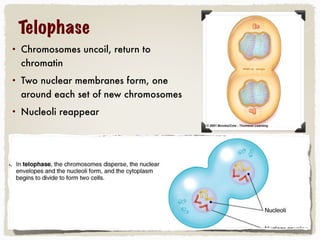
Telophase
• Chromosomes uncoil, return to
chromatin
• Two nuclear membranes form, one
around each set of new chromosomes
• Nucleoli reappear
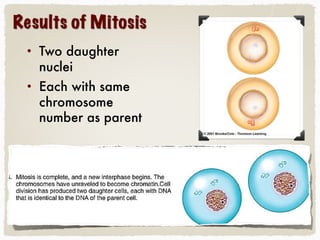
Results of Mitosis
• Two daughter
nuclei
• Each with same
chromosome
number as parent
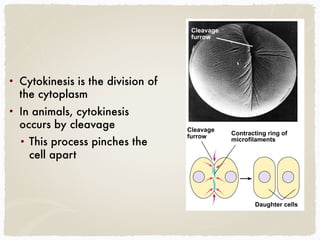
• Cytokinesis is the division of
the cytoplasm
• In animals, cytokinesis
occurs by cleavage
• This process pinches the
cell apart
Cleavage

furrow
Cleavage

furrow
Contracting ring of

microfilaments
Daughter cells
• Cancer cells have abnormal cell cycles
• They divide excessively and can form abnormal masses
called tumors
• Cancer cells ignore the control signals of normal cells -
ignore STOP signals
• Radiation and chemotherapy are effective as cancer
treatments because they interfere with cell division
Cancer: 

cells growing out of control
Results of Mitosis

Chapter 3 cell