Chapter 20 Sec. 1
     Mobilizing for War
    The War dramatically change
  American society—it ended the
         Great Depression.
  “The industrial output of the US
during the war astounded the rest of
 the world. American workers were
   twice as productive as German
    workers and five times more
 productive than Japanese worker.”
American Industry Gets the Job Done
• 600,000 Jeeps
• 88,000 tanks
• 7000 ships—liberty ships (welded not
  riveted)Cheap, easy to build and hard to sink
• 20 million rifles
• 40 billion bullets
• 43 million men drafted
• As well as mines, helmets, cooking utensils,
  airplanes and scores of other military equipment
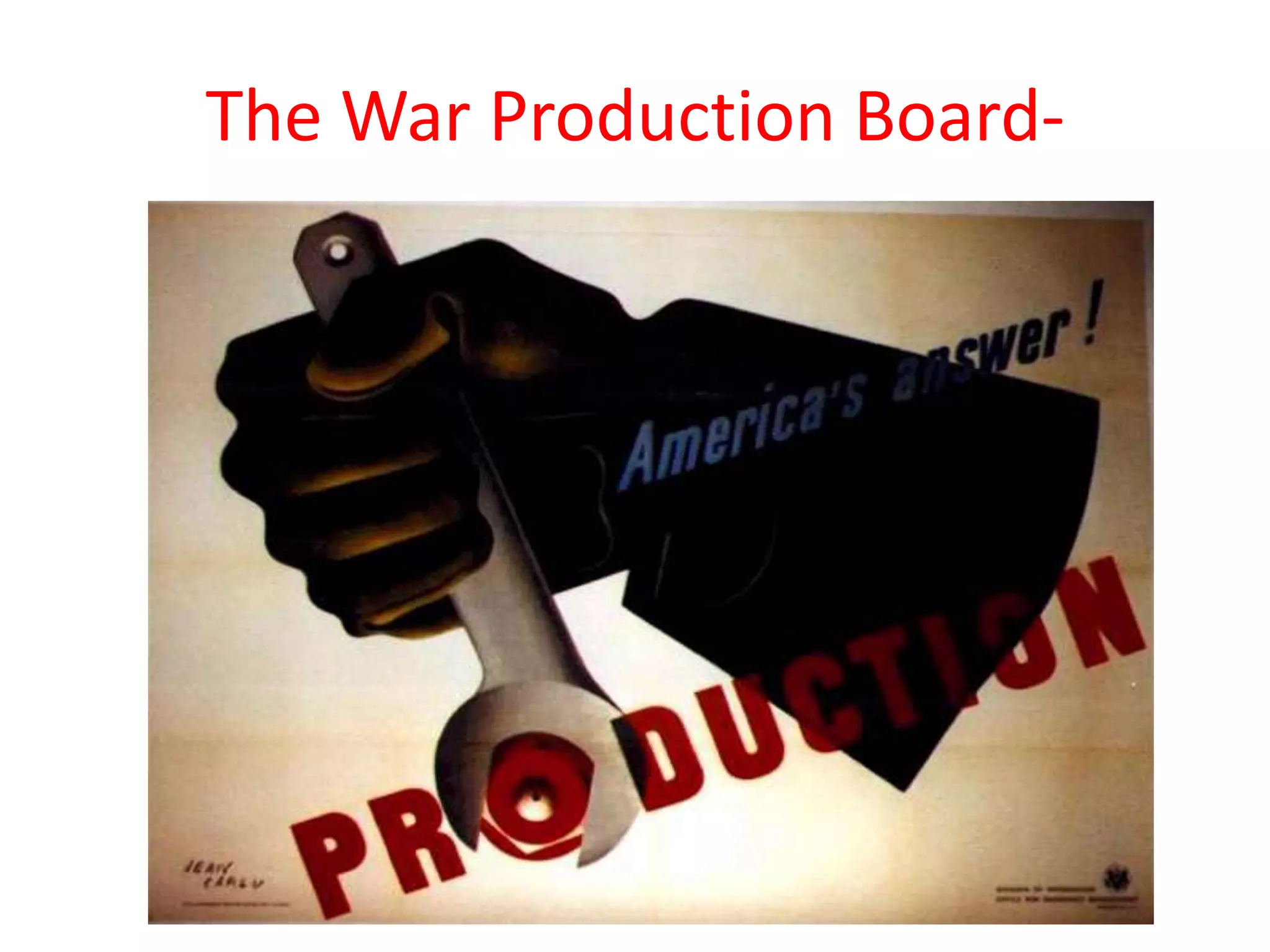
The War Production Board-
You’re in the Army Now
• Over 40 million men were drafted. First given
  physical exams and injections against smallpox
  and typhoid. They were issued uniforms,
  boots, and whatever equipment was available.
  The clothing bore the label GI meaning
  Government Issue. Which is why American
  soldiers were called GIs. Then they were giving
  aptitude tests and shipped off to 8 weeks of
  basic training.
• http://130thgeneralhospital.com/
A Segregated Army
• African Americans had separated barracks,
  latrines, mess halls, and recreational facilities.
• Double V Campaign—a victory over Hitler’s
  racism aboard and a victory over racism at
  home.
• Tuskegee Airman
• http://youtu.be/BpA6TC0T_Lw
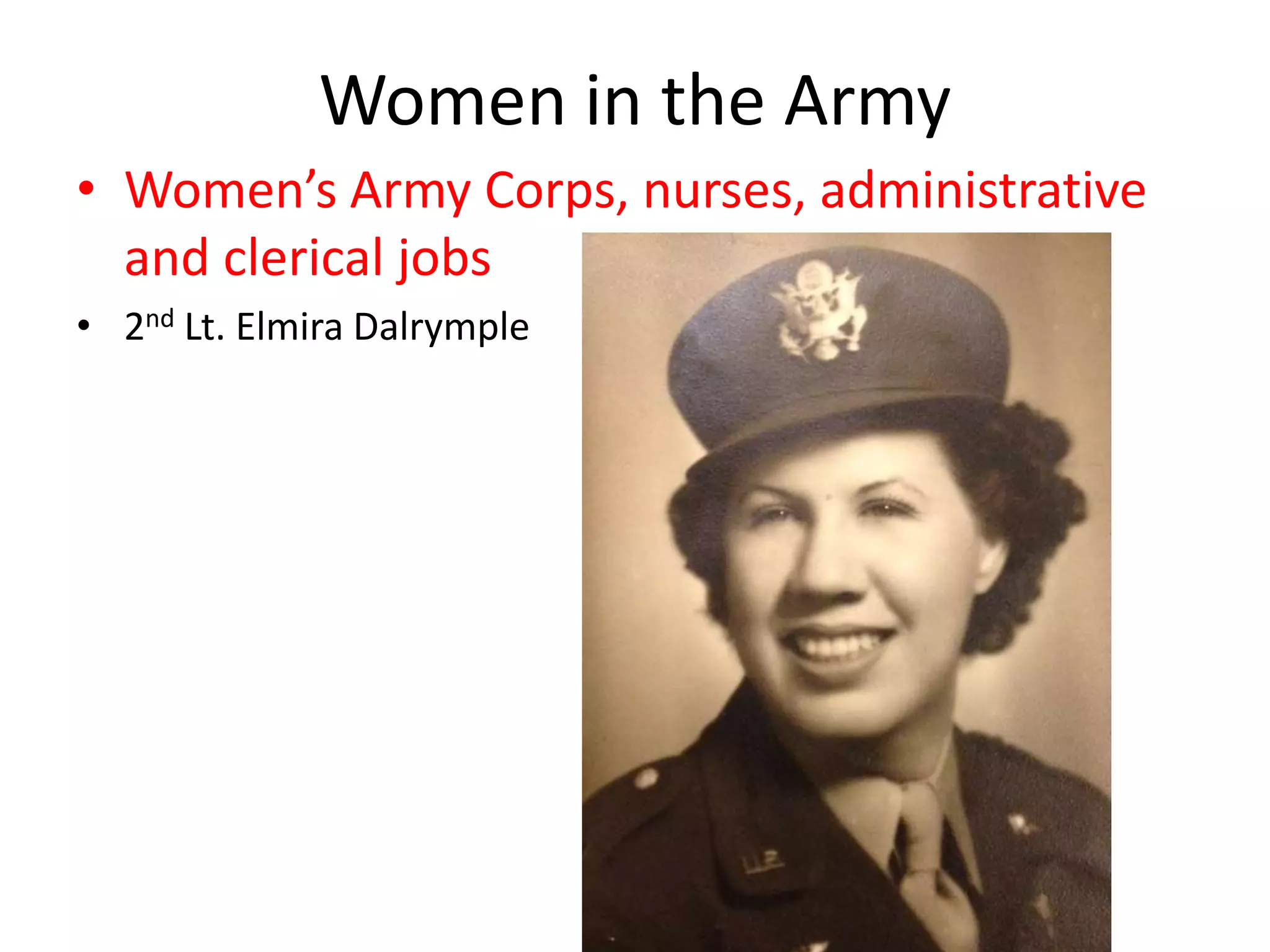
Women in the Army
• Women’s Army Corps, nurses, administrative
  and clerical jobs
• 2nd Lt. Elmira Dalrymple
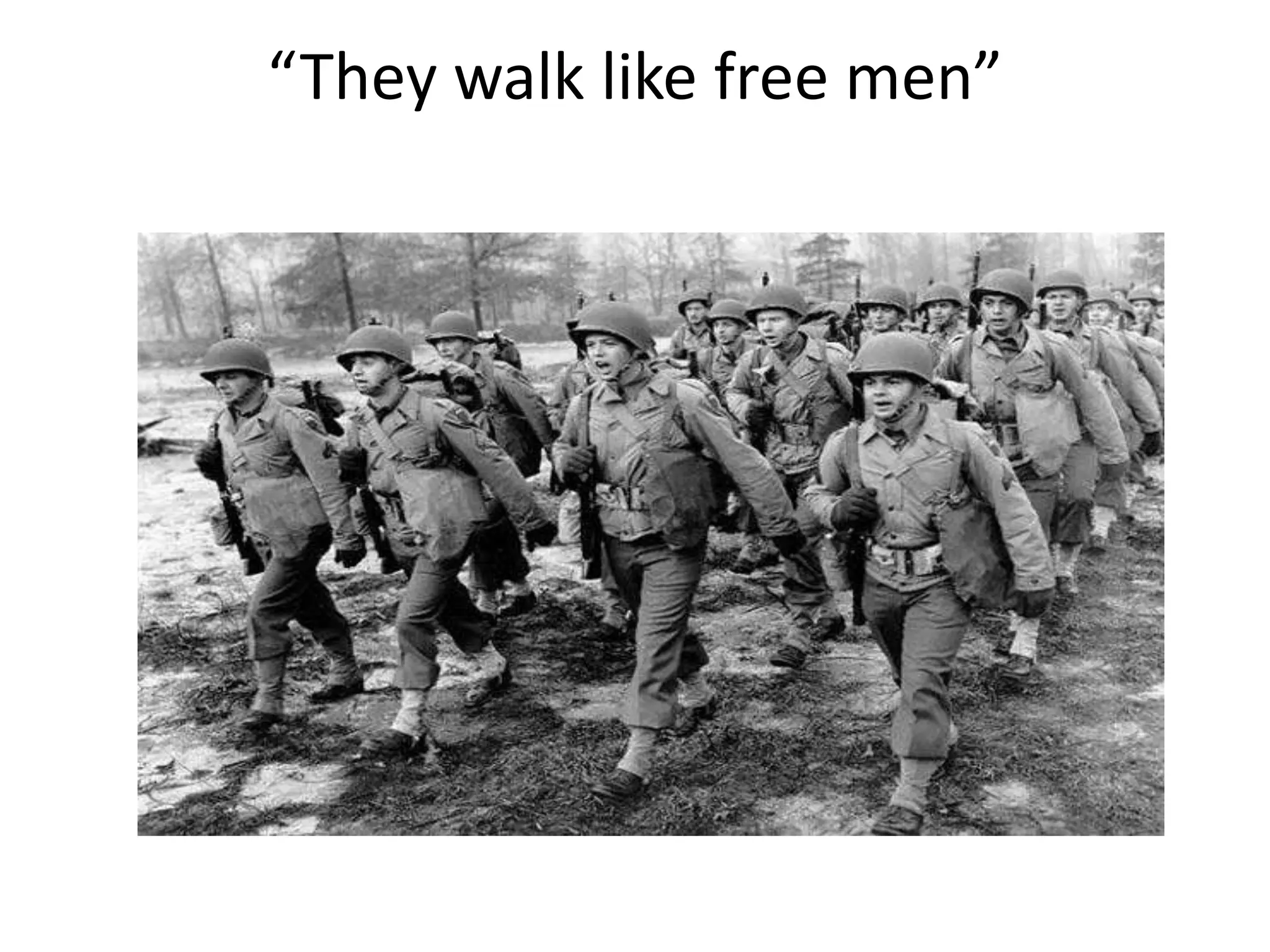
“They walk like free men”
Life on the Home Front
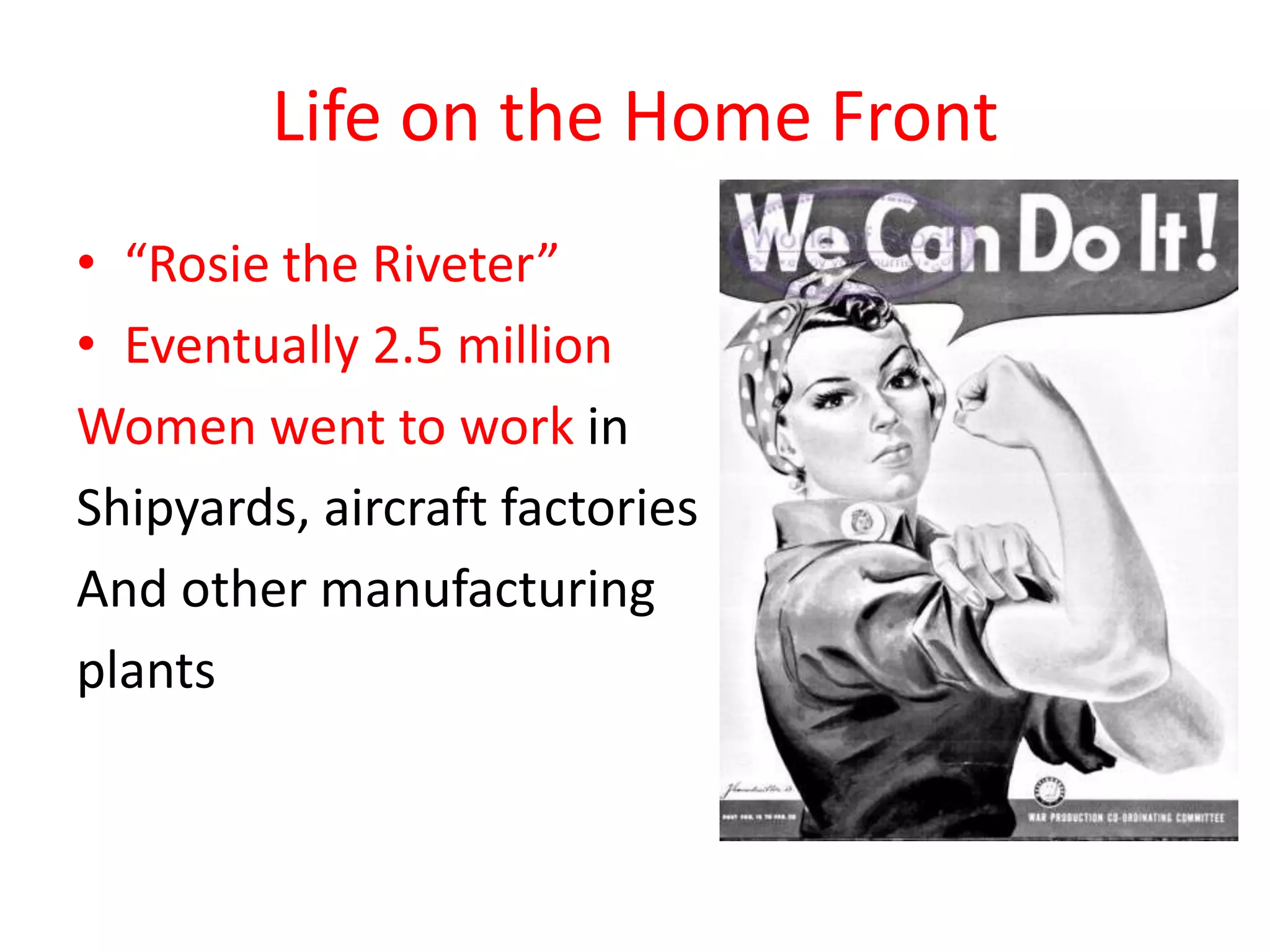
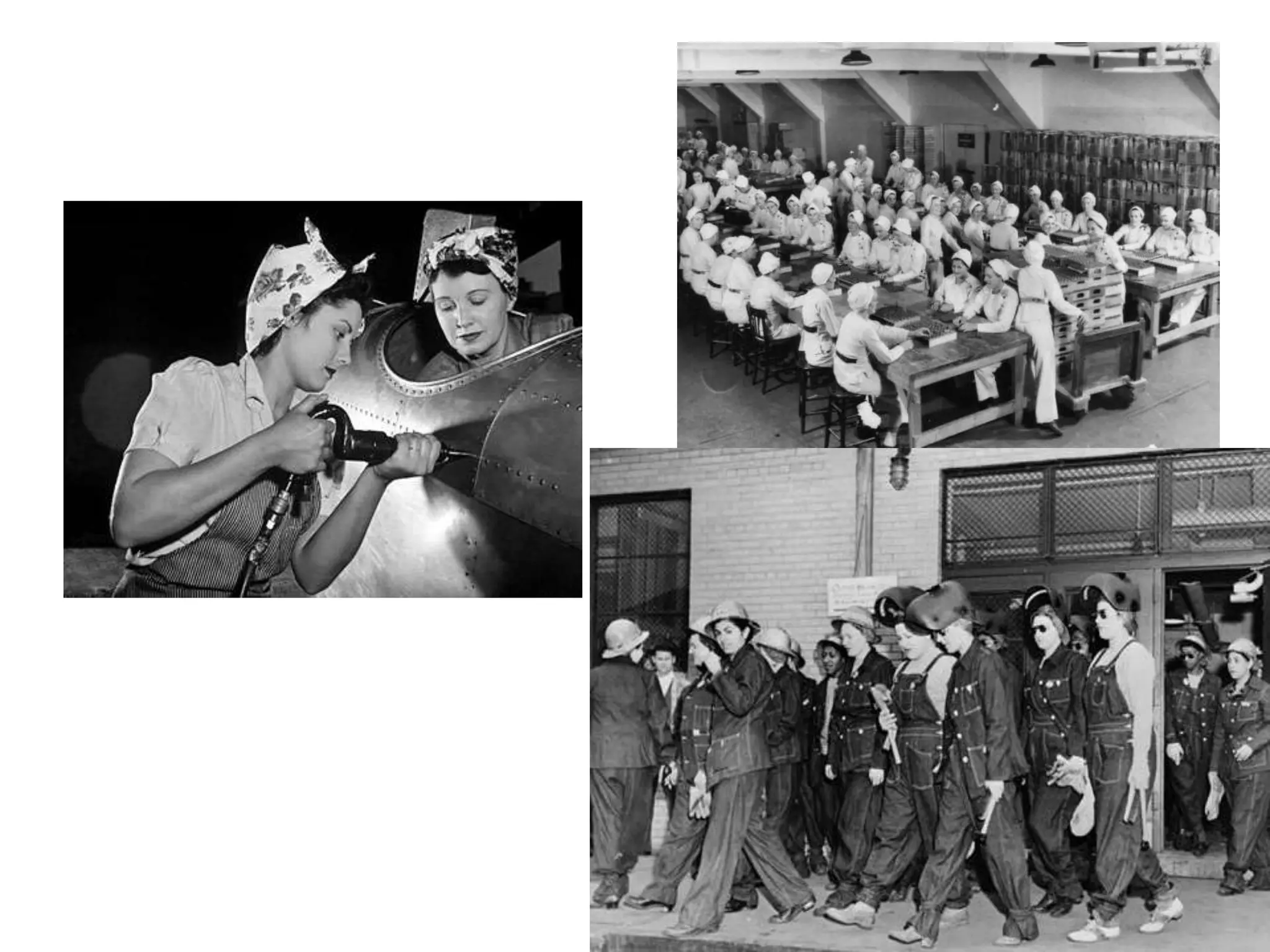
• “Rosie the Riveter”
• Eventually 2.5 million
Women went to work in
Shipyards, aircraft factories
And other manufacturing
plants
African American
• Roosevelt issued Executive Order 8802—
  declaring no discrimination in the
  employment of worker in defense industries
  or government because of race.
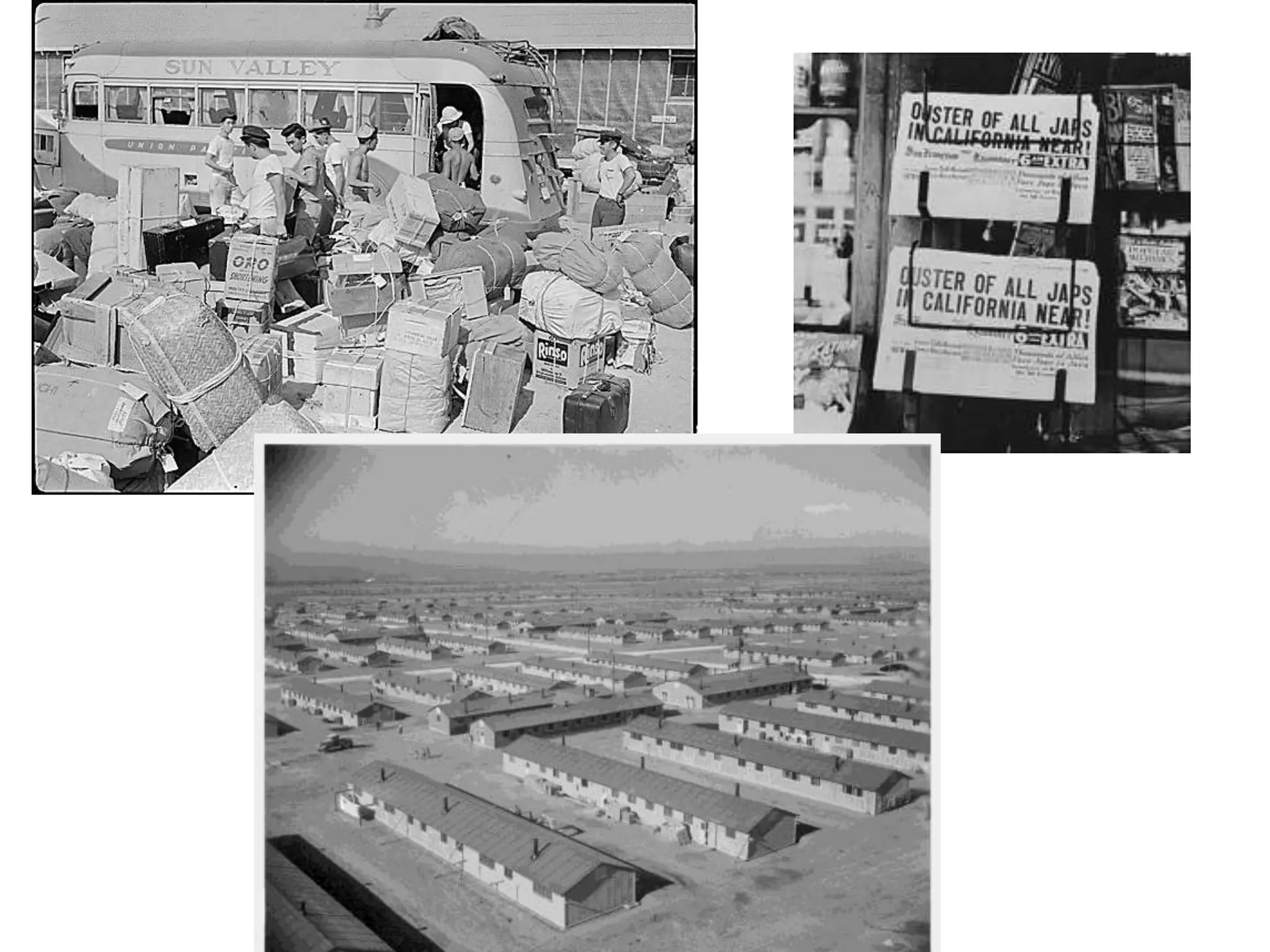
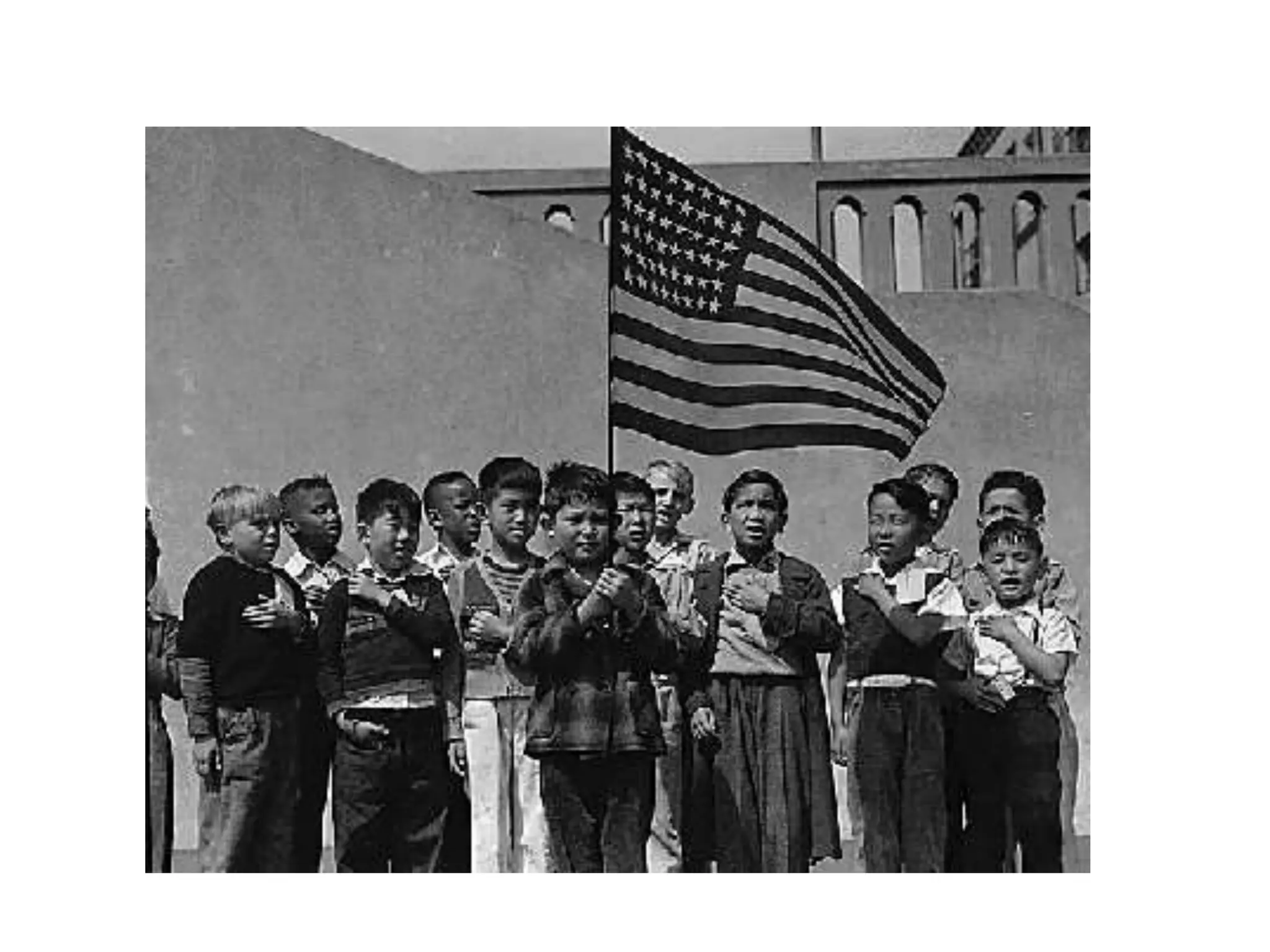
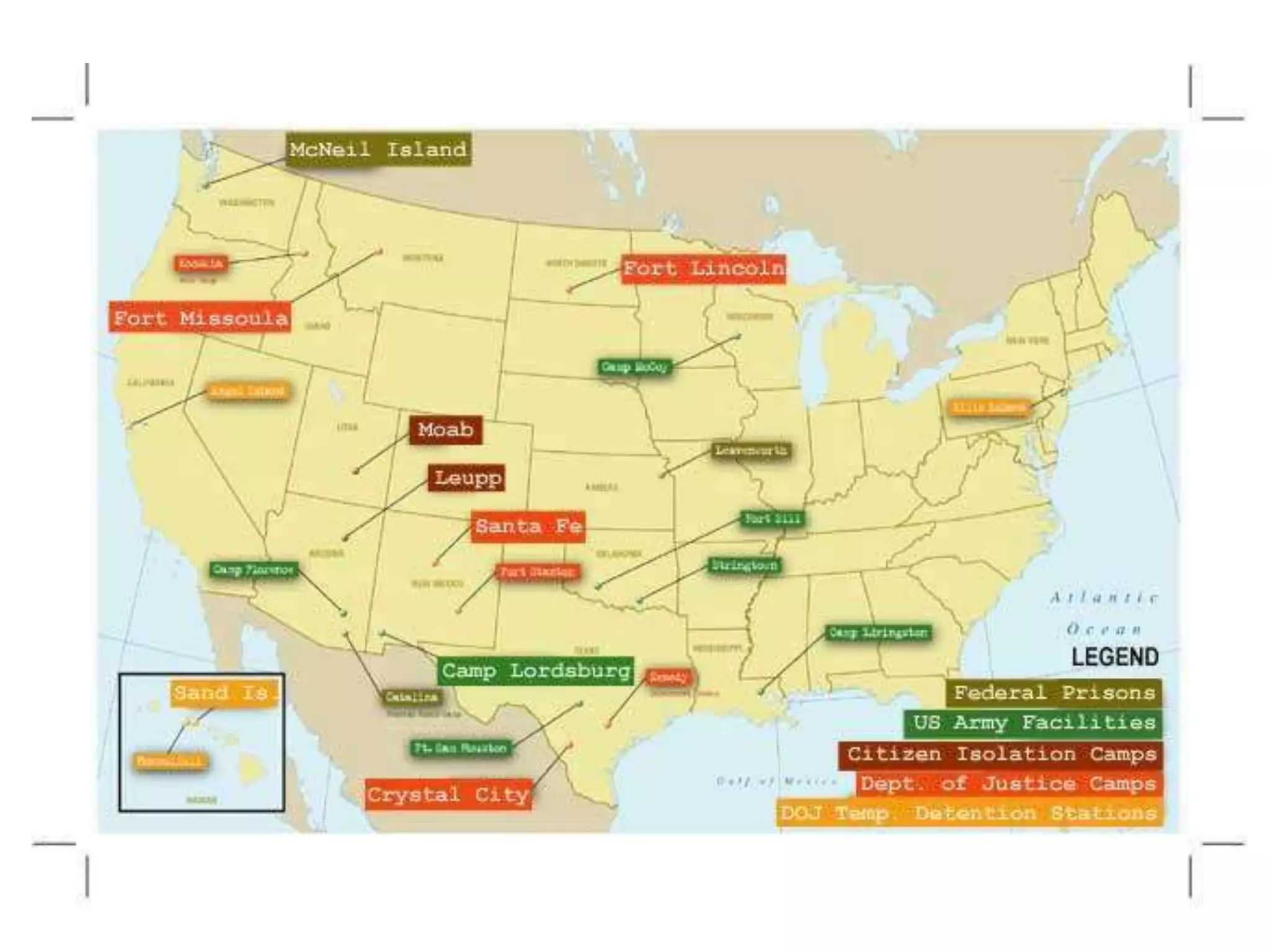
Japanese American Relocation
• Because of fear and racism all persons of
  Japanese ancestry were ordered to evacuate
  to internment camps.
• http://www.imdb.com/media/rm497324544/t
  t0099291
Racism Explodes into Violence
• The “Great Migration” continued with African
  Americans continuing with their migration to
  the North to take industrial jobs –again
  meeting with discrimination and sometime
  resulting in violence.
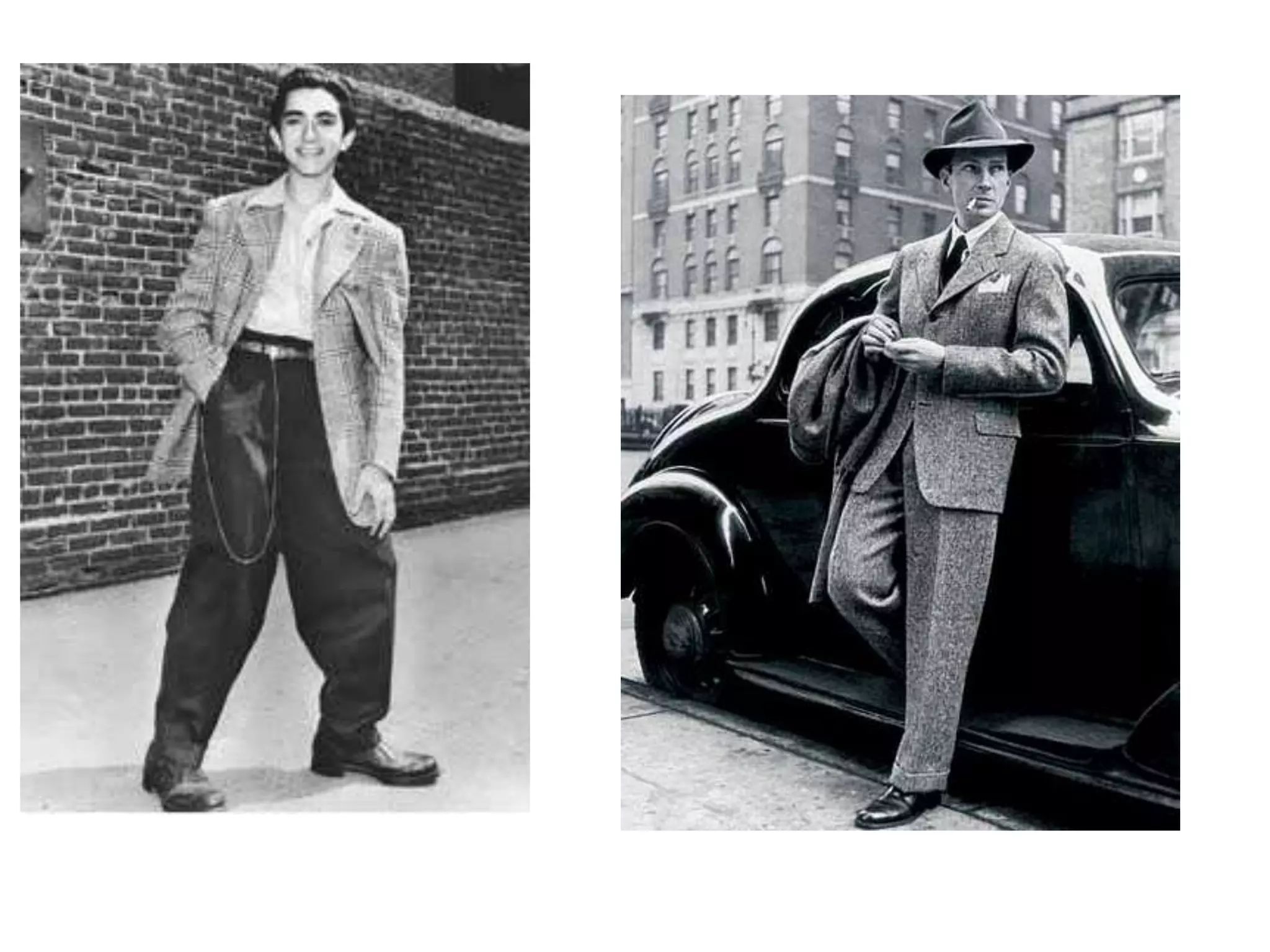
Zoot Suit Riots
• Racism also reared its ugly head in other
  places as well as with other nationalities.
• Mexican Americans and juvenile crime
  became linked because of a zoot suit.
• Upon hearing rumors that Mexican American
  teenagers had attacked sailors in California,
  2,400 soldiers and sailors attacked Mexican
  American neighborhoods in LA. The attacked
  teenagers, but their hair, tore off their zoot
  suits. The police stood by as the violence
  continued for days. In the end the Zoot suit
  was banned.
• Despite discrimination, over 500,000 Hispanic
  Americans served in WWII with distinction.
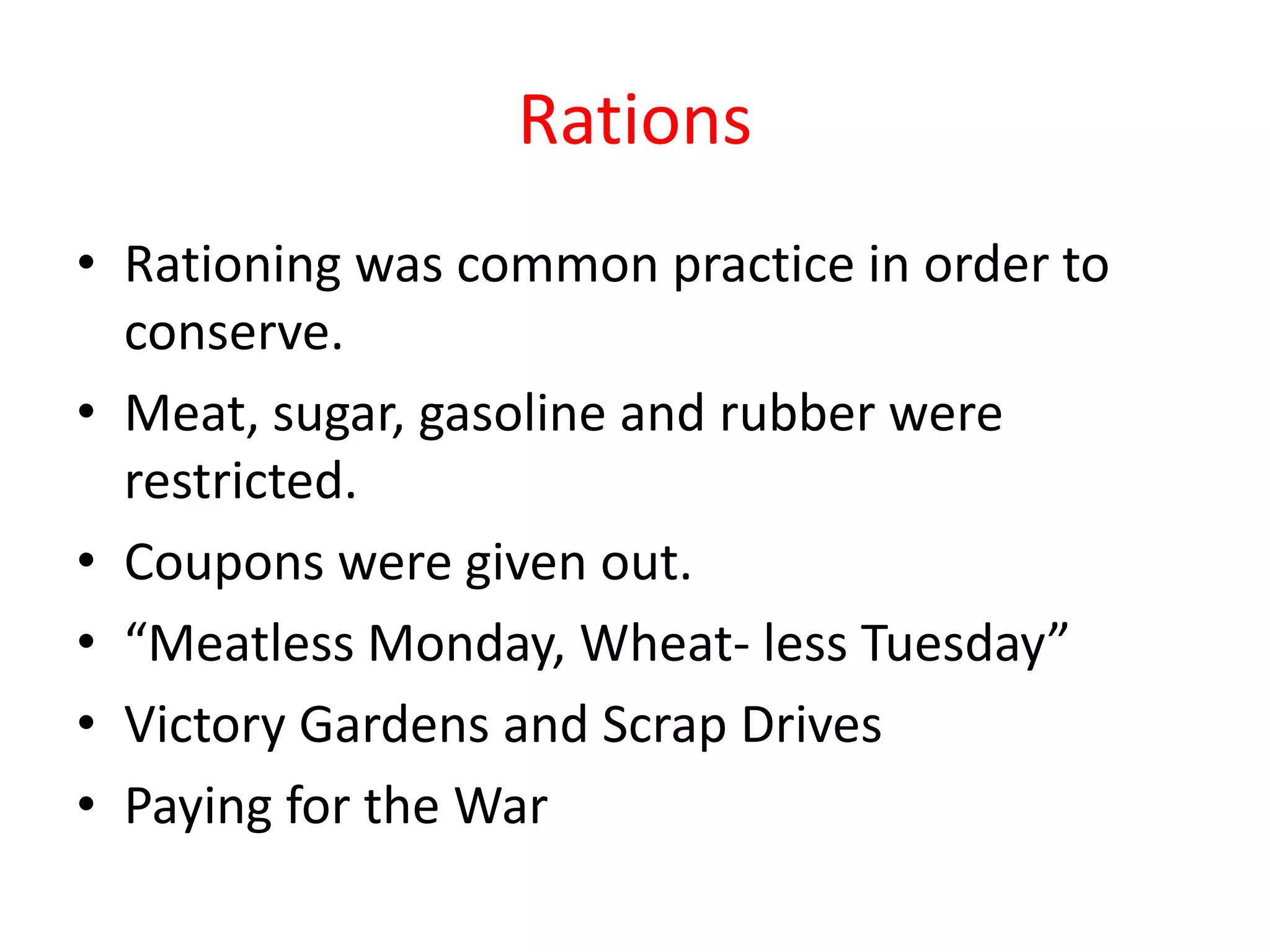
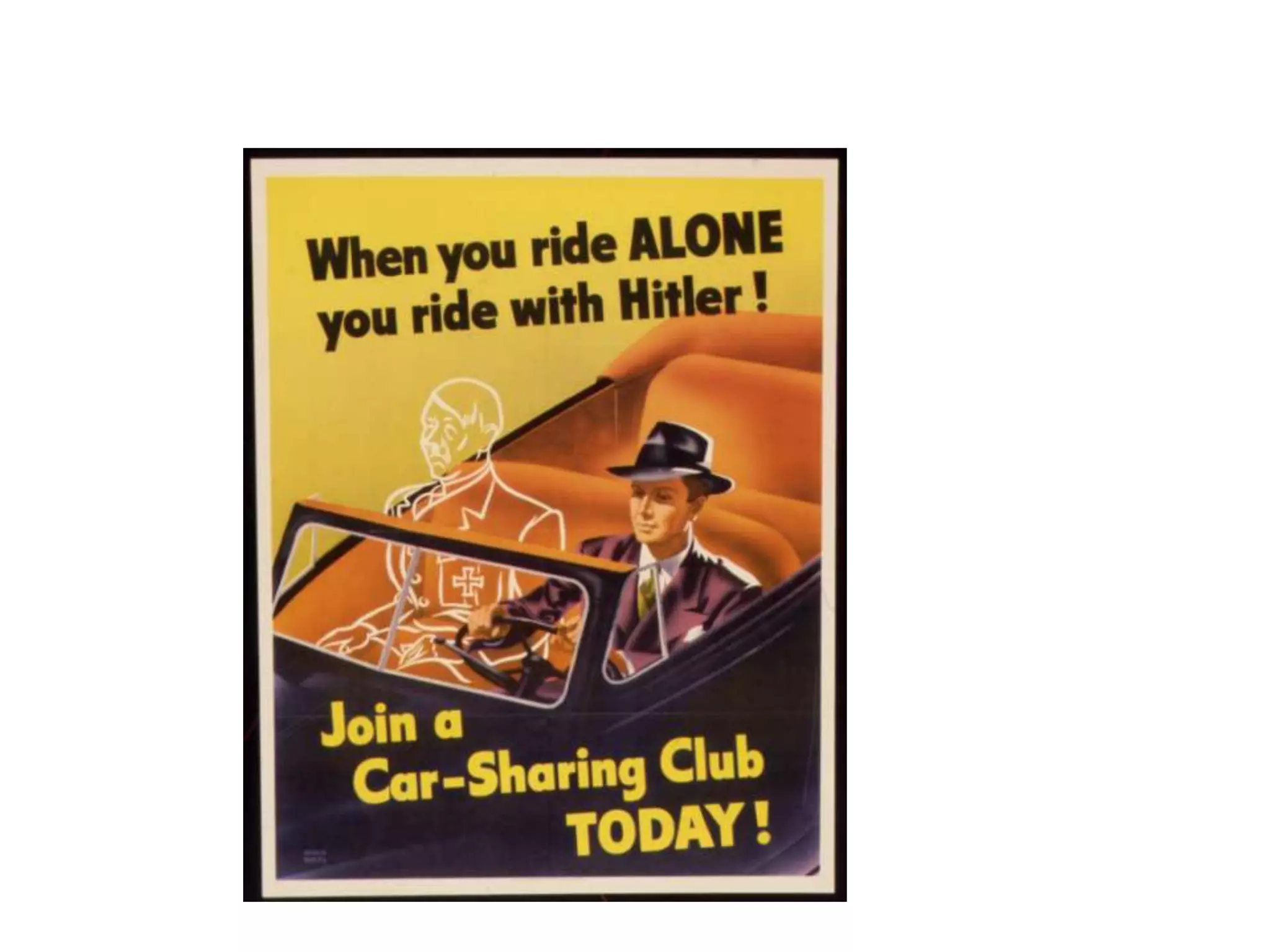
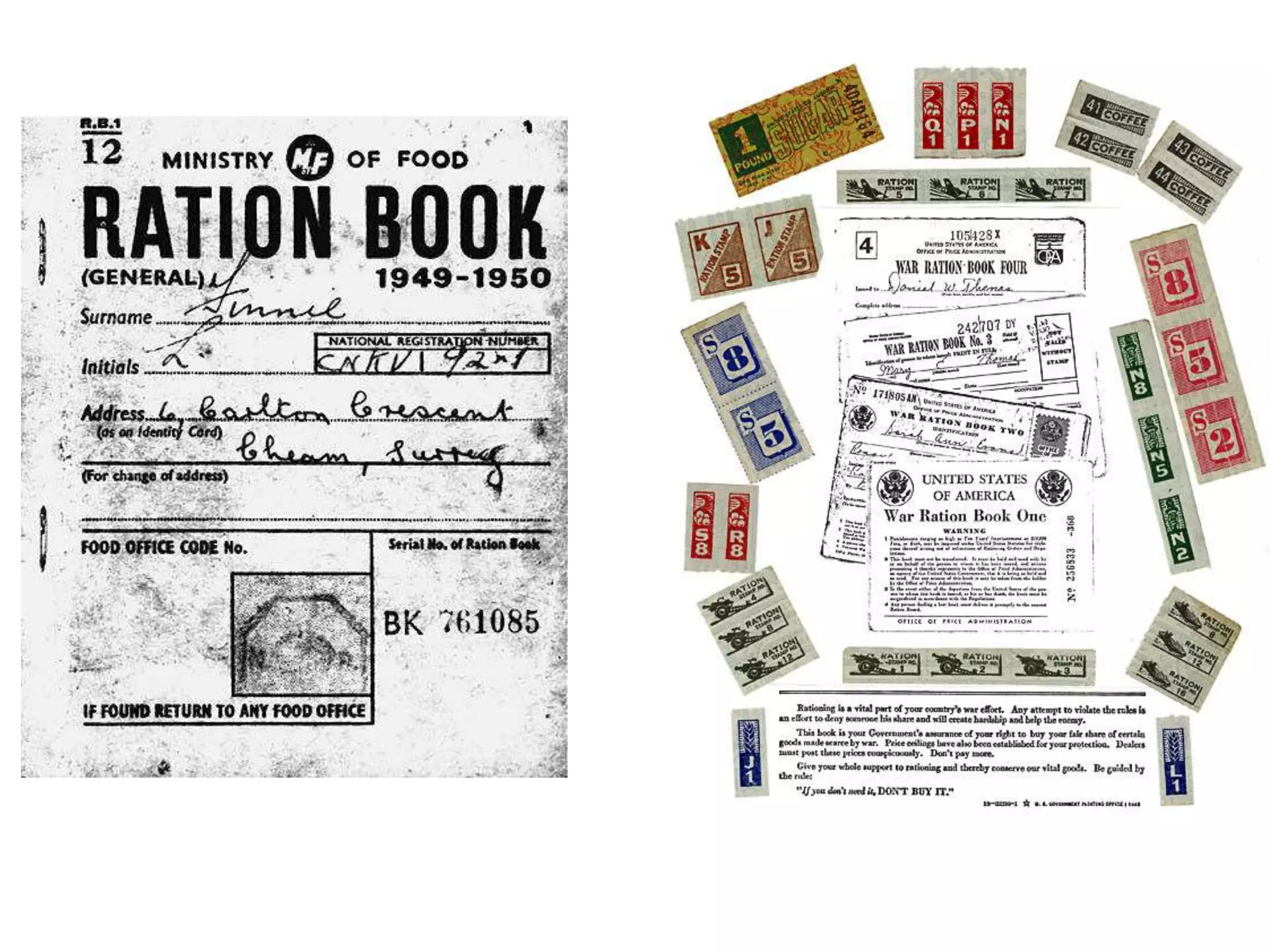
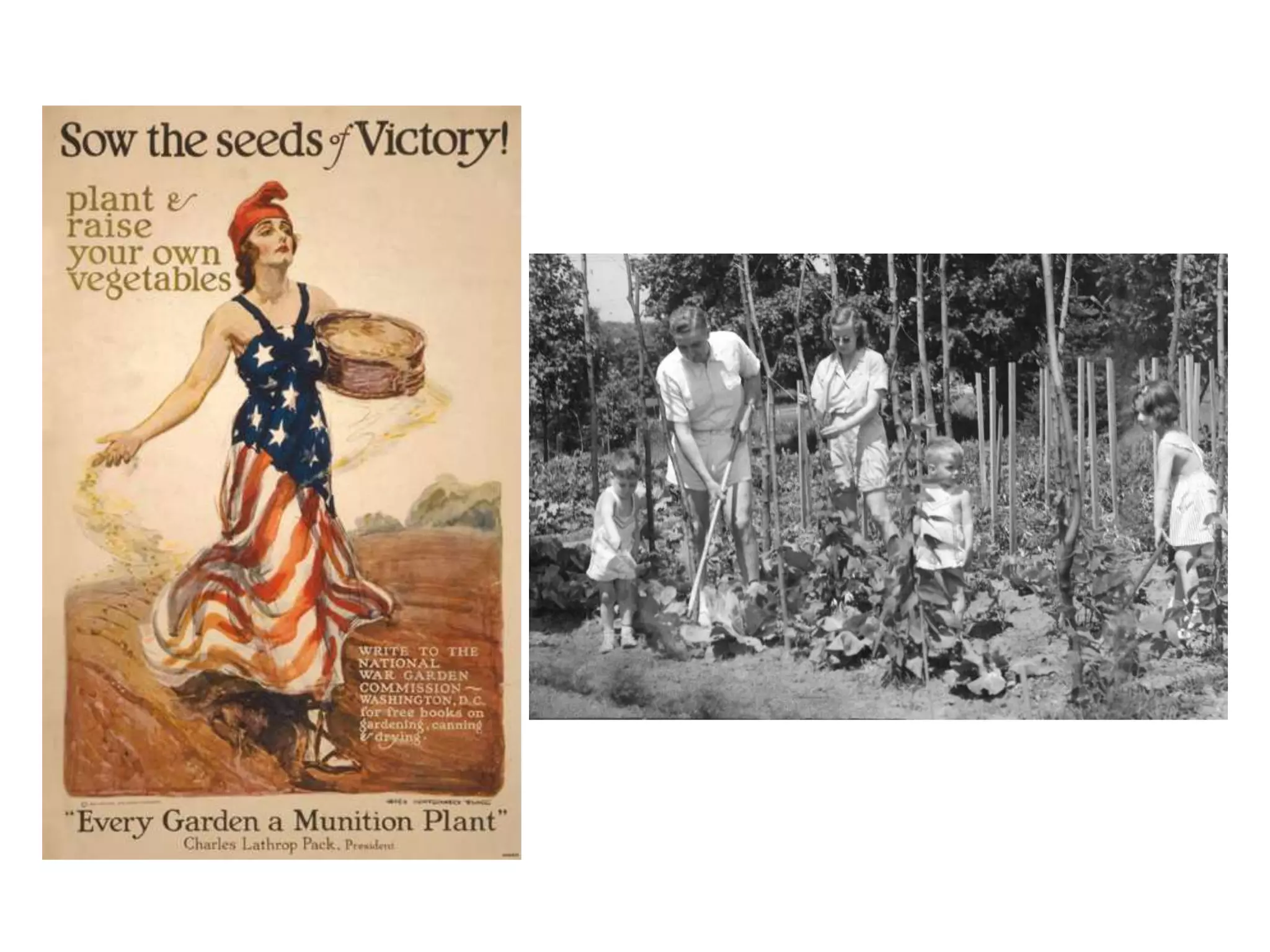
Rations
• Rationing was common practice in order to
  conserve.
• Meat, sugar, gasoline and rubber were
  restricted.
• Coupons were given out.
• “Meatless Monday, Wheat- less Tuesday”
• Victory Gardens and Scrap Drives
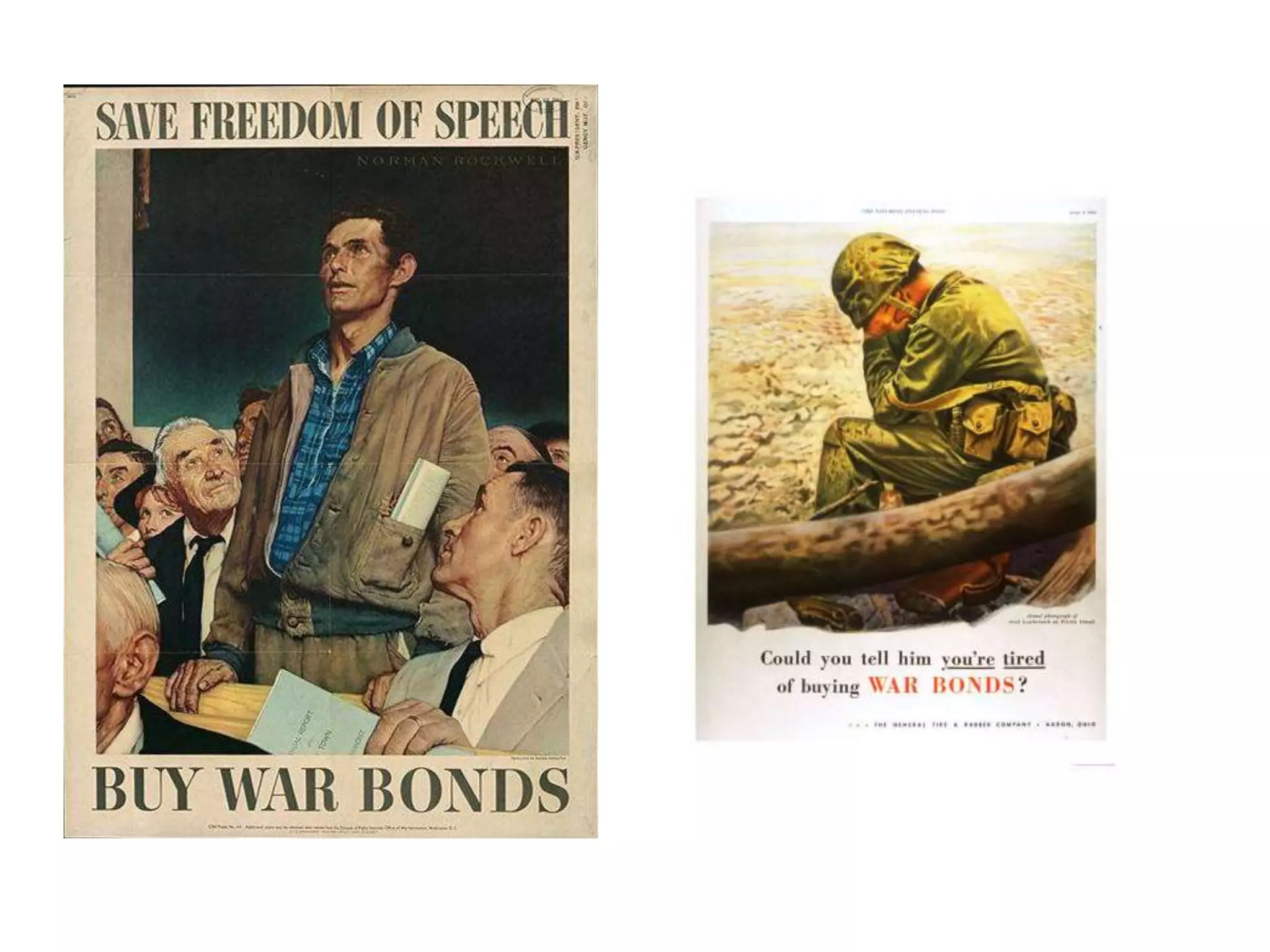
• Paying for the War
Chapter 20 sec 1
Chapter 20 sec 1
Chapter 20 sec 1
Chapter 20 sec 1

Chapter 20 sec 1

  • 1.
    Chapter 20 Sec.1 Mobilizing for War The War dramatically change American society—it ended the Great Depression. “The industrial output of the US during the war astounded the rest of the world. American workers were twice as productive as German workers and five times more productive than Japanese worker.”
  • 2.
    American Industry Getsthe Job Done • 600,000 Jeeps • 88,000 tanks • 7000 ships—liberty ships (welded not riveted)Cheap, easy to build and hard to sink • 20 million rifles • 40 billion bullets • 43 million men drafted • As well as mines, helmets, cooking utensils, airplanes and scores of other military equipment
  • 3.
  • 4.
    You’re in theArmy Now • Over 40 million men were drafted. First given physical exams and injections against smallpox and typhoid. They were issued uniforms, boots, and whatever equipment was available. The clothing bore the label GI meaning Government Issue. Which is why American soldiers were called GIs. Then they were giving aptitude tests and shipped off to 8 weeks of basic training.
  • 5.
  • 6.
    A Segregated Army •African Americans had separated barracks, latrines, mess halls, and recreational facilities. • Double V Campaign—a victory over Hitler’s racism aboard and a victory over racism at home. • Tuskegee Airman • http://youtu.be/BpA6TC0T_Lw
  • 7.
    Women in theArmy • Women’s Army Corps, nurses, administrative and clerical jobs • 2nd Lt. Elmira Dalrymple
  • 8.
    “They walk likefree men”
  • 9.
    Life on theHome Front • “Rosie the Riveter” • Eventually 2.5 million Women went to work in Shipyards, aircraft factories And other manufacturing plants
  • 11.
    African American • Rooseveltissued Executive Order 8802— declaring no discrimination in the employment of worker in defense industries or government because of race.
  • 12.
    Japanese American Relocation •Because of fear and racism all persons of Japanese ancestry were ordered to evacuate to internment camps. • http://www.imdb.com/media/rm497324544/t t0099291
  • 16.
    Racism Explodes intoViolence • The “Great Migration” continued with African Americans continuing with their migration to the North to take industrial jobs –again meeting with discrimination and sometime resulting in violence.
  • 17.
    Zoot Suit Riots •Racism also reared its ugly head in other places as well as with other nationalities. • Mexican Americans and juvenile crime became linked because of a zoot suit.
  • 19.
    • Upon hearingrumors that Mexican American teenagers had attacked sailors in California, 2,400 soldiers and sailors attacked Mexican American neighborhoods in LA. The attacked teenagers, but their hair, tore off their zoot suits. The police stood by as the violence continued for days. In the end the Zoot suit was banned.
  • 20.
    • Despite discrimination,over 500,000 Hispanic Americans served in WWII with distinction.
  • 21.
    Rations • Rationing wascommon practice in order to conserve. • Meat, sugar, gasoline and rubber were restricted. • Coupons were given out. • “Meatless Monday, Wheat- less Tuesday” • Victory Gardens and Scrap Drives • Paying for the War