Chapter 18
The New Deal
Democratic candidate
Franklin D. Roosevelt easily
defeated Hoover in the
election of 1932. FDR
promised a “ New Deal”
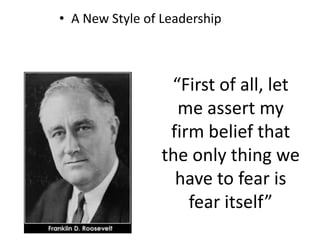
• A New Style of Leadership

“First of all, let
me assert my
firm belief that
the only thing we
have to fear is
fear itself”
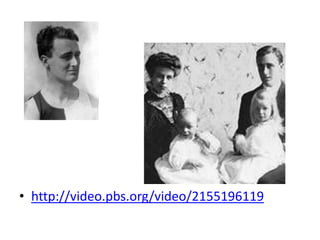
• http://video.pbs.org/video/2155196119
The New Deal
• The New Deal was not based on a clear
strategy shaped by a single philosophy. He was
not an intellectual—he was just a practical
politician. FDR was willing to try a variety of
approaches to see what worked.
• But the New Deal did change the role of
government. It made the government
responsible for managing the economy.
• This was the beginning of Big Government
First Hundred Days

• He pushed through Congress
legislation in his first hundred
days that would try and solve
the depression--setting a
precedent for all other
presidents to follow.
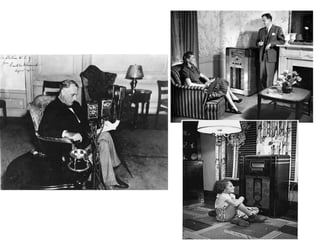
Fire-side Chats
• Within the first week of being in office he
called for a Bank Holiday—closed all banks. He
then ordered the National Treasury
Department print millions of dollars to be sent
to the banks. He spoke to the American
people via the radio and assured them that it
was now safe to put their money back into the
banks. When the banks opened the day after
the speech, deposits far out weighed
withdrawals. The banking crisis was over.
• DFR, by Executive Order, outlawed the Gold
Standard—wanted people to use paper
money—Fiat money
The New Deal can be classified into 3
categories:
• Relief—short term action to help people right
immediately
• Recovery—measures designed to restore the
economy
• Reform—measures aimed at remedying or
fixing defects
• http://app.discoveryeducation.com/player/vie
w/assetGuid/831435AA-4BF5-49F0-9E247ABC0E76B02A
1.Relief—short term action
• Tennessee Valley Authority-built 21
government-owned dams along the
Tennessee river, controlling floods and
producing electricity.
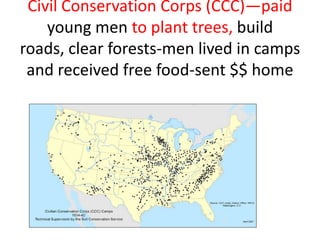
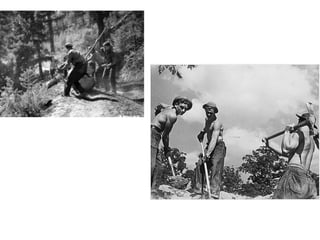
Civil Conservation Corps (CCC)—paid
young men to plant trees, build
roads, clear forests-men lived in camps
and received free food-sent $$ home
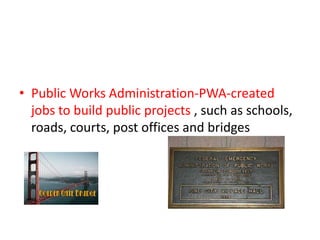
• Public Works Administration-PWA-created
jobs to build public projects , such as schools,
roads, courts, post offices and bridges
• Works Progress Administration (WPA) created
federal jobs— by hiring artists, writers, and
musicians to paint murals, produce plays and
create artwork
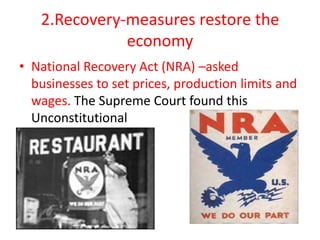
2.Recovery-measures restore the
economy
• National Recovery Act (NRA) –asked
businesses to set prices, production limits and
wages. The Supreme Court found this
Unconstitutional
• Agricultural Adjustment Act (AAA)-passed to
help farmers, raised prices, the government
bought surplus crops. Paid farmers to plant
less or not plant at all—Supreme Court
declared this unconstitutional as well.
3.Reform-measures aimed at
remedying or fixing defects
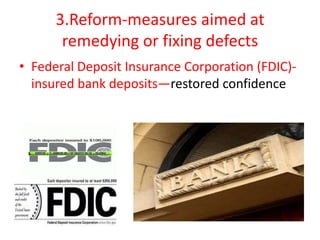
• Federal Deposit Insurance Corporation (FDIC)insured bank deposits—restored confidence
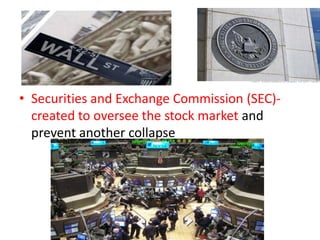
• Securities and Exchange Commission (SEC)created to oversee the stock market and
prevent another collapse
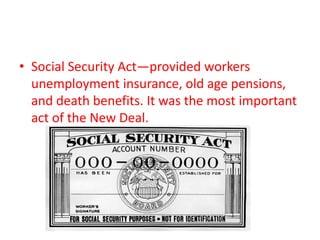
• Social Security Act—provided workers
unemployment insurance, old age pensions,
and death benefits. It was the most important
act of the New Deal.
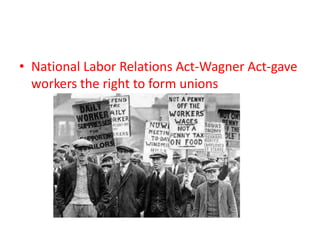
• National Labor Relations Act-Wagner Act-gave
workers the right to form unions
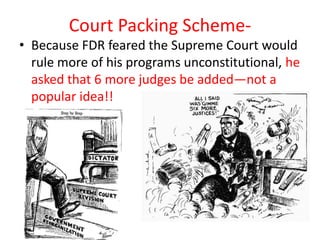
Court Packing Scheme• Because FDR feared the Supreme Court would
rule more of his programs unconstitutional, he
asked that 6 more judges be added—not a
popular idea!!
Impact of the New Deal
• Power of the Federal government increased
dramatically
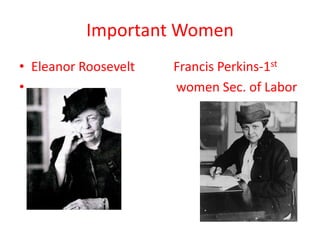
Important Women
• Eleanor Roosevelt
•

Francis Perkins-1st
women Sec. of Labor

Chapter 18 the new deal (3)

  • 1.
    Chapter 18 The NewDeal Democratic candidate Franklin D. Roosevelt easily defeated Hoover in the election of 1932. FDR promised a “ New Deal”
  • 2.
    • A NewStyle of Leadership “First of all, let me assert my firm belief that the only thing we have to fear is fear itself”
  • 3.
  • 4.
    The New Deal •The New Deal was not based on a clear strategy shaped by a single philosophy. He was not an intellectual—he was just a practical politician. FDR was willing to try a variety of approaches to see what worked. • But the New Deal did change the role of government. It made the government responsible for managing the economy. • This was the beginning of Big Government
  • 5.
    First Hundred Days •He pushed through Congress legislation in his first hundred days that would try and solve the depression--setting a precedent for all other presidents to follow.
  • 6.
    Fire-side Chats • Withinthe first week of being in office he called for a Bank Holiday—closed all banks. He then ordered the National Treasury Department print millions of dollars to be sent to the banks. He spoke to the American people via the radio and assured them that it was now safe to put their money back into the banks. When the banks opened the day after the speech, deposits far out weighed withdrawals. The banking crisis was over.
  • 8.
    • DFR, byExecutive Order, outlawed the Gold Standard—wanted people to use paper money—Fiat money
  • 9.
    The New Dealcan be classified into 3 categories: • Relief—short term action to help people right immediately • Recovery—measures designed to restore the economy • Reform—measures aimed at remedying or fixing defects • http://app.discoveryeducation.com/player/vie w/assetGuid/831435AA-4BF5-49F0-9E247ABC0E76B02A
  • 10.
    1.Relief—short term action •Tennessee Valley Authority-built 21 government-owned dams along the Tennessee river, controlling floods and producing electricity.
  • 11.
    Civil Conservation Corps(CCC)—paid young men to plant trees, build roads, clear forests-men lived in camps and received free food-sent $$ home
  • 13.
    • Public WorksAdministration-PWA-created jobs to build public projects , such as schools, roads, courts, post offices and bridges
  • 14.
    • Works ProgressAdministration (WPA) created federal jobs— by hiring artists, writers, and musicians to paint murals, produce plays and create artwork
  • 15.
    2.Recovery-measures restore the economy •National Recovery Act (NRA) –asked businesses to set prices, production limits and wages. The Supreme Court found this Unconstitutional
  • 16.
    • Agricultural AdjustmentAct (AAA)-passed to help farmers, raised prices, the government bought surplus crops. Paid farmers to plant less or not plant at all—Supreme Court declared this unconstitutional as well.
  • 17.
    3.Reform-measures aimed at remedyingor fixing defects • Federal Deposit Insurance Corporation (FDIC)insured bank deposits—restored confidence
  • 18.
    • Securities andExchange Commission (SEC)created to oversee the stock market and prevent another collapse
  • 19.
    • Social SecurityAct—provided workers unemployment insurance, old age pensions, and death benefits. It was the most important act of the New Deal.
  • 20.
    • National LaborRelations Act-Wagner Act-gave workers the right to form unions
  • 21.
    Court Packing Scheme•Because FDR feared the Supreme Court would rule more of his programs unconstitutional, he asked that 6 more judges be added—not a popular idea!!
  • 22.
    Impact of theNew Deal • Power of the Federal government increased dramatically
  • 23.
    Important Women • EleanorRoosevelt • Francis Perkins-1st women Sec. of Labor