


CHAPTER 2 – LESSON 3
PLANNED CITIES ON THE INDUS
          SOCIAL STUDIES
            7TH. GRADE
          SECOND PERIOD
Outline
• Environment
    Indus flooding unpredictable.
    Natural barriers: mountains and deserts.
    Monsoon winds.
• Power and authority
    Strong centralized government.
    Planned cities
• Science and Technology
    Writing (not yet deciphered).
    Cities built on precise grid.
    Plumbing and sewage systems.
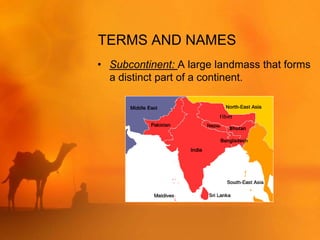
TERMS AND NAMES
• Subcontinent: A large landmass that forms
  a distinct part of a continent.
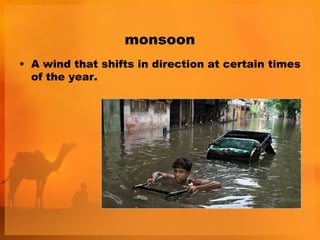
monsoon
• A wind that shifts in direction at certain times
  of the year.
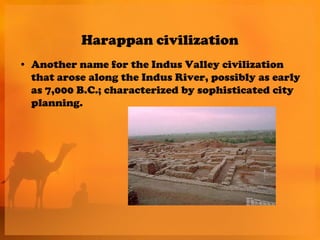
Harappan civilization
• Another name for the Indus Valley civilization
  that arose along the Indus River, possibly as early
  as 7,000 B.C.; characterized by sophisticated city
  planning.
What is one conclusion you can draw
about the Indus Valley civilizaton?
• Cities – Central planning, advanced
  plumbing and sewage systems.
• Language – Written with symbols
  and phonetic sounds.
• Trade – Thriving trade by river,
  overland, and sea.
• The Indus Valley civilization had a
  high level of culture and
  organization.
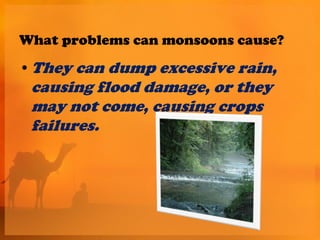
What problems can monsoons cause?
• They can dump excessive rain,
 causing flood damage, or they
 may not come, causing crops
 failures.
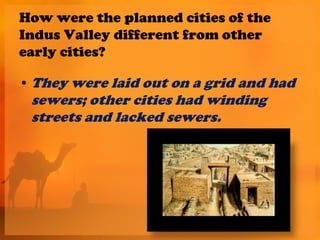
How were the planned cities of the
Indus Valley different from other
early cities?

• They were laid out on a grid and had
 sewers; other cities had winding
 streets and lacked sewers.
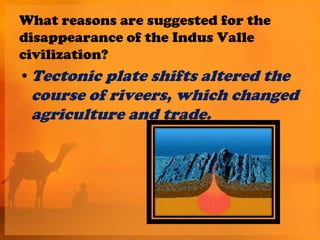
What reasons are suggested for the
disappearance of the Indus Valle
civilization?
• Tectonic plate shifts altered the
 course of riveers, which changed
 agriculture and trade.
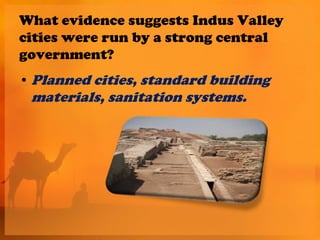
What evidence suggests Indus Valley
cities were run by a strong central
government?
• Planned cities, standard building
 materials, sanitation systems.
What skills would the construction of
planned cities require? Explain
         Central government.
         Standard building
           materials.

         Engineering and
           architectural skills.
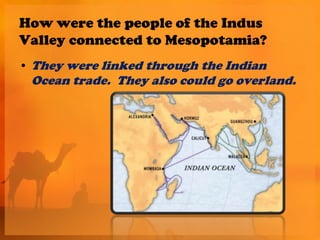
How were the people of the Indus
Valley connected to Mesopotamia?
• They were linked through the Indian
 Ocean trade. They also could go overland.
What does the attention the Indus
people gave to plumbing and sewer
systems suggest about their culture?
       • The Indus people valued
         personal cleanliness and
         social sanitation.
       • They may have known
         that poor sanitation could
         spread disease.
What is the main reason Harappan
language has not been deciphered?
• No bilingual texts have been found to
 help in the translating of the
 symbols.
What do planned cities of the Indus
Valley people tell us about their
culture?
• High level of cooperation.
• Strong central government.
What are some characteristics of the
Harappan culture?
• They were peaceful, organized and clean.

Chapter 2 – lesson 3 social studies

  • 1.
    CHAPTER 2 –LESSON 3 PLANNED CITIES ON THE INDUS SOCIAL STUDIES 7TH. GRADE SECOND PERIOD
  • 2.
    Outline • Environment  Indus flooding unpredictable.  Natural barriers: mountains and deserts.  Monsoon winds. • Power and authority  Strong centralized government.  Planned cities • Science and Technology  Writing (not yet deciphered).  Cities built on precise grid.  Plumbing and sewage systems.
  • 3.
    TERMS AND NAMES •Subcontinent: A large landmass that forms a distinct part of a continent.
  • 4.
    monsoon • A windthat shifts in direction at certain times of the year.
  • 5.
    Harappan civilization • Anothername for the Indus Valley civilization that arose along the Indus River, possibly as early as 7,000 B.C.; characterized by sophisticated city planning.
  • 6.
    What is oneconclusion you can draw about the Indus Valley civilizaton? • Cities – Central planning, advanced plumbing and sewage systems. • Language – Written with symbols and phonetic sounds. • Trade – Thriving trade by river, overland, and sea. • The Indus Valley civilization had a high level of culture and organization.
  • 7.
    What problems canmonsoons cause? • They can dump excessive rain, causing flood damage, or they may not come, causing crops failures.
  • 8.
    How were theplanned cities of the Indus Valley different from other early cities? • They were laid out on a grid and had sewers; other cities had winding streets and lacked sewers.
  • 9.
    What reasons aresuggested for the disappearance of the Indus Valle civilization? • Tectonic plate shifts altered the course of riveers, which changed agriculture and trade.
  • 10.
    What evidence suggestsIndus Valley cities were run by a strong central government? • Planned cities, standard building materials, sanitation systems.
  • 11.
    What skills wouldthe construction of planned cities require? Explain Central government. Standard building materials. Engineering and architectural skills.
  • 12.
    How were thepeople of the Indus Valley connected to Mesopotamia? • They were linked through the Indian Ocean trade. They also could go overland.
  • 13.
    What does theattention the Indus people gave to plumbing and sewer systems suggest about their culture? • The Indus people valued personal cleanliness and social sanitation. • They may have known that poor sanitation could spread disease.
  • 14.
    What is themain reason Harappan language has not been deciphered? • No bilingual texts have been found to help in the translating of the symbols.
  • 15.
    What do plannedcities of the Indus Valley people tell us about their culture? • High level of cooperation. • Strong central government.
  • 16.
    What are somecharacteristics of the Harappan culture? • They were peaceful, organized and clean.