IMPORTANT MARKETING
CONCEPTS
David Holdford, RPh, MS, PhD
Professor, School of Pharmacy
Virginia Commonwealth University
Each Concept Has an Important Lesson for
Pharmacists
IMPORTANT MARKETING
CONCEPTS
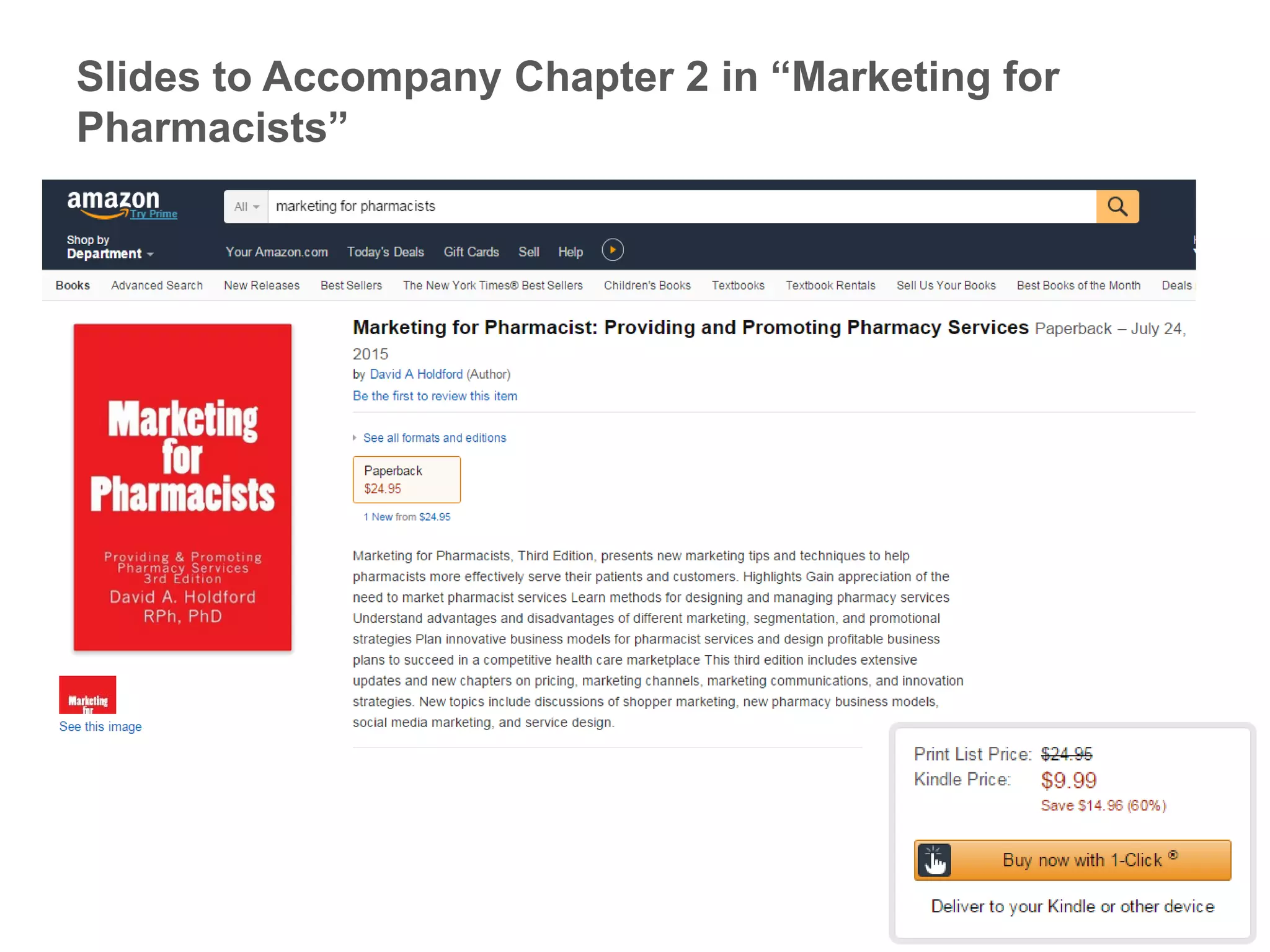
Slides to Accompany Chapter 2 in “Marketing for
Pharmacists”
2
Learning Objectives
Define key marketing terms: product; core, expected, and augmented
product; marketing myopia; potential, target, and actual markets; the
marketing mix; the four P’s; positioning; and value proposition
Explain the difference between customers, partners, and competitors
Describe two major categories of competitors
Differentiate internal from external customers
Describe the “products” offered by pharmacists
Identify and differentiate the various marketing tasks, the type of
demand they regulate, and suggested strategies
DEFINING THE PRODUCT
“anything of value that can be
exchanged to satisfy a need or
want”
A PRODUCT CAN BE A (AN)…
object (e.g., a syringe of antibiotic),
service (e.g., cholesterol screening),
activity (e.g., a poison prevention campaign),
person (e.g., Bob, the clinical pharmacist),
place (e.g., Medicine Shoppe pharmacy),
organization (e.g., the American Pharmacists
Association), or
concept (e.g., medication therapy management)
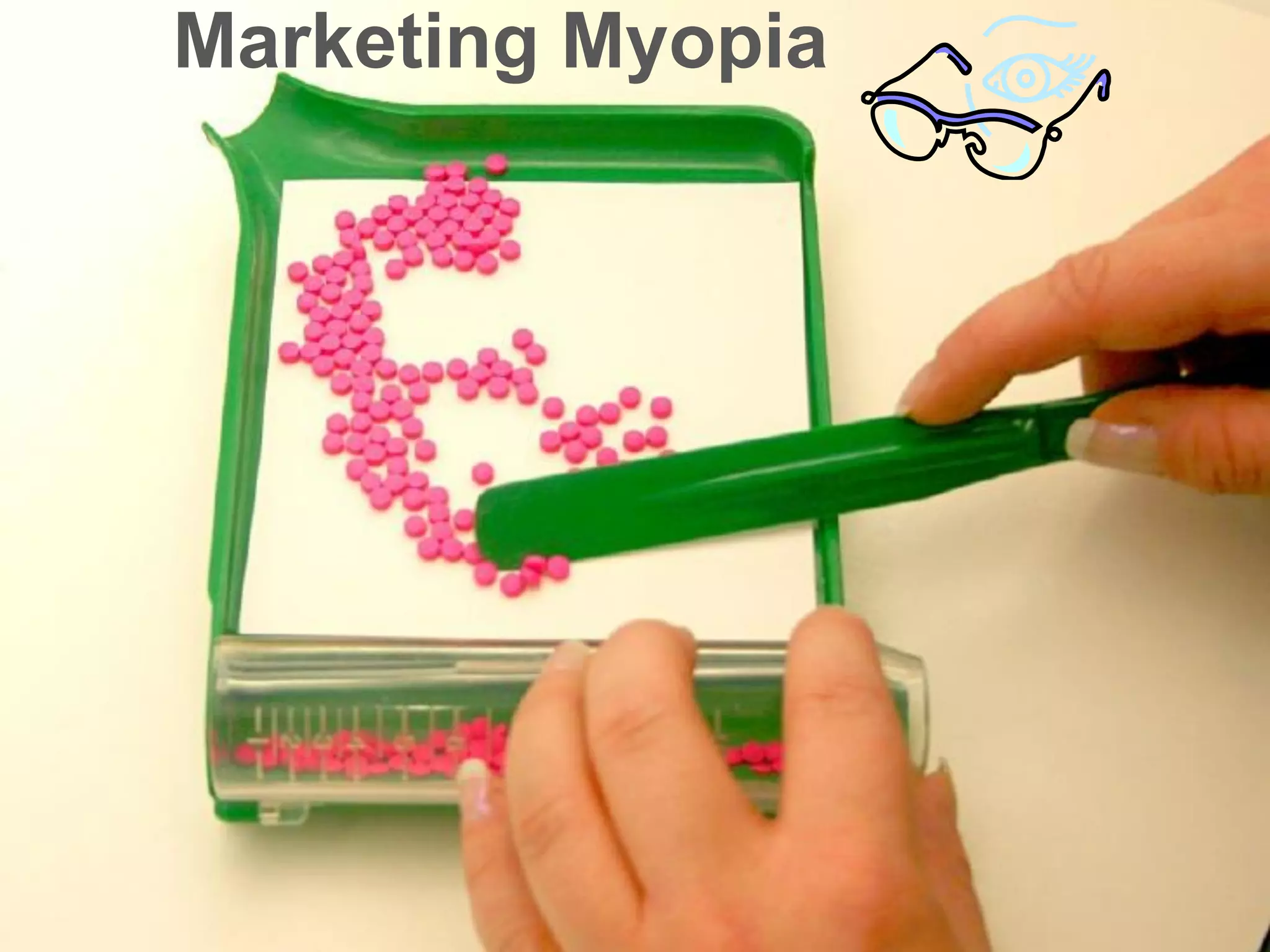
MARKETING MYOPIA
shortsighted, preoccupation with
selling the tangible product while
failing to consider the needs of
the consumer
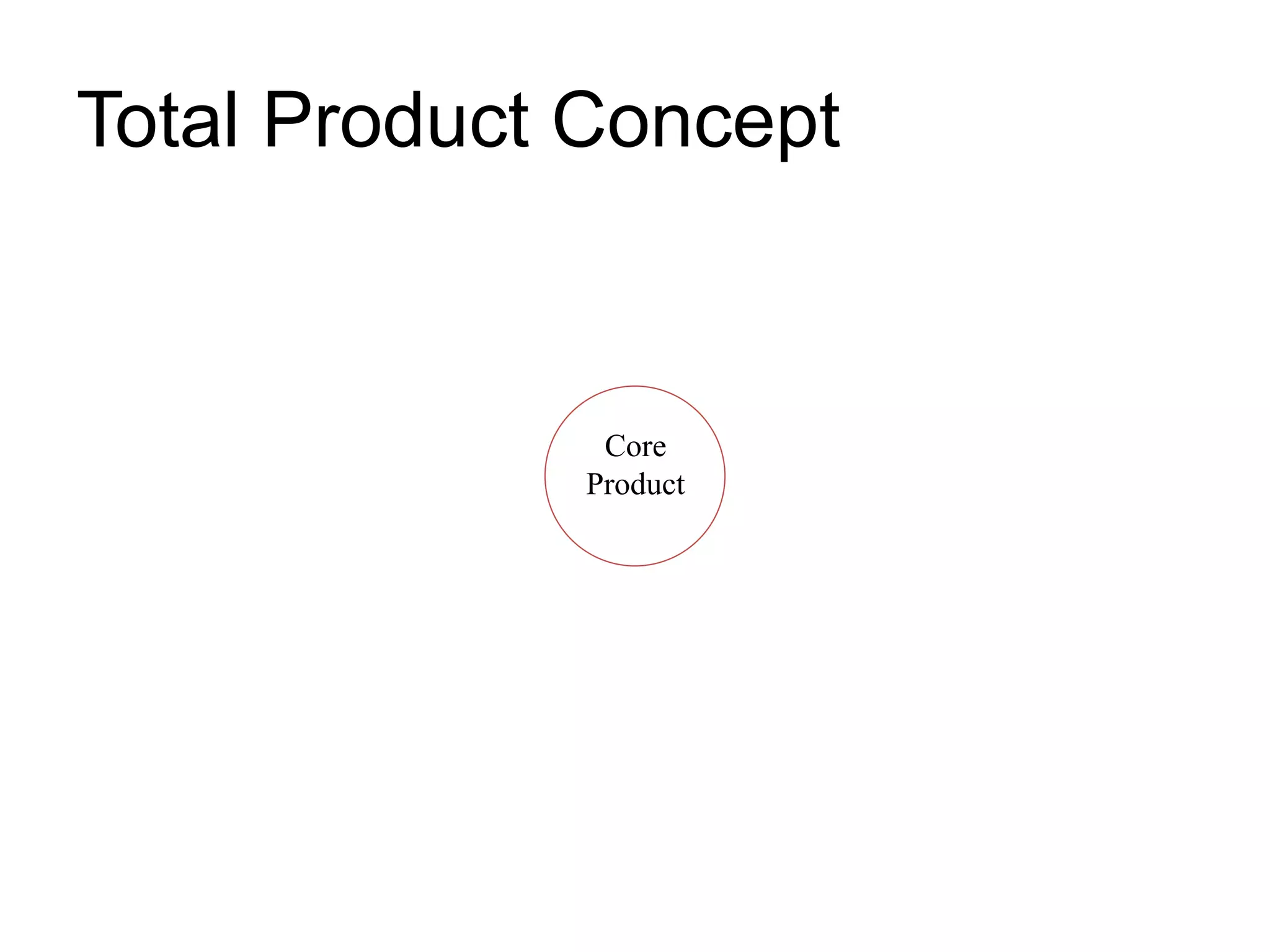
Core
Product
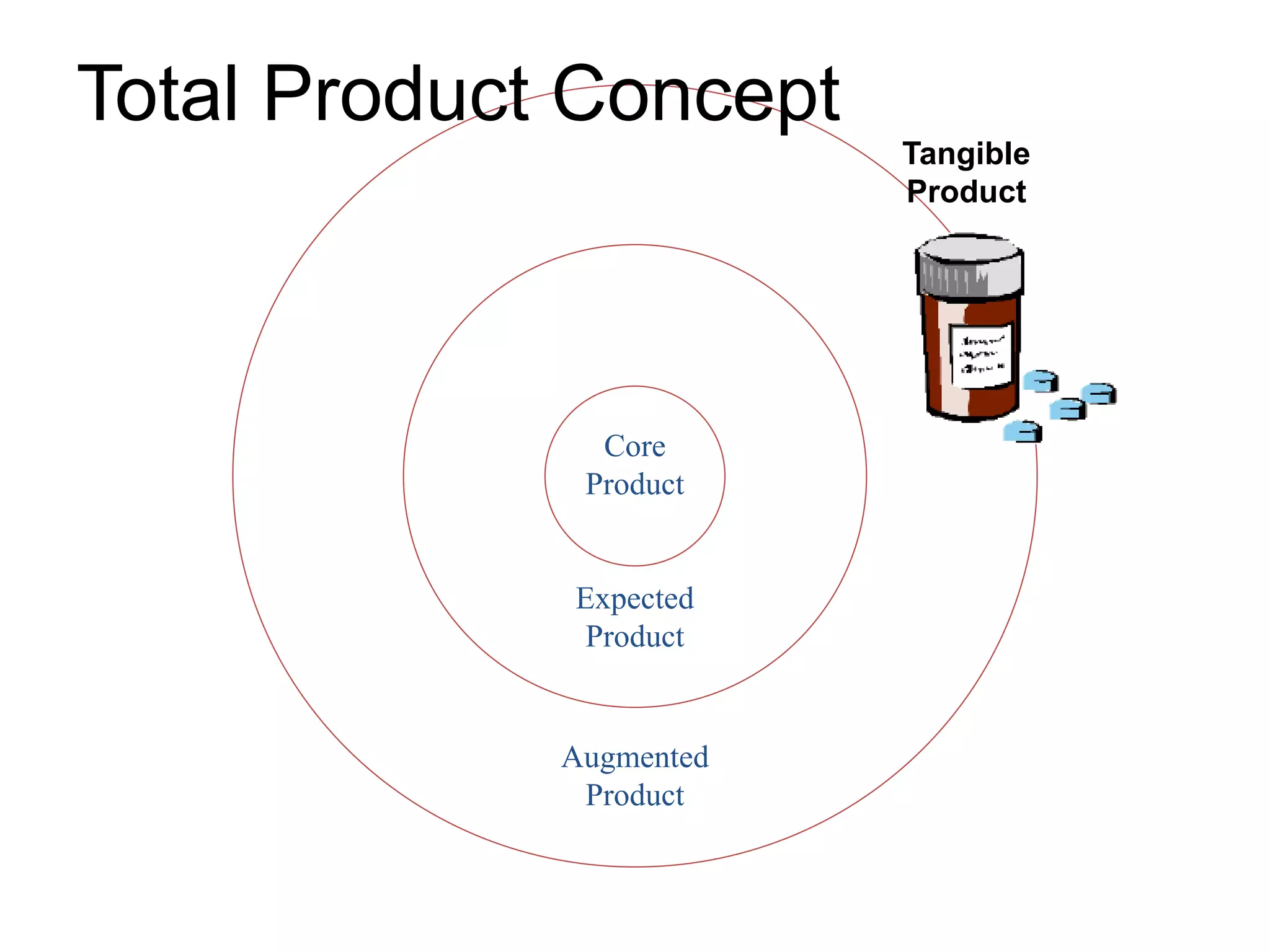
TOTAL PRODUCT CONCEPT
the benefit resulting from the bundle of
tangible goods, information, and services
offered to the customer
JOBS-TO-BE-DONE
FRAMEWORK
encourages pharmacists to think
about the job from the customer's
perspective by asking "What job is
the patient trying to get done?"
Core
Product
Expected
Product
TOTAL PRODUCT CONCEPT
what the customer expects to receive from a
marketer
Core
Product
Expected
Product
Augmented
Product
TOTAL PRODUCT CONCEPT
Anything provided that is beyond
what the customer expects
Core
Product
Expected
Product
Augmented
Product
Tangible
Product
TOTAL PRODUCT CONCEPT
the physical, touchable vehicle
for delivering the core product
MEASURING THE MARKET
MARKET
Set of all individuals and organizations who
are actual and potential buyers of a
product or service
Wherever there is potential for trade, there is
a market
MARKET
Actual market size depends on:
Interest of the customer
Ability to access and pay for the product
Willingness to pay
Actual market may include untargeted
customers
MARKET
Potential market size =
(Total population in a market) x
(Fraction who might reasonably be
expected to purchase)
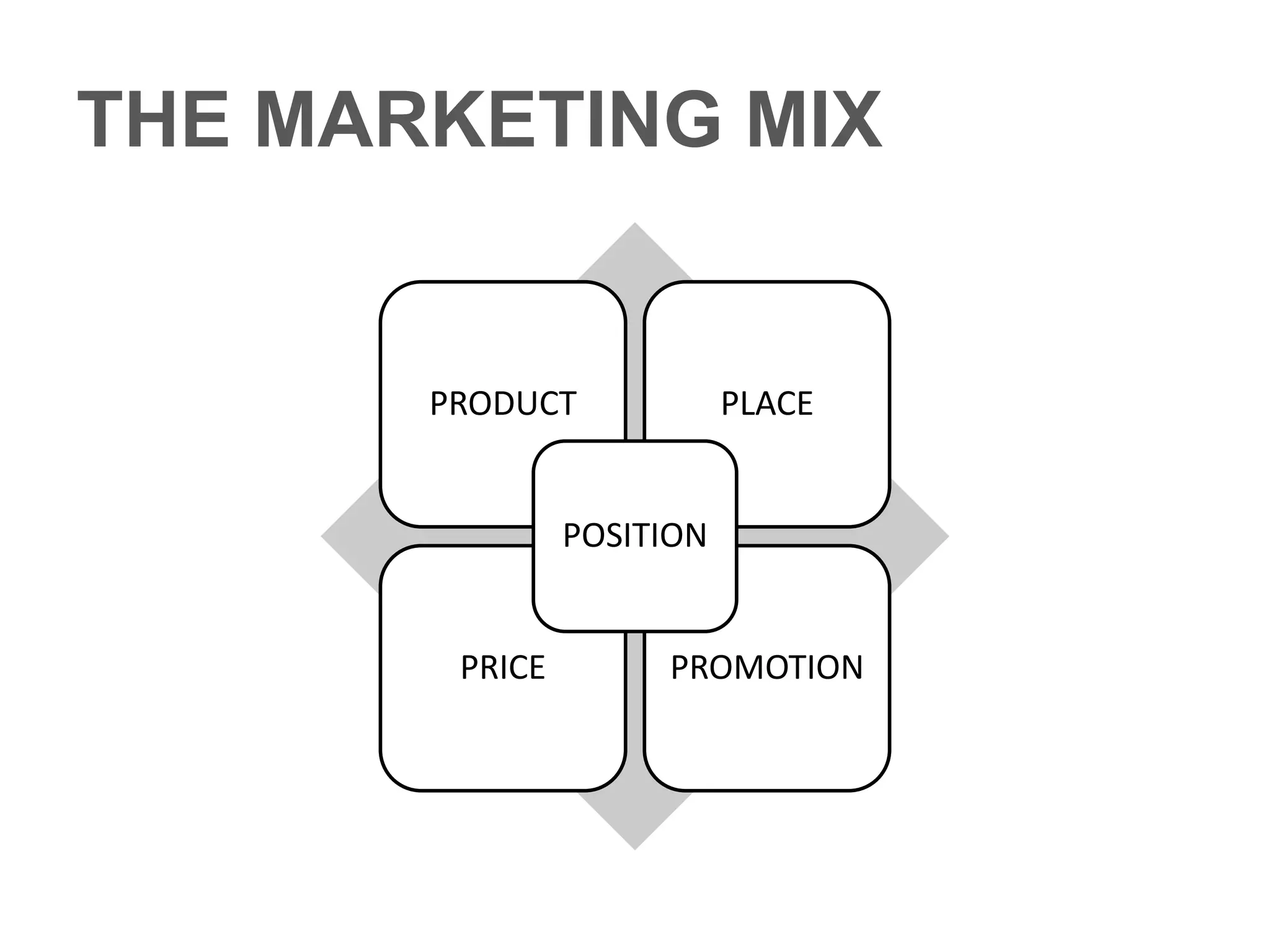
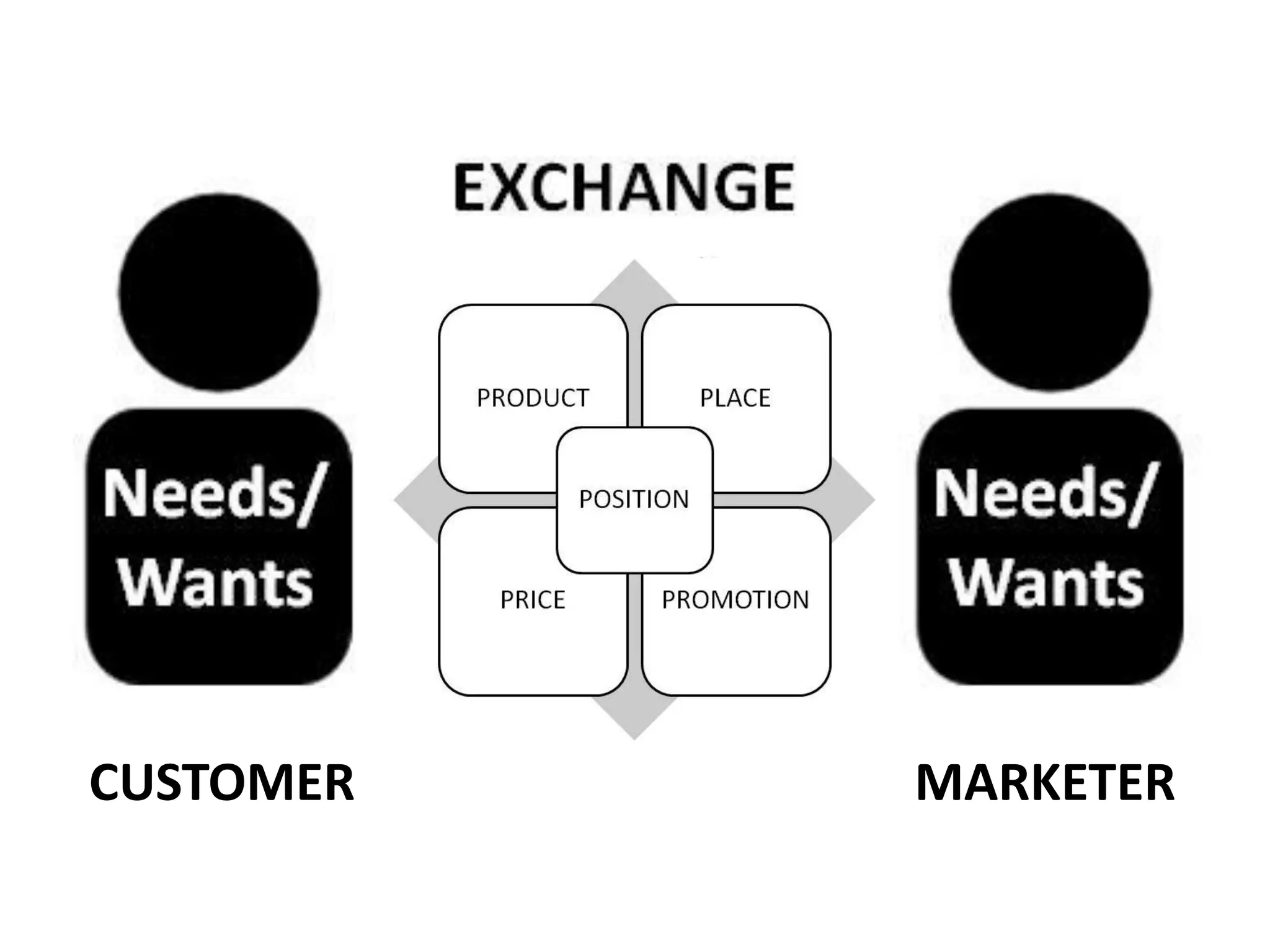
THE MARKETING MIX
PRODUCT PLACE
PRICE PROMOTION
POSITION
CUSTOMER MARKETER
VALUE PROPOSITION
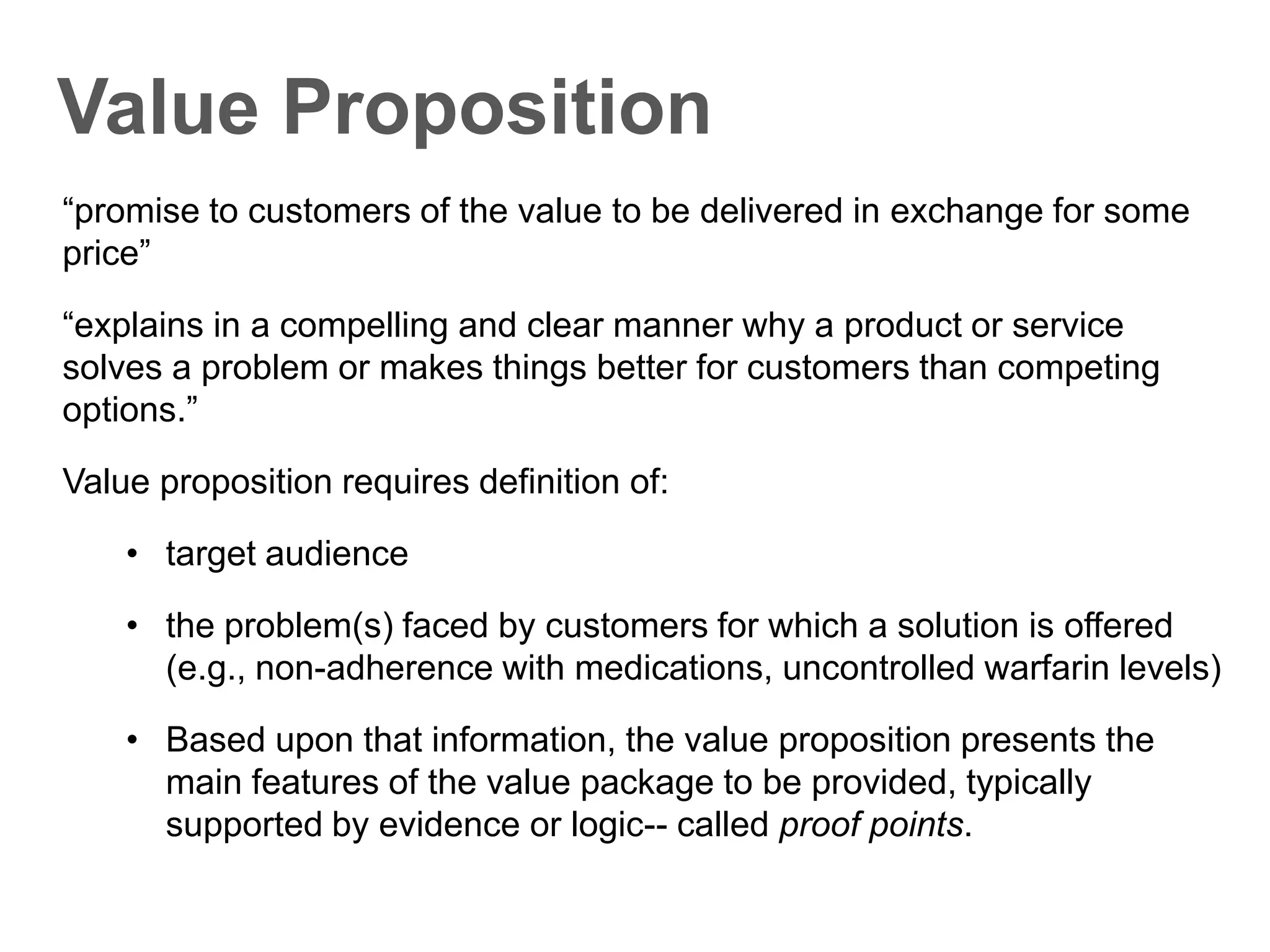
promise of the value to be delivered to customers in exchange for some
price
explains in a compelling and clear manner why a product or service
solves a problem or makes things better for customers than competing
options
Value proposition requires definition of:
• target audience
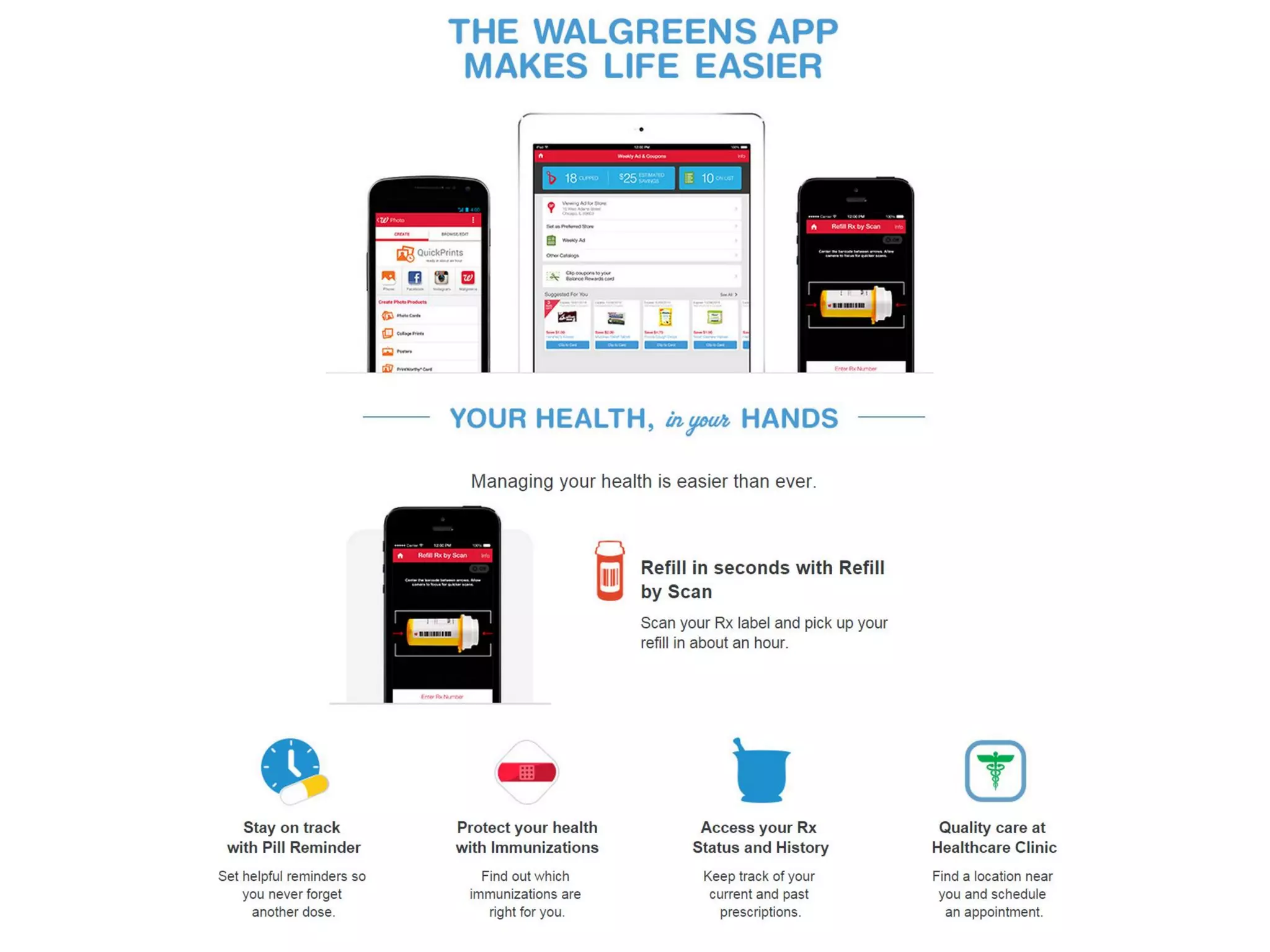
• the problem(s) faced by customers for which a solution is offered
(e.g., non-adherence with medications, uncontrolled warfarin levels)
• Based upon that information, the value proposition presents the
main features of the value package to be provided, typically
supported by evidence or logic-- called proof points.
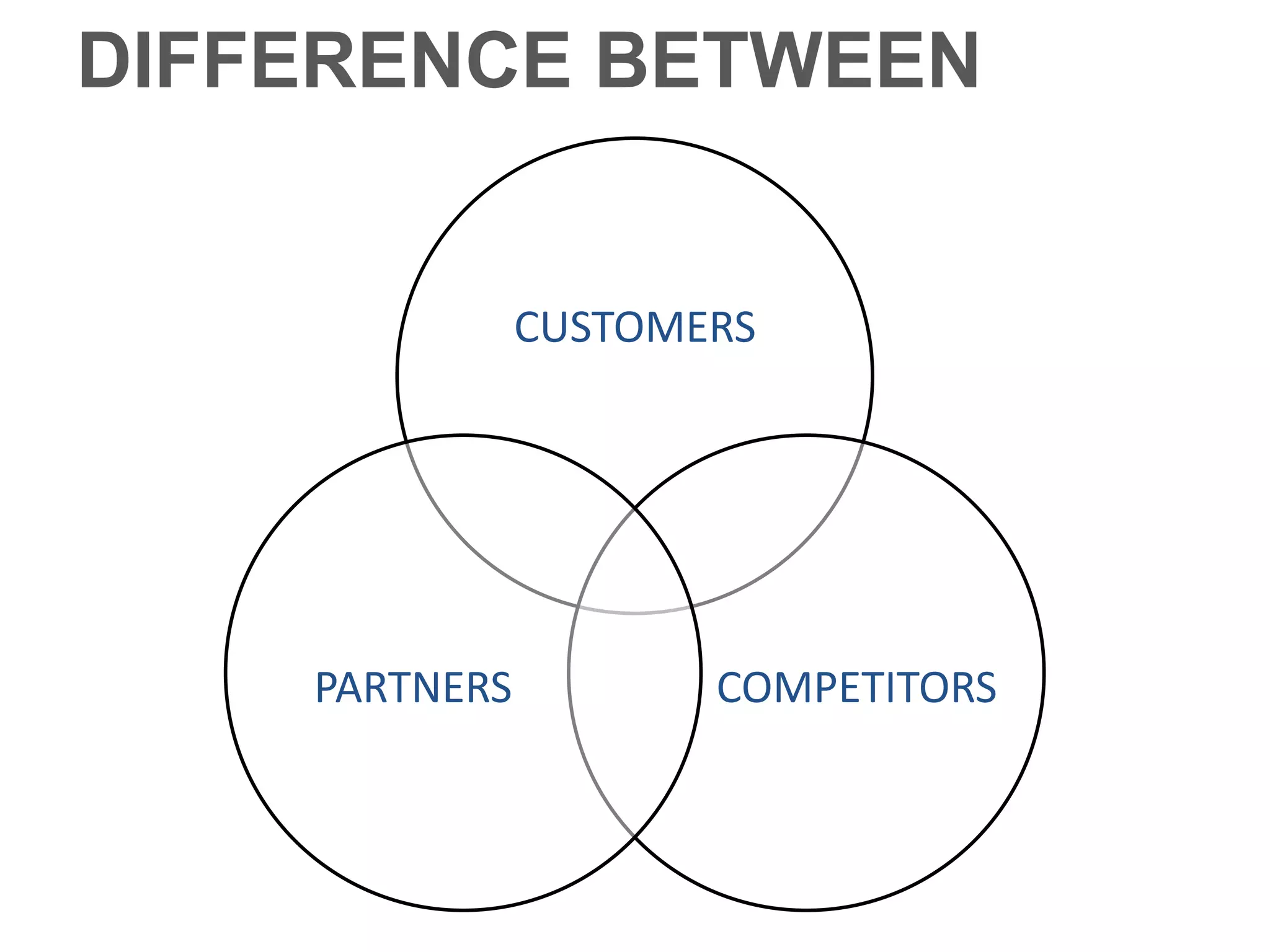
WHAT IS THE DIFFERENCE?
CUSTOMERS
COMPETITORSPARTNERS
CUSTOMER
Any person or group involved in an exchange
External – people outside of the organization
Internal – people within the organization
PRIMARY CUSTOMER
CUSTOMER ROLES IN HEALTHCARE
Influencer - An individual whose advice can change some element of
the buying decision
Decider - The person with the authority to make the ultimate decision
regarding purchase
Patient - The person who actually consumes the product or service
Provider - The individual or organization who provides a particular
product or service
Producer - The individual or organization who produces a particular
product or service
Payer - The one who pays for all or part of the health care product or
service
Care Provider - A friend or family member who provides care to a
patient
COMPETITORS
Any alternative to what you offer to
customers
Any alternative that can get in the way of an
exchange between you and your customer
COMPETITORS
Identification of competitors requires a clear
definition of one’s
product(s),
customer(s), &
market(s)
COMPETITORS
Intra type competitors compete by offering
similar tangible & augmented products
Inter type competitors compete in terms of the
benefits provided
SOCIAL MARKETING
The primary competitor of social
marketers is:
existing unhealthy behavior
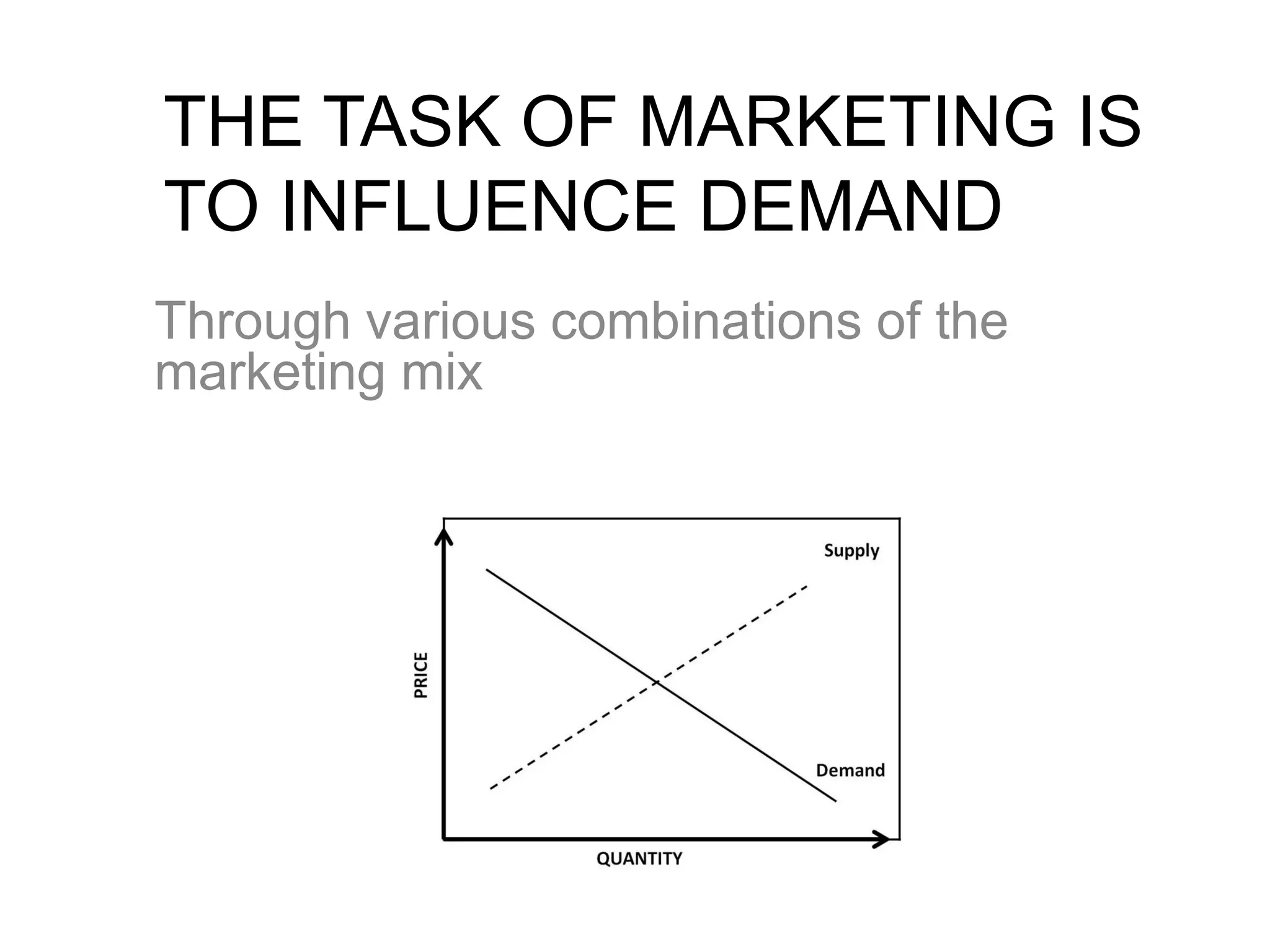
THE TASK OF MARKETING IS TO
INFLUENCE DEMAND
THE TASK IS NOT ALWAYS
TO INCREASE DEMAND
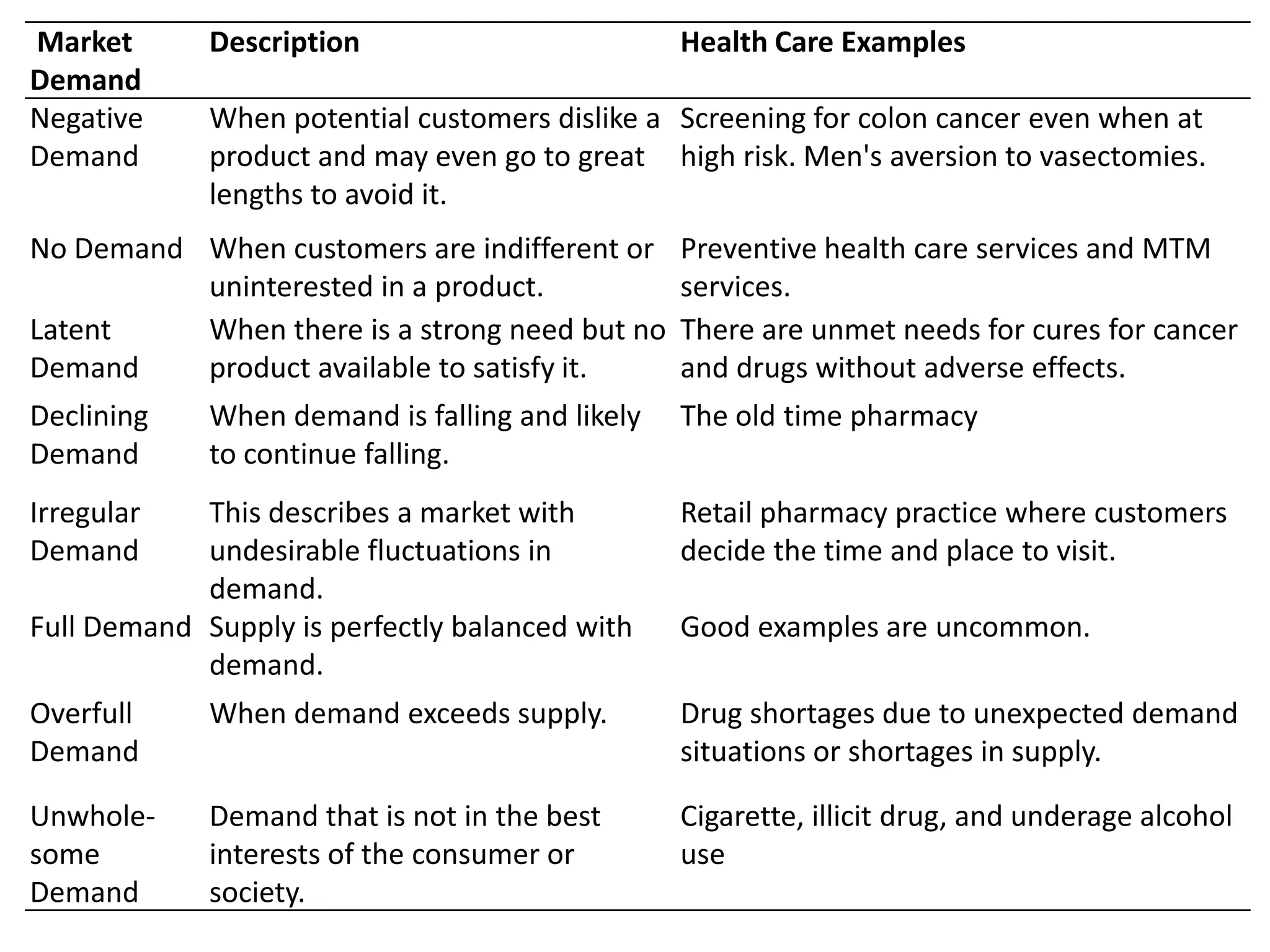
Market
Demand
Description Health Care Examples
Negative
Demand
When potential customers dislike a
product and may even go to great
lengths to avoid it.
Screening for colon cancer even when at
high risk. Men's aversion to vasectomies.
No Demand When customers are indifferent or
uninterested in a product.
Preventive health care services and MTM
services.
Latent
Demand
When there is a strong need but no
product available to satisfy it.
There are unmet needs for cures for cancer
and drugs without adverse effects.
Declining
Demand
When demand is falling and likely
to continue falling.
The old time pharmacy
Irregular
Demand
This describes a market with
undesirable fluctuations in
demand.
Retail pharmacy practice where customers
decide the time and place to visit.
Full Demand Supply is perfectly balanced with
demand.
Good examples are uncommon.
Overfull
Demand
When demand exceeds supply. Drug shortages due to unexpected demand
situations or shortages in supply.
Unwhole-
some
Demand
Demand that is not in the best
interests of the consumer or
society.
Cigarette, illicit drug, and underage alcohol
use
Summary
Knowing marketing terminology helps to learn
marketing concepts.
Those concepts can be used to:
Communicate with managers
Understand more complex topics

Chapter 2 Important Concepts in Marketing

  • 1.
    IMPORTANT MARKETING CONCEPTS David Holdford,RPh, MS, PhD Professor, School of Pharmacy Virginia Commonwealth University Each Concept Has an Important Lesson for Pharmacists IMPORTANT MARKETING CONCEPTS
  • 2.
    Slides to AccompanyChapter 2 in “Marketing for Pharmacists” 2
  • 3.
    Learning Objectives Define keymarketing terms: product; core, expected, and augmented product; marketing myopia; potential, target, and actual markets; the marketing mix; the four P’s; positioning; and value proposition Explain the difference between customers, partners, and competitors Describe two major categories of competitors Differentiate internal from external customers Describe the “products” offered by pharmacists Identify and differentiate the various marketing tasks, the type of demand they regulate, and suggested strategies
  • 4.
    DEFINING THE PRODUCT “anythingof value that can be exchanged to satisfy a need or want”
  • 5.
    A PRODUCT CANBE A (AN)… object (e.g., a syringe of antibiotic), service (e.g., cholesterol screening), activity (e.g., a poison prevention campaign), person (e.g., Bob, the clinical pharmacist), place (e.g., Medicine Shoppe pharmacy), organization (e.g., the American Pharmacists Association), or concept (e.g., medication therapy management)
  • 6.
    MARKETING MYOPIA shortsighted, preoccupationwith selling the tangible product while failing to consider the needs of the consumer
  • 7.
    Core Product TOTAL PRODUCT CONCEPT thebenefit resulting from the bundle of tangible goods, information, and services offered to the customer
  • 8.
    JOBS-TO-BE-DONE FRAMEWORK encourages pharmacists tothink about the job from the customer's perspective by asking "What job is the patient trying to get done?"
  • 9.
    Core Product Expected Product TOTAL PRODUCT CONCEPT whatthe customer expects to receive from a marketer
  • 10.
  • 11.
    Core Product Expected Product Augmented Product Tangible Product TOTAL PRODUCT CONCEPT thephysical, touchable vehicle for delivering the core product
  • 12.
  • 13.
    MARKET Set of allindividuals and organizations who are actual and potential buyers of a product or service Wherever there is potential for trade, there is a market
  • 14.
    MARKET Actual market sizedepends on: Interest of the customer Ability to access and pay for the product Willingness to pay Actual market may include untargeted customers
  • 15.
    MARKET Potential market size= (Total population in a market) x (Fraction who might reasonably be expected to purchase)
  • 16.
    THE MARKETING MIX PRODUCTPLACE PRICE PROMOTION POSITION
  • 17.
  • 18.
    VALUE PROPOSITION promise ofthe value to be delivered to customers in exchange for some price explains in a compelling and clear manner why a product or service solves a problem or makes things better for customers than competing options Value proposition requires definition of: • target audience • the problem(s) faced by customers for which a solution is offered (e.g., non-adherence with medications, uncontrolled warfarin levels) • Based upon that information, the value proposition presents the main features of the value package to be provided, typically supported by evidence or logic-- called proof points.
  • 19.
    WHAT IS THEDIFFERENCE? CUSTOMERS COMPETITORSPARTNERS
  • 20.
    CUSTOMER Any person orgroup involved in an exchange External – people outside of the organization Internal – people within the organization
  • 21.
  • 22.
    CUSTOMER ROLES INHEALTHCARE Influencer - An individual whose advice can change some element of the buying decision Decider - The person with the authority to make the ultimate decision regarding purchase Patient - The person who actually consumes the product or service Provider - The individual or organization who provides a particular product or service Producer - The individual or organization who produces a particular product or service Payer - The one who pays for all or part of the health care product or service Care Provider - A friend or family member who provides care to a patient
  • 23.
    COMPETITORS Any alternative towhat you offer to customers Any alternative that can get in the way of an exchange between you and your customer
  • 24.
    COMPETITORS Identification of competitorsrequires a clear definition of one’s product(s), customer(s), & market(s)
  • 25.
    COMPETITORS Intra type competitorscompete by offering similar tangible & augmented products Inter type competitors compete in terms of the benefits provided
  • 26.
    SOCIAL MARKETING The primarycompetitor of social marketers is: existing unhealthy behavior
  • 27.
    THE TASK OFMARKETING IS TO INFLUENCE DEMAND
  • 28.
    THE TASK ISNOT ALWAYS TO INCREASE DEMAND
  • 29.
    Market Demand Description Health CareExamples Negative Demand When potential customers dislike a product and may even go to great lengths to avoid it. Screening for colon cancer even when at high risk. Men's aversion to vasectomies. No Demand When customers are indifferent or uninterested in a product. Preventive health care services and MTM services. Latent Demand When there is a strong need but no product available to satisfy it. There are unmet needs for cures for cancer and drugs without adverse effects. Declining Demand When demand is falling and likely to continue falling. The old time pharmacy Irregular Demand This describes a market with undesirable fluctuations in demand. Retail pharmacy practice where customers decide the time and place to visit. Full Demand Supply is perfectly balanced with demand. Good examples are uncommon. Overfull Demand When demand exceeds supply. Drug shortages due to unexpected demand situations or shortages in supply. Unwhole- some Demand Demand that is not in the best interests of the consumer or society. Cigarette, illicit drug, and underage alcohol use
  • 30.
    Summary Knowing marketing terminologyhelps to learn marketing concepts. Those concepts can be used to: Communicate with managers Understand more complex topics