Building
Confidence and
Overcoming
Fear
Presented by;
Husnain Mahavia
What is confidence?
Confidence is the feeling you have when you
believe that you are capable of handling a
situation successfully.
You are not born with confidence.
It is something that anyone can develop.
What is stage fright?
Stage fright, or communication apprehension,
means that a person is afraid to speak in public.
Surveys indicate that 80 to 90 percent of Americans
admit to feeling extremely uncomfortable about
public speaking.
Common Physical Symptoms of
Communication Apprehension
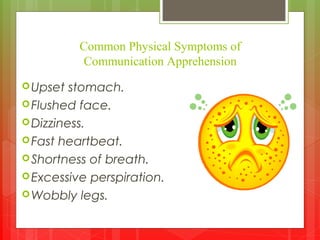
Upset stomach.
Flushed face.
Dizziness.
Fast heartbeat.
Shortness of breath.
Excessive perspiration.
Wobbly legs.
Why do we get stage fright?
 The body is flooded with energy (adrenaline) because we
sense an emergency situation.
 We don’t like to be judged.
 We don’t think our ideas are worth listening to, we don’t
think we can express our ideas well, or we fear the
audience won’t like us while we are speaking.
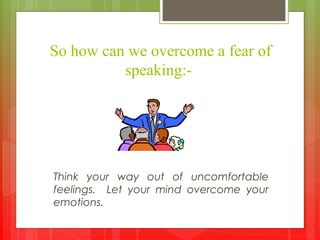
So how can we overcome a fear of
speaking:-
Think your way out of uncomfortable
feelings. Let your mind overcome your
emotions.
Perception
Perception is how you see things.
How you perceive a situation when you feel fear is
often very inaccurate.
An inaccurate perception of a situation can cause a
person to blow things out of proportion, or make a
problem seem greater than it is.
Perception of Your Audience
You may think that your audience
automatically knows that you’re nervous.
Consider this:
Studies on how well an audience perceives
anxiety should comfort nervous speakers.
Researchers have found that most report
noticing little or no anxiety in a speaker.
Perception of Your Speech
 Consider it your opportunity to share something
meaningful (your message).
 It is not a performance. No Hollywood screen tests
here!
 The speech is an extension of yourself. It exemplifies
your personality, feelings, likes, and dislikes.
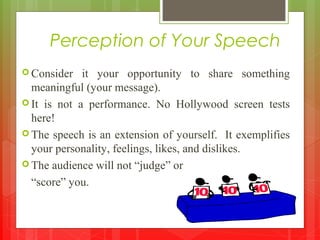
 The audience will not “judge” or
“score” you.
Perception of Yourself
Don’t compare yourself to others.
You don’t have to be perfect!
Don’t equate a few mistakes with
total failure.
Mistakes are an opportunity to
learn and improve.
We are all unique and have a lot to offer one
another.
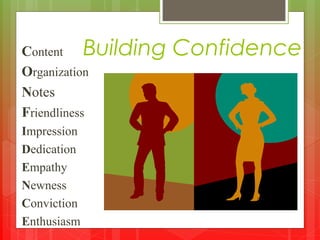
Building ConfidenceContent
Organization
Notes
Friendliness
Impression
Dedication
Empathy
Newness
Conviction
Enthusiasm

Stage freight

  • 1.
  • 2.
    What is confidence? Confidenceis the feeling you have when you believe that you are capable of handling a situation successfully. You are not born with confidence. It is something that anyone can develop.
  • 3.
    What is stagefright? Stage fright, or communication apprehension, means that a person is afraid to speak in public. Surveys indicate that 80 to 90 percent of Americans admit to feeling extremely uncomfortable about public speaking.
  • 4.
    Common Physical Symptomsof Communication Apprehension Upset stomach. Flushed face. Dizziness. Fast heartbeat. Shortness of breath. Excessive perspiration. Wobbly legs.
  • 5.
    Why do weget stage fright?  The body is flooded with energy (adrenaline) because we sense an emergency situation.  We don’t like to be judged.  We don’t think our ideas are worth listening to, we don’t think we can express our ideas well, or we fear the audience won’t like us while we are speaking.
  • 6.
    So how canwe overcome a fear of speaking:- Think your way out of uncomfortable feelings. Let your mind overcome your emotions.
  • 7.
    Perception Perception is howyou see things. How you perceive a situation when you feel fear is often very inaccurate. An inaccurate perception of a situation can cause a person to blow things out of proportion, or make a problem seem greater than it is.
  • 8.
    Perception of YourAudience You may think that your audience automatically knows that you’re nervous. Consider this: Studies on how well an audience perceives anxiety should comfort nervous speakers. Researchers have found that most report noticing little or no anxiety in a speaker.
  • 9.
    Perception of YourSpeech  Consider it your opportunity to share something meaningful (your message).  It is not a performance. No Hollywood screen tests here!  The speech is an extension of yourself. It exemplifies your personality, feelings, likes, and dislikes.  The audience will not “judge” or “score” you.
  • 10.
    Perception of Yourself Don’tcompare yourself to others. You don’t have to be perfect! Don’t equate a few mistakes with total failure. Mistakes are an opportunity to learn and improve. We are all unique and have a lot to offer one another.
  • 11.