Review and Ancient City of
Jenne-Jeno Africa notes/Pictures
7th Grade History
A)Use this map
to answer the
questions on the
page.
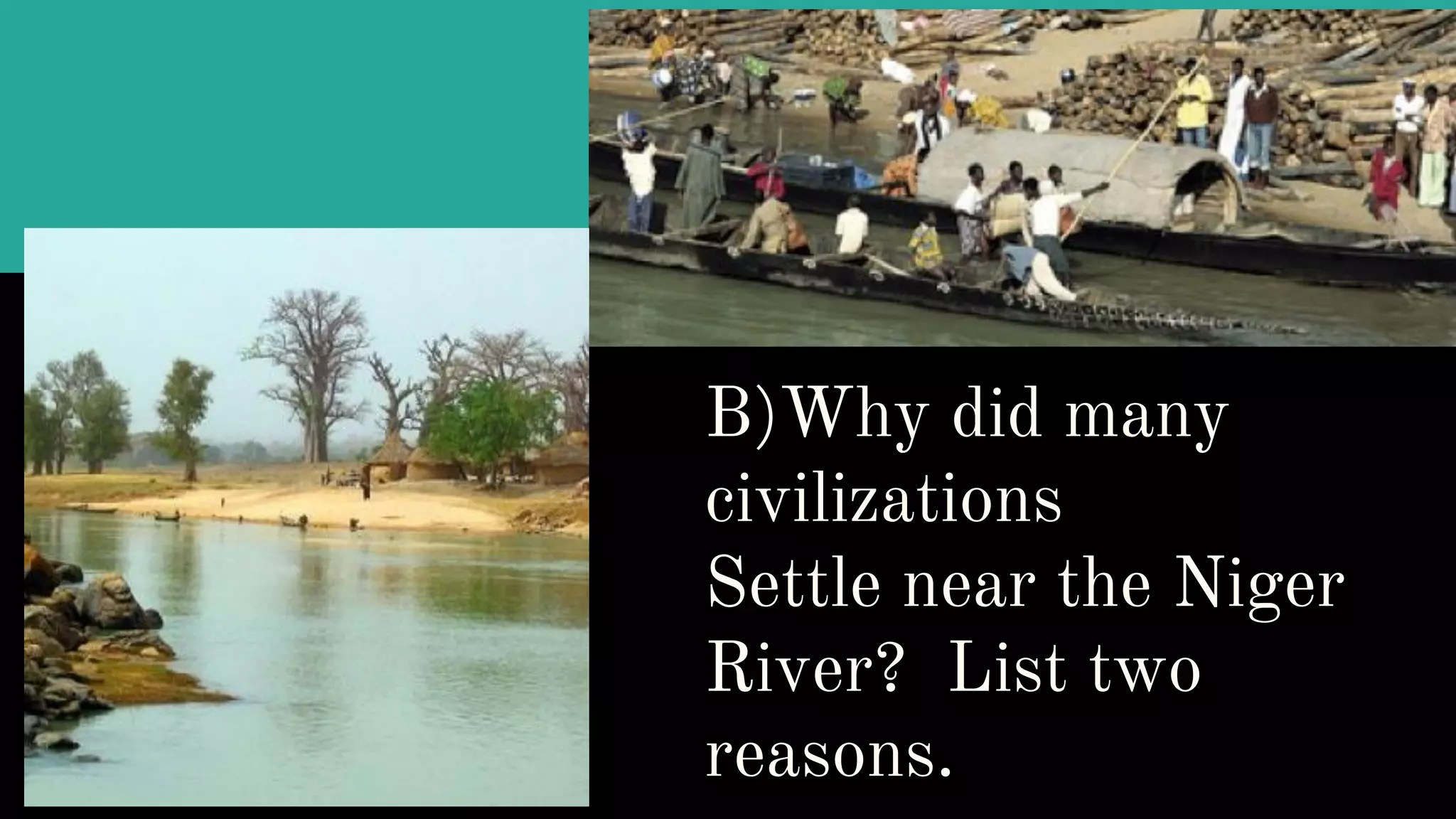
B)Why did many
civilizations
Settle near the Niger
River? List two
reasons.
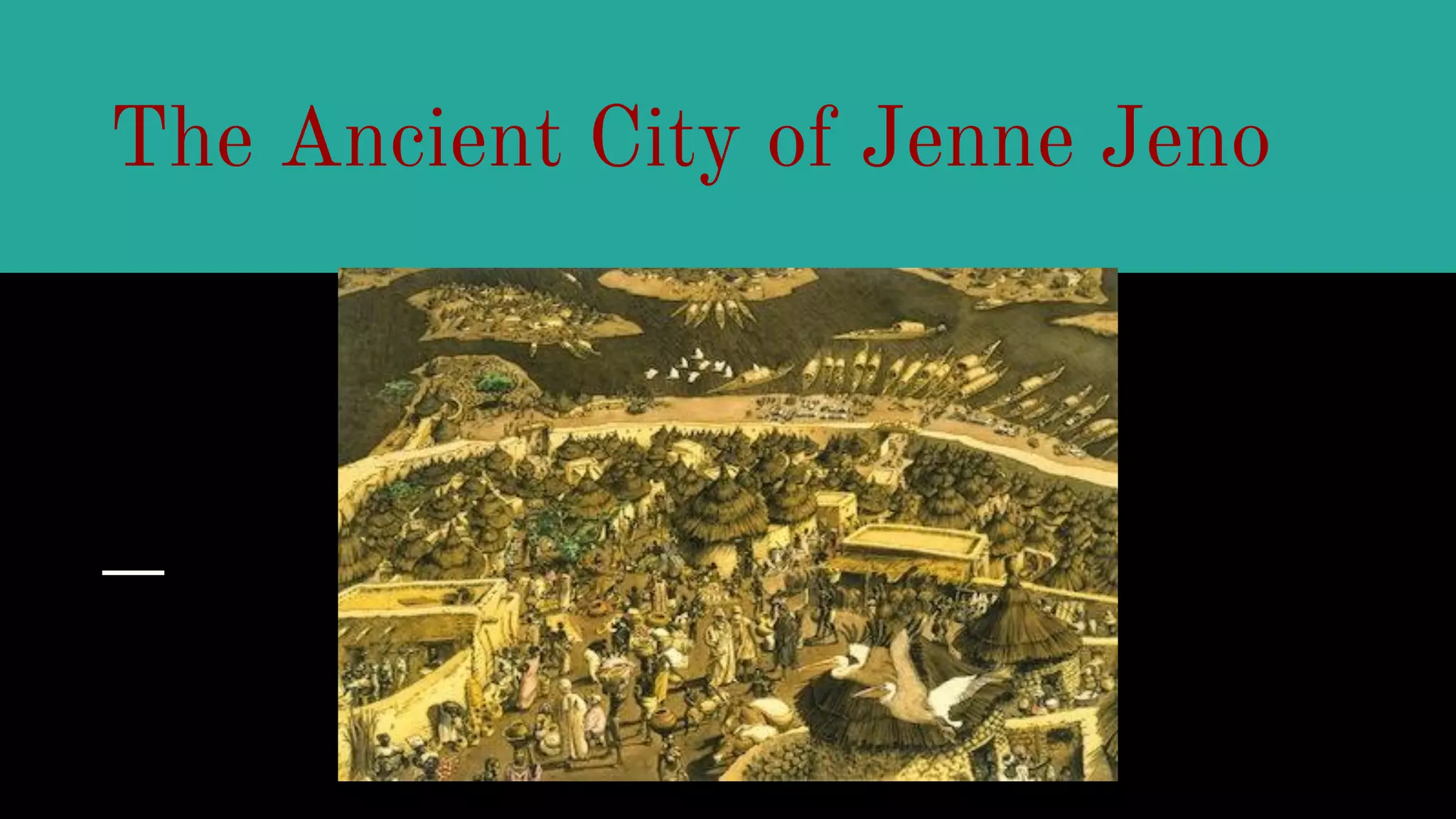
The Ancient City of Jenne Jeno
The Ancient City of Jenne-Jeno 
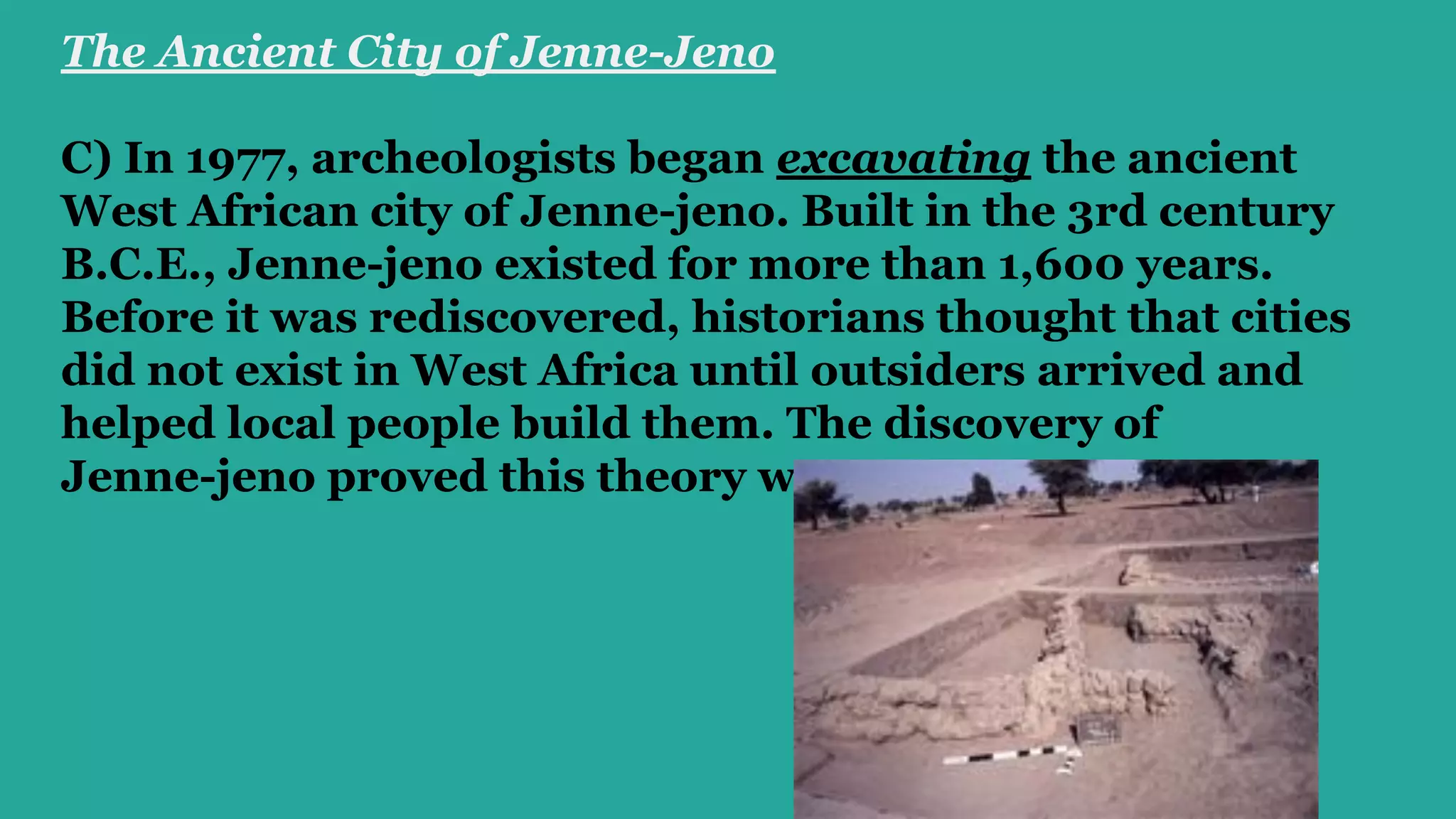
C) In 1977, archeologists began excavating the ancient
West African city of Jenne-jeno. Built in the 3rd century
B.C.E., Jenne-jeno existed for more than 1,600 years.
Before it was rediscovered, historians thought that cities
did not exist in West Africa until outsiders arrived and
helped local people build them. The discovery of
Jenne-jeno proved this theory wrong.
D) Jenne-jeno was built where the Niger River meets the
Bani River. This was an ideal location for farming, fishing,
and trade. The people of Jenne-jeno traded their surplus
goods—such as catfish, fish oil, onions, and rice—for salt,
iron ore, copper, and gold. The iron ore came from 50 miles
away and the copper from 600 miles away.
Jenne-jeno grew into a busy city of about twenty thousand people. It was surrounded by a wall 10 feet wide and 13 feet high. The wall may have been built to
give the city more status and to make it easier to control the comings and goings of traders.
E) Jenne-jeno grew into a busy city of about twenty
thousand people. It was surrounded by a wall 10 feet wide
and 13 feet high. The wall may have been built to give the
city more status and to make it easier to control the
comings and goings of traders.
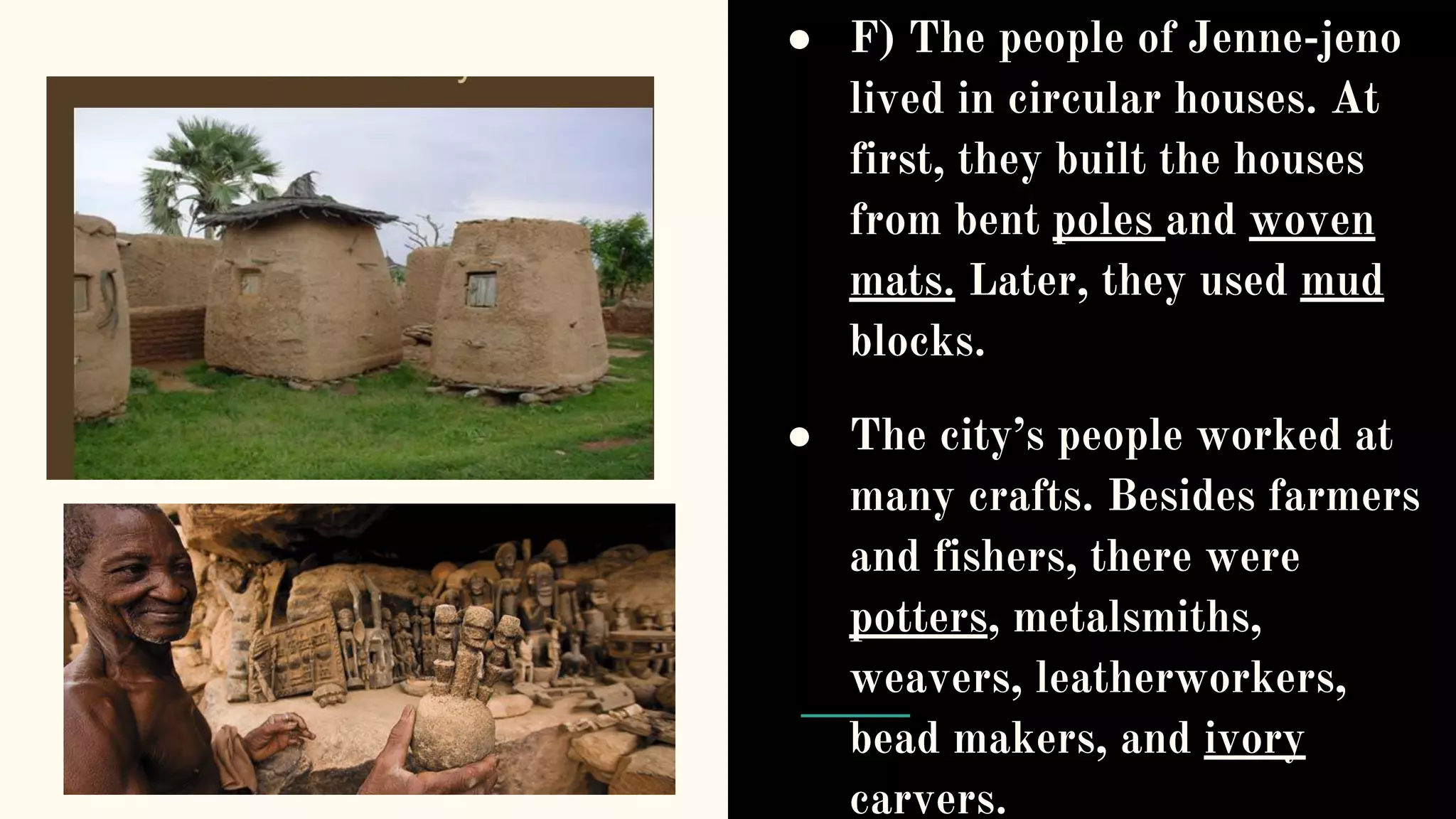
● F) The people of Jenne-jeno
lived in circular houses. At
first, they built the houses
from bent poles and woven
mats. Later, they used mud
blocks.
● The city’s people worked at
many crafts. Besides farmers
and fishers, there were
potters, metalsmiths,
weavers, leatherworkers,
bead makers, and ivory
carvers.
G) The most respected people in Jenne-jeno
were blacksmiths. The people of West
Africa prized iron more than gold. They
were amazed by blacksmiths’ ability to make
tools from iron. As in many other early
cultures, early West Africans thought
blacksmiths had supernatural (magical or
godlike) powers. For this reason,
blacksmiths had authority and many
responsibilities. Blacksmiths acted as
political leaders, judges, and doctors. Some
were charged with predicting the future.
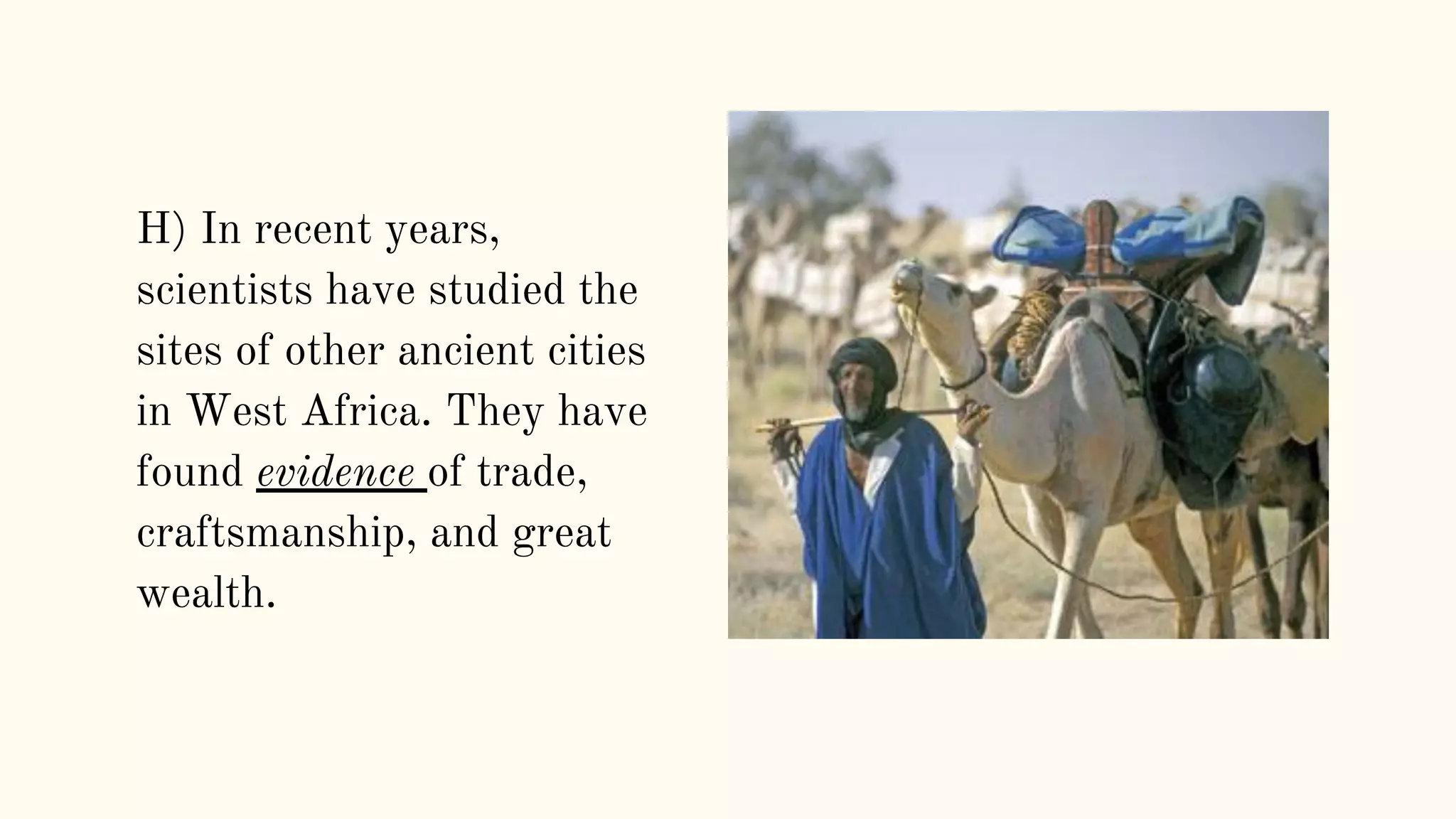
H) In recent years,
scientists have studied the
sites of other ancient cities
in West Africa. They have
found evidence of trade,
craftsmanship, and great
wealth.

Jenne jeno- Ancient city

  • 1.
    Review and AncientCity of Jenne-Jeno Africa notes/Pictures 7th Grade History
  • 2.
    A)Use this map toanswer the questions on the page.
  • 3.
    B)Why did many civilizations Settlenear the Niger River? List two reasons.
  • 4.
    The Ancient Cityof Jenne Jeno
  • 5.
    The Ancient Cityof Jenne-Jeno  C) In 1977, archeologists began excavating the ancient West African city of Jenne-jeno. Built in the 3rd century B.C.E., Jenne-jeno existed for more than 1,600 years. Before it was rediscovered, historians thought that cities did not exist in West Africa until outsiders arrived and helped local people build them. The discovery of Jenne-jeno proved this theory wrong.
  • 6.
    D) Jenne-jeno wasbuilt where the Niger River meets the Bani River. This was an ideal location for farming, fishing, and trade. The people of Jenne-jeno traded their surplus goods—such as catfish, fish oil, onions, and rice—for salt, iron ore, copper, and gold. The iron ore came from 50 miles away and the copper from 600 miles away.
  • 7.
    Jenne-jeno grew intoa busy city of about twenty thousand people. It was surrounded by a wall 10 feet wide and 13 feet high. The wall may have been built to give the city more status and to make it easier to control the comings and goings of traders. E) Jenne-jeno grew into a busy city of about twenty thousand people. It was surrounded by a wall 10 feet wide and 13 feet high. The wall may have been built to give the city more status and to make it easier to control the comings and goings of traders.
  • 9.
    ● F) Thepeople of Jenne-jeno lived in circular houses. At first, they built the houses from bent poles and woven mats. Later, they used mud blocks. ● The city’s people worked at many crafts. Besides farmers and fishers, there were potters, metalsmiths, weavers, leatherworkers, bead makers, and ivory carvers.
  • 10.
    G) The mostrespected people in Jenne-jeno were blacksmiths. The people of West Africa prized iron more than gold. They were amazed by blacksmiths’ ability to make tools from iron. As in many other early cultures, early West Africans thought blacksmiths had supernatural (magical or godlike) powers. For this reason, blacksmiths had authority and many responsibilities. Blacksmiths acted as political leaders, judges, and doctors. Some were charged with predicting the future.
  • 11.
    H) In recentyears, scientists have studied the sites of other ancient cities in West Africa. They have found evidence of trade, craftsmanship, and great wealth.