Chapter 2 
Taking Charge of Your 
Health
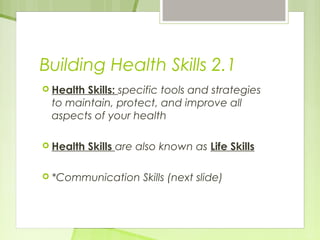
Building Health Skills 2.1 
 Health Skills: specific tools and strategies 
to maintain, protect, and improve all 
aspects of your health 
 Health Skills are also known as Life Skills 
 *Communication Skills (next slide)
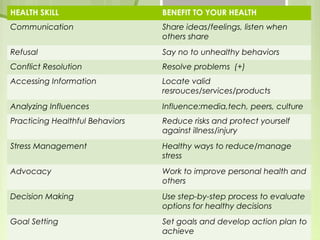
HEALTH SKILL BENEFIT TO YOUR HEALTH 
Communication Share ideas/feelings, listen when 
others share 
Refusal Say no to unhealthy behaviors 
Conflict Resolution Resolve problems (+) 
Accessing Information Locate valid 
resrouces/services/products 
Analyzing Influences Influence:media,tech, peers, culture 
Practicing Healthful Behaviors Reduce risks and protect yourself 
against illness/injury 
Stress Management Healthy ways to reduce/manage 
stress 
Advocacy Work to improve personal health and 
others 
Decision Making Use step-by-step process to evaluate 
options for healthy decisions 
Goal Setting Set goals and develop action plan to 
achieve
Communication… 
Interpersonal Communication: 
exchange of thoughts, feelings, and 
beliefs between two or more 
people. 
 Helps build strong relationships
Strengthen Interpersonal 
Communication: 
 Use “I” messages to express your feelings 
 Ex: I feel upset when I am left out of our 
plans” 
 Communicate with respect and care. 
 Calm voice, respectful tone 
 Be an active listener 
 Pay attention while others are talking
Refusal Skills 
 Refusal Skills: communication strategies 
that can help you say no when you are 
urged to take part in behaviors that are 
unsafe or unhealthful, or that go against 
your values.
Examples of Refusal Skills 
 Say “NO” in a firm but calm voice. 
 Explain Why. State your feelings 
 Offer Alternatives. Suggest a safe/healthful 
activity instead. 
 Stand your Ground. Do not give in. 
 Leave if Necessary.
Conflict Resolution 
Conflict Resolution: process of 
ending a conflict through 
cooperation and problem solving. 
*In a compromise, both parties give 
up something but still gain a desired 
result*
Analyzing Influences 
Why do you do the things you do? 
 Personal Values 
 Beliefs 
 Perceptions 
 Curiosity/Fear 
 Family/Culture 
Media/Technology 
 Friends/Peers 
 School and Community
Self-Management Skills 
 Self-Management: taking charge of your 
own health to promote your own well-being 
 Practice healthful behaviors 
 Manage Stress
Managing Stress 
Stress: The reaction of the body 
and mind to everyday challenges 
and demands. 
Stress Management Skills: 
skills that help you reduce and 
manage stress in your life. 
Examples: exercise, relaxation 
techniques, time management
Advocacy 
 Advocacy: taking action to influence 
others to address a health-related 
concern or to support a health-related 
belief. 
 Name examples of how to advocate?
Making Responsible Decisions 
and Setting Goals 2.2 
Making decisions and settings 
goals means: 
 You are now taking responsibility 
in determining your life’s purpose 
and direction!
Decision Making 
 Small vs. Big 
 What do I eat today vs. What college will I 
go to 
 Values: ideas, beliefs, and attitudes about 
what is important that help guide the way 
you live.
Decision Making Process 
H.E.L.P. 
H- Healthful 
E- Ethical 
L- Legal 
P- Parent Approval
6 steps of Decision Making 
1. State the Situation 
2. List the Options 
3. Weigh the Possible Outcomes 
4. Consider Values 
5. Make a decision and Act on it 
6. Evaluate the Decision
Goal Setting 
 Goals: Something you aim for through 
planning and work. 
 Types of Goals: 
 Short Term- a goal you can reach in a short 
amount of time. 
 Long-Term- goal you plan to reach over an 
extended period of time.
Reaching your Goals 
 Action Plan: a multi-step strategy to 
identify and achieve your goals.
Being a Health-Literate 
Consumer 2.3 
 Health Consumer: someone who 
purchases or uses health products or 
services (to make informed buying 
decisions) 
 Advertising: written or spoken media 
message designed to interest consumers 
in purchasing a product or service
Hidden Messages in 
Advertising 
Bandwagon 
 Example: Group of people using a 
product or service 
 Hidden Message: Everyone is using it, and 
you should too
Rich and Famous 
 Example: Product displayed in expensive 
homes 
 Hidden Message: It will make you feel rich 
and famous
Free Gifts 
 Example: Redeemable coupons for 
merchandise 
 Hidden Message: It’s too good a deal to 
pass up
Great Outdoors 
 Example: Scenes of nature 
 Hidden Message: If it’s associated with 
nature, it must be healthy
Good Times 
 Example: People smiling and laughing 
 Hidden Message: The product will add fun 
to your life
Testimonial 
 Example: People for whom a product has 
worked 
 Hidden Message: It worked for them, so it 
will work for you too
Evaluating Products 
Comparison shopping: judging the 
benefits of different products by 
comparing several factors, such as 
quality, features, and cost.
Evaluating Products 
 Cost and Quality 
 Features 
Warranty 
 Safety 
 Recommendation
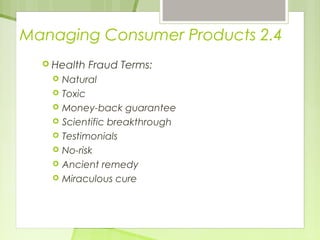
Managing Consumer Products 2.4 
 Health Fraud Terms: 
 Natural 
 Toxic 
 Money-back guarantee 
 Scientific breakthrough 
 Testimonials 
 No-risk 
 Ancient remedy 
 Miraculous cure
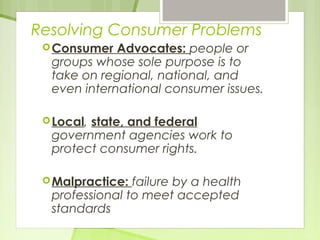
Resolving Consumer Problems 
Consumer Advocates: people or 
groups whose sole purpose is to 
take on regional, national, and 
even international consumer issues. 
Local, state, and federal 
government agencies work to 
protect consumer rights. 
Malpractice: failure by a health 
professional to meet accepted 
standards
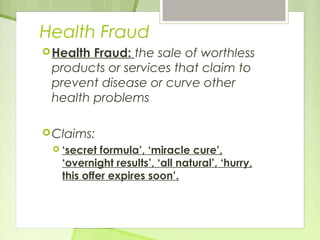
Health Fraud 
Health Fraud: the sale of worthless 
products or services that claim to 
prevent disease or curve other 
health problems 
Claims: 
 ‘secret formula’, ‘miracle cure’, 
‘overnight results’, ‘all natural’, ‘hurry, 
this offer expires soon’.
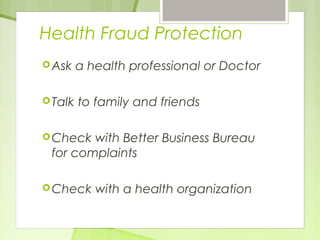
Health Fraud Protection 
Ask a health professional or Doctor 
Talk to family and friends 
Check with Better Business Bureau 
for complaints 
Check with a health organization

Chapter 2

  • 1.
    Chapter 2 TakingCharge of Your Health
  • 2.
    Building Health Skills2.1  Health Skills: specific tools and strategies to maintain, protect, and improve all aspects of your health  Health Skills are also known as Life Skills  *Communication Skills (next slide)
  • 3.
    HEALTH SKILL BENEFITTO YOUR HEALTH Communication Share ideas/feelings, listen when others share Refusal Say no to unhealthy behaviors Conflict Resolution Resolve problems (+) Accessing Information Locate valid resrouces/services/products Analyzing Influences Influence:media,tech, peers, culture Practicing Healthful Behaviors Reduce risks and protect yourself against illness/injury Stress Management Healthy ways to reduce/manage stress Advocacy Work to improve personal health and others Decision Making Use step-by-step process to evaluate options for healthy decisions Goal Setting Set goals and develop action plan to achieve
  • 4.
    Communication… Interpersonal Communication: exchange of thoughts, feelings, and beliefs between two or more people.  Helps build strong relationships
  • 5.
    Strengthen Interpersonal Communication:  Use “I” messages to express your feelings  Ex: I feel upset when I am left out of our plans”  Communicate with respect and care.  Calm voice, respectful tone  Be an active listener  Pay attention while others are talking
  • 6.
    Refusal Skills Refusal Skills: communication strategies that can help you say no when you are urged to take part in behaviors that are unsafe or unhealthful, or that go against your values.
  • 7.
    Examples of RefusalSkills  Say “NO” in a firm but calm voice.  Explain Why. State your feelings  Offer Alternatives. Suggest a safe/healthful activity instead.  Stand your Ground. Do not give in.  Leave if Necessary.
  • 8.
    Conflict Resolution ConflictResolution: process of ending a conflict through cooperation and problem solving. *In a compromise, both parties give up something but still gain a desired result*
  • 9.
    Analyzing Influences Whydo you do the things you do?  Personal Values  Beliefs  Perceptions  Curiosity/Fear  Family/Culture Media/Technology  Friends/Peers  School and Community
  • 10.
    Self-Management Skills Self-Management: taking charge of your own health to promote your own well-being  Practice healthful behaviors  Manage Stress
  • 11.
    Managing Stress Stress:The reaction of the body and mind to everyday challenges and demands. Stress Management Skills: skills that help you reduce and manage stress in your life. Examples: exercise, relaxation techniques, time management
  • 12.
    Advocacy  Advocacy:taking action to influence others to address a health-related concern or to support a health-related belief.  Name examples of how to advocate?
  • 13.
    Making Responsible Decisions and Setting Goals 2.2 Making decisions and settings goals means:  You are now taking responsibility in determining your life’s purpose and direction!
  • 14.
    Decision Making Small vs. Big  What do I eat today vs. What college will I go to  Values: ideas, beliefs, and attitudes about what is important that help guide the way you live.
  • 15.
    Decision Making Process H.E.L.P. H- Healthful E- Ethical L- Legal P- Parent Approval
  • 16.
    6 steps ofDecision Making 1. State the Situation 2. List the Options 3. Weigh the Possible Outcomes 4. Consider Values 5. Make a decision and Act on it 6. Evaluate the Decision
  • 17.
    Goal Setting Goals: Something you aim for through planning and work.  Types of Goals:  Short Term- a goal you can reach in a short amount of time.  Long-Term- goal you plan to reach over an extended period of time.
  • 18.
    Reaching your Goals  Action Plan: a multi-step strategy to identify and achieve your goals.
  • 19.
    Being a Health-Literate Consumer 2.3  Health Consumer: someone who purchases or uses health products or services (to make informed buying decisions)  Advertising: written or spoken media message designed to interest consumers in purchasing a product or service
  • 20.
    Hidden Messages in Advertising Bandwagon  Example: Group of people using a product or service  Hidden Message: Everyone is using it, and you should too
  • 21.
    Rich and Famous  Example: Product displayed in expensive homes  Hidden Message: It will make you feel rich and famous
  • 22.
    Free Gifts Example: Redeemable coupons for merchandise  Hidden Message: It’s too good a deal to pass up
  • 23.
    Great Outdoors Example: Scenes of nature  Hidden Message: If it’s associated with nature, it must be healthy
  • 24.
    Good Times Example: People smiling and laughing  Hidden Message: The product will add fun to your life
  • 25.
    Testimonial  Example:People for whom a product has worked  Hidden Message: It worked for them, so it will work for you too
  • 26.
    Evaluating Products Comparisonshopping: judging the benefits of different products by comparing several factors, such as quality, features, and cost.
  • 27.
    Evaluating Products Cost and Quality  Features Warranty  Safety  Recommendation
  • 28.
    Managing Consumer Products2.4  Health Fraud Terms:  Natural  Toxic  Money-back guarantee  Scientific breakthrough  Testimonials  No-risk  Ancient remedy  Miraculous cure
  • 29.
    Resolving Consumer Problems Consumer Advocates: people or groups whose sole purpose is to take on regional, national, and even international consumer issues. Local, state, and federal government agencies work to protect consumer rights. Malpractice: failure by a health professional to meet accepted standards
  • 30.
    Health Fraud HealthFraud: the sale of worthless products or services that claim to prevent disease or curve other health problems Claims:  ‘secret formula’, ‘miracle cure’, ‘overnight results’, ‘all natural’, ‘hurry, this offer expires soon’.
  • 31.
    Health Fraud Protection Ask a health professional or Doctor Talk to family and friends Check with Better Business Bureau for complaints Check with a health organization