Chapter 1
Lesson 1
If you could 
have one wish 
what would it 
be?
Health- 
• The combination of physical, 
mental/emotional, and social well being 
 Not an absolute state 
 Being healthy means knowing various 
strategies when making decisions related to 
health needs and risks of young adults
Physical Health 
• They way parts and systems of your body work 
together 
Mental and Emotional Health 
• The way you feel about yourself and relate to 
others 
Social Health 
• The way you get along with others
 Physical Health- How well your body 
functions 
 Good physical health provides simplicity in 
dealing with the activities of daily life, and to resist 
diseases, and avoid injury. 
 What are examples of things you can do 
for good physical health?
Mental/Emotional Health- Includes feelings 
about yourself, how well you relate to others, 
and how well you meet the demands of 
everyday life. 
 People who have good mental/emotional health enjoy 
challenges and learning, understand that mistakes 
encourage growth, accept responsibility and develop 
higher thinking skills 
 What are some ways to tell if you have good 
Mental/ Emotional health?
Social Health- Involves the way you get 
along with others. 
• Includes the ability to make and keep friends. It 
also involves communicating well and showing 
respect for yourself and others. 
What are way people express good social 
health?
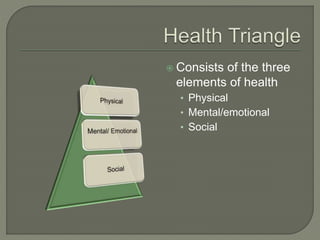
 Consists of the three 
elements of health 
• Physical 
• Mental/emotional 
• Social
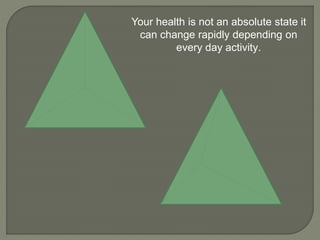
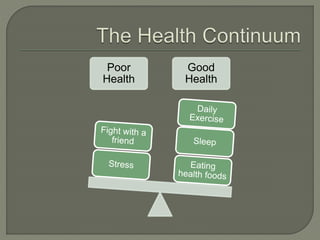
Your health is not an absolute state it 
can change rapidly depending on 
every day activity.
 What are the three 
sides of the health 
triangle and an 
example of each
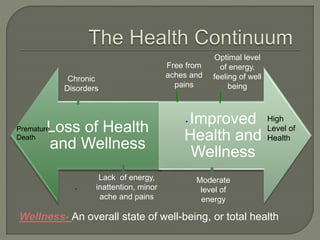
Poor 
Health 
Good 
Health
Loss of Health 
and Wellness 
Improved 
Health and 
Wellness 
Lack of energy, 
inattention, minor 
ache and pains 
Premature 
Death 
High 
Level of 
Health 
Chronic 
Disorders 
Free from 
aches and 
pains 
Optimal level 
of energy, 
feeling of well 
being 
Moderate 
level of 
energy 
Wellness- An overall state of well-being, or total health
Lifestyle Factors- Personal behaviors related 
to the way a person lives. 
• Decisions made daily affect your health.
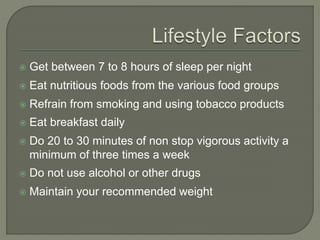
 Get between 7 to 8 hours of sleep per night 
 Eat nutritious foods from the various food groups 
 Refrain from smoking and using tobacco products 
 Eat breakfast daily 
 Do 20 to 30 minutes of non stop vigorous activity a 
minimum of three times a week 
 Do not use alcohol or other drugs 
 Maintain your recommended weight
Prevention- 
• Practicing healthy habits to keep a person well and 
free from disease 
What are some preventive measures that 
you practice daily?
 What are the 7 
lifestyle factors?
Lesson 2
 Heredity- 
 All the traits that were biologically passed on to you from your 
parents 
 Environment- 
 The sum of your surroundings, such as your family, 
neighborhood, school, job, and your life experiences 
 Peers- 
 People of the same age who share similar interests. Includes your 
friends and classmates. 
 Culture- 
 The collective beliefs, customs, and behaviors of a group. This 
group may be an ethnic group, a community, a nation, or a 
specific part of the world.
Physical Environment 
• Where you go everyday 
Social Environment 
• Who you come in contact with 
Cultural Environment 
• Collective beliefs, customs and behavior of a group
Behavior- 
• The way you choose to act within your 
environment
Lesson 3
Risk Factors- 
• Actions or behaviors that represent a potential 
health threat
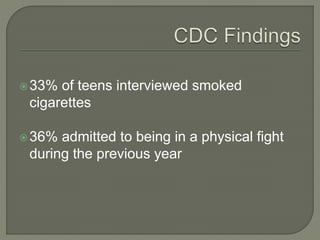
33% of teens interviewed smoked 
cigarettes 
36% admitted to being in a physical fight 
during the previous year
Cumulative Risks- related risks that increase 
in effect with each added risk 
• EX: smoking and bad diet 
Cumulative risks may also result from a 
combination of risk factors 
• Give an example of combination risk factors???
 It is important to understand what behaviors may 
cause you or others harm 
 You must be aware of the consequences of your 
choices and behaviors 
 Risk Behaviors- actions that can potentially 
threaten your health or the health of others
Tobacco, alcohol, and other drugs- 
• you avoid many negative consequences 
including physical, and psychological effects 
• addiction 
• bodily harm 
• even death
Sexual Activity 
• Never have to worry about unplanned 
pregnancy- 100% effective 
• Do not have to worry about STI 
• Free from emotional problems that accompany 
sex: guilt, regret, rejection, confusion 
• Making choices that are always legal

Chapter 1 ppt presentation

  • 1.
  • 2.
  • 3.
    If you could have one wish what would it be?
  • 4.
    Health- • Thecombination of physical, mental/emotional, and social well being  Not an absolute state  Being healthy means knowing various strategies when making decisions related to health needs and risks of young adults
  • 5.
    Physical Health •They way parts and systems of your body work together Mental and Emotional Health • The way you feel about yourself and relate to others Social Health • The way you get along with others
  • 6.
     Physical Health-How well your body functions  Good physical health provides simplicity in dealing with the activities of daily life, and to resist diseases, and avoid injury.  What are examples of things you can do for good physical health?
  • 7.
    Mental/Emotional Health- Includesfeelings about yourself, how well you relate to others, and how well you meet the demands of everyday life.  People who have good mental/emotional health enjoy challenges and learning, understand that mistakes encourage growth, accept responsibility and develop higher thinking skills  What are some ways to tell if you have good Mental/ Emotional health?
  • 8.
    Social Health- Involvesthe way you get along with others. • Includes the ability to make and keep friends. It also involves communicating well and showing respect for yourself and others. What are way people express good social health?
  • 9.
     Consists ofthe three elements of health • Physical • Mental/emotional • Social
  • 10.
    Your health isnot an absolute state it can change rapidly depending on every day activity.
  • 11.
     What arethe three sides of the health triangle and an example of each
  • 12.
  • 13.
    Loss of Health and Wellness Improved Health and Wellness Lack of energy, inattention, minor ache and pains Premature Death High Level of Health Chronic Disorders Free from aches and pains Optimal level of energy, feeling of well being Moderate level of energy Wellness- An overall state of well-being, or total health
  • 14.
    Lifestyle Factors- Personalbehaviors related to the way a person lives. • Decisions made daily affect your health.
  • 15.
     Get between7 to 8 hours of sleep per night  Eat nutritious foods from the various food groups  Refrain from smoking and using tobacco products  Eat breakfast daily  Do 20 to 30 minutes of non stop vigorous activity a minimum of three times a week  Do not use alcohol or other drugs  Maintain your recommended weight
  • 16.
    Prevention- • Practicinghealthy habits to keep a person well and free from disease What are some preventive measures that you practice daily?
  • 17.
     What arethe 7 lifestyle factors?
  • 18.
  • 19.
     Heredity- All the traits that were biologically passed on to you from your parents  Environment-  The sum of your surroundings, such as your family, neighborhood, school, job, and your life experiences  Peers-  People of the same age who share similar interests. Includes your friends and classmates.  Culture-  The collective beliefs, customs, and behaviors of a group. This group may be an ethnic group, a community, a nation, or a specific part of the world.
  • 20.
    Physical Environment •Where you go everyday Social Environment • Who you come in contact with Cultural Environment • Collective beliefs, customs and behavior of a group
  • 21.
    Behavior- • Theway you choose to act within your environment
  • 22.
  • 23.
    Risk Factors- •Actions or behaviors that represent a potential health threat
  • 24.
    33% of teensinterviewed smoked cigarettes 36% admitted to being in a physical fight during the previous year
  • 25.
    Cumulative Risks- relatedrisks that increase in effect with each added risk • EX: smoking and bad diet Cumulative risks may also result from a combination of risk factors • Give an example of combination risk factors???
  • 26.
     It isimportant to understand what behaviors may cause you or others harm  You must be aware of the consequences of your choices and behaviors  Risk Behaviors- actions that can potentially threaten your health or the health of others
  • 27.
    Tobacco, alcohol, andother drugs- • you avoid many negative consequences including physical, and psychological effects • addiction • bodily harm • even death
  • 28.
    Sexual Activity •Never have to worry about unplanned pregnancy- 100% effective • Do not have to worry about STI • Free from emotional problems that accompany sex: guilt, regret, rejection, confusion • Making choices that are always legal

Editor's Notes

  • #2 Vocabulary words will appear in Red so you know when we come across one If you could have 3 wishes what would you wish for? Call on a few students to see what they say Would your wishes stay they same if you had an incurable disease? Why do people take their health for granted when it is perhaps the most precious gift of all?
  • #5 Can your health change from day to day? Give an example
  • #7 What are example of things you can do for food physical health? Proper nutrition Regular physical activity Enough rest Good hygiene Medical checkups Paying attention to what you put in your body
  • #8 What are some ways to tell if you have good Mental and Emotional Health Use your mind to develop thinking skills Enjoy learning See mistakes as opportunities to learn, grow and change Take responsibilities for their actions Stand up for their beliefs In touch with your feelings Can handle stress of life without getting overwhelmed
  • #9 People with good Social Health can? The way you get along with others Ability to make and keep friends Ability to work, play, cooperate with others Good communication with others Respecting and caring for yourself and others
  • #10 When one side of the triangle receives to much attention the other sides of the triangle change as well.
  • #11 There are very seldom times when your health triangle is balanced. Same with the other categories
  • #14 People on the left side of the continuum usually do not take responsibility for maintaining their own health People on the right side of the continuum usually exhibit a high degree of responsibility, discipline, and positive direction in life. They accept responsibility for maintaining their own health People usually function below the wellness midpoint Since the health continuum is always moving you can go to sleep at one point and wake up at another. Since the change can be very gradual you might not be fully aware of some changes What are some factors that might change your level of wellness?
  • #15 What lifestyle factors may be dangerous? Drinking Your Attitude and Your Health- For you to want to be healthy you have to understand they benefits you will see in return to being healthy. What are some benefits of being healthy? Studies have shown that people who are optimist (people who tend to see the positive in situations) are less likely to suffer illness and die young compared to pessimistic (people who look for and see negative in situations) Studies have also shown that it is now what happens to a person but that person attitude and responding behaviors that determine how well that person will cope and how happy he or she will be
  • #17 What are some preventive measures you practice regularly? Seatbelts Wearing protective eye covering Sunscreen Avoiding unsafe areas
  • #21 Physical Environment- What is in your environment? Parks Schools Home Work Social Environment- To what extent can you control your own environment? You can choose your friends, Which aspects can you not control? Family, Neighbors, Family Friends Teachers Coaches Peers Cultural Environment- Ethnic group Community Nation Entire section of a globe
  • #22 If you family has a history of cardiovascular disease, does this mean you must “ follow in their footsteps” You can reduce your chances of developing the condition through positive choices and habits What can you do to reduce you chances? Reduce intake of fried foods Reduce intake of high fat foods Exercise
  • #24 The CDC conducts nationwide surveys of Americans youth in the following catogories Behaviors that contribute to unintentional and intentional injuries Tobacco Use Alcohol and other drug use Sexual behaviors Unhealthy eating behaviors Physical inactivity
  • #25 Activity Finished on page 18
  • #26 Speeding and not wearing a seat belt Drinking and driving Riding a bike on a main street and not wearing a helmet