Chapter 1 
Understanding Health and 
Wellness 
Health
Chapter 1.1 
Your Total Health 
 What makes a person healthy? 
 Define Health: the combination of 
physical, mental/emotional, and 
social well-being.
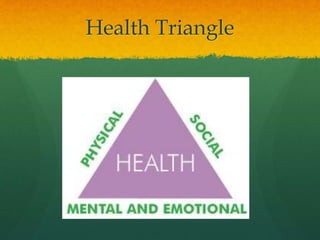
Health Triangle
Physical Health 
 Physical Health: How well your body functions, good physical 
health means that you have enough energy to perform your daily 
activities, deal with everyday stress, and avoid injury. 
 5 Important actions you can take to 
keep a healthy body 
 1. 8-10 hrs. of sleep each night. 
 2. Avoid the use of tobacco, alcohol, and other drugs 
 3. Eat nutritious meals and drink 8 Cups of water each day 
 4. Practice proper daily hygiene 
 5. Participate in 30-60 minutes of physical activity each day.
Mental/Emotional Health 
 Mental/Emotional Health: is about your feelings 
and thoughts, a reflection of how you feel about 
yourself overall. 
 Spiritual: a deep-seated sense of meaning and 
purpose in life.
Social Health 
 Social Health: getting along with others, maintaining 
healthy relationships. 
 How do you maintain healthy relationships? 
1. Seeking and lending support when needed 
2. Communicating clearly and listening to others 
3. Showing respect and care for yourself and 
others
 When your health triangle is balanced, you have a 
high degree of WELLNESS. 
 WELLNESS is an overall state of well-being or total 
health, which is created through balance 
 Health Continuum…draw a horizontal line….place 
a mark for each of the three aspects of your health 
* Draw your own triangle….label the three sides 
(strengths/weaknesses)
 What are some events or actions that could positively or 
negatively change a person’s health? 
Making new friends, break-ups, illness, riding in a 
car without a seatbelt, diet, exercise 
 Chronic Disease: an ongoing condition or illness such 
as: Heart disease, obesity, and cancer 
Four Factors that influence your Health: 
 Heredity: refers to all the traits that were biologically 
passed on to you from your parents. 
 Gender: male or female 
 Lifestyle: behaviors 
 Environment
Chapter 1.2 What Affects 
Your Health? 
 Heredity, environment, attitude, behavior, media, 
technology,and gender are all factors that may influence your 
health. 
 Environment is the sum of your surroundings including the 
people who make up your world and the physical places in 
which you live. 
 3 environment types: 
1. Physical 
2. Social 
3. Cultural
Physical Environmental 
Factors 
 Name a few physical environmental factors that can 
affect your health: 
 Neighborhood, school safety 
 Air and water quality 
 Availability of parks, recreational facilities, and libraries 
 Access to medical care 
 Name a few physical environmental factors that can 
affect your health that you CAN control right now: 
 Cleanliness of your room 
 Recycling, reducing litter around campus
Social Environmental 
Factors 
 Social Environment: made up of the people around 
you including your family and peers. 
 Peers are the people of the same age who share 
similar interests; this can also be your friend. 
 Culture: refers to the collective beliefs, customs, and 
behaviors of a group.
Social Influences 
 Attitude: the way you view situations 
 Behavior: How you act upon the way you view situations 
 Media: the various methods for communicating information. 
 Radio, television, internet, newspaper are examples of 
technology 
 How do media and technology influence your attitude and 
behaviors? 
 Influence you to think something is ‘cool’, or just because this 
person does this one thing means it is okay for you to do it also, 
or motivation to do not do something.
Chapter 1.3 Health Risks and 
Your Behavior 
 What is CDC? The center for disease control and 
prevention, s valuable health resource/tool. 
 The CDC has identified 6 risk behaviors that account for 
most of the deaths amongst people under the age of 
24.The risks behaviors can lead to heart disease, cancer, 
and other serious illnesses. 
 1. Tobacco use 
 2. Unhealthy dietary behaviors 
 3. Alcohol/Drug use 
 4. Sexual behaviors that may results in infection 
 5. Inadequate physical activity 
 6. Behaviors that contribute to unintentional injuries and 
violence
 Cumulative Risks are: 
 Related to risks that increase in effect with each added 
risk. 
 Short-term vs. Long-term effects of risk behaviors: 
(list 1 example) 
 Ex. Eating a high-fat meal at a fast food restaurant 
occasionally vs. every day.
How to avoid or reduce 
risks…… 
 Prevention which is a process of taking steps to 
keep something from happening or getting worse. 
 List a few examples of Prevention: 
 Wearing a seatbelt, being drug free, etc. avoiding 
unhealthy relationships.
Avoiding Risk Behaviors 
 Abstinence: a deliberate decision to avoid high-risk 
behavior including sexual activity and use of 
tobacco, alcohol, and drugs. 
 Every day you make decisions big and small that 
can affect your health. 
 Lifestyle factors are personal habits and behaviors 
related to the way a person lives.
7 Lifestyle factors to improve 
level of health 
 1. getting 8 hrs. of sleep each night 
 2. eat a health breakfast 
 3. eating a variety of nutritious foods 
 4. physical activity for 30-60 min. a day 
 5. maintain healthy weight 
 6. Stay away from tobacco 
 7. stay away from alcohol and drugs
Chapter 1.4 Promoting Health 
and Wellness 
 True or False: 
 Individual, family, community, and national health 
require planning and responsible behavior on 
everyone’s part. 
 Fun Fact: today, America spends about $7.3 trillion 
each year on health care, which is about 7,600 per 
person. 
 How can we avoid this?
CDC 
 The CDC has a report that comes out every 10 years, 
it is a nationwide health promotion and disease 
prevention plan designed to serve as a guide for 
improving the health of all people in the U.S. This is 
called Healthy People 2020. 
 Health disparities: differences in health outcomes 
among groups.
4 Goals for Healthy People 2020: 
 1. Promote the best possible health in order to end 
preventable death, illness, injury, and disability. 
 2. Eliminate health disparities 
 3. Make wellness a way of life and enhance quality of life 
for individuals and communities. 
 4. Promote healthy places and environments.
How can we change? 
 Health Education: 
 Includes providing accurate health information and 
teaching health skills to help people make healthy 
decisions. 
 Health Literacy: 
 refers to a person’s capacity to learn about and 
understand basic health information and services, and 
to use these resources to promote one’s health and 
wellness.