Prepared by Madeleine Lacefield Tattoon, M.A.1Part IHeredity and EnvironmentChapter TwoWhat Theories DoGrand TheoriesEmergent TheoriesWhat Theories Contribute
2What Theories Dodevelopmental theoriesa systematic statement of principles and generalizations that provides a coherent framework for understanding how and why people change as they grow olderlead to pivotal hypothesesgenerate discoveroffer practical guidance
3What Theories Dodevelopmental theoriesgrand theoriesdescribe universal processes and development throughout the entire life spanoffers a framework for interpreting and understanding…change and development of all individualssome are emergent theories–new systematic and comprehensive theories of the future
4Grand Theoriespsychoanalyticbehaviorism (learning theory)cognitivegrand in that they are…comprehensiveenduringwidely applied
5Psychoanalytic Theorya grand theory of human development that holds that irrational, unconscious drives and motives, often originating in childhood, underlies human behavior
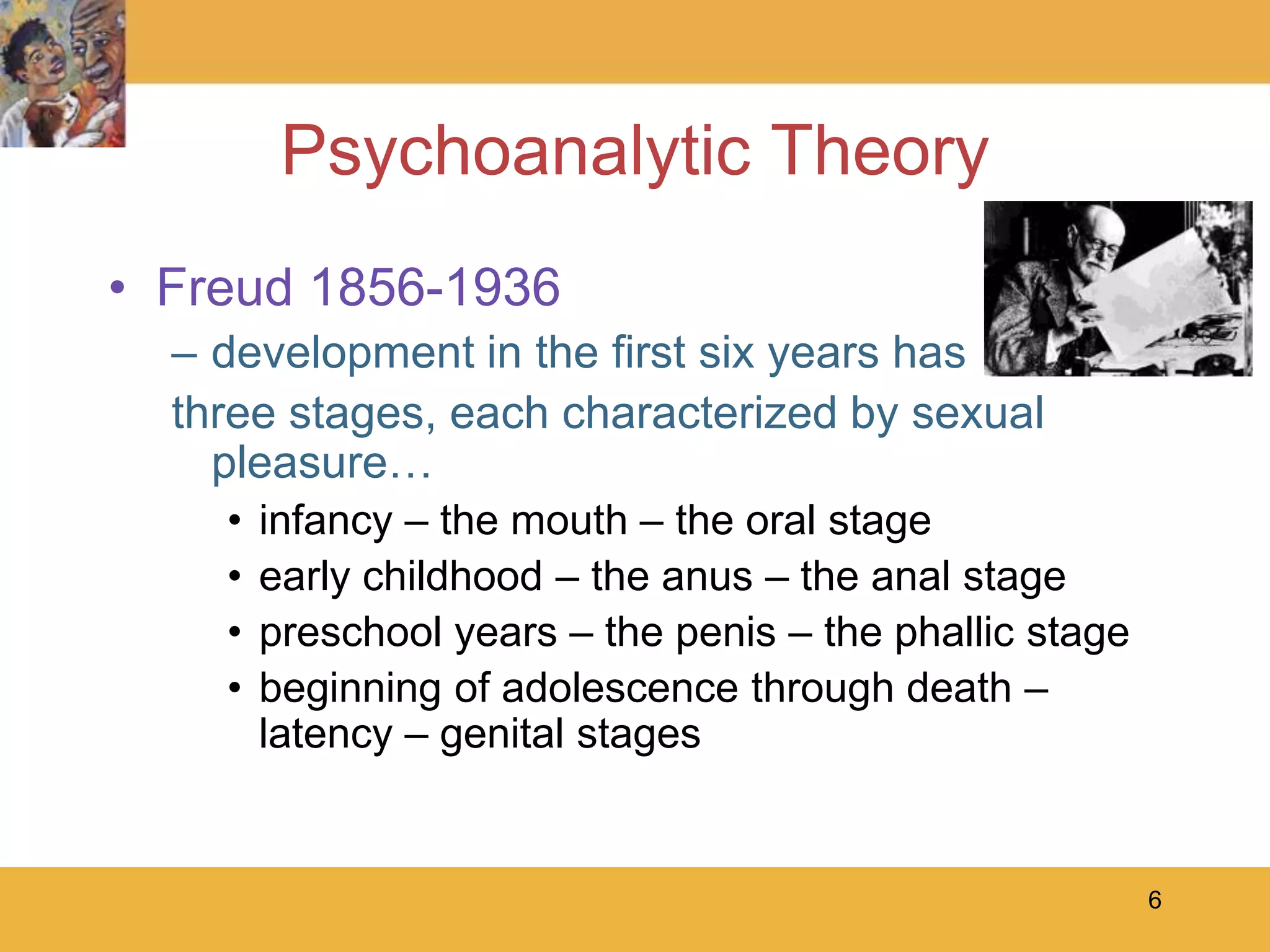
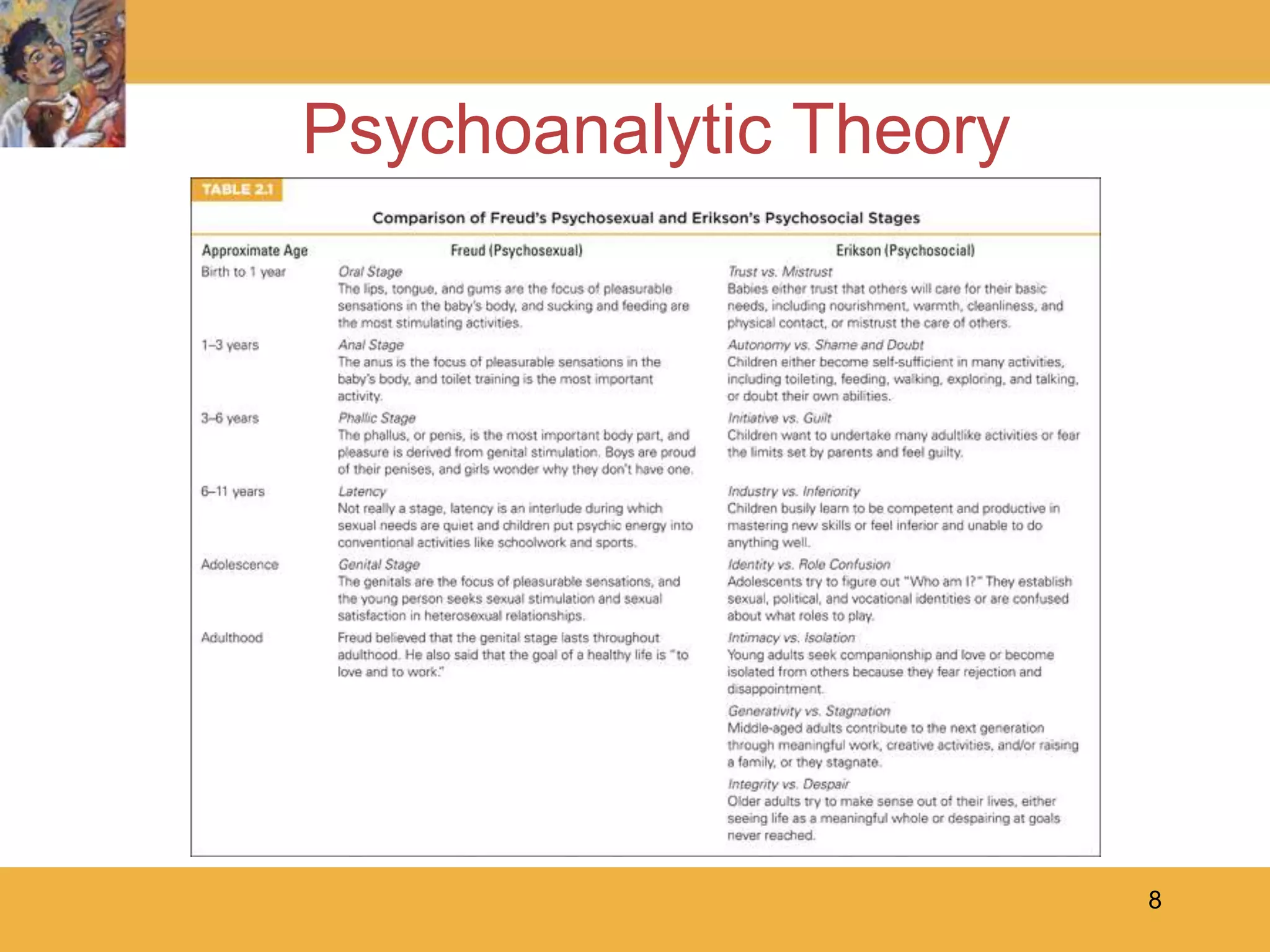
6Psychoanalytic TheoryFreud 1856-1936development in the first six years hasthree stages, each characterized by sexual pleasure…infancy – the mouth – the oral stageearly childhood – the anus – the anal stagepreschool years – the penis – the phallic stagebeginning of adolescence through death – latency – genital stages
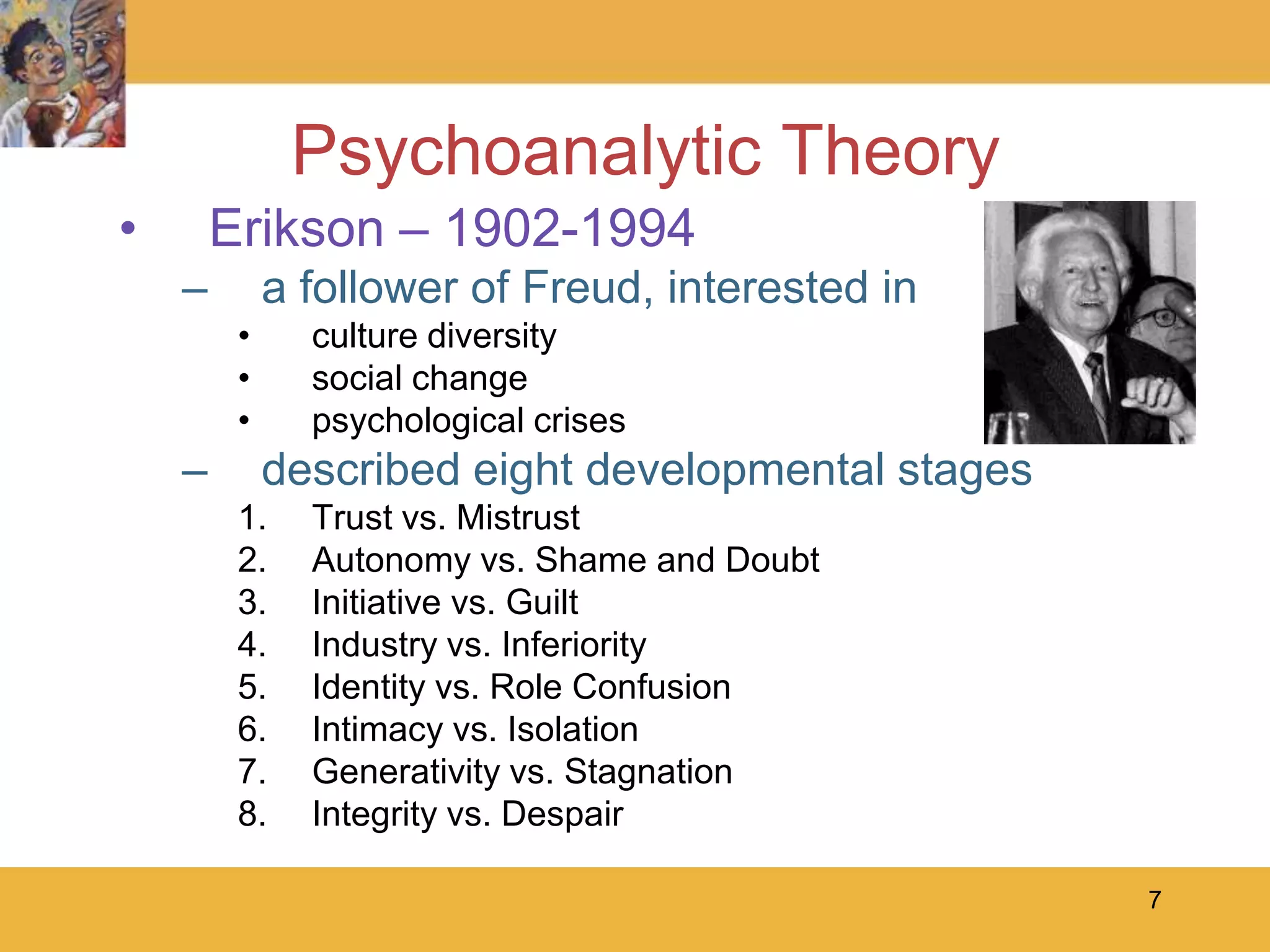
7Psychoanalytic TheoryErikson – 1902-1994a follower of Freud, interested in culture diversitysocial changepsychological crisesdescribed eight developmental stagesTrust vs. Mistrust Autonomy vs. Shame and DoubtInitiative vs. GuiltIndustry vs. InferiorityIdentity vs. Role ConfusionIntimacy vs. IsolationGenerativity vs. StagnationIntegrity vs. Despair
8Psychoanalytic Theory
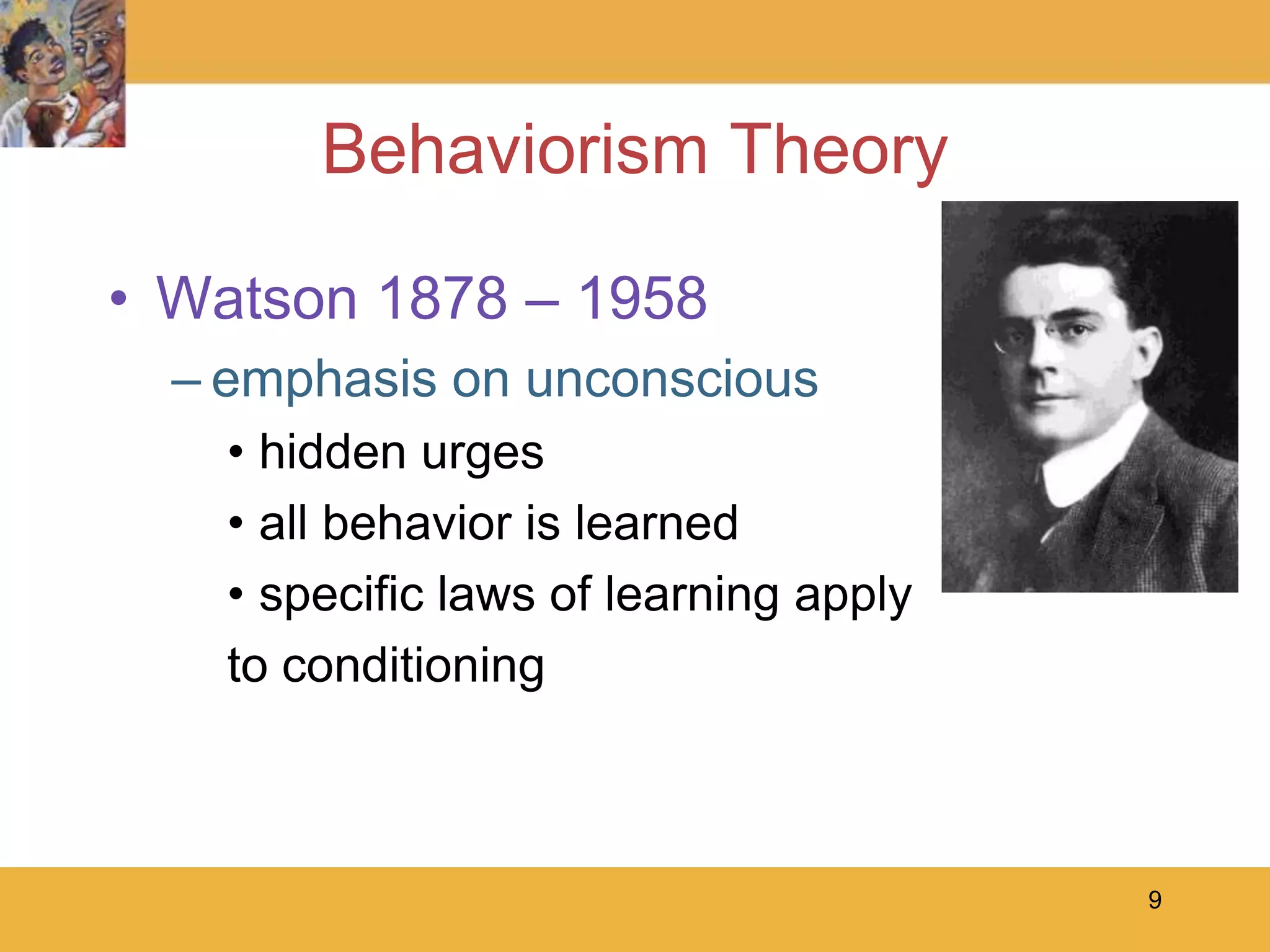
9Behaviorism TheoryWatson 1878 – 1958emphasis on unconscioushidden urgesall behavior is learnedspecific laws of learning apply to conditioning
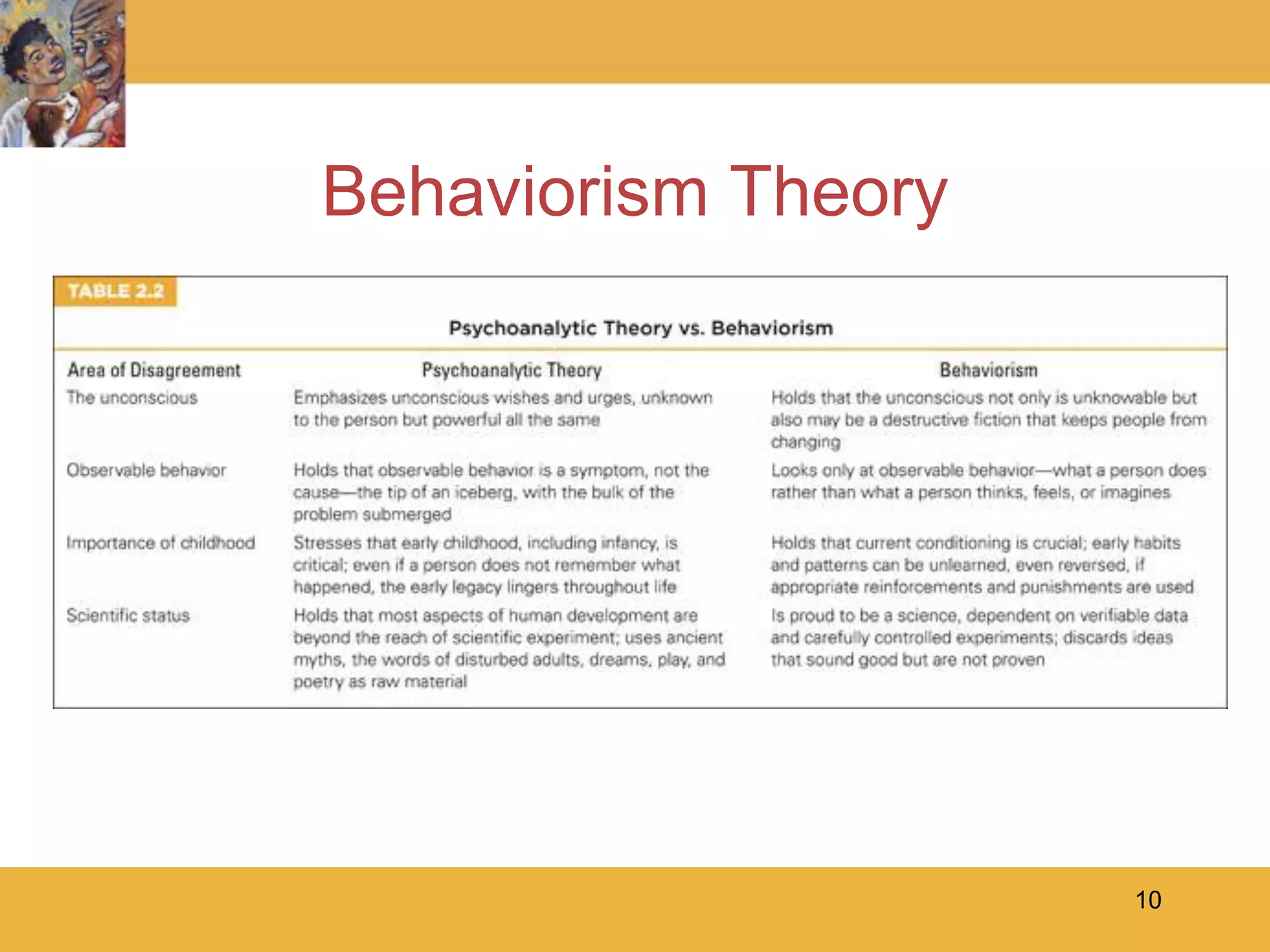
10Behaviorism Theory
11Behaviorism TheoryLaw of Behavior - learning theories…all behavior is learned step by stepconditioningthe processes by which responses become linked to particular stimuliclassical conditioning - respondent conditioninga person or animal is conditioned to associate a neutral stimulus with a meaningful stimulusoperant conditioning - instrumental conditioninglearning process by which a particular action is followed by something desired – the person will repeat the actionreinforcementA technique for conditioning behavior where behavior is followed by something desired
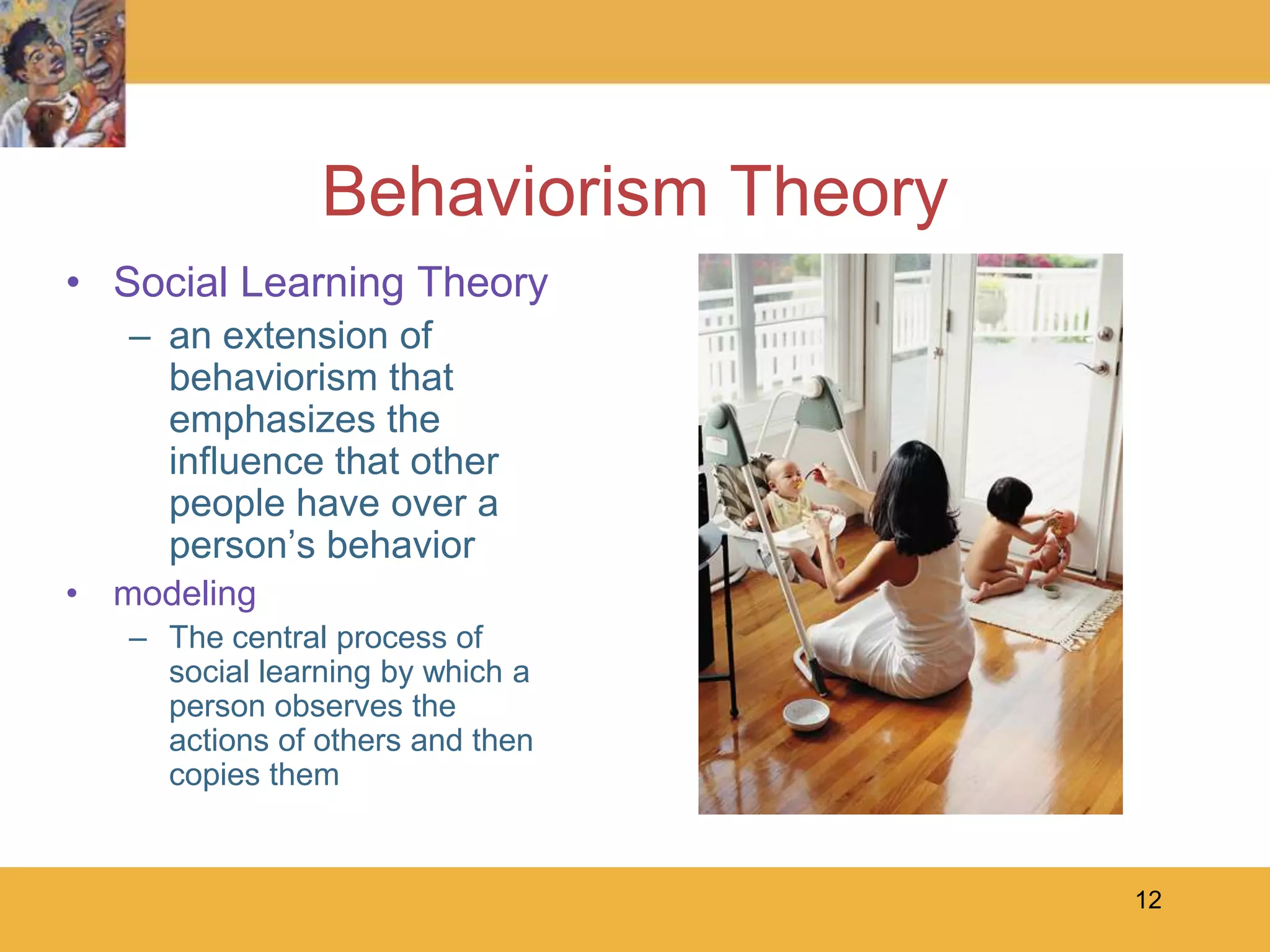
12Behaviorism TheorySocial Learning Theoryan extension of behaviorism that emphasizes the influence that other people have over a person’s behaviormodelingThe central process of social learning by which a person observes the actions of others and then copies them
13Cognitive TheoryThe third grand theoryemphasized the structure and development of thought 	processes
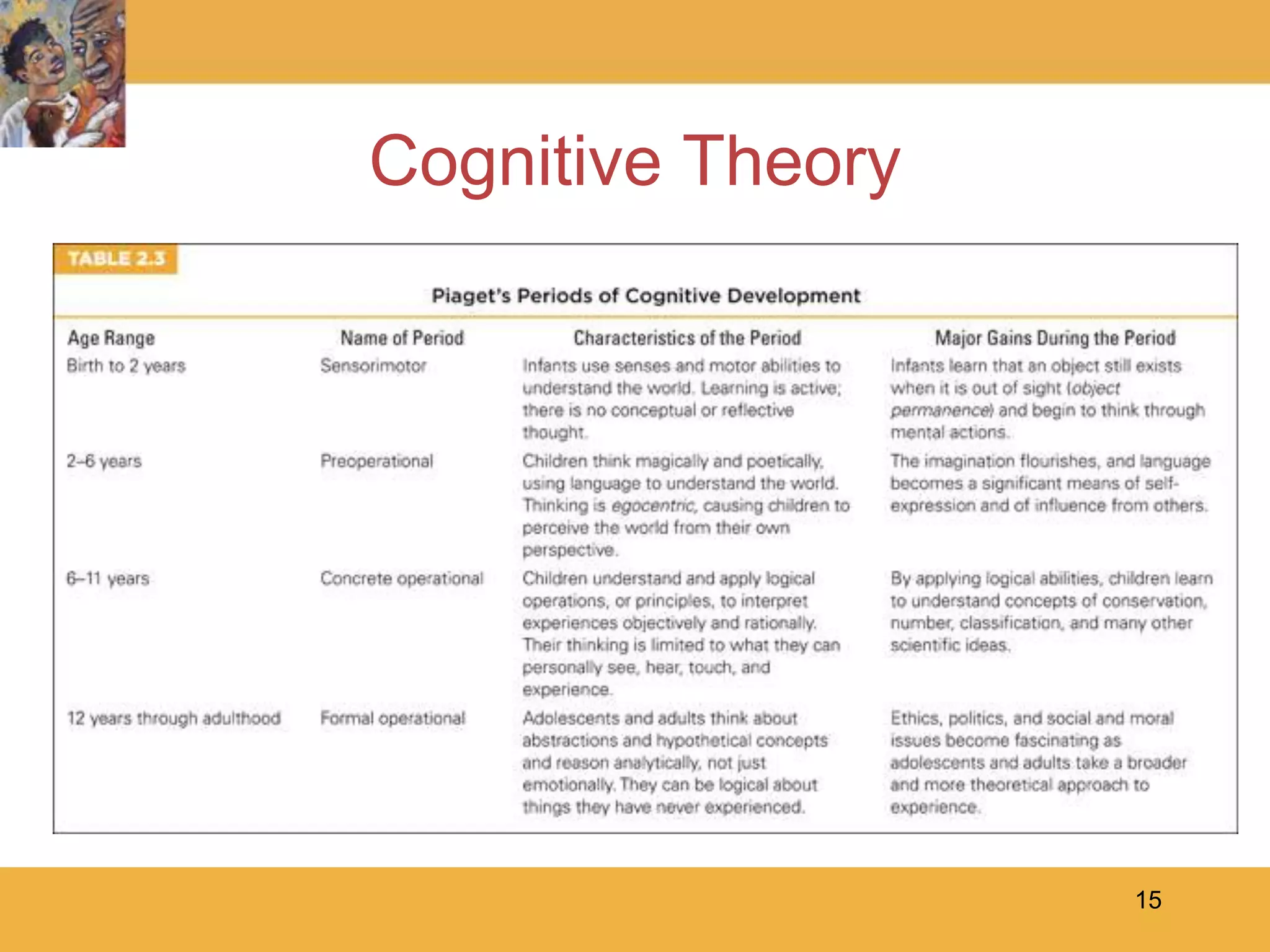
14Cognitive TheoryJean Piaget’s 4 Stages sensorimotorpreoperationalconcrete operationalformal operational
15Cognitive Theory
16Cognitive TheoryCognitive equilibrium—state of mental balance.If threatened, how do we achieve equilibrium again? Assimilation: incorporate new events into existing schemasAccommodation: change schema
17Emergent Theories…multicultural and multidisciplinary , developed not only by men of European ancestry but also by many non-Western, non-White, and female scientists…
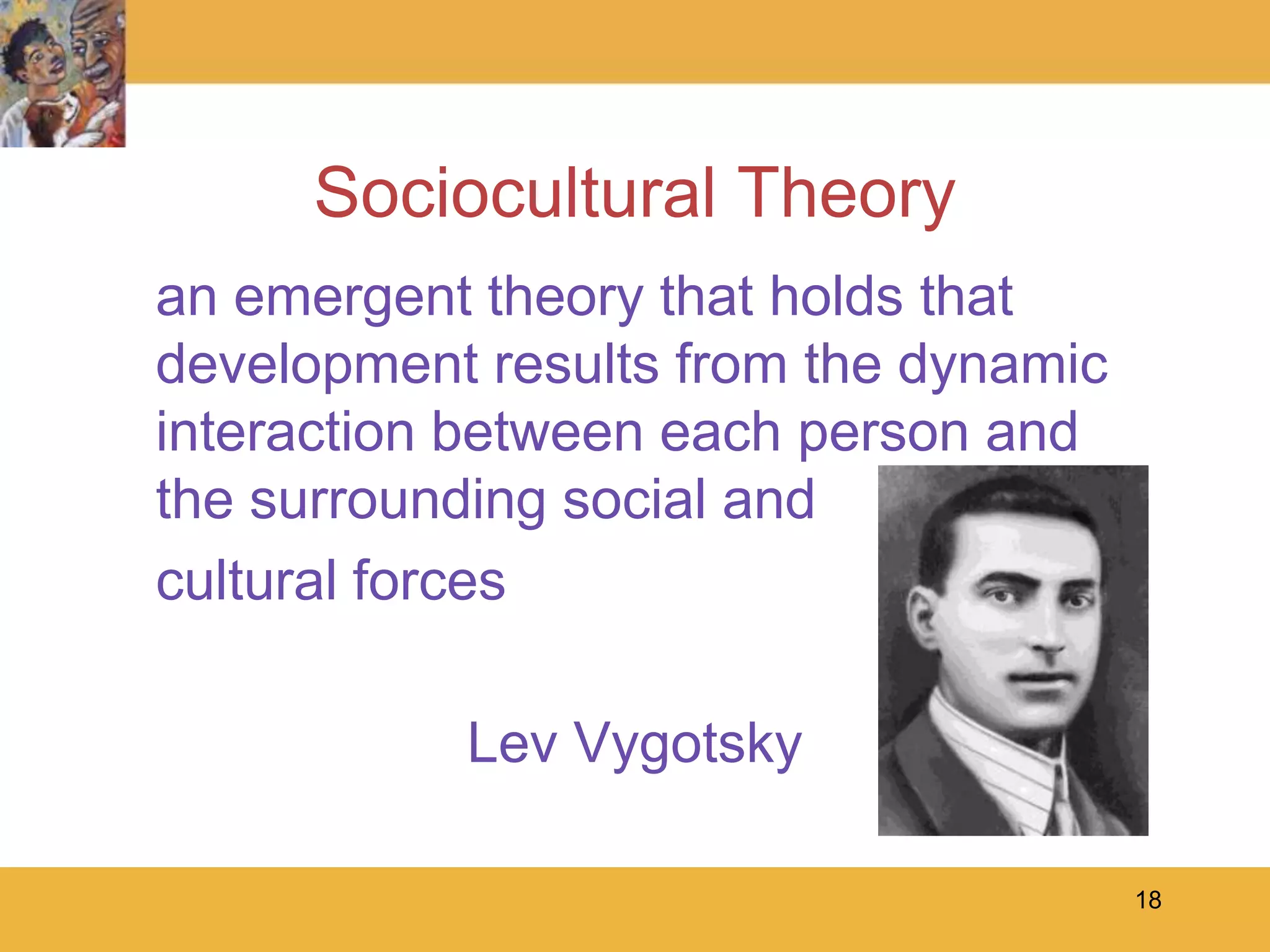
18Sociocultural Theory	an emergent theory that holds that development results from the dynamic interaction between each person and the surrounding social and	cultural forcesLev Vygotsky
19Sociocultural Theorycultural variationadult responses are shaped by culturesociety provides not only customs but also the tools and theoriesguided participationa technique in which skilled mentors help novices lean not only by providing instruction, but also by allowing direct, shared involvement in the activity
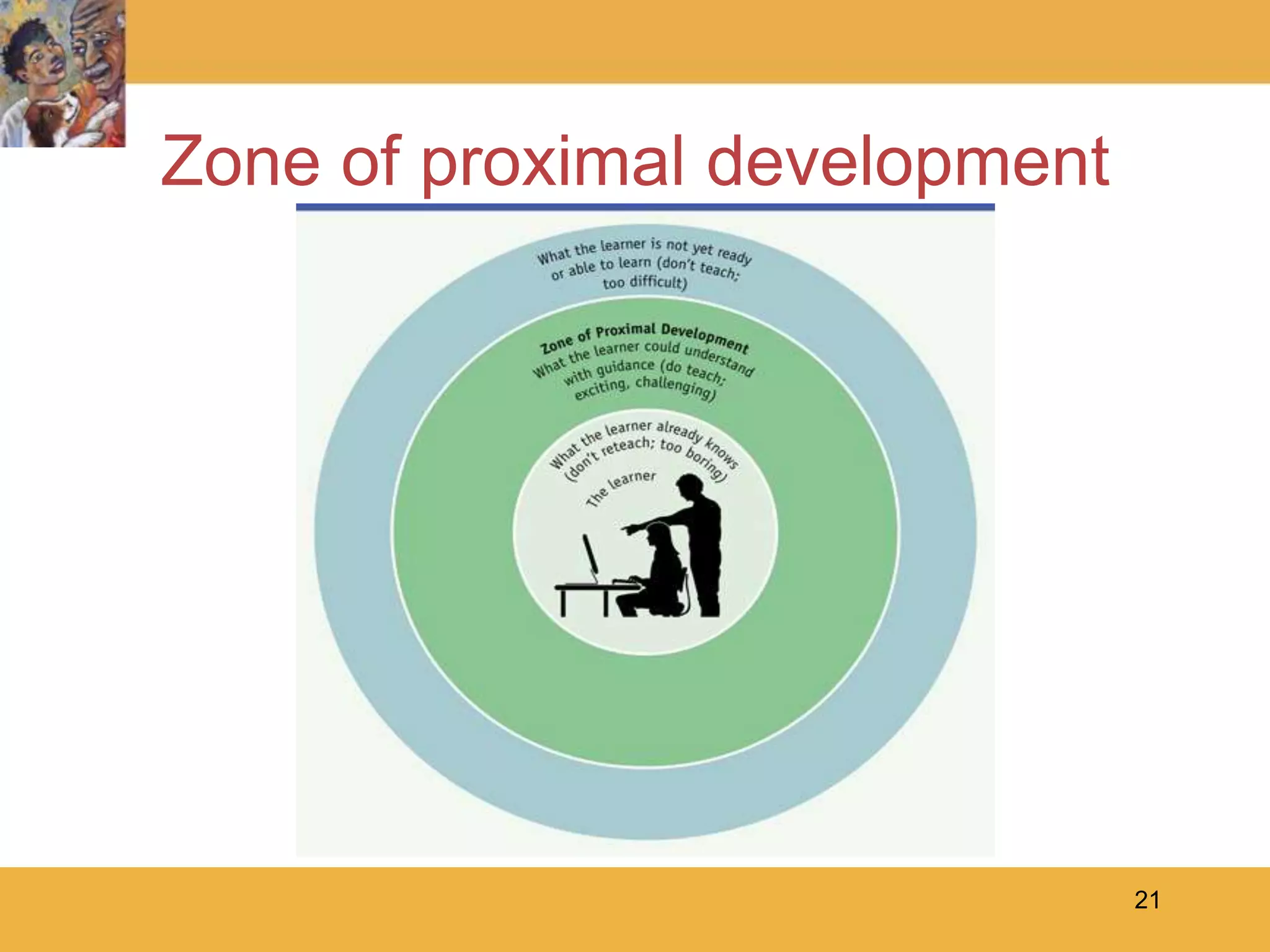
20Sociocultural TheoryZone of proximal developmentskills, knowledge, and concepts that the learner is close to acquiring but cannot master without help
21Zone of proximal development
22Epigenetic TheoryAn emergent theory of development that considers both the genetic origins of behavior (within each person and within each species) and the direct, systematic influences that environmental forces have over time on genes
23Genetic AdaptationSelective adaptationthe process by which humans and other organisms gradually adjust to their environmentgenes for the traits that are most useful will become more frequent, thus making survival of species more likely.
24What Theories ContributePsychoanalytic theory has made us aware of the importance of early childhood experiences.Behaviorism has shown effect of the immediate environment on learning.Cognitive theory shows how intellectual process and thinking affect actions.Sociocultural theory has reminded us of the importance of culture in learning.Epigenetic theory reminds us of the power of genes and their interaction with the environment.
25The Nature-Nurture ControversyNatureThe genes that people inheritNurtureTo all the environmental influences
26The Nature-Nurture ControversyNature and Nurture Always interactHeredity vs. EnvironmentHow much of any characteristic,behavior, or pattern of development isthe result of genes and how much isthe result of experience?
27Theoretical Perspectives on…Hyperactivity NatureThey are usually boys who have male relatives with the same problemThey are overactive in every context, home as well as schoolThey are often calmed by stimulants, such as Ritalin, Adderall, and even coffeeNurtureThe rapid increase in ADHA (from 1 to 5 percent of all U.S. children within the past 50 years) cannot be genetic, since selective adaptation takes centuriesMany environmental factors correlate with ADHD, including crowded homes, television, lead, food additives, and rigid teaching
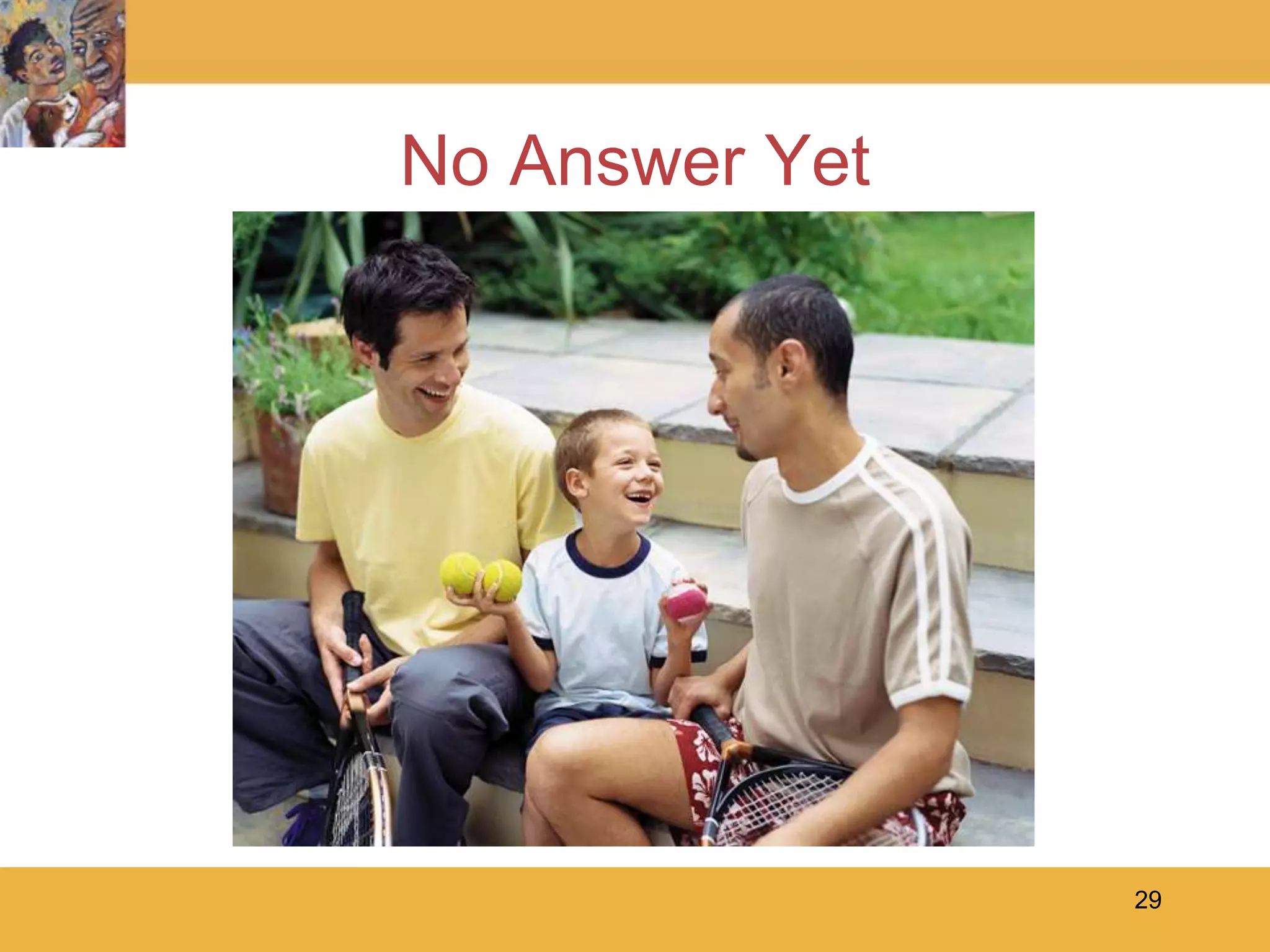
28Theoretical Perspectives on…HomosexualityNature vs. NurtureChildren raised by homosexual couples (either adopted or the biological offspring of one of the parents) become heterosexual or homosexual in about the same proportions as children raised by heterosexual and do not seem particularly rebellious or emotionally disturbed.
29No Answer Yet

Chapter 2

  • 1.
    Prepared by MadeleineLacefield Tattoon, M.A.1Part IHeredity and EnvironmentChapter TwoWhat Theories DoGrand TheoriesEmergent TheoriesWhat Theories Contribute
  • 2.
    2What Theories Dodevelopmentaltheoriesa systematic statement of principles and generalizations that provides a coherent framework for understanding how and why people change as they grow olderlead to pivotal hypothesesgenerate discoveroffer practical guidance
  • 3.
    3What Theories Dodevelopmentaltheoriesgrand theoriesdescribe universal processes and development throughout the entire life spanoffers a framework for interpreting and understanding…change and development of all individualssome are emergent theories–new systematic and comprehensive theories of the future
  • 4.
    4Grand Theoriespsychoanalyticbehaviorism (learningtheory)cognitivegrand in that they are…comprehensiveenduringwidely applied
  • 5.
    5Psychoanalytic Theorya grandtheory of human development that holds that irrational, unconscious drives and motives, often originating in childhood, underlies human behavior
  • 6.
    6Psychoanalytic TheoryFreud 1856-1936developmentin the first six years hasthree stages, each characterized by sexual pleasure…infancy – the mouth – the oral stageearly childhood – the anus – the anal stagepreschool years – the penis – the phallic stagebeginning of adolescence through death – latency – genital stages
  • 7.
    7Psychoanalytic TheoryErikson –1902-1994a follower of Freud, interested in culture diversitysocial changepsychological crisesdescribed eight developmental stagesTrust vs. Mistrust Autonomy vs. Shame and DoubtInitiative vs. GuiltIndustry vs. InferiorityIdentity vs. Role ConfusionIntimacy vs. IsolationGenerativity vs. StagnationIntegrity vs. Despair
  • 8.
  • 9.
    9Behaviorism TheoryWatson 1878– 1958emphasis on unconscioushidden urgesall behavior is learnedspecific laws of learning apply to conditioning
  • 10.
  • 11.
    11Behaviorism TheoryLaw ofBehavior - learning theories…all behavior is learned step by stepconditioningthe processes by which responses become linked to particular stimuliclassical conditioning - respondent conditioninga person or animal is conditioned to associate a neutral stimulus with a meaningful stimulusoperant conditioning - instrumental conditioninglearning process by which a particular action is followed by something desired – the person will repeat the actionreinforcementA technique for conditioning behavior where behavior is followed by something desired
  • 12.
    12Behaviorism TheorySocial LearningTheoryan extension of behaviorism that emphasizes the influence that other people have over a person’s behaviormodelingThe central process of social learning by which a person observes the actions of others and then copies them
  • 13.
    13Cognitive TheoryThe thirdgrand theoryemphasized the structure and development of thought processes
  • 14.
    14Cognitive TheoryJean Piaget’s4 Stages sensorimotorpreoperationalconcrete operationalformal operational
  • 15.
  • 16.
    16Cognitive TheoryCognitive equilibrium—stateof mental balance.If threatened, how do we achieve equilibrium again? Assimilation: incorporate new events into existing schemasAccommodation: change schema
  • 17.
    17Emergent Theories…multicultural andmultidisciplinary , developed not only by men of European ancestry but also by many non-Western, non-White, and female scientists…
  • 18.
    18Sociocultural Theory an emergenttheory that holds that development results from the dynamic interaction between each person and the surrounding social and cultural forcesLev Vygotsky
  • 19.
    19Sociocultural Theorycultural variationadultresponses are shaped by culturesociety provides not only customs but also the tools and theoriesguided participationa technique in which skilled mentors help novices lean not only by providing instruction, but also by allowing direct, shared involvement in the activity
  • 20.
    20Sociocultural TheoryZone ofproximal developmentskills, knowledge, and concepts that the learner is close to acquiring but cannot master without help
  • 21.
  • 22.
    22Epigenetic TheoryAn emergenttheory of development that considers both the genetic origins of behavior (within each person and within each species) and the direct, systematic influences that environmental forces have over time on genes
  • 23.
    23Genetic AdaptationSelective adaptationtheprocess by which humans and other organisms gradually adjust to their environmentgenes for the traits that are most useful will become more frequent, thus making survival of species more likely.
  • 24.
    24What Theories ContributePsychoanalytictheory has made us aware of the importance of early childhood experiences.Behaviorism has shown effect of the immediate environment on learning.Cognitive theory shows how intellectual process and thinking affect actions.Sociocultural theory has reminded us of the importance of culture in learning.Epigenetic theory reminds us of the power of genes and their interaction with the environment.
  • 25.
    25The Nature-Nurture ControversyNatureThegenes that people inheritNurtureTo all the environmental influences
  • 26.
    26The Nature-Nurture ControversyNatureand Nurture Always interactHeredity vs. EnvironmentHow much of any characteristic,behavior, or pattern of development isthe result of genes and how much isthe result of experience?
  • 27.
    27Theoretical Perspectives on…HyperactivityNatureThey are usually boys who have male relatives with the same problemThey are overactive in every context, home as well as schoolThey are often calmed by stimulants, such as Ritalin, Adderall, and even coffeeNurtureThe rapid increase in ADHA (from 1 to 5 percent of all U.S. children within the past 50 years) cannot be genetic, since selective adaptation takes centuriesMany environmental factors correlate with ADHD, including crowded homes, television, lead, food additives, and rigid teaching
  • 28.
    28Theoretical Perspectives on…HomosexualityNaturevs. NurtureChildren raised by homosexual couples (either adopted or the biological offspring of one of the parents) become heterosexual or homosexual in about the same proportions as children raised by heterosexual and do not seem particularly rebellious or emotionally disturbed.
  • 29.